Post office words are useful when you send mail, prepare a parcel, fill out an address form, ask for registered mail, keep a receipt, or check delivery tracking in Korea. This lesson teaches post office words by task, so you can read the counter and the form calmly instead of trying to translate every line at once.
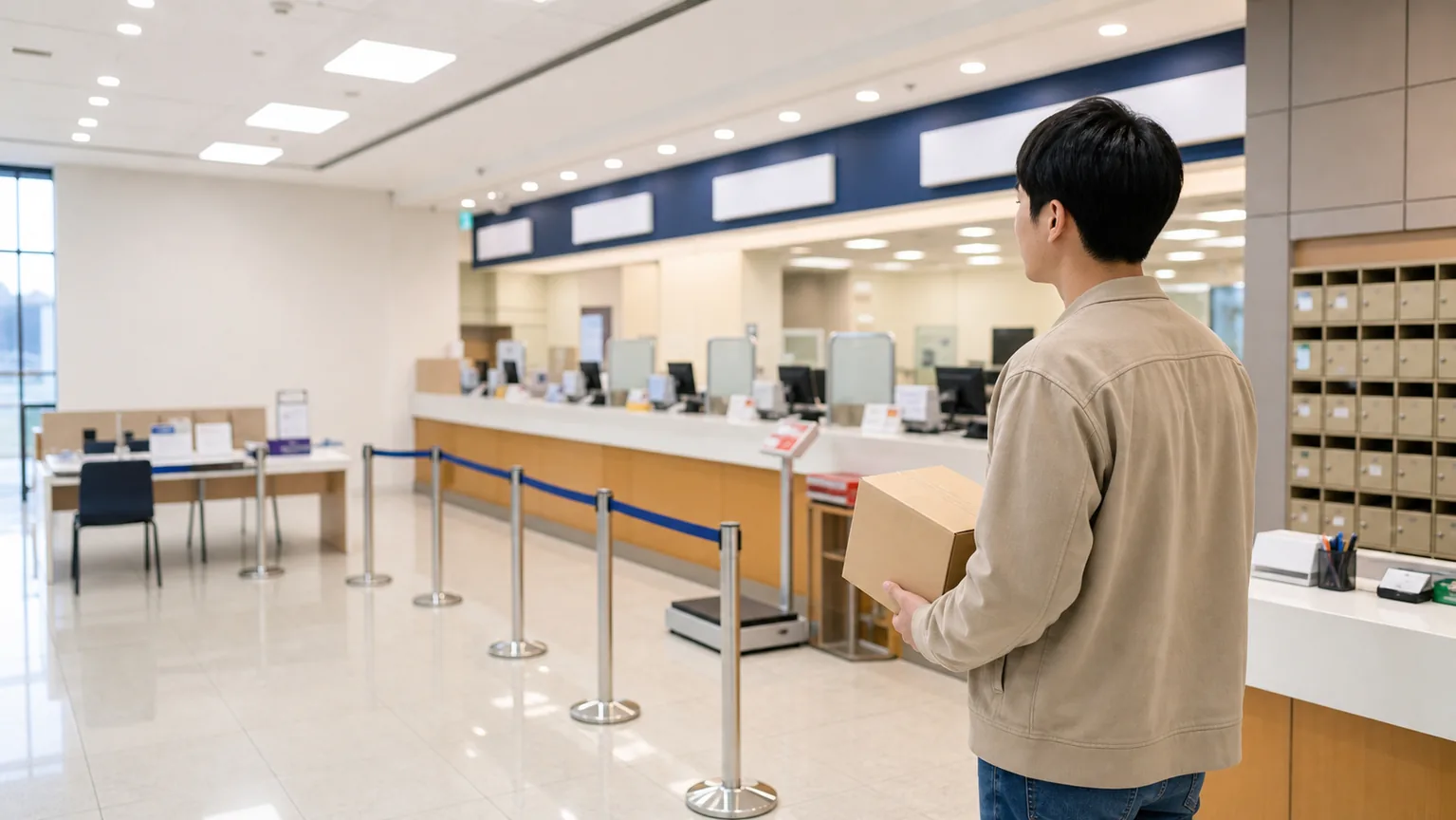
Briefing Summary
| Situation | Using a Korean post office for mail, parcels, registered mail, address forms, receipts, and tracking |
|---|---|
| Practice focus | post office, mail type, parcel type, recipient, sender, postal code, waybill, receipt, fee, and tracking words |
| Useful for | foreign residents, students, workers, new tenants, and anyone sending items from Korea |
| Study time | 8-12 minutes |
Slide 1. The Situation
Imagine you walk into a 우체국 with a small parcel. You may need 우편, 소포, 택배, or 등기. Start with the task first. Are you sending mail, sending a parcel, using registered mail, or asking about tracking?
This post is a Korean language lesson, not postal, customs, insurance, refund, delivery-time, price, or prohibited-item advice. For exact prices, international rules, customs documents, lost mail, refunds, or delivery promises, follow the official counter, service provider, or government guidance.
Slide 2. Key Post Office Words
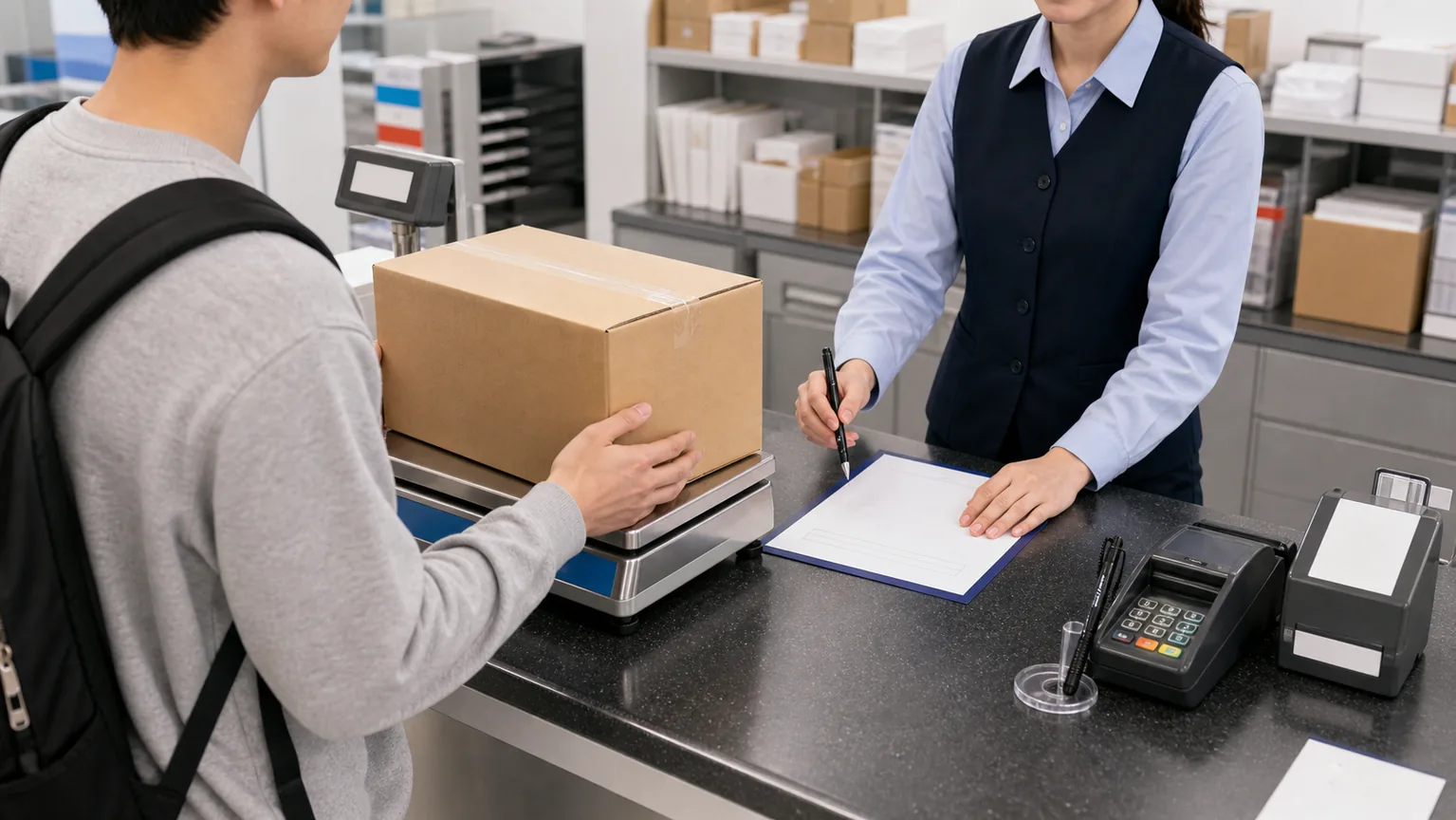
| Korean | Romanization | English | Level | Use |
|---|---|---|---|---|
| 우체국 | ucheguk | post office | BS1 | The place where you send mail or parcels. |
| 우편 | upyeon | mail; postal service | BS2 | General mail or postal-service word. |
| 우편함 | upyeonham | mailbox | BS2 | Place where mail is received. |
| 소포 | sopo | parcel; package | BS2 | Parcel or package at the post office. |
| 택배 | taekbae | courier delivery; parcel delivery | BS2 | Common parcel-delivery word. |
| 등기 | deunggi | registered mail | BS4 | Registered mail with proof or tracking depending on service. |
| 주소 | juso | address | BS2 | Address field on a form or label. |
| 우편번호 | upyeon beonho | postal code | BS3 | Postal code on an address form. |
| 받는 사람 | batneun saram | recipient | BS3 | Person receiving the mail or parcel. |
| 보내는 사람 | bonaeneun saram | sender | BS3 | Person sending the mail or parcel. |
| 운송장 | unsongjang | waybill; shipping label | BS4 | Shipping label or waybill used for delivery tracking. |
| 배송 조회 | baesong johoe | delivery tracking | BS4 | Checking delivery status. |
| 배송비 | baesongbi | shipping fee; delivery fee | BS2 | Fee for sending a parcel or delivery. |
| 국제우편 | gukje upyeon | international mail | BS4 | Mail going to another country. |
| 접수증 | jeopsujeung | receipt of acceptance; filing receipt | BS5 | Proof that the item or request was accepted. |
Slide 3. Read the Post Office in Five Passes
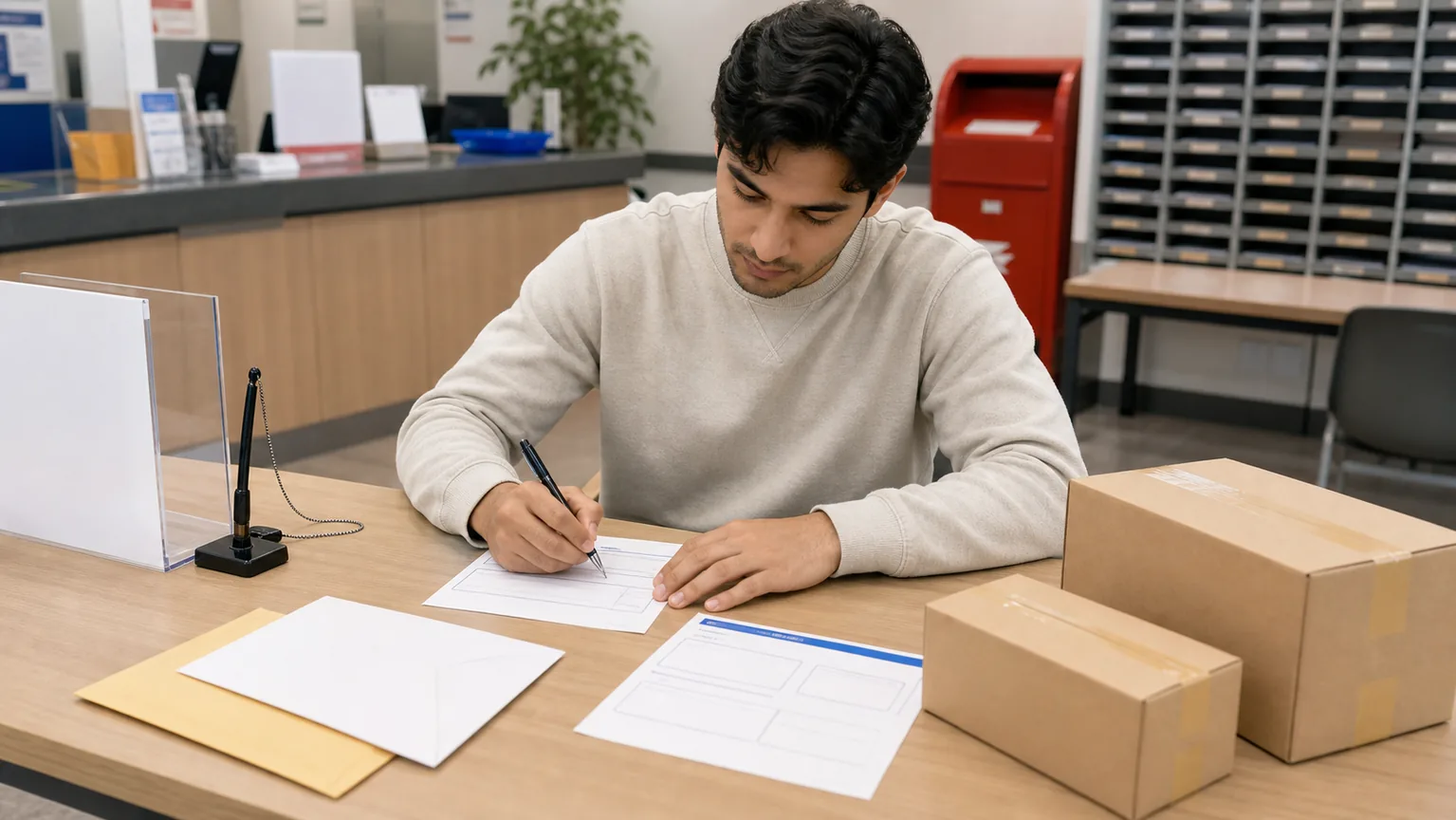
- Pass 1: Place. Start with 우체국 and 우편함. They tell you whether you are at the post office or dealing with received mail.
- Pass 2: Mail or parcel type. Check whether the task is 우편, 소포, 택배, 등기, or 국제우편.
- Pass 3: Address form. Look for 주소, 우편번호, 받는 사람, and 보내는 사람 before you write.
- Pass 4: Fee. When money appears, connect it to 배송비. The word tells you it is a shipping or delivery fee, but the price still depends on the service.
- Pass 5: Proof and tracking. Keep the 운송장 or 접수증, then use 배송 조회 when you check the delivery.
Slide 4. Common Post Office Mistakes
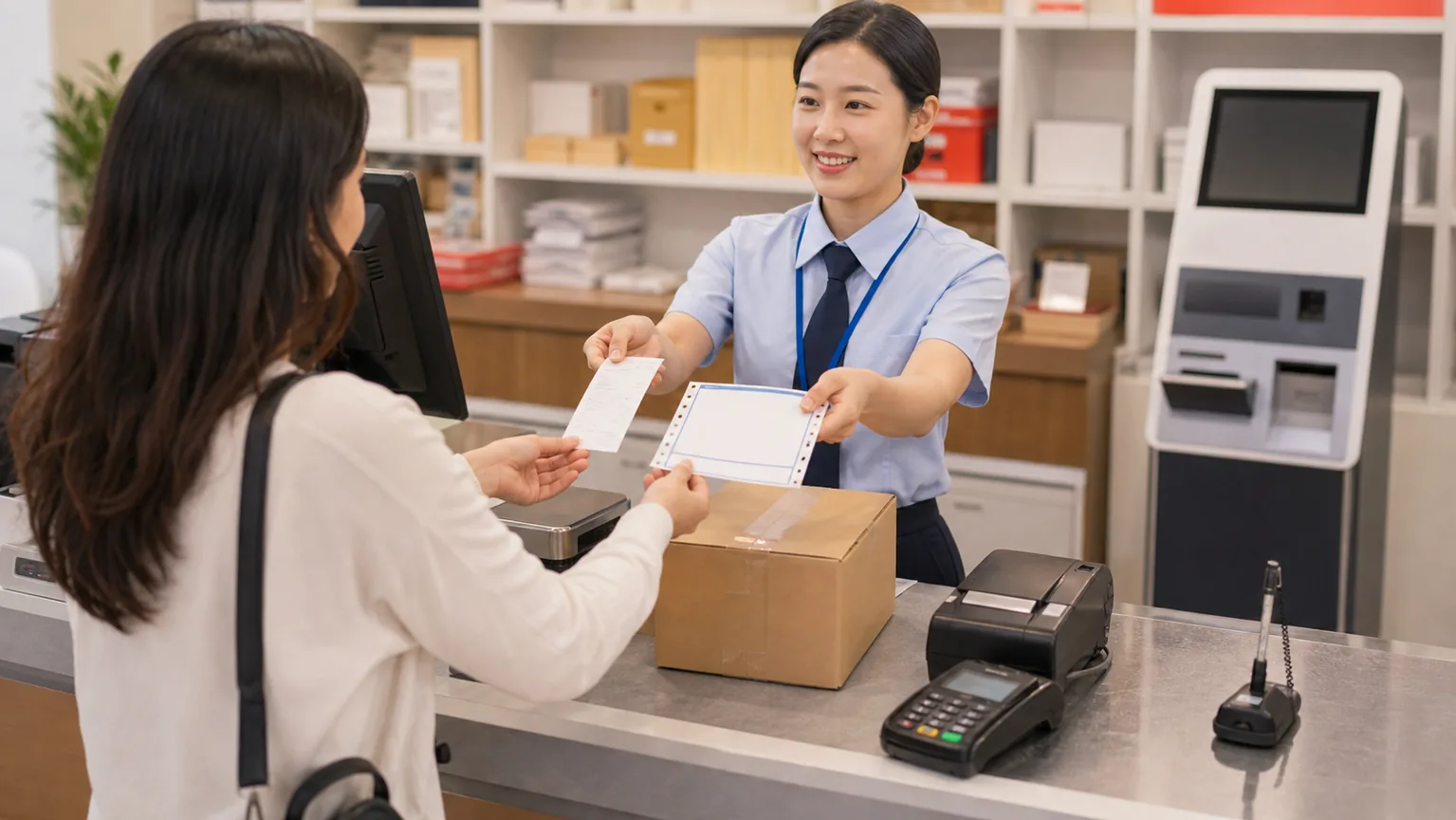
The first mistake is mixing 우편, 소포, and 택배. 우편 is the broad mail or postal-service word. 소포 and 택배 point more toward parcels and delivery.
The second mistake is writing the wrong person in the wrong field. 받는 사람 is the recipient. 보내는 사람 is the sender. On a form, check these two labels before you write the names and addresses.
The third mistake is treating 운송장 and 접수증 as the same thing. A waybill or shipping label helps with delivery information. A receipt of acceptance proves the post office accepted the item. Keep the proof until the delivery is finished.
Slide 5. Practice With BSKorean
Practice this topic in BSKorean: Read the BSKorean app guide, then open the practice app. This exact article set keeps the post office words together so you can review mail, parcels, forms, fees, receipts, and tracking in one focused session.
A good practice habit is to say the task first: mail, parcel, registered mail, address form, fee, proof, or tracking. Then say the Korean word. This makes the post office less stressful because you are reading the service flow, not every possible notice on the wall.
Mini Review Table
| If you see… | Think… |
|---|---|
| 우체국 | This is the post office. |
| 소포 | This is a parcel. |
| 등기 | This means registered mail. |
| 주소 | This is the address. |
| 우편번호 | This is the postal code. |
| 받는 사람 | This is the recipient. |
| 운송장 | This is the waybill or shipping label. |
| 배송 조회 | This means delivery tracking. |
Final Takeaway
You do not need to understand every postal form to use a Korean post office. First identify the service, then separate the address fields, keep the proof, and use the tracking word when needed. These Korean post office words give you a simple order for sending mail or parcels with more confidence.
Related Lessons
- Korean Convenience Store Words for Foreign Residents
- Korean Parking Lot Words for Foreign Residents
- Korean Apartment Management Fee Words for Foreign Residents
- Korean Bank Transfer Words: A Briefing-Style Lesson
Practice these Korean words in the BSKorean app
After reading this lesson, continue with the BSKorean practical Korean app guide or open the BSKorean practice app to review words by level and real-life situation.