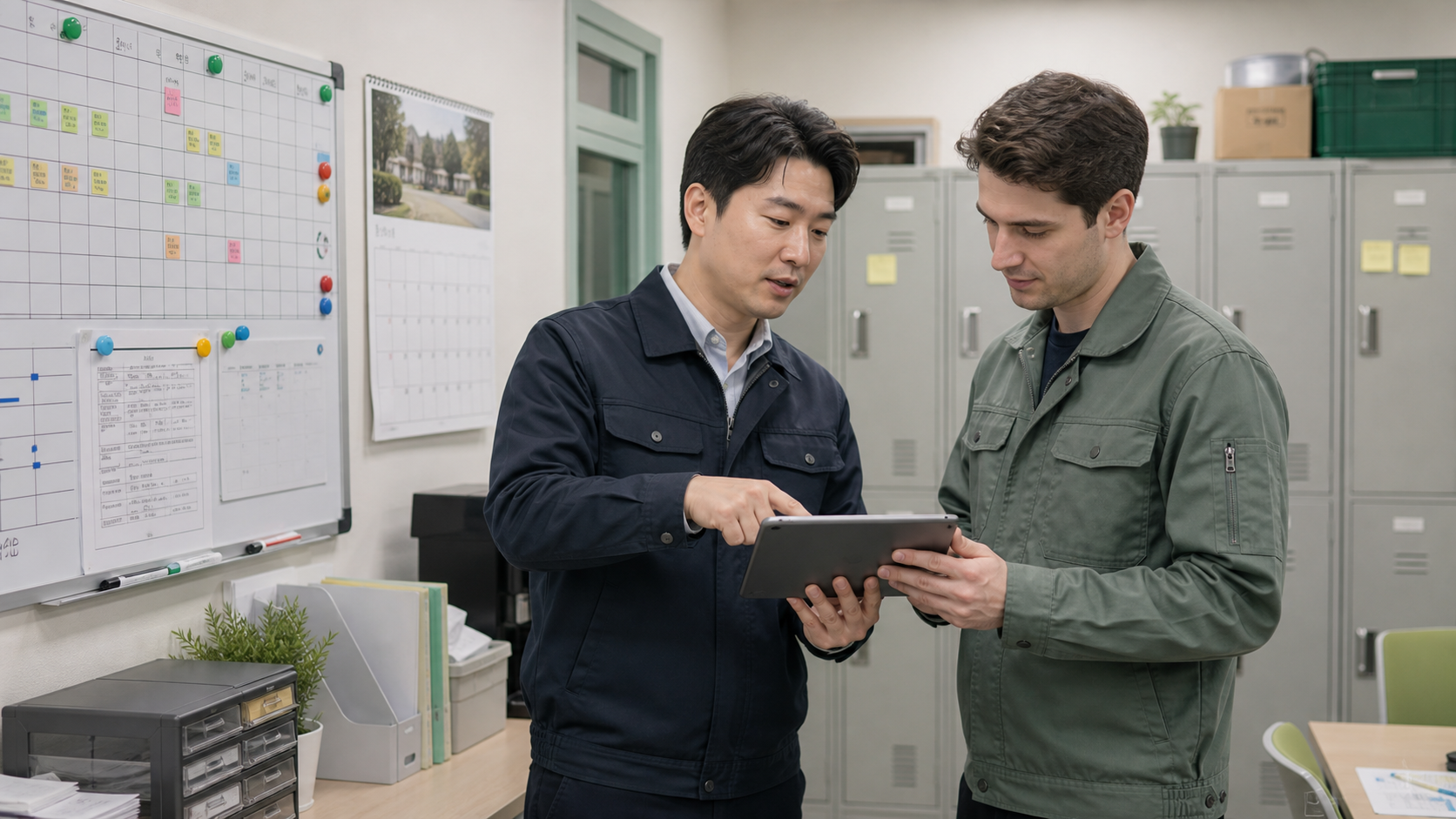
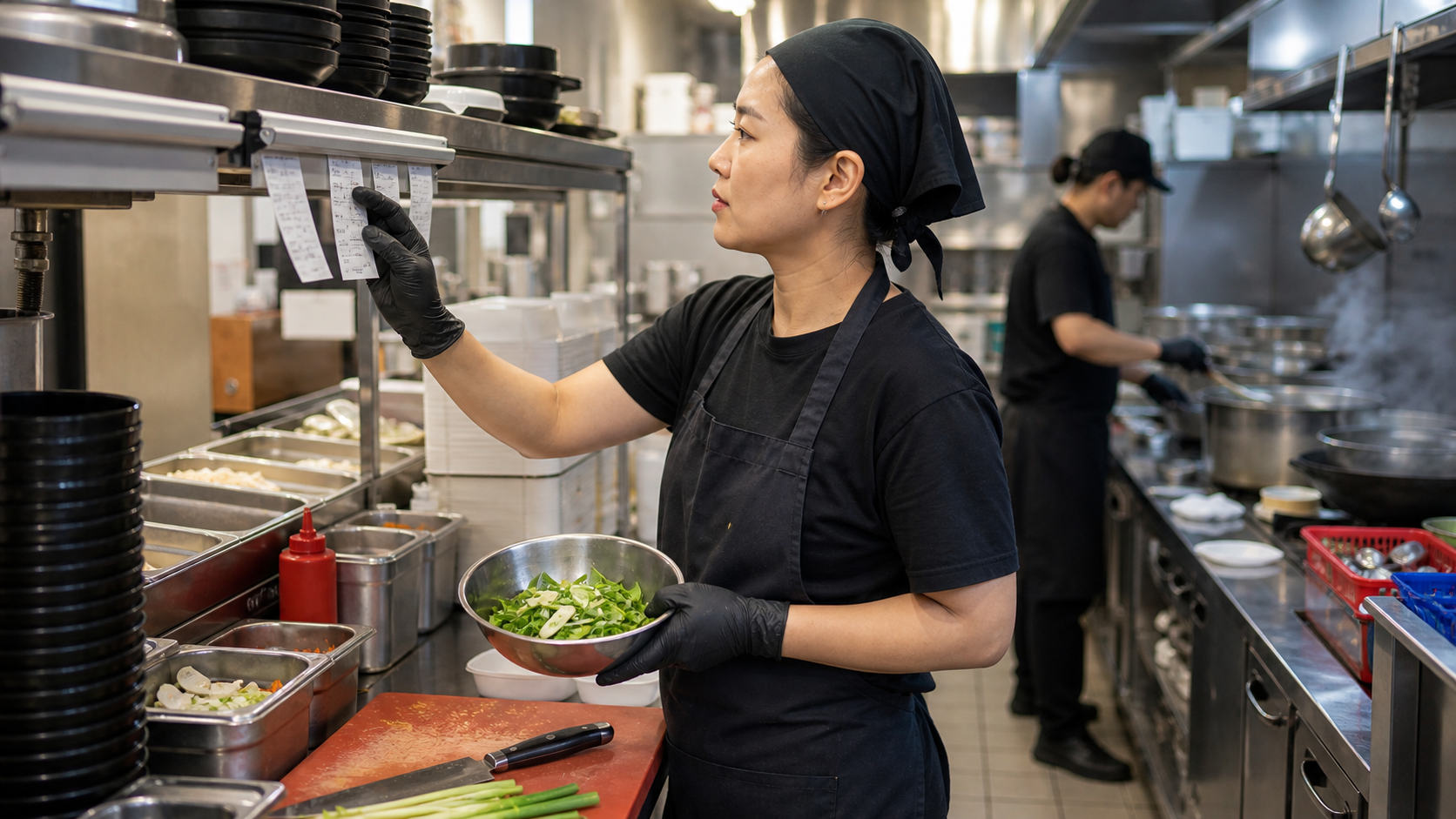
Worker: 재료 먼저 확인하겠습니다. I will check the ingredients first.
Manager: 포장도 같이 준비해 주세요. Please prepare the packaging too.
5. Quick review
For kitchen work, connect each word to an action: prepare, store, wash, disinfect, package, check, or report. This helps you understand short Korean workplace instructions faster.
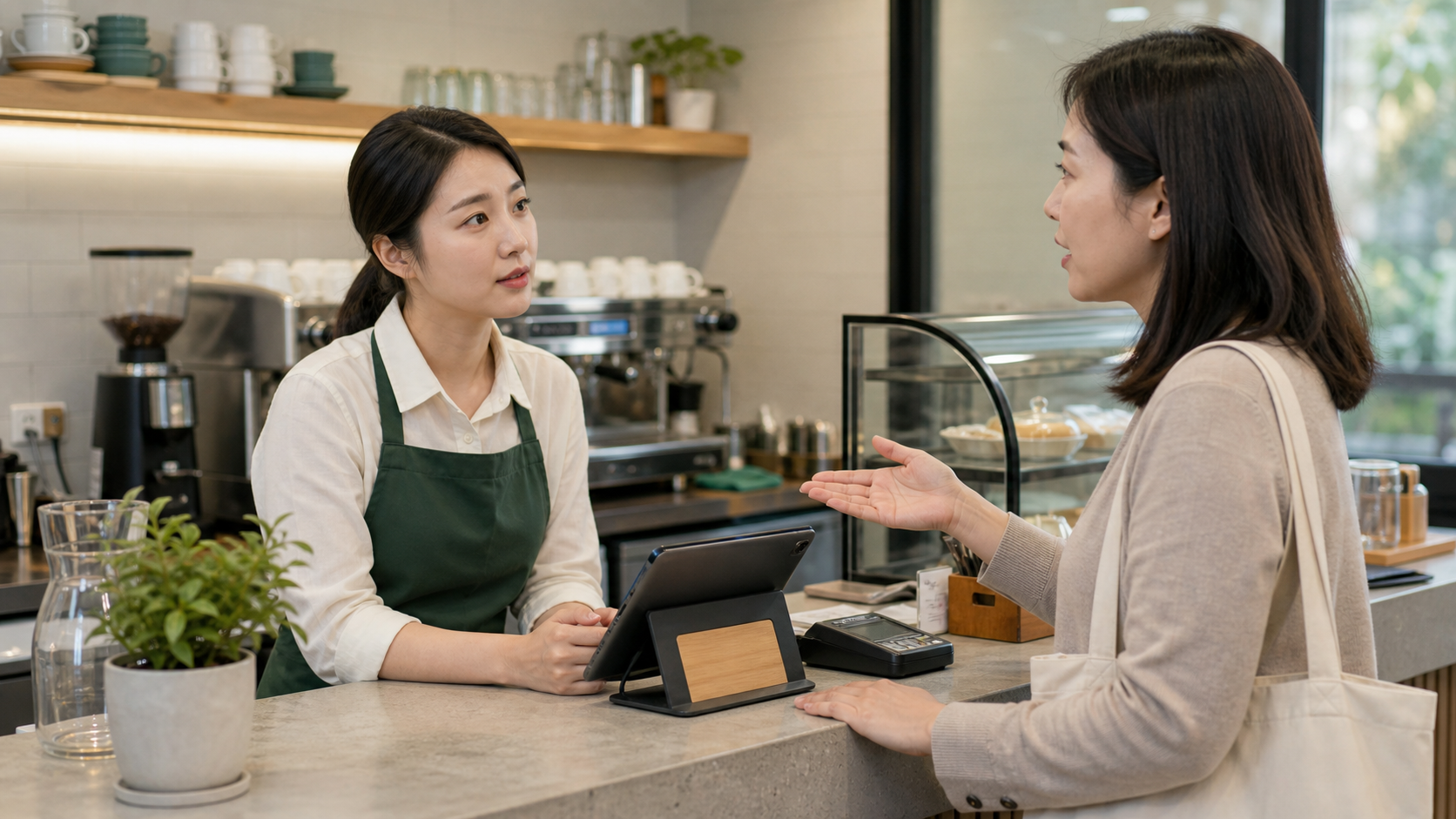
Manager: 이 상품 재고 있어요? Do we have stock for this product?
Worker: 네, 창고에 박스가 있습니다. Yes, there are boxes in storage.
Manager: 그러면 매대에 보충해 주세요. Then please restock the shelf.
5. Quick review
For store work, first notice whether the word is about display, stock, price, expiration date, or reporting. Then connect it to the action: check, restock, organize, or report.
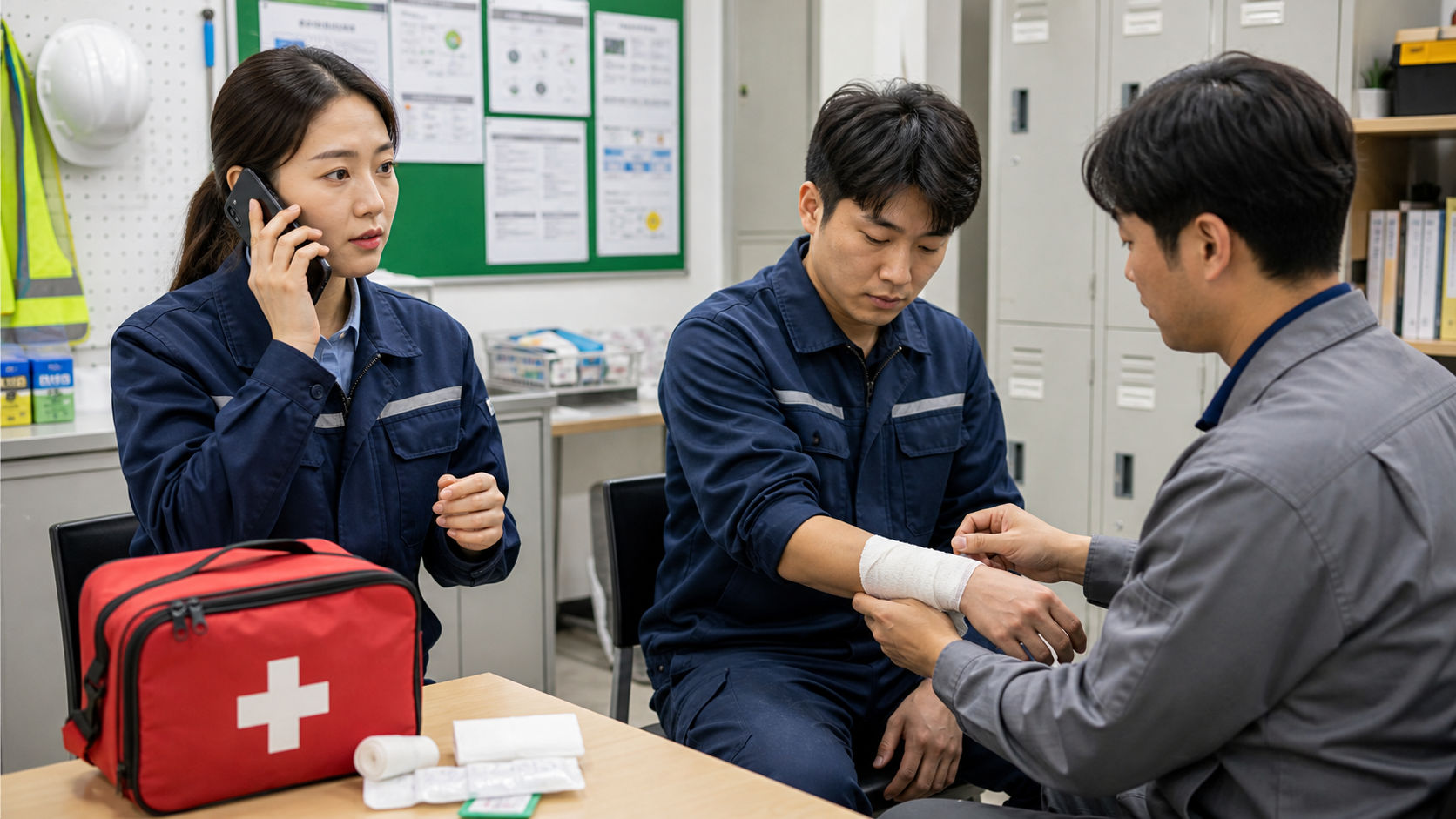
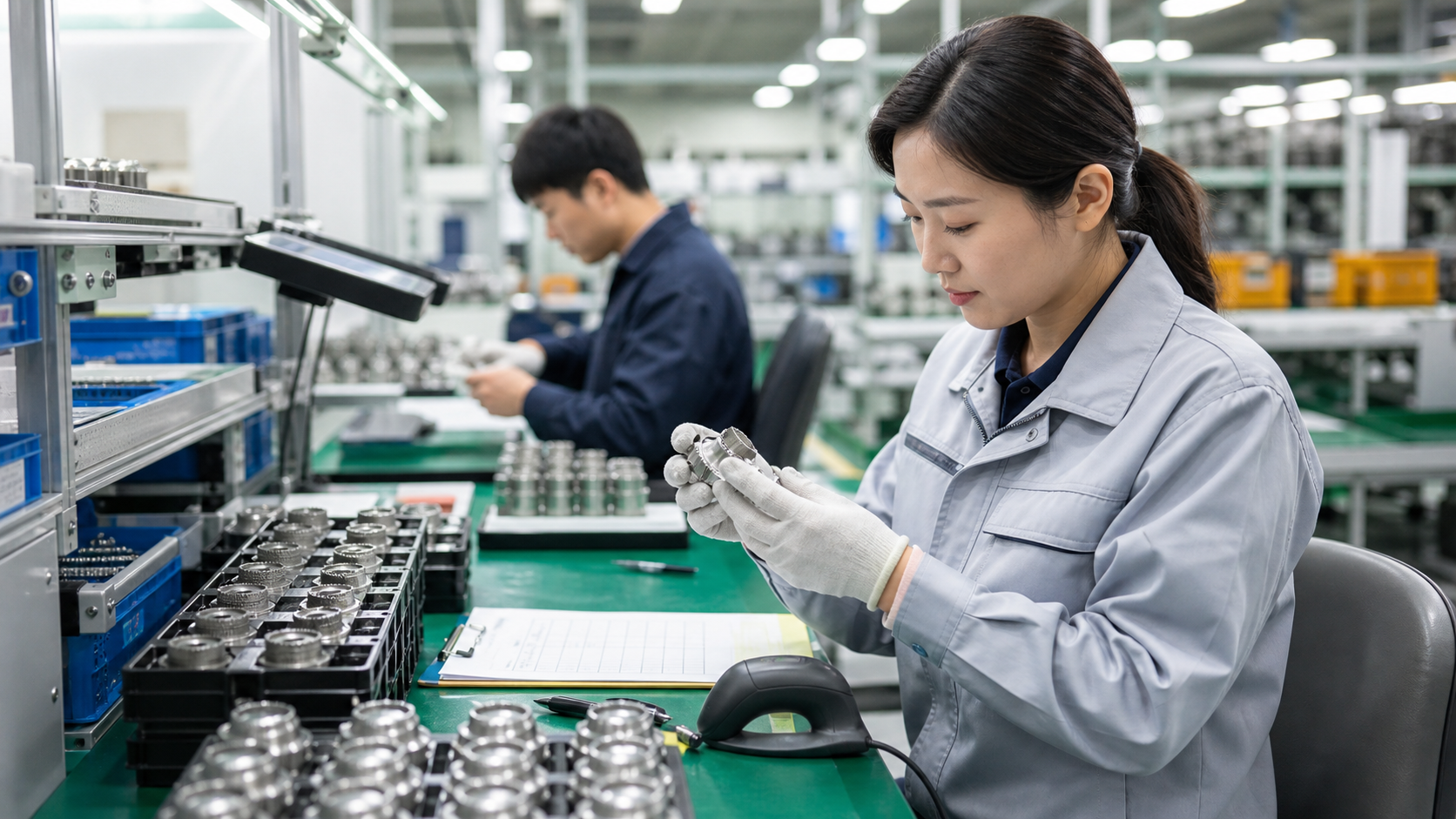
Supervisor: 이 제품 외관검사 했어요? Did you do the visual inspection for this product?
Worker: 네, 스크래치가 보입니다. Yes, I can see a scratch.
Supervisor: 그러면 불량품으로 분리해 주세요. Then please separate it as a defective product.
5. Quick review
First, find the inspection word such as 검사, 외관검사, or 치수검사. Then check the result word such as 합격, 불합격, 양품, or 불량품. Finally, take the work action: 분리, 격리, 보고, or 재검사.
The safest repair message follows this order: place, problem, request, photo, visit time, and cost. If you remember that order, you can handle many apartment, office, or shop repair situations even with simple Korean.
2. Key vocabulary
수리[suri] – การซ่อม
고장[gojang] – เสีย / มีปัญหา
물이 새요[muri saeyo] – น้ำรั่ว
전기가 안 들어와요[jeongiga an deureowayo] – ไฟไม่เข้า
기사님[gisanim] – ช่าง
관리사무소[gwallisamuso] – สำนักงานนิติ / ฝ่ายจัดการ
확인하다[hwaginhada] – ตรวจสอบ
방문하다[bangmunhada] – มาเยี่ยม / เข้ามาดู
비용[biyong] – ค่าใช้จ่าย
사진[sajin] – รูปภาพ
예약[yeyak] – นัดหมาย
싱크대[singkeudae] – อ่างล้างจาน
천장[cheonjang] – เพดาน
콘센트[konsenteu] – ปลั๊กไฟ
화장실[hwajangsil] – ห้องน้ำ
급하다[geuphada] – เร่งด่วน
가능하다[ganeunghada] – เป็นไปได้
연락하다[yeollakhada] – ติดต่อ
부탁드립니다[butakdeurimnida] – กรุณา / โปรด
오늘[oneul] – วันนี้
Scene 2: a photo makes the repair request faster and clearer.
ใช้ 고장이 났어요 สำหรับของเสียทั่วไป, 물이 새요 สำหรับน้ำรั่ว, และ 전기가 안 들어와요 สำหรับปัญหาไฟฟ้า
ขอให้ตรวจสอบ
확인해 주실 수 있나요? เป็นประโยคสุภาพและใช้ได้ดีเมื่อคุยกับนิติหรือช่าง
ถามเวลานัด
เมื่ออีกฝ่ายเข้าใจปัญหาแล้ว ให้ถาม 언제 방문 가능하세요? ถ้าเร่งด่วนให้เพิ่ม 조금 급해요
ปิดท้ายด้วยการกระทำต่อไป
ใช้ 사진을 보내드릴게요 หรือ 오늘 답장 가능하실까요? เพื่อให้การสนทนาดำเนินต่อ
For practice, write one short message using this frame: “안녕하세요. [place/item]이/가 [problem]. 확인해 주실 수 있나요? 사진을 보내드릴게요.” Replace only the bracketed parts and keep the polite ending.
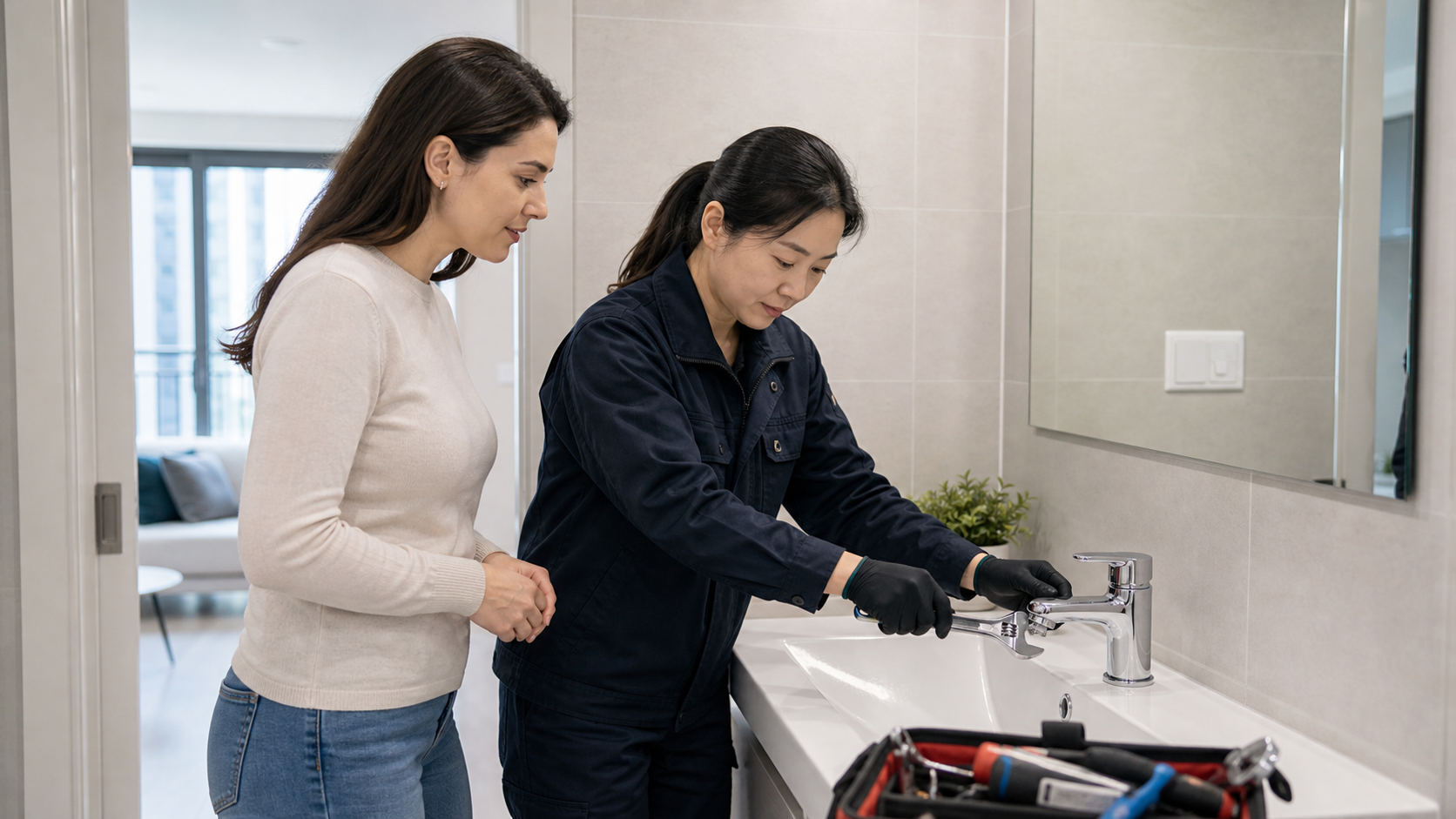
A: 오늘 아침부터요. 싱크대 아래에서 물이 새요. ตั้งแต่เช้านี้ค่ะ/ครับ มีน้ำรั่วใต้อ่าง
B: 먼저 사진을 보내 주세요. กรุณาส่งรูปก่อนค่ะ/ครับ
A: 지금 사진을 보내드릴게요. 기사님은 언제 방문 가능하세요? จะส่งรูปตอนนี้ค่ะ/ครับ ช่างมาได้เมื่อไหร่คะ/ครับ
B: 오늘 오후에 방문 가능합니다. ช่างมาได้บ่ายวันนี้ค่ะ/ครับ
A: 대략 비용도 알 수 있을까요? ช่วยบอกค่าใช้จ่ายคร่าว ๆ ได้ไหมคะ/ครับ
B: 기사님이 먼저 확인하고 비용을 안내해 드릴게요. ช่างจะตรวจสอบก่อนแล้วอธิบายค่าใช้จ่ายค่ะ/ครับ
Scene 3: confirm the visit time and cost after the problem is clear.
5. Common mistake
อย่าเริ่มด้วย 고쳐 주세요 เพียงอย่างเดียว ถึงจะเข้าใจได้ แต่ 수리 부탁드립니다 หรือ 확인해 주실 수 있나요 สุภาพและเป็นธรรมชาติมากกว่า
A natural repair request does not need to sound dramatic. Korean service conversations often value clear information and polite endings. If you are not sure, use 부탁드립니다, 주실 수 있나요, and 보내드릴게요. These endings keep the tone respectful while still asking directly for help.
6. Quick check
ในสถานการณ์ขอซ่อม “고장이 났어요” หมายถึงอะไร
ราคาแพง
มันเสีย
ฉันมาสาย
ฉันต้องการใบเสร็จ
Answer: B
7. Practice routine
First, read the vocabulary aloud once. Second, choose one problem such as 물이 새요 or 전기가 안 들어와요. Third, combine it with 확인해 주실 수 있나요? Fourth, add a practical next step such as 사진을 보내드릴게요. Finally, repeat the full message until it feels short and automatic.
This lesson belongs to the Work Korean package because repair requests are not only home situations. The same language appears in offices, small businesses, factories, dormitories, clinics, service counters, and shared work spaces. Learning the pattern now gives you a reusable survival phrase set.