
survival Korean phrases before Korea: Save this ten-situation, fifty-sentence deck on your phone before departure. It covers only the minimum Korean needed to get help during your first hours and first work contact.
survival Korean phrases before Korea: This is a compact pre-departure survival deck, not a full airport, phone, banking, workplace or medical guide. Later episodes teach those procedures in depth.
What you will have before departure
You will leave with fifty phrases you can point to, play aloud or say, plus two official HRD Korea textbooks and an official emergency guide you can open from your phone.
Preview official material, download the originals, and open the sources
HRD Korea publishes the 2024 EPS-TOPIK New Standard Textbook in separate preliminary and basic-life files. The source library states Korea Open Government License Type 3 (attribution and no modification), so BSKorean shows unaltered page previews and sends downloads to the official host. The KTO emergency PDF is linked directly and is not mirrored.
- Preview
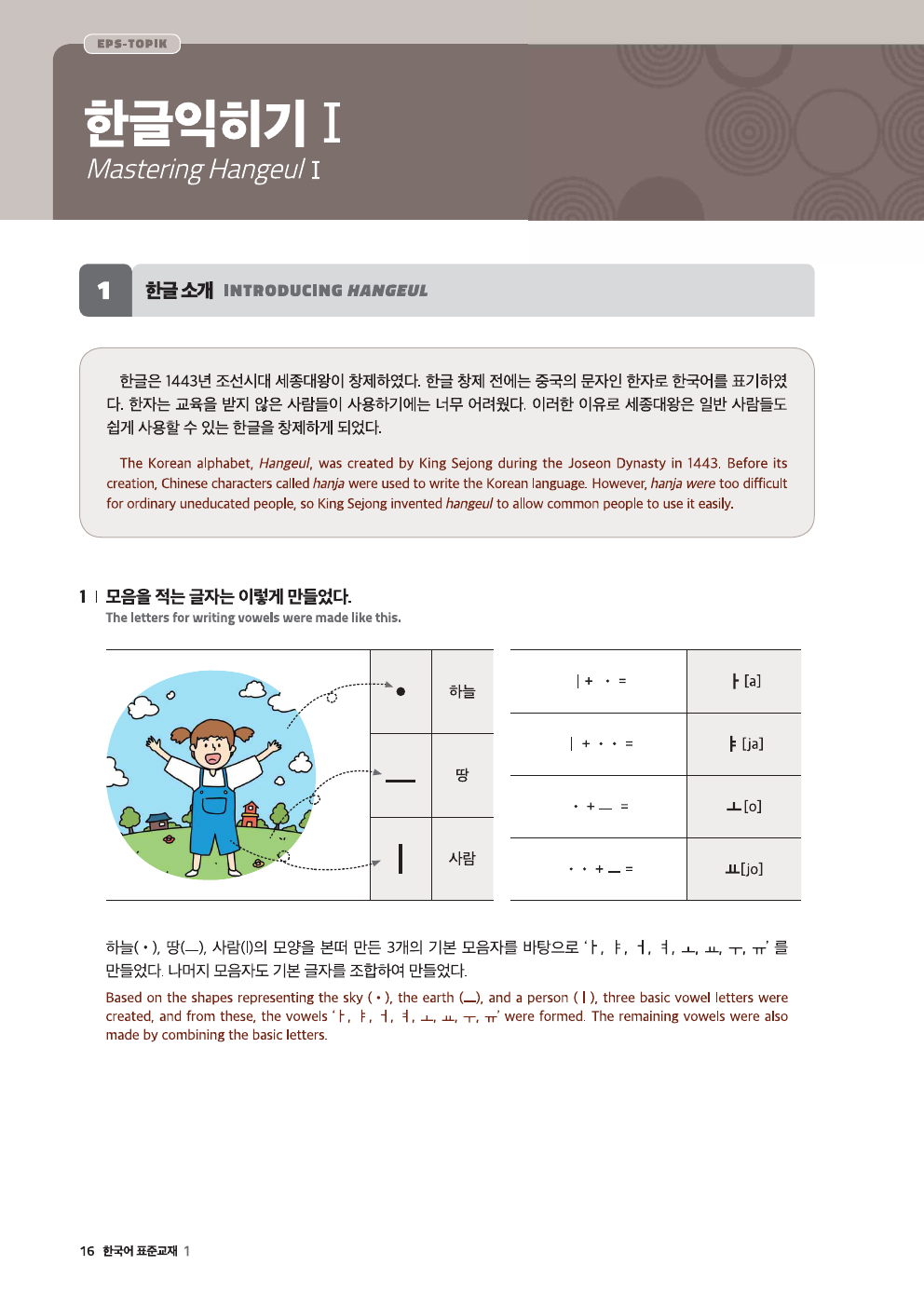
EPS-TOPIK preliminary: Mastering Hangeul · Preview 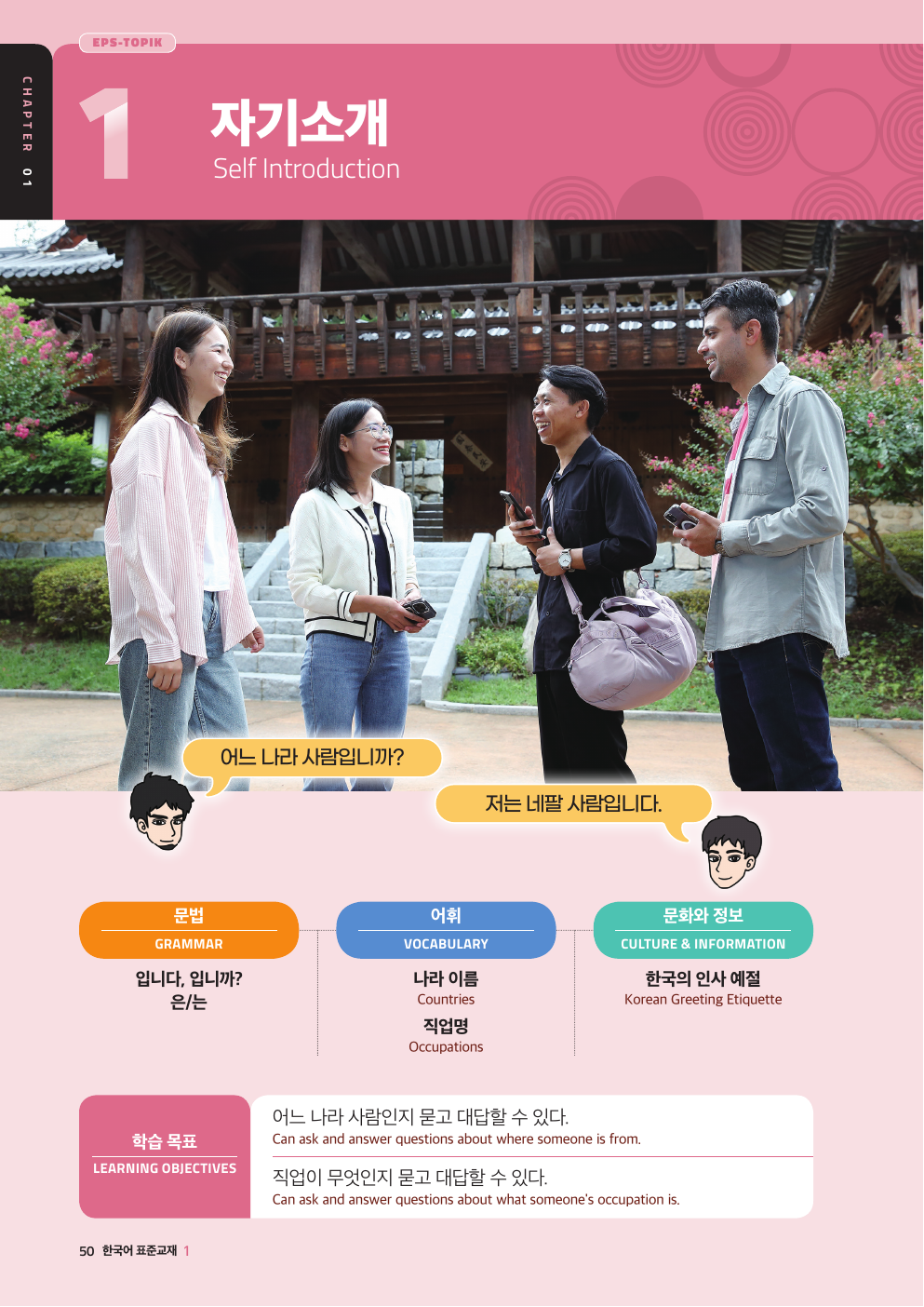
EPS-TOPIK basic life: Self Introduction · Preview - Official original download
EPS-TOPIK preliminary: Mastering Hangeul PDF · 34 pages · 3,004,626 bytes
EPS-TOPIK basic life: Self Introduction PDF · 80 pages · 139,873,519 bytes
KTO emergency guide PDF · 1 pages · 499,849 bytes - Official source page
EPS-TOPIK official textbook library · HRD Korea textbook information · VISITKOREA emergency situations · Immigration Contact Center 1345
Fetched and checked again on 25 August 2026: PDF signature, byte length, page count and SHA-256. Public previews are unaltered HRD Korea pages; original PDFs remain on official servers.
Your 10-situation survival map
- 1. First respectful words
- 2. When you cannot understand
- 3. Introduce yourself and ask for help
- 4. Find an address or place
- 5. Use transport
- 6. Buy and pay
- 7. Order food safely
- 8. Enter your accommodation
- 9. First work and immediate safety
- 10. Emergency help
50 survival Korean phrases
Read the learner-friendly pronunciation first and use RR only as a reference. Confirm difficult sounds with Korean audio or a speaker.
1. First respectful words
Use these before making a request.
| # | Korean | How to say it | Natural meaning |
|---|---|---|---|
| 1 | 안녕하세요. | ahn-nyuhng-hah-seh-yoh. RR: Annyeonghaseyo. |
Hello. |
| 2 | 감사합니다. | gahm-sah-hahm-nee-dah. RR: Gamsahamnida. |
Thank you. |
| 3 | 죄송합니다. | jweh-sohng-hahm-nee-dah. RR: Joesonghamnida. |
I am sorry. |
| 4 | 실례합니다. | seel-ryeh-hahm-nee-dah. RR: Silryehamnida. |
Excuse me. |
| 5 | 괜찮습니다. | gwehn-chahn-seum-nee-dah. RR: Gwaenchanseumnida. |
It is okay. |
2. When you cannot understand
Say this immediately instead of pretending to understand.
| # | Korean | How to say it | Natural meaning |
|---|---|---|---|
| 6 | 한국어를 잘 못해요. | hahn-goo-guh-reul jahl moh-teh-yoh. RR: Hangugeoreul jal motaeyo. |
I do not speak Korean well. |
| 7 | 천천히 말씀해 주세요. | chuhn-chuhn-hee mahl-sseum-heh joo-seh-yoh. RR: Cheoncheonhi malsseumhae juseyo. |
Please speak slowly. |
| 8 | 다시 말씀해 주세요. | dah-see mahl-sseum-heh joo-seh-yoh. RR: Dasi malsseumhae juseyo. |
Please say that again. |
| 9 | 쉽게 설명해 주세요. | sweep-kkeh suhl-myuhng-heh joo-seh-yoh. RR: Swipkke seolmyeonghae juseyo. |
Please explain it simply. |
| 10 | 여기에 적어 주세요. | yuh-gee-eh juh-guh joo-seh-yoh. RR: Yeogie jeogeo juseyo. |
Please write it here. |
3. Introduce yourself and ask for help
Replace the words in brackets with your information.
| # | Korean | How to say it | Natural meaning |
|---|---|---|---|
| 11 | 저는 [나라]에서 왔어요. | juh-neun [nah-rah]eh-suh wah-ssuh-yoh. RR: Jeoneun [nara]eseo wasseoyo. |
I am from [country]. |
| 12 | 제 이름은 [이름]입니다. | jeh ee-reu-meun [ee-reum]eem-nee-dah. RR: Je ireumeun [ireum]imnida. |
My name is [name]. |
| 13 | 통역이 필요해요. | tohng-yuh-gee pee-ryoh-heh-yoh. RR: Tongyeogi piryohaeyo. |
I need an interpreter. |
| 14 | 영어로 말할 수 있나요? | yuhng-uh-roh mahl-hahl soo een-nah-yoh? RR: Yeongeoro malhal su innayo? |
Can you speak English? |
| 15 | 도와주세요. | doh-wah-joo-seh-yoh. RR: Dowajuseyo. |
Please help me. |
4. Find an address or place
Show the written Korean address at the same time.
| # | Korean | How to say it | Natural meaning |
|---|---|---|---|
| 16 | 여기가 어디예요? | yuh-gee-gah uh-dee-yeh-yoh? RR: Yeogiga eodiyeyo? |
Where am I? |
| 17 | 이 주소로 가 주세요. | ee joo-soh-roh gah joo-seh-yoh. RR: I jusoro ga juseyo. |
Please take me to this address. |
| 18 | 이곳이 맞나요? | ee-goh-see mahn-nah-yoh? RR: Igosi mannayo? |
Is this the right place? |
| 19 | 어디로 가야 해요? | uh-dee-roh gah-yah heh-yoh? RR: Eodiro gaya haeyo? |
Where should I go? |
| 20 | 지도에서 보여 주세요. | jee-doh-eh-suh boh-yuh joo-seh-yoh. RR: Jidoeseo boyeo juseyo. |
Please show me on the map. |
5. Use transport
Replace [place] with the station or destination on your ticket.
| # | Korean | How to say it | Natural meaning |
|---|---|---|---|
| 21 | 이 버스가 [장소]에 가나요? | ee buh-seu-gah [jahng-soh]eh gah-nah-yoh? RR: I beoseuga [jangso]e ganayo? |
Does this bus go to [place]? |
| 22 | [장소]역은 어디예요? | [jahng-soh]yuh-geun uh-dee-yeh-yoh? RR: [jangso]yeogeun eodiyeyo? |
Where is [place] Station? |
| 23 | 표 한 장 주세요. | pyoh hahn jahng joo-seh-yoh. RR: Pyo han jang juseyo. |
One ticket, please. |
| 24 | 어디에서 갈아타요? | uh-dee-eh-suh gah-rah-tah-yoh? RR: Eodieseo garatayo? |
Where do I transfer? |
| 25 | 여기에서 내려 주세요. | yuh-gee-eh-suh neh-ryuh joo-seh-yoh. RR: Yeogieseo naeryeo juseyo. |
Please let me off here. |
6. Buy and pay
Confirm price and payment method before paying.
| # | Korean | How to say it | Natural meaning |
|---|---|---|---|
| 26 | 이거 얼마예요? | ee-guh uhl-mah-yeh-yoh? RR: Igeo eolmayeyo? |
How much is this? |
| 27 | 카드로 계산할게요. | kah-deu-roh gyeh-sahn-hahl-geh-yoh. RR: Kadeuro gyesanhalgeyo. |
I will pay by card. |
| 28 | 현금만 되나요? | hyuhn-geum-mahn dweh-nah-yoh? RR: Hyeongeumman doenayo? |
Is it cash only? |
| 29 | 영수증 주세요. | yuhng-soo-jeung joo-seh-yoh. RR: Yeongsujeung juseyo. |
Please give me a receipt. |
| 30 | 봉투 주세요. | bohng-too joo-seh-yoh. RR: Bongtu juseyo. |
A bag, please. |
7. Order food safely
For a severe allergy, show a translated allergy card as well.
| # | Korean | How to say it | Natural meaning |
|---|---|---|---|
| 31 | 물 주세요. | mool joo-seh-yoh. RR: Mul juseyo. |
Water, please. |
| 32 | 이거 하나 주세요. | ee-guh hah-nah joo-seh-yoh. RR: Igeo hana juseyo. |
One of these, please. |
| 33 | 안 매운 음식이 있나요? | ahn meh-oon eum-see-gee een-nah-yoh? RR: An maeun eumsigi innayo? |
Do you have non-spicy food? |
| 34 | 돼지고기가 들어 있나요? | dweh-jee-goh-gee-gah deu-ruh een-nah-yoh? RR: Dwaejigogiga deureo innayo? |
Does this contain pork? |
| 35 | 저는 [음식] 알레르기가 있어요. | juh-neun [eum-seek] ahl-reh-reu-gee-gah ee-ssuh-yoh. RR: Jeoneun [eumsik] alrereugiga isseoyo. |
I am allergic to [food]. |
8. Enter your accommodation
Keep your booking name and address offline.
| # | Korean | How to say it | Natural meaning |
|---|---|---|---|
| 36 | 예약했습니다. | yeh-yah-keht-sseum-nee-dah. RR: Yeyakaetsseumnida. |
I have a reservation. |
| 37 | 제 방은 어디예요? | jeh bahng-eun uh-dee-yeh-yoh? RR: Je bangeun eodiyeyo? |
Where is my room? |
| 38 | 문이 열리지 않아요. | moo-nee yuhl-ree-jee ahn-hah-yoh. RR: Muni yeolriji anhayo. |
The door will not open. |
| 39 | 와이파이 비밀번호가 뭐예요? | wah-ee-pah-ee bee-meel-buhn-hoh-gah mwuh-yeh-yoh? RR: Waipai bimilbeonhoga mwoyeyo? |
What is the Wi-Fi password? |
| 40 | 관리자에게 연락해 주세요. | gwahn-ree-jah-eh-geh yuhn-rah-keh joo-seh-yoh. RR: Gwanrijaege yeonrakae juseyo. |
Please contact the manager. |
9. First work and immediate safety
These are only first-contact phrases; Episodes 11-15 cover work Korean.
| # | Korean | How to say it | Natural meaning |
|---|---|---|---|
| 41 | 오늘 어디에서 일해요? | oh-neul uh-dee-eh-suh eel-heh-yoh? RR: Oneul eodieseo ilhaeyo? |
Where do I work today? |
| 42 | 무엇부터 하면 돼요? | moo-uht-ppoo-tuh hah-myuhn dweh-yoh? RR: Mueotpputeo hamyeon dwaeyo? |
What should I do first? |
| 43 | 잘 모르겠습니다. | jahl moh-reu-geht-sseum-nee-dah. RR: Jal moreugetsseumnida. |
I do not understand. |
| 44 | 한 번 보여 주세요. | hahn buhn boh-yuh joo-seh-yoh. RR: Han beon boyeo juseyo. |
Please show me once. |
| 45 | 위험합니다. 잠깐 멈춰 주세요. | wee-huhm-hahm-nee-dah. jahm-kkahn muhm-chwuh joo-seh-yoh. RR: Wiheomhamnida. jamkkan meomchwo juseyo. |
This is dangerous. Please stop for a moment. |
10. Emergency help
For immediate danger, move to safety first and call the official number.
| # | Korean | How to say it | Natural meaning |
|---|---|---|---|
| 46 | 경찰을 불러 주세요. | gyuhng-chah-reul bool-ruh joo-seh-yoh. RR: Gyeongchareul bulreo juseyo. |
Please call the police. |
| 47 | 119에 전화해 주세요. | 119eh juhn-hwah-heh joo-seh-yoh. RR: 119e jeonhwahae juseyo. |
Please call 119. |
| 48 | 아파요. | ah-pah-yoh. RR: Apayo. |
I am sick / in pain. |
| 49 | 길을 잃었어요. | gee-reul eel-huh-ssuh-yoh. RR: Gireul ilheosseoyo. |
I am lost. |
| 50 | 가족에게 연락해 주세요. | gah-joh-geh-geh yuhn-rah-keh joo-seh-yoh. RR: Gajogege yeonrakae juseyo. |
Please contact my family. |
20 words to recognize immediately
| # | Korean | Pronunciation | Meaning |
|---|---|---|---|
| 1 | 주소 | joo-soh RR: Juso |
address |
| 2 | 지도 | jee-doh RR: Jido |
map |
| 3 | 버스 | buh-seu RR: Beoseu |
bus |
| 4 | 지하철 | jee-hah-chuhl RR: Jihacheol |
subway |
| 5 | 표 | pyoh RR: Pyo |
ticket |
| 6 | 환승 | hwahn-seung RR: Hwanseung |
transfer |
| 7 | 카드 | kah-deu RR: Kadeu |
card |
| 8 | 현금 | hyuhn-geum RR: Hyeongeum |
cash |
| 9 | 영수증 | yuhng-soo-jeung RR: Yeongsujeung |
receipt |
| 10 | 음식 | eum-seek RR: Eumsik |
food |
| 11 | 물 | mool RR: Mul |
water |
| 12 | 알레르기 | ahl-reh-reu-gee RR: Alrereugi |
allergy |
| 13 | 예약 | yeh-yahk RR: Yeyak |
reservation |
| 14 | 방 | bahng RR: Bang |
room |
| 15 | 와이파이 | wah-ee-pah-ee RR: Waipai |
Wi-Fi |
| 16 | 출구 | chool-goo RR: Chulgu |
exit |
| 17 | 경찰 | gyuhng-chahl RR: Gyeongchal |
police |
| 18 | 구급차 | goo-geup-chah RR: Gugeupcha |
ambulance |
| 19 | 병원 | byuhng-wuhn RR: Byeongwon |
hospital |
| 20 | 통역 | tohng-yuhk RR: Tongyeok |
interpretation |
Replies you may hear
- 어서 오세요. — Welcome.
- 다시 말씀드릴게요. — I will say it again.
- 성함이 어떻게 되세요? — What is your name?
- 오른쪽으로 가세요. — Go to the right.
- 다음 정류장에서 내리세요. — Get off at the next stop.
- 카드 가능합니다. — Cards are accepted.
- 돼지고기는 안 들어갑니다. — It does not contain pork.
- 예약자 이름을 말씀해 주세요. — Please tell me the name on the booking.
- 이것부터 하세요. — Do this first.
- 지금 119에 전화할게요. — I will call 119 now.
Two short dialogues to practise
1
학습자: 실례합니다. 이 주소로 가 주세요.
기사: 네. 이곳이 맞습니까?
학습자: 한국어를 잘 못해요. 천천히 말씀해 주세요.
기사: 네. 지도에서 다시 확인해 드릴게요.
학습자: 감사합니다.
A learner shows the written destination, says that Korean is difficult, and asks for slow confirmation on the map.
2
관리자: 이것부터 하고 다음에 저쪽으로 가세요.
근로자: 죄송합니다. 잘 모르겠습니다.
근로자: 천천히 다시 말씀해 주세요. 한 번 보여 주세요.
관리자: 네, 제가 먼저 보여 드릴게요.
근로자: 위험합니다. 잠깐 멈춰 주세요.
A worker does not pretend to understand an instruction: they ask for a slow demonstration and stop the task when it appears dangerous.
Before-departure offline checklist
- I replaced every bracket with my country, name, destination and allergy.
- I saved the fifty phrases offline.
- I saved my Korean destination and accommodation address.
- I marked 112 for police and 119 for fire or medical emergencies.
- I opened the official emergency guide at least once.
- I downloaded the HRD Korea preliminary and basic-life textbooks over Wi-Fi.
- I practised phrases 6-10 until I can ask for repetition without reading.
- I showed a friend how to find my emergency contact.
- I did not save passport or residence-card numbers in this phrase card.
- I know that later episodes explain arrival, phone, banking, work and hospital procedures.
Continue with the right detailed guide
- Use Episode 1 for the safe work-preparation route.
- Use the existing airport-to-accommodation guide for the full arrival route.
- Use Episodes 6-10 for arrival-day, residence, phone, banking and housing deductions.
- Use Episodes 11-15 for workplace Korean and instructions.
- Use Episodes 23 and 29 for medical and institutional-help procedures.
In immediate danger, move to a safe place and use official emergency services. In Korea, 112 is police and 119 is fire or medical emergency; 1330 provides travel help. A phrase card does not replace an interpreter, emergency operator, doctor or official advice.
Prepared by BSKorean Content Studio for foreign workers and new residents. Korean expressions, official links and file integrity were reviewed on 25 August 2026. Pronunciation is an approximation for learners, not an audio guarantee.
Official sources checked
- EPS-TOPIK official textbook library
- HRD Korea: EPS-TOPIK textbook structure and downloads
- VISITKOREA: Emergency Situations
- Korea Immigration Service: Immigration Contact Center 1345
Five-minute practice
Cover the meaning column, say one sentence from each situation, then practise phrases 6-10 and 45-50 once more.