Taking a taxi in Korea is usually simple, but it can feel fast if you are still learning Korean. You may need to say where you are going, ask about payment, or tell the driver where to stop. This lesson gives you practical Korean taxi words and short phrases you can use from the curb to the moment you get out.
Use these phrases as a calm script. You do not need long sentences. A clear place name plus 주세요 is often enough.
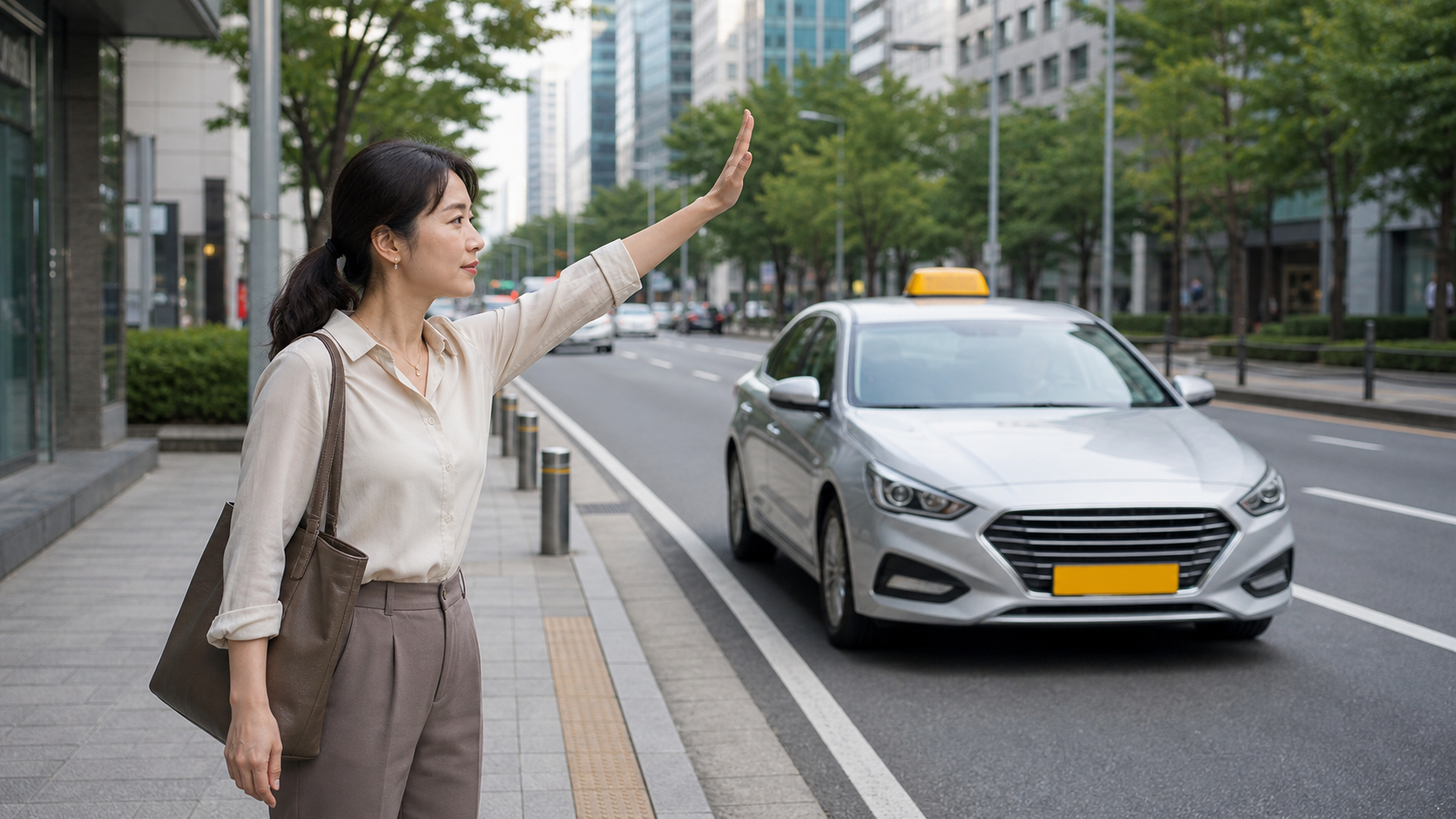
1. Starting the Ride
If the taxi is stopping at a safe curb, you can confirm that it is okay to get in.
택시를 타요.
taeksi-reul tayo
I take a taxi.
여기서 타면 돼요?
yeogiseo tamyeon dwaeyo?
Can I get in here?
Key words:
| Korean | Romanization | Meaning |
|---|---|---|
| 택시 | taeksi | taxi |
| 타다 | tada | to ride, to get in |
2. Confirming the Destination
Say your destination before the taxi starts moving. If the place name is difficult, say the area first, then the exact building or address.
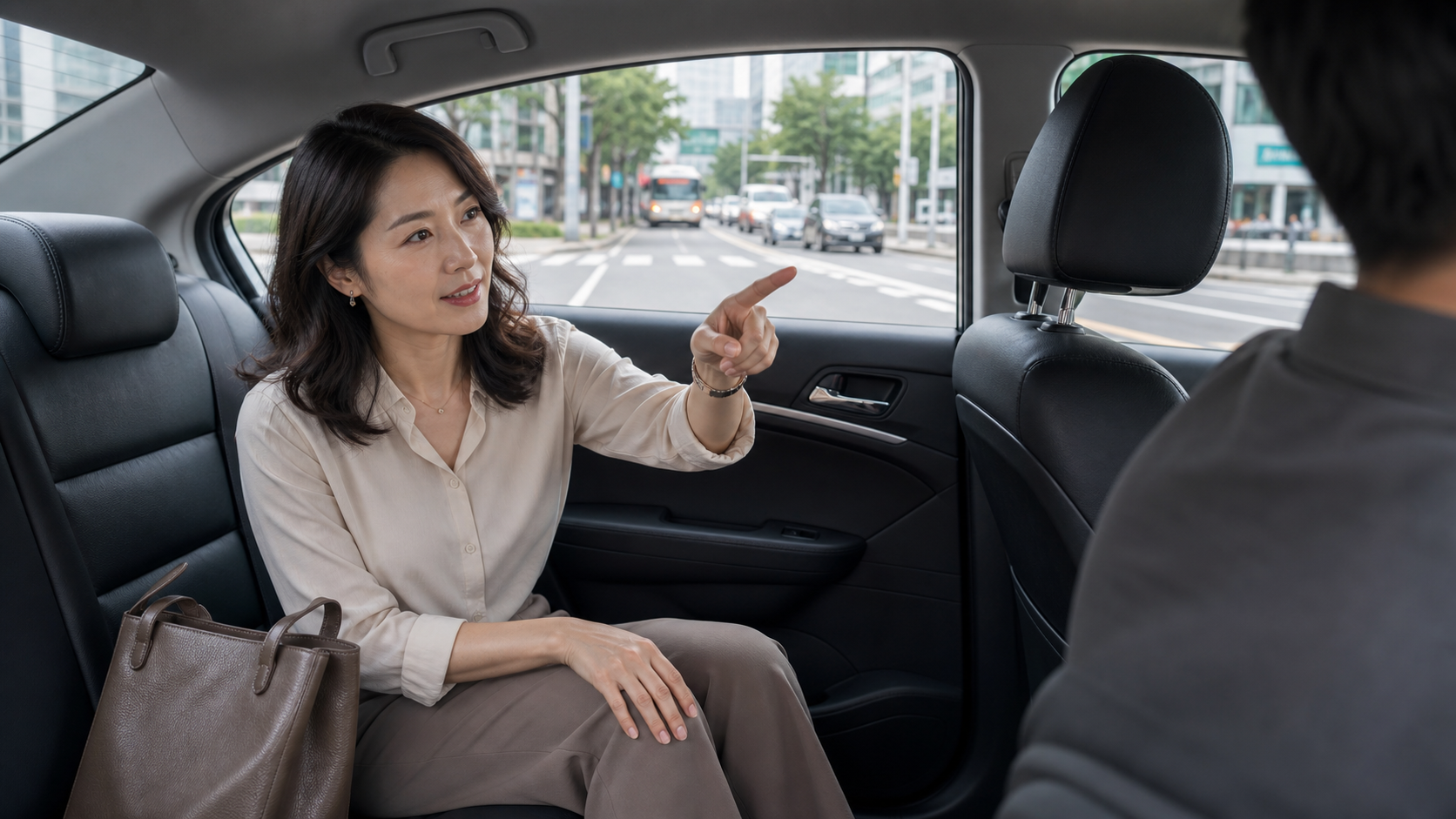
OO까지 가 주세요.
OO-kkaji ga juseyo
Please go to OO.
주소는 여기예요.
juso-neun yeogiyeyo
The address is here.
Key words:
| Korean | Romanization | Meaning |
|---|---|---|
| 목적지 | mokjeokji | destination |
| 주소 | juso | address |
| 까지 | kkaji | to, as far as |
| 가 주세요 | ga juseyo | please go |
3. Fare and Payment
When you are not sure what to say at the end of the ride, keep the payment phrase short.
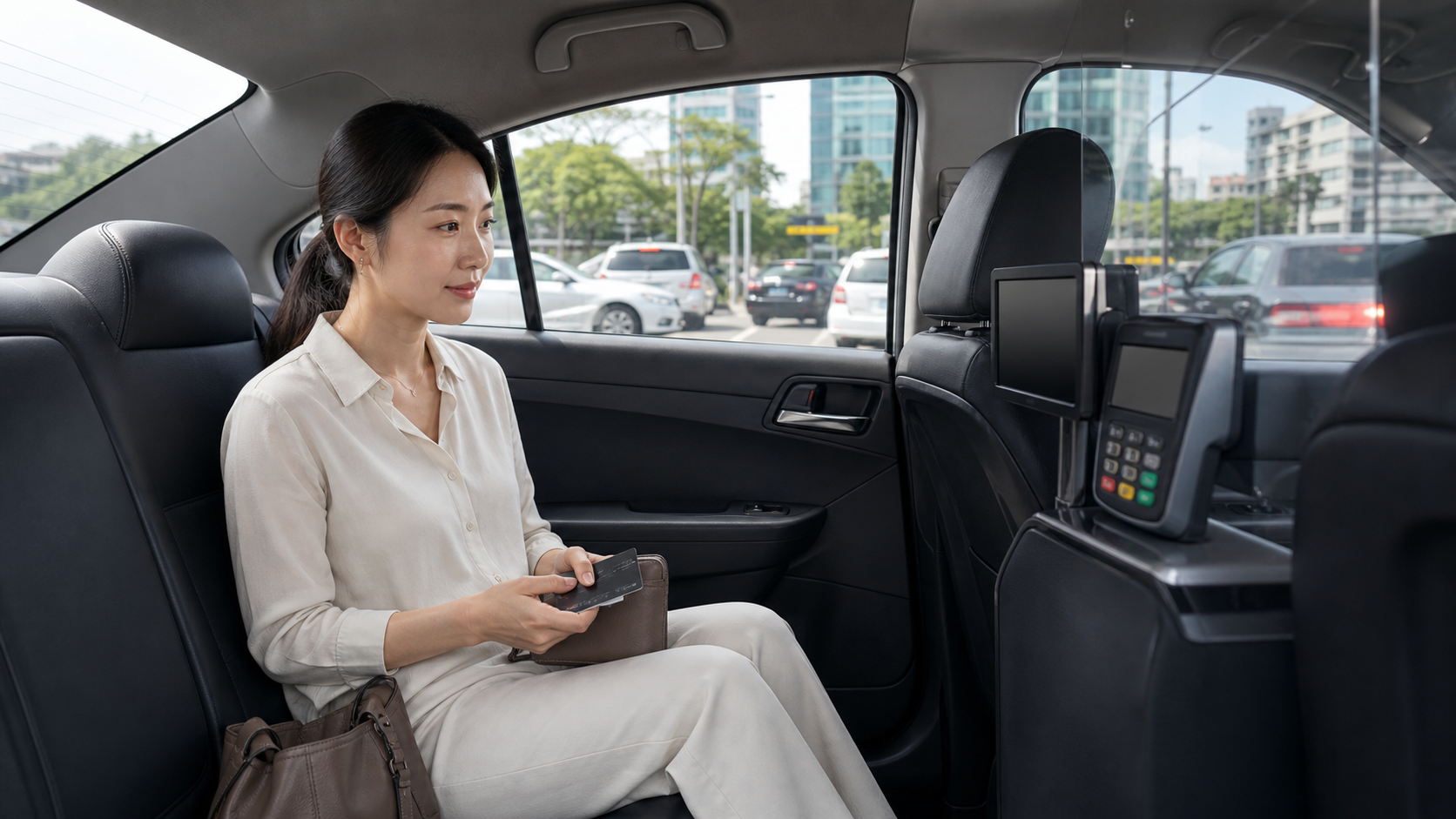
요금이 얼마예요?
yogeum-i eolmayeyo?
How much is the fare?
카드로 결제할게요.
kadeu-ro gyeolje-halgeyo
I will pay by card.
Key words:
| Korean | Romanization | Meaning |
|---|---|---|
| 요금 | yogeum | fare, fee |
| 미터기 | miteogi | taxi meter |
| 카드 | kadeu | card |
| 결제 | gyeolje | payment |
4. Asking the Taxi to Stop Nearby
It is better to ask for a nearby safe stop than to demand an exact stop in traffic. Use 근처 when the exact curb is not possible.
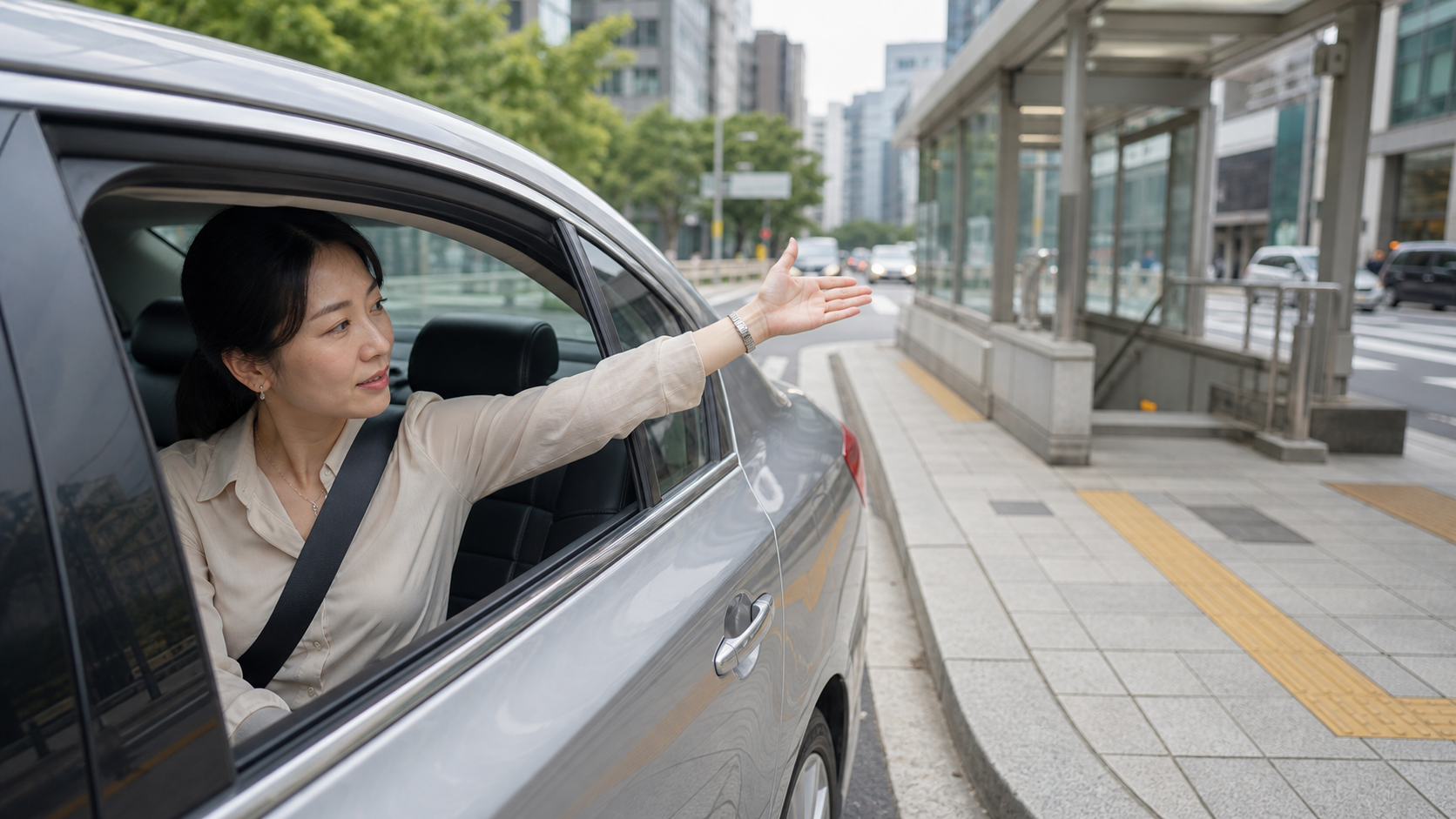
여기 근처에 세워 주세요.
yeogi geuncheo-e sewo juseyo
Please stop near here.
저기 앞에서 내려 주세요.
jeogi apeseo naeryeo juseyo
Please let me get out up there.
Key words:
| Korean | Romanization | Meaning |
|---|---|---|
| 근처 | geuncheo | nearby |
| 세워 주세요 | sewo juseyo | please stop |
| 내리다 | naerida | to get out |
5. Receipt and Belongings
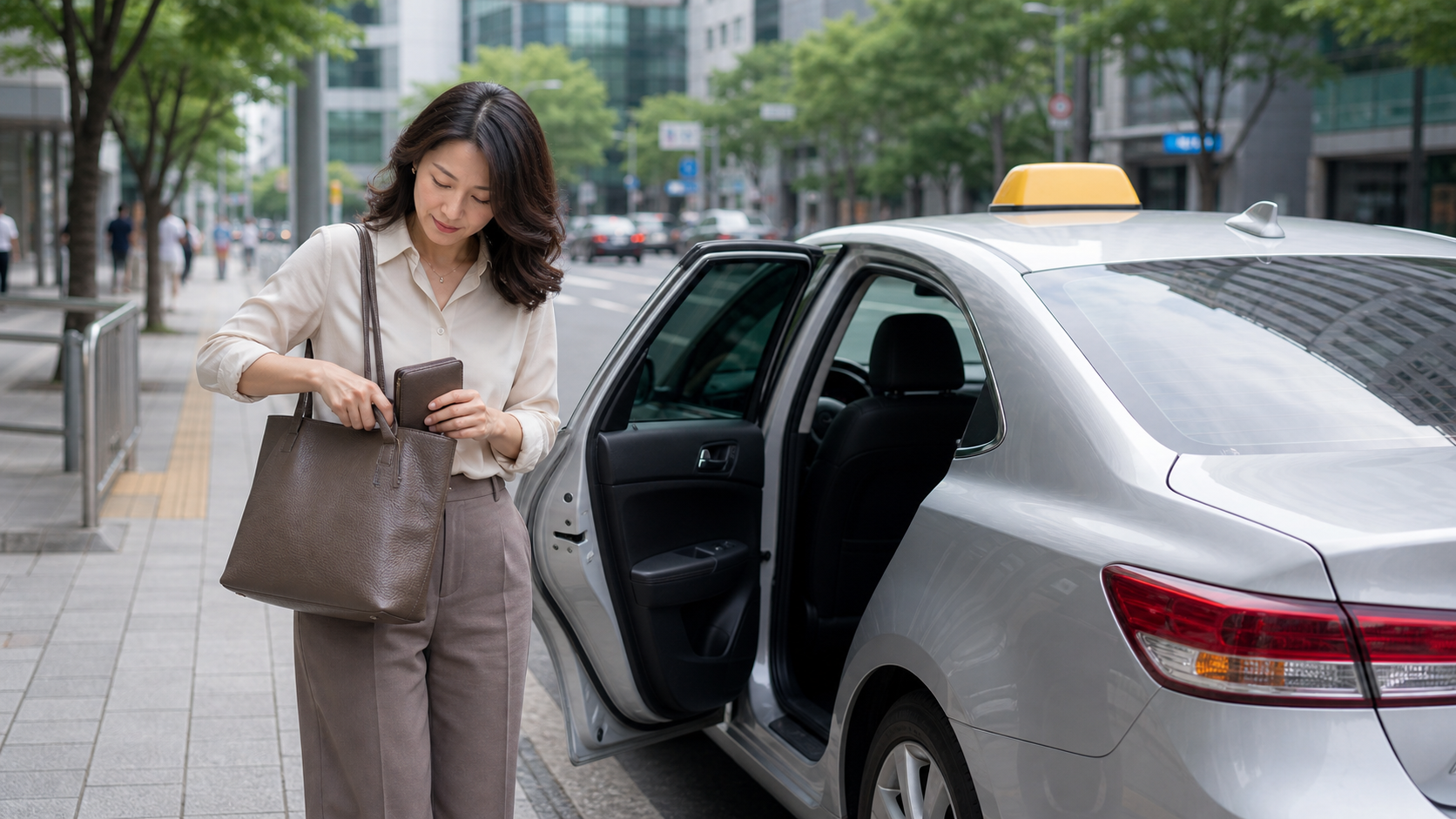
Before you leave, check your bag and wallet. If you need a receipt, ask before closing the door.
영수증 주세요.
yeongsujeung juseyo
Please give me a receipt.
물건을 놓고 내렸어요.
mulgeon-eul noko naeryeosseoyo
I left something behind.
Key words:
| Korean | Romanization | Meaning |
|---|---|---|
| 영수증 | yeongsujeung | receipt |
| 물건 | mulgeon | item, belongings |
Quick Review
| Situation | Korean phrase | Meaning |
|---|---|---|
| Getting in | 여기서 타면 돼요? | Can I get in here? |
| Destination | OO까지 가 주세요. | Please go to OO. |
| Address | 주소는 여기예요. | The address is here. |
| Payment | 카드로 결제할게요. | I will pay by card. |
| Stop nearby | 여기 근처에 세워 주세요. | Please stop near here. |
| Receipt | 영수증 주세요. | Please give me a receipt. |
For more practical daily-life lessons, see the BSKorean learning app page and the practice page. If you are studying transportation Korean, you may also find the bus stop and parking lot lessons useful.
Leave a Reply