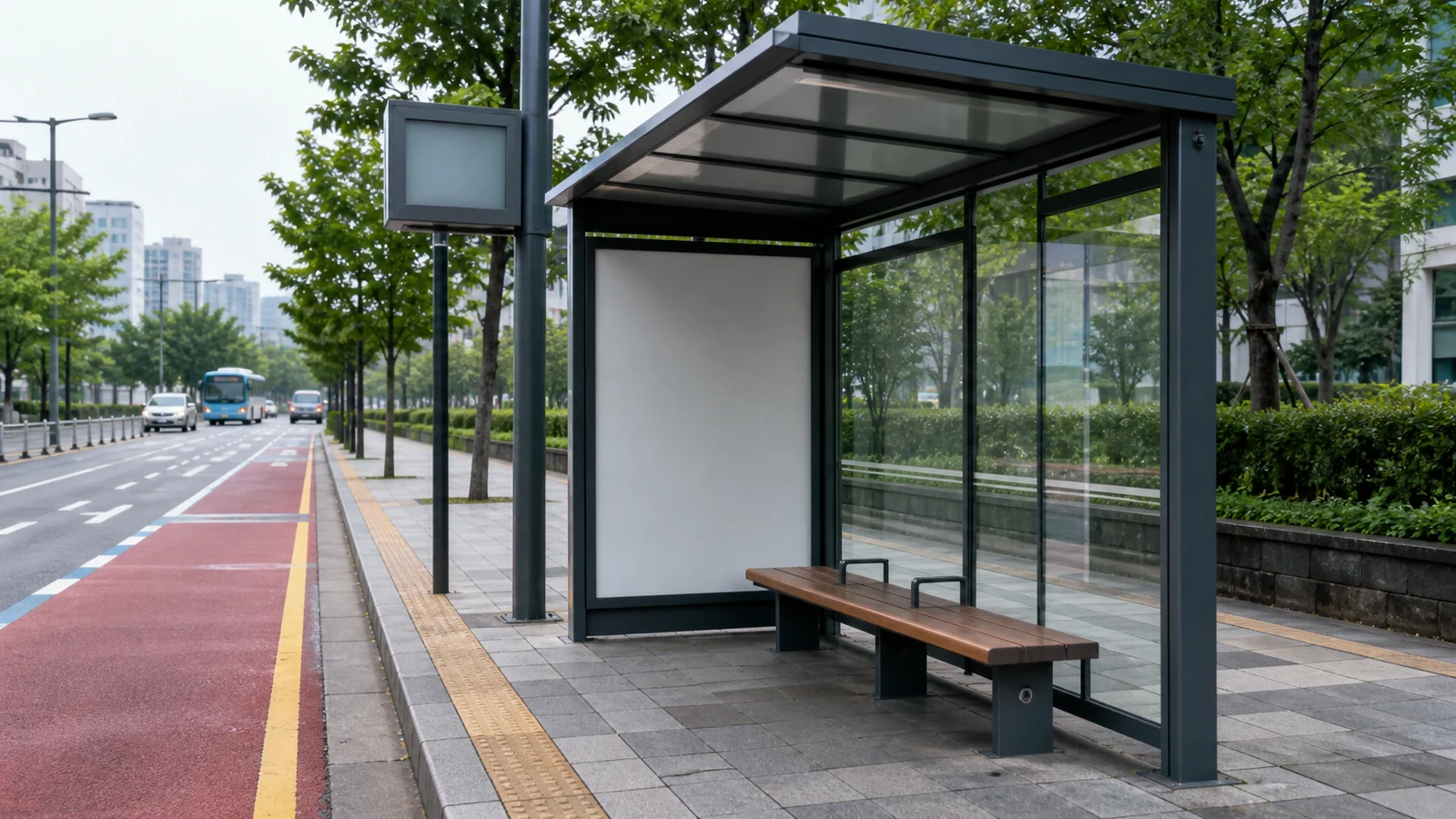
Panduan Kosakata bahasa Korea untuk rambu halte bus
Kosakata bahasa Korea untuk rambu halte bus membantu pelajar melatih kata bahasa Korea dalam situasi nyata. Artikel BSKorean ini dibuat jelas, mudah dipindai, dan terhubung dengan latihan aplikasi.
Hướng dẫn Từ vựng tiếng Hàn cho biển báo trạm xe buýt
Từ vựng tiếng Hàn cho biển báo trạm xe buýt giúp người học luyện từ tiếng Hàn trong tình huống thực tế. Bài BSKorean này giữ nội dung rõ ràng, dễ xem và liên kết với phần luyện tập.
Korean bus stop sign vocabulary helps learners practice Korean words in real situations. This BSKorean post keeps the lesson clear, scannable, and connected to app practice.
Korean bus stop sign vocabulary helps you read stop names, route lists, arrival boards, boarding signs, last bus notices, and transfer information at a real bus stop in Korea.
A Korean bus stop sign can look busy at first. You may see the stop name, several route numbers, arrival times, transfer information, and words like 승차, 하차, or 막차. The sign is not trying to teach grammar. It is trying to help people move.
This briefing-style lesson teaches the Korean words you need to read a bus stop sign in real life. Focus on the function of each word: where the stop is, which bus route you need, when the bus arrives, where you board, where you get off, and whether the bus is the last one.
Best for
Main skill
Study time
Practice focus
Travelers, foreign residents, exchange students, and new commuters in Korea
Reading Korean bus stop signs by function
8-10 minutes
Stop, route, arrival, boarding, getting off, last bus
Slide 1. The Situation
You are waiting at a bus stop in Korea. A digital board shows several bus numbers. One line says a bus will arrive soon. Another line shows a different bus with more waiting time. On the signpost, you see a stop name and a route list.
At this moment, you do not need to read every Korean word. You need to find the words that answer practical questions:
Where is this bus stop?
Which bus route should I take?
When will the bus arrive?
Where do I board or get off?
Is this the last bus?
The words below help you answer those questions quickly.
Slide 2. Key Bus Stop Words
Korean bus stop signs often use short word patterns. They are not full sentences, so read them like labels.
Formula 1: Stop name + 정류장
서울역 정류장 Seoul-yeok jeongnyujang Seoul Station bus stop
The word before 정류장 is usually the stop name or nearby place. If you know this pattern, you can confirm that you are waiting at the correct stop.
Formula 2: Bus number + 노선
버스 노선 beoseu noseon bus route
노선 helps you check the route, not only the bus number. Two buses can stop at the same place but go to different areas. Always check the route direction if you are unsure.
Formula 3: Time + 도착
3분 후 도착 sam-bun hu dochag arrives in 3 minutes
On digital boards, 도착 is the key word for arrival. If you see a number before it, that number often tells you the waiting time.
Slide 4. Read Bus Stop Signs in 3 Steps
Step 1. Find the stop. Look for 정류장 and the stop name. This tells you where you are.
Step 2. Check the route. Look for the bus number and 노선. If the sign shows several routes, choose the one that matches your destination.
Step 3. Check the action. Use 도착 for arrival time, 승차 for getting on, 하차 for getting off, and 막차 for the last bus. If you need another bus or subway, look for 환승.
Example:
강남역 정류장 / 3분 후 도착 / 환승 가능 Gangnam-yeok jeongnyujang / sam-bun hu dochag / hwanseung ganeung Gangnam Station bus stop / arrives in 3 minutes / transfer available
Slide 5. Mistakes and Practice
Mistake 1: Reading 노선 as the destination
노선 means route. It does not always mean your final destination. Check the route direction or nearby stops before boarding.
Mistake 2: Confusing 승차 and 하차
승차 means getting on. 하차 means getting off. If you see a sign about 하차, it may be telling passengers where to exit or where getting off happens.
Mistake 3: Ignoring 막차
막차 is important at night. If the board says the bus is the last one, missing it may mean you need a taxi or a different route.
Practice
1. What does 정류장 mean? A. route / B. bus stop / C. transfer Answer: B. bus stop.
2. What does 5분 후 도착 mean? Answer: Arrives in 5 minutes.
3. Which word means getting off? A. 승차 / B. 하차 / C. 노선 Answer: B. 하차.
4. You need to change to another bus or subway. Which word should you look for? Answer: 환승.
5. You are traveling late at night. Which word is especially important? Answer: 막차.
Mini Review Table
Korean
Meaning
Where You See It
Quick Tip
정류장
bus stop
Stop name, map, signpost
Use it to confirm your location.
노선
route
Route list, bus information board
Check where the bus goes.
도착
arrival
Digital arrival board
Look for minutes before this word.
승차
boarding
Boarding area, guide notice
Getting on the bus.
하차
getting off
Exit notice, stop announcement
Getting off the bus.
막차
last bus
Late-night route board
Do not ignore this at night.
환승
transfer
Bus, subway, route information
Changing to another route.
Final Takeaway
Do not try to translate every word on a Korean bus stop sign. First, find 정류장 to confirm the stop. Then check 노선 for the route and 도착 for arrival time. Use 승차 and 하차 to understand getting on and off. At night, always check 막차. If you need another route, look for 환승.
Practice these words in Korean Learn Korean after reading. Start by matching the Korean word to the real action you would take at a bus stop.
For official Korea travel and transportation context, check Visit Korea.