Workplace Korean
วลีภาษาเกาหลีสำหรับงานปิดร้านและทำความสะอาดร้านอาหาร
เรียนวลีภาษาเกาหลีสำหรับงานปิดร้านอาหาร เช่น เช็ดโต๊ะ จัดเก้าอี้ ล้างจาน แยกขยะ ตรวจสต็อก และรายงานหัวหน้า
Short Introduction
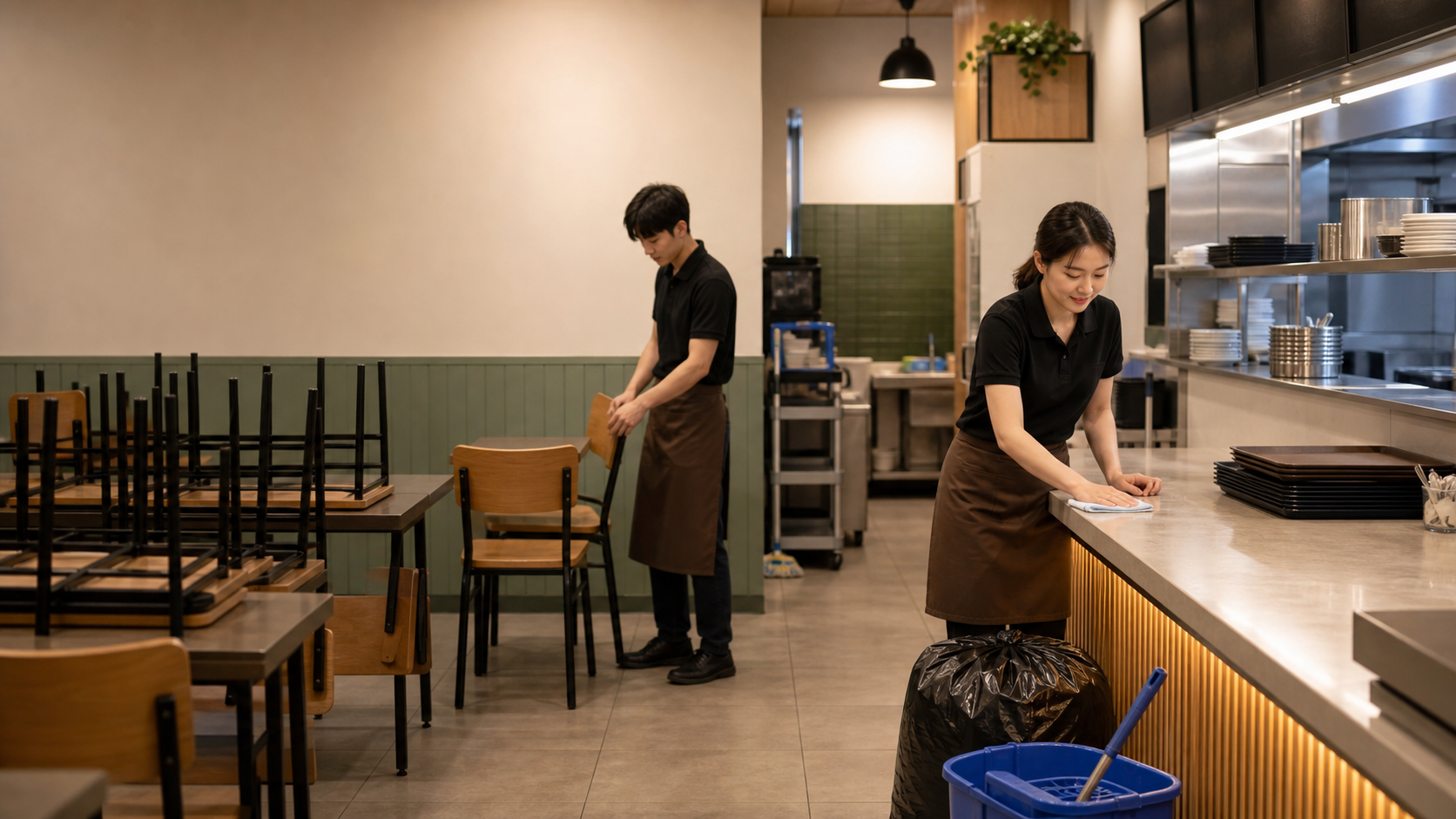
คุณทำงานกะสุดท้ายในร้านอาหารเกาหลี ลูกค้าคนสุดท้ายออกไปแล้ว และผู้จัดการพูดว่า “마감 준비해 주세요.” ร้านปิดสำหรับลูกค้าแล้ว แต่งานของพนักงานยังไม่จบ
คำสั่งตอนปิดร้านมักสั้น เช่น 테이블 닦아 주세요, 의자 정리해 주세요, 쓰레기 버려 주세요 หรือ 끝나면 보고해 주세요 ให้มองหาสิ่งของและการกระทำก่อน
บทเรียนนี้สอนวลีภาษาเกาหลีสำหรับงานปิดร้านและทำความสะอาดร้านอาหารสำหรับพนักงานบริการต่างชาติ
Key Vocabulary
| Korean | Romanization | English | Level | Usage Note |
|---|---|---|---|---|
| 마감 | magam | closing / end of business | Beginner | the closing stage after customers leave |
| 마감 준비 | magam junbi | closing preparation | Beginner | getting ready to close the store |
| 정리 | jeongni | organizing / putting in order | Beginner | putting chairs, trays, tools, or stock back in place |
| 청소 | cheongso | cleaning | Beginner | general cleaning of the work area |
| 닦다 | dakda | to wipe | Beginner | wiping tables, counters, or surfaces |
| 치우다 | chiuda | to clear away | Beginner | removing items, trash, or leftover things |
| 설거지 | seolgeoji | dishwashing | Beginner | washing dishes, cups, trays, and utensils |
| 분리수거 | bullisugeo | recycling / sorting waste | Beginner | sorting trash by type |
| 쓰레기 | sseuregi | trash | Beginner | general waste |
| 음식물 쓰레기 | eumsikmul sseuregi | food waste | Beginner | food scraps handled separately in Korea |
| 테이블 | teibeul | table | Beginner | customer table that must be wiped or cleared |
| 의자 | uija | chair | Beginner | chair that may need to be stacked or arranged |
| 바닥 | badak | floor | Intermediate | floor that may need sweeping or mopping |
| 냉장고 | naengjanggo | refrigerator | Intermediate | storage area to check before closing |
| 유통기한 | yutonggihan | expiration date | Intermediate | date to check on ingredients or packaged items |
| 재고 | jaego | stock / inventory | Intermediate | items remaining after work |
| 확인 | hwagin | check / confirm | Intermediate | checking status before finishing |
| 보고 | bogo | report | Intermediate | telling the manager after finishing or finding a problem |
Real Situation
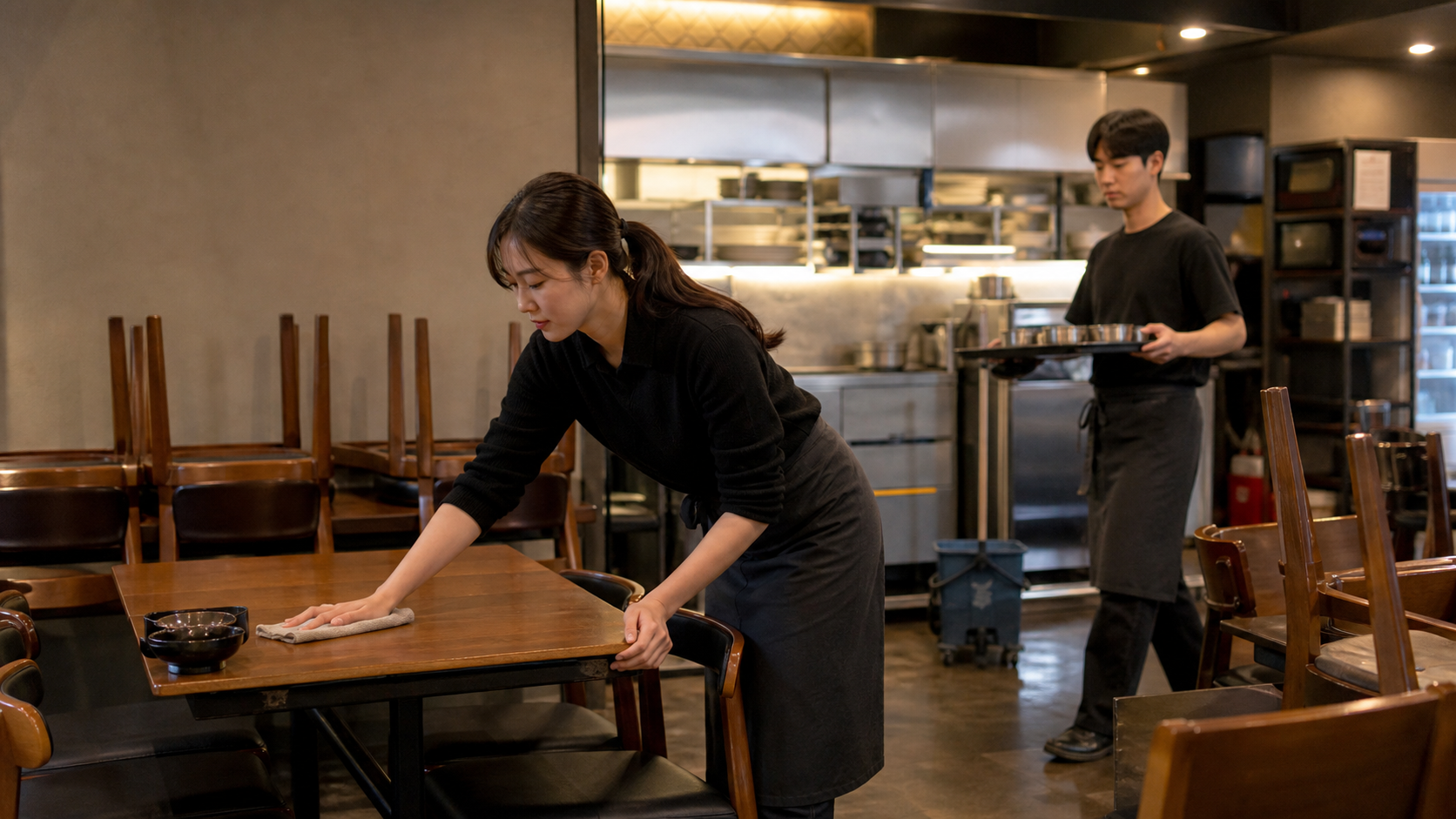
งานปิดร้านมักเริ่มจากพื้นที่ลูกค้า: เช็ดโต๊ะ จัดเก้าอี้ เก็บถาด และทิ้งขยะ
ต่อจากนั้นพนักงานอาจตรวจพื้นที่ครัวหรือเคาน์เตอร์ เช่น จาน แก้ว ตู้เย็น วัตถุดิบ สต็อก และวันหมดอายุ
ถ้าได้ยิน 끝나면 보고해 주세요 หมายถึงให้รายงานหลังทำงานเสร็จ
Real Workplace Phrases
| Korean Sentence | English Meaning | When to Use |
|---|---|---|
| 마감 준비해 주세요. | Please get ready for closing. | When the manager starts closing work. |
| 테이블 닦아 주세요. | Please wipe the tables. | When customer tables need cleaning. |
| 의자 정리해 주세요. | Please arrange the chairs. | When chairs must be put back or stacked. |
| 쓰레기 버려 주세요. | Please throw away the trash. | When trash needs to be removed. |
| 분리수거 해 주세요. | Please sort the recycling. | When waste must be separated. |
| 냉장고 확인해 주세요. | Please check the refrigerator. | When closing storage areas. |
| 유통기한 확인해 주세요. | Please check the expiration dates. | When checking ingredients or stock. |
| 끝나면 보고해 주세요. | Please report when you are finished. | When a manager wants a closing update. |
Usage Notes
마감 หมายถึงช่วงปิดร้านหรือขั้นตอนจบงาน ไม่ใช่แค่ปิดประตูเท่านั้น
정리 คือจัดให้เป็นระเบียบ, 청소 คือทำความสะอาด, 닦다 คือเช็ดพื้นผิว เช่น โต๊ะหรือเคาน์เตอร์
분리수거 สำคัญในเกาหลี เพราะต้องแยกขยะทั่วไป รีไซเคิล และ 음식물 쓰레기 หรือเศษอาหาร
확인 คือการตรวจสอบ ส่วน 보고 คือการรายงาน ทั้งสองคำมักใช้ตอนท้ายงาน
Read closing instructions as a three-part signal: object, action, and final report. For example, 테이블 닦아 주세요 has the object 테이블 and the action 닦아 주세요. 끝나면 보고해 주세요 tells you to report after finishing.
Mini Dialogue / บทสนทนาสั้น
Manager: 마감 준비해 주세요.
Please get ready for closing.
Staff: 네, 테이블 닦고 의자 정리하겠습니다.
Yes, I will wipe the tables and arrange the chairs.
Manager: 냉장고랑 유통기한도 확인해 주세요.
Please also check the refrigerator and expiration dates.
Staff: 끝나면 보고하겠습니다.
I will report when I am finished.
Quick Quiz
- What does 마감 mean at a restaurant?
Answer: Closing or end-of-business work.
마감 is the closing stage after customers leave. - Which word means to wipe a table or counter?
Answer: 닦다.
닦다 is used for wiping surfaces. - What should you do when you hear 분리수거 해 주세요?
Answer: Sort the trash or recycling.
분리수거 means separating waste by type. - Which phrase means “Please report when you are finished”?
Answer: 끝나면 보고해 주세요.
보고 means report. - Why is 유통기한 important during closing?
Answer: It helps staff check whether ingredients or packaged items are still usable.
유통기한 means expiration date.
Related Lessons
บทเรียนที่เกี่ยวข้อง:
Practice More

ฝึกคำชุดนี้ได้ใน Learn Korean หรือแอป BSKorean ที่กำลังจะมา
Practice this word list in Learn Korean. Open the BSKorean app page.
??????????????????????????????????
???????????????????????????????????????????????????????????????????? ????????????????????? ?? ??? ??? ?????????????????????????????? ? ???? ??????????????????????????????????????????? ???? ???????? ?????????? ??????? ?????? ??????????? ????????????????????????
??????????????? ???????????????????? ???????????? ??? ?? ???, ?? ??? ???, ???? ??? ??? ??? ????????????????? ???????????????????? ??, ??, ??, ?? ??????? ??????????????????????????
Extra Closing Shift Practice
| Korean | Romanization | English Support | Thai Use Note |
|---|---|---|---|
| ???? ?????. | teibeureul dakgetseumnida | I will wipe the tables. | ????????????????????????????????????????????? |
| ?? ???????. | uija jeongnihagetseumnida | I will organize the chairs. | ?????????????????????????????????????????????? |
| ???? ?? ?????. | bullisugeo meonjeo hagetseumnida | I will sort the recycling first. | ?????????????? ??????? ????? ??????????????? |
| ??? ???????. | naengjanggo hwaginhagetseumnida | I will check the refrigerator. | ???????????????????????? ????? ?????????????? |
| ??? ???????. | kkeutnamyeon bogohagetseumnida | I will report when I am finished. | ??????????????????????????????? |
English support note: In Korean service workplaces, many instructions are built from a work object and an action. For example, ??? plus ?? becomes ?wipe the table,? and ??? plus ?? becomes ?check the refrigerator.? This makes the sentence easier to understand because you can first look for the object and then the action.
The word ?? is not only ?closing time.? In a restaurant, it can mean the full closing routine. This includes cleaning customer areas, washing dishes, sorting waste, checking ingredients, checking expiration dates, organizing chairs, and reporting to the manager. If you learn ?? only as a time word, you may miss the work meaning.
If you are confused, use short polite phrases. ?? ??? ??? means ?Please say that again.? ??? ???? means ?What should I do first?? These questions are useful during closing because several tasks can be given at once, and asking early is better than doing the wrong task.
English Support Notes for Review
This English support section is included for learners who use the translated article together with English search terms, workplace training materials, or bilingual study notes. The main lesson is still about practical Korean, but these notes make the closing-cleanup routine easier to reuse in real service work. In a restaurant, closing is not one action. It is a short sequence of repeated tasks: wipe the tables, organize the chairs, wash dishes, sort recycling, remove food waste, check the refrigerator, check expiration dates, check stock, and report to the manager.
When you hear a Korean instruction during closing, do not wait until you understand every grammar detail. First, listen for the object. The object may be ???, ??, ???, ???, ????, ??, or ????. Second, listen for the action. The action may be ??, ????, ????, ???, ??, or ????. Third, answer with a short polite sentence. Useful answers are ?, ?????, ?, ?????, and ??? ???????. These answers show that you understood the task and will report when finished.
Closing Korean is also connected to workplace safety and hygiene. If the floor is wet, a coworker may say ?? ?????. If there is food waste, the manager may say ?????? ?? ???. If ingredients are near the expiration date, someone may say ???? ??? ???. These are not advanced academic Korean sentences. They are practical job instructions. A learner should connect each phrase with the physical action that happens in the restaurant.
A common mistake is translating ?? only as ?deadline.? In many Korean dictionaries, ?? can mean a deadline. In restaurant work, however, ?? often means closing duties or end-of-day work. Another mistake is thinking ?? only means ?summary.? In a workplace, ?? often means arranging, organizing, or putting things back in order. A third mistake is confusing ?? and ??. ?? means to check something. ?? means to report the result to another person. You may need to do both: first ????, then ?????.
For daily practice, choose five expressions and say them aloud: ???? ?????, ?? ???????, ??? ???????, ???? ?? ?????, ??? ???????. These sentences are short, polite, and realistic. They help a service worker sound cooperative without building long grammar-heavy sentences. If you forget the full sentence, keep the core pattern: noun plus ?????, or noun plus ? ???.
Use this lesson with Learn Korean after reading. Review the core words as flashcards, then test yourself from Korean to English. If you choose the wrong answer, check the correct meaning and try the word again. The goal is not only to pass a quiz. The goal is to recognize closing-cleanup Korean quickly when a real manager, coworker, or senior staff member says it during a busy shift.