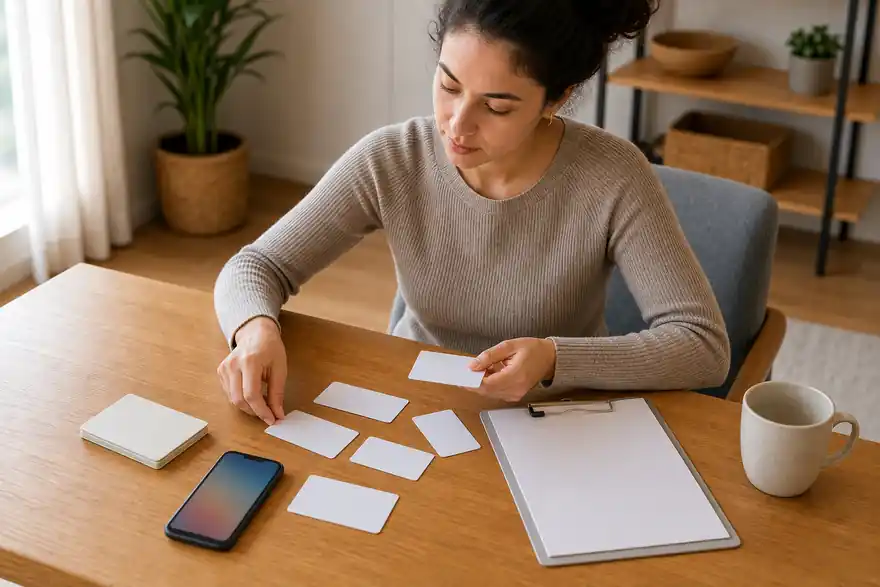
[태그:] symptom Korean

  • ภาษาเกาหลีสำหรับลงทะเบียนโรงพยาบาลและอธิบายอาการ

    ภาษาเกาหลีสำหรับลงทะเบียนโรงพยาบาลและอธิบายอาการ

    ภาษาเกาหลีสำหรับลงทะเบียนโรงพยาบาลและอธิบายอาการ

    10 นาที
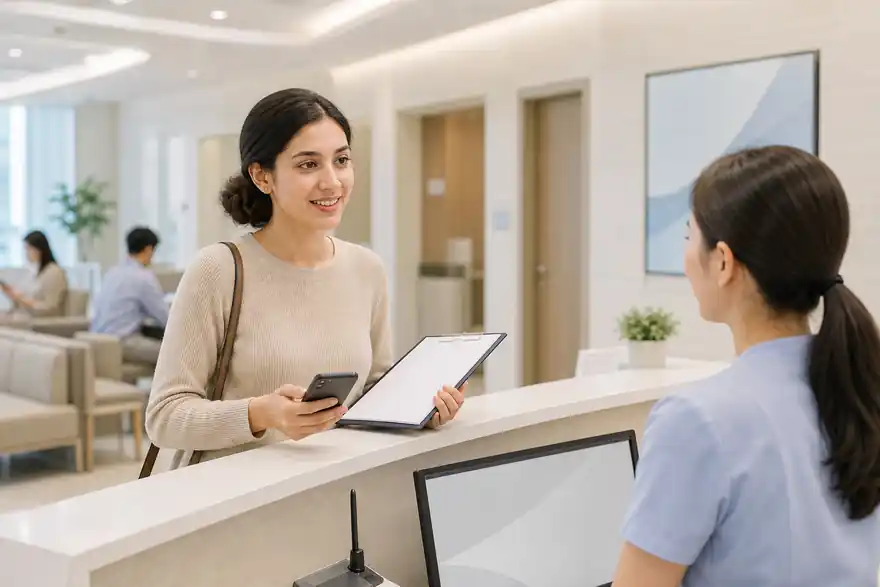
    Textless generated photo of a learner checking in at a Korean clinic reception desk with blank forms.
    เริ่มจากคำที่ใช้ลงทะเบียน เช่น นัดหมาย ประกัน บัตรประจำตัว และแผนก

    บทเรียนนี้เรียนอะไร

    การลงทะเบียนที่โรงพยาบาลอาจยากเพราะต้องพูดสุภาพและให้ข้อมูลถูกต้อง บทเรียนนี้สอนภาษาเกาหลีสำหรับลงทะเบียน นัดหมาย ประกัน แผนก อาการ ระดับความเจ็บ และการถามซ้ำอย่างสุภาพ ไม่ใช่คำแนะนำทางการแพทย์หรือการวินิจฉัย

    ลำดับที่ปลอดภัยคือ บอกเหตุผลที่มา ให้ข้อมูลเอกสารเมื่อถูกถาม อธิบายอาการด้วยคำง่าย ๆ แล้วขอยืนยัน คุณไม่จำเป็นต้องเดาชื่อโรค

    ฝึกด้วยตัวอย่างที่ปลอดภัย อย่าพูดเลขผู้ป่วย เลขประกัน รายละเอียดใบสั่งยา หรือประวัติสุขภาพส่วนตัวเสียงดังในห้องเรียนหรือห้องรอ
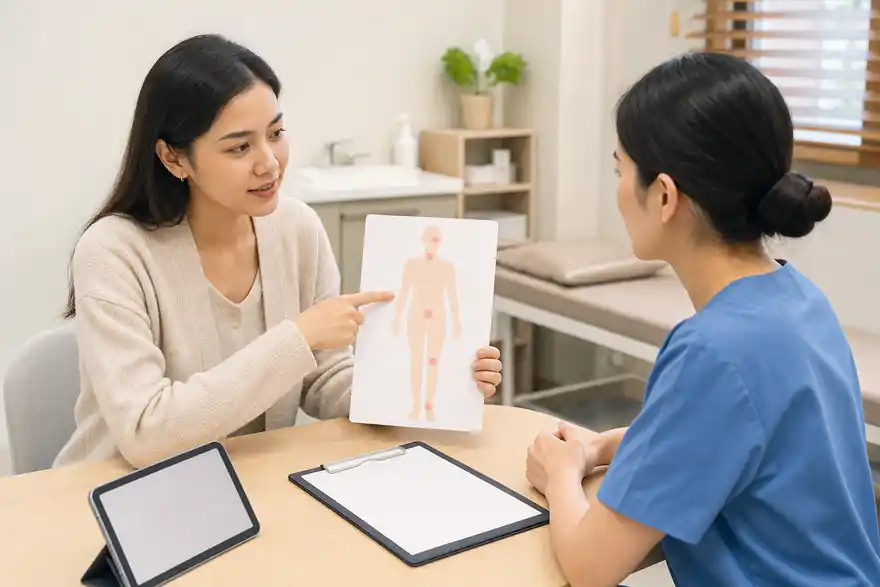
    Textless generated photo of a learner explaining symptoms with a blank body-area card in a Korean clinic.
    บอกอาการ ตำแหน่ง ระยะเวลา และระดับความรุนแรง โดยไม่วินิจฉัยตัวเอง

    ขั้นตอนลงทะเบียนที่โรงพยาบาล

    ที่เคาน์เตอร์ อาจถูกถามว่ามีนัดไหม ต้องไปแผนกไหน และมีประกันไหม ถ้าไม่แน่ใจให้ถามว่า 어느 과로 가야 해요?

    ในแบบสอบถาม คำพื้นฐานสำคัญคือ ไข้ ไอ ปวด เวียนหัว คลื่นไส้ แพ้ และยาที่กินอยู่

    การบอกอาการในภาษาเกาหลีมักใช้ส่วนของร่างกายกับ 아파요 เช่น 머리가 아파요

    ถ้ารู้สึกฉุกเฉิน ให้ใช้คำว่า 응급 และขอความช่วยเหลือจากเจ้าหน้าที่ทันที

    หลังตรวจ อาจต้องถามเรื่องชำระเงิน ผลตรวจ และใบสั่งยา

    คำศัพท์โรงพยาบาลและอาการ

    เกาหลีการออกเสียงความหมายบันทึกฝึก
    병원byeongwonโรงพยาบาลใช้คำนี้ในประโยคอาการหรือการลงทะเบียนหนึ่งประโยค โดยไม่ใช้ข้อมูลจริง
    의원uiwonคลินิกใช้คำนี้ในประโยคอาการหรือการลงทะเบียนหนึ่งประโยค โดยไม่ใช้ข้อมูลจริง
    접수jeopsuลงทะเบียนใช้คำนี้ในประโยคอาการหรือการลงทะเบียนหนึ่งประโยค โดยไม่ใช้ข้อมูลจริง
    접수처jeopsucheoเคาน์เตอร์ลงทะเบียนใช้คำนี้ในประโยคอาการหรือการลงทะเบียนหนึ่งประโยค โดยไม่ใช้ข้อมูลจริง
    예약yeyakนัดหมายใช้คำนี้ในประโยคอาการหรือการลงทะเบียนหนึ่งประโยค โดยไม่ใช้ข้อมูลจริง
    진료jillyoการตรวจรักษาใช้คำนี้ในประโยคอาการหรือการลงทะเบียนหนึ่งประโยค โดยไม่ใช้ข้อมูลจริง
    진료과jillyogwaแผนกใช้คำนี้ในประโยคอาการหรือการลงทะเบียนหนึ่งประโยค โดยไม่ใช้ข้อมูลจริง
    내과naegwaอายุรกรรมใช้คำนี้ในประโยคอาการหรือการลงทะเบียนหนึ่งประโยค โดยไม่ใช้ข้อมูลจริง
    이비인후과ibiinhugwaหูคอจมูกใช้คำนี้ในประโยคอาการหรือการลงทะเบียนหนึ่งประโยค โดยไม่ใช้ข้อมูลจริง
    피부과pibugwaผิวหนังใช้คำนี้ในประโยคอาการหรือการลงทะเบียนหนึ่งประโยค โดยไม่ใช้ข้อมูลจริง
    신분증sinbunjeungบัตรประจำตัวใช้คำนี้ในประโยคอาการหรือการลงทะเบียนหนึ่งประโยค โดยไม่ใช้ข้อมูลจริง
    건강보험geongang boheomประกันสุขภาพใช้คำนี้ในประโยคอาการหรือการลงทะเบียนหนึ่งประโยค โดยไม่ใช้ข้อมูลจริง
    보험증boheomjeungบัตรประกันใช้คำนี้ในประโยคอาการหรือการลงทะเบียนหนึ่งประโยค โดยไม่ใช้ข้อมูลจริง
    문진표munjinpyoแบบสอบถามอาการใช้คำนี้ในประโยคอาการหรือการลงทะเบียนหนึ่งประโยค โดยไม่ใช้ข้อมูลจริง
    증상jeungsangอาการใช้คำนี้ในประโยคอาการหรือการลงทะเบียนหนึ่งประโยค โดยไม่ใช้ข้อมูลจริง
    통증tongjeungความเจ็บปวดใช้คำนี้ในประโยคอาการหรือการลงทะเบียนหนึ่งประโยค โดยไม่ใช้ข้อมูลจริง
    yeolไข้ใช้คำนี้ในประโยคอาการหรือการลงทะเบียนหนึ่งประโยค โดยไม่ใช้ข้อมูลจริง
    기침gichimไอใช้คำนี้ในประโยคอาการหรือการลงทะเบียนหนึ่งประโยค โดยไม่ใช้ข้อมูลจริง
    콧물konnmulน้ำมูกใช้คำนี้ในประโยคอาการหรือการลงทะเบียนหนึ่งประโยค โดยไม่ใช้ข้อมูลจริง
    목이 아파요mogi apayoเจ็บคอใช้คำนี้ในประโยคอาการหรือการลงทะเบียนหนึ่งประโยค โดยไม่ใช้ข้อมูลจริง
    머리가 아파요meoriga apayoปวดหัวใช้คำนี้ในประโยคอาการหรือการลงทะเบียนหนึ่งประโยค โดยไม่ใช้ข้อมูลจริง
    배가 아파요baega apayoปวดท้องใช้คำนี้ในประโยคอาการหรือการลงทะเบียนหนึ่งประโยค โดยไม่ใช้ข้อมูลจริง
    어지러워요eojireowoyoเวียนหัวใช้คำนี้ในประโยคอาการหรือการลงทะเบียนหนึ่งประโยค โดยไม่ใช้ข้อมูลจริง
    메스꺼워요meseukkeowoyoคลื่นไส้ใช้คำนี้ในประโยคอาการหรือการลงทะเบียนหนึ่งประโยค โดยไม่ใช้ข้อมูลจริง
    언제부터eonjebuteoตั้งแต่เมื่อไรใช้คำนี้ในประโยคอาการหรือการลงทะเบียนหนึ่งประโยค โดยไม่ใช้ข้อมูลจริง
    얼마나eolmanaเท่าไร/นานแค่ไหนใช้คำนี้ในประโยคอาการหรือการลงทะเบียนหนึ่งประโยค โดยไม่ใช้ข้อมูลจริง
    심해요simhaeyoรุนแรงใช้คำนี้ในประโยคอาการหรือการลงทะเบียนหนึ่งประโยค โดยไม่ใช้ข้อมูลจริง
    가벼워요gabyeowoyoเบาใช้คำนี้ในประโยคอาการหรือการลงทะเบียนหนึ่งประโยค โดยไม่ใช้ข้อมูลจริง
    계속gyesokต่อเนื่องใช้คำนี้ในประโยคอาการหรือการลงทะเบียนหนึ่งประโยค โดยไม่ใช้ข้อมูลจริง
    가끔gakkeumบางครั้งใช้คำนี้ในประโยคอาการหรือการลงทะเบียนหนึ่งประโยค โดยไม่ใช้ข้อมูลจริง
    알레르기allereugiภูมิแพ้/แพ้ใช้คำนี้ในประโยคอาการหรือการลงทะเบียนหนึ่งประโยค โดยไม่ใช้ข้อมูลจริง
    yakยาใช้คำนี้ในประโยคอาการหรือการลงทะเบียนหนึ่งประโยค โดยไม่ใช้ข้อมูลจริง
    복용bogyongการกินยาใช้คำนี้ในประโยคอาการหรือการลงทะเบียนหนึ่งประโยค โดยไม่ใช้ข้อมูลจริง
    검사geomsaการตรวจใช้คำนี้ในประโยคอาการหรือการลงทะเบียนหนึ่งประโยค โดยไม่ใช้ข้อมูลจริง
    결과gyeolgwaผลตรวจใช้คำนี้ในประโยคอาการหรือการลงทะเบียนหนึ่งประโยค โดยไม่ใช้ข้อมูลจริง
    대기daegiรอใช้คำนี้ในประโยคอาการหรือการลงทะเบียนหนึ่งประโยค โดยไม่ใช้ข้อมูลจริง
    수납sunapชำระเงินใช้คำนี้ในประโยคอาการหรือการลงทะเบียนหนึ่งประโยค โดยไม่ใช้ข้อมูลจริง
    처방전cheobangjeonใบสั่งยาใช้คำนี้ในประโยคอาการหรือการลงทะเบียนหนึ่งประโยค โดยไม่ใช้ข้อมูลจริง
    응급eunggeupฉุกเฉินใช้คำนี้ในประโยคอาการหรือการลงทะเบียนหนึ่งประโยค โดยไม่ใช้ข้อมูลจริง
    천천히cheoncheonhiช้า ๆใช้คำนี้ในประโยคอาการหรือการลงทะเบียนหนึ่งประโยค โดยไม่ใช้ข้อมูลจริง

    รูปประโยคสำหรับลงทะเบียนและอธิบายอาการ

    ใช้ …하고 싶어요 เพื่อบอกสิ่งที่ต้องการทำที่เคาน์เตอร์

    ใช้ …이/가 있어요 เพื่อบอกอาการหรือสิ่งที่มี

    ใช้ …부터 เพื่อบอกว่าเริ่มตั้งแต่เมื่อไร

    ใช้ 계속 และ 가끔 เพื่อบอกความถี่

    ถ้าฟังไม่ทัน ใช้ 다시 한 번 말씀해 주세요 หรือ 천천히 말씀해 주세요
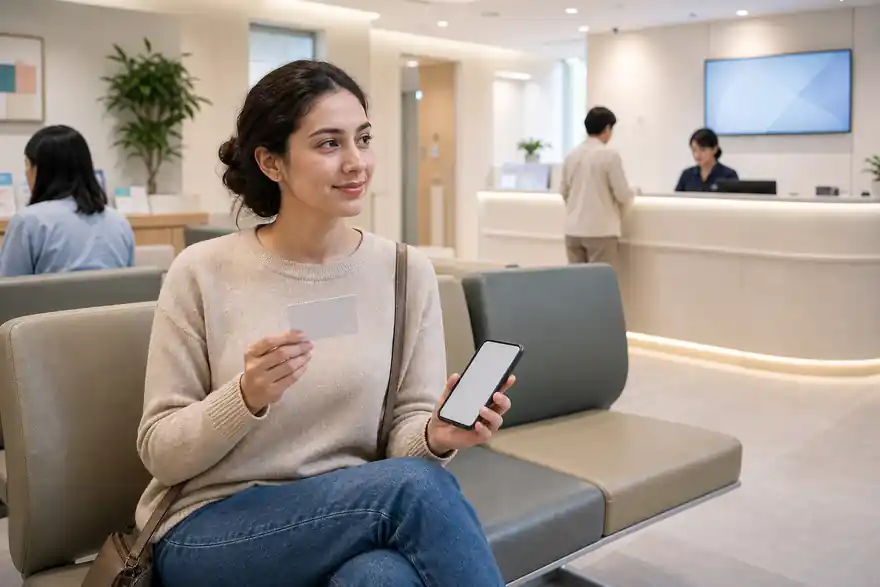
    Textless generated photo of a learner waiting calmly in a Korean clinic with a blank appointment card.
    ในห้องรอ ให้ฟังชื่อของคุณ หรือถามอย่างสุภาพถ้าไม่แน่ใจ

    ประโยคที่ใช้บ่อย

    ประโยคเกาหลีความหมายการใช้
    예약했어요.นัดไว้แล้วค่ะ/ครับพูดเป็นประโยคเดียว แล้วรอคำถามจากเจ้าหน้าที่
    예약 없이 왔어요.มาโดยไม่ได้นัดค่ะ/ครับพูดเป็นประโยคเดียว แล้วรอคำถามจากเจ้าหน้าที่
    접수하고 싶어요.อยากลงทะเบียนค่ะ/ครับพูดเป็นประโยคเดียว แล้วรอคำถามจากเจ้าหน้าที่
    어느 과로 가야 해요?ต้องไปแผนกไหนพูดเป็นประโยคเดียว แล้วรอคำถามจากเจ้าหน้าที่
    신분증이 필요해요?ต้องใช้บัตรประจำตัวไหมพูดเป็นประโยคเดียว แล้วรอคำถามจากเจ้าหน้าที่
    건강보험이 있어요.มีประกันสุขภาพค่ะ/ครับพูดเป็นประโยคเดียว แล้วรอคำถามจากเจ้าหน้าที่
    문진표를 작성해야 하나요?ต้องกรอกแบบสอบถามไหมพูดเป็นประโยคเดียว แล้วรอคำถามจากเจ้าหน้าที่
    어디가 아프세요?เจ็บตรงไหนพูดเป็นประโยคเดียว แล้วรอคำถามจากเจ้าหน้าที่
    머리가 아파요.ปวดหัวค่ะ/ครับพูดเป็นประโยคเดียว แล้วรอคำถามจากเจ้าหน้าที่
    배가 아파요.ปวดท้องค่ะ/ครับพูดเป็นประโยคเดียว แล้วรอคำถามจากเจ้าหน้าที่
    열이 있어요.มีไข้ค่ะ/ครับพูดเป็นประโยคเดียว แล้วรอคำถามจากเจ้าหน้าที่
    기침이 나요.ไอค่ะ/ครับพูดเป็นประโยคเดียว แล้วรอคำถามจากเจ้าหน้าที่
    어제부터 아팠어요.เจ็บตั้งแต่เมื่อวานพูดเป็นประโยคเดียว แล้วรอคำถามจากเจ้าหน้าที่
    계속 아파요.เจ็บต่อเนื่องพูดเป็นประโยคเดียว แล้วรอคำถามจากเจ้าหน้าที่
    가끔 아파요.ปวดเป็นบางครั้งพูดเป็นประโยคเดียว แล้วรอคำถามจากเจ้าหน้าที่
    통증이 심해요.ปวดมากค่ะ/ครับพูดเป็นประโยคเดียว แล้วรอคำถามจากเจ้าหน้าที่
    통증은 가벼워요.ปวดไม่มากพูดเป็นประโยคเดียว แล้วรอคำถามจากเจ้าหน้าที่
    알레르기가 있어요.มีอาการแพ้ค่ะ/ครับพูดเป็นประโยคเดียว แล้วรอคำถามจากเจ้าหน้าที่
    먹는 약이 있어요.มียาที่กินอยู่ค่ะ/ครับพูดเป็นประโยคเดียว แล้วรอคำถามจากเจ้าหน้าที่
    천천히 말씀해 주세요.กรุณาพูดช้า ๆพูดเป็นประโยคเดียว แล้วรอคำถามจากเจ้าหน้าที่
    다시 한 번 말씀해 주세요.กรุณาพูดอีกครั้งพูดเป็นประโยคเดียว แล้วรอคำถามจากเจ้าหน้าที่
    검사 결과는 언제 나와요?ผลตรวจออกเมื่อไรพูดเป็นประโยคเดียว แล้วรอคำถามจากเจ้าหน้าที่
    수납은 어디에서 해요?ชำระเงินที่ไหนพูดเป็นประโยคเดียว แล้วรอคำถามจากเจ้าหน้าที่
    처방전은 어디에서 받아요?รับใบสั่งยาที่ไหนพูดเป็นประโยคเดียว แล้วรอคำถามจากเจ้าหน้าที่

    บทสนทนาสั้น

    ลงทะเบียน

    ผู้ป่วย: 예약했어요.

    เจ้าหน้าที่: 성함을 말씀해 주세요.

    ผู้ป่วย: 천천히 말씀해 주세요.

    เจ้าหน้าที่: 네, 신분증도 준비해 주세요.

    ไม่มีนัด

    ผู้ป่วย: 예약 없이 왔어요.

    เจ้าหน้าที่: 어디가 불편하세요?

    ผู้ป่วย: 목이 아파요.

    เจ้าหน้าที่: 접수 도와드릴게요.

    เลือกแผนก

    ผู้ป่วย: 어느 과로 가야 해요?

    เจ้าหน้าที่: 증상을 말씀해 주세요.

    ผู้ป่วย: 기침이 나고 열이 있어요.

    เจ้าหน้าที่: 내과 접수해 드릴게요.

    ระยะเวลาอาการ

    เจ้าหน้าที่: 언제부터 아프셨어요?

    ผู้ป่วย: 어제부터 아팠어요.

    เจ้าหน้าที่: 통증이 심하세요?

    ผู้ป่วย: 가끔 아파요.

    ชำระเงินและใบสั่งยา

    ผู้ป่วย: 수납은 어디에서 해요?

    เจ้าหน้าที่: 저쪽에서 하시면 됩니다.

    ผู้ป่วย: 처방전은 어디에서 받아요?

    เจ้าหน้าที่: 수납 후에 받으시면 됩니다.

    ความปลอดภัยและความเป็นส่วนตัว

    • อย่าฝึกด้วยเลขผู้ป่วย เลขประกัน หรือเวชระเบียนจริง
    • อย่าวินิจฉัยตัวเองถ้าไม่แน่ใจ ให้บอกอาการที่รู้สึก
    • ถ้าไม่เข้าใจคำถาม ให้ขอให้พูดซ้ำ
    • พูดข้อมูลส่วนตัวเบา ๆ ที่เคาน์เตอร์
    • ถ้าอาการรุนแรง ให้ทำตามคำแนะนำฉุกเฉินและเจ้าหน้าที่
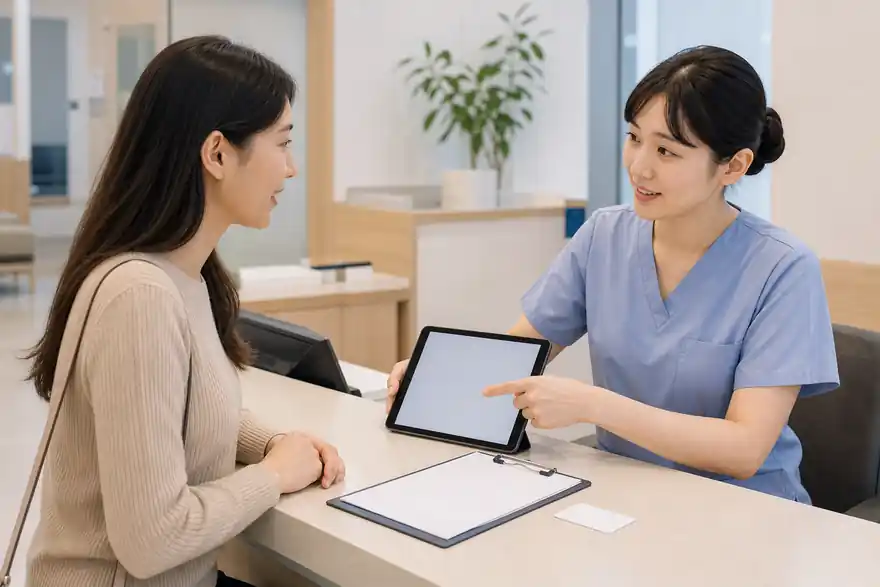
    Textless generated photo of a learner confirming reception details with a nurse and blank tablet screen.
    ยืนยันข้อมูลส่วนตัวอย่างเบา ๆ และขอให้อธิบายช้าลงเมื่อจำเป็น

    กิจกรรมฝึกสิบ นาที

    รอบที่หนึ่ง อ่านคำศัพท์และแต่งประโยคตัวอย่างปลอดภัย

    รอบที่สอง ฝึกประโยคมีนัด ไม่มีนัด และอยากลงทะเบียน

    รอบที่สาม อธิบายอาการด้วยตำแหน่ง เวลา และระดับความเจ็บ

    รอบที่สี่ ฝึกขอให้พูดซ้ำหรือพูดช้าลง

    รอบที่ห้า เล่นบทบาทสมมติลงทะเบียน รอ อธิบายอาการ ชำระเงิน และรับใบสั่งยา

    ฝึกเพิ่ม: รวมอาการ เวลา และระดับความรุนแรงโดยไม่ใช้ข้อมูลแพทย์จริง

    1. 예약했어요.
    2. 예약 없이 왔어요.
    3. 접수하고 싶어요.
    4. 어느 과로 가야 해요?
    5. 신분증이 필요해요?
    6. 건강보험이 있어요.
    7. 문진표를 작성해야 하나요?
    8. 어디가 아프세요?
    9. 머리가 아파요.
    10. 배가 아파요.
    11. 열이 있어요.
    12. 기침이 나요.
    13. 어제부터 아팠어요.
    14. 계속 아파요.
    15. 가끔 아파요.
    16. 통증이 심해요.
    17. 통증은 가벼워요.
    18. 알레르기가 있어요.
    Textless generated photo of a learner reviewing hospital reception and symptom phrases with blank flashcards at home.
    ฝึกด้วยตัวอย่างที่ปลอดภัย ไม่ใช้เลขผู้ป่วยหรือเวชระเบียนจริง

    แบบทดสอบสั้น

    1. คำถาม 1: How do you say you have an appointment?
      คำตอบ: 예약했어요.
    2. คำถาม 2: How do you say you came without an appointment?
      คำตอบ: 예약 없이 왔어요.
    3. คำถาม 3: How do you ask which department to go to?
      คำตอบ: 어느 과로 가야 해요?
    4. คำถาม 4: How do you say your head hurts?
      คำตอบ: 머리가 아파요.
    5. คำถาม 5: How do you say you have a fever?
      คำตอบ: 열이 있어요.
    6. คำถาม 6: How do you say it started yesterday?
      คำตอบ: 어제부터 아팠어요.
    7. คำถาม 7: How do you ask staff to speak slowly?
      คำตอบ: 천천히 말씀해 주세요.
    8. คำถาม 8: How do you ask where to pay?
      คำตอบ: 수납은 어디에서 해요?

    ทบทวน

    หลังบทเรียนนี้ คุณควรลงทะเบียนที่โรงพยาบาลได้ ถามแผนกที่ควรไปได้ อธิบายอาการทั่วไปได้ บอกระยะเวลาและความถี่ได้ ปกป้องข้อมูลสุขภาพส่วนตัวได้ และขอให้เจ้าหน้าที่พูดช้าลงได้ หัวข้อถัดไปคือการถามและเข้าใจวิธีกินยาที่ร้านขายยา

    Extra Thai learner practice bank

    1. Round 1: jeopsuhago sipeoyo – check in at reception. Read the Korean romanization aloud, then answer with a safe example. Do not use real patient numbers, insurance numbers, addresses, or treatment history. If one word is unclear, ask staff to repeat it.
    2. Round 2: yeyakhaesseoyo – say that you have an appointment. Read the Korean romanization aloud, then answer with a safe example. Do not use real patient numbers, insurance numbers, addresses, or treatment history. If one word is unclear, ask staff to repeat it.
    3. Round 3: yeyak eopsi wasseoyo – say that you came without an appointment. Read the Korean romanization aloud, then answer with a safe example. Do not use real patient numbers, insurance numbers, addresses, or treatment history. If one word is unclear, ask staff to repeat it.
    4. Round 4: eoneu gwaro gaya haeyo – ask which department to visit. Read the Korean romanization aloud, then answer with a safe example. Do not use real patient numbers, insurance numbers, addresses, or treatment history. If one word is unclear, ask staff to repeat it.
    5. Round 5: sinbunjeungi piryohaeyo – ask whether an ID card is needed. Read the Korean romanization aloud, then answer with a safe example. Do not use real patient numbers, insurance numbers, addresses, or treatment history. If one word is unclear, ask staff to repeat it.
    6. Round 6: geongang boheomi isseoyo – say that you have health insurance. Read the Korean romanization aloud, then answer with a safe example. Do not use real patient numbers, insurance numbers, addresses, or treatment history. If one word is unclear, ask staff to repeat it.
    7. Round 7: munjinpyoreul jakseonghaeya hanayo – ask whether to fill out a questionnaire. Read the Korean romanization aloud, then answer with a safe example. Do not use real patient numbers, insurance numbers, addresses, or treatment history. If one word is unclear, ask staff to repeat it.
    8. Round 8: meoriga apayo – say that your head hurts. Read the Korean romanization aloud, then answer with a safe example. Do not use real patient numbers, insurance numbers, addresses, or treatment history. If one word is unclear, ask staff to repeat it.
    9. Round 9: baega apayo – say that your stomach hurts. Read the Korean romanization aloud, then answer with a safe example. Do not use real patient numbers, insurance numbers, addresses, or treatment history. If one word is unclear, ask staff to repeat it.
    10. Round 10: yeori isseoyo – say that you have a fever. Read the Korean romanization aloud, then answer with a safe example. Do not use real patient numbers, insurance numbers, addresses, or treatment history. If one word is unclear, ask staff to repeat it.
    11. Round 11: gichimeul haeyo – say that you have a cough. Read the Korean romanization aloud, then answer with a safe example. Do not use real patient numbers, insurance numbers, addresses, or treatment history. If one word is unclear, ask staff to repeat it.
    12. Round 12: eoje buteo apasseoyo – say that it started yesterday. Read the Korean romanization aloud, then answer with a safe example. Do not use real patient numbers, insurance numbers, addresses, or treatment history. If one word is unclear, ask staff to repeat it.
    13. Round 13: gyesok apayo – say that it hurts continuously. Read the Korean romanization aloud, then answer with a safe example. Do not use real patient numbers, insurance numbers, addresses, or treatment history. If one word is unclear, ask staff to repeat it.
    14. Round 14: gakkeum apayo – say that it hurts sometimes. Read the Korean romanization aloud, then answer with a safe example. Do not use real patient numbers, insurance numbers, addresses, or treatment history. If one word is unclear, ask staff to repeat it.
    15. Round 15: tongjeungi simhaeyo – say that the pain is severe. Read the Korean romanization aloud, then answer with a safe example. Do not use real patient numbers, insurance numbers, addresses, or treatment history. If one word is unclear, ask staff to repeat it.
    16. Round 16: tongjeungeun gabyeowoyo – say that the pain is mild. Read the Korean romanization aloud, then answer with a safe example. Do not use real patient numbers, insurance numbers, addresses, or treatment history. If one word is unclear, ask staff to repeat it.
    17. Round 17: cheoncheonhi malsseumhae juseyo – ask staff to speak slowly. Read the Korean romanization aloud, then answer with a safe example. Do not use real patient numbers, insurance numbers, addresses, or treatment history. If one word is unclear, ask staff to repeat it.
    18. Round 18: dasi han beon malsseumhae juseyo – ask staff to repeat. Read the Korean romanization aloud, then answer with a safe example. Do not use real patient numbers, insurance numbers, addresses, or treatment history. If one word is unclear, ask staff to repeat it.

    BS3001 Daily Korean L2 content group: daily-korean-hospital-reception-symptom-phrases

  • Tiếng Hàn khi đăng ký khám bệnh và nói triệu chứng

    Tiếng Hàn khi đăng ký khám bệnh và nói triệu chứng

    Tiếng Hàn khi đăng ký khám bệnh và nói triệu chứng

    10 ph

    Textless generated photo of a learner checking in at a Korean clinic reception desk with blank forms.
    Bắt đầu bằng từ ở quầy tiếp nhận: lịch hẹn, bảo hiểm, giấy tờ và khoa khám.

    Bài này học gì

    Đăng ký khám ở bệnh viện có thể khó vì bạn cần nói lịch sự và đưa thông tin chính xác. Bài này dạy tiếng Hàn cho tiếp nhận, lịch hẹn, bảo hiểm, khoa khám, triệu chứng, mức độ đau và cách hỏi lại. Đây không phải lời khuyên y tế, không dạy chẩn đoán hay điều trị.

    Thứ tự nói an toàn là: nói lý do đến, đưa thông tin giấy tờ khi được hỏi, mô tả triệu chứng bằng từ đơn giản, rồi xin xác nhận. Bạn không cần đoán tên bệnh.

    Hãy luyện bằng ví dụ an toàn. Không đọc to số bệnh nhân, số bảo hiểm, chi tiết đơn thuốc hoặc bệnh sử riêng tư trong lớp học hay phòng chờ.

    Textless generated photo of a learner explaining symptoms with a blank body-area card in a Korean clinic.
    Nói triệu chứng, vị trí, thời gian và mức độ, không tự chẩn đoán.

    Quy trình tiếp nhận ở bệnh viện

    Ở quầy tiếp nhận, bạn có thể được hỏi có lịch hẹn không, cần khoa nào và có bảo hiểm không. Nếu không chắc, hãy hỏi 어느 과로 가야 해요?.

    Khi điền phiếu khai bệnh, hãy tập trung vào từ cơ bản: sốt, ho, đau, chóng mặt, buồn nôn, dị ứng và thuốc đang dùng.

    Để nói triệu chứng, tiếng Hàn thường dùng bộ phận cơ thể với 아파요, ví dụ 머리가 아파요배가 아파요.

    Nếu thấy tình huống khẩn cấp, dùng từ 응급 và nhờ nhân viên giúp trực tiếp.

    Sau khi khám, bạn có thể cần hỏi về thanh toán, kết quả xét nghiệm và đơn thuốc.

    Từ vựng bệnh viện và triệu chứng

    Tiếng HànPhiên âmNghĩaGhi chú luyện tập
    병원byeongwonbệnh việnDùng từ này trong một câu tiếp nhận hoặc triệu chứng; không thêm thông tin riêng thật.
    의원uiwonphòng khámDùng từ này trong một câu tiếp nhận hoặc triệu chứng; không thêm thông tin riêng thật.
    접수jeopsuđăng ký tiếp nhậnDùng từ này trong một câu tiếp nhận hoặc triệu chứng; không thêm thông tin riêng thật.
    접수처jeopsucheoquầy tiếp nhậnDùng từ này trong một câu tiếp nhận hoặc triệu chứng; không thêm thông tin riêng thật.
    예약yeyaklịch hẹnDùng từ này trong một câu tiếp nhận hoặc triệu chứng; không thêm thông tin riêng thật.
    진료jillyokhám bệnhDùng từ này trong một câu tiếp nhận hoặc triệu chứng; không thêm thông tin riêng thật.
    진료과jillyogwakhoa khámDùng từ này trong một câu tiếp nhận hoặc triệu chứng; không thêm thông tin riêng thật.
    내과naegwanội khoaDùng từ này trong một câu tiếp nhận hoặc triệu chứng; không thêm thông tin riêng thật.
    이비인후과ibiinhugwatai mũi họngDùng từ này trong một câu tiếp nhận hoặc triệu chứng; không thêm thông tin riêng thật.
    피부과pibugwada liễuDùng từ này trong một câu tiếp nhận hoặc triệu chứng; không thêm thông tin riêng thật.
    신분증sinbunjeunggiấy tờ tùy thânDùng từ này trong một câu tiếp nhận hoặc triệu chứng; không thêm thông tin riêng thật.
    건강보험geongang boheombảo hiểm y tếDùng từ này trong một câu tiếp nhận hoặc triệu chứng; không thêm thông tin riêng thật.
    보험증boheomjeungthẻ bảo hiểmDùng từ này trong một câu tiếp nhận hoặc triệu chứng; không thêm thông tin riêng thật.
    문진표munjinpyophiếu khai bệnhDùng từ này trong một câu tiếp nhận hoặc triệu chứng; không thêm thông tin riêng thật.
    증상jeungsangtriệu chứngDùng từ này trong một câu tiếp nhận hoặc triệu chứng; không thêm thông tin riêng thật.
    통증tongjeungđauDùng từ này trong một câu tiếp nhận hoặc triệu chứng; không thêm thông tin riêng thật.
    yeolsốtDùng từ này trong một câu tiếp nhận hoặc triệu chứng; không thêm thông tin riêng thật.
    기침gichimhoDùng từ này trong một câu tiếp nhận hoặc triệu chứng; không thêm thông tin riêng thật.
    콧물konnmulsổ mũiDùng từ này trong một câu tiếp nhận hoặc triệu chứng; không thêm thông tin riêng thật.
    목이 아파요mogi apayođau họngDùng từ này trong một câu tiếp nhận hoặc triệu chứng; không thêm thông tin riêng thật.
    머리가 아파요meoriga apayođau đầuDùng từ này trong một câu tiếp nhận hoặc triệu chứng; không thêm thông tin riêng thật.
    배가 아파요baega apayođau bụngDùng từ này trong một câu tiếp nhận hoặc triệu chứng; không thêm thông tin riêng thật.
    어지러워요eojireowoyochóng mặtDùng từ này trong một câu tiếp nhận hoặc triệu chứng; không thêm thông tin riêng thật.
    메스꺼워요meseukkeowoyobuồn nônDùng từ này trong một câu tiếp nhận hoặc triệu chứng; không thêm thông tin riêng thật.
    언제부터eonjebuteotừ khi nàoDùng từ này trong một câu tiếp nhận hoặc triệu chứng; không thêm thông tin riêng thật.
    얼마나eolmanabao lâu/mức nàoDùng từ này trong một câu tiếp nhận hoặc triệu chứng; không thêm thông tin riêng thật.
    심해요simhaeyonặngDùng từ này trong một câu tiếp nhận hoặc triệu chứng; không thêm thông tin riêng thật.
    가벼워요gabyeowoyonhẹDùng từ này trong một câu tiếp nhận hoặc triệu chứng; không thêm thông tin riêng thật.
    계속gyesokliên tụcDùng từ này trong một câu tiếp nhận hoặc triệu chứng; không thêm thông tin riêng thật.
    가끔gakkeumthỉnh thoảngDùng từ này trong một câu tiếp nhận hoặc triệu chứng; không thêm thông tin riêng thật.
    알레르기allereugidị ứngDùng từ này trong một câu tiếp nhận hoặc triệu chứng; không thêm thông tin riêng thật.
    yakthuốcDùng từ này trong một câu tiếp nhận hoặc triệu chứng; không thêm thông tin riêng thật.
    복용bogyonguống thuốcDùng từ này trong một câu tiếp nhận hoặc triệu chứng; không thêm thông tin riêng thật.
    검사geomsaxét nghiệm/kiểm traDùng từ này trong một câu tiếp nhận hoặc triệu chứng; không thêm thông tin riêng thật.
    결과gyeolgwakết quảDùng từ này trong một câu tiếp nhận hoặc triệu chứng; không thêm thông tin riêng thật.
    대기daegichờDùng từ này trong một câu tiếp nhận hoặc triệu chứng; không thêm thông tin riêng thật.
    수납sunapthanh toánDùng từ này trong một câu tiếp nhận hoặc triệu chứng; không thêm thông tin riêng thật.
    처방전cheobangjeonđơn thuốcDùng từ này trong một câu tiếp nhận hoặc triệu chứng; không thêm thông tin riêng thật.
    응급eunggeupcấp cứuDùng từ này trong một câu tiếp nhận hoặc triệu chứng; không thêm thông tin riêng thật.
    천천히cheoncheonhichậmDùng từ này trong một câu tiếp nhận hoặc triệu chứng; không thêm thông tin riêng thật.

    Mẫu câu cho tiếp nhận và triệu chứng

    Dùng …하고 싶어요 để nói việc muốn làm ở quầy.

    Dùng …이/가 있어요 để nói triệu chứng hoặc thứ bạn có.

    Dùng …부터 để nói bắt đầu từ khi nào.

    Dùng 계속가끔 để nói tần suất.

    Khi nghe không kịp, dùng 다시 한 번 말씀해 주세요 hoặc 천천히 말씀해 주세요.

    Textless generated photo of a learner waiting calmly in a Korean clinic with a blank appointment card.
    Trong phòng chờ, hãy nghe tên mình hoặc hỏi lịch sự nếu không chắc.

    Câu hữu ích

    Câu tiếng HànNghĩaCách dùng
    예약했어요.Tôi đã đặt lịch hẹn.Nói như một câu hoàn chỉnh, rồi chờ nhân viên hỏi tiếp.
    예약 없이 왔어요.Tôi đến mà chưa đặt lịch.Nói như một câu hoàn chỉnh, rồi chờ nhân viên hỏi tiếp.
    접수하고 싶어요.Tôi muốn đăng ký khám.Nói như một câu hoàn chỉnh, rồi chờ nhân viên hỏi tiếp.
    어느 과로 가야 해요?Tôi nên đến khoa nào?Nói như một câu hoàn chỉnh, rồi chờ nhân viên hỏi tiếp.
    신분증이 필요해요?Có cần giấy tờ tùy thân không?Nói như một câu hoàn chỉnh, rồi chờ nhân viên hỏi tiếp.
    건강보험이 있어요.Tôi có bảo hiểm y tế.Nói như một câu hoàn chỉnh, rồi chờ nhân viên hỏi tiếp.
    문진표를 작성해야 하나요?Tôi có cần điền phiếu khai bệnh không?Nói như một câu hoàn chỉnh, rồi chờ nhân viên hỏi tiếp.
    어디가 아프세요?Đau ở đâu ạ?Nói như một câu hoàn chỉnh, rồi chờ nhân viên hỏi tiếp.
    머리가 아파요.Tôi đau đầu.Nói như một câu hoàn chỉnh, rồi chờ nhân viên hỏi tiếp.
    배가 아파요.Tôi đau bụng.Nói như một câu hoàn chỉnh, rồi chờ nhân viên hỏi tiếp.
    열이 있어요.Tôi bị sốt.Nói như một câu hoàn chỉnh, rồi chờ nhân viên hỏi tiếp.
    기침이 나요.Tôi bị ho.Nói như một câu hoàn chỉnh, rồi chờ nhân viên hỏi tiếp.
    어제부터 아팠어요.Tôi đau từ hôm qua.Nói như một câu hoàn chỉnh, rồi chờ nhân viên hỏi tiếp.
    계속 아파요.Đau liên tục.Nói như một câu hoàn chỉnh, rồi chờ nhân viên hỏi tiếp.
    가끔 아파요.Thỉnh thoảng đau.Nói như một câu hoàn chỉnh, rồi chờ nhân viên hỏi tiếp.
    통증이 심해요.Đau nhiều.Nói như một câu hoàn chỉnh, rồi chờ nhân viên hỏi tiếp.
    통증은 가벼워요.Đau nhẹ.Nói như một câu hoàn chỉnh, rồi chờ nhân viên hỏi tiếp.
    알레르기가 있어요.Tôi có dị ứng.Nói như một câu hoàn chỉnh, rồi chờ nhân viên hỏi tiếp.
    먹는 약이 있어요.Tôi đang dùng thuốc.Nói như một câu hoàn chỉnh, rồi chờ nhân viên hỏi tiếp.
    천천히 말씀해 주세요.Vui lòng nói chậm hơn.Nói như một câu hoàn chỉnh, rồi chờ nhân viên hỏi tiếp.
    다시 한 번 말씀해 주세요.Vui lòng nói lại một lần nữa.Nói như một câu hoàn chỉnh, rồi chờ nhân viên hỏi tiếp.
    검사 결과는 언제 나와요?Khi nào có kết quả xét nghiệm?Nói như một câu hoàn chỉnh, rồi chờ nhân viên hỏi tiếp.
    수납은 어디에서 해요?Thanh toán ở đâu ạ?Nói như một câu hoàn chỉnh, rồi chờ nhân viên hỏi tiếp.
    처방전은 어디에서 받아요?Tôi nhận đơn thuốc ở đâu?Nói như một câu hoàn chỉnh, rồi chờ nhân viên hỏi tiếp.

    Hội thoại ngắn

    Đăng ký

    Bệnh nhân: 예약했어요.

    Nhân viên: 성함을 말씀해 주세요.

    Bệnh nhân: 천천히 말씀해 주세요.

    Nhân viên: 네, 신분증도 준비해 주세요.

    Không có lịch hẹn

    Bệnh nhân: 예약 없이 왔어요.

    Nhân viên: 어디가 불편하세요?

    Bệnh nhân: 목이 아파요.

    Nhân viên: 접수 도와드릴게요.

    Chọn khoa

    Bệnh nhân: 어느 과로 가야 해요?

    Nhân viên: 증상을 말씀해 주세요.

    Bệnh nhân: 기침이 나고 열이 있어요.

    Nhân viên: 내과 접수해 드릴게요.

    Thời gian triệu chứng

    Nhân viên: 언제부터 아프셨어요?

    Bệnh nhân: 어제부터 아팠어요.

    Nhân viên: 통증이 심하세요?

    Bệnh nhân: 가끔 아파요.

    Thanh toán và đơn thuốc

    Bệnh nhân: 수납은 어디에서 해요?

    Nhân viên: 저쪽에서 하시면 됩니다.

    Bệnh nhân: 처방전은 어디에서 받아요?

    Nhân viên: 수납 후에 받으시면 됩니다.

    An toàn và riêng tư

    • Không luyện bằng số bệnh nhân, số bảo hiểm hoặc hồ sơ y tế thật.
    • Đừng tự chẩn đoán nếu không chắc. Hãy mô tả cảm giác của bạn.
    • Nếu không hiểu câu hỏi, hãy xin nhắc lại.
    • Nói thông tin riêng nhỏ tiếng ở quầy tiếp nhận.
    • Với triệu chứng nghiêm trọng, hãy làm theo hướng dẫn khẩn cấp và nhân viên.
    Textless generated photo of a learner confirming reception details with a nurse and blank tablet screen.
    Xác nhận thông tin cá nhân nhỏ tiếng và xin giải thích chậm hơn khi cần.

    Luyện tập mười phút

    Vòng một: đọc bảng từ vựng và tạo câu an toàn với mỗi từ triệu chứng.

    Vòng hai: luyện câu có lịch hẹn, không có lịch hẹn và muốn đăng ký khám.

    Vòng ba: mô tả triệu chứng bằng vị trí, thời gian và mức độ.

    Vòng bốn: luyện xin nói lại hoặc nói chậm hơn.

    Vòng năm: đóng vai tiếp nhận, phòng chờ, nói triệu chứng, thanh toán và nhận đơn thuốc.

    Luyện thêm: kết hợp triệu chứng, thời gian và mức độ mà không dùng dữ liệu y tế riêng.

    1. 예약했어요.
    2. 예약 없이 왔어요.
    3. 접수하고 싶어요.
    4. 어느 과로 가야 해요?
    5. 신분증이 필요해요?
    6. 건강보험이 있어요.
    7. 문진표를 작성해야 하나요?
    8. 어디가 아프세요?
    9. 머리가 아파요.
    10. 배가 아파요.
    11. 열이 있어요.
    12. 기침이 나요.
    13. 어제부터 아팠어요.
    14. 계속 아파요.
    15. 가끔 아파요.
    16. 통증이 심해요.
    17. 통증은 가벼워요.
    18. 알레르기가 있어요.
    Textless generated photo of a learner reviewing hospital reception and symptom phrases with blank flashcards at home.
    Hãy luyện bằng ví dụ an toàn, không dùng số bệnh nhân hoặc hồ sơ y tế thật.

    Câu hỏi ngắn

    1. Câu hỏi 1: How do you say you have an appointment?
      Đáp án: 예약했어요.
    2. Câu hỏi 2: How do you say you came without an appointment?
      Đáp án: 예약 없이 왔어요.
    3. Câu hỏi 3: How do you ask which department to go to?
      Đáp án: 어느 과로 가야 해요?
    4. Câu hỏi 4: How do you say your head hurts?
      Đáp án: 머리가 아파요.
    5. Câu hỏi 5: How do you say you have a fever?
      Đáp án: 열이 있어요.
    6. Câu hỏi 6: How do you say it started yesterday?
      Đáp án: 어제부터 아팠어요.
    7. Câu hỏi 7: How do you ask staff to speak slowly?
      Đáp án: 천천히 말씀해 주세요.
    8. Câu hỏi 8: How do you ask where to pay?
      Đáp án: 수납은 어디에서 해요?

    Ôn tập

    Sau bài này, bạn có thể đăng ký khám ở bệnh viện, hỏi nên đến khoa nào, mô tả triệu chứng thường gặp, nói thời gian và tần suất, bảo vệ thông tin sức khỏe riêng tư và nhờ nhân viên nói chậm hơn. Chủ đề Daily Korean tiếp theo là hỏi và hiểu cách uống thuốc ở nhà thuốc.

    BS3001 Daily Korean L2 content group: daily-korean-hospital-reception-symptom-phrases

  • Bahasa Korea untuk Pendaftaran Rumah Sakit dan Menjelaskan Gejala

    Bahasa Korea untuk Pendaftaran Rumah Sakit dan Menjelaskan Gejala

    Bahasa Korea untuk Pendaftaran Rumah Sakit dan Menjelaskan Gejala

    10 menit baca

    Textless generated photo of a learner checking in at a Korean clinic reception desk with blank forms.
    Mulai dari kata pendaftaran: janji temu, asuransi, identitas, dan bagian klinik.

    Isi Pelajaran Ini

    Pendaftaran rumah sakit bisa terasa sulit karena Anda harus berbicara sopan dan memberi informasi yang tepat. Pelajaran ini mengajarkan bahasa Korea untuk pendaftaran, janji temu, asuransi, bagian klinik, gejala, tingkat nyeri, dan meminta klarifikasi. Ini bukan nasihat medis dan bukan pelajaran diagnosis atau pengobatan.

    Urutan bicara yang aman adalah: sebutkan alasan datang, berikan informasi dokumen hanya jika diminta, jelaskan gejala dengan kata sederhana, lalu minta konfirmasi. Anda tidak perlu menebak nama penyakit.

    Berlatihlah dengan contoh aman. Jangan menyebut nomor pasien, nomor identitas, nomor asuransi, resep, atau riwayat medis pribadi dengan suara keras di kelas atau ruang tunggu.

    Textless generated photo of a learner explaining symptoms with a blank body-area card in a Korean clinic.
    Sebutkan gejala, lokasi, durasi, dan tingkatnya tanpa mendiagnosis diri sendiri.

    Alur Pendaftaran di Rumah Sakit

    Di meja pendaftaran, Anda mungkin ditanya apakah punya janji, bagian mana yang dituju, dan apakah punya asuransi. Jika tidak yakin, tanya 어느 과로 가야 해요?.

    Saat mengisi formulir, fokus pada kata gejala dasar: demam, batuk, nyeri, pusing, mual, alergi, dan obat yang sedang diminum.

    Untuk gejala, bahasa Korea sering memakai bagian tubuh ditambah 아파요, seperti 머리가 아파요 dan 배가 아파요.

    Jika gejala terasa darurat, gunakan kata 응급 dan minta bantuan langsung. Pelajaran ini tetap berfokus pada bahasa sehari-hari.

    Setelah pemeriksaan, Anda mungkin perlu bertanya tentang pembayaran, hasil pemeriksaan, dan resep.

    Kosakata Rumah Sakit dan Gejala

    KoreaPelafalanArtiCatatan latihan
    병원byeongwonrumah sakitGunakan kata ini dalam satu kalimat gejala atau pendaftaran; jangan pakai data pribadi asli.
    의원uiwonklinikGunakan kata ini dalam satu kalimat gejala atau pendaftaran; jangan pakai data pribadi asli.
    접수jeopsupendaftaranGunakan kata ini dalam satu kalimat gejala atau pendaftaran; jangan pakai data pribadi asli.
    접수처jeopsucheoloket pendaftaranGunakan kata ini dalam satu kalimat gejala atau pendaftaran; jangan pakai data pribadi asli.
    예약yeyakjanji temuGunakan kata ini dalam satu kalimat gejala atau pendaftaran; jangan pakai data pribadi asli.
    진료jillyopemeriksaanGunakan kata ini dalam satu kalimat gejala atau pendaftaran; jangan pakai data pribadi asli.
    진료과jillyogwabagian klinikGunakan kata ini dalam satu kalimat gejala atau pendaftaran; jangan pakai data pribadi asli.
    내과naegwapenyakit dalamGunakan kata ini dalam satu kalimat gejala atau pendaftaran; jangan pakai data pribadi asli.
    이비인후과ibiinhugwaTHTGunakan kata ini dalam satu kalimat gejala atau pendaftaran; jangan pakai data pribadi asli.
    피부과pibugwakulitGunakan kata ini dalam satu kalimat gejala atau pendaftaran; jangan pakai data pribadi asli.
    신분증sinbunjeungkartu identitasGunakan kata ini dalam satu kalimat gejala atau pendaftaran; jangan pakai data pribadi asli.
    건강보험geongang boheomasuransi kesehatanGunakan kata ini dalam satu kalimat gejala atau pendaftaran; jangan pakai data pribadi asli.
    보험증boheomjeungkartu asuransiGunakan kata ini dalam satu kalimat gejala atau pendaftaran; jangan pakai data pribadi asli.
    문진표munjinpyoformulir riwayat kesehatanGunakan kata ini dalam satu kalimat gejala atau pendaftaran; jangan pakai data pribadi asli.
    증상jeungsanggejalaGunakan kata ini dalam satu kalimat gejala atau pendaftaran; jangan pakai data pribadi asli.
    통증tongjeungnyeriGunakan kata ini dalam satu kalimat gejala atau pendaftaran; jangan pakai data pribadi asli.
    yeoldemamGunakan kata ini dalam satu kalimat gejala atau pendaftaran; jangan pakai data pribadi asli.
    기침gichimbatukGunakan kata ini dalam satu kalimat gejala atau pendaftaran; jangan pakai data pribadi asli.
    콧물konnmulpilekGunakan kata ini dalam satu kalimat gejala atau pendaftaran; jangan pakai data pribadi asli.
    목이 아파요mogi apayotenggorokan saya sakitGunakan kata ini dalam satu kalimat gejala atau pendaftaran; jangan pakai data pribadi asli.
    머리가 아파요meoriga apayokepala saya sakitGunakan kata ini dalam satu kalimat gejala atau pendaftaran; jangan pakai data pribadi asli.
    배가 아파요baega apayoperut saya sakitGunakan kata ini dalam satu kalimat gejala atau pendaftaran; jangan pakai data pribadi asli.
    어지러워요eojireowoyosaya pusingGunakan kata ini dalam satu kalimat gejala atau pendaftaran; jangan pakai data pribadi asli.
    메스꺼워요meseukkeowoyosaya mualGunakan kata ini dalam satu kalimat gejala atau pendaftaran; jangan pakai data pribadi asli.
    언제부터eonjebuteosejak kapanGunakan kata ini dalam satu kalimat gejala atau pendaftaran; jangan pakai data pribadi asli.
    얼마나eolmanaseberapaGunakan kata ini dalam satu kalimat gejala atau pendaftaran; jangan pakai data pribadi asli.
    심해요simhaeyoparahGunakan kata ini dalam satu kalimat gejala atau pendaftaran; jangan pakai data pribadi asli.
    가벼워요gabyeowoyoringanGunakan kata ini dalam satu kalimat gejala atau pendaftaran; jangan pakai data pribadi asli.
    계속gyesokterus-menerusGunakan kata ini dalam satu kalimat gejala atau pendaftaran; jangan pakai data pribadi asli.
    가끔gakkeumkadang-kadangGunakan kata ini dalam satu kalimat gejala atau pendaftaran; jangan pakai data pribadi asli.
    알레르기allereugialergiGunakan kata ini dalam satu kalimat gejala atau pendaftaran; jangan pakai data pribadi asli.
    yakobatGunakan kata ini dalam satu kalimat gejala atau pendaftaran; jangan pakai data pribadi asli.
    복용bogyongminum obatGunakan kata ini dalam satu kalimat gejala atau pendaftaran; jangan pakai data pribadi asli.
    검사geomsapemeriksaanGunakan kata ini dalam satu kalimat gejala atau pendaftaran; jangan pakai data pribadi asli.
    결과gyeolgwahasilGunakan kata ini dalam satu kalimat gejala atau pendaftaran; jangan pakai data pribadi asli.
    대기daegimenungguGunakan kata ini dalam satu kalimat gejala atau pendaftaran; jangan pakai data pribadi asli.
    수납sunappembayaranGunakan kata ini dalam satu kalimat gejala atau pendaftaran; jangan pakai data pribadi asli.
    처방전cheobangjeonresepGunakan kata ini dalam satu kalimat gejala atau pendaftaran; jangan pakai data pribadi asli.
    응급eunggeupdaruratGunakan kata ini dalam satu kalimat gejala atau pendaftaran; jangan pakai data pribadi asli.
    천천히cheoncheonhipelan-pelanGunakan kata ini dalam satu kalimat gejala atau pendaftaran; jangan pakai data pribadi asli.

    Pola Kalimat untuk Pendaftaran dan Gejala

    Gunakan …하고 싶어요 untuk tindakan di pendaftaran.

    Gunakan …이/가 있어요 untuk menyatakan apa yang Anda punya atau rasakan.

    Gunakan …부터 untuk menjelaskan sejak kapan gejala muncul.

    Gunakan 계속 dan 가끔 untuk frekuensi.

    Gunakan 다시 한 번 말씀해 주세요 atau 천천히 말씀해 주세요 saat perlu penjelasan lebih jelas.

    Textless generated photo of a learner waiting calmly in a Korean clinic with a blank appointment card.
    Di ruang tunggu, dengarkan nama Anda atau tanyakan dengan sopan jika tidak yakin.

    Ungkapan Berguna

    Ungkapan KoreaArtiPenggunaan
    예약했어요.Saya sudah membuat janji.Ucapkan sebagai satu kalimat, lalu tunggu pertanyaan staf.
    예약 없이 왔어요.Saya datang tanpa janji.Ucapkan sebagai satu kalimat, lalu tunggu pertanyaan staf.
    접수하고 싶어요.Saya ingin mendaftar.Ucapkan sebagai satu kalimat, lalu tunggu pertanyaan staf.
    어느 과로 가야 해요?Saya harus ke bagian mana?Ucapkan sebagai satu kalimat, lalu tunggu pertanyaan staf.
    신분증이 필요해요?Apakah perlu kartu identitas?Ucapkan sebagai satu kalimat, lalu tunggu pertanyaan staf.
    건강보험이 있어요.Saya punya asuransi kesehatan.Ucapkan sebagai satu kalimat, lalu tunggu pertanyaan staf.
    문진표를 작성해야 하나요?Apakah saya harus mengisi formulir?Ucapkan sebagai satu kalimat, lalu tunggu pertanyaan staf.
    어디가 아프세요?Bagian mana yang sakit?Ucapkan sebagai satu kalimat, lalu tunggu pertanyaan staf.
    머리가 아파요.Kepala saya sakit.Ucapkan sebagai satu kalimat, lalu tunggu pertanyaan staf.
    배가 아파요.Perut saya sakit.Ucapkan sebagai satu kalimat, lalu tunggu pertanyaan staf.
    열이 있어요.Saya demam.Ucapkan sebagai satu kalimat, lalu tunggu pertanyaan staf.
    기침이 나요.Saya batuk.Ucapkan sebagai satu kalimat, lalu tunggu pertanyaan staf.
    어제부터 아팠어요.Sakit sejak kemarin.Ucapkan sebagai satu kalimat, lalu tunggu pertanyaan staf.
    계속 아파요.Sakit terus.Ucapkan sebagai satu kalimat, lalu tunggu pertanyaan staf.
    가끔 아파요.Kadang-kadang sakit.Ucapkan sebagai satu kalimat, lalu tunggu pertanyaan staf.
    통증이 심해요.Nyerinya parah.Ucapkan sebagai satu kalimat, lalu tunggu pertanyaan staf.
    통증은 가벼워요.Nyerinya ringan.Ucapkan sebagai satu kalimat, lalu tunggu pertanyaan staf.
    알레르기가 있어요.Saya punya alergi.Ucapkan sebagai satu kalimat, lalu tunggu pertanyaan staf.
    먹는 약이 있어요.Saya sedang minum obat.Ucapkan sebagai satu kalimat, lalu tunggu pertanyaan staf.
    천천히 말씀해 주세요.Tolong bicara pelan-pelan.Ucapkan sebagai satu kalimat, lalu tunggu pertanyaan staf.
    다시 한 번 말씀해 주세요.Tolong katakan sekali lagi.Ucapkan sebagai satu kalimat, lalu tunggu pertanyaan staf.
    검사 결과는 언제 나와요?Kapan hasil pemeriksaannya keluar?Ucapkan sebagai satu kalimat, lalu tunggu pertanyaan staf.
    수납은 어디에서 해요?Bayarnya di mana?Ucapkan sebagai satu kalimat, lalu tunggu pertanyaan staf.
    처방전은 어디에서 받아요?Resepnya diambil di mana?Ucapkan sebagai satu kalimat, lalu tunggu pertanyaan staf.

    Dialog Mini

    Pendaftaran

    Pasien: 예약했어요.

    Staf: 성함을 말씀해 주세요.

    Pasien: 천천히 말씀해 주세요.

    Staf: 네, 신분증도 준비해 주세요.

    Tanpa Janji

    Pasien: 예약 없이 왔어요.

    Staf: 어디가 불편하세요?

    Pasien: 목이 아파요.

    Staf: 접수 도와드릴게요.

    Memilih Bagian

    Pasien: 어느 과로 가야 해요?

    Staf: 증상을 말씀해 주세요.

    Pasien: 기침이 나고 열이 있어요.

    Staf: 내과 접수해 드릴게요.

    Durasi Gejala

    Staf: 언제부터 아프셨어요?

    Pasien: 어제부터 아팠어요.

    Staf: 통증이 심하세요?

    Pasien: 가끔 아파요.

    Pembayaran dan Resep

    Pasien: 수납은 어디에서 해요?

    Staf: 저쪽에서 하시면 됩니다.

    Pasien: 처방전은 어디에서 받아요?

    Staf: 수납 후에 받으시면 됩니다.

    Keamanan dan Privasi

    • Jangan berlatih memakai nomor pasien, nomor asuransi, atau catatan medis asli.
    • Jangan mendiagnosis diri sendiri dalam bahasa Korea jika tidak yakin.
    • Jika tidak paham pertanyaan, mintalah pengulangan.
    • Ucapkan detail pribadi dengan pelan di loket.
    • Untuk kondisi serius, ikuti instruksi darurat dan arahan staf.
    Textless generated photo of a learner confirming reception details with a nurse and blank tablet screen.
    Konfirmasi data pribadi dengan pelan dan minta penjelasan lebih lambat bila perlu.

    Latihan Sepuluh Menit

    Putaran satu: baca kosakata dan buat satu kalimat aman untuk setiap gejala.

    Putaran dua: latih tiga kalimat pendaftaran.

    Putaran tiga: jelaskan gejala dengan bagian tubuh, waktu, dan tingkat nyeri.

    Putaran empat: latih meminta pengulangan dan bicara lebih pelan.

    Putaran lima: role-play pendaftaran, ruang tunggu, gejala, pembayaran, dan resep.

    Latihan tambahan: gabungkan gejala, waktu, dan tingkatnya tanpa data medis pribadi.

    1. 예약했어요.
    2. 예약 없이 왔어요.
    3. 접수하고 싶어요.
    4. 어느 과로 가야 해요?
    5. 신분증이 필요해요?
    6. 건강보험이 있어요.
    7. 문진표를 작성해야 하나요?
    8. 어디가 아프세요?
    9. 머리가 아파요.
    10. 배가 아파요.
    11. 열이 있어요.
    12. 기침이 나요.
    13. 어제부터 아팠어요.
    14. 계속 아파요.
    15. 가끔 아파요.
    16. 통증이 심해요.
    17. 통증은 가벼워요.
    18. 알레르기가 있어요.
    Textless generated photo of a learner reviewing hospital reception and symptom phrases with blank flashcards at home.
    Berlatihlah dengan contoh aman, bukan nomor pasien atau rekam medis asli.

    Kuis Mini

    1. Pertanyaan 1: How do you say you have an appointment?
      Jawaban: 예약했어요.
    2. Pertanyaan 2: How do you say you came without an appointment?
      Jawaban: 예약 없이 왔어요.
    3. Pertanyaan 3: How do you ask which department to go to?
      Jawaban: 어느 과로 가야 해요?
    4. Pertanyaan 4: How do you say your head hurts?
      Jawaban: 머리가 아파요.
    5. Pertanyaan 5: How do you say you have a fever?
      Jawaban: 열이 있어요.
    6. Pertanyaan 6: How do you say it started yesterday?
      Jawaban: 어제부터 아팠어요.
    7. Pertanyaan 7: How do you ask staff to speak slowly?
      Jawaban: 천천히 말씀해 주세요.
    8. Pertanyaan 8: How do you ask where to pay?
      Jawaban: 수납은 어디에서 해요?

    Tinjauan

    Setelah pelajaran ini, Anda dapat mendaftar di rumah sakit, menanyakan bagian yang tepat, menjelaskan gejala umum, menyebut durasi dan frekuensi, menjaga informasi kesehatan pribadi, dan meminta staf berbicara lebih pelan. Topik berikutnya adalah cara memahami aturan minum obat di apotek.

    Bank latihan tambahan untuk pendaftaran

    1. Putaran 1: jeopsuhago sipeoyo – check in at reception. Baca kalimat Korea dengan suara pelan, lalu jawab memakai contoh aman. Jaga data pasien, nomor asuransi, dan riwayat medis pribadi. Jika satu kata belum jelas, minta staf mengulang.
    2. Putaran 2: yeyakhaesseoyo – say that you have an appointment. Baca kalimat Korea dengan suara pelan, lalu jawab memakai contoh aman. Jaga data pasien, nomor asuransi, dan riwayat medis pribadi. Jika satu kata belum jelas, minta staf mengulang.
    3. Putaran 3: yeyak eopsi wasseoyo – say that you came without an appointment. Baca kalimat Korea dengan suara pelan, lalu jawab memakai contoh aman. Jaga data pasien, nomor asuransi, dan riwayat medis pribadi. Jika satu kata belum jelas, minta staf mengulang.
    4. Putaran 4: eoneu gwaro gaya haeyo – ask which department to visit. Baca kalimat Korea dengan suara pelan, lalu jawab memakai contoh aman. Jaga data pasien, nomor asuransi, dan riwayat medis pribadi. Jika satu kata belum jelas, minta staf mengulang.
    5. Putaran 5: sinbunjeungi piryohaeyo – ask whether an ID card is needed. Baca kalimat Korea dengan suara pelan, lalu jawab memakai contoh aman. Jaga data pasien, nomor asuransi, dan riwayat medis pribadi. Jika satu kata belum jelas, minta staf mengulang.
    6. Putaran 6: geongang boheomi isseoyo – say that you have health insurance. Baca kalimat Korea dengan suara pelan, lalu jawab memakai contoh aman. Jaga data pasien, nomor asuransi, dan riwayat medis pribadi. Jika satu kata belum jelas, minta staf mengulang.
    7. Putaran 7: munjinpyoreul jakseonghaeya hanayo – ask whether to fill out a questionnaire. Baca kalimat Korea dengan suara pelan, lalu jawab memakai contoh aman. Jaga data pasien, nomor asuransi, dan riwayat medis pribadi. Jika satu kata belum jelas, minta staf mengulang.
    8. Putaran 8: meoriga apayo – say that your head hurts. Baca kalimat Korea dengan suara pelan, lalu jawab memakai contoh aman. Jaga data pasien, nomor asuransi, dan riwayat medis pribadi. Jika satu kata belum jelas, minta staf mengulang.
    9. Putaran 9: baega apayo – say that your stomach hurts. Baca kalimat Korea dengan suara pelan, lalu jawab memakai contoh aman. Jaga data pasien, nomor asuransi, dan riwayat medis pribadi. Jika satu kata belum jelas, minta staf mengulang.
    10. Putaran 10: yeori isseoyo – say that you have a fever. Baca kalimat Korea dengan suara pelan, lalu jawab memakai contoh aman. Jaga data pasien, nomor asuransi, dan riwayat medis pribadi. Jika satu kata belum jelas, minta staf mengulang.
    11. Putaran 11: gichimeul haeyo – say that you have a cough. Baca kalimat Korea dengan suara pelan, lalu jawab memakai contoh aman. Jaga data pasien, nomor asuransi, dan riwayat medis pribadi. Jika satu kata belum jelas, minta staf mengulang.
    12. Putaran 12: eoje buteo apasseoyo – say that it started yesterday. Baca kalimat Korea dengan suara pelan, lalu jawab memakai contoh aman. Jaga data pasien, nomor asuransi, dan riwayat medis pribadi. Jika satu kata belum jelas, minta staf mengulang.
    13. Putaran 13: gyesok apayo – say that it hurts continuously. Baca kalimat Korea dengan suara pelan, lalu jawab memakai contoh aman. Jaga data pasien, nomor asuransi, dan riwayat medis pribadi. Jika satu kata belum jelas, minta staf mengulang.
    14. Putaran 14: gakkeum apayo – say that it hurts sometimes. Baca kalimat Korea dengan suara pelan, lalu jawab memakai contoh aman. Jaga data pasien, nomor asuransi, dan riwayat medis pribadi. Jika satu kata belum jelas, minta staf mengulang.
    15. Putaran 15: tongjeungi simhaeyo – say that the pain is severe. Baca kalimat Korea dengan suara pelan, lalu jawab memakai contoh aman. Jaga data pasien, nomor asuransi, dan riwayat medis pribadi. Jika satu kata belum jelas, minta staf mengulang.
    16. Putaran 16: tongjeungeun gabyeowoyo – say that the pain is mild. Baca kalimat Korea dengan suara pelan, lalu jawab memakai contoh aman. Jaga data pasien, nomor asuransi, dan riwayat medis pribadi. Jika satu kata belum jelas, minta staf mengulang.

    BS3001 Daily Korean L2 content group: daily-korean-hospital-reception-symptom-phrases

  • 病院受付と症状説明で使う韓国語

    病院受付と症状説明で使う韓国語

    病院受付と症状説明で使う韓国語

    10 分

    Textless generated photo of a learner checking in at a Korean clinic reception desk with blank forms.
    受付では、予約、保険、身分証、診療科から落ち着いて伝えます。

    このレッスンで学ぶこと

    病院受付では、丁寧に話しながら正確な情報を伝える必要があるため、外国語では緊張しやすいです。このレッスンでは、受付、予約、保険、診療科、症状、痛みの程度、聞き返しの韓国語を学びます。医療アドバイスや診断、治療を教える内容ではありません。

    安全な話し方の順番は、来た理由、必要な書類、症状、確認です。病名を推測する必要はありません。感じていることを短く伝える方が大切です。

    練習では安全な例だけを使います。本当の患者番号、保険番号、処方内容、個人の病歴を大きな声で言わないでください。

    Textless generated photo of a learner explaining symptoms with a blank body-area card in a Korean clinic.
    自分で診断せず、症状、場所、期間、強さを伝えます。

    病院受付の流れ

    受付では、予約があるか、どの診療科か、保険があるかを聞かれることがあります。分からない時は 어느 과로 가야 해요? と聞きます。

    問診票では、熱、咳、痛み、めまい、吐き気、アレルギー、飲んでいる薬などの基本語が重要です。

    症状は、体の部分に 아파요 を付けて言えます。머리가 아파요배가 아파요 のように使います。

    緊急に感じる時は 응급 という語を使い、職員に直接助けを求めます。

    診療後は、会計、検査結果、処方箋について質問する場面があります。

    病院と症状の語彙

    韓国語発音意味練習メモ
    병원byeongwon病院受付や症状の文で使います。本当の個人情報は入れません。
    의원uiwon医院受付や症状の文で使います。本当の個人情報は入れません。
    접수jeopsu受付受付や症状の文で使います。本当の個人情報は入れません。
    접수처jeopsucheo受付窓口受付や症状の文で使います。本当の個人情報は入れません。
    예약yeyak予約受付や症状の文で使います。本当の個人情報は入れません。
    진료jillyo診療受付や症状の文で使います。本当の個人情報は入れません。
    진료과jillyogwa診療科受付や症状の文で使います。本当の個人情報は入れません。
    내과naegwa内科受付や症状の文で使います。本当の個人情報は入れません。
    이비인후과ibiinhugwa耳鼻咽喉科受付や症状の文で使います。本当の個人情報は入れません。
    피부과pibugwa皮膚科受付や症状の文で使います。本当の個人情報は入れません。
    신분증sinbunjeung身分証受付や症状の文で使います。本当の個人情報は入れません。
    건강보험geongang boheom健康保険受付や症状の文で使います。本当の個人情報は入れません。
    보험증boheomjeung保険証受付や症状の文で使います。本当の個人情報は入れません。
    문진표munjinpyo問診票受付や症状の文で使います。本当の個人情報は入れません。
    증상jeungsang症状受付や症状の文で使います。本当の個人情報は入れません。
    통증tongjeung痛み受付や症状の文で使います。本当の個人情報は入れません。
    yeol受付や症状の文で使います。本当の個人情報は入れません。
    기침gichim受付や症状の文で使います。本当の個人情報は入れません。
    콧물konnmul鼻水受付や症状の文で使います。本当の個人情報は入れません。
    목이 아파요mogi apayo喉が痛いです受付や症状の文で使います。本当の個人情報は入れません。
    머리가 아파요meoriga apayo頭が痛いです受付や症状の文で使います。本当の個人情報は入れません。
    배가 아파요baega apayoお腹が痛いです受付や症状の文で使います。本当の個人情報は入れません。
    어지러워요eojireowoyoめまいがします受付や症状の文で使います。本当の個人情報は入れません。
    메스꺼워요meseukkeowoyo吐き気がします受付や症状の文で使います。本当の個人情報は入れません。
    언제부터eonjebuteoいつから受付や症状の文で使います。本当の個人情報は入れません。
    얼마나eolmanaどのくらい受付や症状の文で使います。本当の個人情報は入れません。
    심해요simhaeyoひどいです受付や症状の文で使います。本当の個人情報は入れません。
    가벼워요gabyeowoyo軽いです受付や症状の文で使います。本当の個人情報は入れません。
    계속gyesokずっと受付や症状の文で使います。本当の個人情報は入れません。
    가끔gakkeum時々受付や症状の文で使います。本当の個人情報は入れません。
    알레르기allereugiアレルギー受付や症状の文で使います。本当の個人情報は入れません。
    yak受付や症状の文で使います。本当の個人情報は入れません。
    복용bogyong服用受付や症状の文で使います。本当の個人情報は入れません。
    검사geomsa検査受付や症状の文で使います。本当の個人情報は入れません。
    결과gyeolgwa結果受付や症状の文で使います。本当の個人情報は入れません。
    대기daegi待機受付や症状の文で使います。本当の個人情報は入れません。
    수납sunap会計受付や症状の文で使います。本当の個人情報は入れません。
    처방전cheobangjeon処方箋受付や症状の文で使います。本当の個人情報は入れません。
    응급eunggeup救急受付や症状の文で使います。本当の個人情報は入れません。
    천천히cheoncheonhiゆっくり受付や症状の文で使います。本当の個人情報は入れません。

    受付と症状説明の文型

    受付の目的は …하고 싶어요 で言います。

    症状や持っているものは …이/가 있어요 で言います。

    いつからかは …부터 を使います。

    頻度は 계속가끔 で説明します。

    聞き取れない時は 다시 한 번 말씀해 주세요 と言います。

    Textless generated photo of a learner waiting calmly in a Korean clinic with a blank appointment card.
    待合室では名前を聞き、分からない時は丁寧に確認します。

    便利な表現

    韓国語表現意味使い方
    예약했어요.予約しています。一つの文として言い、職員の質問を待ちます。
    예약 없이 왔어요.予約なしで来ました。一つの文として言い、職員の質問を待ちます。
    접수하고 싶어요.受付をしたいです。一つの文として言い、職員の質問を待ちます。
    어느 과로 가야 해요?何科に行けばいいですか。一つの文として言い、職員の質問を待ちます。
    신분증이 필요해요?身分証が必要ですか。一つの文として言い、職員の質問を待ちます。
    건강보험이 있어요.健康保険があります。一つの文として言い、職員の質問を待ちます。
    문진표를 작성해야 하나요?問診票を記入しますか。一つの文として言い、職員の質問を待ちます。
    어디가 아프세요?どこが痛いですか。一つの文として言い、職員の質問を待ちます。
    머리가 아파요.頭が痛いです。一つの文として言い、職員の質問を待ちます。
    배가 아파요.お腹が痛いです。一つの文として言い、職員の質問を待ちます。
    열이 있어요.熱があります。一つの文として言い、職員の質問を待ちます。
    기침이 나요.咳が出ます。一つの文として言い、職員の質問を待ちます。
    어제부터 아팠어요.昨日から痛いです。一つの文として言い、職員の質問を待ちます。
    계속 아파요.ずっと痛いです。一つの文として言い、職員の質問を待ちます。
    가끔 아파요.時々痛いです。一つの文として言い、職員の質問を待ちます。
    통증이 심해요.痛みがひどいです。一つの文として言い、職員の質問を待ちます。
    통증은 가벼워요.痛みは軽いです。一つの文として言い、職員の質問を待ちます。
    알레르기가 있어요.アレルギーがあります。一つの文として言い、職員の質問を待ちます。
    먹는 약이 있어요.飲んでいる薬があります。一つの文として言い、職員の質問を待ちます。
    천천히 말씀해 주세요.ゆっくり話してください。一つの文として言い、職員の質問を待ちます。
    다시 한 번 말씀해 주세요.もう一度言ってください。一つの文として言い、職員の質問を待ちます。
    검사 결과는 언제 나와요?検査結果はいつ出ますか。一つの文として言い、職員の質問を待ちます。
    수납은 어디에서 해요?会計はどこですか。一つの文として言い、職員の質問を待ちます。
    처방전은 어디에서 받아요?処方箋はどこでもらいますか。一つの文として言い、職員の質問を待ちます。

    ミニ会話

    受付する

    患者: 예약했어요.

    職員: 성함을 말씀해 주세요.

    患者: 천천히 말씀해 주세요.

    職員: 네, 신분증도 준비해 주세요.

    予約なし

    患者: 예약 없이 왔어요.

    職員: 어디가 불편하세요?

    患者: 목이 아파요.

    職員: 접수 도와드릴게요.

    診療科を選ぶ

    患者: 어느 과로 가야 해요?

    職員: 증상을 말씀해 주세요.

    患者: 기침이 나고 열이 있어요.

    職員: 내과 접수해 드릴게요.

    症状の期間

    職員: 언제부터 아프셨어요?

    患者: 어제부터 아팠어요.

    職員: 통증이 심하세요?

    患者: 가끔 아파요.

    会計と処方箋

    患者: 수납은 어디에서 해요?

    職員: 저쪽에서 하시면 됩니다.

    患者: 처방전은 어디에서 받아요?

    職員: 수납 후에 받으시면 됩니다.

    安全とプライバシー

    • 本当の患者番号、保険番号、医療記録で練習しないでください。
    • 自分で病名を決めず、感じている症状を伝えてください。
    • 質問が分からない時は、適当に答えず聞き返します。
    • 個人情報は受付で静かに確認します。
    • 深刻な症状では、現地の緊急案内と職員の指示に従ってください。
    Textless generated photo of a learner confirming reception details with a nurse and blank tablet screen.
    個人情報は静かに確認し、必要ならゆっくり説明してもらいます。

    10分練習ルーティン

    一回目は語彙表を読み、症状語で安全な文を作ります。

    二回目は予約あり、予約なし、受付したいですを練習します。

    三回目は体の部分、時間、痛みの強さで症状を説明します。

    四回目は聞き返しとゆっくり話してもらう表現を練習します。

    五回目は受付、待合室、症状説明、会計、処方箋のロールプレイをします。

    追加練習: 個人の医療情報を使わず、症状、時間、強さを組み合わせます。

    1. 예약했어요.
    2. 예약 없이 왔어요.
    3. 접수하고 싶어요.
    4. 어느 과로 가야 해요?
    5. 신분증이 필요해요?
    6. 건강보험이 있어요.
    7. 문진표를 작성해야 하나요?
    8. 어디가 아프세요?
    9. 머리가 아파요.
    10. 배가 아파요.
    11. 열이 있어요.
    12. 기침이 나요.
    13. 어제부터 아팠어요.
    14. 계속 아파요.
    15. 가끔 아파요.
    16. 통증이 심해요.
    17. 통증은 가벼워요.
    18. 알레르기가 있어요.
    Textless generated photo of a learner reviewing hospital reception and symptom phrases with blank flashcards at home.
    本当の患者番号や医療記録ではなく、安全な例で練習してください。

    ミニクイズ

    1. 質問 1: How do you say you have an appointment?
      答え: 예약했어요.
    2. 質問 2: How do you say you came without an appointment?
      答え: 예약 없이 왔어요.
    3. 質問 3: How do you ask which department to go to?
      答え: 어느 과로 가야 해요?
    4. 質問 4: How do you say your head hurts?
      答え: 머리가 아파요.
    5. 質問 5: How do you say you have a fever?
      答え: 열이 있어요.
    6. 質問 6: How do you say it started yesterday?
      答え: 어제부터 아팠어요.
    7. 質問 7: How do you ask staff to speak slowly?
      答え: 천천히 말씀해 주세요.
    8. 質問 8: How do you ask where to pay?
      答え: 수납은 어디에서 해요?

    復習

    このレッスンの後、病院で受付し、どの診療科に行くか聞き、よくある症状を説明し、期間と頻度を言い、個人の健康情報を守り、職員にゆっくり話してもらうことができます。次のDaily Koreanは薬局での服用法です。

    Tsuika renshu bank

    1. Renshu 1: jeopsuhago sipeoyo – check in at reception. Read the Korean romanization aloud, then answer with a short safe example. Do not use real patient numbers, insurance numbers, addresses, or private medical history. If one word is unclear, ask staff to repeat it.
    2. Renshu 2: yeyakhaesseoyo – say that you have an appointment. Read the Korean romanization aloud, then answer with a short safe example. Do not use real patient numbers, insurance numbers, addresses, or private medical history. If one word is unclear, ask staff to repeat it.
    3. Renshu 3: yeyak eopsi wasseoyo – say that you came without an appointment. Read the Korean romanization aloud, then answer with a short safe example. Do not use real patient numbers, insurance numbers, addresses, or private medical history. If one word is unclear, ask staff to repeat it.
    4. Renshu 4: eoneu gwaro gaya haeyo – ask which department to visit. Read the Korean romanization aloud, then answer with a short safe example. Do not use real patient numbers, insurance numbers, addresses, or private medical history. If one word is unclear, ask staff to repeat it.
    5. Renshu 5: sinbunjeungi piryohaeyo – ask whether an ID card is needed. Read the Korean romanization aloud, then answer with a short safe example. Do not use real patient numbers, insurance numbers, addresses, or private medical history. If one word is unclear, ask staff to repeat it.
    6. Renshu 6: geongang boheomi isseoyo – say that you have health insurance. Read the Korean romanization aloud, then answer with a short safe example. Do not use real patient numbers, insurance numbers, addresses, or private medical history. If one word is unclear, ask staff to repeat it.
    7. Renshu 7: munjinpyoreul jakseonghaeya hanayo – ask whether to fill out a questionnaire. Read the Korean romanization aloud, then answer with a short safe example. Do not use real patient numbers, insurance numbers, addresses, or private medical history. If one word is unclear, ask staff to repeat it.
    8. Renshu 8: meoriga apayo – say that your head hurts. Read the Korean romanization aloud, then answer with a short safe example. Do not use real patient numbers, insurance numbers, addresses, or private medical history. If one word is unclear, ask staff to repeat it.
    9. Renshu 9: baega apayo – say that your stomach hurts. Read the Korean romanization aloud, then answer with a short safe example. Do not use real patient numbers, insurance numbers, addresses, or private medical history. If one word is unclear, ask staff to repeat it.
    10. Renshu 10: yeori isseoyo – say that you have a fever. Read the Korean romanization aloud, then answer with a short safe example. Do not use real patient numbers, insurance numbers, addresses, or private medical history. If one word is unclear, ask staff to repeat it.
    11. Renshu 11: gichimeul haeyo – say that you have a cough. Read the Korean romanization aloud, then answer with a short safe example. Do not use real patient numbers, insurance numbers, addresses, or private medical history. If one word is unclear, ask staff to repeat it.
    12. Renshu 12: eoje buteo apasseoyo – say that it started yesterday. Read the Korean romanization aloud, then answer with a short safe example. Do not use real patient numbers, insurance numbers, addresses, or private medical history. If one word is unclear, ask staff to repeat it.
    13. Renshu 13: gyesok apayo – say that it hurts continuously. Read the Korean romanization aloud, then answer with a short safe example. Do not use real patient numbers, insurance numbers, addresses, or private medical history. If one word is unclear, ask staff to repeat it.
    14. Renshu 14: gakkeum apayo – say that it hurts sometimes. Read the Korean romanization aloud, then answer with a short safe example. Do not use real patient numbers, insurance numbers, addresses, or private medical history. If one word is unclear, ask staff to repeat it.
    15. Renshu 15: tongjeungi simhaeyo – say that the pain is severe. Read the Korean romanization aloud, then answer with a short safe example. Do not use real patient numbers, insurance numbers, addresses, or private medical history. If one word is unclear, ask staff to repeat it.
    16. Renshu 16: tongjeungeun gabyeowoyo – say that the pain is mild. Read the Korean romanization aloud, then answer with a short safe example. Do not use real patient numbers, insurance numbers, addresses, or private medical history. If one word is unclear, ask staff to repeat it.
    17. Renshu 17: cheoncheonhi malsseumhae juseyo – ask staff to speak slowly. Read the Korean romanization aloud, then answer with a short safe example. Do not use real patient numbers, insurance numbers, addresses, or private medical history. If one word is unclear, ask staff to repeat it.
    18. Renshu 18: dasi han beon malsseumhae juseyo – ask staff to repeat. Read the Korean romanization aloud, then answer with a short safe example. Do not use real patient numbers, insurance numbers, addresses, or private medical history. If one word is unclear, ask staff to repeat it.
    19. Renshu 19: sunabeun eodieseo haeyo – ask where to pay. Read the Korean romanization aloud, then answer with a short safe example. Do not use real patient numbers, insurance numbers, addresses, or private medical history. If one word is unclear, ask staff to repeat it.
    20. Renshu 20: cheobangjeoneun eodieseo badayo – ask where to get the prescription. Read the Korean romanization aloud, then answer with a short safe example. Do not use real patient numbers, insurance numbers, addresses, or private medical history. If one word is unclear, ask staff to repeat it.
    21. Renshu 21: jeopsuhago sipeoyo – check in at reception. Read the Korean romanization aloud, then answer with a short safe example. Do not use real patient numbers, insurance numbers, addresses, or private medical history. If one word is unclear, ask staff to repeat it.
    22. Renshu 22: yeyakhaesseoyo – say that you have an appointment. Read the Korean romanization aloud, then answer with a short safe example. Do not use real patient numbers, insurance numbers, addresses, or private medical history. If one word is unclear, ask staff to repeat it.
    23. Renshu 23: yeyak eopsi wasseoyo – say that you came without an appointment. Read the Korean romanization aloud, then answer with a short safe example. Do not use real patient numbers, insurance numbers, addresses, or private medical history. If one word is unclear, ask staff to repeat it.
    24. Renshu 24: eoneu gwaro gaya haeyo – ask which department to visit. Read the Korean romanization aloud, then answer with a short safe example. Do not use real patient numbers, insurance numbers, addresses, or private medical history. If one word is unclear, ask staff to repeat it.
    25. Renshu 25: sinbunjeungi piryohaeyo – ask whether an ID card is needed. Read the Korean romanization aloud, then answer with a short safe example. Do not use real patient numbers, insurance numbers, addresses, or private medical history. If one word is unclear, ask staff to repeat it.
    26. Renshu 26: geongang boheomi isseoyo – say that you have health insurance. Read the Korean romanization aloud, then answer with a short safe example. Do not use real patient numbers, insurance numbers, addresses, or private medical history. If one word is unclear, ask staff to repeat it.
    27. Renshu 27: munjinpyoreul jakseonghaeya hanayo – ask whether to fill out a questionnaire. Read the Korean romanization aloud, then answer with a short safe example. Do not use real patient numbers, insurance numbers, addresses, or private medical history. If one word is unclear, ask staff to repeat it.
    28. Renshu 28: meoriga apayo – say that your head hurts. Read the Korean romanization aloud, then answer with a short safe example. Do not use real patient numbers, insurance numbers, addresses, or private medical history. If one word is unclear, ask staff to repeat it.
    29. Renshu 29: baega apayo – say that your stomach hurts. Read the Korean romanization aloud, then answer with a short safe example. Do not use real patient numbers, insurance numbers, addresses, or private medical history. If one word is unclear, ask staff to repeat it.
    30. Renshu 30: yeori isseoyo – say that you have a fever. Read the Korean romanization aloud, then answer with a short safe example. Do not use real patient numbers, insurance numbers, addresses, or private medical history. If one word is unclear, ask staff to repeat it.
    31. Renshu 31: gichimeul haeyo – say that you have a cough. Read the Korean romanization aloud, then answer with a short safe example. Do not use real patient numbers, insurance numbers, addresses, or private medical history. If one word is unclear, ask staff to repeat it.
    32. Renshu 32: eoje buteo apasseoyo – say that it started yesterday. Read the Korean romanization aloud, then answer with a short safe example. Do not use real patient numbers, insurance numbers, addresses, or private medical history. If one word is unclear, ask staff to repeat it.
    33. Renshu 33: gyesok apayo – say that it hurts continuously. Read the Korean romanization aloud, then answer with a short safe example. Do not use real patient numbers, insurance numbers, addresses, or private medical history. If one word is unclear, ask staff to repeat it.
    34. Renshu 34: gakkeum apayo – say that it hurts sometimes. Read the Korean romanization aloud, then answer with a short safe example. Do not use real patient numbers, insurance numbers, addresses, or private medical history. If one word is unclear, ask staff to repeat it.
    35. Renshu 35: tongjeungi simhaeyo – say that the pain is severe. Read the Korean romanization aloud, then answer with a short safe example. Do not use real patient numbers, insurance numbers, addresses, or private medical history. If one word is unclear, ask staff to repeat it.
    36. Renshu 36: tongjeungeun gabyeowoyo – say that the pain is mild. Read the Korean romanization aloud, then answer with a short safe example. Do not use real patient numbers, insurance numbers, addresses, or private medical history. If one word is unclear, ask staff to repeat it.
    37. Renshu 37: cheoncheonhi malsseumhae juseyo – ask staff to speak slowly. Read the Korean romanization aloud, then answer with a short safe example. Do not use real patient numbers, insurance numbers, addresses, or private medical history. If one word is unclear, ask staff to repeat it.
    38. Renshu 38: dasi han beon malsseumhae juseyo – ask staff to repeat. Read the Korean romanization aloud, then answer with a short safe example. Do not use real patient numbers, insurance numbers, addresses, or private medical history. If one word is unclear, ask staff to repeat it.

    BS3001 Daily Korean L2 content group: daily-korean-hospital-reception-symptom-phrases

  • Korean for Hospital Reception and Explaining Symptoms

    Korean for Hospital Reception and Explaining Symptoms

    Korean for Hospital Reception and Explaining Symptoms

    10 min read

    Textless generated photo of a learner checking in at a Korean clinic reception desk with blank forms.
    Start with reception words: appointment, insurance, ID, and department.

    What This Lesson Covers

    Hospital reception can feel difficult because you need to speak politely while also giving accurate information. This lesson teaches language for check-in, appointments, insurance, departments, symptoms, pain level, and clarification. It is not medical advice and it does not teach diagnosis or treatment.

    A safe speaking order is simple: say why you came, give only the requested document information, describe the symptom in plain words, then ask for confirmation. You do not need to know a disease name. In many real situations, saying 머리가 아파요, 어제부터 아팠어요, and 천천히 말씀해 주세요 is more useful than trying to guess a medical term.

    Practice with safe sample information. Do not say real patient numbers, resident registration numbers, insurance numbers, prescription details, or private medical history loudly in class or in the waiting room.

    Textless generated photo of a learner explaining symptoms with a blank body-area card in a Korean clinic.
    Say the symptom, place, duration, and strength without trying to diagnose yourself.

    How Hospital Reception Usually Works

    At reception, you may be asked whether you have an appointment, which department you need, and whether you have insurance. If you are not sure which department is right, ask 어느 과로 가야 해요?. This asks for direction without pretending you know the answer.

    When filling out a questionnaire, focus on basic symptom words: fever, cough, pain, dizziness, nausea, allergy, and medicine you already take. If a form is difficult, ask 문진표를 작성해야 하나요? or 천천히 설명해 주세요.

    For symptoms, Korean often uses the body part plus 아파요. For example, 머리가 아파요, 배가 아파요, and 목이 아파요. You can add time with 어제부터 or frequency with 계속 and 가끔.

    If the symptom feels urgent, use the word 응급 and ask staff directly for help. This lesson stays with everyday language, but you should follow local emergency instructions when the situation is serious.

    At the end of the visit, you may need to ask about payment, test results, and prescriptions. The useful words are 수납, 결과, and 처방전.

    Hospital and Symptom Vocabulary

    KoreanPronunciationMeaningPractice note
    병원byeongwonhospitalUse the word in one symptom or reception sentence; do not add real private details.
    의원uiwonclinicUse the word in one symptom or reception sentence; do not add real private details.
    접수jeopsureception/check-inUse the word in one symptom or reception sentence; do not add real private details.
    접수처jeopsucheoreception deskUse the word in one symptom or reception sentence; do not add real private details.
    예약yeyakappointmentUse the word in one symptom or reception sentence; do not add real private details.
    진료jillyomedical consultationUse the word in one symptom or reception sentence; do not add real private details.
    진료과jillyogwadepartmentUse the word in one symptom or reception sentence; do not add real private details.
    내과naegwainternal medicineUse the word in one symptom or reception sentence; do not add real private details.
    이비인후과ibiinhugwaENTUse the word in one symptom or reception sentence; do not add real private details.
    피부과pibugwadermatologyUse the word in one symptom or reception sentence; do not add real private details.
    신분증sinbunjeungID cardUse the word in one symptom or reception sentence; do not add real private details.
    건강보험geongang boheomhealth insuranceUse the word in one symptom or reception sentence; do not add real private details.
    보험증boheomjeunginsurance cardUse the word in one symptom or reception sentence; do not add real private details.
    문진표munjinpyomedical questionnaireUse the word in one symptom or reception sentence; do not add real private details.
    증상jeungsangsymptomUse the word in one symptom or reception sentence; do not add real private details.
    통증tongjeungpainUse the word in one symptom or reception sentence; do not add real private details.
    yeolfeverUse the word in one symptom or reception sentence; do not add real private details.
    기침gichimcoughUse the word in one symptom or reception sentence; do not add real private details.
    콧물konnmulrunny noseUse the word in one symptom or reception sentence; do not add real private details.
    목이 아파요mogi apayomy throat hurtsUse the word in one symptom or reception sentence; do not add real private details.
    머리가 아파요meoriga apayomy head hurtsUse the word in one symptom or reception sentence; do not add real private details.
    배가 아파요baega apayomy stomach hurtsUse the word in one symptom or reception sentence; do not add real private details.
    어지러워요eojireowoyoI feel dizzyUse the word in one symptom or reception sentence; do not add real private details.
    메스꺼워요meseukkeowoyoI feel nauseousUse the word in one symptom or reception sentence; do not add real private details.
    언제부터eonjebuteosince whenUse the word in one symptom or reception sentence; do not add real private details.
    얼마나eolmanahow much/how longUse the word in one symptom or reception sentence; do not add real private details.
    심해요simhaeyosevereUse the word in one symptom or reception sentence; do not add real private details.
    가벼워요gabyeowoyomildUse the word in one symptom or reception sentence; do not add real private details.
    계속gyesokcontinuouslyUse the word in one symptom or reception sentence; do not add real private details.
    가끔gakkeumsometimesUse the word in one symptom or reception sentence; do not add real private details.
    알레르기allereugiallergyUse the word in one symptom or reception sentence; do not add real private details.
    yakmedicineUse the word in one symptom or reception sentence; do not add real private details.
    복용bogyongtaking medicineUse the word in one symptom or reception sentence; do not add real private details.
    검사geomsatest/examUse the word in one symptom or reception sentence; do not add real private details.
    결과gyeolgwaresultUse the word in one symptom or reception sentence; do not add real private details.
    대기daegiwaitingUse the word in one symptom or reception sentence; do not add real private details.
    수납sunappayment deskUse the word in one symptom or reception sentence; do not add real private details.
    처방전cheobangjeonprescriptionUse the word in one symptom or reception sentence; do not add real private details.
    응급eunggeupemergencyUse the word in one symptom or reception sentence; do not add real private details.
    천천히cheoncheonhislowlyUse the word in one symptom or reception sentence; do not add real private details.

    Sentence Patterns for Reception and Symptoms

    Use …하고 싶어요 for reception actions: 접수하고 싶어요, 진료받고 싶어요, 예약하고 싶어요.

    Use …이/가 있어요 to say what you have: 열이 있어요, 알레르기가 있어요, 건강보험이 있어요.

    Use …부터 to say since when: 어제부터 아팠어요, 아침부터 기침이 나요.

    Use 계속 and 가끔 to describe frequency. This helps staff understand the pattern without a long story.

    Use 다시 한 번 말씀해 주세요 and 천천히 말씀해 주세요 when you need clearer instructions.

    Textless generated photo of a learner waiting calmly in a Korean clinic with a blank appointment card.
    In the waiting room, listen for your name or ask politely if you are unsure.

    Useful Phrases

    Korean phraseMeaningUse
    예약했어요.I have an appointment.Say it as one sentence, then wait for the staff question.
    예약 없이 왔어요.I came without an appointment.Say it as one sentence, then wait for the staff question.
    접수하고 싶어요.I would like to check in.Say it as one sentence, then wait for the staff question.
    어느 과로 가야 해요?Which department should I go to?Say it as one sentence, then wait for the staff question.
    신분증이 필요해요?Do I need an ID?Say it as one sentence, then wait for the staff question.
    건강보험이 있어요.I have health insurance.Say it as one sentence, then wait for the staff question.
    문진표를 작성해야 하나요?Do I need to fill out a questionnaire?Say it as one sentence, then wait for the staff question.
    어디가 아프세요?Where does it hurt?Say it as one sentence, then wait for the staff question.
    머리가 아파요.My head hurts.Say it as one sentence, then wait for the staff question.
    배가 아파요.My stomach hurts.Say it as one sentence, then wait for the staff question.
    열이 있어요.I have a fever.Say it as one sentence, then wait for the staff question.
    기침이 나요.I have a cough.Say it as one sentence, then wait for the staff question.
    어제부터 아팠어요.It has hurt since yesterday.Say it as one sentence, then wait for the staff question.
    계속 아파요.It hurts continuously.Say it as one sentence, then wait for the staff question.
    가끔 아파요.It hurts sometimes.Say it as one sentence, then wait for the staff question.
    통증이 심해요.The pain is severe.Say it as one sentence, then wait for the staff question.
    통증은 가벼워요.The pain is mild.Say it as one sentence, then wait for the staff question.
    알레르기가 있어요.I have an allergy.Say it as one sentence, then wait for the staff question.
    먹는 약이 있어요.I take medicine.Say it as one sentence, then wait for the staff question.
    천천히 말씀해 주세요.Please speak slowly.Say it as one sentence, then wait for the staff question.
    다시 한 번 말씀해 주세요.Please say it one more time.Say it as one sentence, then wait for the staff question.
    검사 결과는 언제 나와요?When will the test result come out?Say it as one sentence, then wait for the staff question.
    수납은 어디에서 해요?Where do I pay?Say it as one sentence, then wait for the staff question.
    처방전은 어디에서 받아요?Where do I get the prescription?Say it as one sentence, then wait for the staff question.

    Mini Dialogues

    Checking In

    Patient: 예약했어요.

    Staff: 성함을 말씀해 주세요.

    Patient: 천천히 말씀해 주세요.

    Staff: 네, 신분증도 준비해 주세요.

    No Appointment

    Patient: 예약 없이 왔어요.

    Staff: 어디가 불편하세요?

    Patient: 목이 아파요.

    Staff: 접수 도와드릴게요.

    Choosing a Department

    Patient: 어느 과로 가야 해요?

    Staff: 증상을 말씀해 주세요.

    Patient: 기침이 나고 열이 있어요.

    Staff: 내과 접수해 드릴게요.

    Symptom Duration

    Staff: 언제부터 아프셨어요?

    Patient: 어제부터 아팠어요.

    Staff: 통증이 심하세요?

    Patient: 가끔 아파요.

    Payment and Prescription

    Patient: 수납은 어디에서 해요?

    Staff: 저쪽에서 하시면 됩니다.

    Patient: 처방전은 어디에서 받아요?

    Staff: 수납 후에 받으시면 됩니다.

    Safety and Privacy Notes

    • Do not practice with real patient numbers, insurance numbers, or private medical records.
    • Do not self-diagnose in Korean if you are not sure. Describe what you feel and let medical staff evaluate it.
    • If you do not understand a question, ask for repetition instead of answering randomly.
    • Speak private details quietly at the counter. Use written notes only when you trust the setting.
    • For serious or emergency symptoms, follow local emergency instructions and staff guidance.
    Textless generated photo of a learner confirming reception details with a nurse and blank tablet screen.
    Confirm personal details quietly and ask for slower explanation when needed.

    Ten-Minute Practice Routine

    Round one: read the vocabulary table and make one safe sentence with each symptom word.

    Round two: say three reception sentences: appointment, no appointment, and check-in.

    Round three: describe symptoms using body part, time, and strength.

    Round four: practice asking staff to repeat or speak slowly.

    Round five: role-play reception, waiting, symptom description, payment, and prescription pickup.

    Extra drill: combine symptom, time, and strength without using private medical details.

    1. 예약했어요.
    2. 예약 없이 왔어요.
    3. 접수하고 싶어요.
    4. 어느 과로 가야 해요?
    5. 신분증이 필요해요?
    6. 건강보험이 있어요.
    7. 문진표를 작성해야 하나요?
    8. 어디가 아프세요?
    9. 머리가 아파요.
    10. 배가 아파요.
    11. 열이 있어요.
    12. 기침이 나요.
    13. 어제부터 아팠어요.
    14. 계속 아파요.
    15. 가끔 아파요.
    16. 통증이 심해요.
    17. 통증은 가벼워요.
    18. 알레르기가 있어요.
    Textless generated photo of a learner reviewing hospital reception and symptom phrases with blank flashcards at home.
    Practice with safe examples, not real patient numbers or medical records.

    Mini Quiz

    1. Question 1: How do you say you have an appointment?
      Answer: 예약했어요.
    2. Question 2: How do you say you came without an appointment?
      Answer: 예약 없이 왔어요.
    3. Question 3: How do you ask which department to go to?
      Answer: 어느 과로 가야 해요?
    4. Question 4: How do you say your head hurts?
      Answer: 머리가 아파요.
    5. Question 5: How do you say you have a fever?
      Answer: 열이 있어요.
    6. Question 6: How do you say it started yesterday?
      Answer: 어제부터 아팠어요.
    7. Question 7: How do you ask staff to speak slowly?
      Answer: 천천히 말씀해 주세요.
    8. Question 8: How do you ask where to pay?
      Answer: 수납은 어디에서 해요?

    Review

    After this lesson, you can check in at a hospital, ask which department to visit, describe common symptoms, explain duration and frequency, protect private health information, and ask staff to speak slowly. The next Daily Korean topic moves to pharmacy dosage instructions, which connects naturally to prescriptions and medicine use.

    Extended reception practice bank

    1. Round 1: jeopsuhago sipeoyo – check in at reception. Read the Korean sentence aloud, then answer with a safe sample detail. Keep the answer short, protect private patient data, and ask staff to repeat if one word is unclear.
    2. Round 2: yeyakhaesseoyo – say that you have an appointment. Read the Korean sentence aloud, then answer with a safe sample detail. Keep the answer short, protect private patient data, and ask staff to repeat if one word is unclear.
    3. Round 3: yeyak eopsi wasseoyo – say that you came without an appointment. Read the Korean sentence aloud, then answer with a safe sample detail. Keep the answer short, protect private patient data, and ask staff to repeat if one word is unclear.
    4. Round 4: eoneu gwaro gaya haeyo – ask which department to visit. Read the Korean sentence aloud, then answer with a safe sample detail. Keep the answer short, protect private patient data, and ask staff to repeat if one word is unclear.
    5. Round 5: sinbunjeungi piryohaeyo – ask whether an ID card is needed. Read the Korean sentence aloud, then answer with a safe sample detail. Keep the answer short, protect private patient data, and ask staff to repeat if one word is unclear.
    6. Round 6: geongang boheomi isseoyo – say that you have health insurance. Read the Korean sentence aloud, then answer with a safe sample detail. Keep the answer short, protect private patient data, and ask staff to repeat if one word is unclear.
    7. Round 7: munjinpyoreul jakseonghaeya hanayo – ask whether to fill out a questionnaire. Read the Korean sentence aloud, then answer with a safe sample detail. Keep the answer short, protect private patient data, and ask staff to repeat if one word is unclear.
    8. Round 8: meoriga apayo – say that your head hurts. Read the Korean sentence aloud, then answer with a safe sample detail. Keep the answer short, protect private patient data, and ask staff to repeat if one word is unclear.

    BS3001 Daily Korean L2 content group: daily-korean-hospital-reception-symptom-phrases