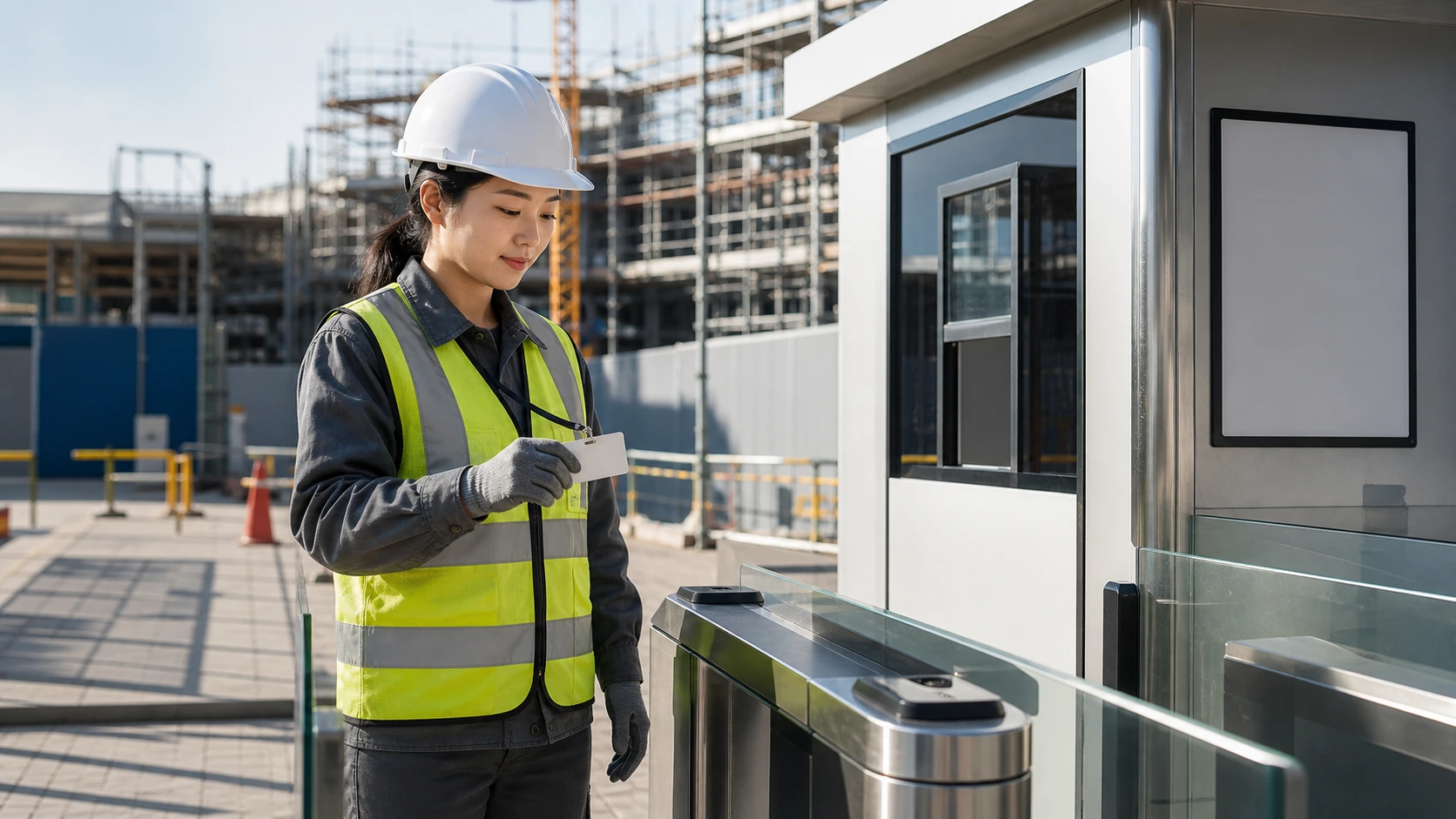
Korean Construction Site Entry and Attendance Phrases for Foreign Workers
Learn practical Workplace Korean for arriving at a construction site, showing an ID, checking in, confirming your name, entering safely, and checking out after work.
1. When to use these phrases
Why entry words matter
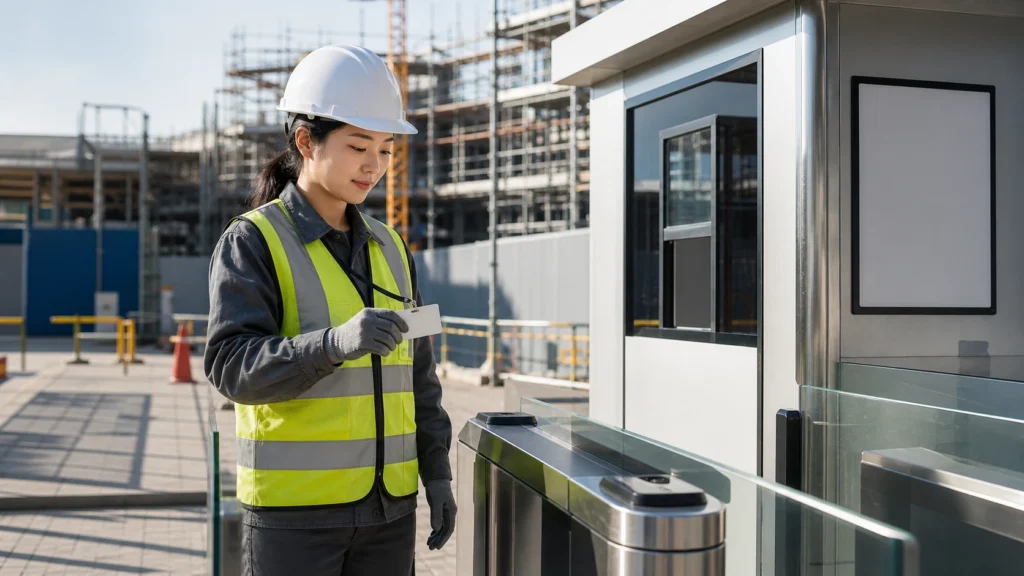
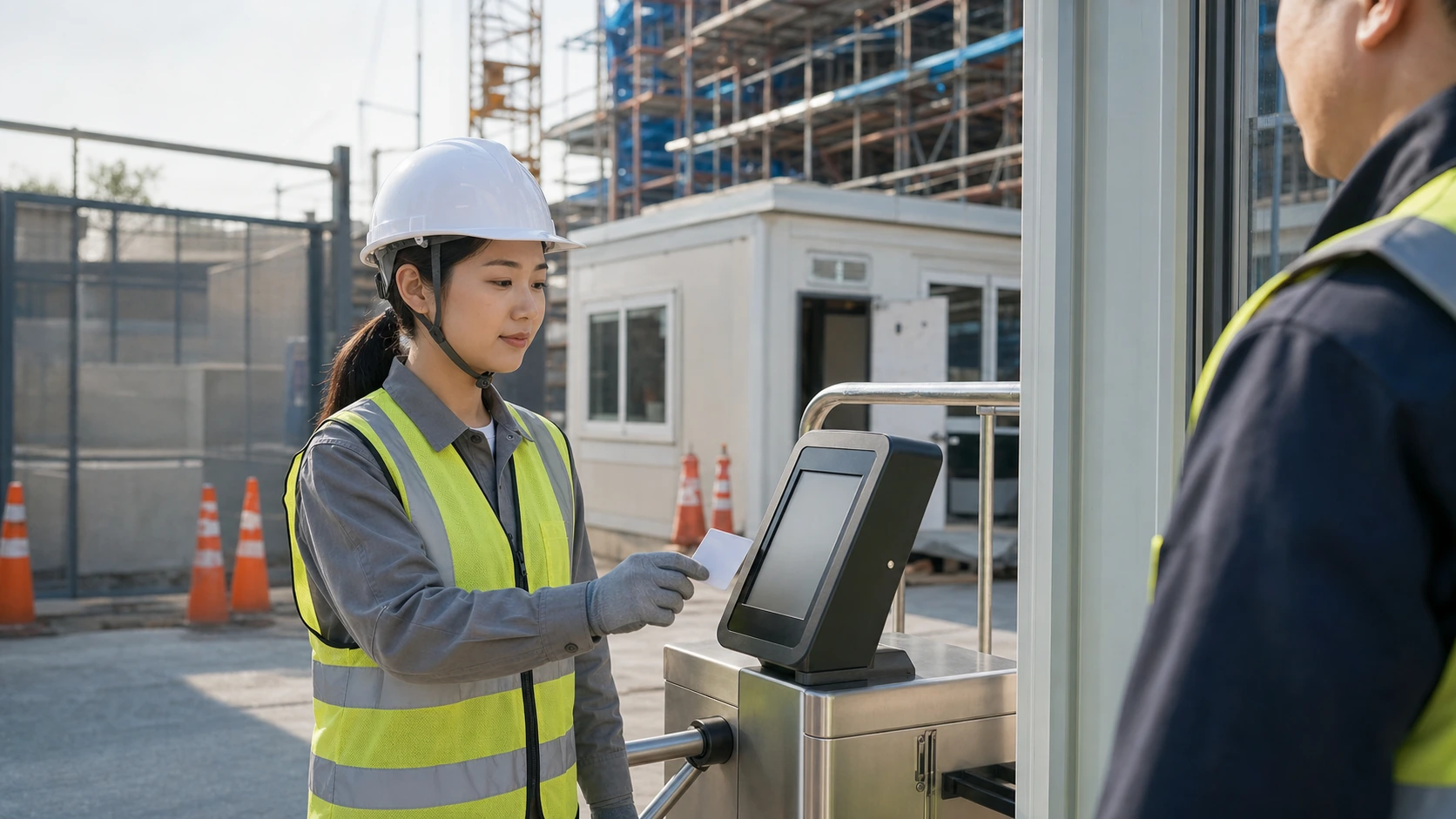
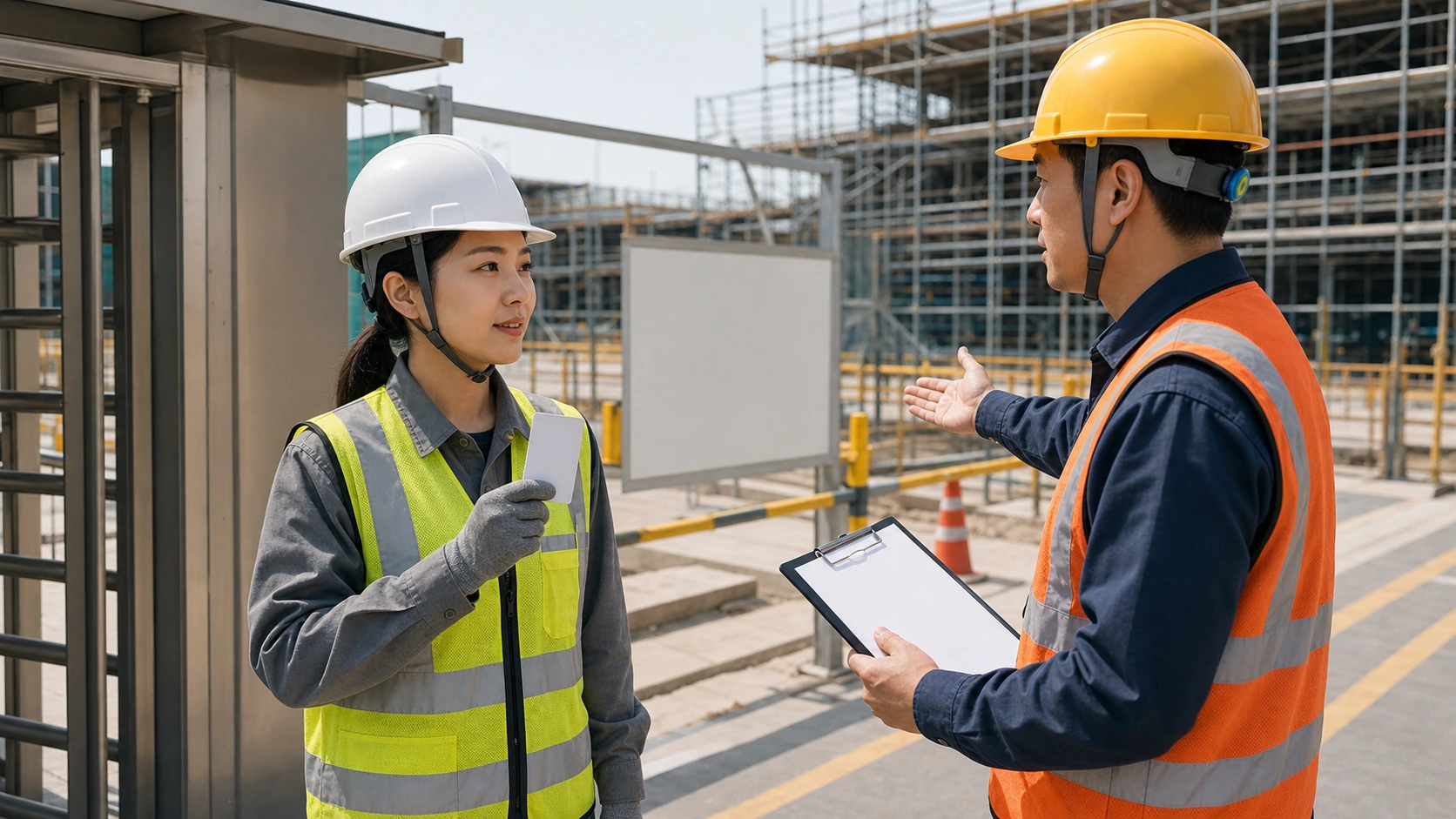
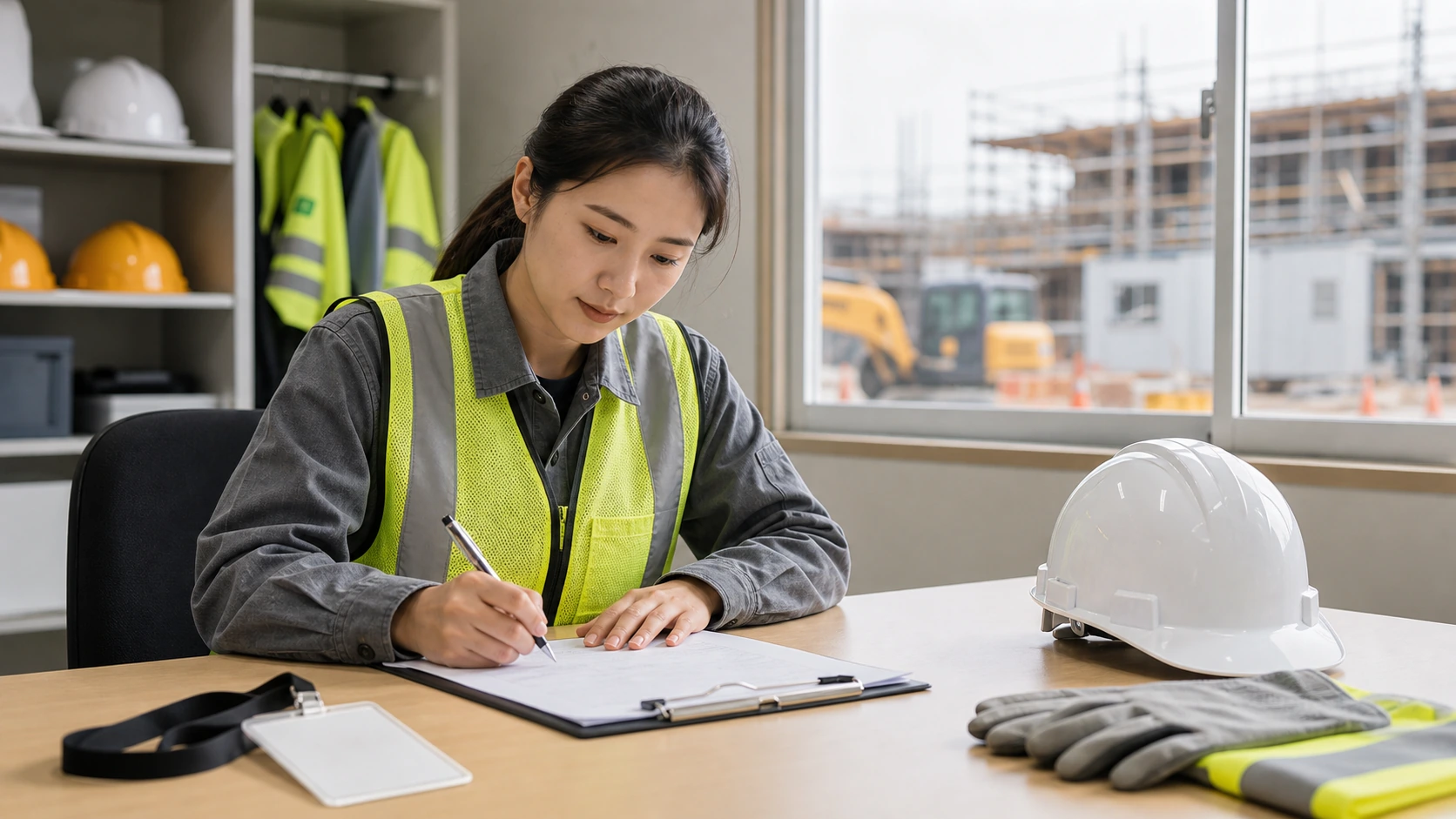
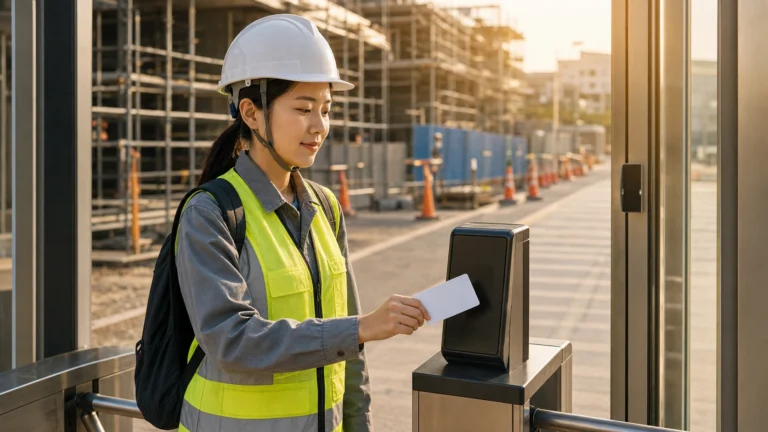
Entry and attendance words are the first Workplace Korean you may need before the work itself begins. At a Korean construction site, the gate staff or supervisor may ask for your ID, entry pass, name on a roster, safety training status, or supervisor approval. If you miss one short instruction at the gate, you may wait in the wrong place or enter before permission is clear.
This lesson is not a security policy or safety manual. It is a language lesson for foreign workers who need to check in, confirm their name, ask where to wait, and check out after work without guessing.
Before you enter
Before entering, confirm three things: your name is on the list, your entry pass or visitor pass is valid, and you know which gate or route to use. Korean staff may speak quickly because the checkpoint is busy. Use short phrases such as 명단에 제 이름이 있어요?, 어디에서 출근 확인해요?, and 다시 확인해 주세요.
Do not walk straight into the work area just because other people are moving. If you are new, late, replacing another worker, or visiting temporarily, ask for 관리자 승인 or 임시출입 허가 first.
The gate routine can feel simple, but many mistakes happen here: a worker uses the wrong entrance, forgets to sign the attendance sheet, keeps a visitor pass after work, or goes to the work area before safety orientation is confirmed. Treat the gate as the first safety checkpoint of the day. When in doubt, stop at the security office and ask one clear question before moving.
Core entry and attendance vocabulary
| Korean | Pronunciation | Meaning | Site example |
|---|---|---|---|
| 출근 | chulgeun | arrive at work / start work | 오늘 몇 시에 출근해요? |
| 퇴근 | toegeun | leave work | 퇴근 전에 출입증을 반납하세요. |
| 출입 | churip | entry and exit | 현장 출입 절차를 확인하세요. |
| 입장 | ipjang | enter | 입장 전에 신분증을 보여 주세요. |
| 현장 | hyeonjang | work site | 현장에 도착했습니다. |
| 정문 | jeongmun | main gate | 정문으로 들어오세요. |
| 후문 | humun | back gate | 후문은 오늘 사용하지 않습니다. |
| 출입구 | churipgu | entrance / exit | 출입구에서 대기하세요. |
| 보안실 | boansil | security office | 보안실에서 확인받으세요. |
| 경비실 | gyeongbisil | guard office | 경비실에 먼저 가세요. |
| 신분증 | sinbunjeung | ID card | 신분증을 보여 주세요. |
| 출입증 | churipjeung | entry pass | 출입증을 착용하세요. |
| 방문증 | bangmunjeung | visitor pass | 방문증을 발급받으세요. |
| 명단 | myeongdan | name list | 명단에 이름이 있어요? |
| 출근부 | chulgeunbu | attendance sheet | 출근부에 서명하세요. |
| 출석 | chulseok | attendance / presence | 출석 확인을 하겠습니다. |
| 확인 | hwagin | check / confirm | 이름을 확인해 주세요. |
| 서명 | seomyeong | signature | 여기에 서명하세요. |
| 등록 | deungnok | registration | 현장 등록이 필요합니다. |
| 발급 | balgeup | issue / provide a pass | 출입증을 발급받으세요. |
| 반납 | bannap | return | 퇴근할 때 반납하세요. |
| 분실 | bunsil | lost item | 출입증을 분실했습니다. |
| 재발급 | jaebalgeup | reissue | 재발급이 가능해요? |
| 대기 | daegi | wait | 여기서 잠깐 대기하세요. |
| 허가 | heoga | permission | 허가 없이 들어가면 안 돼요. |
| 승인 | seungin | approval | 관리자 승인이 필요합니다. |
| 관계자 | gwangyeja | authorized person | 관계자만 출입 가능합니다. |
| 외부인 | oebuin | outside visitor | 외부인은 방문증이 필요합니다. |
| 동행 | donghaeng | accompany | 처음에는 관리자와 동행하세요. |
| 안내 | annae | guide / information | 안내를 받고 이동하세요. |
| 출입금지 | churip geumji | no entry | 출입금지 구역입니다. |
| 임시출입 | imsi churip | temporary entry | 임시출입 허가를 받으세요. |
| 작업구역 | jageop guyeok | work area | 작업구역으로 바로 가지 마세요. |
| 안전교육 | anjeon gyoyuk | safety orientation | 안전교육 후 입장하세요. |
| 작업자 | jageopja | worker | 작업자 명단을 확인하세요. |
| 관리자 | gwallija | manager / supervisor | 관리자에게 확인받으세요. |
| 지각 | jigak | late arrival | 오늘 지각했습니다. |
| 조퇴 | jotoe | early leave | 조퇴하려면 말해 주세요. |
| 결근 | gyeolgeun | absence | 결근하면 미리 연락하세요. |
| 출근시간 | chulgeun sigan | start time | 출근시간을 확인하세요. |
How Korean entry instructions are built
Many Korean entry instructions combine a place, an object, and an action. 정문으로 들어오세요 means come in through the main gate. 신분증을 보여 주세요 means show your ID. 출근부에 서명하세요 means sign the attendance sheet. 출입증을 반납하세요 means return the pass.
The most useful pattern is object plus action: 신분증 보여 주세요, 명단 확인하세요, 출입증 반납하세요. Once you know the object, you can understand the request even when the full sentence is fast.
What staff may say
Gate staff may say 명단에 이름이 없어요, 보안실에서 확인받으세요, 출입증을 착용하세요, or 안전교육 후 입장하세요. Your answer can be short and clear: 네, 확인받겠습니다. If you are unsure, ask 어디로 가면 돼요? or 관리자 승인 필요해요?
How to ask again safely
- 신분증을 보여 드릴까요? Should I show my ID?
- 명단에 제 이름이 있어요? Is my name on the list?
- 어디에서 출근 확인해요? Where do I check in?
- 출입증을 어디에 반납해요? Where should I return the entry pass?
- 관리자 승인 필요해요? Do I need supervisor approval?
- 다시 확인해 주세요. Please check again.
Mini dialogues
Staff: 신분증을 보여 주세요. 명단을 확인하겠습니다.
Worker: 네. 명단에 제 이름이 있어요?
Staff: 네, 출근부에 서명하고 출입증을 착용하세요.
Worker: 어디에서 출근 확인해요?
Supervisor: 정문 옆 보안실에서 확인받으세요.
Worker: 알겠습니다. 확인 후 작업구역으로 가겠습니다.
Five-minute review routine
After work, write down five gate words you used today: 신분증, 출입증, 명단, 출근부, 반납. Add one question for each word. Before the next shift, read them once. The goal is to make the gate routine predictable before the site becomes noisy.
Related Workplace Korean lessons
Study this entry lesson before safety phrases, safety signs, PPE words, and emergency direction lessons. Entry words help you start the shift correctly; the other lessons help you move safely after you are inside.
2. Key vocabulary
arrive at work / start work
Beginnerleave work
Beginnerentry and exit
Beginnerenter
Beginnerwork site
Beginner3. Essential phrases
7. Related practical Korean lessons
 Workplace Korean
Korean Construction Site PPE and Protective Equipment Words for Foreign Workers
6월 18, 2026
Workplace Korean
Korean Construction Site PPE and Protective Equipment Words for Foreign Workers
6월 18, 2026
 Workplace Korean
Korean Construction Site Safety Signs and Warning Labels for Foreign Workers
6월 18, 2026
Workplace Korean
Korean Construction Site Safety Signs and Warning Labels for Foreign Workers
6월 18, 2026
 Workplace Korean
Korean Construction Site Safety Phrases for Foreign Workers
6월 18, 2026
Workplace Korean
Korean Construction Site Safety Phrases for Foreign Workers
6월 18, 2026
Practice this lesson in the app
Review these words with multiple-choice questions and weak-Learn Korean.
Practice this lesson →
답글 남기기
Please sign in with Google to comment. Sign in with Google