Korean Parking Lot Words for Foreign Residents
Learn parking lot words for practical life in Korea with Korean examples, key meanings, review tables, and BSKorean app practice.
1. When to use these phrases
Use this parking lot resident lesson first
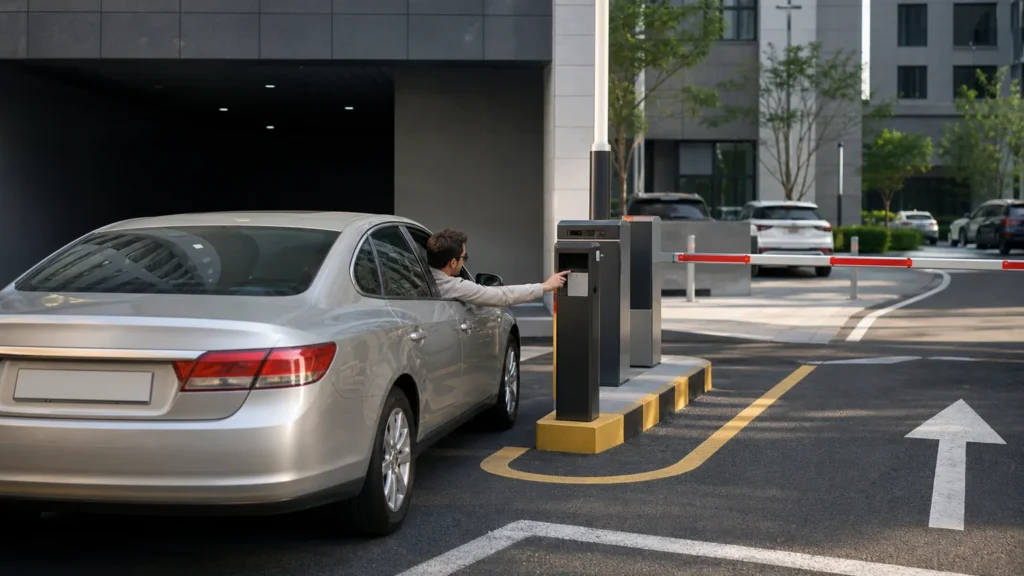
Resident parking Korean starts with access. Say 방문 주차 가능해요?, “is visitor parking possible?” Then check 입구, 출구, 정기권, 주차 요금, and 정산기.
| Parking need | Korean | Meaning |
|---|---|---|
| Visitor parking | 방문 주차 가능해요? | Is visitor parking possible? |
| Monthly pass | 정기권 신청하고 싶어요 | I want to apply for a monthly pass. |
| Fee | 주차 요금은 얼마예요? | How much is the parking fee? |
| Exit | 출구가 어디예요? | Where is the exit? |
If a machine asks for your license plate, enter it privately and keep the receipt. Related lessons: parking lot briefing words and street sign words.
parking lot words guide
parking lot words helps learners practice Korean words in real situations. This BSKorean post keeps the lesson clear, scannable, and connected to app practice.
Related lessons
Parking lot words are useful when you drive, ride with someone, visit an apartment, go to a clinic, shop at a mart, or pay for parking in Korea. This lesson teaches parking lot words for the lot, ticket, fee, payment machine, free or paid parking, full lots, vehicle numbers, and exit gates.
Briefing Summary
| Situation | Using a parking lot or parking garage in Korea |
|---|---|
| Practice focus | place, ticket, payment, fee, status, vehicle number, and exit words |
| Useful for | foreign residents, students, workers, drivers, and visitors in Korea |
| Study time | 8-12 minutes |
Slide 1. The Situation
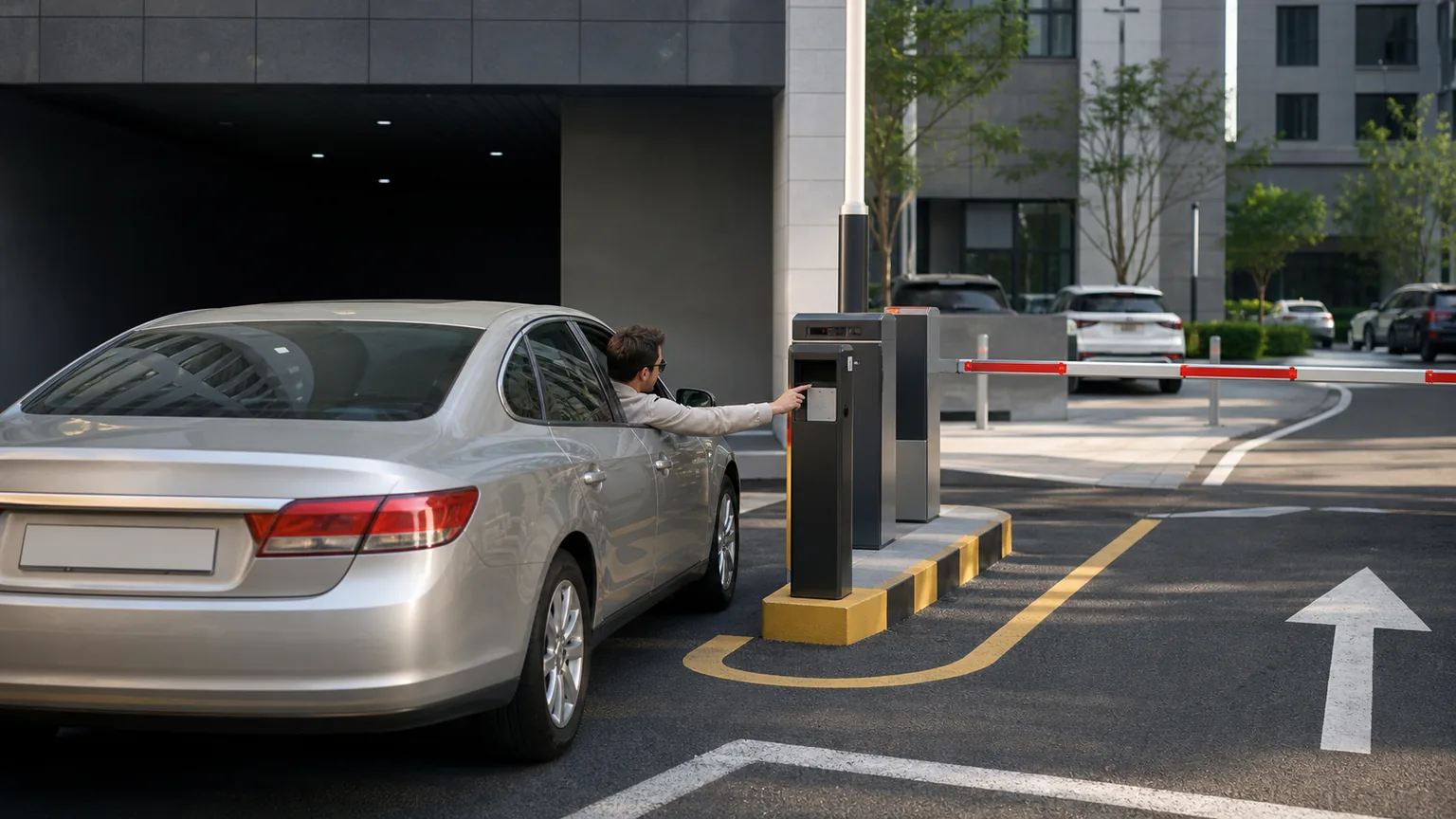
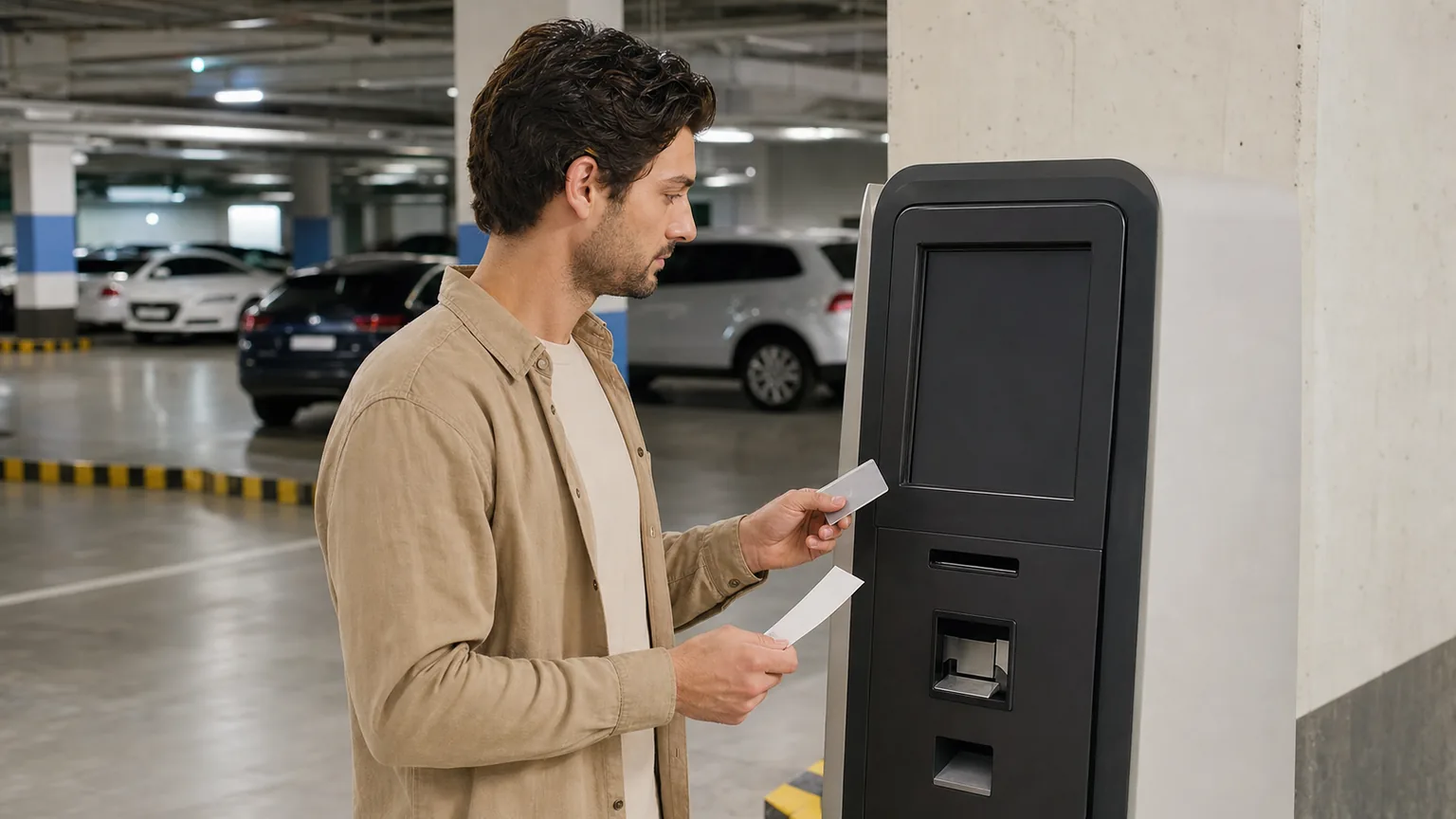
Imagine you enter a 주차장 and see a gate, a payment kiosk, and several signs. First identify the place and action: 주차 means parking, and 주차하다 means to park. Then scan for the ticket, fee, availability, and exit words.
This post is a Korean language lesson, not parking law, fine, towing, disabled parking eligibility, payment dispute, or building management advice. Real rules, fees, permit requirements, and penalties should be confirmed with the posted notice, parking operator, building office, or responsible authority.
Slide 2. Key Parking Lot Words
| Korean | Romanization | English | Level | Use |
|---|---|---|---|---|
| 주차장 | juchajang | parking lot | BS1 | The parking lot or parking area. |
| 주차 | jucha | parking | BS1 | The general idea of parking. |
| 주차하다 | juchahada | to park | BS2 | The action of parking a vehicle. |
| 주차권 | juchagwon | parking ticket | BS3 | Ticket issued when entering or paying for parking. |
| 정산기 | jeongsangi | payment machine; fare adjustment machine | BS4 | Machine used to settle or pay the parking fee. |
| 주차요금 | jucha yogeum | parking fee | BS3 | Amount paid for parking. |
| 무료 주차 | muryo jucha | free parking | BS3 | Parking that does not require payment for a stated period. |
| 유료 주차 | yuryo jucha | paid parking | BS3 | Parking that requires payment. |
| 입차 | ipcha | vehicle entry | BS4 | Vehicle entering a parking area. |
| 출차 | chulcha | vehicle exit | BS4 | Vehicle leaving a parking area. |
| 만차 | mancha | full parking lot; no spaces | BS3 | Status word meaning there are no parking spaces. |
| 공영주차장 | gongyeong juchajang | public parking lot | BS4 | Public parking lot, often operated by a local authority or public system. |
| 장애인 주차구역 | jangaein jucha guyeok | accessible parking area | BS4 | Designated accessible parking area. |
| 차단기 | chadangi | parking barrier gate | BS4 | Parking gate or barrier arm at entry or exit. |
| 차량번호 | charyang beonho | vehicle number; license plate number | BS3 | Vehicle number used for lookup or payment. |
Slide 3. Read the Parking Lot in Five Passes
- Pass 1: Place. Find 주차장 or 공영주차장 first.
- Pass 2: Ticket or lookup. Keep the 주차권 or enter the 차량번호 if the machine asks for it.
- Pass 3: Fee. Look for 정산기, 주차요금, 무료 주차, and 유료 주차.
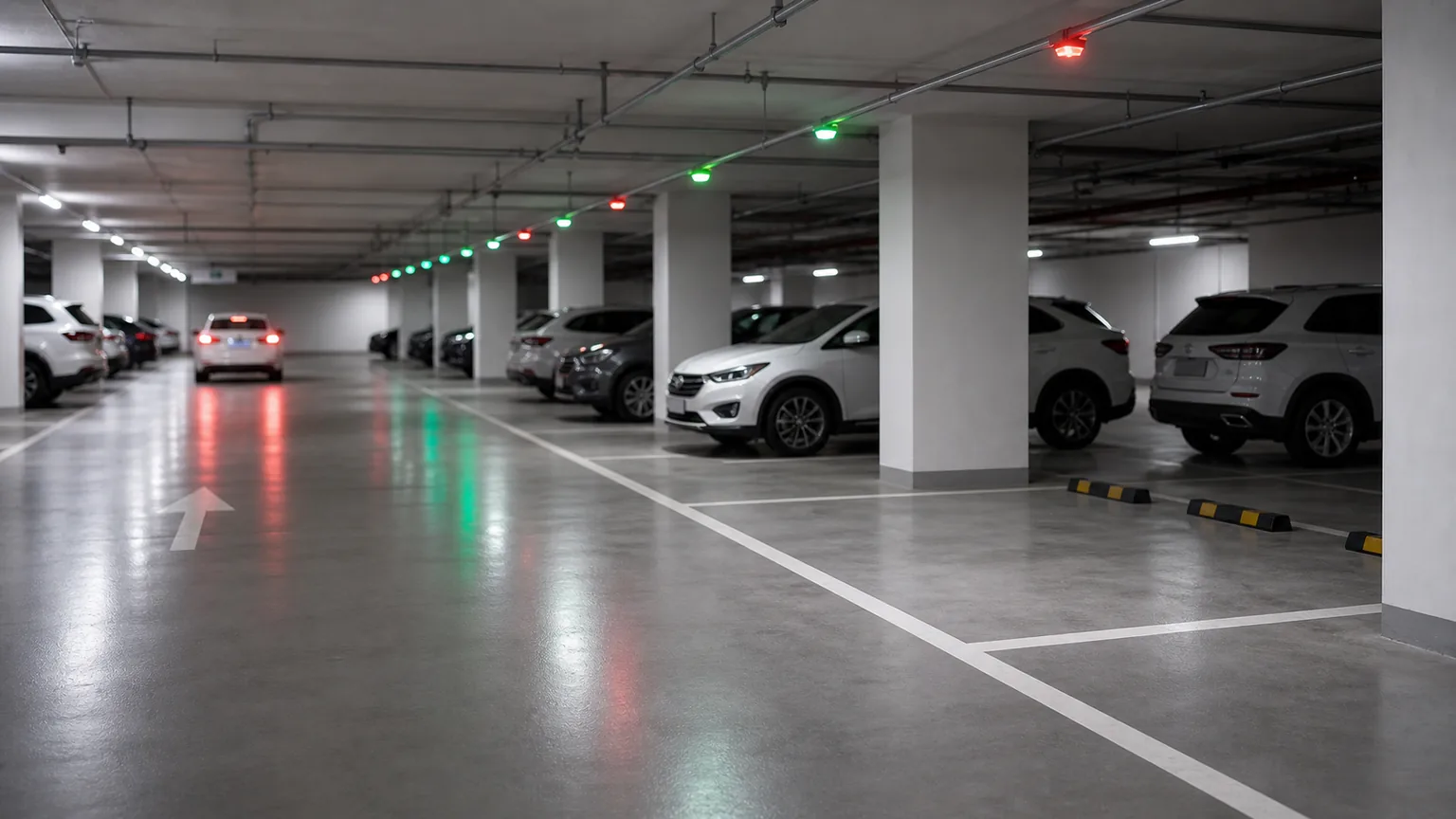
- Pass 4: Status. If you see 만차, the lot is full. If you see 장애인 주차구역, check whether your vehicle is permitted.
- Pass 5: Exit. Use 입차, 출차, and 차단기 to understand the entry and exit flow.
Slide 4. Common Parking Lot Mistakes
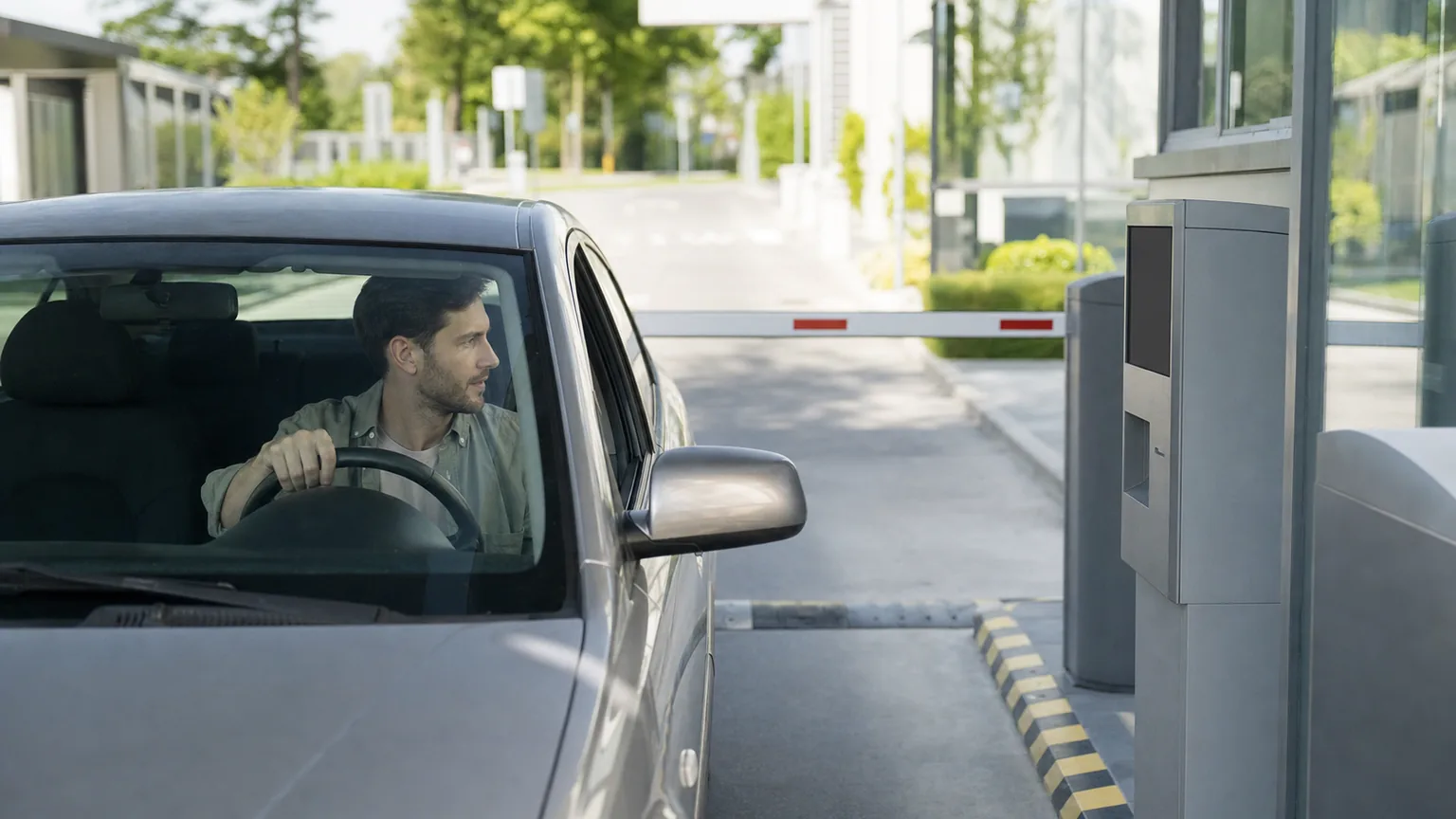
The first mistake is mixing the fee with free parking. 주차요금 is the parking fee. 무료 주차 means free parking, often for a fixed time or condition.
The second mistake is mixing entry and exit. 입차 means vehicle entry. 출차 means vehicle exit. The words may appear on lane signs, receipts, or payment screens.
The third mistake is reading 차단기 too broadly. In a parking lot, it usually means the gate or barrier arm. In other contexts, it can mean a breaker or blocking device, so context matters.
Slide 5. Practice With BSKorean
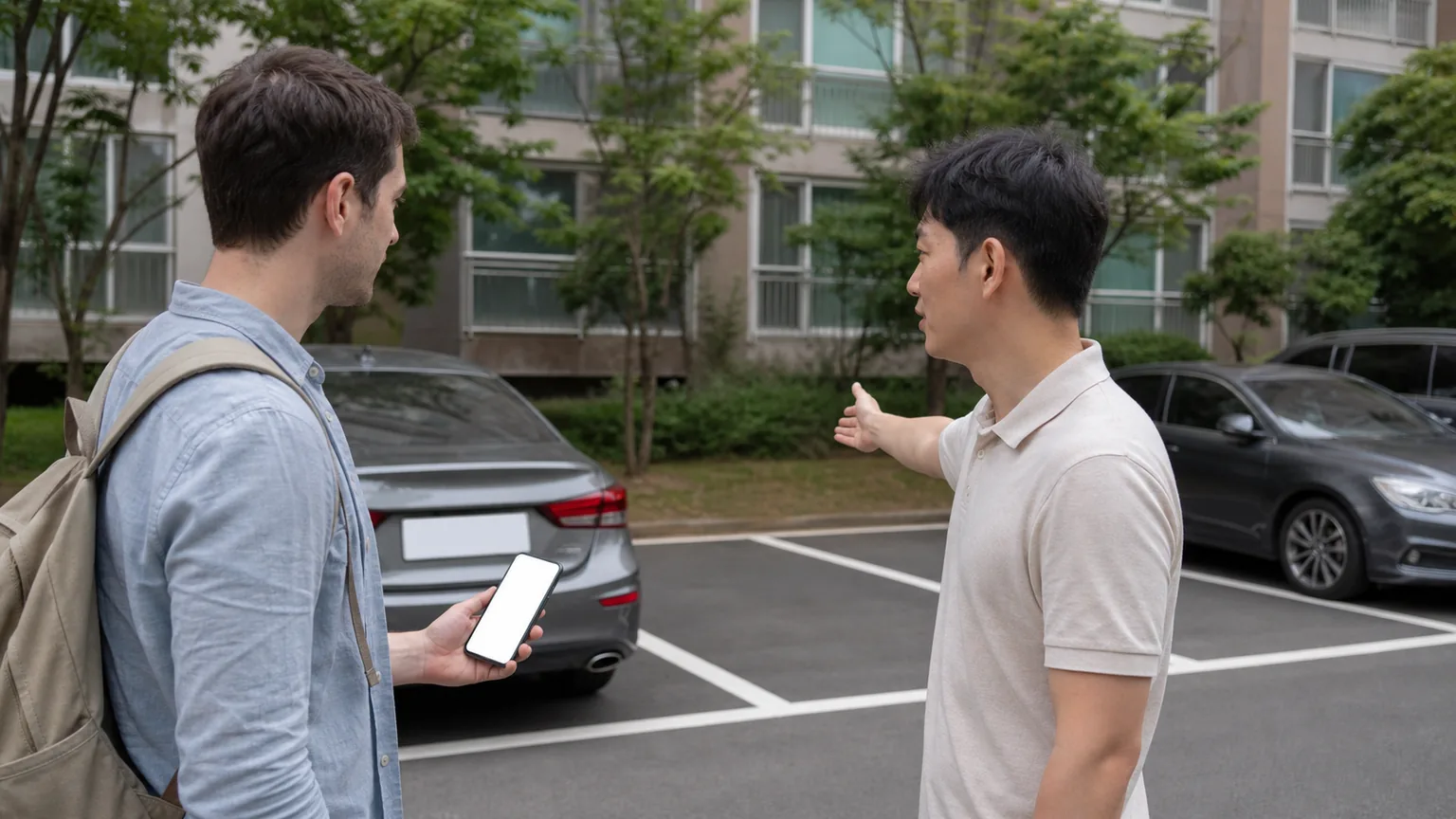
Practice this topic in BSKorean: Read the BSKorean app guide, then open the practice app. This exact article set keeps the parking lot words together so you can review place, ticket, fee, status, vehicle number, and exit words in one focused session.
A good practice habit is to say the scan order first: place, ticket, fee, status, exit. Then say the Korean word. This makes a real parking lot easier to read when several signs and payment screens appear at once.
Mini Review Table
| If you see… | Think… |
|---|---|
| 주차장 | This is the parking lot. |
| 주차권 | This is the parking ticket. |
| 정산기 | This is the payment machine. |
| 주차요금 | This is the parking fee. |
| 무료 주차 | This means free parking. |
| 만차 | This means the lot is full. |
| 출차 | This means vehicle exit. |
| 차량번호 | This is the vehicle number. |
Final Takeaway
You do not need to translate every parking notice at once. First find the place, keep the ticket or vehicle number, check the fee, then follow the exit words. These Korean parking lot words give you a practical order for using parking areas more confidently.
Related Lessons
2. Key vocabulary
to park
Beginnerparking lot
Beginnerwhere
Beginnerparking
Beginnerfree parking
Beginner3. Essential phrases
7. Related practical Korean lessons



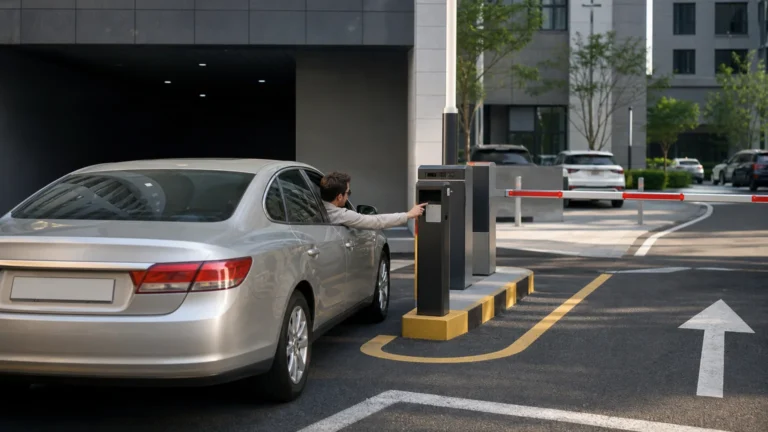
Practice this lesson in the app
Review these words with multiple-choice questions and weak-Learn Korean.
Practice this lesson →