Korean payslip words help you understand what happened to your pay: the salary amount, hourly wage, pre-tax amount, deductions, insurance lines, net pay, pay date, account, and deposit. This lesson is for language recognition, so you can find the important words before asking payroll a clearer question.

Briefing Summary
| Situation | Reading a Korean payslip after payday |
|---|---|
| Practice focus | salary, hourly wage, pre-tax amount, deductions, insurance, net pay, pay date, account, and deposit words |
| Useful for | foreign workers, factory workers, service workers, and anyone paid by salary or hourly wage in Korea |
| Study time | 8-12 minutes |
Slide 1. The Payslip Moment
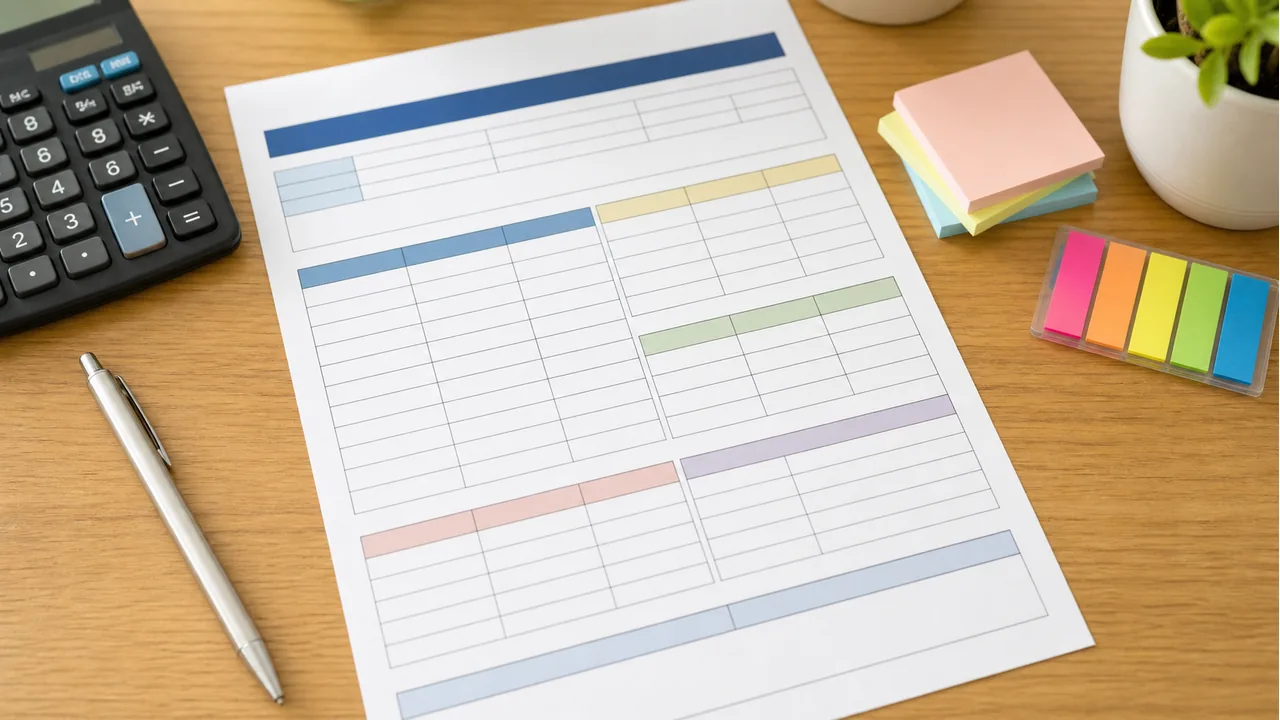
Imagine you receive a 급여명세서 after payday. The first question is simple: what was paid, what was deducted, and what arrived in your account? Start with 급여, 세전 금액, 공제, and 실수령액. These words give you the basic map of the page.
This post is a Korean language lesson, not tax, labor, or financial advice. If you think a real payslip is wrong, ask payroll, a local help center, or a qualified professional. The goal here is to help you recognize the words that deserve a question.
Slide 2. Key Korean Payslip Words
| Korean | Romanization | English | Level | Use |
|---|---|---|---|---|
| 급여 | geubyeo | salary; pay | BS2 | Main pay word on a payslip. |
| 급여명세서 | geubyeo myeongseoseo | payslip; pay statement | BS5 | The document that explains pay. |
| 월급 | wolgeup | monthly salary | BS1 | Monthly salary amount. |
| 시급 | sigeup | hourly wage | BS2 | Hourly pay rate. |
| 세전 금액 | sejeon geumaek | pre-tax amount | BS5 | Amount before taxes and deductions. |
| 공제 | gongje | deduction | BS4 | Money subtracted from pay. |
| 소득세 | sodeukse | income tax | BS5 | Income tax line. |
| 국민연금 | gungmin yeongeum | national pension | BS5 | National pension deduction line. |
| 건강 보험 | geongang boheom | health insurance | BS4 | Health insurance deduction line. |
| 고용보험 | goyong boheom | employment insurance | BS5 | Employment insurance deduction line. |
| 산재보험 | sanjae boheom | industrial accident insurance | BS5 | Workplace accident insurance line. |
| 실수령액 | silsuryeong-aek | net pay; take-home pay | BS5 | Final amount you receive. |
| 지급일 | jigeubil | pay date | BS3 | Date the pay is issued. |
| 계좌 | gyejwa | bank account | BS1 | Bank account for payment. |
| 입금 | ipgeum | deposit | BS1 | Deposit into the bank account. |
Slide 3. Read a Payslip in 3 Steps

- Step 1: Find the pay type. Look for 급여, 월급, and 시급. These tell you whether the page is talking about pay, monthly salary, or hourly wage.
- Step 2: Compare before and after deductions. Find 세전 금액, 공제, and 실수령액. This helps you separate the starting amount from the final amount.
- Step 3: Match the final amount to your bank. Check 지급일, 계좌, and 입금. These words connect the payslip to the bank deposit.
Slide 4. Deductions and Insurance Words

The word 공제 means deduction. It is the big category for money subtracted from pay. On many payslips, you may also see insurance or tax words such as 소득세, 국민연금, 건강 보험, 고용보험, and 산재보험.
Do not try to solve every number from vocabulary alone. Use these words as labels. If a line looks unexpected, point to the Korean word and ask: “What is this item?” or “Why was this deducted?” That is a practical first step.
Slide 5. Practice With BSKorean
Practice this topic in BSKorean: Read the BSKorean app guide, then open the practice app. Use this article set to practice Korean word, romanization, English meaning, and the payslip situation together.
A useful habit is to group the page first: pay, deductions, insurance, final amount, date, and bank. Then say the Korean word. That makes a busy payslip easier to scan.
Mini Review Table
| If you see… | Think… |
|---|---|
| 급여명세서 | This tells you the page is a payslip or pay statement. |
| 세전 금액 | This is the amount before taxes and deductions. |
| 공제 | This means a deduction from pay. |
| 건강 보험 | This points to the health insurance line. |
| 실수령액 | This is the final take-home amount. |
| 지급일 | This is the pay date. |
| 계좌 | This is the bank account. |
| 입금 | This means the money was deposited. |
Final Takeaway
You do not need to understand every small number to begin reading a payslip. First find the payslip word, then the pay, deduction, insurance, net pay, pay date, account, and deposit words. These Korean payslip words help you ask better questions when your pay arrives.
Related Lessons
- Korean Employment Contract Words for Foreign Workers
- Korean Workplace Schedule Words for Foreign Workers
- Korean Bank Transfer Words: A Briefing-Style Lesson
- Korean Workplace Problem Report Phrases for Foreign Workers
Practice these Korean words in the BSKorean app
After reading this lesson, continue with the BSKorean practical Korean app guide or open the BSKorean practice app to review words by level and real-life situation.