Briefing Summary
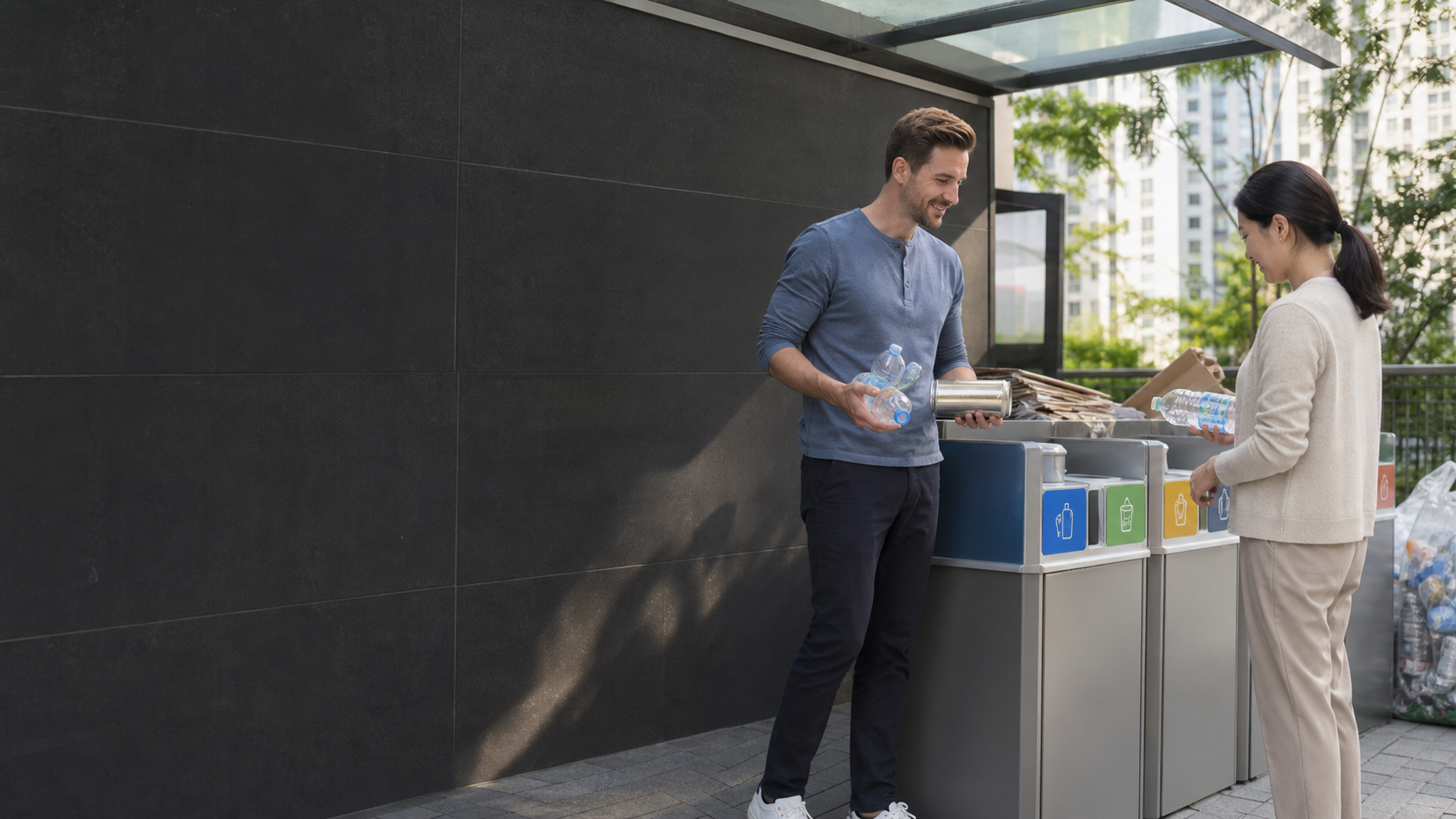
Korean recycling words are essential when you live in Korea, especially in apartments, studios, dorms, or shared housing. The difficult part is not the idea of recycling. It is reading the right label at the right moment. This briefing follows a five-slide lesson: identify the waste type, choose the correct bag or bin, watch food waste rules, sort recyclables, and handle bulky waste without guessing.
Download the complete Korean recycling words PPT briefing
Slide 1. The Situation
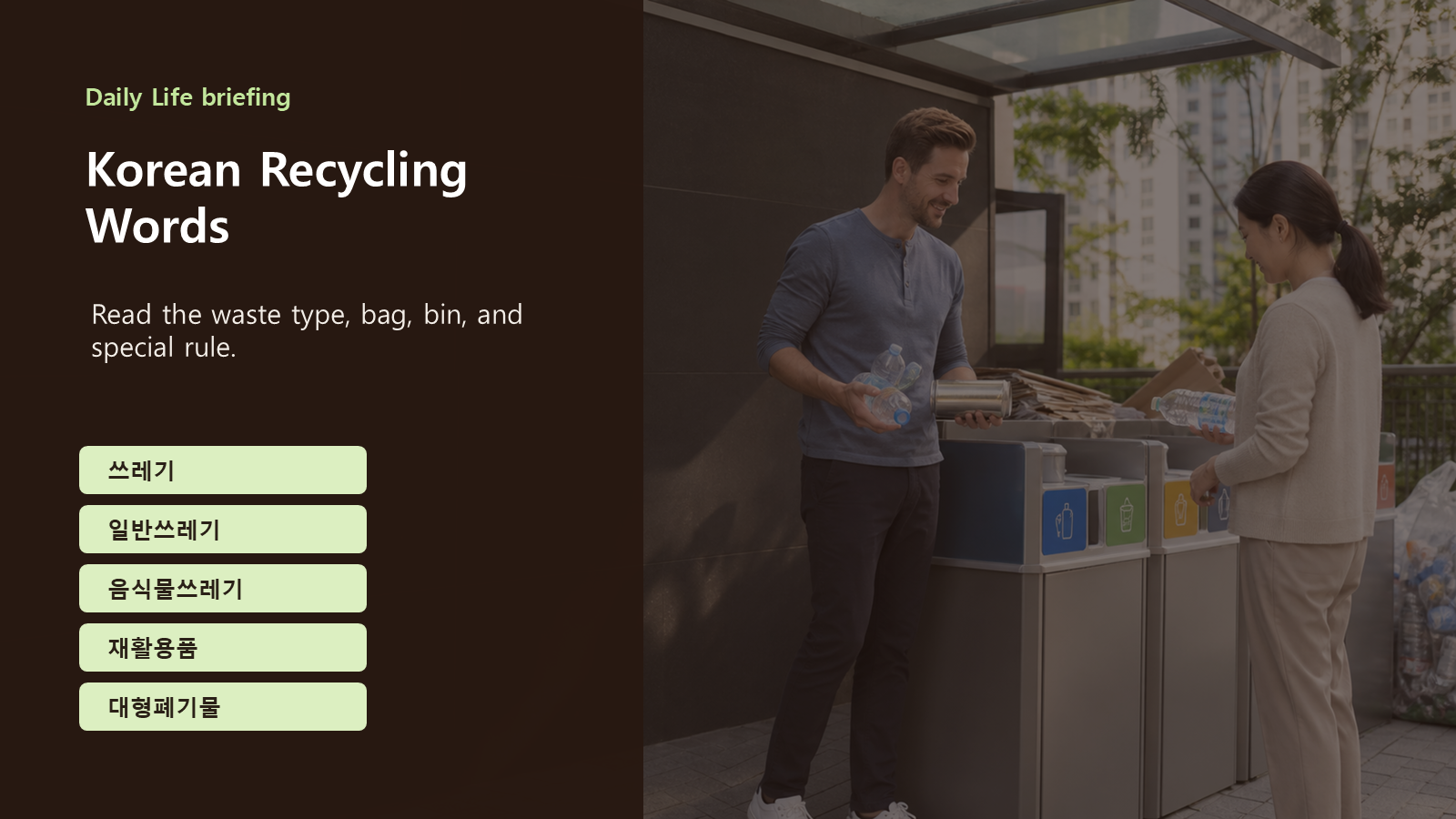
You are standing at an apartment recycling area with bottles, paper, a small trash bag, and maybe food scraps from dinner. The bins look familiar, but the Korean labels can change your next action. Some items go into 재활용품. Some become 일반쓰레기. Food scraps may need a separate container or bag. Large items like a chair may be 대형폐기물, not normal trash.
The slide shows a calm sorting area because this lesson is about practical reading. You do not need to understand every recycling notice. First, find the object word. Then look for the disposal action. If you can recognize 분리수거, 쓰레기봉투, 음식물쓰레기, and 분리배출, you can avoid the most common mistakes.
Slide 2. Key Recycling Words
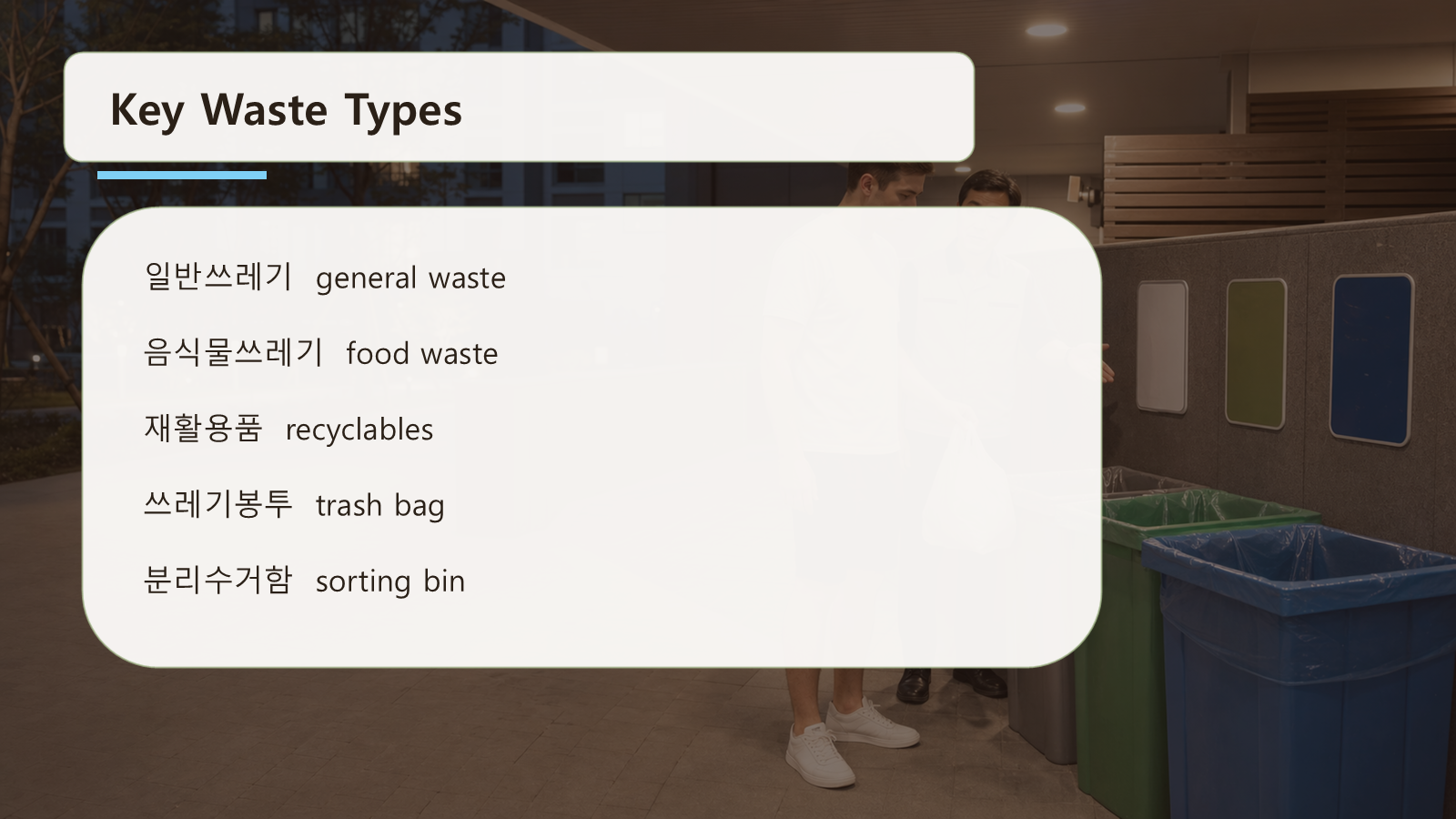
The table below gives fifteen Korean recycling words from the Wordbook database. They are grouped around one daily route: name the waste, decide whether it is general trash, food waste, or recycling, then choose the right bag or bin.
| Korean | Romanization | English | Usage |
|---|---|---|---|
| 쓰레기 | sseuregi | trash | The general word for waste, but it does not tell you the disposal type. |
| 생활 폐기물 | saenghwal pyegimul | household waste | A formal term for waste made in daily home life. |
| 음식물쓰레기 | eumsikmul sseuregi | food waste | Use this for food scraps that go in a separate container or bag. |
| 일반쓰레기 | ilban sseuregi | general waste | This is non-recyclable waste that usually needs a paid trash bag. |
| 재활용품 | jaehwaryongpum | recyclables | This means items that should go to recycling, not general trash. |
| 분리수거 | bulli sugeo | waste sorting | This is the everyday word for sorting recycling and waste. |
| 분리배출 | bulli baechul | separate disposal | A notice-style word meaning you must put items out by type. |
| 분리수거함 | bulli sugeoham | sorting bin | Look for this bin area in apartment basements or outside zones. |
| 쓰레기봉투 | sseuregi bongtu | trash bag | This often means the official paid bag for general waste. |
| 종이류 | jongnyu | paper items | Use this label for paper waste, paper bags, boxes, and similar items. |
| 플라스틱류 | peullaseutiknyu | plastic items | This label covers plastic containers, packaging, and similar items. |
| 페트병 | peteubyeong | plastic bottle | A common recycling word for drink bottles made from PET plastic. |
| 비닐봉지 | binil bongji | plastic bag | This means a thin plastic bag, often sorted differently from hard plastic. |
| 대형폐기물 | daehyeong pyegimul | bulky waste | This is for large items like furniture that need a special process. |
| 분리배출하다 | bulli baechulhada | to dispose separately | Use this verb when a notice tells residents to sort before disposal. |
Start with the big category. 쓰레기 is broad, so it is only your first clue. The important question is what kind of trash it is. 일반쓰레기 usually needs an official trash bag. 음식물쓰레기 goes separately. 재활용품 must be sorted into the right bin.
Next, notice the place word or container word. 분리수거함 tells you where sorted items go. 쓰레기봉투 tells you a bag is required. If a notice says 대형폐기물, do not leave the item beside normal bins. Large waste often needs a report, sticker, fee, or assigned pickup day.
Slide 3. Reading Formulas
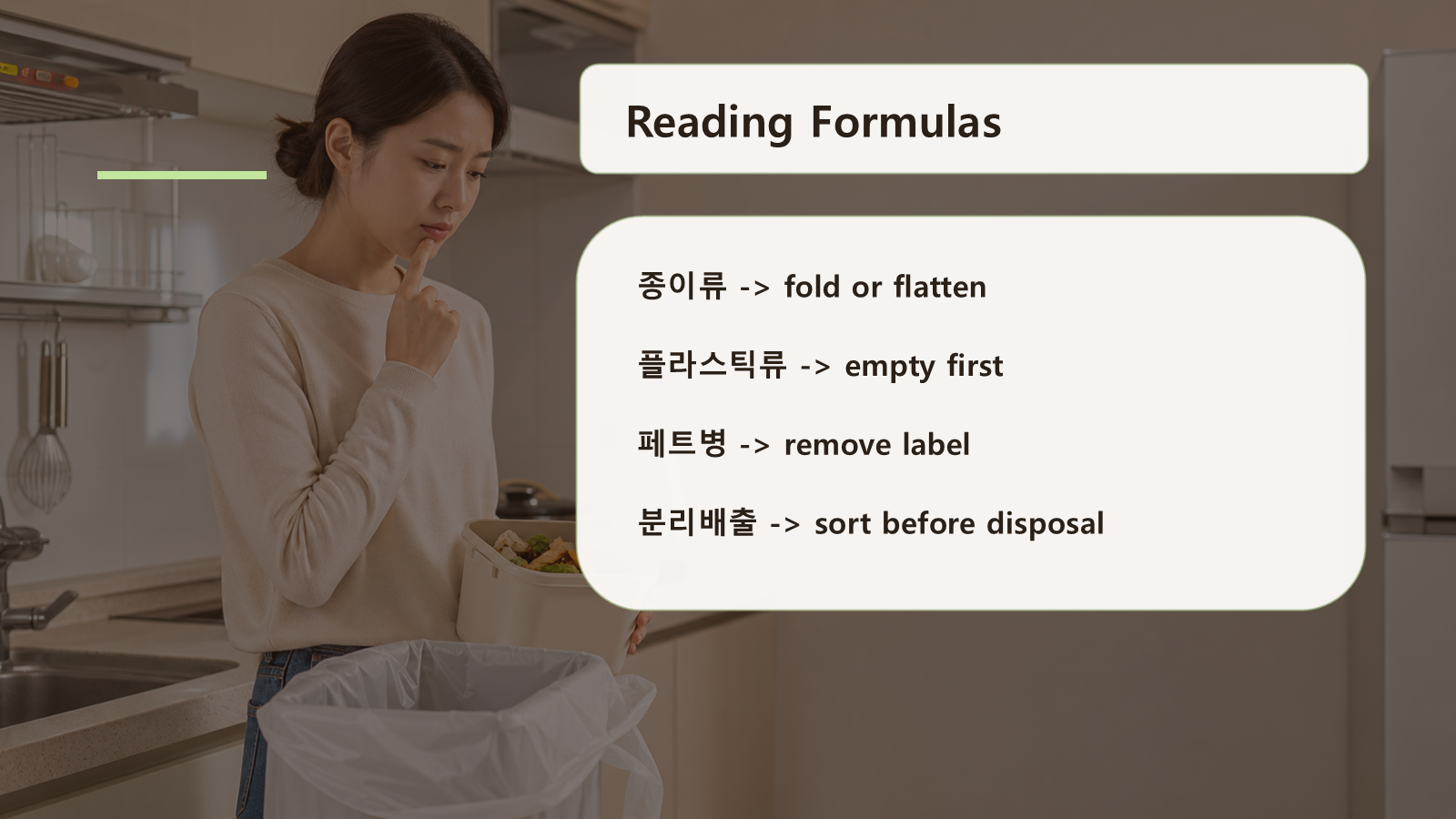
Recycling Korean becomes easier when you read labels as formulas. Type plus container is the first formula. 플라스틱류 + 분리수거함 means plastic items go into the sorting bin. 종이류 + 접어서 often means paper should be folded or flattened. 페트병 + 라벨 제거 tells you to remove the bottle label.
The second formula is waste type plus disposal action. 재활용품을 분리배출하세요 means you should dispose of recyclables separately. 음식물쓰레기는 따로 버리세요 means food waste is separate from other trash. In signs, 따로 and 분리 both warn you not to mix items.
The third formula is exception plus special process. 대형폐기물 is the key warning word. A chair, mattress, desk, or shelf may not belong in the normal trash area. If you see that word, check whether the apartment office, district office, or app requires a pickup request.
A small reading habit helps here. Do not start with the longest sentence on the sign. Scan for the material word first. Then scan for the action word near it. If you see 종이류, the notice is probably about paper. If you see 플라스틱류 or 페트병, the rule is probably about emptying, separating, or removing a label.
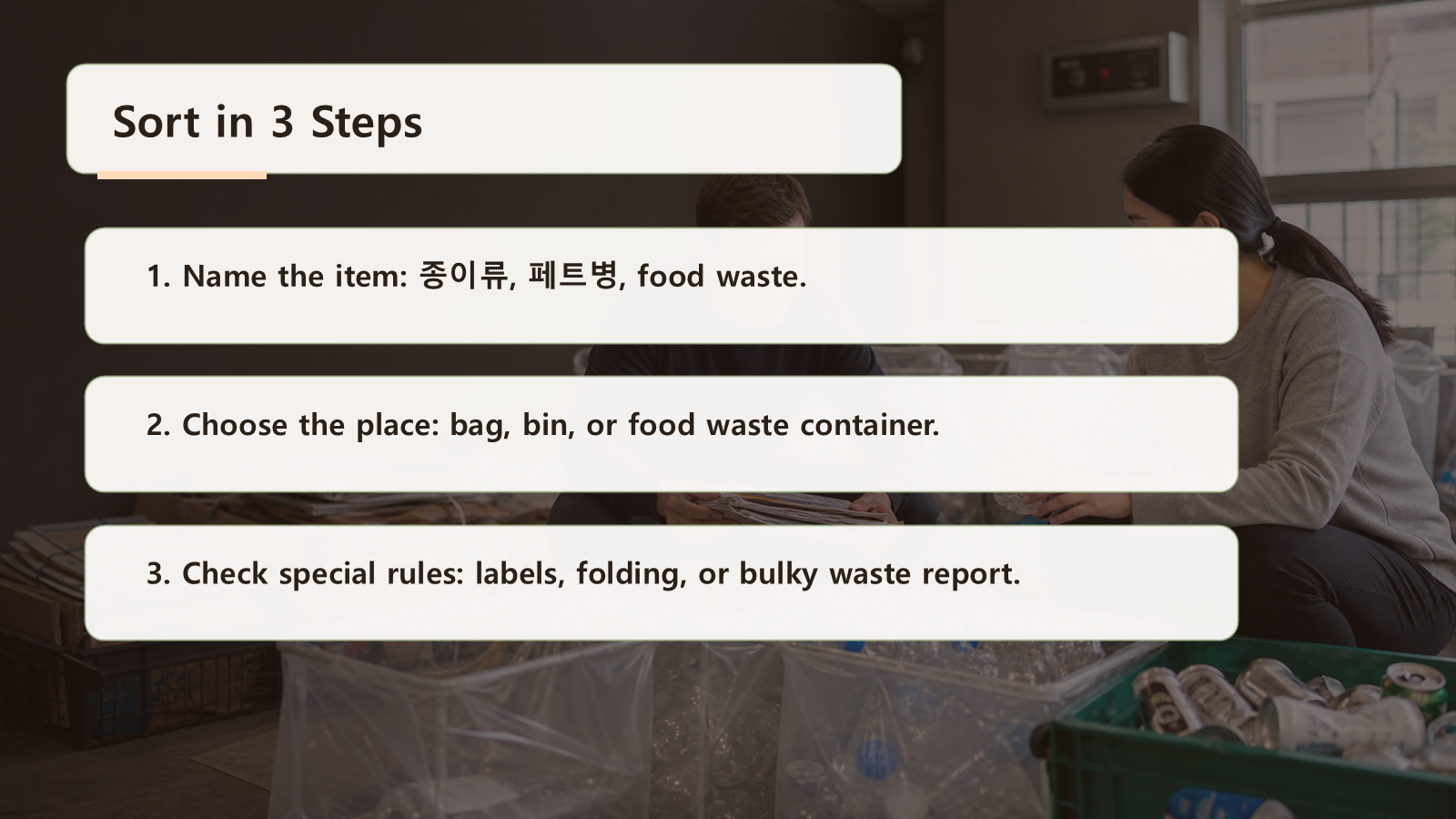
Slide 4. Read Recycling Korean in 3 Steps
Step one is to name the item. Ask yourself whether it is paper, plastic, food waste, a plastic bottle, or a large item. Match the item to a word such as 종이류, 플라스틱류, 음식물쓰레기, 페트병, or 대형폐기물. This prevents you from using one general trash idea for everything.
Step two is to choose the correct container. If the notice says 일반쓰레기, look for the correct 쓰레기봉투. If the label says 재활용품, move to the 분리수거함. If it says 음식물쓰레기, check whether your building uses a food waste bin, card reader, or special bag.
Step three is to check the special rule. Bottles may need emptying. Paper may need folding. Plastic bags may be collected separately. Large items may need registration. This is where 분리배출 matters. The word does not only mean recycling. It means you must separate the item correctly before putting it out.
This three-step method also helps when a neighbor or building staff member gives a quick instruction. Listen for the item word first. Then listen for the container or action word. You can ask a short question like 이건 어디에 버려요?, which means “Where do I throw this away?”
If the answer is too fast, repeat only the key word you heard. For example, say 음식물쓰레기요? or 재활용품이에요? with a questioning tone. This keeps the conversation simple. You are not asking for a full grammar explanation. You are confirming which disposal category controls the next step.
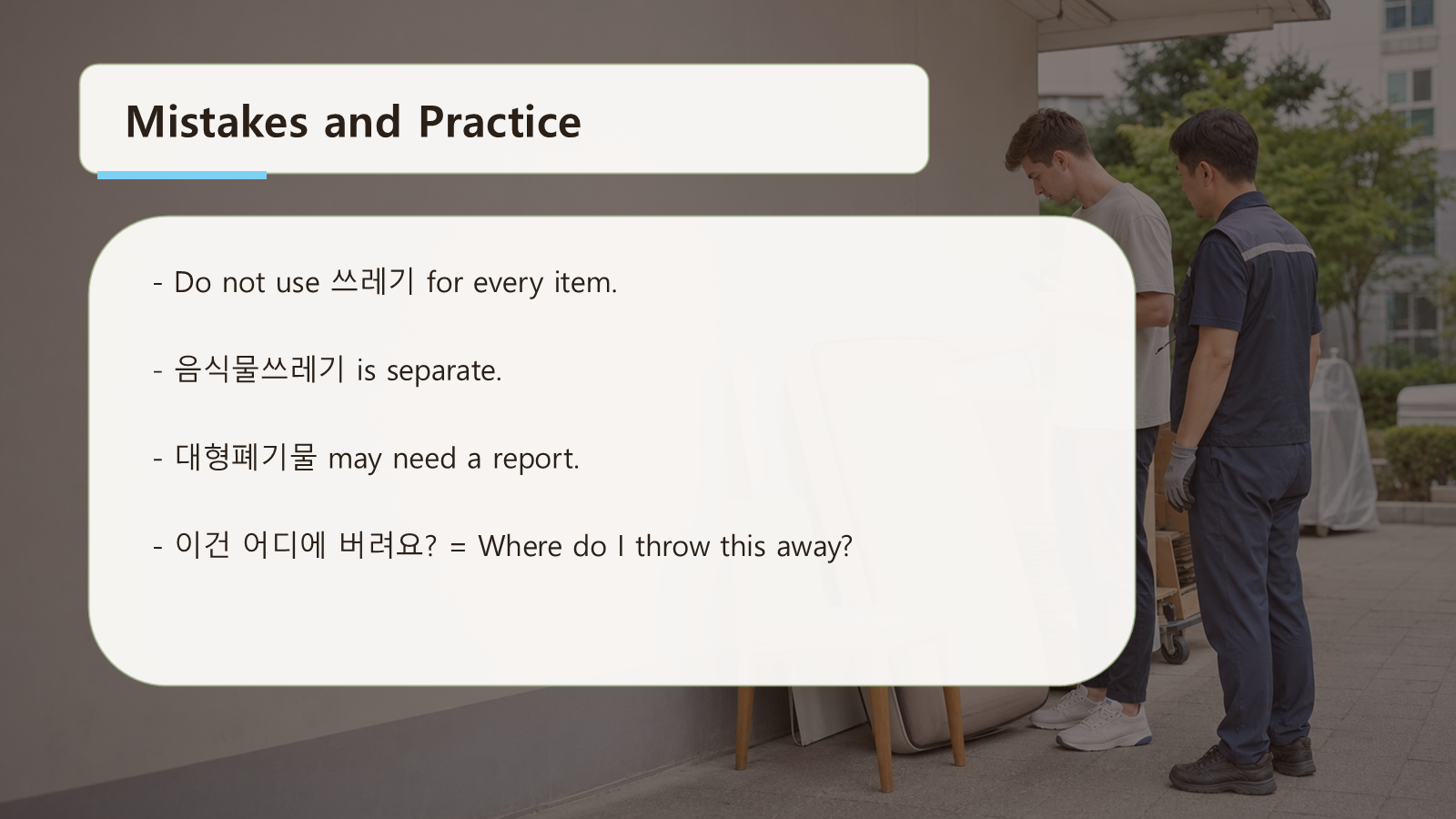
Slide 5. Mistakes and Practice
The first mistake is using 쓰레기 for every situation. It is a useful word, but it is too broad. When you read an apartment notice, look for the more exact label. 일반쓰레기, 음식물쓰레기, and 재활용품 lead to different actions.
The second mistake is putting dirty recyclables directly into the bin. A notice may ask residents to empty, rinse, flatten, or remove labels. Even if those verbs are new, the category words still help. If you see 페트병, check the bottle. If you see 종이류, check whether boxes should be flattened.
The third mistake is treating 대형폐기물 as normal trash. Large waste rules are strict in many Korean cities. If you are unsure, ask building staff before leaving the item outside. A simple question is enough: 대형폐기물 신고해야 해요? It means “Do I need to report bulky waste?”
Practice
Answer these quick recognition questions. 1. Which word means food waste: 음식물쓰레기 or 종이류? 2. Which word means a sorting bin: 분리수거함 or 쓰레기봉투? 3. Which word warns you about large waste: 대형폐기물 or 페트병?
Mini scenario: you have a plastic drink bottle and a pizza box. The bottle is 페트병, so empty it and check the label. The pizza box may be 종이류 only if it is not too dirty. The answer key is 음식물쓰레기, 분리수거함, and 대형폐기물. The main habit is simple: identify, sort, then dispose.
Mini Review Table
| If you see… | It usually means… | What to do |
|---|---|---|
| 일반쓰레기 | Non-recyclable waste. | Use the correct trash bag. |
| 음식물쓰레기 | Food waste is separate. | Use the food waste bin or bag. |
| 재활용품 | The item can be recycled. | Sort by material. |
| 분리수거함 | This is the sorting bin. | Choose the matching bin. |
| 대형폐기물 | A large item needs special handling. | Ask before leaving it outside. |
Final Takeaway
Korean recycling words are practical because they tell you the next action. Do not stop at 쓰레기. Find the exact type, choose the correct bag or sorting bin, and check for special rules. When the label is unclear, ask one short question before putting the item out.
Related Lessons
- Korean Apartment Words: A Briefing-Style Lesson
- Korean Housing Words: A Briefing-Style Lesson
- Korean Convenience Store Words for Checkout
Practice this topic in BSKorean: Read the BSKorean app guide, then open the practice app and use the words from this lesson.