[태그:] repair request Korean

  • วลีภาษาเกาหลีสำหรับขอซ่อมแซม

    วลีภาษาเกาหลีสำหรับขอซ่อมแซม

    ไทย · Work Korean · 5 min read

    เวลาของในบ้านหรือที่ทำงานเสีย การอธิบายเป็นภาษาเกาหลีอาจทำให้กังวล เพราะต้องพูดให้ชัดและมักเป็นเรื่องเร่งด่วน บทเรียนนี้ให้ลำดับที่ใช้ได้จริง: บอกจุดที่เสีย อธิบายอาการ ขอให้ตรวจสอบ และถามเวลาที่ช่างมาได้

    ไม่จำเป็นต้องแปลประโยคยาวจากภาษาไทยเป็นเกาหลีทั้งหมด ในเกาหลี ประโยคสั้น สุภาพ และตรงประเด็นมักได้ผลดีกว่า เช่น 고장이 났어요, 물이 새요, 수리 부탁드립니다

    ใช้ได้กับอพาร์ตเมนต์ หอพัก สำนักงาน ร้านค้า หรือสถานที่ทำงานในเกาหลี สำนวนเป็นระดับเริ่มต้น แต่สถานการณ์เป็นแบบที่พบได้จริง

    Female learner requesting repair in Korean
    Scene 1: explain the broken item before asking for help.

    1. When to use these phrases

    • อ่างล้างจาน ก๊อกน้ำ ห้องน้ำ เพดาน ปลั๊กไฟ กลอนประตู ฮีตเตอร์ แอร์ หรือไฟมีปัญหา
    • ต้องติดต่อสำนักงานนิติ เจ้าของบ้าน พนักงานต้อนรับ พนักงานร้าน หรือช่าง
    • ต้องส่งรูปเพื่ออธิบายปัญหาให้สั้นลง
    • ต้องถามเวลาที่ช่างสามารถเข้ามาได้
    • อยากพูดสุภาพแต่ไม่ซับซ้อนเกินไป

    The safest repair message follows this order: place, problem, request, photo, visit time, and cost. If you remember that order, you can handle many apartment, office, or shop repair situations even with simple Korean.

    2. Key vocabulary

    수리 [suri] – การซ่อม

    고장 [gojang] – เสีย / มีปัญหา

    물이 새요 [muri saeyo] – น้ำรั่ว

    전기가 안 들어와요 [jeongiga an deureowayo] – ไฟไม่เข้า

    기사님 [gisanim] – ช่าง

    관리사무소 [gwallisamuso] – สำนักงานนิติ / ฝ่ายจัดการ

    확인하다 [hwaginhada] – ตรวจสอบ

    방문하다 [bangmunhada] – มาเยี่ยม / เข้ามาดู

    비용 [biyong] – ค่าใช้จ่าย

    사진 [sajin] – รูปภาพ

    예약 [yeyak] – นัดหมาย

    싱크대 [singkeudae] – อ่างล้างจาน

    천장 [cheonjang] – เพดาน

    콘센트 [konsenteu] – ปลั๊กไฟ

    화장실 [hwajangsil] – ห้องน้ำ

    급하다 [geuphada] – เร่งด่วน

    가능하다 [ganeunghada] – เป็นไปได้

    연락하다 [yeollakhada] – ติดต่อ

    부탁드립니다 [butakdeurimnida] – กรุณา / โปรด

    오늘 [oneul] – วันนี้

    Female learner sending repair photo to management office
    Scene 2: a photo makes the repair request faster and clearer.

    3. Request flow

    บอกสถานที่หรือสิ่งของก่อน

    เริ่มจากคำว่า 싱크대, 화장실, 콘센트, 천장 เพื่อให้คู่สนทนารู้ทันทีว่าปัญหาอยู่ตรงไหน

    บอกอาการสั้น ๆ

    ใช้ 고장이 났어요 สำหรับของเสียทั่วไป, 물이 새요 สำหรับน้ำรั่ว, และ 전기가 안 들어와요 สำหรับปัญหาไฟฟ้า

    ขอให้ตรวจสอบ

    확인해 주실 수 있나요? เป็นประโยคสุภาพและใช้ได้ดีเมื่อคุยกับนิติหรือช่าง

    ถามเวลานัด

    เมื่ออีกฝ่ายเข้าใจปัญหาแล้ว ให้ถาม 언제 방문 가능하세요? ถ้าเร่งด่วนให้เพิ่ม 조금 급해요

    ปิดท้ายด้วยการกระทำต่อไป

    ใช้ 사진을 보내드릴게요 หรือ 오늘 답장 가능하실까요? เพื่อให้การสนทนาดำเนินต่อ

    For practice, write one short message using this frame: “안녕하세요. [place/item]이/가 [problem]. 확인해 주실 수 있나요? 사진을 보내드릴게요.” Replace only the bracketed parts and keep the polite ending.

    4. Example conversation

    A: 안녕하세요. 싱크대가 고장이 났어요.
    สวัสดีค่ะ/ครับ อ่างล้างจานเสียค่ะ/ครับ

    B: 언제부터 고장이 났나요?
    เสียตั้งแต่เมื่อไหร่คะ/ครับ

    A: 오늘 아침부터요. 싱크대 아래에서 물이 새요.
    ตั้งแต่เช้านี้ค่ะ/ครับ มีน้ำรั่วใต้อ่าง

    B: 먼저 사진을 보내 주세요.
    กรุณาส่งรูปก่อนค่ะ/ครับ

    A: 지금 사진을 보내드릴게요. 기사님은 언제 방문 가능하세요?
    จะส่งรูปตอนนี้ค่ะ/ครับ ช่างมาได้เมื่อไหร่คะ/ครับ

    B: 오늘 오후에 방문 가능합니다.
    ช่างมาได้บ่ายวันนี้ค่ะ/ครับ

    A: 대략 비용도 알 수 있을까요?
    ช่วยบอกค่าใช้จ่ายคร่าว ๆ ได้ไหมคะ/ครับ

    B: 기사님이 먼저 확인하고 비용을 안내해 드릴게요.
    ช่างจะตรวจสอบก่อนแล้วอธิบายค่าใช้จ่ายค่ะ/ครับ
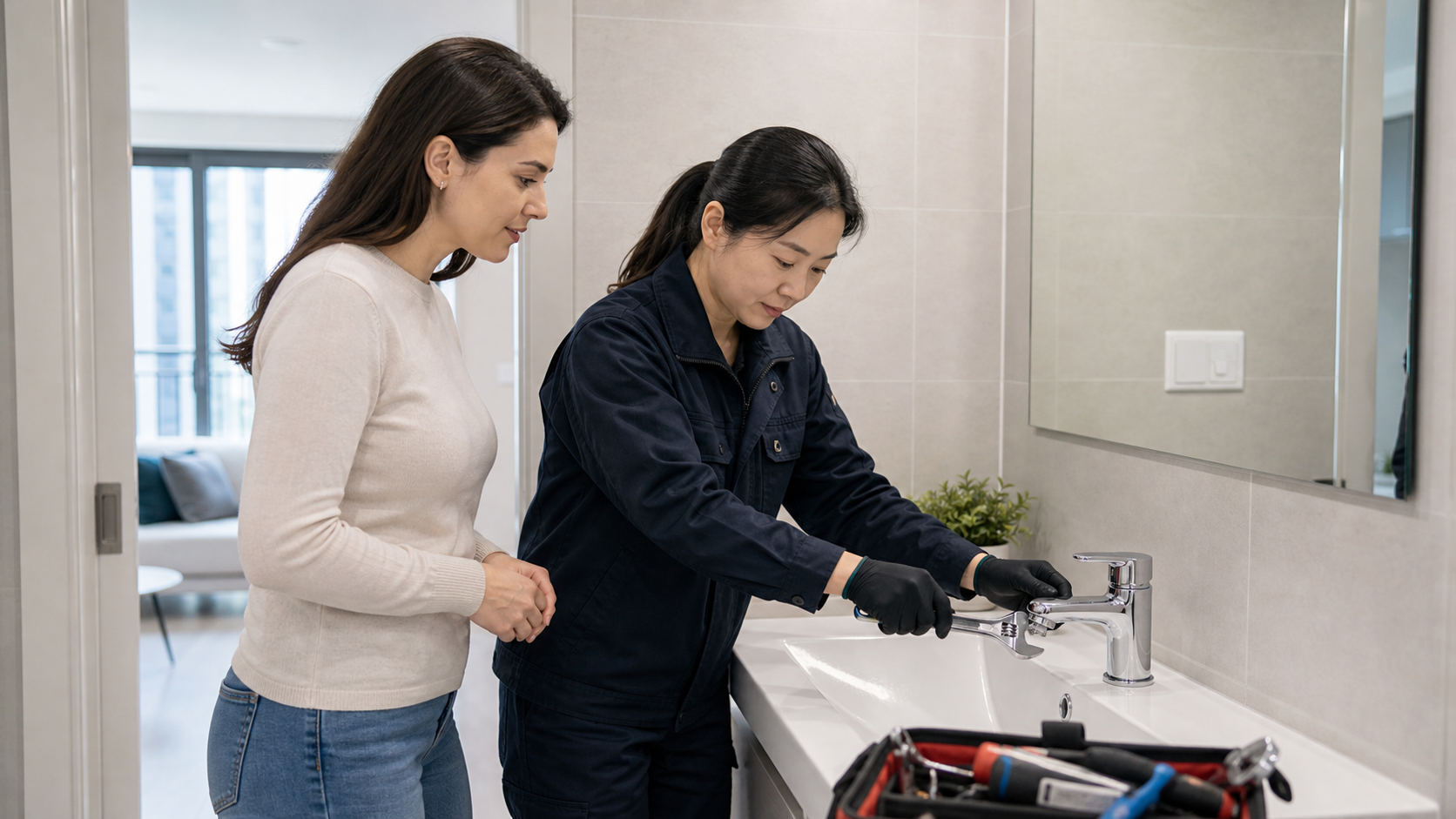
    Female learner confirming repair visit with technician
    Scene 3: confirm the visit time and cost after the problem is clear.

    5. Common mistake

    อย่าเริ่มด้วย 고쳐 주세요 เพียงอย่างเดียว ถึงจะเข้าใจได้ แต่ 수리 부탁드립니다 หรือ 확인해 주실 수 있나요 สุภาพและเป็นธรรมชาติมากกว่า

    A natural repair request does not need to sound dramatic. Korean service conversations often value clear information and polite endings. If you are not sure, use 부탁드립니다, 주실 수 있나요, and 보내드릴게요. These endings keep the tone respectful while still asking directly for help.

    6. Quick check

    ในสถานการณ์ขอซ่อม “고장이 났어요” หมายถึงอะไร

    1. ราคาแพง
    2. มันเสีย
    3. ฉันมาสาย
    4. ฉันต้องการใบเสร็จ

    Answer: B

    7. Practice routine

    First, read the vocabulary aloud once. Second, choose one problem such as 물이 새요 or 전기가 안 들어와요. Third, combine it with 확인해 주실 수 있나요? Fourth, add a practical next step such as 사진을 보내드릴게요. Finally, repeat the full message until it feels short and automatic.

    This lesson belongs to the Work Korean package because repair requests are not only home situations. The same language appears in offices, small businesses, factories, dormitories, clinics, service counters, and shared work spaces. Learning the pattern now gives you a reusable survival phrase set.

    View more Work Korean lessons

    ฝึกสถานการณ์ขอซ่อมในแอป

    ทบทวนคำศัพท์ ฟังวลี และตอบคำถามสั้น ๆ จากสถานการณ์ซ่อมแซม

    Open practice app

  • Cụm từ tiếng Hàn khi yêu cầu sửa chữa

    Cụm từ tiếng Hàn khi yêu cầu sửa chữa

    Tiếng Việt · Work Korean · 5 min read

    Khi đồ trong nhà hoặc nơi làm việc bị hỏng, việc giải thích bằng tiếng Hàn có thể khá căng thẳng vì tình huống thường gấp và cần nói rõ. Bài học này cho bạn một trình tự an toàn: nêu đồ vật bị hỏng, nói triệu chứng, xin kiểm tra, rồi hỏi thời gian đến sửa.

    Bạn không cần dịch từng câu dài từ tiếng Việt. Trong tình huống thật ở Hàn Quốc, câu ngắn, lịch sự và đủ thông tin thường hiệu quả hơn: 고장이 났어요, 물이 새요, 수리 부탁드립니다.

    Bạn có thể dùng bài này ở căn hộ, ký túc xá, văn phòng, cửa hàng nhỏ hoặc nơi làm việc. Cụm từ ở mức dễ học nhưng luồng hội thoại rất gần thực tế.

    Female learner requesting repair in Korean
    Scene 1: explain the broken item before asking for help.

    1. When to use these phrases

    • Bồn rửa, vòi nước, toilet, trần nhà, ổ cắm, khóa cửa, máy sưởi, điều hòa hoặc đèn có vấn đề.
    • Bạn cần liên hệ văn phòng quản lý, chủ nhà, lễ tân, nhân viên cửa hàng hoặc kỹ thuật viên.
    • Bạn muốn gửi ảnh để giải thích ngắn gọn hơn.
    • Bạn cần hỏi khi nào kỹ thuật viên có thể đến.
    • Bạn muốn nói lịch sự nhưng không dùng câu quá phức tạp.

    The safest repair message follows this order: place, problem, request, photo, visit time, and cost. If you remember that order, you can handle many apartment, office, or shop repair situations even with simple Korean.

    2. Key vocabulary

    수리 [suri] – sửa chữa

    고장 [gojang] – hỏng / sự cố

    물이 새요 [muri saeyo] – nước bị rò

    전기가 안 들어와요 [jeongiga an deureowayo] – điện không vào

    기사님 [gisanim] – kỹ thuật viên

    관리사무소 [gwallisamuso] – văn phòng quản lý

    확인하다 [hwaginhada] – kiểm tra

    방문하다 [bangmunhada] – đến kiểm tra

    비용 [biyong] – chi phí

    사진 [sajin] – ảnh

    예약 [yeyak] – lịch hẹn

    싱크대 [singkeudae] – bồn rửa

    천장 [cheonjang] – trần nhà

    콘센트 [konsenteu] – ổ cắm

    화장실 [hwajangsil] – phòng tắm

    급하다 [geuphada] – khẩn cấp

    가능하다 [ganeunghada] – có thể

    연락하다 [yeollakhada] – liên hệ

    부탁드립니다 [butakdeurimnida] – làm ơn / xin

    오늘 [oneul] – hôm nay

    Female learner sending repair photo to management office
    Scene 2: a photo makes the repair request faster and clearer.

    3. Request flow

    Nói địa điểm hoặc đồ vật trước

    Bắt đầu bằng 싱크대, 화장실, 콘센트, 천장 để người nghe hiểu vấn đề nằm ở đâu.

    Nói vấn đề thật ngắn

    Dùng 고장이 났어요 cho hỏng nói chung, 물이 새요 cho rò nước, và 전기가 안 들어와요 cho vấn đề điện.

    Xin kiểm tra

    확인해 주실 수 있나요? là câu lịch sự và linh hoạt khi nói với văn phòng quản lý hoặc kỹ thuật viên.

    Hỏi thời gian đến

    Sau khi người nghe hiểu vấn đề, hỏi 언제 방문 가능하세요? Nếu hơi gấp, thêm 조금 급해요.

    Kết thúc bằng bước tiếp theo

    Dùng 사진을 보내드릴게요 hoặc 오늘 답장 가능하실까요? để cuộc trao đổi tiếp tục rõ ràng.

    For practice, write one short message using this frame: “안녕하세요. [place/item]이/가 [problem]. 확인해 주실 수 있나요? 사진을 보내드릴게요.” Replace only the bracketed parts and keep the polite ending.

    4. Example conversation

    A: 안녕하세요. 싱크대가 고장이 났어요.
    Xin chào. Bồn rửa bị hỏng.

    B: 언제부터 고장이 났나요?
    Bị hỏng từ khi nào?

    A: 오늘 아침부터요. 싱크대 아래에서 물이 새요.
    Từ sáng nay. Nước rò dưới bồn rửa.

    B: 먼저 사진을 보내 주세요.
    Vui lòng gửi ảnh trước.

    A: 지금 사진을 보내드릴게요. 기사님은 언제 방문 가능하세요?
    Tôi sẽ gửi ảnh bây giờ. Khi nào kỹ thuật viên có thể đến?

    B: 오늘 오후에 방문 가능합니다.
    Kỹ thuật viên có thể đến chiều nay.

    A: 대략 비용도 알 수 있을까요?
    Bạn có thể cho biết chi phí ước tính không?

    B: 기사님이 먼저 확인하고 비용을 안내해 드릴게요.
    Kỹ thuật viên sẽ kiểm tra trước rồi giải thích chi phí.

    Female learner confirming repair visit with technician
    Scene 3: confirm the visit time and cost after the problem is clear.

    5. Common mistake

    Đừng chỉ viết 고쳐 주세요 trong tin nhắn đầu tiên. Câu đó hiểu được, nhưng 수리 부탁드립니다 hoặc 확인해 주실 수 있나요 lịch sự và tự nhiên hơn.

    A natural repair request does not need to sound dramatic. Korean service conversations often value clear information and polite endings. If you are not sure, use 부탁드립니다, 주실 수 있나요, and 보내드릴게요. These endings keep the tone respectful while still asking directly for help.

    6. Quick check

    Trong ngữ cảnh sửa chữa, “고장이 났어요” nghĩa là gì?

    1. Nó đắt.
    2. Nó bị hỏng.
    3. Tôi đến muộn.
    4. Tôi cần hóa đơn.

    Answer: B

    7. Practice routine

    First, read the vocabulary aloud once. Second, choose one problem such as 물이 새요 or 전기가 안 들어와요. Third, combine it with 확인해 주실 수 있나요? Fourth, add a practical next step such as 사진을 보내드릴게요. Finally, repeat the full message until it feels short and automatic.

    This lesson belongs to the Work Korean package because repair requests are not only home situations. The same language appears in offices, small businesses, factories, dormitories, clinics, service counters, and shared work spaces. Learning the pattern now gives you a reusable survival phrase set.

    View more Work Korean lessons

    Luyện yêu cầu sửa chữa trong ứng dụng

    Ôn từ vựng, nghe cụm từ và trả lời các câu hỏi ngắn theo tình huống sửa chữa.

    Open practice app

  • 修理を依頼するときの韓国語フレーズ

    修理を依頼するときの韓国語フレーズ

    日本語 · Work Korean · 5 min read

    韓国で修理を依頼する場面は、韓国語学習者にとって緊張しやすい状況です。急いでいることが多く、電話やメッセージで説明する必要があるからです。このレッスンでは、問題を説明し、確認をお願いし、訪問時間を聞くまでの流れを練習します。

    ポイントは長い翻訳文を作らないことです。韓国語では、場所や物を先に言い、고장이 났어요、물이 새요、수리 부탁드립니다 のように短く丁寧に伝える方が自然です。

    アパート、寮、オフィス、店舗、職場の設備トラブルで使えます。初級者向けの表現ですが、実際の管理事務所や技師との会話に近い形でまとめています。

    Female learner requesting repair in Korean
    Scene 1: explain the broken item before asking for help.

    1. When to use these phrases

    • シンク、蛇口、トイレ、天井、コンセント、ドアロック、暖房、エアコン、照明に問題があるとき。
    • 管理事務所、大家、受付、店舗スタッフ、技師に連絡するとき。
    • 写真を送って説明を短くしたいとき。
    • 訪問できる時間を確認したいとき。
    • 失礼にならず、でも複雑すぎない韓国語で話したいとき。

    The safest repair message follows this order: place, problem, request, photo, visit time, and cost. If you remember that order, you can handle many apartment, office, or shop repair situations even with simple Korean.

    2. Key vocabulary

    수리 [suri] – 修理

    고장 [gojang] – 故障 / 問題

    물이 새요 [muri saeyo] – 水が漏れています

    전기가 안 들어와요 [jeongiga an deureowayo] – 電気がつきません

    기사님 [gisanim] – 技師 / 作業員

    관리사무소 [gwallisamuso] – 管理事務所

    확인하다 [hwaginhada] – 確認する

    방문하다 [bangmunhada] – 訪問する

    비용 [biyong] – 費用

    사진 [sajin] – 写真

    예약 [yeyak] – 予約 / 約束

    싱크대 [singkeudae] – シンク

    천장 [cheonjang] – 天井

    콘센트 [konsenteu] – コンセント

    화장실 [hwajangsil] – 浴室

    급하다 [geuphada] – 急ぎ

    가능하다 [ganeunghada] – 可能

    연락하다 [yeollakhada] – 連絡する

    부탁드립니다 [butakdeurimnida] – お願いします

    오늘 [oneul] – 今日

    Female learner sending repair photo to management office
    Scene 2: a photo makes the repair request faster and clearer.

    3. Request flow

    場所や物を先に言う

    싱크대、화장실、콘센트、천장 のように、どこで問題が起きたかを先に伝えると相手が理解しやすくなります。

    問題を短く言う

    一般的な故障は 고장이 났어요、水漏れは 물이 새요、電気の問題は 전기가 안 들어와요 が便利です。

    確認をお願いする

    확인해 주실 수 있나요? は丁寧で自然です。強く要求するよりも柔らかく聞こえます。

    訪問時間を聞く

    問題が伝わったら 언제 방문 가능하세요? と聞きます。急ぎなら 조금 급해요 を加えます。

    次の行動で終える

    사진을 보내드릴게요 や 오늘 답장 가능하실까요? で会話を次に進めます。

    For practice, write one short message using this frame: “안녕하세요. [place/item]이/가 [problem]. 확인해 주실 수 있나요? 사진을 보내드릴게요.” Replace only the bracketed parts and keep the polite ending.

    4. Example conversation

    A: 안녕하세요. 싱크대가 고장이 났어요.
    こんにちは。シンクが故障しました。

    B: 언제부터 고장이 났나요?
    いつから故障していますか。

    A: 오늘 아침부터요. 싱크대 아래에서 물이 새요.
    今朝からです。シンクの下から水が漏れています。

    B: 먼저 사진을 보내 주세요.
    まず写真を送ってください。

    A: 지금 사진을 보내드릴게요. 기사님은 언제 방문 가능하세요?
    今写真を送ります。技師の方はいつ訪問できますか。

    B: 오늘 오후에 방문 가능합니다.
    今日の午後に訪問できます。

    A: 대략 비용도 알 수 있을까요?
    おおよその費用を教えていただけますか。

    B: 기사님이 먼저 확인하고 비용을 안내해 드릴게요.
    技師が先に確認してから費用を説明します。

    Female learner confirming repair visit with technician
    Scene 3: confirm the visit time and cost after the problem is clear.

    5. Common mistake

    最初のメッセージで 고쳐 주세요 だけを書くのは避けましょう。通じますが、수리 부탁드립니다 や 확인해 주실 수 있나요 の方が管理事務所や技師には丁寧です。

    A natural repair request does not need to sound dramatic. Korean service conversations often value clear information and polite endings. If you are not sure, use 부탁드립니다, 주실 수 있나요, and 보내드릴게요. These endings keep the tone respectful while still asking directly for help.

    6. Quick check

    修理の場面で “고장이 났어요” はどんな意味ですか。

    1. 高いです。
    2. 故障しました。
    3. 遅れました。
    4. 領収書が必要です。

    Answer: B

    7. Practice routine

    First, read the vocabulary aloud once. Second, choose one problem such as 물이 새요 or 전기가 안 들어와요. Third, combine it with 확인해 주실 수 있나요? Fourth, add a practical next step such as 사진을 보내드릴게요. Finally, repeat the full message until it feels short and automatic.

    This lesson belongs to the Work Korean package because repair requests are not only home situations. The same language appears in offices, small businesses, factories, dormitories, clinics, service counters, and shared work spaces. Learning the pattern now gives you a reusable survival phrase set.

    View more Work Korean lessons

    この修理依頼をアプリで練習

    単語を復習し、音声を聞き、修理場面の短い問題に答えます。

    Open practice app

  • Frasa Korea untuk Meminta Perbaikan

    Frasa Korea untuk Meminta Perbaikan

    Bahasa Indonesia · Work Korean · 5 min read

    Meminta perbaikan dalam bahasa Korea sering terasa sulit karena situasinya mendesak dan biasanya dilakukan lewat telepon, pesan singkat, atau kantor pengelola apartemen. Pelajaran ini memberi urutan yang aman: jelaskan benda yang rusak, sebutkan gejalanya, minta pengecekan, lalu konfirmasi waktu kunjungan.

    Anda tidak perlu membuat kalimat panjang. Dalam situasi nyata di Korea, kalimat pendek dan sopan lebih efektif. Gunakan nama benda seperti 싱크대 atau 화장실, lalu tambahkan 고장이 났어요, 물이 새요, atau 수리 부탁드립니다.

    Gunakan materi ini saat tinggal di apartemen, asrama, kantor, toko kecil, atau tempat kerja di Korea. Frasanya sederhana, tetapi alurnya mengikuti percakapan nyata antara penghuni, pengelola, dan teknisi.

    Female learner requesting repair in Korean
    Scene 1: explain the broken item before asking for help.

    1. When to use these phrases

    • Wastafel, keran, toilet, plafon, stopkontak, kunci pintu, pemanas, AC, atau lampu bermasalah.
    • Anda harus menghubungi kantor pengelola, pemilik rumah, resepsionis, staf toko, atau teknisi.
    • Anda ingin mengirim foto agar penjelasan tidak terlalu panjang.
    • Anda perlu menanyakan kapan teknisi bisa datang.
    • Anda ingin terdengar sopan tanpa kalimat Korea yang terlalu rumit.

    The safest repair message follows this order: place, problem, request, photo, visit time, and cost. If you remember that order, you can handle many apartment, office, or shop repair situations even with simple Korean.

    2. Key vocabulary

    수리 [suri] – perbaikan

    고장 [gojang] – kerusakan / masalah

    물이 새요 [muri saeyo] – air bocor

    전기가 안 들어와요 [jeongiga an deureowayo] – listrik tidak menyala

    기사님 [gisanim] – teknisi

    관리사무소 [gwallisamuso] – kantor pengelola

    확인하다 [hwaginhada] – memeriksa

    방문하다 [bangmunhada] – berkunjung

    비용 [biyong] – biaya

    사진 [sajin] – foto

    예약 [yeyak] – janji waktu

    싱크대 [singkeudae] – wastafel

    천장 [cheonjang] – langit-langit

    콘센트 [konsenteu] – stopkontak

    화장실 [hwajangsil] – kamar mandi

    급하다 [geuphada] – mendesak

    가능하다 [ganeunghada] – bisa / memungkinkan

    연락하다 [yeollakhada] – menghubungi

    부탁드립니다 [butakdeurimnida] – tolong

    오늘 [oneul] – hari ini

    Female learner sending repair photo to management office
    Scene 2: a photo makes the repair request faster and clearer.

    3. Request flow

    Sebutkan tempat atau benda

    Mulai dari bagian yang bermasalah: 싱크대, 화장실, 콘센트, 천장. Ini membuat lawan bicara langsung tahu area yang harus dicek.

    Jelaskan masalahnya singkat

    Gunakan 고장이 났어요 untuk kerusakan umum, 물이 새요 untuk kebocoran, dan 전기가 안 들어와요 untuk masalah listrik.

    Minta pengecekan

    확인해 주실 수 있나요? terdengar sopan dan tidak memaksa. Frasa ini sangat berguna saat berbicara dengan pengelola.

    Tanyakan jadwal kunjungan

    Setelah masalah dipahami, tanyakan 언제 방문 가능하세요? Jika cukup mendesak, tambahkan 조금 급해요.

    Akhiri dengan tindakan berikutnya

    Gunakan 사진을 보내드릴게요 atau 오늘 답장 가능하실까요? agar percakapan langsung berlanjut.

    For practice, write one short message using this frame: “안녕하세요. [place/item]이/가 [problem]. 확인해 주실 수 있나요? 사진을 보내드릴게요.” Replace only the bracketed parts and keep the polite ending.

    4. Example conversation

    A: 안녕하세요. 싱크대가 고장이 났어요.
    Halo. Wastafelnya rusak.

    B: 언제부터 고장이 났나요?
    Sejak kapan rusak?

    A: 오늘 아침부터요. 싱크대 아래에서 물이 새요.
    Sejak pagi ini. Air bocor di bawah wastafel.

    B: 먼저 사진을 보내 주세요.
    Tolong kirim foto dulu.

    A: 지금 사진을 보내드릴게요. 기사님은 언제 방문 가능하세요?
    Saya akan kirim foto sekarang. Kapan teknisi bisa datang?

    B: 오늘 오후에 방문 가능합니다.
    Teknisi bisa datang sore ini.

    A: 대략 비용도 알 수 있을까요?
    Bisakah memberi tahu perkiraan biayanya?

    B: 기사님이 먼저 확인하고 비용을 안내해 드릴게요.
    Teknisi akan mengecek dulu lalu menjelaskan biayanya.

    Female learner confirming repair visit with technician
    Scene 3: confirm the visit time and cost after the problem is clear.

    5. Common mistake

    Jangan hanya menulis 고쳐 주세요 pada pesan pertama. Artinya bisa dipahami, tetapi 수리 부탁드립니다 atau 확인해 주실 수 있나요 terdengar lebih sopan dan alami.

    A natural repair request does not need to sound dramatic. Korean service conversations often value clear information and polite endings. If you are not sure, use 부탁드립니다, 주실 수 있나요, and 보내드릴게요. These endings keep the tone respectful while still asking directly for help.

    6. Quick check

    Dalam konteks perbaikan, “고장이 났어요” berarti apa?

    1. Harganya mahal.
    2. Itu rusak.
    3. Saya terlambat.
    4. Saya butuh tanda terima.

    Answer: B

    7. Practice routine

    First, read the vocabulary aloud once. Second, choose one problem such as 물이 새요 or 전기가 안 들어와요. Third, combine it with 확인해 주실 수 있나요? Fourth, add a practical next step such as 사진을 보내드릴게요. Finally, repeat the full message until it feels short and automatic.

    This lesson belongs to the Work Korean package because repair requests are not only home situations. The same language appears in offices, small businesses, factories, dormitories, clinics, service counters, and shared work spaces. Learning the pattern now gives you a reusable survival phrase set.

    View more Work Korean lessons

    Latih permintaan perbaikan ini di aplikasi

    Ulangi kosakata, dengarkan frasa, dan jawab pertanyaan pendek berdasarkan situasi perbaikan.

    Open practice app

  • Korean Repair Request Phrases

    Korean Repair Request Phrases

    English · Work Korean · 5 min read

    Repairs are one of the most stressful moments for a Korean learner because the situation is practical, time-sensitive, and often happens by phone or chat. This lesson gives you a calm pattern: explain what is broken, show where the problem is, ask for a visit, and confirm cost or timing.

    The key is not to translate every sentence from your native language. In Korean, a short polite request works better: name the problem, add 부탁드립니다 or 확인해 주실 수 있나요, and then give the manager enough details to act.

    Use this article for apartments, offices, dormitories, small shops, shared housing, and workplace maintenance. The phrases are beginner-friendly, but the flow is realistic enough for real repair messages in Korea.

    Female learner requesting repair in Korean
    Scene 1: explain the broken item before asking for help.

    1. When to use these phrases

    • A sink, faucet, toilet, ceiling, outlet, door lock, heater, air conditioner, or light is not working.
    • You need to contact a management office, landlord, receptionist, shop worker, or technician.
    • You want to send a photo and avoid a long phone explanation.
    • You need to ask when someone can visit.
    • You want to sound polite without making the sentence too complicated.

    The safest repair message follows this order: place, problem, request, photo, visit time, and cost. If you remember that order, you can handle many apartment, office, or shop repair situations even with simple Korean.

    2. Key vocabulary

    수리 [suri] – repair

    고장 [gojang] – breakdown / problem

    물이 새요 [muri saeyo] – water is leaking

    전기가 안 들어와요 [jeongiga an deureowayo] – power is not working

    기사님 [gisanim] – technician

    관리사무소 [gwallisamuso] – management office

    확인하다 [hwaginhada] – to check

    방문하다 [bangmunhada] – to visit

    비용 [biyong] – cost

    사진 [sajin] – photo

    예약 [yeyak] – appointment

    싱크대 [singkeudae] – sink

    천장 [cheonjang] – ceiling

    콘센트 [konsenteu] – outlet

    화장실 [hwajangsil] – bathroom

    급하다 [geuphada] – urgent

    가능하다 [ganeunghada] – possible

    연락하다 [yeollakhada] – to contact

    부탁드립니다 [butakdeurimnida] – please

    오늘 [oneul] – today

    Female learner sending repair photo to management office
    Scene 2: a photo makes the repair request faster and clearer.

    3. Request flow

    Say the place first

    Start with the room or object: 싱크대, 화장실, 콘센트, 천장. This helps the listener understand the problem before hearing the details.

    Name the problem simply

    Use 고장이 났어요 for general breakdowns, 물이 새요 for leaks, and 전기가 안 들어와요 for power problems. One clear sentence is better than a long uncertain explanation.

    Ask for confirmation

    확인해 주실 수 있나요? is polite and flexible. It asks the other person to check the situation without sounding demanding.

    Ask for the visit time

    언제 방문 가능하세요? is useful after the other person understands the problem. If it is urgent, add 조금 급해요.

    Close with an action

    End with 사진을 보내드릴게요 or 오늘 답장 가능하실까요? so the conversation moves to the next step.

    For practice, write one short message using this frame: “안녕하세요. [place/item]이/가 [problem]. 확인해 주실 수 있나요? 사진을 보내드릴게요.” Replace only the bracketed parts and keep the polite ending.

    4. Example conversation

    A: 안녕하세요. 싱크대가 고장이 났어요.
    Hello. The sink is broken.

    B: 언제부터 고장이 났나요?
    Since when has it been broken?

    A: 오늘 아침부터요. 싱크대 아래에서 물이 새요.
    Since this morning. Water is leaking under the sink.

    B: 먼저 사진을 보내 주세요.
    Please send a photo first.

    A: 지금 사진을 보내드릴게요. 기사님은 언제 방문 가능하세요?
    I will send a photo now. When can a technician visit?

    B: 오늘 오후에 방문 가능합니다.
    A technician can visit this afternoon.

    A: 대략 비용도 알 수 있을까요?
    Could you tell me the approximate cost?

    B: 기사님이 먼저 확인하고 비용을 안내해 드릴게요.
    The technician will check first and explain the cost.

    Female learner confirming repair visit with technician
    Scene 3: confirm the visit time and cost after the problem is clear.

    5. Common mistake

    Do not use 고쳐 주세요 alone in a first message. It is understandable, but 수리 부탁드립니다 or 확인해 주실 수 있나요 sounds more natural and polite for management offices and technicians.

    A natural repair request does not need to sound dramatic. Korean service conversations often value clear information and polite endings. If you are not sure, use 부탁드립니다, 주실 수 있나요, and 보내드릴게요. These endings keep the tone respectful while still asking directly for help.

    6. Quick check

    What does “고장이 났어요” mean in this repair context?

    1. It is expensive.
    2. It is broken.
    3. I am late.
    4. I need a receipt.

    Answer: B

    7. Practice routine

    First, read the vocabulary aloud once. Second, choose one problem such as 물이 새요 or 전기가 안 들어와요. Third, combine it with 확인해 주실 수 있나요? Fourth, add a practical next step such as 사진을 보내드릴게요. Finally, repeat the full message until it feels short and automatic.

    This lesson belongs to the Work Korean package because repair requests are not only home situations. The same language appears in offices, small businesses, factories, dormitories, clinics, service counters, and shared work spaces. Learning the pattern now gives you a reusable survival phrase set.

    View more Work Korean lessons

    Practice this repair request in the app

    Review the words, listen to the phrases, and answer short repair-situation questions.

    Open practice app