10 min read
Korean for Airport Arrival, Immigration, and Baggage Claim
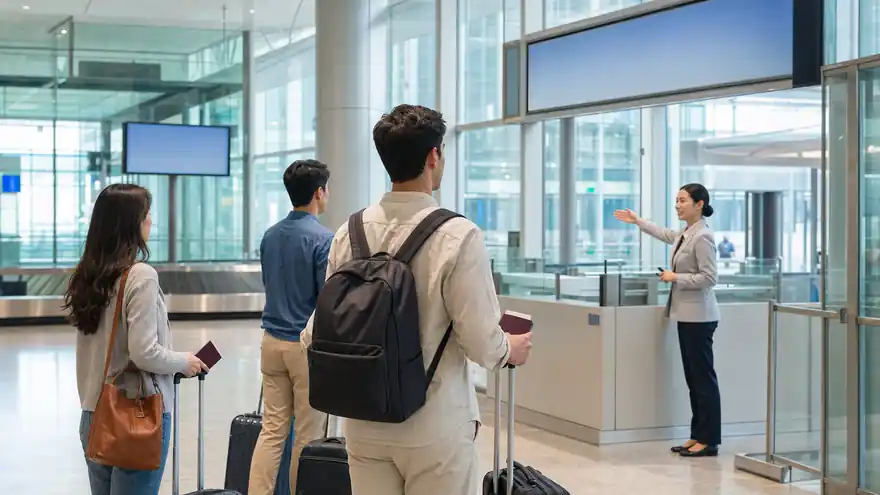
This lesson follows one real airport route: get off the plane, stand in the immigration line, answer simple questions, find baggage claim, pass customs, and ask how to leave the airport.
The goal is not to memorize every airport word. The goal is to control the first thirty minutes after landing with a small set of words and sentences you can actually say while tired, carrying bags, and reading unfamiliar signs.
Keep the Korean sentence short. Point to your passport, address, baggage tag, or phone when needed. A beginner can survive the arrival flow by using calm requests such as 'Please say it slowly', 'Where is baggage claim?', and 'Please go to this address'.
Use these cards in order. They match the physical path through the airport.
Core airport words
Use these cards in order. They match the physical path through the airport.
여권
yeogwon
passport
Show it instead of explaining too much.
비자
bija
visa
Use only if the officer asks about entry permission.
입국심사
ipguk simsa
immigration inspection
This is the counter before baggage claim.
입국
ipguk
entry into Korea
Pair it with purpose or date.
입국신고서
ipguk singoseo
arrival card
Some travelers fill it digitally or on paper.
체류
cheryu
stay
Useful for days, hotel, and purpose.
숙소
sukso
accommodation
Show the address on your phone.
주소
juso
address
Needed at immigration and in taxis.
수하물
suhamul
baggage
More formal than 짐 at the airport.
짐
jim
luggage, bags
A simple everyday word for your bags.
수하물 찾는 곳
suhamul chatneun got
baggage claim
Ask this right after immigration.
항공편
hanggongpyeon
flight
Use it with baggage carousel questions.
도착
dochag
arrival
Often appears around arrival halls.
분실
bunsil
lost item
Use when a bag does not appear.
파손
pason
damage
Use before leaving baggage claim.
세관
segwan
customs
The area after baggage claim.
신고
singo
declaration, report
Use for customs items or lost baggage.
출구
chulgu
exit
Useful after customs.
게이트
geiteu
gate
Use if you are transferring.
환승
hwanseung
transfer
Important if Korea is not your final stop.
택시
taeksi
taxi
Use with address and terminal.
버스
beoseu
bus
Ask where to board, not only where it is.
지하철
jihacheol
subway, train
At airports this can mean airport rail/subway route.
터미널
teomineol
terminal
Check it before taxi, bus, or transfer.
Arrival phrases by situation
Immigration
여권 여기 있습니다.
yeogwon yeogi itseumnida.
Here is my passport.
Use this before baggage claim. Keep the answer short and show documents.
관광하러 왔습니다.
gwangwanghareo watseumnida.
I came for tourism.
Use this before baggage claim. Keep the answer short and show documents.
친구를 만나러 왔습니다.
chingureul mannareo watseumnida.
I came to meet a friend.
Use this before baggage claim. Keep the answer short and show documents.
며칠 머무를 예정입니다.
myeochil meomureul yejeongimnida.
I plan to stay for a few days.
Use this before baggage claim. Keep the answer short and show documents.
숙소 주소는 여기입니다.
sukso jusoneun yeogiimnida.
My accommodation address is here.
Use this before baggage claim. Keep the answer short and show documents.
입국신고서를 작성해야 하나요?
ipguk singoseoreul jakseonghaeya hanayo?
Do I need to fill out an arrival card?
Use this before baggage claim. Keep the answer short and show documents.
다시 말씀해 주세요.
dasi malsseumhae juseyo.
Please say it again.
Use this before baggage claim. Keep the answer short and show documents.
천천히 말씀해 주세요.
cheoncheonhi malsseumhae juseyo.
Please speak slowly.
Use this before baggage claim. Keep the answer short and show documents.
한국어를 조금만 합니다.
hangugeoreul jogeumman hamnida.
I speak only a little Korean.
Use this before baggage claim. Keep the answer short and show documents.
Baggage claim
수하물 찾는 곳이 어디예요?
suhamul chatneun gosi eodiyeyo?
Where is baggage claim?
Use this near the carousel or baggage service counter.
이 항공편 수하물 맞나요?
i hanggongpyeon suhamul mannayo?
Is this the baggage for this flight?
Use this near the carousel or baggage service counter.
제 짐이 아직 안 나왔어요.
je jimi ajik an nawatseoyo.
My luggage has not come out yet.
Use this near the carousel or baggage service counter.
짐표는 여기 있습니다.
jimpyo-neun yeogi itseumnida.
Here is my baggage tag.
Use this near the carousel or baggage service counter.
가방이 파손됐어요.
gabang-i pasondwaesseoyo.
My bag is damaged.
Use this near the carousel or baggage service counter.
분실 신고는 어디에서 해요?
bunsil singoneun eodieseo haeyo?
Where do I report lost baggage?
Use this near the carousel or baggage service counter.
직원에게 물어봐도 될까요?
jigwonege mureobwado doelkkayo?
May I ask a staff member?
Use this near the carousel or baggage service counter.
Customs
신고할 물건이 없습니다.
singohal mulgeoni eopseumnida.
I have nothing to declare.
Use this after you collect your bags and before the public exit.
신고해야 하나요?
singohaeya hanayo?
Do I need to declare this?
Use this after you collect your bags and before the public exit.
개인용 물건입니다.
gaein-yong mulgeonimnida.
It is for personal use.
Use this after you collect your bags and before the public exit.
가방을 열까요?
gabang-eul yeolkkayo?
Should I open my bag?
Use this after you collect your bags and before the public exit.
영수증은 여기 있습니다.
yeongsujeungeun yeogi itseumnida.
Here is the receipt.
Use this after you collect your bags and before the public exit.
이 음식은 반입할 수 있나요?
i eumsigeun baniphal su innayo?
Can I bring this food in?
Use this after you collect your bags and before the public exit.
Exit and transport
출구가 어디예요?
chulgu-ga eodiyeyo?
Where is the exit?
Use this once you are outside customs and need transport.
택시 타는 곳은 어디예요?
taeksi taneun goseun eodiyeyo?
Where do I take a taxi?
Use this once you are outside customs and need transport.
공항버스는 어디에서 타요?
gonghang beoseuneun eodieseo tayo?
Where do I take the airport bus?
Use this once you are outside customs and need transport.
지하철역은 어디예요?
jihacheollyeogeun eodiyeyo?
Where is the subway station?
Use this once you are outside customs and need transport.
이 주소로 가 주세요.
i jusoro ga juseyo.
Please go to this address.
Use this once you are outside customs and need transport.
얼마나 걸려요?
eolmana geollyeoyo?
How long does it take?
Use this once you are outside customs and need transport.
요금은 얼마예요?
yogeumeun eolmayeyo?
How much is the fare?
Use this once you are outside customs and need transport.
이 터미널이 맞나요?
i teomineori mannayo?
Is this the correct terminal?
Use this once you are outside customs and need transport.
Transfer
환승은 어디로 가야 해요?
hwanseung-eun eodiro gaya haeyo?
Where should I go for transfer?
Use this if Korea is a transfer point, not your final destination.
게이트 번호를 확인하고 싶어요.
geiteu beonhoreul hwaginhago sipeoyo.
I want to check the gate number.
Use this if Korea is a transfer point, not your final destination.
Help
도와주세요.
dowajuseyo.
Please help me.
Use this when stress is high and you need a staff member to act.
길을 잃었어요.
gireul ireosseoyo.
I am lost.
Use this when stress is high and you need a staff member to act.
어디로 가야 하나요?
eodiro gaya hanayo?
Where should I go?
Use this when stress is high and you need a staff member to act.
여기에 써 주세요.
yeogie sseo juseyo.
Please write it here.
Use this when stress is high and you need a staff member to act.
사진으로 보여 주세요.
sajineuro boyeo juseyo.
Please show me with a picture.
Use this when stress is high and you need a staff member to act.
직원에게 연결해 주세요.
jigwonege yeongyeolhae juseyo.
Please connect me to a staff member.
Use this when stress is high and you need a staff member to act.
Five airport dialogues
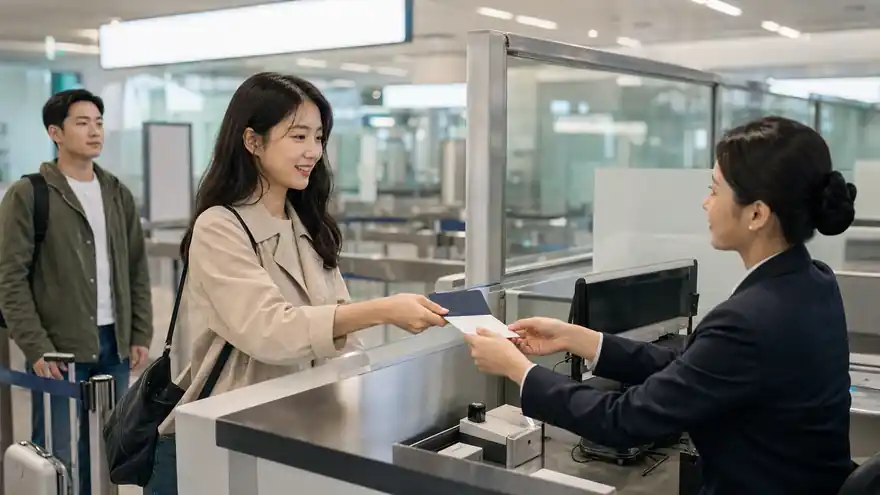
1. At immigration
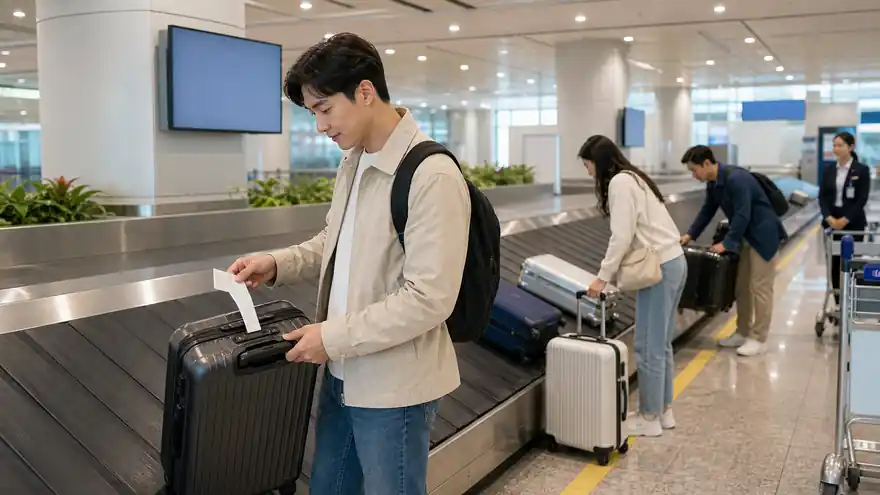
2. Finding baggage claim
3. When a bag does not appear
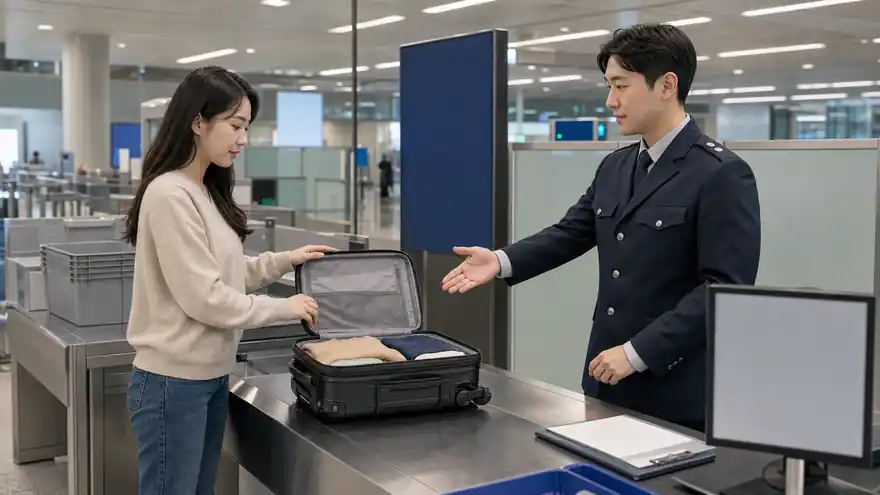
4. At customs
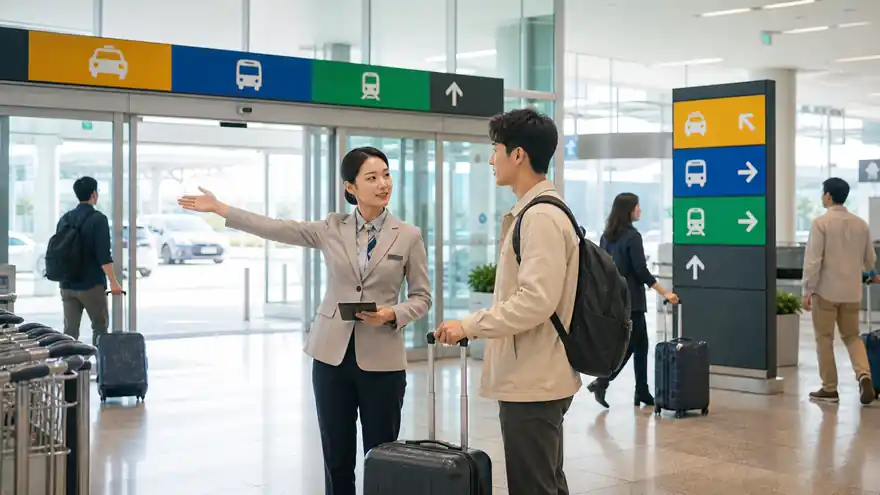
5. Leaving the airport
Situation drills
1. Immigration
When: The officer asks the purpose of your visit.
Say: 관광하러 왔습니다.
Why it works: It gives the staff one clear airport action instead of a long explanation.
2. Immigration
When: You cannot understand the next question.
Say: 천천히 말씀해 주세요.
Why it works: It gives the staff one clear airport action instead of a long explanation.
3. Immigration
When: The officer asks for your address.
Say: 숙소 주소는 여기입니다.
Why it works: It gives the staff one clear airport action instead of a long explanation.
4. Baggage claim
When: You cannot find the baggage claim area.
Say: 수하물 찾는 곳이 어디예요?
Why it works: It gives the staff one clear airport action instead of a long explanation.
5. Baggage claim
When: Your bag has not arrived.
Say: 제 짐이 아직 안 나왔어요.
Why it works: It gives the staff one clear airport action instead of a long explanation.
6. Baggage claim
When: Your suitcase is damaged.
Say: 가방이 파손됐어요.
Why it works: It gives the staff one clear airport action instead of a long explanation.
7. Customs
When: You have nothing to declare.
Say: 신고할 물건이 없습니다.
Why it works: It gives the staff one clear airport action instead of a long explanation.
8. Customs
When: You are unsure whether food can enter.
Say: 이 음식은 반입할 수 있나요?
Why it works: It gives the staff one clear airport action instead of a long explanation.
9. Exit and transport
When: You need the airport bus.
Say: 공항버스는 어디에서 타요?
Why it works: It gives the staff one clear airport action instead of a long explanation.
10. Exit and transport
When: You want a taxi to your address.
Say: 이 주소로 가 주세요.
Why it works: It gives the staff one clear airport action instead of a long explanation.
11. Transfer
When: You are transferring to another flight.
Say: 환승은 어디로 가야 해요?
Why it works: It gives the staff one clear airport action instead of a long explanation.
12. Help
When: You are lost and need a staff member.
Say: 도와주세요. 길을 잃었어요.
Why it works: It gives the staff one clear airport action instead of a long explanation.
Sentence patterns
1. N은/는 어디예요?
N-eun/neun eodiyeyo?
Where is N?
출구가 어디예요?
지하철역은 어디예요?
2. N을/를 보여 주세요.
N-eul/reul boyeo juseyo.
Please show me N.
짐표를 보여 주세요.
사진으로 보여 주세요.
3. N은/는 여기 있습니다.
N-eun/neun yeogi itseumnida.
N is here.
여권은 여기 있습니다.
주소는 여기 있습니다.
4. N하러 왔습니다.
N-hareo watseumnida.
I came to do N.
관광하러 왔습니다.
친구를 만나러 왔습니다.
5. N해야 하나요?
N-haeya hanayo?
Do I need to do N?
신고해야 하나요?
작성해야 하나요?
6. N로 가 주세요.
N-ro ga juseyo.
Please go to N.
이 주소로 가 주세요.
출구로 가 주세요.
7. N이/가 아직 안 나왔어요.
N-i/ga ajik an nawatseoyo.
N has not come out yet.
제 짐이 아직 안 나왔어요.
수하물이 아직 안 나왔어요.
8. N을/를 확인하고 싶어요.
N-eul/reul hwaginhago sipeoyo.
I want to check N.
게이트 번호를 확인하고 싶어요.
터미널을 확인하고 싶어요.
9. N할 수 있나요?
N-hal su innayo?
Can I do N?
반입할 수 있나요?
환승할 수 있나요?
10. N에게 연결해 주세요.
N-ege yeongyeolhae juseyo.
Please connect me to N.
직원에게 연결해 주세요.
분실물 센터에 연결해 주세요.
Ten-minute route rehearsal
Do not practice these as isolated words. Practice with a gesture: point, show, ask, wait, repeat.
Open your passport and say the passport sentence without adding extra words.
Point to a hotel address on your phone and say the accommodation address sentence.
Ask where baggage claim is, then repeat only the location word you hear.
Pretend your bag is late and show an imaginary baggage tag.
Ask whether the carousel is for your flight.
Report a damaged suitcase before leaving baggage claim.
Say you have nothing to declare at customs.
Ask whether a food item can enter Korea.
Ask where the exit is after customs.
Ask where to take a taxi.
Ask where to take the airport bus.
Ask where the subway station is.
Show an address and ask a driver to go there.
Ask how long the ride takes.
Ask where to go for transfer.
Say you are lost and need help.
Mistake clinic
1
Do not answer immigration questions with a long story.
Use one purpose word first: 관광, 방문, 회의.
2
Do not leave baggage claim before reporting damage.
Say 가방이 파손됐어요 while you are still near the counter.
3
Do not say 신고 only for customs.
It also appears in 분실 신고, a lost baggage report.
4
Do not confuse 출구 and 게이트.
출구 is exit from the airport area; 게이트 is boarding/transfer gate.
5
Do not ask only 택시 어디예요?
Use 택시 타는 곳은 어디예요 to ask for the boarding area.
6
Do not hide when you do not understand.
Say 다시 말씀해 주세요 or 천천히 말씀해 주세요 immediately.
Mini quiz
You need baggage claim.
수하물 찾는 곳이 어디예요?
Your bag has not appeared.
제 짐이 아직 안 나왔어요.
You have nothing to declare.
신고할 물건이 없습니다.
You need a taxi boarding area.
택시 타는 곳은 어디예요?
You need someone to speak slowly.
천천히 말씀해 주세요.
You need to show your address.
숙소 주소는 여기입니다.
Practice this lesson in the app
Review these words with multiple-choice questions and weak-Learn Korean.
Practice this lesson →