Korean fire and emergency sign words are useful when you work in a building, factory, kitchen, warehouse, school, or public facility in Korea. This lesson helps you recognize the words for safety, danger, caution, no entry, emergency exits, evacuation routes, fire extinguishers, alarms, and non-smoking areas.
Briefing Summary
| Situation | Reading Korean fire and emergency signs at work or in a public building |
|---|---|
| Practice focus | warning, prohibition, emergency exit, evacuation route, fire equipment, alarm, and non-smoking area words |
| Useful for | foreign workers, factory workers, service workers, students, and residents in Korea |
| Study time | 8-12 minutes |
Slide 1. The Situation
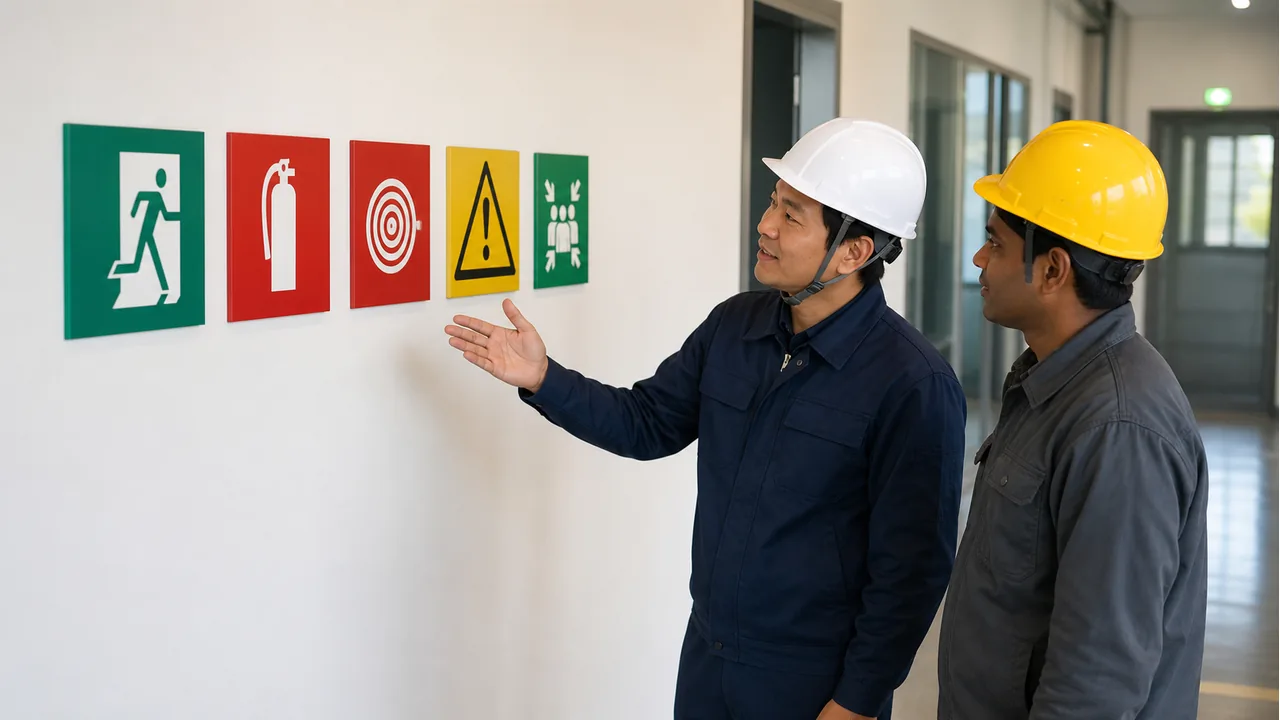
Imagine you are walking through a workplace hallway and see several colored signs. You may not understand the whole notice yet, but you can still start with the sign family. Look for 안전, 위험, 주의, and 금지. These words tell you whether the sign is about safety, danger, caution, or a prohibited action.
This post is a Korean language lesson, not emergency-response, legal, workplace safety, or compliance advice. In a real emergency or safety question, follow the trained local procedure and ask the responsible person. The goal here is to help you recognize the Korean words on the sign.
Slide 2. Key Fire and Emergency Sign Words
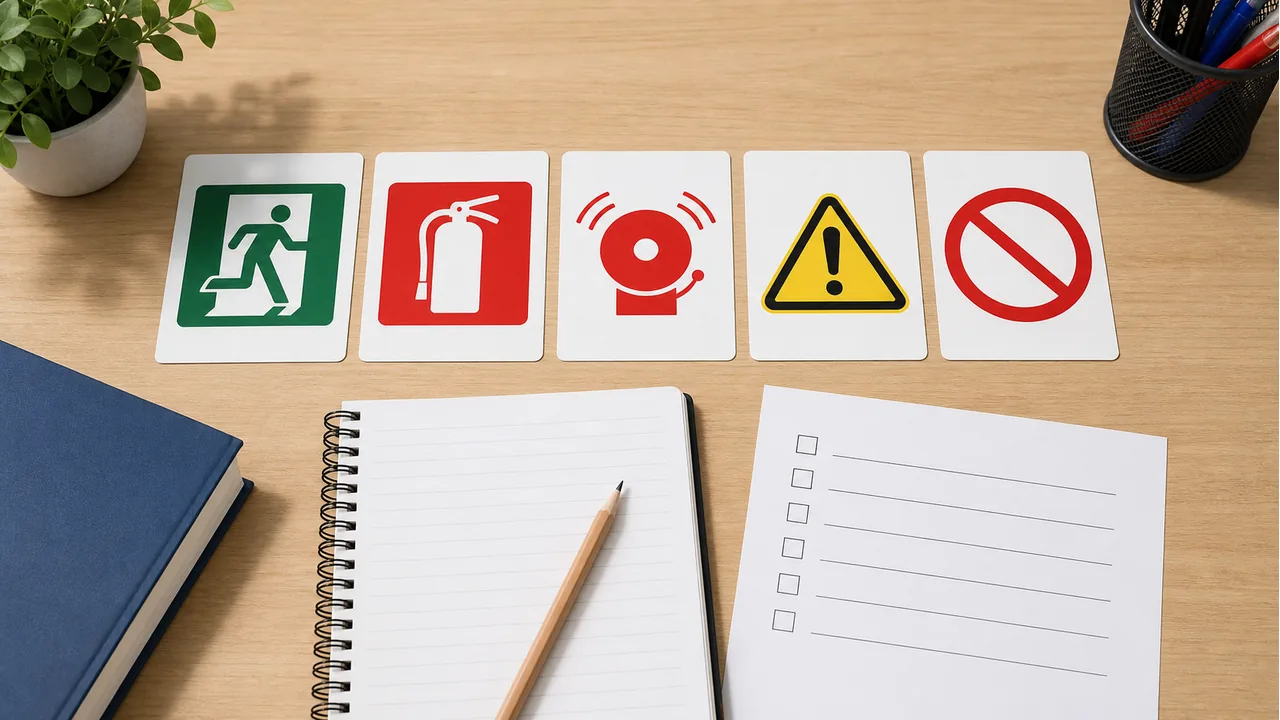
| Korean | Romanization | English | Level | Use |
|---|---|---|---|---|
| 안전 | anjeon | safety | BS1 | General safety word. |
| 위험 | wiheom | danger; hazard | BS1 | Danger or hazard sign. |
| 주의 | juui | caution | BS1 | Caution or warning word. |
| 금지 | geumji | prohibition; ban | BS1 | Prohibition sign word. |
| 출입 금지 | churip geumji | no entry; entry prohibited | BS2 | Entry restriction sign. |
| 비상구 | bisanggu | emergency exit | BS2 | Emergency exit word. |
| 비상구 확인 | bisanggu hwagin | check emergency exit | BS4 | Instruction to check exits. |
| 대피 | daepi | evacuation | BS2 | Evacuation word. |
| 대피로 | daepiro | evacuation route | BS2 | Evacuation route word. |
| 대피로 확보 | daepiro hwakbo | keep evacuation route clear; secure evacuation route | BS4 | Keep evacuation route clear. |
| 화재 | hwajae | fire; fire incident | BS2 | Fire incident word. |
| 소화기 | sohwagi | fire extinguisher | BS2 | Fire extinguisher word. |
| 소화전 | sohwajeon | fire hydrant | BS4 | Fire hydrant word. |
| 비상벨 | bisangbel | emergency bell | BS2 | Emergency bell or alarm word. |
| 금연 구역 | geumyeon guyeok | non-smoking area | BS3 | Fire-prevention related area sign. |
Slide 3. Read Emergency Signs in 3 Steps
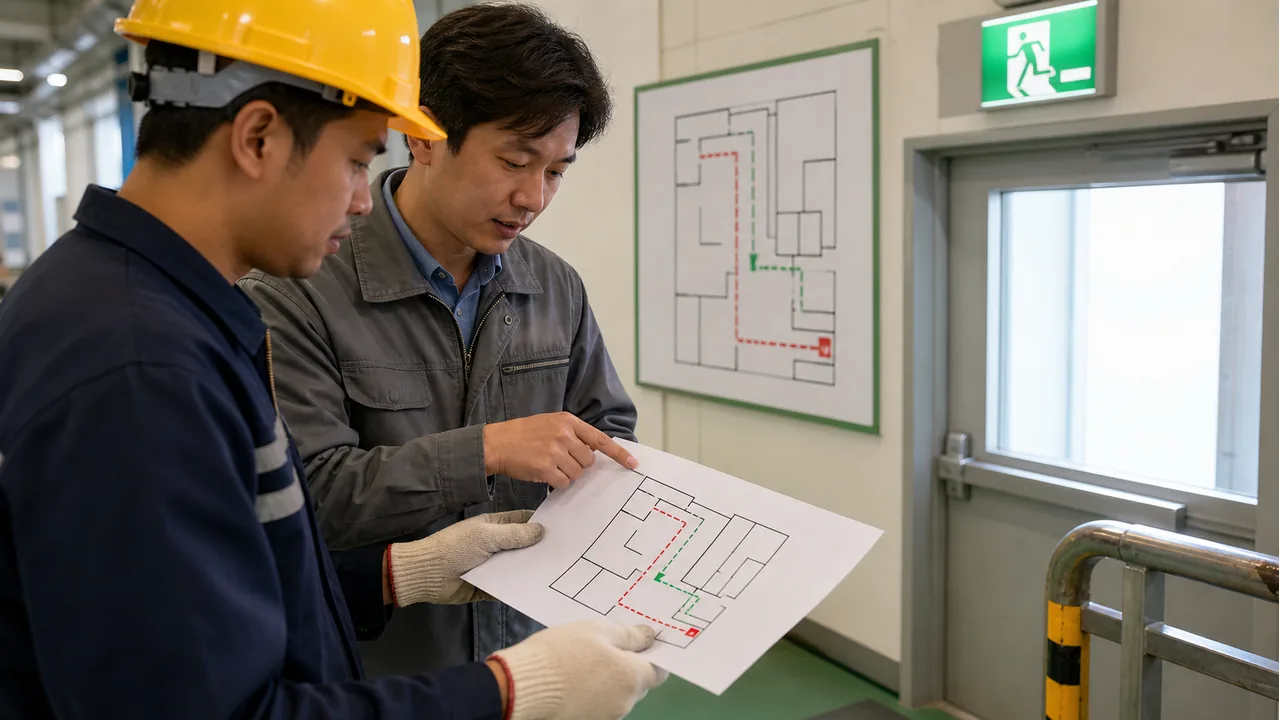
- Step 1: Identify the sign family. Look for 위험, 주의, and 금지. These words tell you whether the sign is warning you, limiting entry, or banning an action.
- Step 2: Find exit and route words. Look for 비상구, 비상구 확인, 대피, 대피로, and 대피로 확보. These connect the sign to a place or route.
- Step 3: Find equipment and alarm words. Look for 화재, 소화기, 소화전, and 비상벨. These words point to fire, fire equipment, or an alarm.
Slide 4. Common Sign Mistakes

The first mistake is reading every red sign as the same message. 금지 means prohibition, but 소화기 and 소화전 are equipment words. A red sign may mean “do not,” “fire equipment,” or another important category.
The second mistake is seeing an exit sign but not reading the route words. 비상구 is the emergency exit word. 대피로 is the evacuation route word. 대피로 확보 is a phrase about keeping that route clear.
The third mistake is skipping area words. 출입 금지 marks an entry restriction. 금연 구역 marks a non-smoking area. These are not the same as route words, so use them as labels when asking what a sign means.
Slide 5. Practice With BSKorean
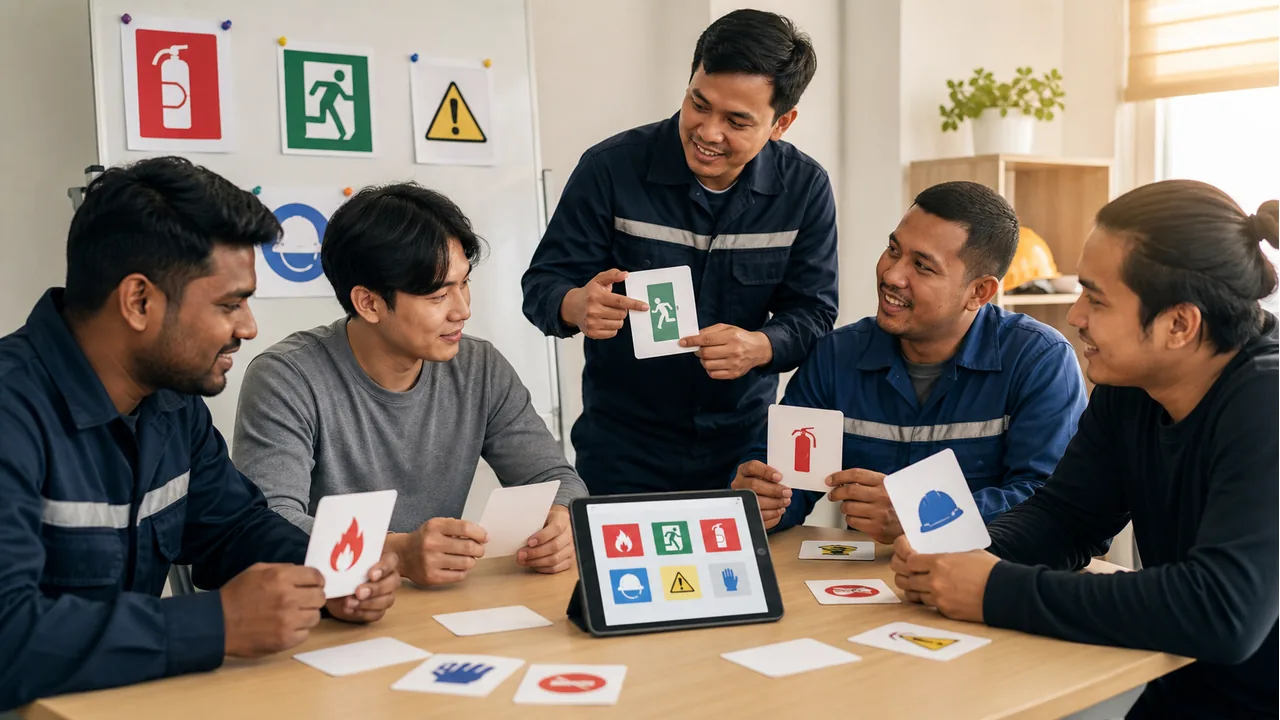
Practice this topic in BSKorean: Read the BSKorean app guide, then open the practice app. Use this article set to practice Korean word, romanization, English meaning, and the fire/emergency sign situation together.
A useful habit is to say the group first: warning, prohibition, exit, evacuation route, fire equipment, or alarm. Then say the Korean word. This makes signs easier to read when you are busy or nervous.
Mini Review Table
| If you see… | Think… |
|---|---|
| 위험 | This is a danger or hazard word. |
| 주의 | This is a caution word. |
| 출입 금지 | This marks an area you should not enter. |
| 비상구 | This points to an emergency exit. |
| 대피로 | This points to an evacuation route. |
| 소화기 | This is the fire extinguisher word. |
| 비상벨 | This is the emergency bell word. |
| 금연 구역 | This marks a non-smoking area. |
Final Takeaway
You do not need to understand every long safety notice to begin reading signs better. First identify the sign family, then find the exit, route, fire equipment, alarm, or restricted-area word. These Korean fire and emergency sign words help you ask clearer questions and practice the signs you see in real places.
Related Lessons
- Korean Construction Safety Words for Foreign Workers
- Korean Workplace Schedule Words for Foreign Workers
- Korean Workplace Problem Report Phrases for Foreign Workers
- Korean Factory Inspection Words for Foreign Workers
Practice these Korean words in the BSKorean app
After reading this lesson, continue with the BSKorean practical Korean app guide or open the BSKorean practice app to review words by level and real-life situation.