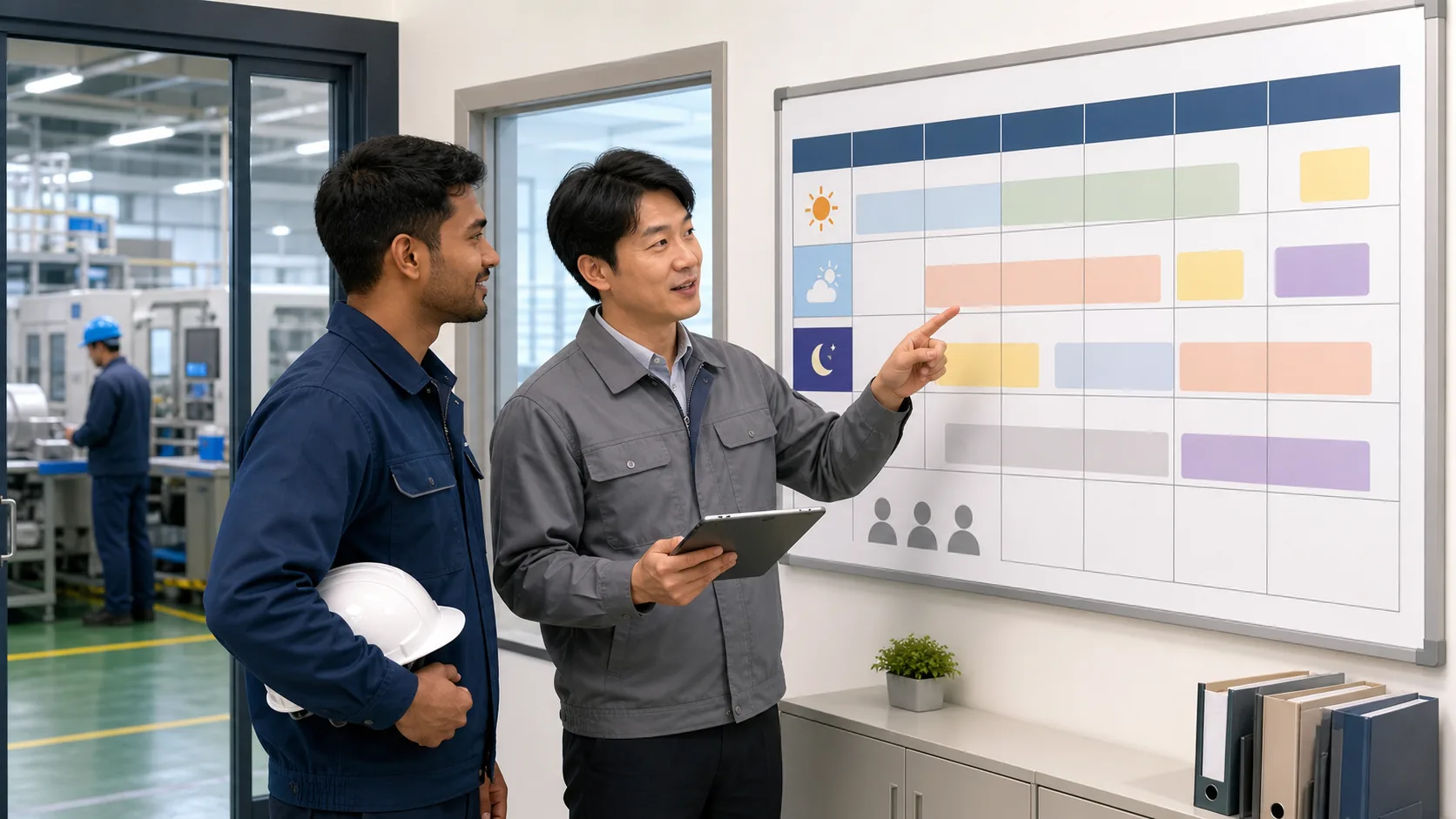
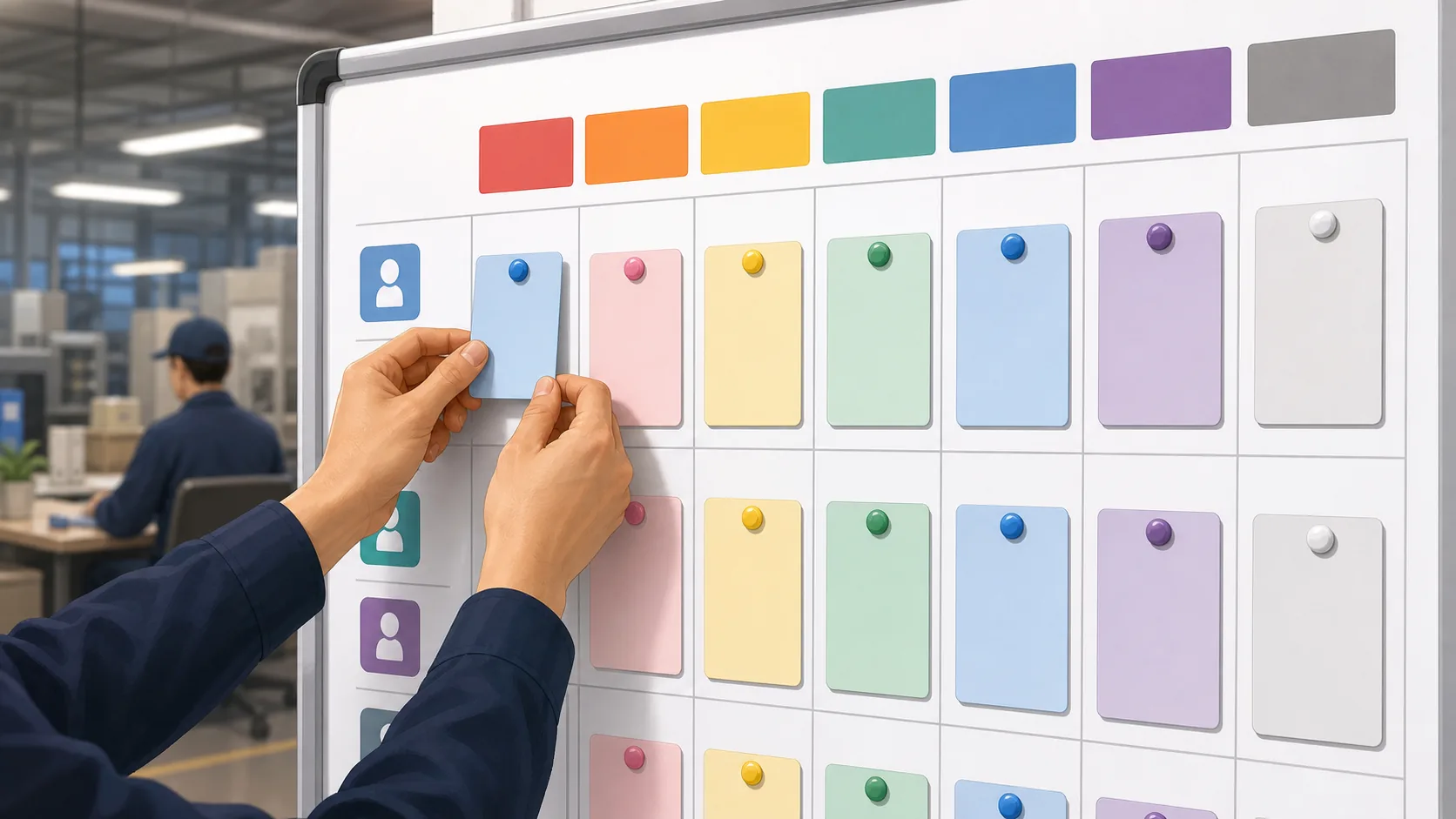
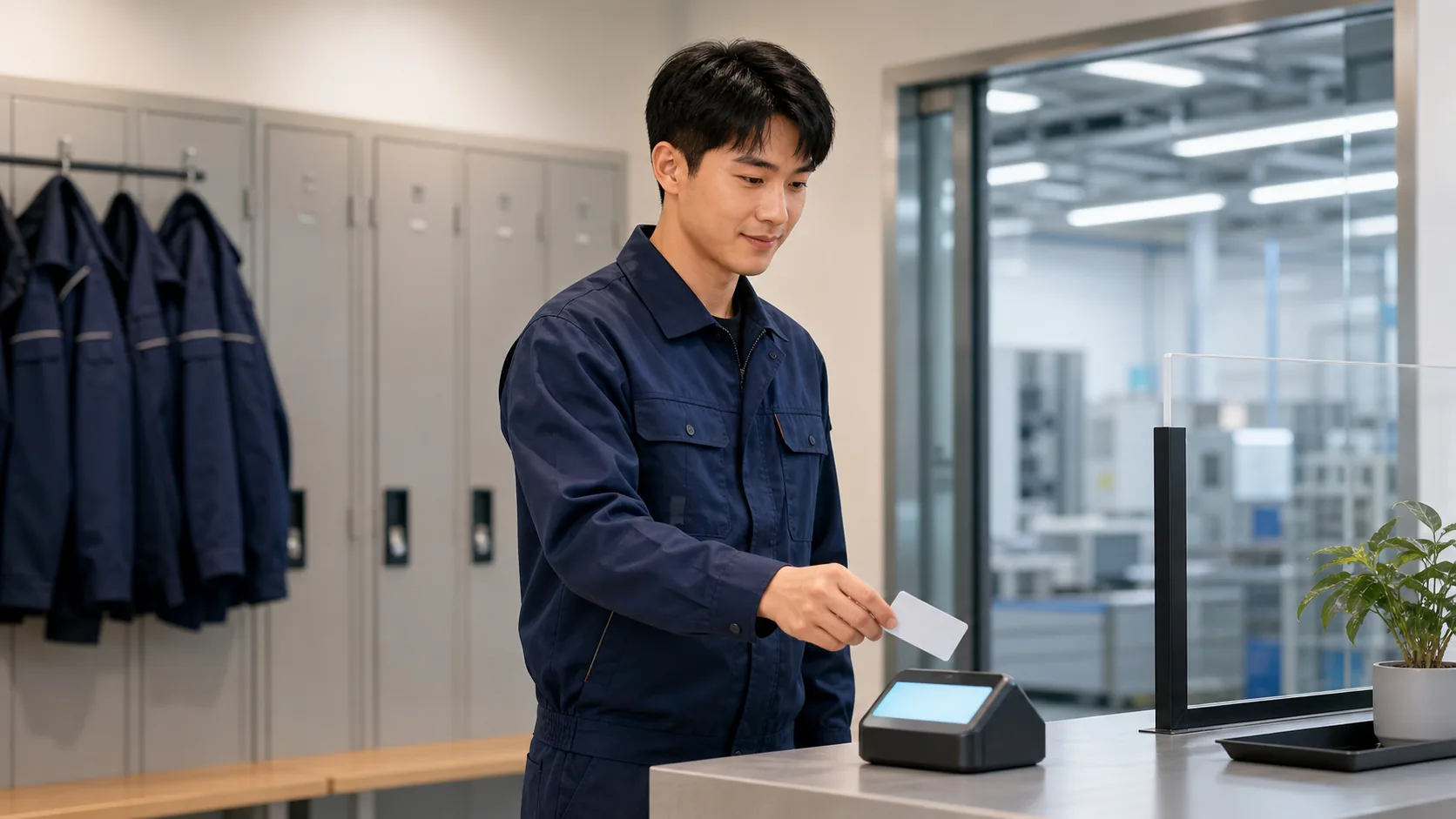
Từ vựng tiếng Hàn cho lịch làm việc giúp người học luyện từ tiếng Hàn trong tình huống thực tế. Bài BSKorean này giữ nội dung rõ ràng, dễ xem và liên kết với phần luyện tập.
Hướng dẫn Luyện từ nông nghiệp, chăn nuôi và thủy sản
Luyện từ nông nghiệp, chăn nuôi và thủy sản giúp người học luyện từ tiếng Hàn trong tình huống thực tế. Bài BSKorean này giữ nội dung rõ ràng, dễ xem và liên kết với phần luyện tập.
Hướng dẫn Từ vựng tiếng Hàn cho công việc nông nghiệp ở Hàn Quốc
Từ vựng tiếng Hàn cho công việc nông nghiệp ở Hàn Quốc giúp người học luyện từ tiếng Hàn trong tình huống thực tế. Bài BSKorean này giữ nội dung rõ ràng, dễ xem và liên kết với phần luyện tập.
Hướng dẫn Từ vựng tiếng Hàn cho kiểm tra trong nhà máy
Từ vựng tiếng Hàn cho kiểm tra trong nhà máy giúp người học luyện từ tiếng Hàn trong tình huống thực tế. Bài BSKorean này giữ nội dung rõ ràng, dễ xem và liên kết với phần luyện tập.
A Korean payslip usually separates money you earned from money deducted. Start with the question 급여명세서를 확인하고 싶어요, “I want to check my payslip.” Then look for 기본급, 수당, 공제, 세금, and 실수령액.
Korean payslip words helps learners practice Korean words in real situations. This BSKorean post keeps the lesson clear, scannable, and connected to app practice.
Korean payslip words help you understand what happened to your pay: the salary amount, hourly wage, pre-tax amount, deductions, insurance lines, net pay, pay date, account, and deposit. This lesson is for language recognition, so you can find the important words before asking payroll a clearer question.
Start with the real moment: a payslip arrives and you need to find the important parts.
Briefing Summary
Situation
Reading a Korean payslip after payday
Practice focus
salary, hourly wage, pre-tax amount, deductions, insurance, net pay, pay date, account, and deposit words
Useful for
foreign workers, factory workers, service workers, and anyone paid by salary or hourly wage in Korea
Study time
8-12 minutes
Slide 1. The Payslip Moment
Imagine you receive a 급여명세서 after payday. The first question is simple: what was paid, what was deducted, and what arrived in your account? Start with 급여, 세전 금액, 공제, and 실수령액. These words give you the basic map of the page.
This post is a Korean language lesson, not tax, labor, or financial advice. If you think a real payslip is wrong, ask payroll, a local help center, or a qualified professional. The goal here is to help you recognize the words that deserve a question.
Slide 2. Key Korean Payslip Words
The image stays text-free; the payslip words are in the table below.
Korean
Romanization
English
Level
Use
급여
geubyeo
salary; pay
BS2
Main pay word on a payslip.
급여명세서
geubyeo myeongseoseo
payslip; pay statement
BS5
The document that explains pay.
월급
wolgeup
monthly salary
BS1
Monthly salary amount.
시급
sigeup
hourly wage
BS2
Hourly pay rate.
세전 금액
sejeon geumaek
pre-tax amount
BS5
Amount before taxes and deductions.
공제
gongje
deduction
BS4
Money subtracted from pay.
소득세
sodeukse
income tax
BS5
Income tax line.
국민연금
gungmin yeongeum
national pension
BS5
National pension deduction line.
건강 보험
geongang boheom
health insurance
BS4
Health insurance deduction line.
고용보험
goyong boheom
employment insurance
BS5
Employment insurance deduction line.
산재보험
sanjae boheom
industrial accident insurance
BS5
Workplace accident insurance line.
실수령액
silsuryeong-aek
net pay; take-home pay
BS5
Final amount you receive.
지급일
jigeubil
pay date
BS3
Date the pay is issued.
계좌
gyejwa
bank account
BS1
Bank account for payment.
입금
ipgeum
deposit
BS1
Deposit into the bank account.
Slide 3. Read a Payslip in 3 Steps
A payslip explains the amount; a bank deposit confirms what arrived.
Step 1: Find the pay type. Look for 급여, 월급, and 시급. These tell you whether the page is talking about pay, monthly salary, or hourly wage.
Step 2: Compare before and after deductions. Find 세전 금액, 공제, and 실수령액. This helps you separate the starting amount from the final amount.
Step 3: Match the final amount to your bank. Check 지급일, 계좌, and 입금. These words connect the payslip to the bank deposit.
Slide 4. Deductions and Insurance Words
Deduction and insurance words are the parts that often need a question.
The word 공제 means deduction. It is the big category for money subtracted from pay. On many payslips, you may also see insurance or tax words such as 소득세, 국민연금, 건강 보험, 고용보험, and 산재보험.
Do not try to solve every number from vocabulary alone. Use these words as labels. If a line looks unexpected, point to the Korean word and ask: “What is this item?” or “Why was this deducted?” That is a practical first step.
Slide 5. Practice With BSKorean
Practice recognition first, then use the words when reading a real payslip.
Practice this topic in BSKorean: Read the BSKorean app guide, then open the practice app. Use this article set to practice Korean word, romanization, English meaning, and the payslip situation together.
A useful habit is to group the page first: pay, deductions, insurance, final amount, date, and bank. Then say the Korean word. That makes a busy payslip easier to scan.
Mini Review Table
If you see…
Think…
급여명세서
This tells you the page is a payslip or pay statement.
세전 금액
This is the amount before taxes and deductions.
공제
This means a deduction from pay.
건강 보험
This points to the health insurance line.
실수령액
This is the final take-home amount.
지급일
This is the pay date.
계좌
This is the bank account.
입금
This means the money was deposited.
Final Takeaway
You do not need to understand every small number to begin reading a payslip. First find the payslip word, then the pay, deduction, insurance, net pay, pay date, account, and deposit words. These Korean payslip words help you ask better questions when your pay arrives.
Before signing a Korean employment contract, check the wage, work hours, overtime, holiday, contract period, and insurance. Start with 계약서를 확인하고 싶어요, “I want to check the contract.” Do not rush through numbers or dates.
Contract item
Korean
Meaning
Contract check
계약서를 확인하고 싶어요
I want to check the contract.
Wage
임금은 얼마예요?
How much is the wage?
Work hours
근무 시간은 어떻게 돼요?
What are the work hours?
Insurance
보험이 포함돼요?
Is insurance included?
If you do not understand a clause, ask 이 부분 설명해 주세요. For connected workplace money and time topics, continue with workplace schedule words and payslip words.
Korean employment contract words guide
Korean employment contract words helps learners practice Korean words in real situations. This BSKorean post keeps the lesson clear, scannable, and connected to app practice.
Korean employment contract words are useful when you receive a work document, start a new job, or review conditions with HR. You do not need to understand every long sentence first. Start by finding the people, the document type, work time, pay, contract period, copy, and signature words.
Start with the real moment: review the contract before you sign.
Briefing Summary
Situation
Reading a Korean employment contract before signing
Practice focus
Contract, document, employer, employee, work hours, pay, period, copy, and signature words
Useful for
foreign workers, factory workers, service workers, and anyone starting work in Korea
Study time
8-12 minutes
Slide 1. The Situation
Imagine an HR staff member gives you a document and asks you to review it. The page may contain many sentences, but your first job is simpler: identify the document and the main fields. Look for 근로 계약, 계약, and 문서. These words tell you that the page is a contract or work document.
This post is language recognition, not legal advice. For a real dispute or legal question, contact a qualified local help center, labor office, or professional. The goal here is to help you notice the words that deserve a question before you sign.
Slide 2. Key Employment Contract Words
The image stays text-free; the contract words are in the table below.
Korean
Romanization
English
Level
Use
근로 계약
geunno gyeyak
employment contract
BS4
Name of the work contract.
계약
gyeyak
contract
BS1
General contract word.
문서
munseo
document
BS1
Document or file.
사본
sabon
copy
BS3
Copy to keep for records.
고용주
goyongju
employer
BS3
Employer or hiring side.
직원
jigwon
employee; staff
BS1
Employee or staff member.
계약직
gyeyakjik
contract employee; fixed-term employee
BS4
Employment type.
근무 시간
geunmu sigan
working hours
BS2
Hours you work.
근로 조건
geunno jogeon
working conditions; employment conditions
BS6
Overall work conditions.
계약 조건
gyeyak jogeon
contract terms
BS5
Terms in the contract.
계약 기간
gyeyak gigan
contract period
BS5
How long the contract runs.
월급
wolgeup
monthly salary
BS1
Monthly pay.
시급
sigeup
hourly wage
BS2
Hourly pay.
급여
geubyeo
salary; pay
BS2
Pay or wage section.
서명
seomyeong
signature
BS2
Signature area.
Slide 3. Read an Employment Contract in 3 Steps
Use the words as a checklist: people, document, time, pay, copy, and signature.
Step 1: Find the people and document. Look for 고용주, 직원, 문서, and 근로 계약. Confirm who the contract is between.
Step 2: Check time and period. Look for 근무 시간, 계약 기간, and 근로 조건. These words tell you when you work and how long the contract runs.
Step 3: Check pay and signing words. Look for 월급, 시급, 급여, 서명, and 사본. Ask before signing if these parts are unclear.
Slide 4. Common Contract Mistakes
Pause before signing if the pay, period, or copy words are unclear.
The first mistake is confusing pay words. 월급 is monthly salary, while 시급 is hourly wage. 급여 is a broader salary or pay word. Do not treat these as the same pay structure.
The second mistake is mixing up period and conditions. 계약 기간 is the contract period. 계약 조건 and 근로 조건 point to terms or working conditions. If the contract period or work conditions do not match what you expected, ask a clear question.
The third mistake is signing before you understand record words. 서명 means signature. 사본 means copy. In real life, it is often important to know whether you have signed and whether you have a copy for your records.
Slide 5. Practice With BSKorean
Practice recognition first, then use the words when reading a real form.
Practice this topic in BSKorean: Read the BSKorean app guide, then open the practice app. Use this article set to practice Korean word, romanization, English meaning, and the contract-reading situation together.
A useful habit is to say the group first: people, document, time, terms, pay, or signature. Then say the Korean word. This makes the page easier to scan when you are nervous or busy.
Mini Review Table
If you see…
Think…
근로 계약
This tells you the document is an employment contract.
고용주
This is the employer side of the contract.
근무 시간
This is where working hours matter.
계약 기간
This tells you the contract period.
급여
This points to pay or salary.
서명
This is the signature word.
Final Takeaway
You do not need to understand every contract sentence to begin reading safely. First find the employment contract word, then the people, time, pay, period, copy, and signature words. These Korean employment contract words help you ask better questions before you sign.
When schedule details change, ask one short Korean question first: 오늘 몇 시에 시작해요?, “what time do we start today?” The most important words are 출근, 퇴근, 야근, 휴무, and 교대.
Korean workplace schedule words helps learners practice Korean words in real situations. This BSKorean post keeps the lesson clear, scannable, and connected to app practice.
Korean workplace schedule words are useful when you need to read a duty roster, confirm a shift, clock in, take a break, or ask about a schedule change. This lesson is for language recognition at work, especially for foreign workers who need practical Korean before the shift starts.
Start with the real moment: check the roster before the shift begins.
Briefing Summary
Situation
Reading a workplace schedule, duty roster, or shift notice
Practice focus
Schedule, clock-in, clock-out, shift type, break time, leave, absence, and overtime words
Useful for
foreign workers, factory workers, field workers, and anyone reading work notices in Korea
Study time
8-12 minutes
Slide 1. The Situation
Imagine you arrive at work and see a roster board. You need to know your row, your shift, your break time, and whether anything changed. If the schedule uses Korean only, the important words may look small, but the reading order can stay simple. Start with the plan, then attendance, then shift type, then exceptions.
This post is not legal or HR advice. It only explains Korean words you may see around a workplace schedule. If a schedule affects pay, leave, overtime, or safety, ask your supervisor or the appropriate workplace contact.
Slide 2. Key Workplace Schedule Words
The image stays text-free; the Korean schedule words are in the table below.
Korean
Romanization
English
Level
Use
일정
iljeong
schedule
BS1
Check the overall plan.
근무표
geunmupyo
duty roster; work schedule
BS4
Find your assigned work row.
출근
chulgeun
clocking in; going to work
BS1
Start of work.
퇴근
toegeun
clocking out; leaving work
BS1
End of work.
교대 근무
gyodae geunmu
shift work
BS4
Rotating shift system.
주간 근무
jugan geunmu
day shift
BS4
Daytime work.
야간 근무
yagan geunmu
night shift
BS4
Nighttime work.
야근
yageun
overtime work; working late
BS2
Work after normal hours.
연장 근무
yeonjang geunmu
overtime work
BS4
Extended work.
휴식 시간
hyusik sigan
break time
BS2
Rest time during work.
점심시간
jeomsim sigan
lunch break
BS1
Lunch break.
휴가
hyuga
vacation; leave
BS1
Approved leave.
결근하다
gyeolgeunhada
to be absent from work
BS2
When you cannot come to work.
출근 기록
chulgeun girok
attendance record; clock-in record
BS3
Record of clock-in.
휴일 근무
hyuil geunmu
holiday work; working on a day off
BS4
Work on a holiday or day off.
Slide 3. Read a Work Schedule in 3 Steps
Clock-in and clock-out words connect the schedule to the actual workday record.
Step 1: Find the plan. Look for 일정 or 근무표. These words tell you that you are looking at a schedule or roster.
Step 2: Check attendance words. Look for 출근, 퇴근, and 출근 기록. These connect the schedule to clock-in and clock-out records.
Step 3: Check shift and exception words. Look for 교대 근무, 야근, 연장 근무, and 휴일 근무. These words often mean the workday is different from a normal day.
Slide 4. Common Schedule Mistakes
Shift changes, overtime, and holiday work are the places where misunderstandings often happen.
The first mistake is reading only the start time and ignoring the shift type. 주간 근무 and 야간 근무 are very different. If your workplace uses 교대 근무, confirm which rotation you are on.
The second mistake is treating overtime words as normal work words. 야근 and 연장 근무 both point to extra work time. If the notice is unclear, ask before the shift ends.
The third mistake is missing leave or absence language. 휴가 is approved leave or vacation, while 결근하다 means being absent from work. Do not guess these words from context alone.
Slide 5. Practice With BSKorean
Practice the schedule words as recognition first, then use them as a checklist at work.
Practice this topic in BSKorean: Read the BSKorean app guide, then open the practice app. Use this article set to practice Korean word, romanization, English meaning, and the work situation together.
A useful practice habit is to say the word group first: plan, attendance, shift, extra work, rest, or leave. Then say the Korean word. This makes the schedule easier to scan when you are tired or in a hurry.
Mini Review Table
If you see…
Think…
근무표
Find the duty roster or work schedule first.
출근
This is the start-of-work or clock-in moment.
퇴근
This is the leaving-work or clock-out moment.
교대 근무
Check whether the job uses rotating shifts.
야간 근무
Night shift needs extra schedule attention.
휴식 시간
This marks a rest or break period.
결근하다
Use this when someone is absent from work.
휴일 근무
Confirm this early because it means holiday work.
Final Takeaway
You do not need to understand every sentence on a work notice to start safely. First find the schedule, then clock-in and clock-out words, then shift type, break time, leave, absence, overtime, and holiday work. These Korean workplace schedule words help you ask better questions before the problem becomes urgent.
Factory inspection language is short and direct. Start with 검사해 주세요, “please inspect it.” If something is wrong, use 불량이에요, which means “it is defective.” These two phrases are enough for many line-check situations.
Practice the core inspection set: 검사해 주세요, 불량이에요, 다시 확인해 주세요, and 안전장비가 필요해요. They cover checking, defects, rechecking, and safety equipment.
Korean factory inspection words helps learners practice Korean words in real situations. This BSKorean post keeps the lesson clear, scannable, and connected to app practice.
Korean factory inspection words are important when a supervisor checks products, reports defects, or asks workers to recheck an item. This briefing-style lesson teaches practical inspection vocabulary for real factory communication in Korea.
Korean Factory Inspection Words to Recognize
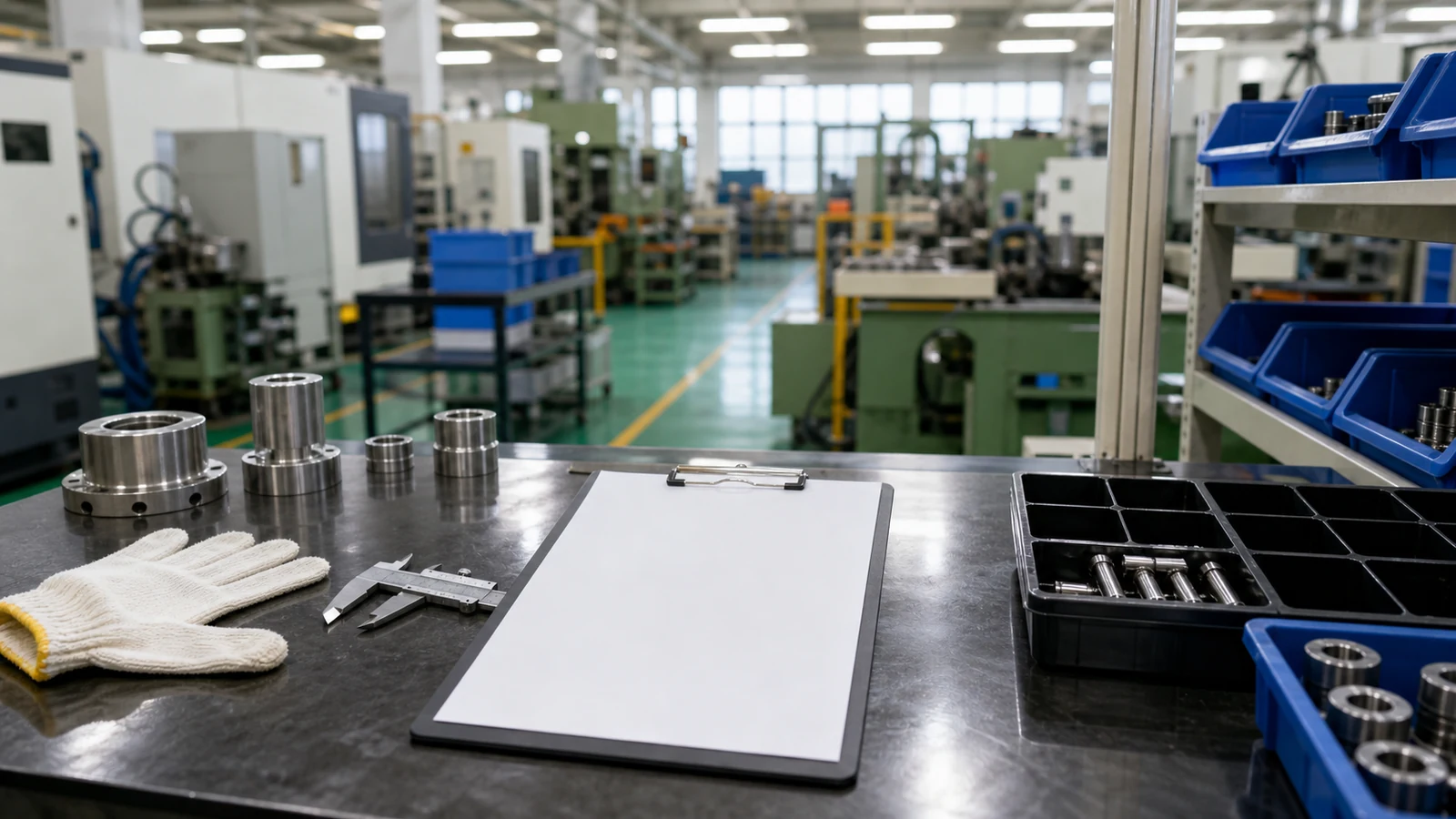
You are standing beside a factory inspection table in Korea. A supervisor points to two trays and says, 양품과 불량품을 분리해 주세요. Another worker says, 외관검사에서 스크래치가 보입니다. You understand some Korean, but the inspection words come quickly.
This lesson teaches practical Korean factory inspection words for foreign workers. The words come from the BSkorean factory vocabulary DB, especially the quality and inspection set. The goal is simple: when you hear a factory inspection word, you should know what to check, what to report, and what action to take next.
Briefing Slides
The PPT below was built with realistic factory situation images first, then Korean learning text was placed on top. Use the slides as a quick briefing before reading the full lesson.
Slide 1. Korean factory inspection words lesson slide with quality and defect vocabulary
Imagine your first day helping with quality checks in a Korean factory. Products move from the production line to the inspection area. Some items are good. Some have scratches, dents, missing parts, or contamination. The supervisor does not explain everything slowly. Instead, you hear short words like 검사, 불량, 합격, 불합격, 선별, and 재검사.
In this situation, the most important skill is not translating every sentence word by word. You need to recognize the inspection word and connect it to the next work action. If you hear 검사, you should check something. If you hear 불량품, you should not mix that item with good products. If you hear 격리, you should keep the problem item separate.
What You Need to Understand
Factory Korean often uses short, direct phrases. A supervisor may say 품질 확인하세요, 샘플검사 하세요, or 불량 보고하세요. These phrases are not long conversations. They are work signals. The noun tells you the object or status, and the verb tells you the action.
This is why factory inspection vocabulary is useful for foreign workers. The same words appear in spoken instructions, inspection sheets, quality reports, defect labels, and workplace notices. Once you recognize the core words, you can understand the workflow more quickly.
Core Vocabulary
Korean
Romanization
English
Level
What it means at work
품질
pumjil
quality
Beginner 1
The condition or standard of a product.
품질관리
pumjilgwanri
quality control
Beginner 1
The system or work of controlling product quality.
검사
geomsa
inspection
Beginner 1
A check or inspection step.
전수검사
jeonsugeomsa
full inspection
Beginner 1
Checking every item, not only a sample.
샘플검사
saempeulgeomsa
sampling inspection
Beginner 1
Checking a sample from a larger lot.
공정검사
gongjeonggeomsa
in-process inspection
Beginner 1
Inspection during the production process.
최종검사
choejonggeomsa
final inspection
Beginner 1
The last inspection before shipment or completion.
외관검사
oegwangeomsa
visual inspection
Beginner 1
Looking at the outside condition of a product.
치수검사
chisugeomsa
dimensional inspection
Beginner 1
Checking size, length, width, or dimensions.
기능검사
gineunggeomsa
functional inspection
Beginner 1
Checking whether the product works correctly.
합격
hapgyeok
pass
Beginner 2
The product or inspection result passes.
불합격
bulhapgyeok
fail
Beginner 2
The product or inspection result fails.
판정
panjeong
judgment
Beginner 2
The decision after inspection.
양품
yangpum
good product
Beginner 2
A good product that can move to the next step.
불량품
bulryangpum
defective product
Beginner 2
A defective product that should not be mixed with good items.
불량
bulryang
defect
Beginner 2
A defect or quality problem.
결함
gyeolham
flaw
Beginner 2
A flaw or fault in the product.
스크래치
seukeuraechi
scratch
Beginner 2
A scratch on the surface.
찍힘
jjikhim
dent
Beginner 2
A dent or mark from impact.
오염
oyeom
contamination
Beginner 2
Contamination, dirt, stain, or unwanted material.
이물
imul
foreign matter
Beginner 2
Foreign matter that should not be inside or on the product.
누락
nurak
missing part
Beginner 2
A missing part, step, or item.
파손
pason
breakage
Beginner 3
Breakage or damage.
격리
gyeokri
quarantine
Intermediate 2
Keeping problem products separate.
선별
seonbyeol
sorting
Intermediate 2
Sorting products by condition.
재검사
jaegeomsa
re-inspection
Intermediate 2
Checking again after a problem or correction.
Real Workplace Phrases
The words above become useful when they are connected to short workplace instructions. The following phrases are common in quality control and inspection work.
Korean Sentence
English Meaning
When to Use
품질을 확인해 주세요.
Please check the quality.
When asking someone to check a product before moving it forward.
샘플검사 먼저 하세요.
Please do the sampling inspection first.
When only selected items need to be checked first.
외관검사에서 스크래치가 보입니다.
A scratch is visible during visual inspection.
When reporting a visible surface problem.
이 제품은 불량품입니다.
This product is defective.
When a product should not be treated as good stock.
양품과 불량품을 분리해 주세요.
Please separate good products and defective products.
When sorting inspected products.
불합격 제품은 격리하세요.
Quarantine failed products.
When failed products must be kept away from good items.
누락된 부품이 있는지 확인하세요.
Check whether any parts are missing.
When inspecting assembly or packaging.
재검사 후 보고해 주세요.
Please report after re-inspection.
When a supervisor asks for confirmation after checking again.
Usage Notes
검사 means the checking step
검사 means inspection or checking. It can be general, but factory work often makes it more specific. 외관검사 checks the outside appearance. 치수검사 checks size or dimensions. 기능검사 checks whether the product works. When you hear a word ending in 검사, ask yourself: “What type of check is required?”
합격 and 불합격 are result words
합격 means pass, and 불합격 means fail. These words can be used for tests, but in a factory they often describe the inspection result. A product can be 합격 if it meets the standard. It can be 불합격 if it does not meet the standard.
양품 and 불량품 describe product status
양품 is a good product. It can usually continue to the next process, packing, or shipment. 불량품 is a defective product. It should be reported, separated, repaired, rechecked, or discarded depending on the workplace rule. Do not mix 불량품 with 양품.
불량 is the problem, 불량품 is the product
불량 can mean the defect or the defective condition. 불량품 means the defective product itself. For example, 스크래치 불량 can mean a scratch defect. 이 제품은 불량품입니다 means this product is defective.
Common Pattern
Pattern
Meaning
Example
N + 확인하세요
Please check N.
품질 확인하세요.
N + 검사하세요
Please inspect N.
치수검사 하세요.
N + 분리해 주세요
Please separate N.
불량품을 분리해 주세요.
N + 보고해 주세요
Please report N.
불량을 보고해 주세요.
N + 재검사하세요
Please inspect N again.
이 제품은 재검사하세요.
In real spoken Korean, workers may shorten these phrases. You might hear 품질 확인, 불량 보고, or 재검사. The shorter form is common when the situation is obvious. For learning, remember the polite full forms first.
Mini Dialogue
Supervisor: 이 제품 외관검사 했어요? Did you do the visual inspection for this product?
Worker: 네, 외관검사에서 스크래치가 보입니다. Yes, a scratch is visible during the visual inspection.
Supervisor: 그러면 불량품으로 분리해 주세요. Then please separate it as a defective product.
Worker: 불합격 제품은 어디에 두면 될까요? Where should I put the failed products?
Supervisor: 저쪽 격리 구역에 두고, 나중에 재검사하세요. Put them in the quarantine area over there, and inspect them again later.
Worker: 네, 격리 후 재검사하겠습니다. Okay, I will quarantine them and re-inspect them.
This dialogue shows the work flow: inspect, find a defect, separate the defective product, quarantine it, and re-inspect it. The Korean is short because the workers are focused on action, not explanation.
Common Mistakes
Common Mistake 1: Treating 불량 and 불량품 as the same word
Why it happens: Both words are connected to defects.
Correct understanding:불량 is the defect or defective condition. 불량품 is the defective product.
Example:스크래치 불량 means a scratch defect. 불량품을 분리해 주세요 means please separate the defective products.
Common Mistake 2: Thinking 합격 and 불합격 only refer to people
Why it happens: Learners often meet these words in tests or exams first.
Correct understanding: In a factory, 합격 and 불합격 can describe an inspection result for a product, part, process, or sample.
Example:샘플검사 합격 means the sample inspection passed.
Common Mistake 3: Ignoring 격리 after a defect is found
Why it happens: Beginners may understand the defect word but miss the next action.
Correct understanding:격리 means the product should be kept separate. This prevents defective products from being mixed with good products.
Example:불합격 제품은 격리하세요 means failed products should be quarantined.
Quick Quiz
1. What does “외관검사” mean? A. visual inspection / B. final inspection / C. missing part Answer: A. visual inspection 외관검사 means checking the outside appearance of a product.
2. A product has a visible dent. Which Korean word is useful? A. 찍힘 / B. 합격 / C. 양품 Answer: A. 찍힘 찍힘 means a dent or impact mark.
3. Which word means “good product”? A. 불량품 / B. 양품 / C. 오염 Answer: B. 양품 양품 is a product that passed inspection or can be treated as good stock.
4. What should you do with failed products if the supervisor says “격리하세요”? A. Mix them with good products / B. Keep them separate / C. Ship them immediately Answer: B. Keep them separate 격리 means quarantine or separation from other products.
5. What does “재검사” mean? A. re-inspection / B. full inspection / C. contamination Answer: A. re-inspection 재검사 means checking again after a problem, correction, or unclear result.
Practice This Lesson
Practice this word list in Learn Korean or in the upcoming BS3001 app.
Korean factory inspection words are easier when you read them as work signals. First, find the inspection type: 외관검사, 치수검사, or 기능검사. Then check the result word: 합격, 불합격, 양품, or 불량품. Finally, take the action: separate, quarantine, report, or re-inspect.
If you work in a Korean factory, these words can help you understand quality instructions faster and avoid mixing good products with defective products.
This lesson is for foreign farm workers who need to understand the next task, ask for tools, and report safety problems. Start with 오늘 작업은 어디예요?, which means “where is today’s work?” It is a safe question when instructions are unclear.
Learn these first-day phrases: 오늘 작업은 어디예요?, 장갑이 필요해요, 쉬는 시간이 언제예요?, and 다쳤어요. They cover location, gloves, break time, and injury.
Situation
Korean
Meaning
Find the task
오늘 작업은 어디예요?
Where is today’s work?
Ask for gloves
장갑이 필요해요
I need gloves.
Ask break time
쉬는 시간이 언제예요?
When is break time?
Report injury
다쳤어요
I got hurt.
When you do not understand a tool name, point and ask 이거 맞아요?, “is this correct?” If something is dangerous, stop and say 위험해요. Continue with workplace problem report phrases and workplace schedule words to handle workday changes.
Korean agriculture words guide
Korean agriculture words helps learners practice Korean words in real situations. This BSKorean post keeps the lesson clear, scannable, and connected to app practice.
Korean agriculture words help foreign farm workers understand field instructions, tools, crop work, safety notices, and daily tasks in Korea. This lesson connects practical farm vocabulary to real work situations.
Korean Agriculture Words for Real Field Work
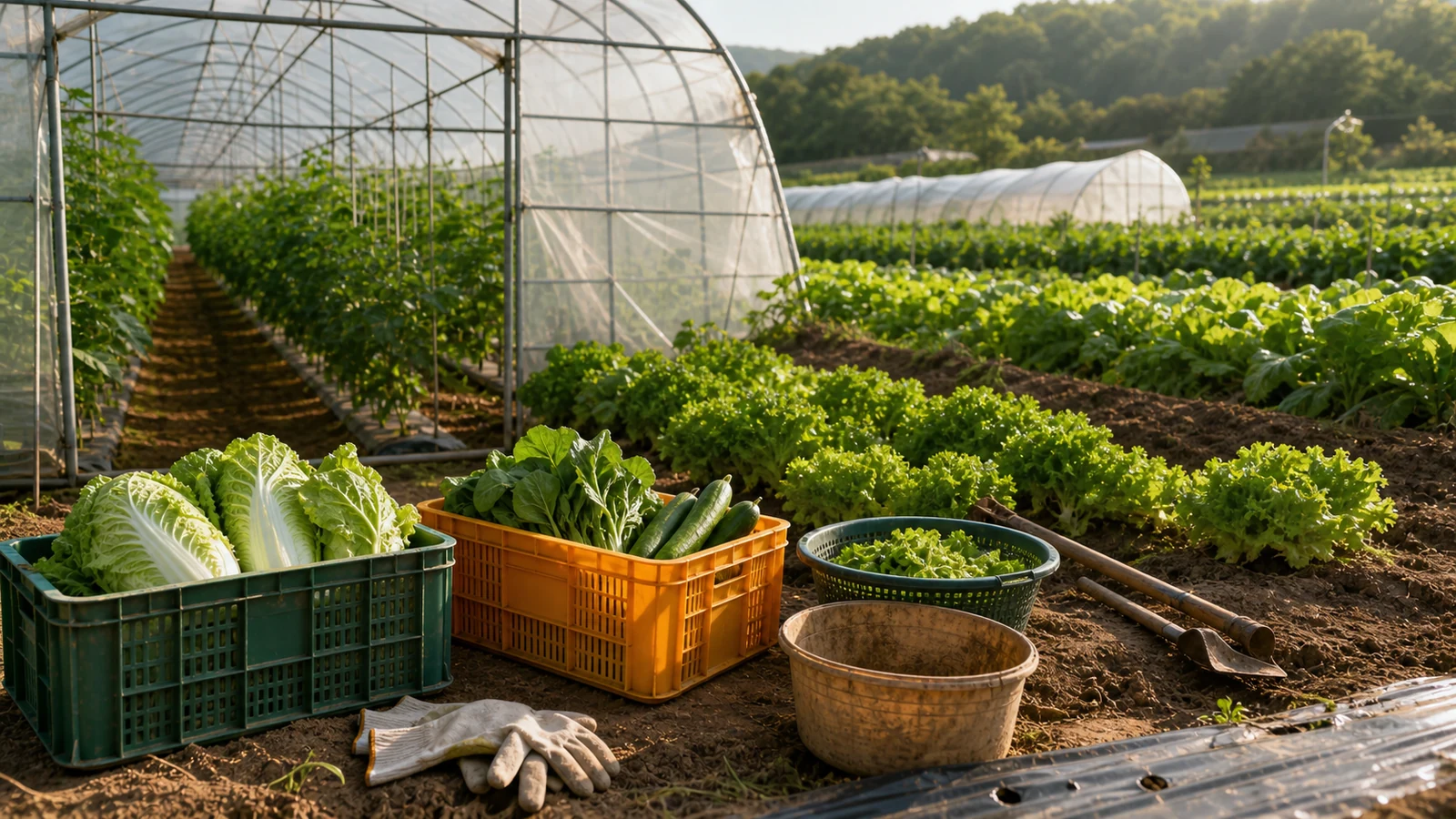
You arrive at a farm in Korea early in the morning. A supervisor points toward a greenhouse and says, 하우스 재배 구역으로 가세요. Then you hear words like 모종, 비료, 토양, and 수확물. Even if the work itself is familiar, the Korean words can make the first few minutes confusing.
This lesson teaches practical Korean agriculture words for foreign farm workers. The words come from the BSkorean agriculture, livestock, and fisheries word DB, and this article focuses on the agriculture side: crops, soil, seedlings, fertilizer, greenhouse work, open-field work, weather, and harvested crops.
Briefing PPT
This PPT was rebuilt using realistic farm background images first, then lesson text was placed on top as readable briefing slides.
Korean Agriculture Words title slide for foreign farm workers
Opening Situation
Imagine your first shift at a vegetable farm in Korea. Some workers are inside a greenhouse. Others are working in an open field. One person is checking seedlings, another is preparing fertilizer, and another is sorting harvested vegetables.
In this situation, you do not need to understand a long explanation about agriculture. You need to recognize the words that tell you what object, place, or work step people are talking about. If you hear 모종, look for seedlings. If you hear 비료, the work is about fertilizer. If you hear 수확물, the work is probably about harvested crops that need to be moved, sorted, packed, or checked.
What You Need to Understand
Agriculture Korean is often practical and object-based. A supervisor may use a noun first, then add a short instruction. For example, 모종 확인하세요 means “Check the seedlings.” 비료 준비해 주세요 means “Please prepare the fertilizer.” The important part is not a grammar explanation. The important part is recognizing the core word and connecting it to the real object in front of you.
Farm work also changes depending on location. 하우스 재배 means greenhouse cultivation. 노지 재배 means open-field cultivation. If you know this difference, you can understand whether the instruction is about work inside a greenhouse or outside in the field.
Core Vocabulary
Korean
Romanization
English
Level
What it means at work
농업
nongeop
agriculture
Beginner 1
The general field of agriculture.
농사
nongsa
farming
Beginner 2
The actual work of farming.
농민
nongmin
farm worker
Beginner 2
A farm worker or farmer as a person.
농부
nongbu
farmer
Beginner 1
A farmer, usually a person who grows crops.
농작물
nongjakmul
agricultural crop
Beginner 1
Crops growing in a field or greenhouse.
채소
chaeso
vegetable
Beginner 1
Vegetables grown, packed, or sorted.
하우스 재배
hauseu jaebae
greenhouse cultivation
Beginner 1
Growing crops inside a greenhouse.
노지 재배
noji jaebae
open-field cultivation
Beginner 2
Growing crops outside in an open field.
논
non
rice paddy
Beginner 1
A rice paddy or wet rice field.
흙
heulk
soil
Beginner 1
Soil or dirt you touch and work with.
토양
toyang
soil
Beginner 2
Soil as a more technical growing condition.
비료
biryo
fertilizer
Beginner 1
Fertilizer used to help crops grow.
종자
jongja
seed stock
Beginner 1
Seed stock before planting.
모종
mojong
seedling
Beginner 2
Seedlings ready to be moved or planted.
싹
ssak
sprout
Beginner 2
A sprout that has just started growing.
줄기
julgi
stem
Beginner 1
The stem of a plant.
수확물
suhwakmul
harvested crop
Beginner 2
The crop after harvest.
비
bi
rain
Beginner 1
Rain that can affect field work.
햇빛
haetbit
sunlight
Beginner 1
Sunlight needed for growing crops.
이슬
iseul
dew
Beginner 2
Dew on plants in the morning.
Crop Words You May Hear
Korean
Romanization
English
Level
Workplace note
당근
danggeun
carrot
Beginner 1
Carrot, often sorted by size and condition.
상추
sangchu
lettuce
Beginner 1
Lettuce, often harvested and packed by hand.
오이
oi
cucumber
Beginner 1
Cucumber, common in greenhouse work.
토마토
tomato
tomato
Beginner 1
Tomato, common in greenhouse work.
옥수수
oksusu
corn
Beginner 1
Corn, common in field farming.
Crop names are useful because they often appear in direct work instructions. If someone says 상추 수확물, they are talking about harvested lettuce. If they say 오이 하우스, they may mean the greenhouse where cucumbers are grown. In real farm work, Korean words are often shortened because everyone can see the place and the object.
Common Pattern
The most useful pattern is simple:
Pattern
Meaning
Example
N + 확인하세요
Please check N.
모종 확인하세요.
N + 준비해 주세요
Please prepare N.
비료 준비해 주세요.
N + 분류해 주세요
Please sort N.
수확물 분류해 주세요.
N + 쪽으로 가세요
Please go toward N.
하우스 재배 구역으로 가세요.
In spoken workplace Korean, particles may be dropped. You may hear 모종 확인하세요 instead of 모종을 확인하세요. Both point to the same action: check the seedlings.
Real-Life Dialogue
Dialogue 1: Greenhouse Work
Supervisor: 오늘은 하우스 재배 구역으로 가세요. Oneureun hauseu jaebae guyeogeuro gaseyo. Today, please go to the greenhouse cultivation area.
Worker: 네, 무엇을 확인하면 될까요? Ne, mueoseul hwaginhayeomyeon doelkkayo? Okay. What should I check?
Supervisor: 모종하고 토양 상태를 확인하세요. Mojonghago toyang sangtaereul hwaginhaseyo. Please check the seedlings and the soil condition.
Worker: 네, 확인하겠습니다. Ne, hwaginhagetseumnida. Yes, I will check.
In this dialogue, 하우스 재배 tells you the work area. 모종 tells you the object to check. 토양 tells you that the supervisor cares about the soil condition, not just the plants.
Worker: 어떤 수확물인가요? Eotteon suhwangmuringayo? Which harvested crops?
Supervisor: 상추하고 오이를 먼저 분류해 주세요. Sangchuhago oireul meonjeo bullyuhae juseyo. Please sort the lettuce and cucumbers first.
Worker: 네, 상추부터 하겠습니다. Ne, sangchubuteo hagetseumnida. Okay, I will start with the lettuce.
Here, the key word is 수확물. It does not simply mean “harvest” as an abstract idea. At work, it usually means the actual crops that have already been picked and now need to be moved, sorted, checked, or packed.
Common Mistakes
Common Mistake 1: Thinking 농업 and 농사 are the same in every sentence
Why it happens: Both words are connected to farming.
Correct understanding:농업 is the broad industry or field of agriculture. 농사 is the actual work of farming.
Example:농업 can appear in a category or document. 농사 is more natural when talking about doing farm work.
Common Mistake 2: Reading 하우스 재배 as a normal house
Why it happens: Beginners may connect 하우스 with “house.”
Correct understanding: In farm work, 하우스 재배 usually means greenhouse cultivation. It is about growing crops inside a greenhouse, not a house for people.
Example:하우스 재배 구역 means the greenhouse cultivation area.
Common Mistake 3: Confusing 흙 and 토양
Why it happens: Both words can mean soil.
Correct understanding:흙 is the everyday word for soil or dirt. 토양 sounds more technical and is often used when talking about soil condition, quality, moisture, or management.
Example: A worker may say 흙이 젖었어요, “The soil is wet.” A supervisor may say 토양 상태를 확인하세요, “Check the soil condition.”
Practice Sentences
Korean Expression
Romanization
English Meaning
Level
When to Use
모종을 확인하세요.
mojongeul hwaginhaseyo.
Please check the seedlings.
Beginner 2
A supervisor asks you to check seedlings before planting.
비료를 준비해 주세요.
biryoreul junbihae juseyo.
Please prepare the fertilizer.
Beginner 1
Before field or greenhouse work starts.
하우스 재배 구역으로 가세요.
hauseu jaebae guyeogeuro gaseyo.
Please go to the greenhouse cultivation area.
Beginner 1
A worker is sent to the greenhouse area.
수확물을 분류해 주세요.
suhwangmureul bullyuhae juseyo.
Please sort the harvested crops.
Beginner 2
After harvesting vegetables or fruits.
토양 상태를 확인하세요.
toyang sangtaereul hwaginhaseyo.
Please check the soil condition.
Beginner 2
When soil moisture or condition matters.
비가 오면 작업을 멈추세요.
biga omyeon jageobeul meomchuseyo.
If it rains, stop the work.
Beginner 1
For outdoor field work.
Mini Quiz
Question 1. What does 모종 mean? A. fertilizer B. seedling C. rain Answer: B. 모종 means seedling.
Question 2. You are told 비료를 준비해 주세요. What should you prepare? A. fertilizer B. harvested crops C. sunlight Answer: A. 비료 means fertilizer.
Question 3. Which word means greenhouse cultivation? A. 노지 재배 B. 하우스 재배 C. 수확물 Answer: B. 하우스 재배 means greenhouse cultivation.
Question 4. What is the more technical word for soil condition? A. 흙 B. 토양 C. 이슬 Answer: B. 토양 is often used for soil as a condition or growing environment.
Question 5. You hear 수확물을 분류해 주세요. What action should you do? A. Sort the harvested crops. B. Plant the seeds. C. Stop because of rain. Answer: A. 수확물 means harvested crops, and 분류해 주세요 means please sort.
Practice This Lesson
Practice these and related words in the dedicated Agri-Fishery Learn Korean page.
For farm work in Korea, start with the object word first. 모종 means seedlings. 비료 means fertilizer. 토양 means soil as a growing condition. 수확물 means crops after harvest. 하우스 재배 points to greenhouse cultivation, while 노지 재배 points to open-field cultivation.
If you can connect these words to real objects and places, Korean agriculture instructions become much easier to follow. You do not need to translate every sentence slowly. Listen for the work word, check the object or place, and confirm the action.