Korean Workplace Schedule Words for Foreign Workers
Learn Korean workplace schedule words for practical life in Korea with Korean examples, key meanings, review tables, and BSKorean app practice.
1. When to use these phrases
Use this workplace schedule lesson first
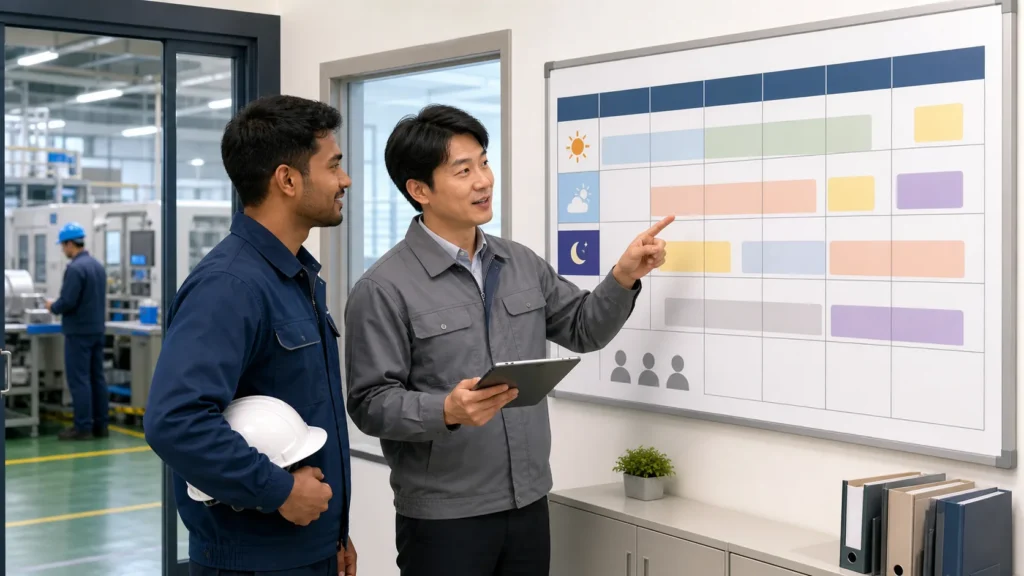
When schedule details change, ask one short Korean question first: 오늘 몇 시에 시작해요?, “what time do we start today?” The most important words are 출근, 퇴근, 야근, 휴무, and 교대.
| Schedule need | Korean | Meaning |
|---|---|---|
| Start time | 오늘 몇 시에 시작해요? | What time do we start today? |
| End time | 몇 시에 퇴근해요? | What time do we finish? |
| Overtime | 오늘 야근 있어요? | Is there overtime today? |
| Day off | 내일 휴무예요? | Is tomorrow a day off? |
If the schedule is posted on a board or app, take a photo and confirm 이 일정 맞아요?. Related work lessons: employment contract words and payslip words.
Korean workplace schedule words guide
Korean workplace schedule words helps learners practice Korean words in real situations. This BSKorean post keeps the lesson clear, scannable, and connected to app practice.
Related lessons
Korean workplace schedule words are useful when you need to read a duty roster, confirm a shift, clock in, take a break, or ask about a schedule change. This lesson is for language recognition at work, especially for foreign workers who need practical Korean before the shift starts.
Briefing Summary
| Situation | Reading a workplace schedule, duty roster, or shift notice |
|---|---|
| Practice focus | Schedule, clock-in, clock-out, shift type, break time, leave, absence, and overtime words |
| Useful for | foreign workers, factory workers, field workers, and anyone reading work notices in Korea |
| Study time | 8-12 minutes |
Slide 1. The Situation
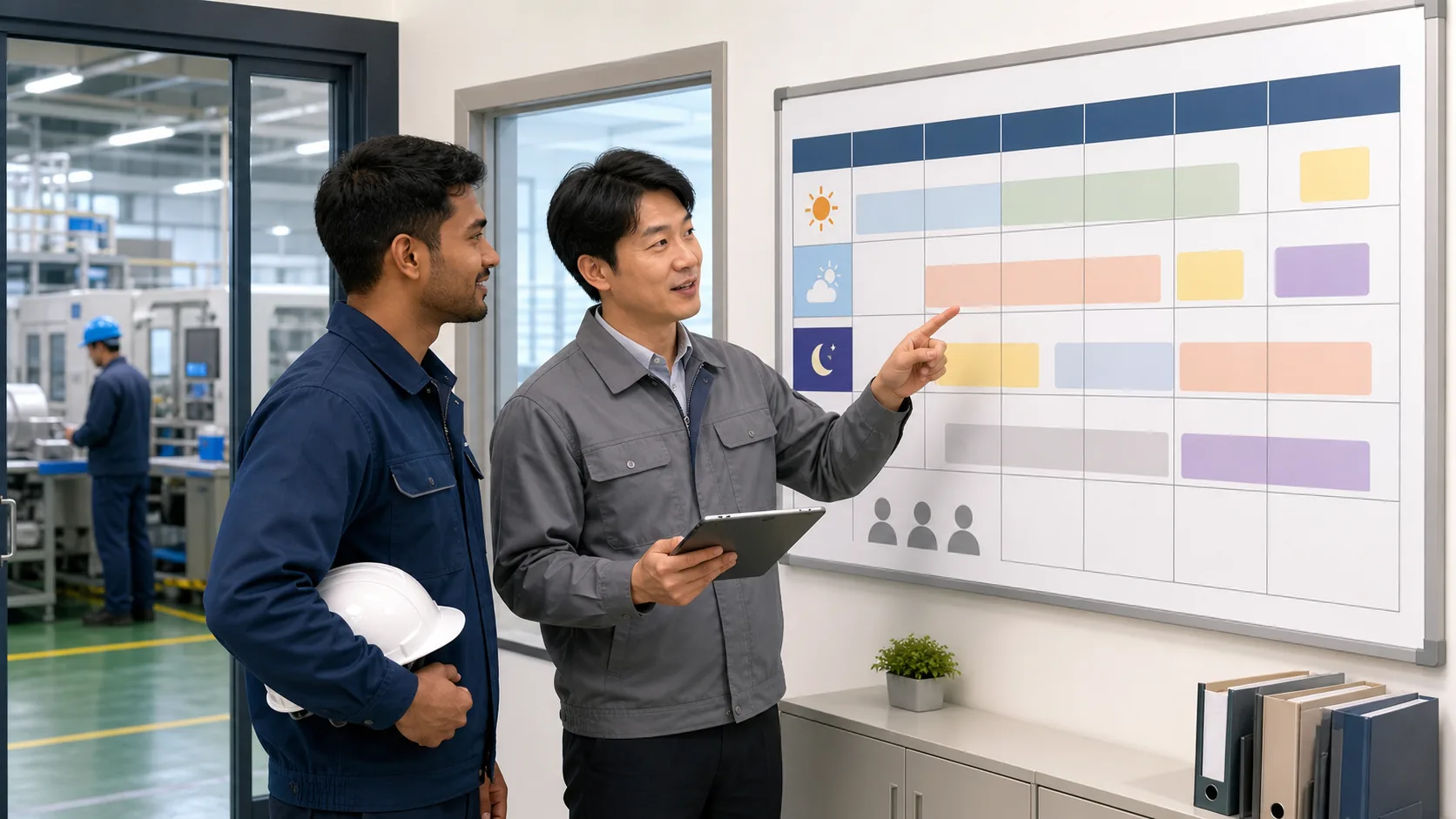
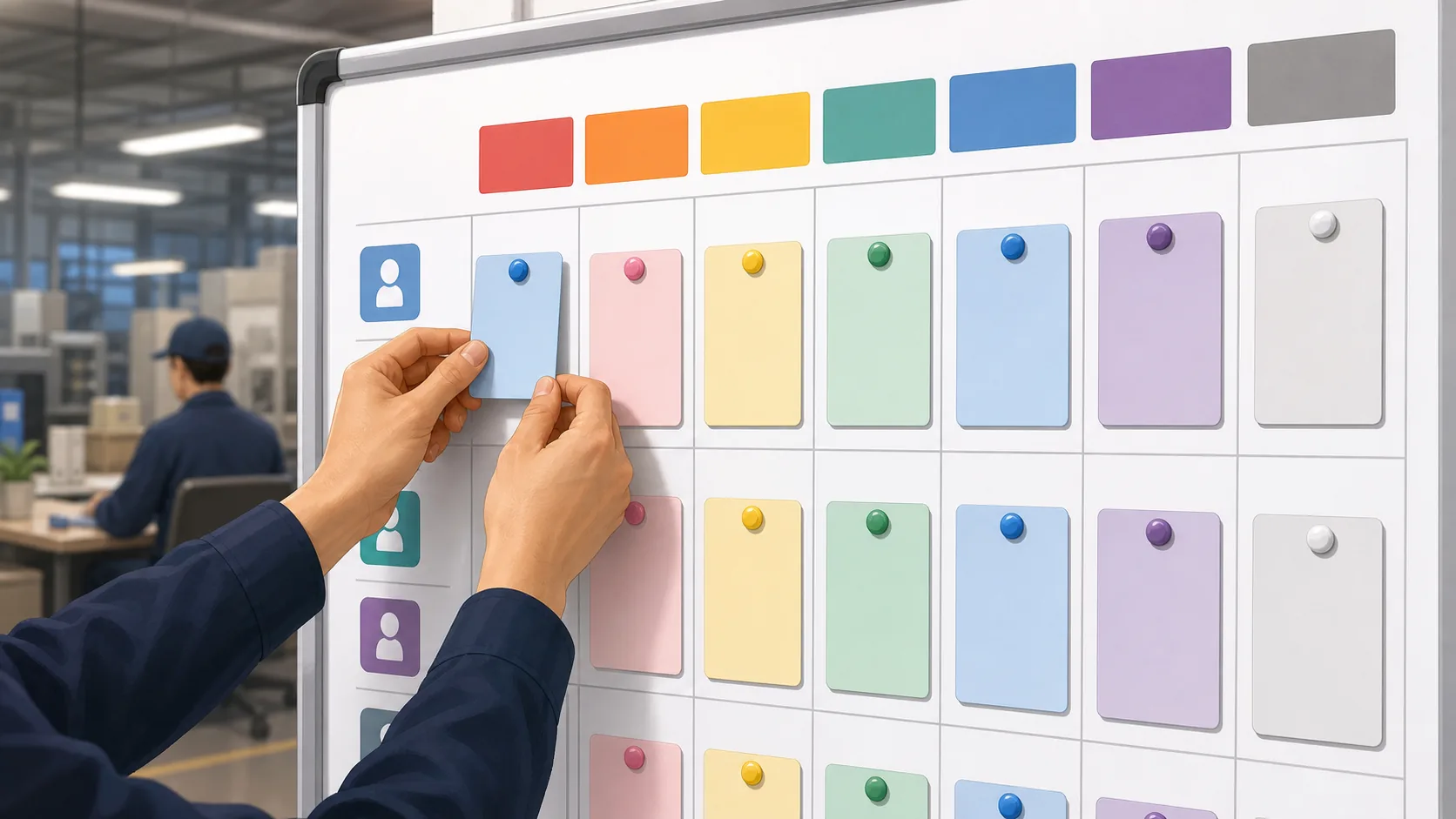
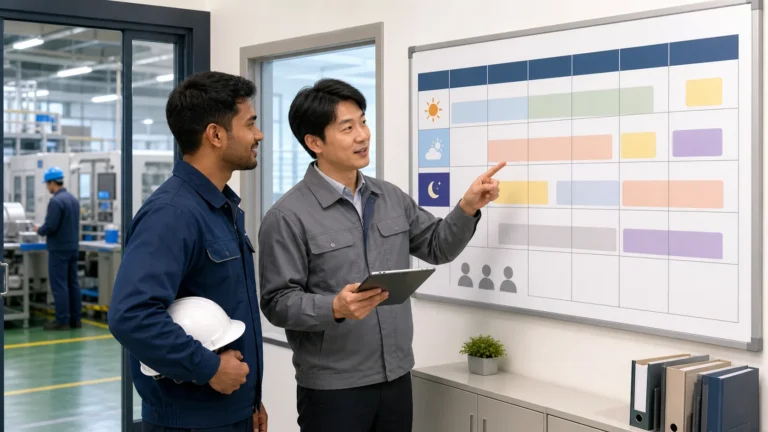
Imagine you arrive at work and see a roster board. You need to know your row, your shift, your break time, and whether anything changed. If the schedule uses Korean only, the important words may look small, but the reading order can stay simple. Start with the plan, then attendance, then shift type, then exceptions.
This post is not legal or HR advice. It only explains Korean words you may see around a workplace schedule. If a schedule affects pay, leave, overtime, or safety, ask your supervisor or the appropriate workplace contact.
Slide 2. Key Workplace Schedule Words
| Korean | Romanization | English | Level | Use |
|---|---|---|---|---|
| 일정 | iljeong | schedule | BS1 | Check the overall plan. |
| 근무표 | geunmupyo | duty roster; work schedule | BS4 | Find your assigned work row. |
| 출근 | chulgeun | clocking in; going to work | BS1 | Start of work. |
| 퇴근 | toegeun | clocking out; leaving work | BS1 | End of work. |
| 교대 근무 | gyodae geunmu | shift work | BS4 | Rotating shift system. |
| 주간 근무 | jugan geunmu | day shift | BS4 | Daytime work. |
| 야간 근무 | yagan geunmu | night shift | BS4 | Nighttime work. |
| 야근 | yageun | overtime work; working late | BS2 | Work after normal hours. |
| 연장 근무 | yeonjang geunmu | overtime work | BS4 | Extended work. |
| 휴식 시간 | hyusik sigan | break time | BS2 | Rest time during work. |
| 점심시간 | jeomsim sigan | lunch break | BS1 | Lunch break. |
| 휴가 | hyuga | vacation; leave | BS1 | Approved leave. |
| 결근하다 | gyeolgeunhada | to be absent from work | BS2 | When you cannot come to work. |
| 출근 기록 | chulgeun girok | attendance record; clock-in record | BS3 | Record of clock-in. |
| 휴일 근무 | hyuil geunmu | holiday work; working on a day off | BS4 | Work on a holiday or day off. |
Slide 3. Read a Work Schedule in 3 Steps
- Step 1: Find the plan. Look for 일정 or 근무표. These words tell you that you are looking at a schedule or roster.
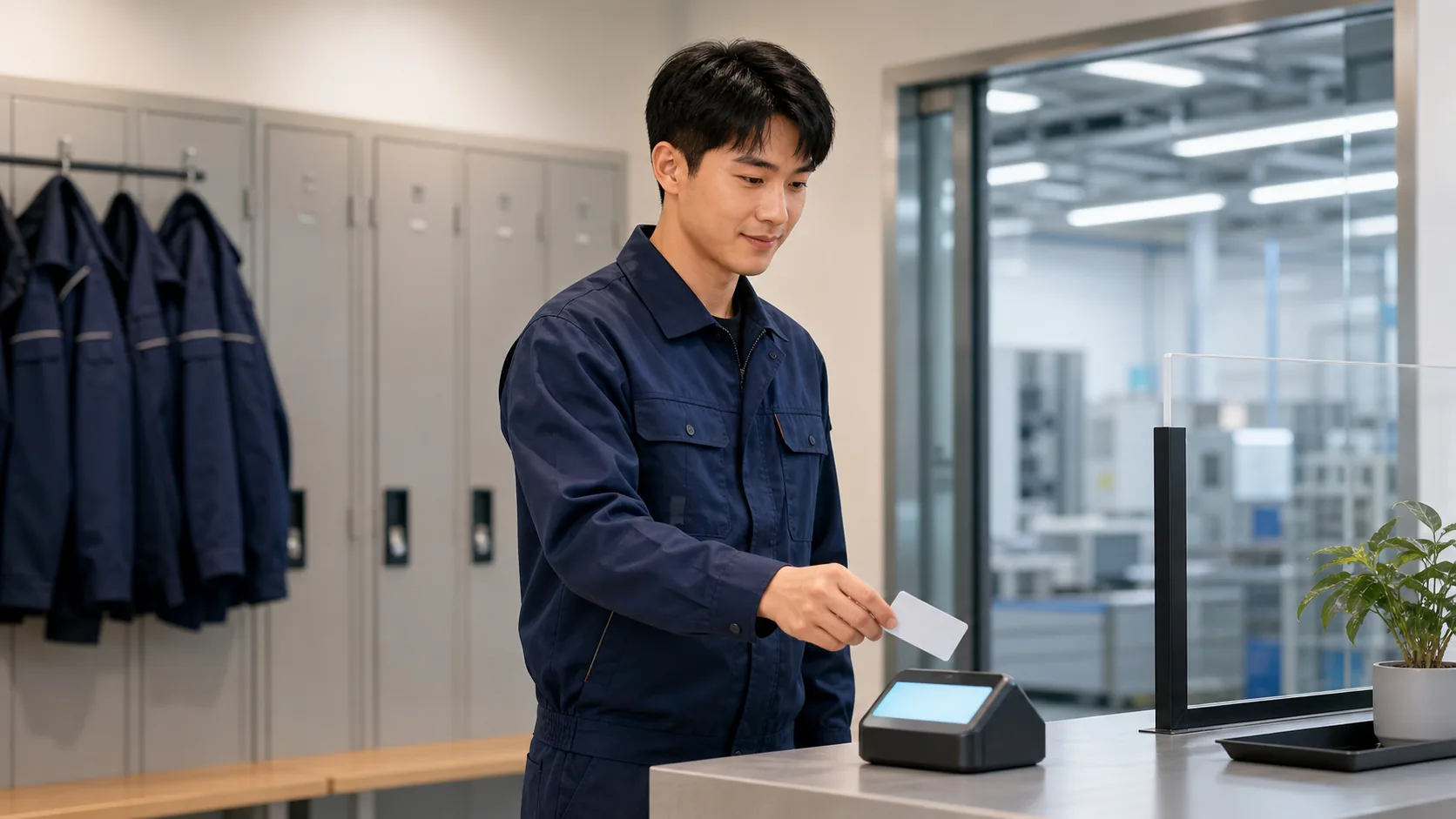
- Step 2: Check attendance words. Look for 출근, 퇴근, and 출근 기록. These connect the schedule to clock-in and clock-out records.
- Step 3: Check shift and exception words. Look for 교대 근무, 야근, 연장 근무, and 휴일 근무. These words often mean the workday is different from a normal day.
Slide 4. Common Schedule Mistakes

The first mistake is reading only the start time and ignoring the shift type. 주간 근무 and 야간 근무 are very different. If your workplace uses 교대 근무, confirm which rotation you are on.
The second mistake is treating overtime words as normal work words. 야근 and 연장 근무 both point to extra work time. If the notice is unclear, ask before the shift ends.
The third mistake is missing leave or absence language. 휴가 is approved leave or vacation, while 결근하다 means being absent from work. Do not guess these words from context alone.
Slide 5. Practice With BSKorean
Practice this topic in BSKorean: Read the BSKorean app guide, then open the practice app. Use this article set to practice Korean word, romanization, English meaning, and the work situation together.
A useful practice habit is to say the word group first: plan, attendance, shift, extra work, rest, or leave. Then say the Korean word. This makes the schedule easier to scan when you are tired or in a hurry.
Mini Review Table
| If you see… | Think… |
|---|---|
| 근무표 | Find the duty roster or work schedule first. |
| 출근 | This is the start-of-work or clock-in moment. |
| 퇴근 | This is the leaving-work or clock-out moment. |
| 교대 근무 | Check whether the job uses rotating shifts. |
| 야간 근무 | Night shift needs extra schedule attention. |
| 휴식 시간 | This marks a rest or break period. |
| 결근하다 | Use this when someone is absent from work. |
| 휴일 근무 | Confirm this early because it means holiday work. |
Final Takeaway
You do not need to understand every sentence on a work notice to start safely. First find the schedule, then clock-in and clock-out words, then shift type, break time, leave, absence, overtime, and holiday work. These Korean workplace schedule words help you ask better questions before the problem becomes urgent.
Related Lessons
2. Key vocabulary
lunch break
Beginnerlunch
Beginnerclocking in; going to work
Beginnerclocking out; leaving work
Beginnervacation; leave
Beginner3. Essential phrases
7. Related practical Korean lessons


Practice this lesson in the app
Review these words with multiple-choice questions and weak-Learn Korean.
Practice this lesson →