Kosakata bahasa Korea untuk jadwal kerja membantu pelajar melatih kata bahasa Korea dalam situasi nyata. Artikel BSKorean ini dibuat jelas, mudah dipindai, dan terhubung dengan latihan aplikasi.
Jika ada hal yang tidak aman di tempat kerja, gunakan satu kalimat Korea yang jelas. Sebutkan masalahnya, tunjukkan tempatnya, lalu minta diperiksa.
Korea
Kapan dipakai
문제가 있어요
Ada masalah.
위험해요
Ini berbahaya.
확인해 주세요
Tolong periksa.
다쳤어요
Saya atau seseorang terluka.
신고해야 해요
Ini perlu dilaporkan.
Pekerja
저기요, 문제가 있어요.
Atasan
어디가 문제예요?
Pekerja
기계 옆이 위험해요. 확인해 주세요.
Catatan keselamatan: jelaskan tempat dan bahayanya lebih dulu. Untuk kebakaran, gas, cedera serius, atau bahaya langsung, hubungi penanggung jawab kerja atau bantuan darurat setempat.
Panduan Frasa bahasa Korea untuk melaporkan masalah di tempat kerja
Frasa bahasa Korea untuk melaporkan masalah di tempat kerja membantu pelajar melatih kata bahasa Korea dalam situasi nyata. Artikel BSKorean ini dibuat jelas, mudah dipindai, dan terhubung dengan latihan aplikasi.
Từ vựng tiếng Hàn cho lịch làm việc giúp người học luyện từ tiếng Hàn trong tình huống thực tế. Bài BSKorean này giữ nội dung rõ ràng, dễ xem và liên kết với phần luyện tập.
Bắt đầu báo cáo vấn đề ở nơi làm việc bằng các câu này
Khi thấy điều không an toàn hoặc có vấn đề ở nơi làm việc, hãy dùng một câu tiếng Hàn rõ ràng. Nói vấn đề, chỉ vị trí, rồi nhờ kiểm tra.
Tiếng Hàn
Dùng khi
문제가 있어요
Có vấn đề.
위험해요
Nguy hiểm.
확인해 주세요
Xin hãy kiểm tra.
다쳤어요
Tôi hoặc có người bị thương.
신고해야 해요
Cần phải báo cáo.
Người lao động
저기요, 문제가 있어요.
Quản lý
어디가 문제예요?
Người lao động
기계 옆이 위험해요. 확인해 주세요.
Ghi chú an toàn: hãy nói vị trí và mối nguy trước. Nếu có cháy, khí gas, chấn thương nghiêm trọng hoặc nguy hiểm ngay lập tức, hãy liên hệ người phụ trách tại chỗ hoặc trợ giúp khẩn cấp địa phương.
Hướng dẫn Cụm tiếng Hàn cho báo cáo vấn đề tại nơi làm việc
Cụm tiếng Hàn cho báo cáo vấn đề tại nơi làm việc giúp người học luyện từ tiếng Hàn trong tình huống thực tế. Bài BSKorean này giữ nội dung rõ ràng, dễ xem và liên kết với phần luyện tập.
When schedule details change, ask one short Korean question first: 오늘 몇 시에 시작해요?, “what time do we start today?” The most important words are 출근, 퇴근, 야근, 휴무, and 교대.
Korean workplace schedule words helps learners practice Korean words in real situations. This BSKorean post keeps the lesson clear, scannable, and connected to app practice.
Korean workplace schedule words are useful when you need to read a duty roster, confirm a shift, clock in, take a break, or ask about a schedule change. This lesson is for language recognition at work, especially for foreign workers who need practical Korean before the shift starts.
Start with the real moment: check the roster before the shift begins.
Briefing Summary
Situation
Reading a workplace schedule, duty roster, or shift notice
Practice focus
Schedule, clock-in, clock-out, shift type, break time, leave, absence, and overtime words
Useful for
foreign workers, factory workers, field workers, and anyone reading work notices in Korea
Study time
8-12 minutes
Slide 1. The Situation
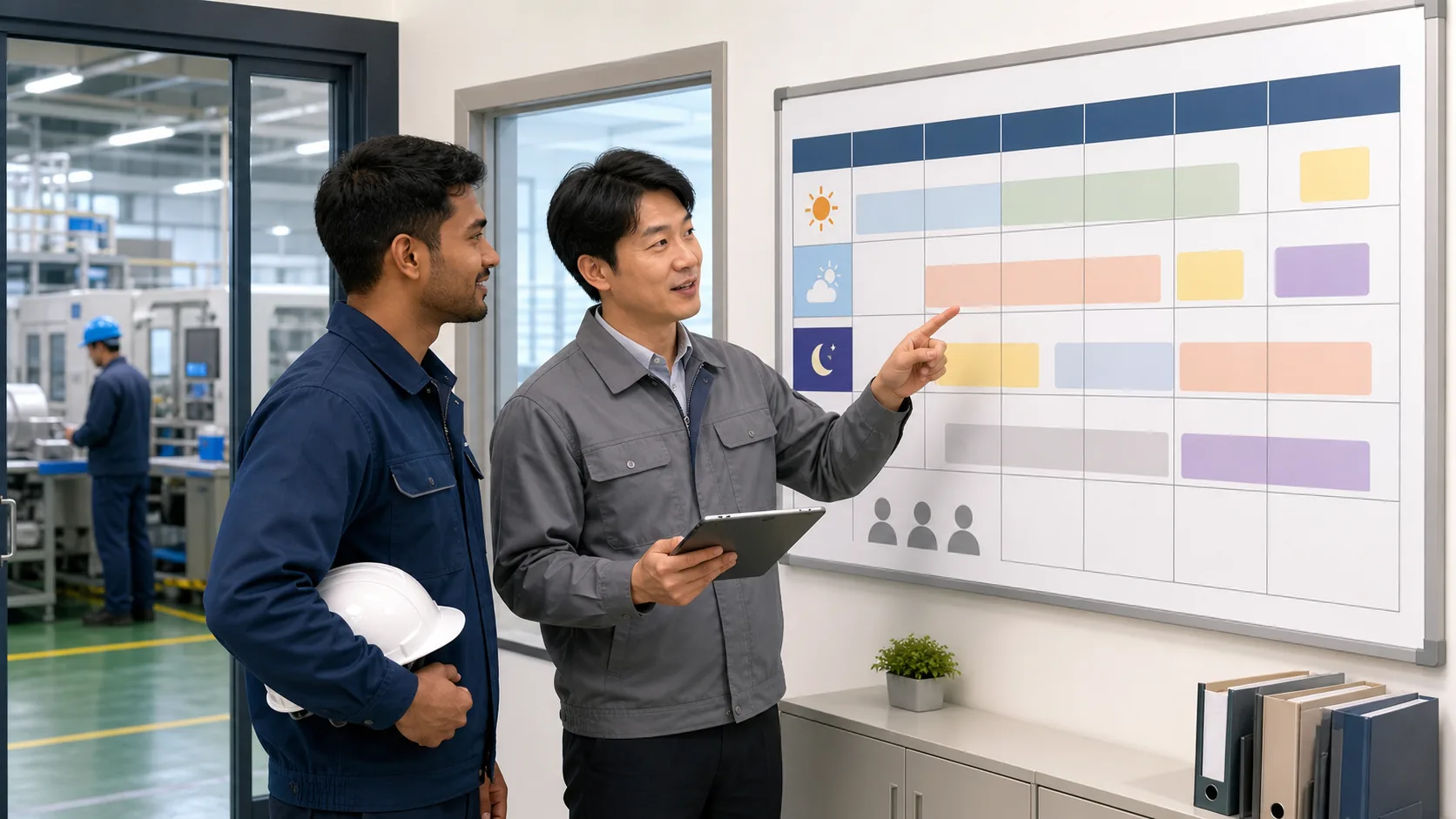
Imagine you arrive at work and see a roster board. You need to know your row, your shift, your break time, and whether anything changed. If the schedule uses Korean only, the important words may look small, but the reading order can stay simple. Start with the plan, then attendance, then shift type, then exceptions.
This post is not legal or HR advice. It only explains Korean words you may see around a workplace schedule. If a schedule affects pay, leave, overtime, or safety, ask your supervisor or the appropriate workplace contact.
Slide 2. Key Workplace Schedule Words
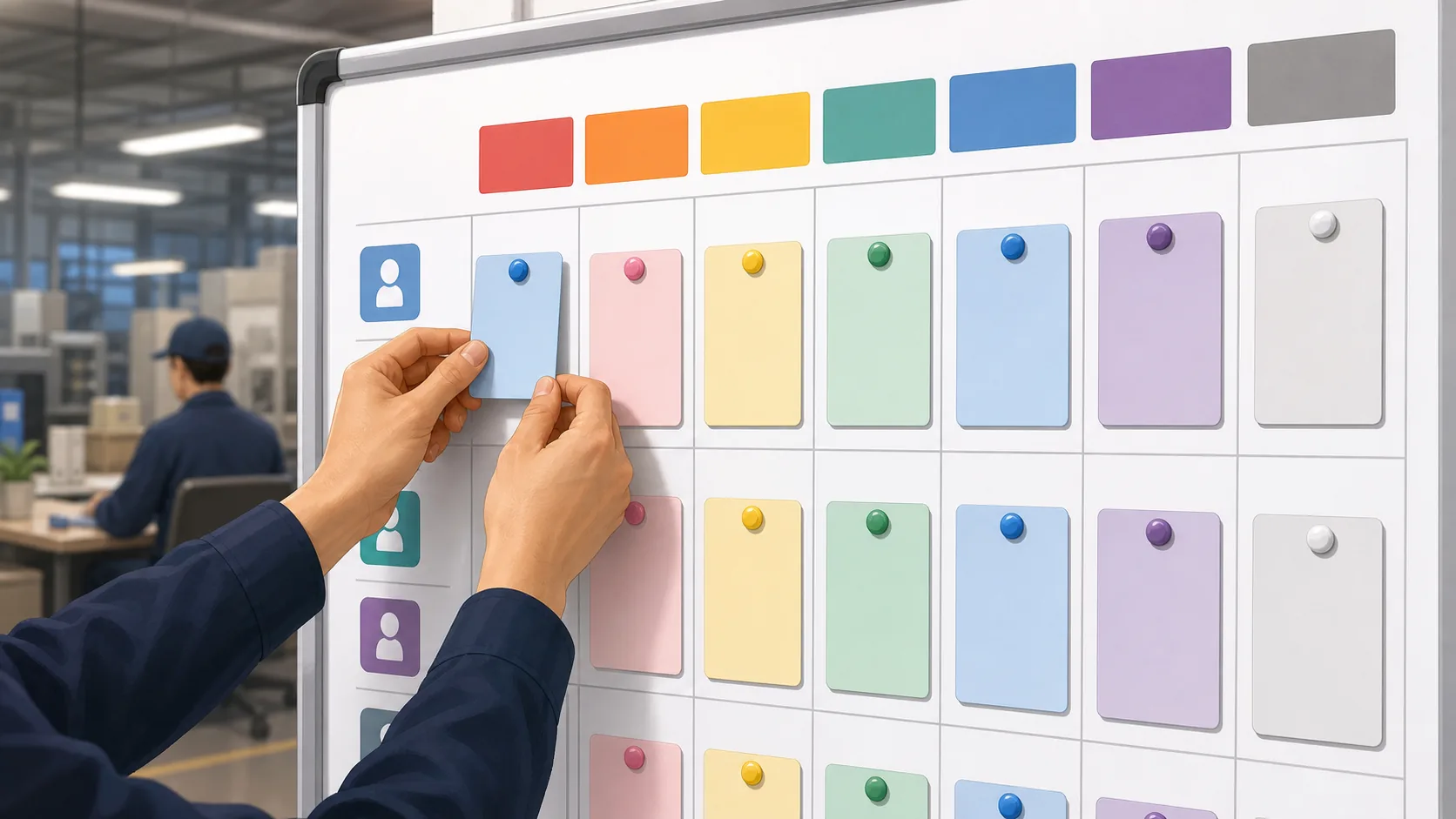
The image stays text-free; the Korean schedule words are in the table below.
Korean
Romanization
English
Level
Use
일정
iljeong
schedule
BS1
Check the overall plan.
근무표
geunmupyo
duty roster; work schedule
BS4
Find your assigned work row.
출근
chulgeun
clocking in; going to work
BS1
Start of work.
퇴근
toegeun
clocking out; leaving work
BS1
End of work.
교대 근무
gyodae geunmu
shift work
BS4
Rotating shift system.
주간 근무
jugan geunmu
day shift
BS4
Daytime work.
야간 근무
yagan geunmu
night shift
BS4
Nighttime work.
야근
yageun
overtime work; working late
BS2
Work after normal hours.
연장 근무
yeonjang geunmu
overtime work
BS4
Extended work.
휴식 시간
hyusik sigan
break time
BS2
Rest time during work.
점심시간
jeomsim sigan
lunch break
BS1
Lunch break.
휴가
hyuga
vacation; leave
BS1
Approved leave.
결근하다
gyeolgeunhada
to be absent from work
BS2
When you cannot come to work.
출근 기록
chulgeun girok
attendance record; clock-in record
BS3
Record of clock-in.
휴일 근무
hyuil geunmu
holiday work; working on a day off
BS4
Work on a holiday or day off.
Slide 3. Read a Work Schedule in 3 Steps
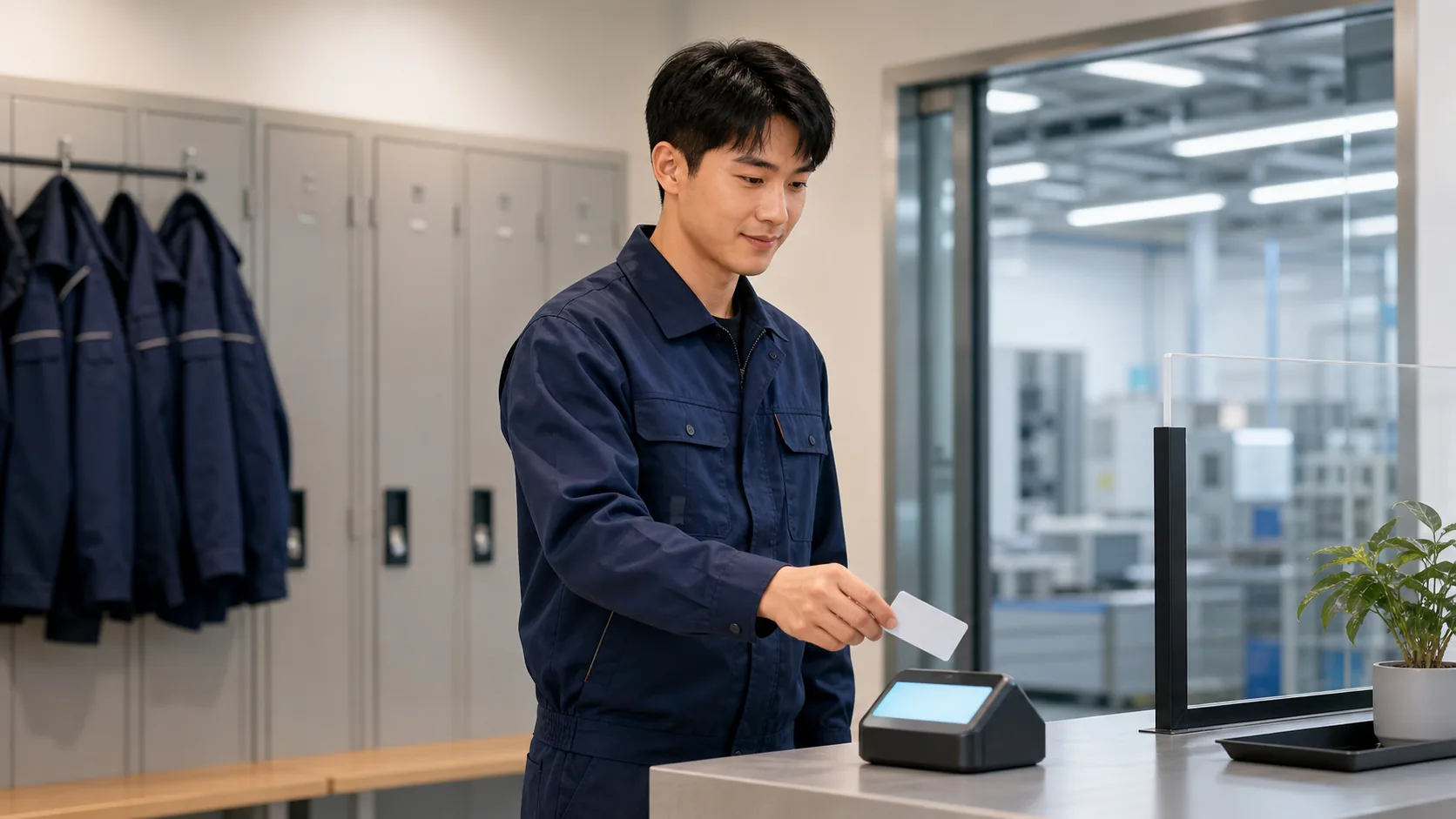
Clock-in and clock-out words connect the schedule to the actual workday record.
Step 1: Find the plan. Look for 일정 or 근무표. These words tell you that you are looking at a schedule or roster.
Step 2: Check attendance words. Look for 출근, 퇴근, and 출근 기록. These connect the schedule to clock-in and clock-out records.
Step 3: Check shift and exception words. Look for 교대 근무, 야근, 연장 근무, and 휴일 근무. These words often mean the workday is different from a normal day.
Slide 4. Common Schedule Mistakes
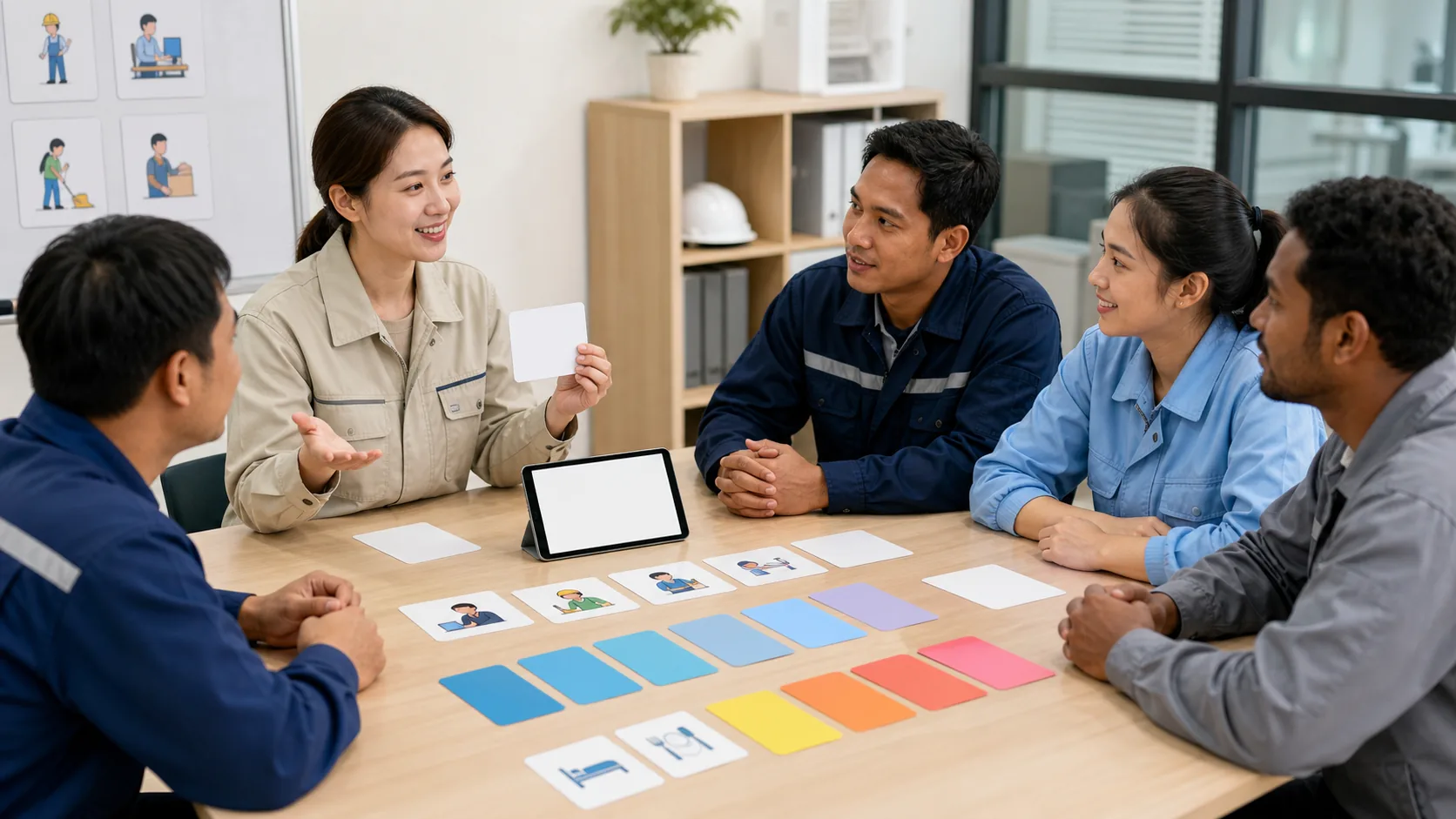
Shift changes, overtime, and holiday work are the places where misunderstandings often happen.
The first mistake is reading only the start time and ignoring the shift type. 주간 근무 and 야간 근무 are very different. If your workplace uses 교대 근무, confirm which rotation you are on.
The second mistake is treating overtime words as normal work words. 야근 and 연장 근무 both point to extra work time. If the notice is unclear, ask before the shift ends.
The third mistake is missing leave or absence language. 휴가 is approved leave or vacation, while 결근하다 means being absent from work. Do not guess these words from context alone.
Slide 5. Practice With BSKorean
Practice the schedule words as recognition first, then use them as a checklist at work.
Practice this topic in BSKorean: Read the BSKorean app guide, then open the practice app. Use this article set to practice Korean word, romanization, English meaning, and the work situation together.
A useful practice habit is to say the word group first: plan, attendance, shift, extra work, rest, or leave. Then say the Korean word. This makes the schedule easier to scan when you are tired or in a hurry.
Mini Review Table
If you see…
Think…
근무표
Find the duty roster or work schedule first.
출근
This is the start-of-work or clock-in moment.
퇴근
This is the leaving-work or clock-out moment.
교대 근무
Check whether the job uses rotating shifts.
야간 근무
Night shift needs extra schedule attention.
휴식 시간
This marks a rest or break period.
결근하다
Use this when someone is absent from work.
휴일 근무
Confirm this early because it means holiday work.
Final Takeaway
You do not need to understand every sentence on a work notice to start safely. First find the schedule, then clock-in and clock-out words, then shift type, break time, leave, absence, overtime, and holiday work. These Korean workplace schedule words help you ask better questions before the problem becomes urgent.
When something feels unsafe or wrong at work, start with one clear Korean sentence. Say the problem, point to the place, then ask for a check.
Korean
Use it for
문제가 있어요
There is a problem.
위험해요
It is dangerous.
확인해 주세요
Please check it.
다쳤어요
I or someone got hurt.
신고해야 해요
We need to report it.
Worker
저기요, 문제가 있어요.
Supervisor
어디가 문제예요?
Worker
기계 옆이 위험해요. 확인해 주세요.
Safety note: describe the place and danger first. For fire, gas, serious injury, or immediate danger, contact the site supervisor or local emergency help right away.
Use this page when something at work is wrong and you need to explain it clearly in Korean. The first sentence is 문제가 있어요, “there is a problem.” Then add one short detail, such as a machine, injury, missing tool, or schedule problem.
Memorize these urgent phrases: 문제가 있어요, 기계가 멈췄어요, 다쳤어요, 관리자에게 말해 주세요, and 사진을 보여드릴게요. They help you report without a long explanation.
Korean workplace problem report phrases helps learners practice Korean words in real situations. This BSKorean post keeps the lesson clear, scannable, and connected to app practice.
Korean workplace problem report phrases help foreign workers explain a problem quickly when something is broken, delayed, dangerous, missing, or unclear. This lesson focuses on calm, practical reporting language used at work in Korea.
Korean Workplace Problem Report Phrases to Use Clearly
Korean workplace problem report phrases title slide with a realistic workplace scene
You are working a busy shift in Korea. A machine stops, a delivery is late, a customer is upset, or one item is missing from an order. Your supervisor is nearby, but you only have a few seconds to explain the problem. In that moment, you do not need advanced Korean. You need a clear problem report.
This lesson teaches Korean workplace problem report phrases for foreign workers in service jobs, factories, warehouses, construction sites, cleaning work, hotels, and other practical workplaces. The goal is to help you say what happened, where it happened, and what kind of help you need.
At work, Korean can become stressful when something goes wrong. Normal words feel harder because you are also dealing with time pressure. Maybe the packing line stopped. Maybe the wrong item was delivered. Maybe a customer is complaining at the counter. A short phrase like 문제가 생겼어요 can help you start the report.
Many industrial and service workplaces in Korea use direct reporting language. Managers often want three pieces of information: what the problem is, where it happened, and whether immediate action is needed. If you can report those three things, you can communicate more safely and professionally.
What You Need to Do
Say that there is a problem.
Name the specific issue: delay, defect, missing item, breakdown, complaint, or mistake.
Say the place or item connected to the problem.
Ask for confirmation or help.
Report again after the issue is checked or fixed.
Core Vocabulary Table
Korean
Romanization
English
Level
Usage Note
문제
munje
problem
Beginner 2
General problem word used in all workplaces.
보고
bogo
report
Intermediate 1
Used when telling a supervisor or manager.
확인
hwagin
check / confirm
Beginner 3
Useful for asking someone to check a situation.
고장
gojang
breakdown
Intermediate 1
Used for machines, equipment, doors, or devices.
지연
jiyeon
delay
Intermediate 2
Common in delivery, production, service, and schedules.
누락
nurak
missing item
Advanced 1
Formal word for something omitted or missing.
불량
bullyang
defect
Intermediate 2
Used in factories, products, packaging, and quality checks.
실수
silsu
mistake
Beginner 3
A general mistake, often used in daily work conversation.
고객 항의
gogaek hangui
customer complaint
Advanced 1
Useful in service jobs and customer support.
주문
jumun
order
Beginner 2
Used in restaurants, cafes, delivery, and online sales.
재고
jaego
stock / inventory
Intermediate 2
Used in stores, warehouses, and production.
조치
jochi
action / measure
Advanced 1
Formal word for what will be done to solve a problem.
담당자
damdangja
person in charge
Intermediate 2
The person responsible for a task or issue.
관리자
gwallija
manager / supervisor
Intermediate 1
The person you report to or ask for instructions.
다시 확인해 주세요
dasi hwaginhae juseyo
please check again
Beginner 3
Polite request when something seems wrong.
Action Signal Formula
A useful workplace report does not need to be long. Use this order:
Formula
Meaning
Example
문제가 생겼어요
There is a problem
관리자님, 문제가 생겼어요.
N에 문제가 있어요
There is a problem with N
포장 라인에 문제가 있어요.
N이 고장 났어요
N is broken
기계가 고장 났어요.
N이 지연됐어요
N is delayed
배송이 지연됐어요.
N이 누락됐어요
N is missing
주문에서 음료가 누락됐어요.
확인 부탁드립니다
Please check
재고 확인 부탁드립니다.
This pattern works across industries. A restaurant worker can report an order problem. A warehouse worker can report missing stock. A factory worker can report a defect. A construction worker can report a tool or equipment problem.
For service jobs, the most useful words are often 주문, 누락, 고객 항의, and 확인. For field jobs, the most useful words are often 고장, 불량, 지연, and 조치. You can use the same report structure, but change the noun to match your workplace.
Usage Notes
보고 sounds more formal than just “telling someone.” It is often used when information moves from a worker to a supervisor, from a staff member to a manager, or from one department to another. In a short spoken situation, you can say 보고드릴 게 있습니다, which means “I have something to report.”
확인 is one of the safest workplace words because it does not blame anyone. If you are not sure whether something is wrong, say 확인 부탁드립니다 or 다시 확인해 주세요. This lets the other person check the situation before deciding what happened.
조치 is a manager-style word. It means the action or measure taken after a problem is found. You may hear 조치하겠습니다, meaning “I will take action,” or 조치가 필요합니다, meaning “action is needed.” You do not need to use this word often as a beginner, but you should recognize it in workplace messages.
Real-Life Dialogue
Dialogue 1: Factory or warehouse problem
Worker: 관리자님, 문제가 생겼어요. Gwallijanim, munjega saenggyeosseoyo. Manager, there is a problem.
Supervisor: 어디 문제예요? Eodi munjeyeyo? Where is the problem?
Worker: 포장 라인에 문제가 있어요. 기계가 멈췄어요. Pojang raine munjega isseoyo. Gigyega meomchwosseoyo. There is a problem on the packing line. The machine stopped.
Supervisor: 알겠습니다. 잠시 멈추고 기다리세요. Algesseumnida. Jamsi meomchugo gidariseyo. Understood. Stop for a moment and wait.
Dialogue 2: Service job problem
Staff: 주문에서 음료가 누락됐어요. Jumuneseo eumryoga nurakdwaesseoyo. A drink is missing from the order.
Manager: 고객님께 말씀드렸어요? Gogaeknimkke malsseumdeuryeosseoyo? Did you tell the customer?
Staff: 아직이요. 다시 확인해 주세요. Ajigiyo. Dasi hwaginhae juseyo. Not yet. Please check again.
Manager: 네, 제가 확인하겠습니다. Ne, jega hwaginhagetseumnida. Yes, I will check.
Common Mistakes
Common Mistake 1: Saying only 문제
Why it happens: Beginners may remember the noun but not the reporting phrase.
Correct understanding: Use a sentence such as 문제가 생겼어요 or N에 문제가 있어요. The sentence tells your supervisor that action is needed.
Common Mistake 2: Using 고장 for every problem
Why it happens: 고장 is easy to remember because it means broken.
Correct understanding: 고장 is best for machines, equipment, devices, or facilities. Use 누락 for missing items, 지연 for delays, and 불량 for defective products.
Common Mistake 3: Forgetting the location
Why it happens: Under pressure, learners report the problem but not where it happened.
Correct understanding: Add the place or item: 포장 라인에, 주문에서, 창고에, 계산대에서. This helps the manager respond faster.
Common Mistake 4: Sounding too casual with customers
Why it happens: Workplace learners may use the same phrase with coworkers and customers.
Correct understanding: With customers, use polite forms such as 확인해 드리겠습니다 or 잠시만 기다려 주세요. With a coworker, short direct phrases may be acceptable.
Mini Quiz
Question 1: What does 문제가 생겼어요 mean? Answer: There is a problem. Explanation: This is a useful first sentence for reporting an issue.
Question 2: Which word is best for a broken machine? Answer: 고장. Explanation: 고장 is used for machines, equipment, devices, or facilities that do not work.
Question 3: Which word means delay? Answer: 지연. Explanation: 지연 is used for delayed delivery, production, service, or schedules.
Question 4: A drink is missing from an order. Which word fits best? Answer: 누락. Explanation: 누락 means something is missing or omitted.
Question 5: How do you politely ask someone to check again? Answer: 다시 확인해 주세요. Explanation: This is short, polite, and useful in many workplaces.
Review Table
Korean
Meaning
Best Situation
Beginner Tip
문제가 생겼어요
There is a problem
first report to a supervisor
Use this to start the report.
고장
breakdown
machine or equipment issue
Use with 기계, 문, 장비, or 컴퓨터.
지연
delay
delivery, production, schedule
Use when something is late.
누락
missing item
orders, documents, inventory
Formal but very useful at work.
불량
defect
product or quality issue
Common in factory and warehouse work.
확인 부탁드립니다
Please check
polite work request
Good for messages and reports.
조치
action / measure
after checking a problem
Often used by managers.
Practice This Set
Practice this word list in Learn Korean or in the upcoming BS3001 app. Start by recognizing the problem word, then practice one report sentence for each word. For example, when you see 고장, say 기계가 고장 났어요. When you see 누락, say 주문에서 하나가 누락됐어요.
Workplace Korean becomes more useful when you learn it as reporting language. In many jobs, the most important sentence is not complicated. It is 문제가 생겼어요. After that, add the specific word: 고장, 지연, 누락, 불량, or 고객 항의.
A clear report protects time, safety, and customer trust. Say what happened, where it happened, and what you need the manager to check. That simple structure works across factories, warehouses, restaurants, cafes, stores, hotels, and field work in Korea.
Practice This Lesson
Review words from this lesson with quiz cards and browser-based review history.