Korean for Hospital Reception and Explaining Symptoms
Learn practical Korean for hospital reception, appointments, insurance cards, symptoms, pain level, duration, and polite clarification.
1. When to use these phrases
Korean for Hospital Reception and Explaining Symptoms
10 min read
What This Lesson Covers
Hospital reception can feel difficult because you need to speak politely while also giving accurate information. This lesson teaches language for check-in, appointments, insurance, departments, symptoms, pain level, and clarification. It is not medical advice and it does not teach diagnosis or treatment.
A safe speaking order is simple: say why you came, give only the requested document information, describe the symptom in plain words, then ask for confirmation. You do not need to know a disease name. In many real situations, saying 머리가 아파요, 어제부터 아팠어요, and 천천히 말씀해 주세요 is more useful than trying to guess a medical term.
Practice with safe sample information. Do not say real patient numbers, resident registration numbers, insurance numbers, prescription details, or private medical history loudly in class or in the waiting room.
How Hospital Reception Usually Works
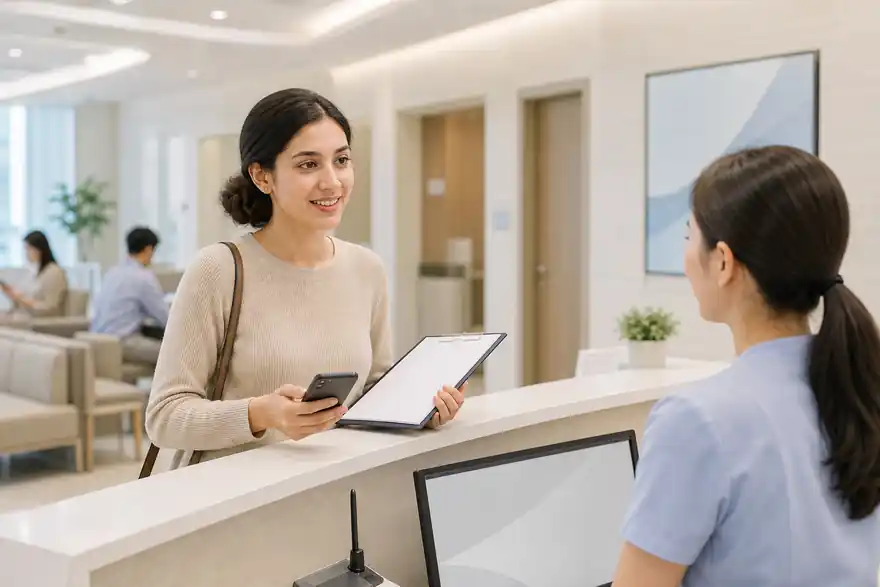
At reception, you may be asked whether you have an appointment, which department you need, and whether you have insurance. If you are not sure which department is right, ask 어느 과로 가야 해요?. This asks for direction without pretending you know the answer.
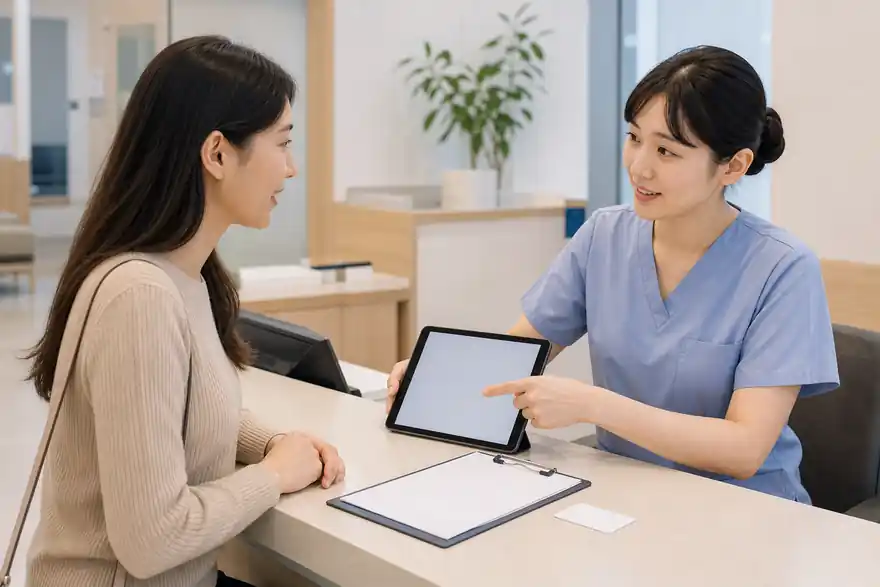
When filling out a questionnaire, focus on basic symptom words: fever, cough, pain, dizziness, nausea, allergy, and medicine you already take. If a form is difficult, ask 문진표를 작성해야 하나요? or 천천히 설명해 주세요.
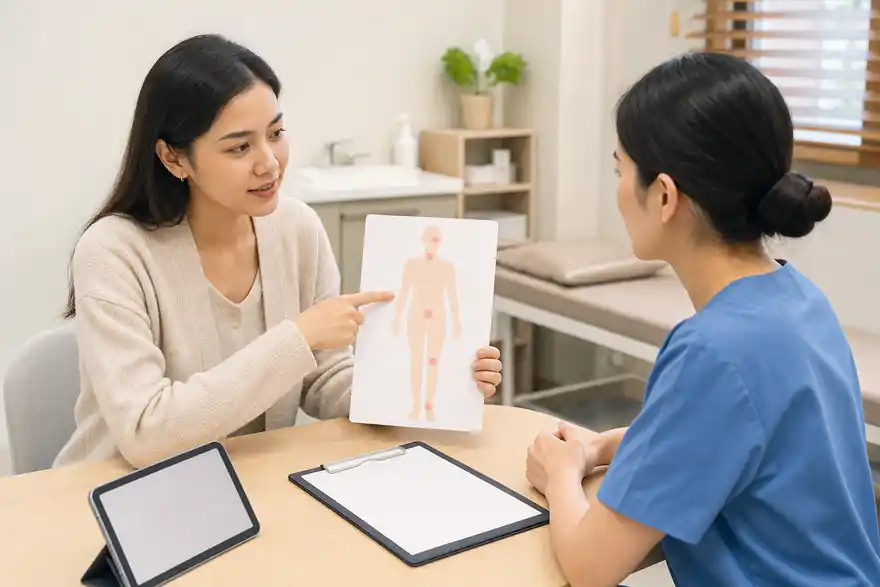
For symptoms, Korean often uses the body part plus 아파요. For example, 머리가 아파요, 배가 아파요, and 목이 아파요. You can add time with 어제부터 or frequency with 계속 and 가끔.
If the symptom feels urgent, use the word 응급 and ask staff directly for help. This lesson stays with everyday language, but you should follow local emergency instructions when the situation is serious.
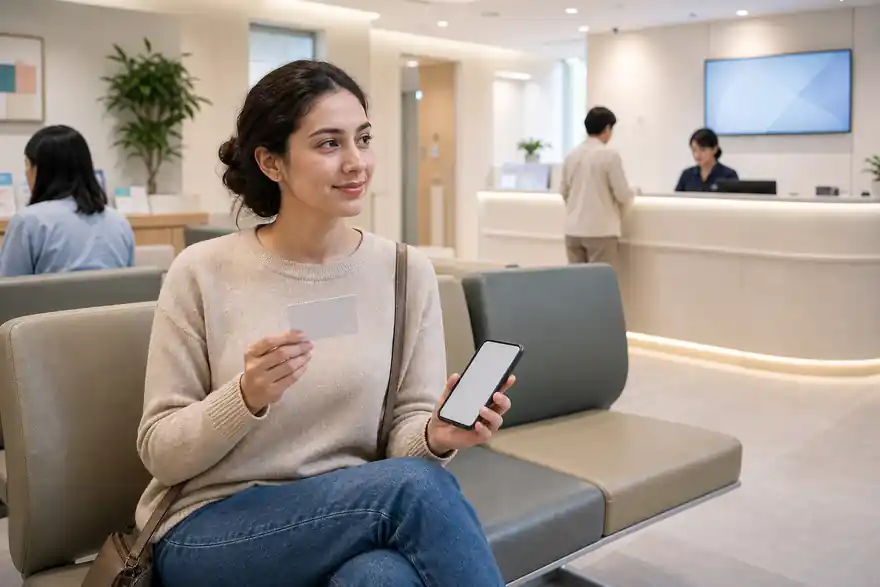
At the end of the visit, you may need to ask about payment, test results, and prescriptions. The useful words are 수납, 결과, and 처방전.
Hospital and Symptom Vocabulary
| Korean | Pronunciation | Meaning | Practice note |
|---|---|---|---|
| 병원 | byeongwon | hospital | Use the word in one symptom or reception sentence; do not add real private details. |
| 의원 | uiwon | clinic | Use the word in one symptom or reception sentence; do not add real private details. |
| 접수 | jeopsu | reception/check-in | Use the word in one symptom or reception sentence; do not add real private details. |
| 접수처 | jeopsucheo | reception desk | Use the word in one symptom or reception sentence; do not add real private details. |
| 예약 | yeyak | appointment | Use the word in one symptom or reception sentence; do not add real private details. |
| 진료 | jillyo | medical consultation | Use the word in one symptom or reception sentence; do not add real private details. |
| 진료과 | jillyogwa | department | Use the word in one symptom or reception sentence; do not add real private details. |
| 내과 | naegwa | internal medicine | Use the word in one symptom or reception sentence; do not add real private details. |
| 이비인후과 | ibiinhugwa | ENT | Use the word in one symptom or reception sentence; do not add real private details. |
| 피부과 | pibugwa | dermatology | Use the word in one symptom or reception sentence; do not add real private details. |
| 신분증 | sinbunjeung | ID card | Use the word in one symptom or reception sentence; do not add real private details. |
| 건강보험 | geongang boheom | health insurance | Use the word in one symptom or reception sentence; do not add real private details. |
| 보험증 | boheomjeung | insurance card | Use the word in one symptom or reception sentence; do not add real private details. |
| 문진표 | munjinpyo | medical questionnaire | Use the word in one symptom or reception sentence; do not add real private details. |
| 증상 | jeungsang | symptom | Use the word in one symptom or reception sentence; do not add real private details. |
| 통증 | tongjeung | pain | Use the word in one symptom or reception sentence; do not add real private details. |
| 열 | yeol | fever | Use the word in one symptom or reception sentence; do not add real private details. |
| 기침 | gichim | cough | Use the word in one symptom or reception sentence; do not add real private details. |
| 콧물 | konnmul | runny nose | Use the word in one symptom or reception sentence; do not add real private details. |
| 목이 아파요 | mogi apayo | my throat hurts | Use the word in one symptom or reception sentence; do not add real private details. |
| 머리가 아파요 | meoriga apayo | my head hurts | Use the word in one symptom or reception sentence; do not add real private details. |
| 배가 아파요 | baega apayo | my stomach hurts | Use the word in one symptom or reception sentence; do not add real private details. |
| 어지러워요 | eojireowoyo | I feel dizzy | Use the word in one symptom or reception sentence; do not add real private details. |
| 메스꺼워요 | meseukkeowoyo | I feel nauseous | Use the word in one symptom or reception sentence; do not add real private details. |
| 언제부터 | eonjebuteo | since when | Use the word in one symptom or reception sentence; do not add real private details. |
| 얼마나 | eolmana | how much/how long | Use the word in one symptom or reception sentence; do not add real private details. |
| 심해요 | simhaeyo | severe | Use the word in one symptom or reception sentence; do not add real private details. |
| 가벼워요 | gabyeowoyo | mild | Use the word in one symptom or reception sentence; do not add real private details. |
| 계속 | gyesok | continuously | Use the word in one symptom or reception sentence; do not add real private details. |
| 가끔 | gakkeum | sometimes | Use the word in one symptom or reception sentence; do not add real private details. |
| 알레르기 | allereugi | allergy | Use the word in one symptom or reception sentence; do not add real private details. |
| 약 | yak | medicine | Use the word in one symptom or reception sentence; do not add real private details. |
| 복용 | bogyong | taking medicine | Use the word in one symptom or reception sentence; do not add real private details. |
| 검사 | geomsa | test/exam | Use the word in one symptom or reception sentence; do not add real private details. |
| 결과 | gyeolgwa | result | Use the word in one symptom or reception sentence; do not add real private details. |
| 대기 | daegi | waiting | Use the word in one symptom or reception sentence; do not add real private details. |
| 수납 | sunap | payment desk | Use the word in one symptom or reception sentence; do not add real private details. |
| 처방전 | cheobangjeon | prescription | Use the word in one symptom or reception sentence; do not add real private details. |
| 응급 | eunggeup | emergency | Use the word in one symptom or reception sentence; do not add real private details. |
| 천천히 | cheoncheonhi | slowly | Use the word in one symptom or reception sentence; do not add real private details. |
Sentence Patterns for Reception and Symptoms
Use …하고 싶어요 for reception actions: 접수하고 싶어요, 진료받고 싶어요, 예약하고 싶어요.
Use …이/가 있어요 to say what you have: 열이 있어요, 알레르기가 있어요, 건강보험이 있어요.
Use …부터 to say since when: 어제부터 아팠어요, 아침부터 기침이 나요.
Use 계속 and 가끔 to describe frequency. This helps staff understand the pattern without a long story.
Use 다시 한 번 말씀해 주세요 and 천천히 말씀해 주세요 when you need clearer instructions.
Useful Phrases
| Korean phrase | Meaning | Use |
|---|---|---|
| 예약했어요. | I have an appointment. | Say it as one sentence, then wait for the staff question. |
| 예약 없이 왔어요. | I came without an appointment. | Say it as one sentence, then wait for the staff question. |
| 접수하고 싶어요. | I would like to check in. | Say it as one sentence, then wait for the staff question. |
| 어느 과로 가야 해요? | Which department should I go to? | Say it as one sentence, then wait for the staff question. |
| 신분증이 필요해요? | Do I need an ID? | Say it as one sentence, then wait for the staff question. |
| 건강보험이 있어요. | I have health insurance. | Say it as one sentence, then wait for the staff question. |
| 문진표를 작성해야 하나요? | Do I need to fill out a questionnaire? | Say it as one sentence, then wait for the staff question. |
| 어디가 아프세요? | Where does it hurt? | Say it as one sentence, then wait for the staff question. |
| 머리가 아파요. | My head hurts. | Say it as one sentence, then wait for the staff question. |
| 배가 아파요. | My stomach hurts. | Say it as one sentence, then wait for the staff question. |
| 열이 있어요. | I have a fever. | Say it as one sentence, then wait for the staff question. |
| 기침이 나요. | I have a cough. | Say it as one sentence, then wait for the staff question. |
| 어제부터 아팠어요. | It has hurt since yesterday. | Say it as one sentence, then wait for the staff question. |
| 계속 아파요. | It hurts continuously. | Say it as one sentence, then wait for the staff question. |
| 가끔 아파요. | It hurts sometimes. | Say it as one sentence, then wait for the staff question. |
| 통증이 심해요. | The pain is severe. | Say it as one sentence, then wait for the staff question. |
| 통증은 가벼워요. | The pain is mild. | Say it as one sentence, then wait for the staff question. |
| 알레르기가 있어요. | I have an allergy. | Say it as one sentence, then wait for the staff question. |
| 먹는 약이 있어요. | I take medicine. | Say it as one sentence, then wait for the staff question. |
| 천천히 말씀해 주세요. | Please speak slowly. | Say it as one sentence, then wait for the staff question. |
| 다시 한 번 말씀해 주세요. | Please say it one more time. | Say it as one sentence, then wait for the staff question. |
| 검사 결과는 언제 나와요? | When will the test result come out? | Say it as one sentence, then wait for the staff question. |
| 수납은 어디에서 해요? | Where do I pay? | Say it as one sentence, then wait for the staff question. |
| 처방전은 어디에서 받아요? | Where do I get the prescription? | Say it as one sentence, then wait for the staff question. |
Mini Dialogues
Checking In
Patient: 예약했어요.
Staff: 성함을 말씀해 주세요.
Patient: 천천히 말씀해 주세요.
Staff: 네, 신분증도 준비해 주세요.
No Appointment
Patient: 예약 없이 왔어요.
Staff: 어디가 불편하세요?
Patient: 목이 아파요.
Staff: 접수 도와드릴게요.
Choosing a Department
Patient: 어느 과로 가야 해요?
Staff: 증상을 말씀해 주세요.
Patient: 기침이 나고 열이 있어요.
Staff: 내과 접수해 드릴게요.
Symptom Duration
Staff: 언제부터 아프셨어요?
Patient: 어제부터 아팠어요.
Staff: 통증이 심하세요?
Patient: 가끔 아파요.
Payment and Prescription
Patient: 수납은 어디에서 해요?
Staff: 저쪽에서 하시면 됩니다.
Patient: 처방전은 어디에서 받아요?
Staff: 수납 후에 받으시면 됩니다.
Safety and Privacy Notes
- Do not practice with real patient numbers, insurance numbers, or private medical records.
- Do not self-diagnose in Korean if you are not sure. Describe what you feel and let medical staff evaluate it.
- If you do not understand a question, ask for repetition instead of answering randomly.
- Speak private details quietly at the counter. Use written notes only when you trust the setting.
- For serious or emergency symptoms, follow local emergency instructions and staff guidance.
Ten-Minute Practice Routine
Round one: read the vocabulary table and make one safe sentence with each symptom word.
Round two: say three reception sentences: appointment, no appointment, and check-in.
Round three: describe symptoms using body part, time, and strength.
Round four: practice asking staff to repeat or speak slowly.
Round five: role-play reception, waiting, symptom description, payment, and prescription pickup.
Extra drill: combine symptom, time, and strength without using private medical details.
- 예약했어요.
- 예약 없이 왔어요.
- 접수하고 싶어요.
- 어느 과로 가야 해요?
- 신분증이 필요해요?
- 건강보험이 있어요.
- 문진표를 작성해야 하나요?
- 어디가 아프세요?
- 머리가 아파요.
- 배가 아파요.
- 열이 있어요.
- 기침이 나요.
- 어제부터 아팠어요.
- 계속 아파요.
- 가끔 아파요.
- 통증이 심해요.
- 통증은 가벼워요.
- 알레르기가 있어요.
Mini Quiz
- Question 1: How do you say you have an appointment?
Answer: 예약했어요. - Question 2: How do you say you came without an appointment?
Answer: 예약 없이 왔어요. - Question 3: How do you ask which department to go to?
Answer: 어느 과로 가야 해요? - Question 4: How do you say your head hurts?
Answer: 머리가 아파요. - Question 5: How do you say you have a fever?
Answer: 열이 있어요. - Question 6: How do you say it started yesterday?
Answer: 어제부터 아팠어요. - Question 7: How do you ask staff to speak slowly?
Answer: 천천히 말씀해 주세요. - Question 8: How do you ask where to pay?
Answer: 수납은 어디에서 해요?
Review
After this lesson, you can check in at a hospital, ask which department to visit, describe common symptoms, explain duration and frequency, protect private health information, and ask staff to speak slowly. The next Daily Korean topic moves to pharmacy dosage instructions, which connects naturally to prescriptions and medicine use.
Extended reception practice bank
- Round 1: jeopsuhago sipeoyo – check in at reception. Read the Korean sentence aloud, then answer with a safe sample detail. Keep the answer short, protect private patient data, and ask staff to repeat if one word is unclear.
- Round 2: yeyakhaesseoyo – say that you have an appointment. Read the Korean sentence aloud, then answer with a safe sample detail. Keep the answer short, protect private patient data, and ask staff to repeat if one word is unclear.
- Round 3: yeyak eopsi wasseoyo – say that you came without an appointment. Read the Korean sentence aloud, then answer with a safe sample detail. Keep the answer short, protect private patient data, and ask staff to repeat if one word is unclear.
- Round 4: eoneu gwaro gaya haeyo – ask which department to visit. Read the Korean sentence aloud, then answer with a safe sample detail. Keep the answer short, protect private patient data, and ask staff to repeat if one word is unclear.
- Round 5: sinbunjeungi piryohaeyo – ask whether an ID card is needed. Read the Korean sentence aloud, then answer with a safe sample detail. Keep the answer short, protect private patient data, and ask staff to repeat if one word is unclear.
- Round 6: geongang boheomi isseoyo – say that you have health insurance. Read the Korean sentence aloud, then answer with a safe sample detail. Keep the answer short, protect private patient data, and ask staff to repeat if one word is unclear.
- Round 7: munjinpyoreul jakseonghaeya hanayo – ask whether to fill out a questionnaire. Read the Korean sentence aloud, then answer with a safe sample detail. Keep the answer short, protect private patient data, and ask staff to repeat if one word is unclear.
- Round 8: meoriga apayo – say that your head hurts. Read the Korean sentence aloud, then answer with a safe sample detail. Keep the answer short, protect private patient data, and ask staff to repeat if one word is unclear.
BS3001 Daily Korean L2 content group: daily-korean-hospital-reception-symptom-phrases
2. Key vocabulary
hospital
Beginnerclinic
Beginnerreception/check-in
Beginnerreception desk
Beginnerappointment
Beginner3. Essential phrases
7. Related practical Korean lessons
 Practical Korean
Korean for Community Centers and Document Issuance
6월 19, 2026
Practical Korean
Korean for Community Centers and Document Issuance
6월 19, 2026
 Practical Korean
Korean for Mobile Phone, Internet, and Repair Consultations
6월 19, 2026
Practical Korean
Korean for Mobile Phone, Internet, and Repair Consultations
6월 19, 2026
 Practical Korean
Korean for Trash Sorting and Apartment Notices
6월 19, 2026
Practical Korean
Korean for Trash Sorting and Apartment Notices
6월 19, 2026
 Practical Korean
Korean for Asking and Understanding Pharmacy Dosage Instructions
6월 19, 2026
Practical Korean
Korean for Asking and Understanding Pharmacy Dosage Instructions
6월 19, 2026
Practice this lesson in the app
Review these words with multiple-choice questions and weak-Learn Korean.
Practice this lesson →
답글 남기기
Please sign in with Google to comment. Sign in with Google