Korean for Trash Sorting and Apartment Notices
Learn practical Korean for recycling, food waste, general trash, apartment notices, disposal days, locations, prohibited items, and management office questions.
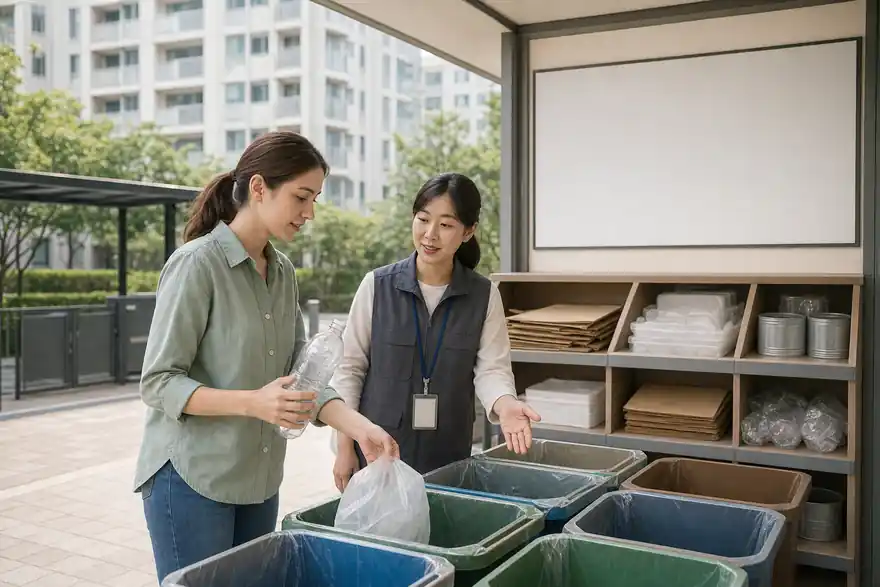
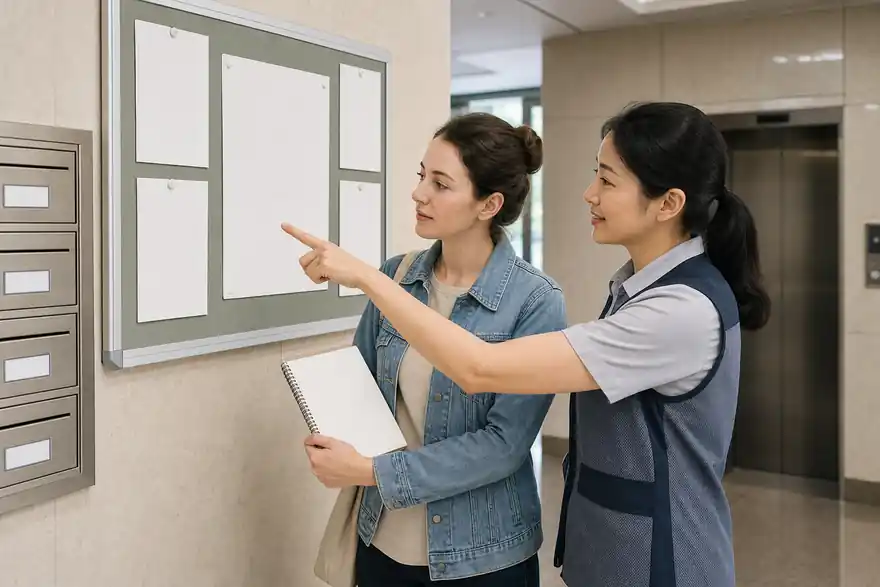
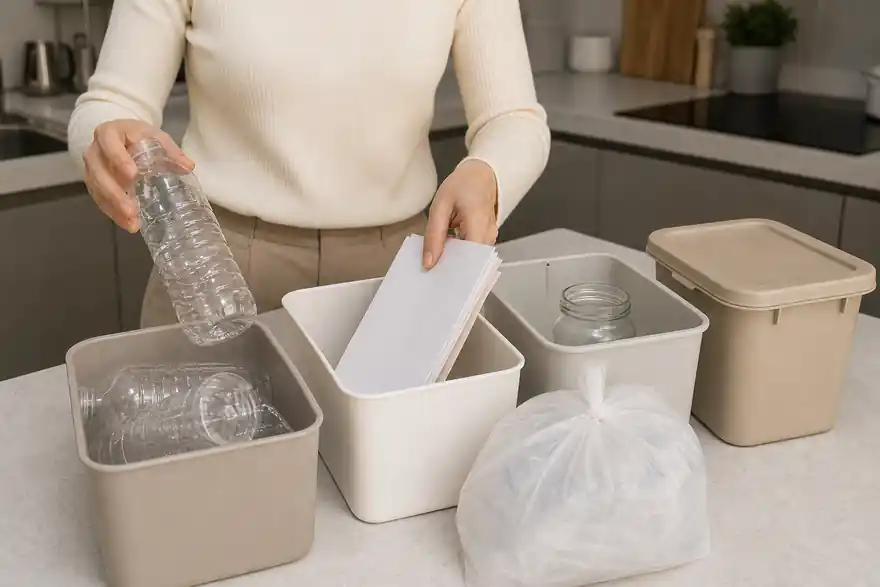
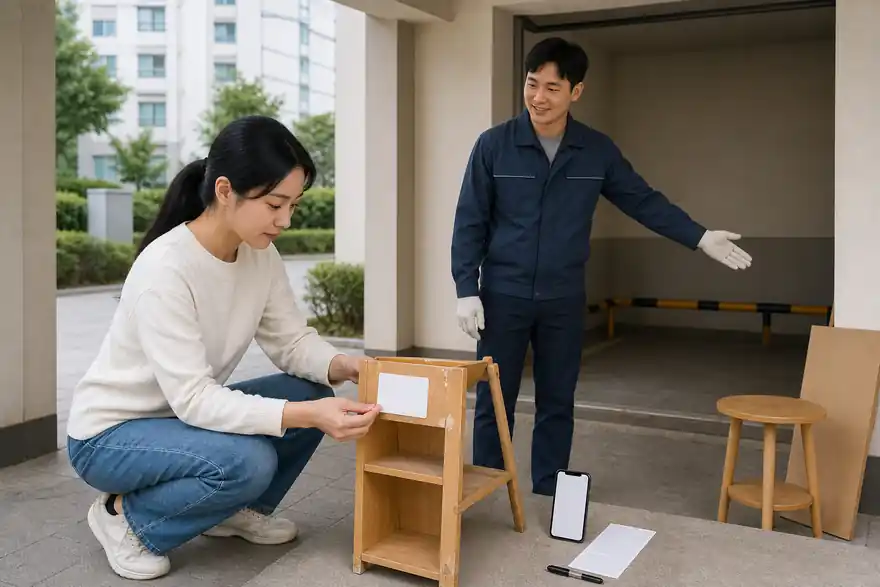
1. When to use these phrases
Korean for Trash Sorting and Apartment Notices
10 min read
What This Lesson Covers
Apartment trash notices can look simple, but they often combine time, place, category, exception, and warning in one short paragraph. This lesson teaches the Korean you need to understand those notices and ask clear questions before throwing something away.
This is a language-learning guide, not a municipal rulebook. Rules can differ by city, apartment complex, season, and item. For real disposal, follow the actual notice, management office, local rules, and the official bag or sticker system used where you live.
Your practical goal is to identify five things in a notice: what item, which category, where to put it, when to put it out, and what not to do. If one part is unclear, ask that one part instead of guessing.
How Apartment Notices Usually Work
Read an apartment notice in this order: first find the topic, then the date or day, then the location, then the action verb, and finally the warning. The topic may be 분리수거, 음식물 쓰레기, 일반쓰레기, or 대형폐기물.
The action verbs matter. 배출하다 means to put waste out. 분리하다 means to separate. 헹구다 means to rinse. 비우다 means to empty. 붙이다 means to attach a sticker or paper. These verbs tell you what to do, not only what the item is.
If a notice says 금지, 주의, or 과태료, slow down. These words signal a rule, caution, or possible penalty. The safe language move is: 이 안내문은 무슨 뜻이에요? and then 제가 맞게 이해했는지 확인해 주세요.
Do not rely on memory from another building. Even familiar items can have different instructions by apartment complex. This lesson gives you Korean tools to ask, confirm, and avoid acting on a guess.
Core Recycling and Notice Vocabulary
| Korean | Pronunciation | Meaning | Practice note |
|---|---|---|---|
| 쓰레기 | sseuregi | trash/garbage | Use this word in one safe sample sentence; do not use real unit numbers, names, or private building notices. |
| 분리수거 | bullisugeo | separate collection / recycling sorting | Use this word in one safe sample sentence; do not use real unit numbers, names, or private building notices. |
| 재활용품 | jaehwaryongpum | recyclables | Use this word in one safe sample sentence; do not use real unit numbers, names, or private building notices. |
| 일반쓰레기 | ilban sseuregi | general trash | Use this word in one safe sample sentence; do not use real unit numbers, names, or private building notices. |
| 음식물 쓰레기 | eumsingmul sseuregi | food waste | Use this word in one safe sample sentence; do not use real unit numbers, names, or private building notices. |
| 대형폐기물 | daehyeong pyegimul | bulky waste | Use this word in one safe sample sentence; do not use real unit numbers, names, or private building notices. |
| 폐기물 | pyegimul | waste | Use this word in one safe sample sentence; do not use real unit numbers, names, or private building notices. |
| 종량제 봉투 | jongnyangje bongtu | official volume-based trash bag | Use this word in one safe sample sentence; do not use real unit numbers, names, or private building notices. |
| 봉투 | bongtu | bag | Use this word in one safe sample sentence; do not use real unit numbers, names, or private building notices. |
| 배출 | baechul | putting out / disposal | Use this word in one safe sample sentence; do not use real unit numbers, names, or private building notices. |
| 배출일 | baechuril | disposal day | Use this word in one safe sample sentence; do not use real unit numbers, names, or private building notices. |
| 배출장소 | baechul jangso | disposal location | Use this word in one safe sample sentence; do not use real unit numbers, names, or private building notices. |
| 수거일 | sugeoil | collection day | Use this word in one safe sample sentence; do not use real unit numbers, names, or private building notices. |
| 수거함 | sugeoham | collection bin | Use this word in one safe sample sentence; do not use real unit numbers, names, or private building notices. |
| 분리배출 | bullibaechul | separate disposal | Use this word in one safe sample sentence; do not use real unit numbers, names, or private building notices. |
| 안내문 | annaemun | notice / information sheet | Use this word in one safe sample sentence; do not use real unit numbers, names, or private building notices. |
| 공지 | gongji | announcement | Use this word in one safe sample sentence; do not use real unit numbers, names, or private building notices. |
| 관리사무소 | gwalli samuso | management office | Use this word in one safe sample sentence; do not use real unit numbers, names, or private building notices. |
| 경비실 | gyeongbisil | security office | Use this word in one safe sample sentence; do not use real unit numbers, names, or private building notices. |
| 아파트 | apateu | apartment complex | Use this word in one safe sample sentence; do not use real unit numbers, names, or private building notices. |
| 동 | dong | building block | Use this word in one safe sample sentence; do not use real unit numbers, names, or private building notices. |
| 호수 | hosu | unit number | Use this word in one safe sample sentence; do not use real unit numbers, names, or private building notices. |
| 엘리베이터 | ellibeiteo | elevator | Use this word in one safe sample sentence; do not use real unit numbers, names, or private building notices. |
| 현관 | hyeongwan | entrance | Use this word in one safe sample sentence; do not use real unit numbers, names, or private building notices. |
| 지하 | jiha | basement | Use this word in one safe sample sentence; do not use real unit numbers, names, or private building notices. |
| 주차장 | juchajang | parking lot | Use this word in one safe sample sentence; do not use real unit numbers, names, or private building notices. |
| 종이 | jongi | paper | Use this word in one safe sample sentence; do not use real unit numbers, names, or private building notices. |
| 종이팩 | jongipak | paper carton | Use this word in one safe sample sentence; do not use real unit numbers, names, or private building notices. |
| 플라스틱 | peullaseutik | plastic | Use this word in one safe sample sentence; do not use real unit numbers, names, or private building notices. |
| 페트병 | peteubyeong | plastic bottle | Use this word in one safe sample sentence; do not use real unit numbers, names, or private building notices. |
| 유리병 | yuribyeong | glass bottle | Use this word in one safe sample sentence; do not use real unit numbers, names, or private building notices. |
| 캔 | kaen | can | Use this word in one safe sample sentence; do not use real unit numbers, names, or private building notices. |
| 비닐 | binil | plastic film / vinyl bag | Use this word in one safe sample sentence; do not use real unit numbers, names, or private building notices. |
| 스티로폼 | seutirophom | styrofoam | Use this word in one safe sample sentence; do not use real unit numbers, names, or private building notices. |
| 건전지 | geonjeonji | battery | Use this word in one safe sample sentence; do not use real unit numbers, names, or private building notices. |
| 형광등 | hyeonggwangdeung | fluorescent lamp | Use this word in one safe sample sentence; do not use real unit numbers, names, or private building notices. |
| 의류 | uiryu | clothing | Use this word in one safe sample sentence; do not use real unit numbers, names, or private building notices. |
| 뚜껑 | ttukkeong | cap/lid | Use this word in one safe sample sentence; do not use real unit numbers, names, or private building notices. |
| 내용물 | naeyongmul | contents | Use this word in one safe sample sentence; do not use real unit numbers, names, or private building notices. |
| 헹구다 | hengguda | to rinse | Use this word in one safe sample sentence; do not use real unit numbers, names, or private building notices. |
| 비우다 | biuda | to empty | Use this word in one safe sample sentence; do not use real unit numbers, names, or private building notices. |
| 묶다 | muktta | to tie | Use this word in one safe sample sentence; do not use real unit numbers, names, or private building notices. |
| 붙이다 | buchida | to attach/stick | Use this word in one safe sample sentence; do not use real unit numbers, names, or private building notices. |
| 신청하다 | sincheonghada | to apply/register | Use this word in one safe sample sentence; do not use real unit numbers, names, or private building notices. |
| 예약하다 | yeyakada | to reserve | Use this word in one safe sample sentence; do not use real unit numbers, names, or private building notices. |
| 금지 | geumji | prohibited | Use this word in one safe sample sentence; do not use real unit numbers, names, or private building notices. |
| 주의 | juui | caution | Use this word in one safe sample sentence; do not use real unit numbers, names, or private building notices. |
| 위반 | wiban | violation | Use this word in one safe sample sentence; do not use real unit numbers, names, or private building notices. |
| 과태료 | gwataeryo | fine/administrative penalty | Use this word in one safe sample sentence; do not use real unit numbers, names, or private building notices. |
| 문의 | munui | inquiry | Use this word in one safe sample sentence; do not use real unit numbers, names, or private building notices. |
Categories You Should Be Able to Name
재활용품 are recyclables. In practice, you often hear separate words such as paper, plastic, cans, glass bottles, vinyl, and styrofoam. Before disposal, a notice may ask you to empty or rinse the item.
음식물 쓰레기 is food waste. The container, disposal location, fee system, and accepted items can vary. If you are unsure, ask 음식물 쓰레기는 어디에 버려요?
일반쓰레기 is general trash. Many learners need the phrase 어떤 봉투를 써요? because the bag can matter. Do not use a random bag when the notice mentions an official bag.
대형폐기물 means bulky waste. It is often handled separately from normal trash and may require registration, a sticker, reservation, or payment. Ask before putting furniture or appliances outside.
Special items such as batteries, lamps, clothing, electronics, and sharp objects may have separate instructions. Use the item name plus 어디에 버려요? to ask a clear question.
Useful Questions and Confirmation Phrases
| Korean phrase | Meaning | Use |
|---|---|---|
| 분리수거는 어디에서 해요? | Where do I sort recyclables? | Ask one exact question, then repeat the answer with 맞아요? before acting. |
| 재활용품은 어디에 버려요? | Where do I throw away recyclables? | Ask one exact question, then repeat the answer with 맞아요? before acting. |
| 일반쓰레기는 어떤 봉투를 써요? | Which bag do I use for general trash? | Ask one exact question, then repeat the answer with 맞아요? before acting. |
| 음식물 쓰레기는 어디에 버려요? | Where do I throw away food waste? | Ask one exact question, then repeat the answer with 맞아요? before acting. |
| 배출일이 언제예요? | When is the disposal day? | Ask one exact question, then repeat the answer with 맞아요? before acting. |
| 수거일이 바뀌었어요? | Did the collection day change? | Ask one exact question, then repeat the answer with 맞아요? before acting. |
| 이 안내문은 무슨 뜻이에요? | What does this notice mean? | Ask one exact question, then repeat the answer with 맞아요? before acting. |
| 천천히 설명해 주세요. | Please explain slowly. | Ask one exact question, then repeat the answer with 맞아요? before acting. |
| 다시 한 번 말해 주세요. | Please say it one more time. | Ask one exact question, then repeat the answer with 맞아요? before acting. |
| 종이에 써 주세요. | Please write it on paper. | Ask one exact question, then repeat the answer with 맞아요? before acting. |
| 사진을 보여 드려도 돼요? | Can I show you a photo? | Ask one exact question, then repeat the answer with 맞아요? before acting. |
| 이건 재활용이에요? | Is this recyclable? | Ask one exact question, then repeat the answer with 맞아요? before acting. |
| 이건 일반쓰레기예요? | Is this general trash? | Ask one exact question, then repeat the answer with 맞아요? before acting. |
| 내용물을 비워야 해요? | Do I need to empty the contents? | Ask one exact question, then repeat the answer with 맞아요? before acting. |
| 헹궈야 해요? | Do I need to rinse it? | Ask one exact question, then repeat the answer with 맞아요? before acting. |
| 뚜껑을 분리해야 해요? | Do I need to separate the cap? | Ask one exact question, then repeat the answer with 맞아요? before acting. |
| 비닐은 따로 버려요? | Do I throw away plastic film separately? | Ask one exact question, then repeat the answer with 맞아요? before acting. |
| 스티로폼은 어디에 버려요? | Where do I throw away styrofoam? | Ask one exact question, then repeat the answer with 맞아요? before acting. |
| 건전지는 어디에 버려요? | Where do I throw away batteries? | Ask one exact question, then repeat the answer with 맞아요? before acting. |
| 대형폐기물은 어떻게 신청해요? | How do I register bulky waste? | Ask one exact question, then repeat the answer with 맞아요? before acting. |
| 스티커를 붙여야 해요? | Do I need to attach a sticker? | Ask one exact question, then repeat the answer with 맞아요? before acting. |
| 관리사무소에 문의하면 돼요? | Should I ask the management office? | Ask one exact question, then repeat the answer with 맞아요? before acting. |
| 경비실에 물어봐도 돼요? | Can I ask the security office? | Ask one exact question, then repeat the answer with 맞아요? before acting. |
| 오늘 버려도 돼요? | Can I throw it away today? | Ask one exact question, then repeat the answer with 맞아요? before acting. |
| 여기에 버리면 안 돼요? | Should I not throw it here? | Ask one exact question, then repeat the answer with 맞아요? before acting. |
| 잘못 버리면 과태료가 있어요? | Is there a fine if I throw it away incorrectly? | Ask one exact question, then repeat the answer with 맞아요? before acting. |
| 제가 맞게 이해했는지 확인해 주세요. | Please check whether I understood correctly. | Ask one exact question, then repeat the answer with 맞아요? before acting. |
| 이건 다음 수거일에 버리면 돼요? | Should I throw this away on the next collection day? | Ask one exact question, then repeat the answer with 맞아요? before acting. |
Five Practical Dialogues
These scripts are for practice. Replace details with safe made-up examples in class, and use actual instructions only with the management office or staff in front of you.
Where is recycling?
| 입주민 | 분리수거는 어디에서 해요? | Where do I sort recyclables? |
| 직원 | 지하 주차장 옆 수거함을 이용하세요. | Use the collection bins next to the basement parking lot. |
| 입주민 | 지하 주차장 옆, 맞아요? | Next to the basement parking lot, correct? |
Notice meaning
| 입주민 | 이 안내문은 무슨 뜻이에요? | What does this notice mean? |
| 직원 | 이번 주 수거일이 변경됐다는 뜻이에요. | It means this week's collection day changed. |
| 입주민 | 수거일이 바뀌었군요. 확인해 주세요. | So the collection day changed. Please confirm. |
Food waste
| 입주민 | 음식물 쓰레기는 어디에 버려요? | Where do I throw away food waste? |
| 직원 | 음식물 수거함을 이용하세요. | Use the food waste collection bin. |
| 입주민 | 네, 음식물 수거함에 버릴게요. | Okay, I will put it in the food waste bin. |
Bulky waste
| 입주민 | 대형폐기물은 어떻게 신청해요? | How do I register bulky waste? |
| 직원 | 먼저 관리사무소에 문의해 주세요. | Please ask the management office first. |
| 입주민 | 스티커를 붙여야 해요? | Do I need to attach a sticker? |
Not sure category
| 입주민 | 이건 재활용이에요, 일반쓰레기예요? | Is this recyclable or general trash? |
| 직원 | 내용물을 비우고 헹군 다음에 분리배출하세요. | Empty and rinse it, then dispose of it separately. |
| 입주민 | 비우고 헹군 다음에 버리면 돼요? | So I empty and rinse it before throwing it away? |
How to Decode a Notice
Step one: circle the date or day word. Look for 오늘, 내일, weekday names, 매주, or 변경. If you see 변경, ask whether the usual collection day has changed.
Step two: find the place. Apartment notices often mention basement, parking lot, entrance, recycling station, security office, or management office. If the place is not clear, ask 배출장소가 어디예요?
Step three: find the item and category. A notice may name the item directly, or it may use a broad category such as recyclables, food waste, general trash, or bulky waste. If the category is unclear, show the item photo and ask.
Step four: find the action. The notice may tell you to empty, rinse, tie, separate, attach a sticker, reserve, or ask first. These small verbs prevent many mistakes.
Step five: find the warning. Words like prohibited, caution, violation, and fine mean you should not improvise. Confirm the meaning before acting.
Apartment Notice Pattern Drills
Real notices are often short fragments, not full textbook sentences. Practice reading the Korean fragment, naming the action, and saying one confirmation sentence before you act.
| Notice fragment | What it means | What to do next |
|---|---|---|
| 매주 화요일 저녁 8시 이후 배출 | Put it out every Tuesday after 8 p.m. | Confirm the day and time: 화요일 저녁 8시 이후, 맞아요? |
| 내용물을 비우고 헹군 후 배출 | Empty the contents, rinse it, then put it out. | Do not focus only on the item name. The verbs 비우고 and 헹군 후 tell you the required preparation. |
| 지정 장소 외 배출 금지 | Do not put it anywhere except the designated place. | Ask for the exact place: 배출장소가 어디예요? |
| 음식물 쓰레기 전용 수거함 이용 | Use the dedicated food waste collection bin. | Look for 전용. It means the bin or bag is only for that category. |
| 대형폐기물은 사전 신청 후 배출 | Register bulky waste in advance before putting it out. | Do not place furniture outside first. Ask 어떻게 신청해요? and whether a sticker is needed. |
| 수거일 변경 안내 | Notice that the collection day has changed. | Do not use the old routine. Ask 이번 주 수거일이 언제예요? |
| 비닐류는 별도 배출 | Put plastic film or vinyl items out separately. | Ask whether the item belongs with plastic containers or with vinyl: 비닐은 따로 버려요? |
| 잘못 배출 시 과태료가 부과될 수 있습니다 | A fine may be charged for incorrect disposal. | Treat this as a stop sign. Ask 제가 맞게 이해했는지 확인해 주세요. |
Mistake Prevention Clinic
Mistake one is translating only the item name and missing the action. A notice about plastic bottles may not only say plastic bottle; it may say empty, rinse, remove the cap, or put it out on a certain day. Train your eyes to find the verb after the item.
Mistake two is using a rule from another apartment. Instead of saying “I already know,” ask a narrower question: 여기는 어떻게 버려요? This sounds humble and fits the building you are actually in.
Mistake three is asking a staff member a long mixed question. Break it into two steps: first ask the category, then ask the day or place. Short Korean questions get clearer answers.
Mistake four is showing a photo that includes private information. Crop out mail, addresses, unit numbers, resident names, and vehicle plates before showing the item. The language goal is to identify the object, not to share private data.
Mistake five is acting after hearing only yes or no. Repeat the answer with 맞아요? For example: 비우고 헹군 다음에 버리면 돼요, 맞아요?
Mistake six is ignoring words such as 금지, 변경, 전용, and 과태료. These words change the action. When you see them, stop and ask one confirmation question.
When You Are Not Sure
Do not ask a broad question such as “What should I do with trash?” Start with one item: 이건 재활용이에요? or 이건 일반쓰레기예요?
If the answer includes a time, repeat the time. If the answer includes a place, repeat the place. If the answer includes a warning, repeat the warning. This makes your Korean slower but safer.
Use a photo carefully. You can ask 사진을 보여 드려도 돼요? before showing a photo of the item. Avoid showing private mail, addresses, unit numbers, or other residents.
If the notice is long, ask for writing: 종이에 써 주세요. A written reminder helps you remember the day, location, and category without guessing later.
Practice Routine
Read each sentence aloud, hide the translation, say what category it belongs to, then ask one confirmation question.
| Korean phrase | Meaning | Use |
|---|---|---|
| 이건 재활용이에요? | recyclable or not | Say the Korean, name the category, then ask 맞아요? |
| 이건 일반쓰레기예요? | general trash or not | Say the Korean, name the category, then ask 맞아요? |
| 음식물 쓰레기는 어디에 버려요? | food waste place | Say the Korean, name the category, then ask 맞아요? |
| 배출일이 언제예요? | disposal day | Say the Korean, name the category, then ask 맞아요? |
| 배출장소가 어디예요? | disposal location | Say the Korean, name the category, then ask 맞아요? |
| 내용물을 비워야 해요? | empty contents | Say the Korean, name the category, then ask 맞아요? |
| 헹궈야 해요? | rinse first | Say the Korean, name the category, then ask 맞아요? |
| 뚜껑을 분리해야 해요? | separate cap | Say the Korean, name the category, then ask 맞아요? |
| 비닐은 따로 버려요? | plastic film separately | Say the Korean, name the category, then ask 맞아요? |
| 대형폐기물은 어떻게 신청해요? | bulky waste registration | Say the Korean, name the category, then ask 맞아요? |
| 스티커를 붙여야 해요? | attach sticker | Say the Korean, name the category, then ask 맞아요? |
| 여기에 버리면 안 돼요? | not here | Say the Korean, name the category, then ask 맞아요? |
| 잘못 버리면 과태료가 있어요? | fine warning | Say the Korean, name the category, then ask 맞아요? |
| 관리사무소에 문의하면 돼요? | ask management office | Say the Korean, name the category, then ask 맞아요? |
| 제가 맞게 이해했는지 확인해 주세요. | confirm my understanding | Say the Korean, name the category, then ask 맞아요? |
Final Safety Boundary
This article teaches Korean communication for apartment life. It does not replace your local waste rules, city notices, apartment management office, or official disposal system.
A strong learner does three things before throwing away an uncertain item: identifies the category, confirms the day and place, and asks about warnings or stickers.
The target result is not perfect grammar. The target result is a correct, polite question that prevents a real-life disposal mistake.
- What is the item?
- Which category is it?
- Where is the disposal place?
- When is the disposal or collection day?
- Is there a warning, sticker, or fine?
- Who should I ask if I am unsure?
2. Key vocabulary
trash/garbage
Beginnerseparate collection / recycling sorting
Beginnerrecyclables
Beginnergeneral trash
Beginnerfood waste
Beginner3. Essential phrases
7. Related practical Korean lessons
 Practical Korean
Korean for School Notices and Parent Guidance
6월 19, 2026
Practical Korean
Korean for School Notices and Parent Guidance
6월 19, 2026
 Practical Korean
Korean for Community Centers and Document Issuance
6월 19, 2026
Practical Korean
Korean for Community Centers and Document Issuance
6월 19, 2026
 Practical Korean
Korean for Mobile Phone, Internet, and Repair Consultations
6월 19, 2026
Practical Korean
Korean for Mobile Phone, Internet, and Repair Consultations
6월 19, 2026
 Practical Korean
Korean for Asking and Understanding Pharmacy Dosage Instructions
6월 19, 2026
Practical Korean
Korean for Asking and Understanding Pharmacy Dosage Instructions
6월 19, 2026
Practice this lesson in the app
Review these words with multiple-choice questions and weak-Learn Korean.
Practice this lesson →
답글 남기기
Please sign in with Google to comment. Sign in with Google