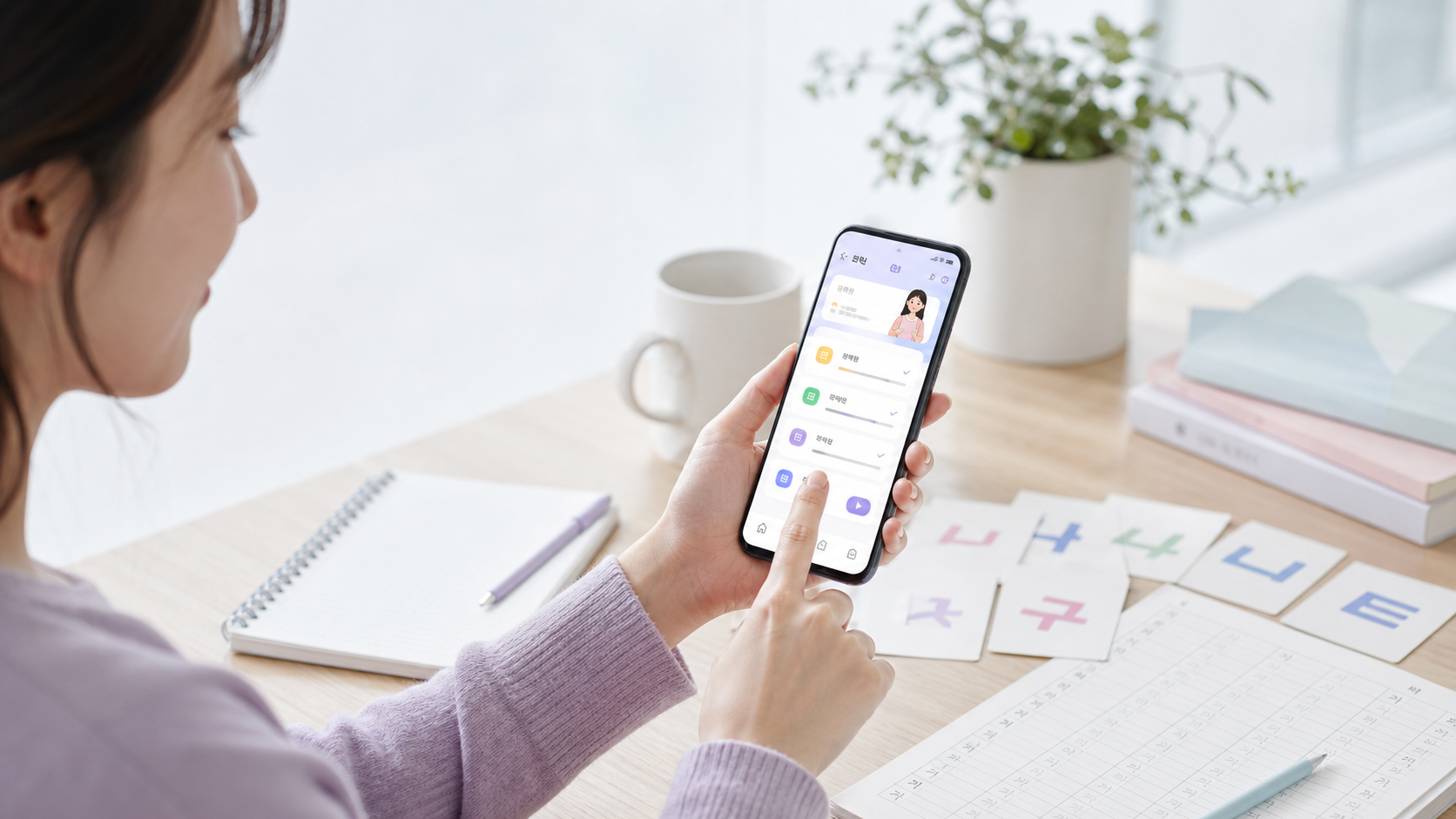
This page is for people who want to test the BSKorean learning app and send practical feedback. A useful tester checks whether Korean words, example sentences, quizzes, level tests, and mobile screens are clear on a real device.
Tester task
What to check
Helpful feedback
Learning flow
Open the app and try a lesson
Which step felt confusing?
Mobile screen
Check buttons and text size
Device model and screenshot area
Learn Korean
Try Korean words and examples
Which word or sentence looked wrong?
Privacy
Do not send passwords or codes
Describe the issue without secrets
Start with the BSKorean app, then try the level test. When reporting a problem, include the page URL, device type, browser, and what you expected to happen.
Good tester notes are specific. Write the exact page, the button you pressed, the message you saw, and whether the issue happened once or every time. Useful reports do not include passwords, login codes, private messages, or screenshots that show someone else’s personal information.
BSKorean app tester guide
BSKorean app tester helps learners practice Korean words in real situations. This BSKorean post keeps the lesson clear, scannable, and connected to app practice.
BSKorean is preparing practical Korean lessons for Android app users. We are recruiting Google Play testers who can install the app, try short learning sessions, and send simple feedback.
한국어 안내
BSKorean 안드로이드 앱 비공개 테스트에 참여할 테스터를 모집합니다. 한국어를 일상생활, 업무, 여행, 공공서비스 상황에서 배우고 싶은 분이면 신청할 수 있습니다.
신청은 william3001v@gmail.com 으로 보내 주세요. 메일에는 Google Play 이메일 주소, 안드로이드 휴대폰 기종, 거주 국가와 주로 쓰는 언어, 연습하고 싶은 한국어 상황을 적어 주세요.
요청된 테스트 과정을 완료하고 사용할 수 있는 피드백을 보내 주신 분에게는 완료 확인 후 계좌이체로 5,000원을 지급합니다. 계좌 정보는 테스트 완료가 확인된 뒤에만 요청합니다.
Who can apply
You use an Android phone with Google Play.
You want to learn Korean for daily life, work, travel, or public services.
You can test short Learn Korean sessions and tell us what was easy or confusing.
How to apply
Send an email to william3001v@gmail.com with the subject BSKorean App Tester Application.
Your Google Play email address
Your Android phone model
Your country and main language
One Korean situation you want to practice
Tester reward
Testers who complete the requested test flow and send usable feedback will receive KRW 5,000 by bank transfer. We will ask for bank account details only after completion is confirmed.
After your email arrives, we will review it and send the next testing instructions. Testers may be asked to install the closed test version, open the app during the test period, and send brief feedback about lessons, Learn Korean, login, and screen layout. Completion means following the requested test steps and submitting usable feedback.
hair salon words helps learners practice Korean words in real situations. This BSKorean post keeps the lesson clear, scannable, and connected to app practice.
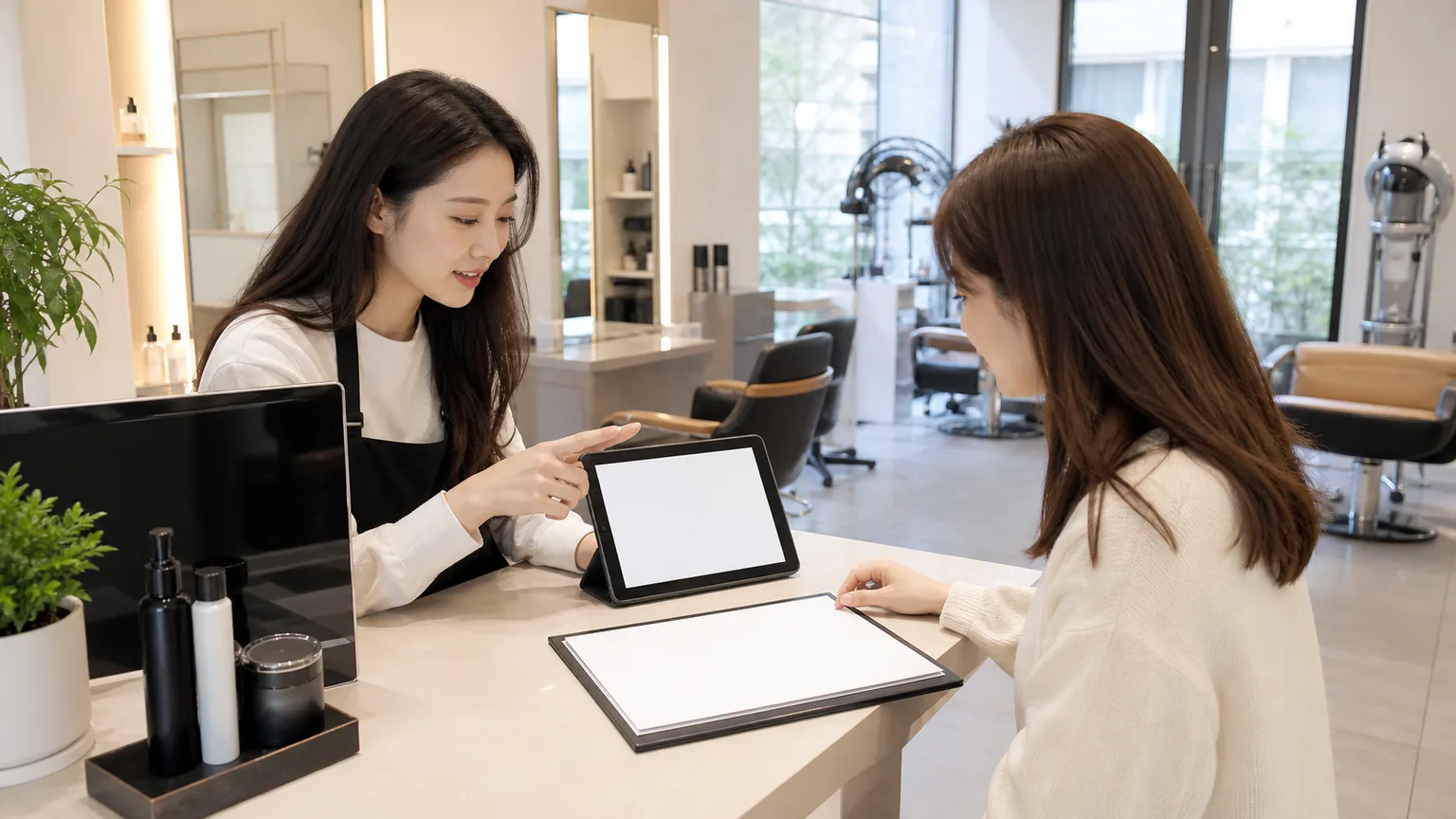
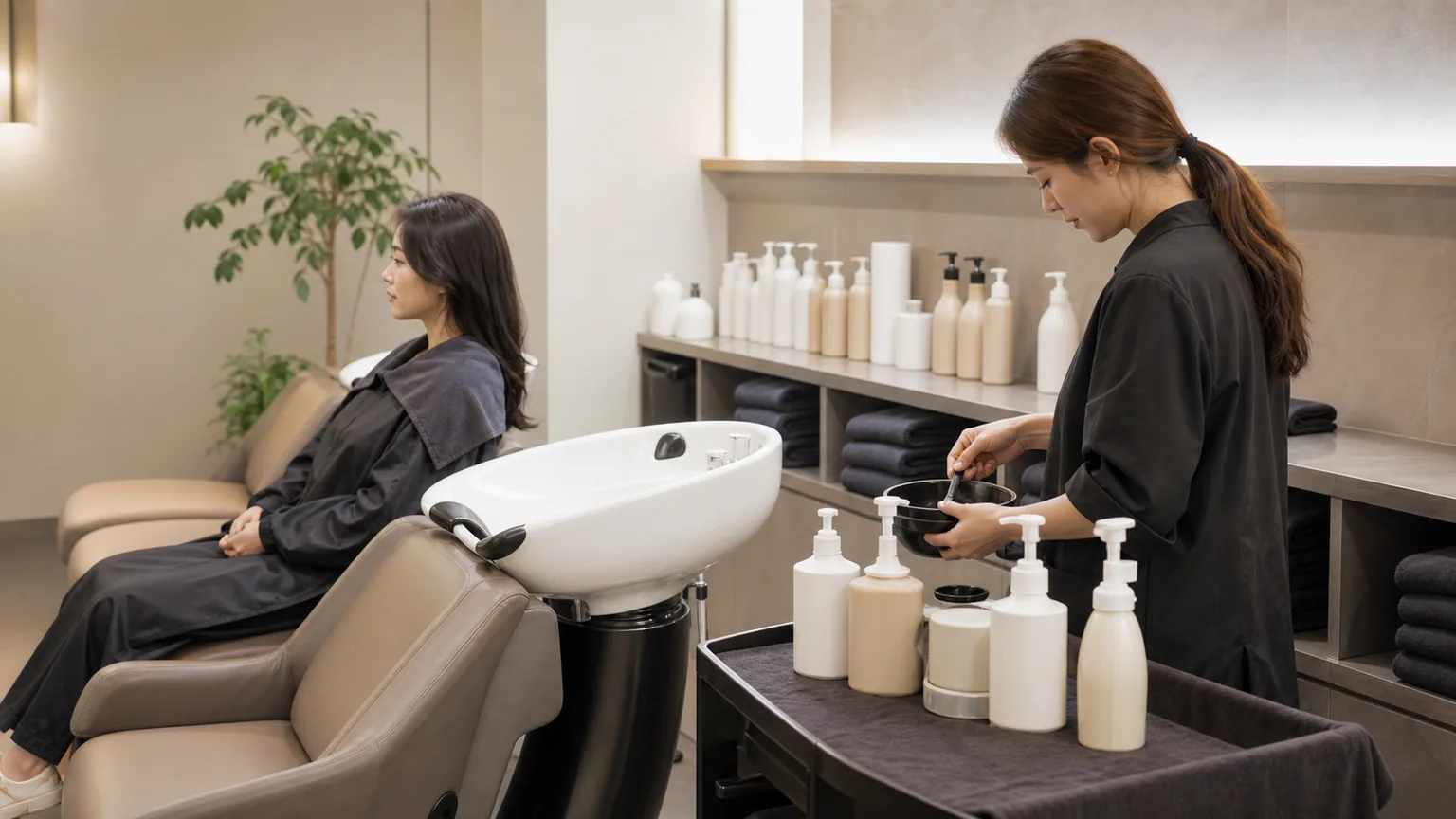
Hair salon words are useful when you book a haircut, explain bangs or length, ask for a trim, check shampoo or styling, compare color or perm services, and pay at a Korean salon. This lesson teaches hair salon words by service step, so you can follow the conversation before the work starts.
Start by identifying the service step: appointment, haircut, treatment, style, price, or payment.
Briefing Summary
Situation
Using a Korean hair salon for an appointment, haircut, bangs, trim, color, perm, styling, price, or payment question
Practice focus
salon place, appointment, haircut request, hair length, trimming, dyeing, perm, shampoo, blow-dry, price, cash, and card payment words
Useful for
foreign residents, students, workers, and new arrivals using salon services in Korea
Study time
8-12 minutes
Slide 1. The Situation
Imagine you enter a 미용실 and the staff asks about your 예약. The conversation may move quickly from 커트 to 앞머리, 길이, or 짧게. First decide the service step: appointment, haircut, trim, treatment, styling, price, or payment.
This post is a Korean language lesson, not beauty, medical, allergy, pricing, refund, or contract advice. For exact prices, chemical services such as dyeing or perms, allergy concerns, refunds, timing, and style outcomes, confirm directly with salon staff and written terms.
Slide 2. Key Hair Salon Words
Appointment and price words often appear before the service starts.
Korean
Romanization
English
Level
Use
미용실
miyongsil
hair salon
BS1
The place where you get a haircut or salon service.
예약
yeyak
reservation; appointment
BS1
The appointment or reservation time.
커트
keoteu
haircut
BS2
The haircut service.
앞머리
apmeori
bangs; fringe
BS2
Bangs or fringe near the forehead.
길이
giri
length
BS2
Hair length or the amount to cut.
다듬다
dadeumda
to trim
BS3
A small trim, not a major cut.
짧게
jjalpge
short; shorter
BS2
A request to make hair shorter.
염색
yeomsaek
hair dyeing; coloring
BS3
Hair coloring service.
파마
pama
perm
BS3
A perm or wave service.
샴푸
syampu
shampoo
BS2
Hair wash or shampoo step.
드라이
deurai
blow-dry; styling dry
BS3
Blow-dry or styling dry after service.
스타일
seutail
style
BS2
The final style or look.
가격
gagyeok
price
BS1
The service price.
현금
hyeongeum
cash
BS1
Cash payment.
카드 결제
kadeu gyeolje
card payment
BS2
Paying by card.
Slide 3. Read the Salon Conversation in Five Passes
Haircut request words help you explain length, bangs, and trimming.
Pass 1: Place and time. Start with 미용실 and 예약. These tell you where you are and whether a booking is involved.
Pass 2: Haircut request. Look for 커트, 앞머리, and 길이 when the staff asks about the cut.
Pass 3: Trim and short. Use 다듬다 for trimming and 짧게 when you want it shorter.
Pass 4: Treatment and style. Separate 염색, 파마, 샴푸, 드라이, and 스타일 from the basic haircut.
Pass 5: Price and payment. Before you pay, check 가격, 현금, and 카드 결제.
Slide 4. Common Hair Salon Mistakes
Treatment words are different from haircut request words.
The first mistake is mixing 커트 and 다듬다. 커트 is the haircut service. 다듬다 is a trim request, often for a smaller change.
The second mistake is confusing 앞머리 and 길이. 앞머리 means bangs or fringe. 길이 means the overall length.
The third mistake is treating chemical or styling services as if they are only haircut words. 염색, 파마, 샴푸, and 드라이 can affect time, price, and final result. Ask before the service begins.
Slide 5. Practice With BSKorean
Review the same set before you ask about a real service.
Practice this topic in BSKorean: Read the BSKorean app guide, then open the practice app. This exact article set keeps the hair salon words together so you can review appointment, haircut, length, treatment, style, price, and payment words in one focused session.
A good practice habit is to say the service step first: appointment, haircut, trim, treatment, styling, or payment. Then say the Korean word. This keeps the conversation clearer when several salon choices appear at once.
Mini Review Table
If you see…
Think…
미용실
This is the place.
예약
This is the booked time.
커트
This is the haircut service.
앞머리
This means bangs or fringe.
길이
This means hair length.
염색
This means hair coloring.
드라이
This means blow-dry or styling dry.
카드 결제
This means card payment.
Final Takeaway
You do not need to understand every style detail to begin reading a Korean salon conversation. First identify the service step, then separate the haircut request, treatment, style, price, and payment words. These Korean hair salon words give you a practical checklist before you sit down.
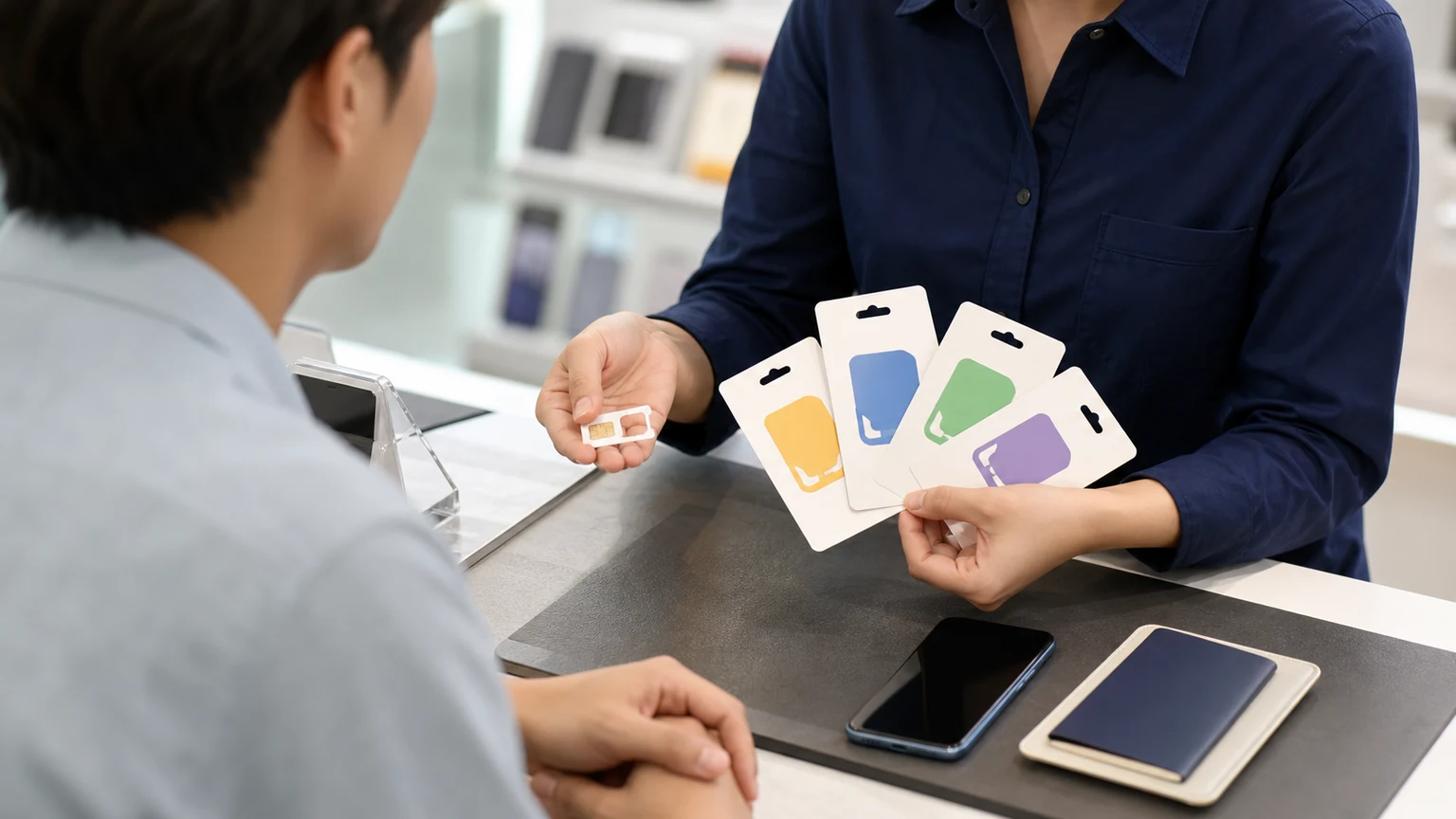
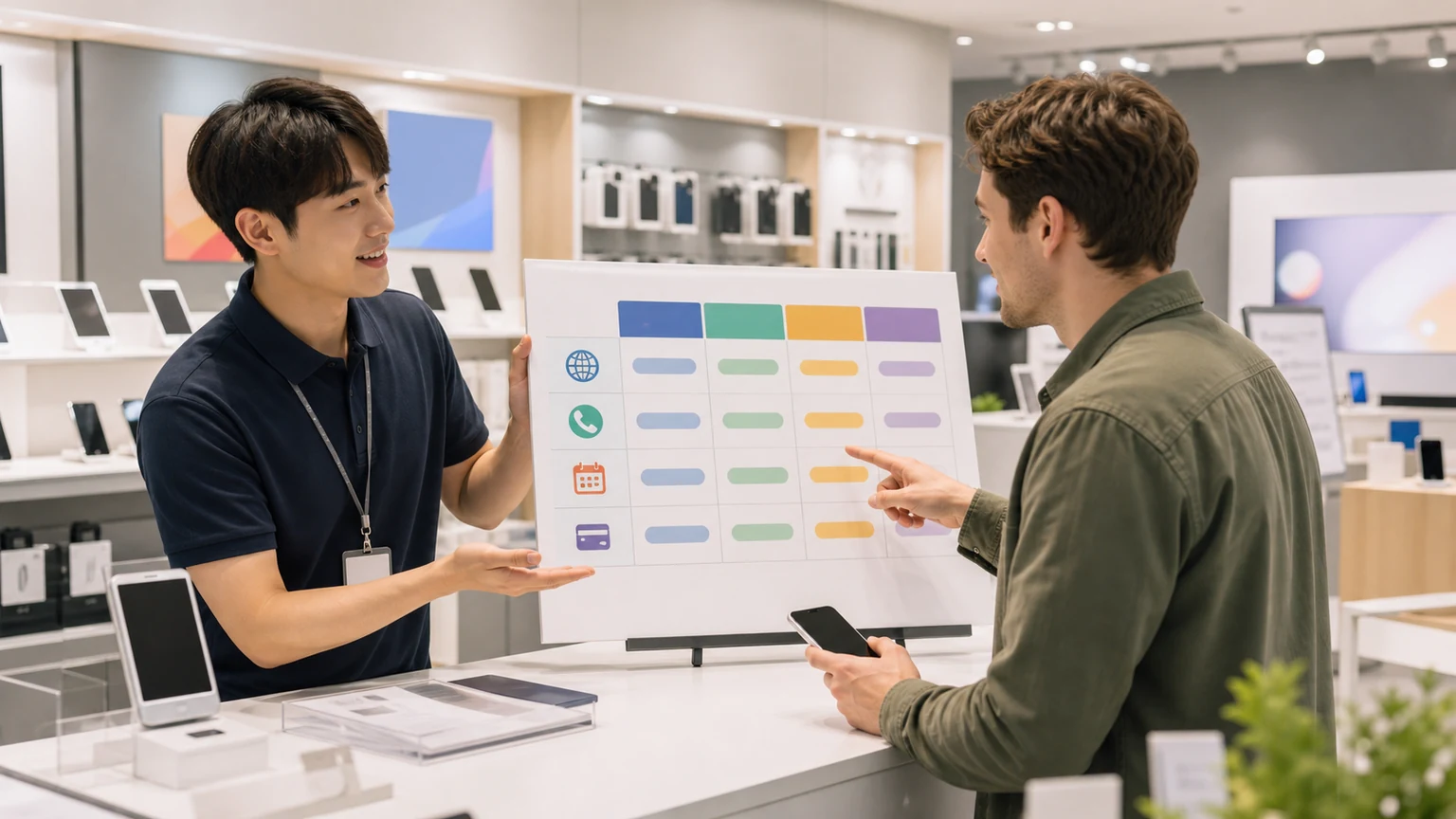
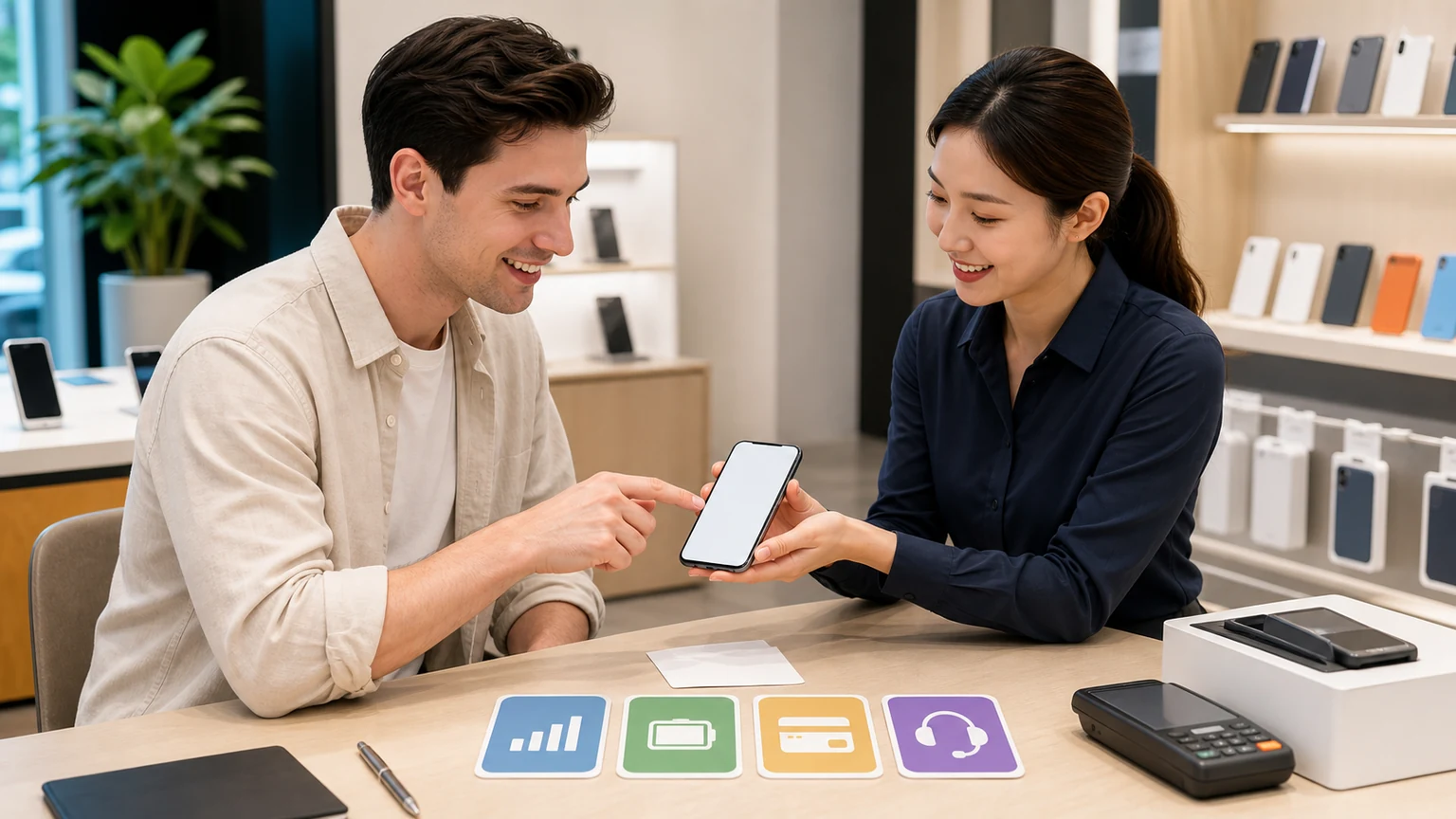
mobile phone store words helps learners practice Korean words in real situations. This BSKorean post keeps the lesson clear, scannable, and connected to app practice.
Mobile phone store words are useful when you buy a phone, choose a plan, change a SIM card, activate service, show ID, check a bill, or ask customer support in Korea. This lesson teaches mobile phone store words by decision point, so you can follow the store conversation more calmly.
Start by identifying the decision: device, SIM, plan, ID check, bill, or support.
Briefing Summary
Situation
Using a Korean mobile phone store for a device, SIM card, plan, identity check, bill, or support question
Practice focus
phone, plan, SIM, activation, contract term, installment, ID check, number transfer, data, calls, texts, bill, cancellation, and customer center words
Useful for
foreign residents, students, workers, and new arrivals setting up phone service in Korea
Study time
8-12 minutes
Slide 1. The Situation
Imagine you enter a phone store with your 휴대폰. The staff may ask about a 요금제, 유심, 개통, or 번호 이동. Before you look at details, decide the task: start service, change a SIM, compare a plan, verify identity, or ask support.
This post is a Korean language lesson, not telecom, contract, credit, visa, pricing, refund, or cancellation-fee advice. For exact plan prices, required documents, contract terms, foreign-resident eligibility, credit checks, cancellation conditions, or refunds, confirm with official staff and written service terms.
Slide 2. Key Mobile Phone Store Words
SIM and activation words usually appear early in the service flow.
Korean
Romanization
English
Level
Use
휴대폰
hyudaepon
mobile phone
BS1
The phone or device.
요금제
yogeumje
mobile plan; rate plan
BS3
The monthly mobile plan.
유심
yusim
SIM card
BS3
SIM card used for service.
개통
gaetong
activation; service opening
BS4
Starting phone service.
약정
yakjeong
contract term; commitment
BS4
Contract or commitment period.
할부
halbu
installment payment
BS3
Paying over time.
본인인증
bonin injeung
identity verification
BS4
Identity verification process.
신분증
sinbunjeung
ID card; identification
BS2
ID card for verification.
번호 이동
beonho idong
number transfer; number porting
BS4
Keeping or moving a phone number to another service.
데이터
deiteo
mobile data
BS2
Mobile data usage.
통화
tonghwa
phone call; calling minutes
BS2
Calls or calling allowance.
문자
munja
text message
BS2
Text messages in a plan.
청구서
cheongguseo
bill; invoice
BS3
Monthly bill or invoice.
해지
haeji
cancellation; termination
BS5
Ending or canceling the service.
고객센터
gogaek senteo
customer center; customer service
BS3
Customer support after signup.
Slide 3. Read the Store Conversation in Five Passes
Plan words help you separate data, calls, texts, and monthly billing.
Pass 1: Device and SIM. Start with 휴대폰 and 유심. These tell you whether the conversation is about the device or the card used for service.
Pass 2: Starting service. Look for 개통 and 번호 이동 when the topic is activating service or moving a number.
Pass 3: Plan and usage. Separate 요금제 from usage words like 데이터, 통화, and 문자.
Pass 4: ID and contract. Check 본인인증, 신분증, 약정, and 할부 before you agree.
Pass 5: After signup. For later questions, watch for 청구서, 해지, and 고객센터.
Slide 4. Common Mobile Phone Store Mistakes
Identity verification words are different from the ID card itself.
The first mistake is mixing 요금제 and 데이터. 요금제 is the plan. 데이터, 통화, and 문자 are parts of what the plan may include.
The second mistake is mixing 유심 and 개통. 유심 is the SIM card. 개통 is the activation or start of service.
The third mistake is confusing the process with the document. 본인인증 is identity verification. 신분증 is the ID card or identification you may need for that process.
Slide 5. Practice With BSKorean
Review the same word set before you compare a real plan.
Practice this topic in BSKorean: Read the BSKorean app guide, then open the practice app. This exact article set keeps the mobile phone store words together so you can review plan, SIM, activation, ID check, billing, cancellation, and support words in one session.
A good practice habit is to say the decision first: device, SIM, plan, identity check, payment, bill, cancellation, or customer support. Then say the Korean word. This keeps the conversation clearer when several choices appear at once.
Mini Review Table
If you see…
Think…
휴대폰
This is the mobile phone.
요금제
This is the mobile plan.
유심
This is the SIM card.
개통
This means activation.
본인인증
This means identity verification.
번호 이동
This means number transfer.
청구서
This is the bill.
고객센터
This is the customer center.
Final Takeaway
You do not need to understand every plan detail to begin reading a Korean phone store conversation. First identify the service step, then separate the plan, usage, ID check, bill, and support words. These Korean mobile phone store words give you a simple order for asking better questions before you decide.
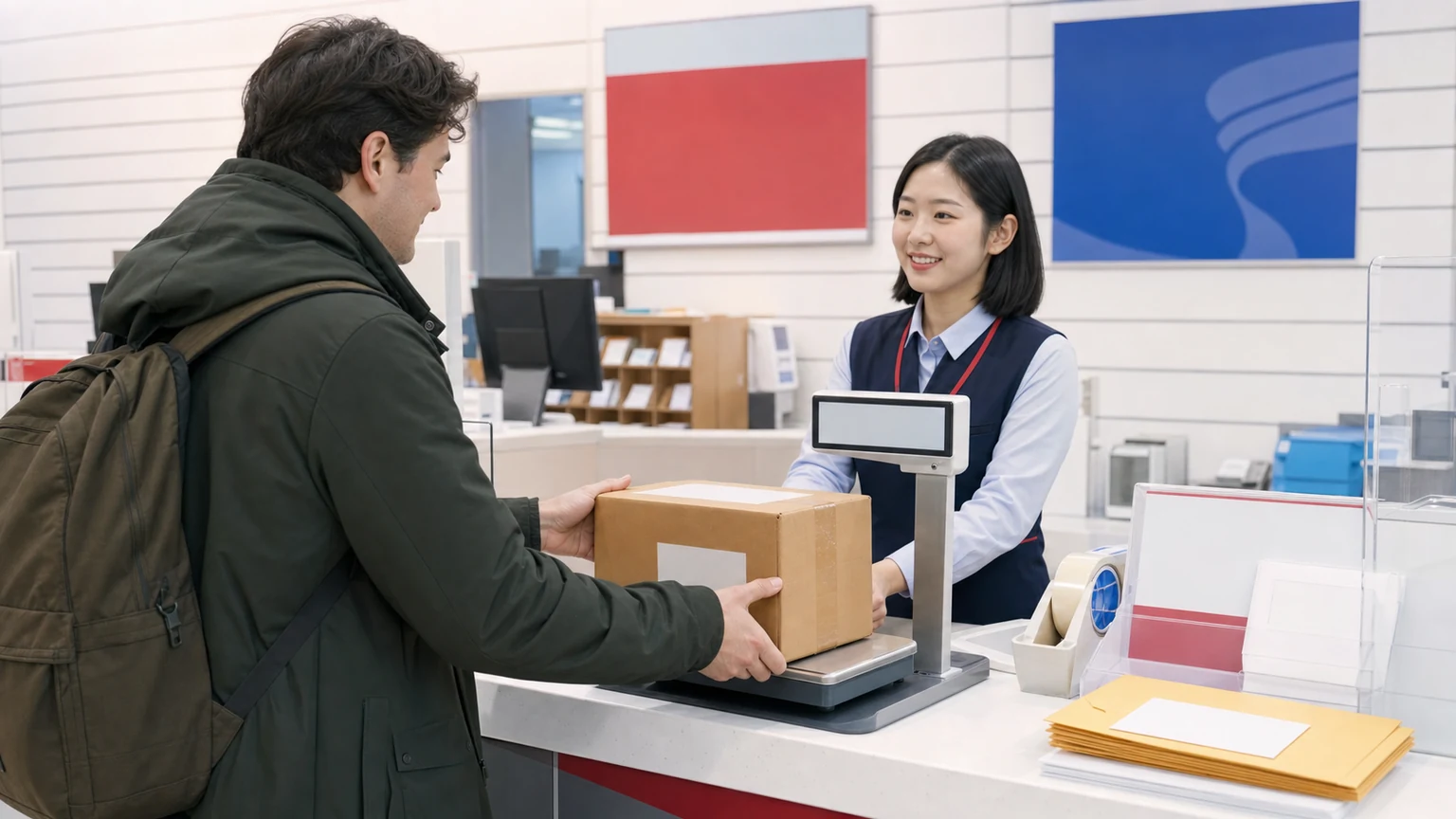
At a Korean post office, start with the service you need. Say 택배 보내고 싶어요, “I want to send a parcel,” or 등기 우편으로 보내고 싶어요, “I want to send it by registered mail.”
post office words helps learners practice Korean words in real situations. This BSKorean post keeps the lesson clear, scannable, and connected to app practice.
Post office words are useful when you send mail, prepare a parcel, fill out an address form, ask for registered mail, keep a receipt, or check delivery tracking in Korea. This lesson teaches post office words by task, so you can read the counter and the form calmly instead of trying to translate every line at once.
Start by identifying the task: mail, parcel, registered mail, address, fee, or tracking.
Briefing Summary
Situation
Using a Korean post office for mail, parcels, registered mail, address forms, receipts, and tracking
Practice focus
post office, mail type, parcel type, recipient, sender, postal code, waybill, receipt, fee, and tracking words
Useful for
foreign residents, students, workers, new tenants, and anyone sending items from Korea
Study time
8-12 minutes
Slide 1. The Situation
Imagine you walk into a 우체국 with a small parcel. You may need 우편, 소포, 택배, or 등기. Start with the task first. Are you sending mail, sending a parcel, using registered mail, or asking about tracking?
This post is a Korean language lesson, not postal, customs, insurance, refund, delivery-time, price, or prohibited-item advice. For exact prices, international rules, customs documents, lost mail, refunds, or delivery promises, follow the official counter, service provider, or government guidance.
Slide 2. Key Post Office Words
Counter words help you connect the parcel, form, fee, and receipt.
Korean
Romanization
English
Level
Use
우체국
ucheguk
post office
BS1
The place where you send mail or parcels.
우편
upyeon
mail; postal service
BS2
General mail or postal-service word.
우편함
upyeonham
mailbox
BS2
Place where mail is received.
소포
sopo
parcel; package
BS2
Parcel or package at the post office.
택배
taekbae
courier delivery; parcel delivery
BS2
Common parcel-delivery word.
등기
deunggi
registered mail
BS4
Registered mail with proof or tracking depending on service.
주소
juso
address
BS2
Address field on a form or label.
우편번호
upyeon beonho
postal code
BS3
Postal code on an address form.
받는 사람
batneun saram
recipient
BS3
Person receiving the mail or parcel.
보내는 사람
bonaeneun saram
sender
BS3
Person sending the mail or parcel.
운송장
unsongjang
waybill; shipping label
BS4
Shipping label or waybill used for delivery tracking.
배송 조회
baesong johoe
delivery tracking
BS4
Checking delivery status.
배송비
baesongbi
shipping fee; delivery fee
BS2
Fee for sending a parcel or delivery.
국제우편
gukje upyeon
international mail
BS4
Mail going to another country.
접수증
jeopsujeung
receipt of acceptance; filing receipt
BS5
Proof that the item or request was accepted.
Slide 3. Read the Post Office in Five Passes
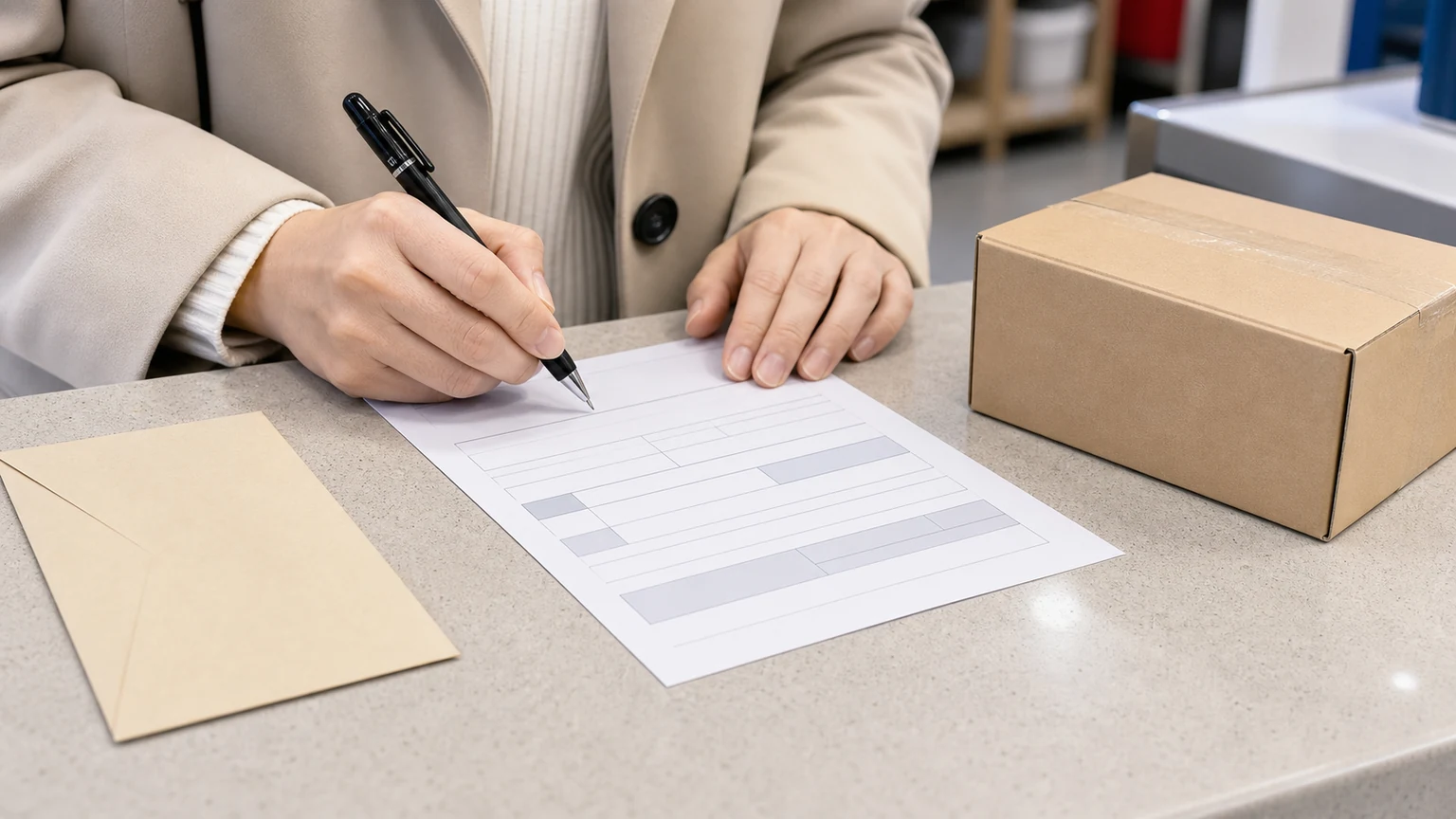
Address fields become easier when you separate recipient, sender, address, and postal code.
Pass 1: Place. Start with 우체국 and 우편함. They tell you whether you are at the post office or dealing with received mail.
Pass 2: Mail or parcel type. Check whether the task is 우편, 소포, 택배, 등기, or 국제우편.
Pass 3: Address form. Look for 주소, 우편번호, 받는 사람, and 보내는 사람 before you write.
Pass 4: Fee. When money appears, connect it to 배송비. The word tells you it is a shipping or delivery fee, but the price still depends on the service.
Pass 5: Proof and tracking. Keep the 운송장 or 접수증, then use 배송 조회 when you check the delivery.
Slide 4. Common Post Office Mistakes
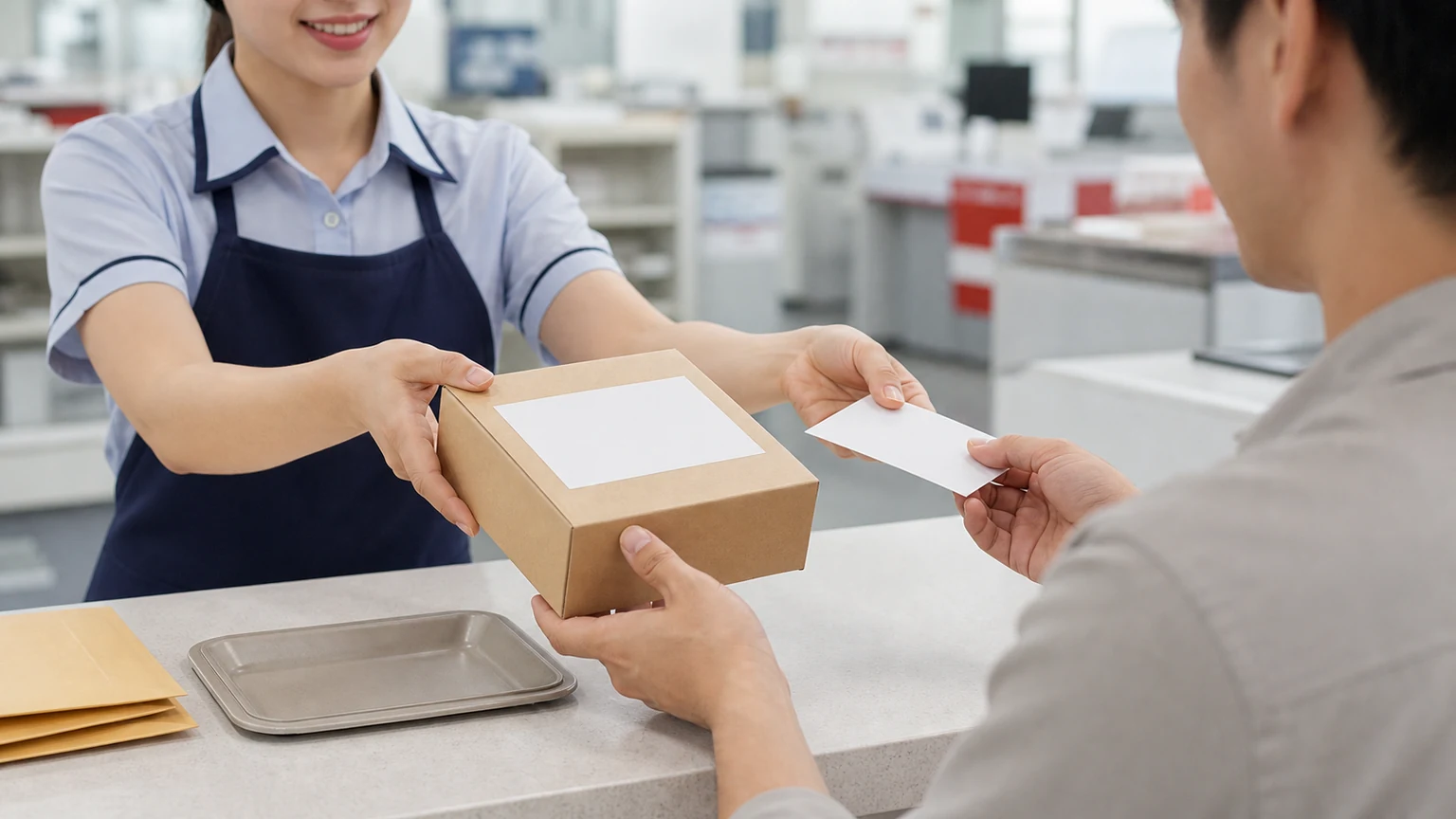
The receipt and waybill help you keep proof and track the delivery.
The first mistake is mixing 우편, 소포, and 택배. 우편 is the broad mail or postal-service word. 소포 and 택배 point more toward parcels and delivery.
The second mistake is writing the wrong person in the wrong field. 받는 사람 is the recipient. 보내는 사람 is the sender. On a form, check these two labels before you write the names and addresses.
The third mistake is treating 운송장 and 접수증 as the same thing. A waybill or shipping label helps with delivery information. A receipt of acceptance proves the post office accepted the item. Keep the proof until the delivery is finished.
Slide 5. Practice With BSKorean
Review the same word set before you use the post office again.
Practice this topic in BSKorean: Read the BSKorean app guide, then open the practice app. This exact article set keeps the post office words together so you can review mail, parcels, forms, fees, receipts, and tracking in one focused session.
A good practice habit is to say the task first: mail, parcel, registered mail, address form, fee, proof, or tracking. Then say the Korean word. This makes the post office less stressful because you are reading the service flow, not every possible notice on the wall.
Mini Review Table
If you see…
Think…
우체국
This is the post office.
소포
This is a parcel.
등기
This means registered mail.
주소
This is the address.
우편번호
This is the postal code.
받는 사람
This is the recipient.
운송장
This is the waybill or shipping label.
배송 조회
This means delivery tracking.
Final Takeaway
You do not need to understand every postal form to use a Korean post office. First identify the service, then separate the address fields, keep the proof, and use the tracking word when needed. These Korean post office words give you a simple order for sending mail or parcels with more confidence.
Convenience store Korean is useful every day. Start with 계산해 주세요, “please ring this up.” Then learn the fast checkout words: 봉투, 영수증, 카드 결제, and 전자레인지.
convenience store words helps learners practice Korean words in real situations. This BSKorean post keeps the lesson clear, scannable, and connected to app practice.
Convenience store words are useful when you buy a quick meal, ask for a bag, heat food, check a promotion, save membership points, recharge a transport card, or drop off a parcel in Korea. This lesson teaches convenience store words by task, so you can read the store more calmly instead of trying to translate every shelf label.
Start by identifying the task: food, checkout, promotion, or store service.
Briefing Summary
Situation
Using a Korean convenience store for food, checkout, promotions, and simple services
Practice focus
store, checkout, receipt, bag, food, microwave, discount, membership, transport card, and parcel words
Useful for
foreign residents, students, workers, travelers, and new tenants in Korea
Study time
8-12 minutes
Slide 1. The Situation
Imagine you walk into a 편의점. You may need food, the microwave, the checkout counter, a promotion, or a service. First decide the task. If you are paying, look for 계산대. If you need proof of purchase, ask for 영수증. If you have several items, you may need a 봉투.
This post is a Korean language lesson, not pricing, refund, parcel, transport card, tax, or membership policy advice. Store rules, refund conditions, parcel limits, transport card recharge limits, and membership terms should be confirmed with the store screen, the cashier, or the service provider.
Slide 2. Key Convenience Store Words
Checkout words help you ask about receipts, bags, and payment moments.
Korean
Romanization
English
Level
Use
편의점
pyeonuijeom
convenience store
BS1
The store itself.
계산대
gyesandae
checkout counter
BS2
Place where you pay.
영수증
yeongsujeung
receipt
BS1
Printed or digital receipt.
봉투
bongtu
shopping bag; envelope
BS1
At checkout, usually a shopping bag.
도시락
dosirak
lunch box; boxed meal
BS2
Convenience store boxed meal.
삼각김밥
samgak gimbap
triangle kimbap
BS2
Common ready-to-eat convenience store food.
컵라면
keop ramyeon
cup noodles
BS2
Instant cup noodles.
전자레인지
jeonjareinji
microwave
BS3
Microwave for convenience store meals.
데우다
deuda
to heat up; to warm up
BS3
Action for heating food.
얼음컵
eoreumkeop
ice cup
BS3
Cup of ice for drinks.
행사 상품
haengsa sangpum
promotional item; sale item
BS5
Item under a promotion.
할인
harin
discount
BS1
Discount word for prices and promotions.
멤버십 적립
membeosip jeongnip
membership point saving; point accumulation
BS4
Asking to save membership points.
교통카드 충전
gyotong kadeu chungjeon
transport card recharge
BS4
Store service for recharging a transport card.
택배 접수
taekbae jeopsu
parcel drop-off; parcel acceptance
BS4
Store service for parcel drop-off or acceptance.
Slide 3. Read the Store in Five Passes
Food and heating words often appear near the microwave or hot water area.
Pass 1: Place. Start with 편의점. It tells you the setting.
Pass 2: Food. Look for 도시락, 삼각김밥, 컵라면, and 얼음컵 when choosing a quick meal or drink.
Pass 3: Heat. Use 전자레인지 for the microwave and 데우다 for the action of heating food.
Pass 4: Checkout. At the 계산대, you may hear 영수증 or 봉투.
Pass 5: Promotions and services. For saving or asking, watch for 행사 상품, 할인, 멤버십 적립, 교통카드 충전, and 택배 접수.
Slide 4. Common Convenience Store Mistakes
Promotion words are useful, but the condition still matters.
The first mistake is reading 봉투 too narrowly. It can mean an envelope, but at a convenience store checkout it usually means a shopping bag. A short phrase like 봉투 하나 주세요 is practical when you need a bag.
The second mistake is mixing the machine with the action. 전자레인지 is the microwave. 데우다 means to heat something up. If you ask the cashier, 이거 데워 주세요 is a useful phrase.
The third mistake is assuming every 행사 상품 or 할인 is simple. Promotions can have conditions, dates, app membership rules, or card rules. Learn the word first, then check the condition if money matters.
Slide 5. Practice With BSKorean
Some convenience store words are service words, not normal checkout words.
Practice this topic in BSKorean: Read the BSKorean app guide, then open the practice app. This exact article set keeps the convenience store words together so you can review food, checkout, promotion, membership, and service words in one session.
A good practice habit is to say the task first: food, heat, checkout, promotion, or service. Then say the Korean word. This is especially helpful in a small store where the microwave, receipt printer, membership screen, and service counter may all be close together.
Mini Review Table
If you see…
Think…
편의점
This is the convenience store.
계산대
This is the checkout counter.
영수증
This is the receipt.
도시락
This is a boxed meal.
컵라면
These are cup noodles.
전자레인지
This is the microwave.
멤버십 적립
This means membership point saving.
택배 접수
This means parcel drop-off.
Final Takeaway
You do not need to understand every product label to use a Korean convenience store. First identify the task, then use the key word: 계산대 for checkout, 전자레인지 for heating food, 멤버십 적립 for points, and 택배 접수 for parcel drop-off. These Korean convenience store words give you a simple order for using the store more confidently.
parking lot words helps learners practice Korean words in real situations. This BSKorean post keeps the lesson clear, scannable, and connected to app practice.
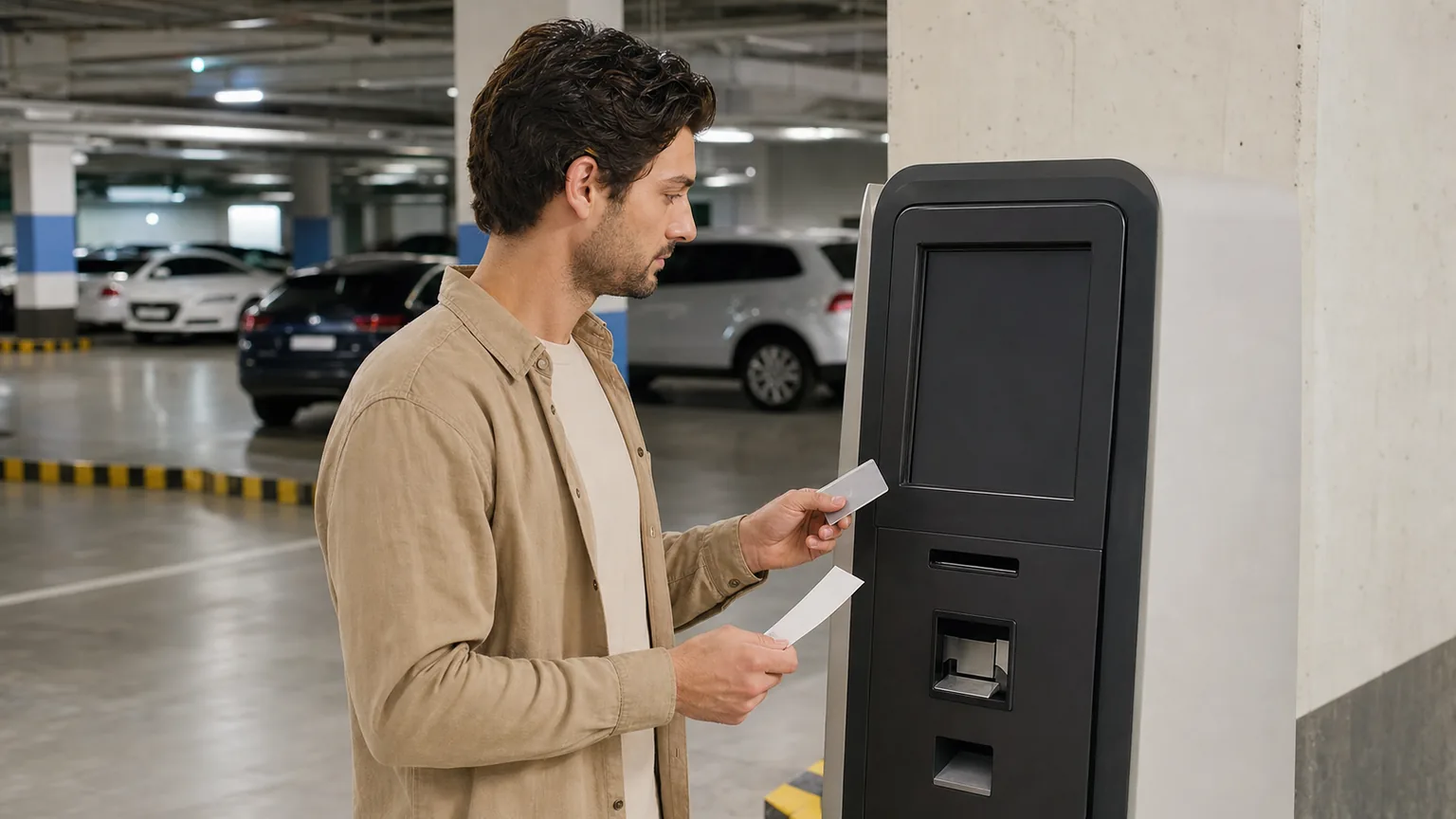
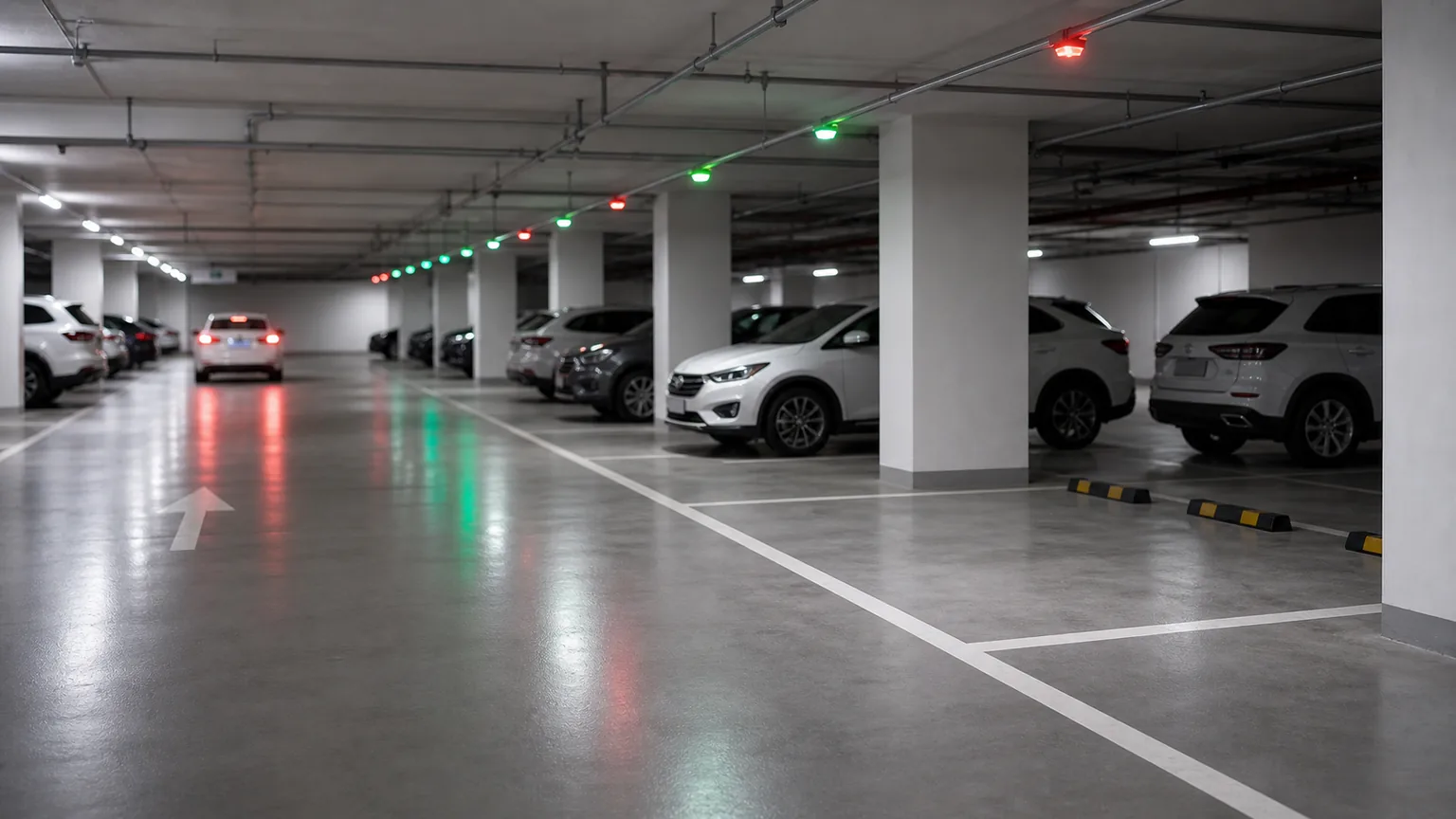
Parking lot words are useful when you drive, ride with someone, visit an apartment, go to a clinic, shop at a mart, or pay for parking in Korea. This lesson teaches parking lot words for the lot, ticket, fee, payment machine, free or paid parking, full lots, vehicle numbers, and exit gates.
Start with the place and gate words before reading every sign.
Briefing Summary
Situation
Using a parking lot or parking garage in Korea
Practice focus
place, ticket, payment, fee, status, vehicle number, and exit words
Useful for
foreign residents, students, workers, drivers, and visitors in Korea
Study time
8-12 minutes
Slide 1. The Situation
Imagine you enter a 주차장 and see a gate, a payment kiosk, and several signs. First identify the place and action: 주차 means parking, and 주차하다 means to park. Then scan for the ticket, fee, availability, and exit words.
This post is a Korean language lesson, not parking law, fine, towing, disabled parking eligibility, payment dispute, or building management advice. Real rules, fees, permit requirements, and penalties should be confirmed with the posted notice, parking operator, building office, or responsible authority.
Slide 2. Key Parking Lot Words
Ticket and payment words often appear near the kiosk or gate.
Korean
Romanization
English
Level
Use
주차장
juchajang
parking lot
BS1
The parking lot or parking area.
주차
jucha
parking
BS1
The general idea of parking.
주차하다
juchahada
to park
BS2
The action of parking a vehicle.
주차권
juchagwon
parking ticket
BS3
Ticket issued when entering or paying for parking.
정산기
jeongsangi
payment machine; fare adjustment machine
BS4
Machine used to settle or pay the parking fee.
주차요금
jucha yogeum
parking fee
BS3
Amount paid for parking.
무료 주차
muryo jucha
free parking
BS3
Parking that does not require payment for a stated period.
유료 주차
yuryo jucha
paid parking
BS3
Parking that requires payment.
입차
ipcha
vehicle entry
BS4
Vehicle entering a parking area.
출차
chulcha
vehicle exit
BS4
Vehicle leaving a parking area.
만차
mancha
full parking lot; no spaces
BS3
Status word meaning there are no parking spaces.
공영주차장
gongyeong juchajang
public parking lot
BS4
Public parking lot, often operated by a local authority or public system.
장애인 주차구역
jangaein jucha guyeok
accessible parking area
BS4
Designated accessible parking area.
차단기
chadangi
parking barrier gate
BS4
Parking gate or barrier arm at entry or exit.
차량번호
charyang beonho
vehicle number; license plate number
BS3
Vehicle number used for lookup or payment.
Slide 3. Read the Parking Lot in Five Passes
Status words tell you whether you can enter, park, or keep looking.
Pass 1: Place. Find 주차장 or 공영주차장 first.
Pass 2: Ticket or lookup. Keep the 주차권 or enter the 차량번호 if the machine asks for it.
Pass 3: Fee. Look for 정산기, 주차요금, 무료 주차, and 유료 주차.
Pass 4: Status. If you see 만차, the lot is full. If you see 장애인 주차구역, check whether your vehicle is permitted.
Pass 5: Exit. Use 입차, 출차, and 차단기 to understand the entry and exit flow.
Slide 4. Common Parking Lot Mistakes
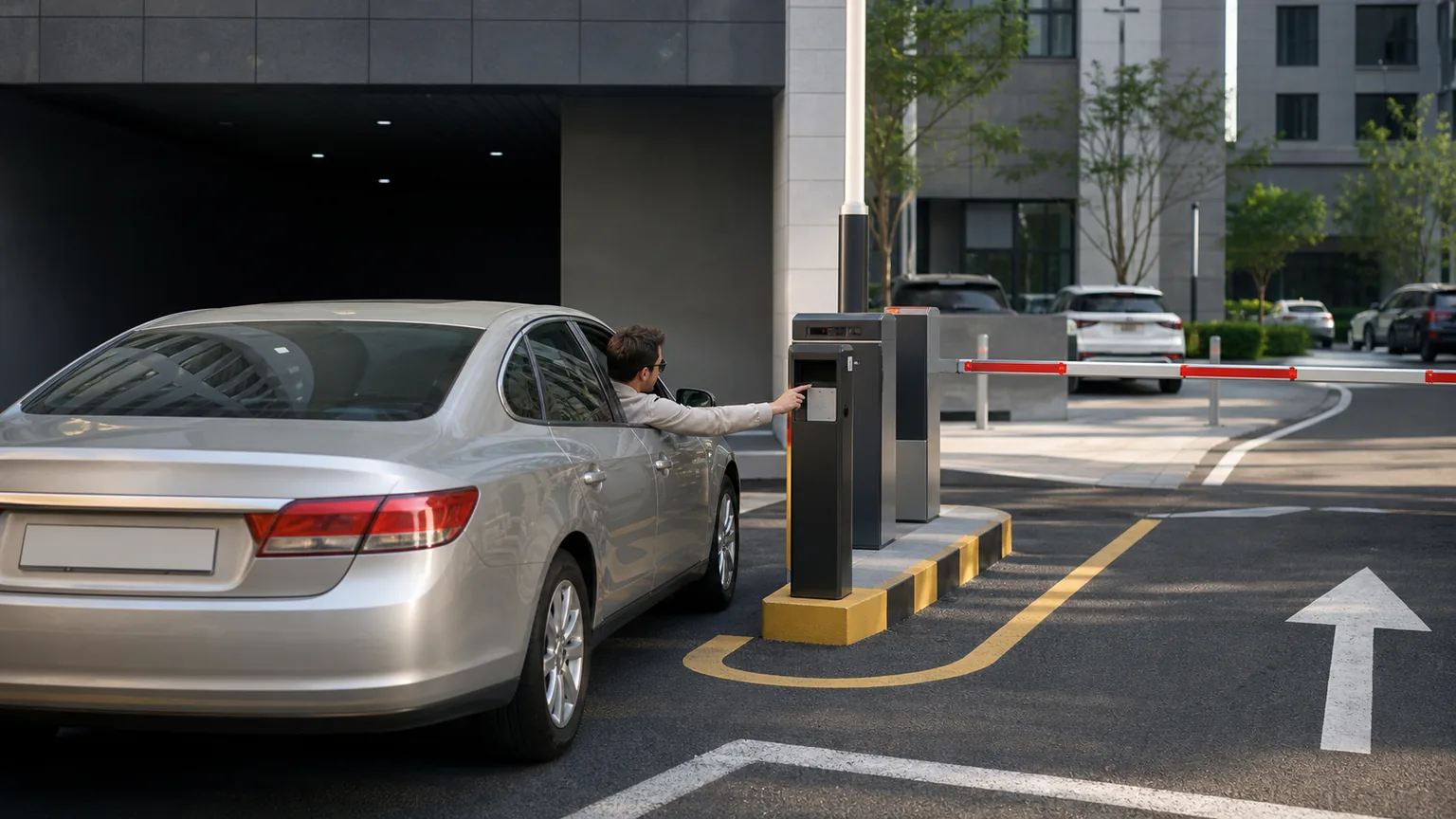
Exit words help you leave after payment without mixing up entry and exit.
The first mistake is mixing the fee with free parking. 주차요금 is the parking fee. 무료 주차 means free parking, often for a fixed time or condition.
The second mistake is mixing entry and exit. 입차 means vehicle entry. 출차 means vehicle exit. The words may appear on lane signs, receipts, or payment screens.
The third mistake is reading 차단기 too broadly. In a parking lot, it usually means the gate or barrier arm. In other contexts, it can mean a breaker or blocking device, so context matters.
Slide 5. Practice With BSKorean
Practice the same 15 words, then use the scan order in a real parking lot.
Practice this topic in BSKorean: Read the BSKorean app guide, then open the practice app. This exact article set keeps the parking lot words together so you can review place, ticket, fee, status, vehicle number, and exit words in one focused session.
A good practice habit is to say the scan order first: place, ticket, fee, status, exit. Then say the Korean word. This makes a real parking lot easier to read when several signs and payment screens appear at once.
Mini Review Table
If you see…
Think…
주차장
This is the parking lot.
주차권
This is the parking ticket.
정산기
This is the payment machine.
주차요금
This is the parking fee.
무료 주차
This means free parking.
만차
This means the lot is full.
출차
This means vehicle exit.
차량번호
This is the vehicle number.
Final Takeaway
You do not need to translate every parking notice at once. First find the place, keep the ticket or vehicle number, check the fee, then follow the exit words. These Korean parking lot words give you a practical order for using parking areas more confidently.
Shared laundry room Korean should be practical immediately. Start with 세탁기 사용하고 싶어요, “I want to use the washing machine.” Then check 건조기, 세제, 동전, and 카드 결제.
laundry room words helps learners practice Korean words in real situations. This BSKorean post keeps the lesson clear, scannable, and connected to app practice.
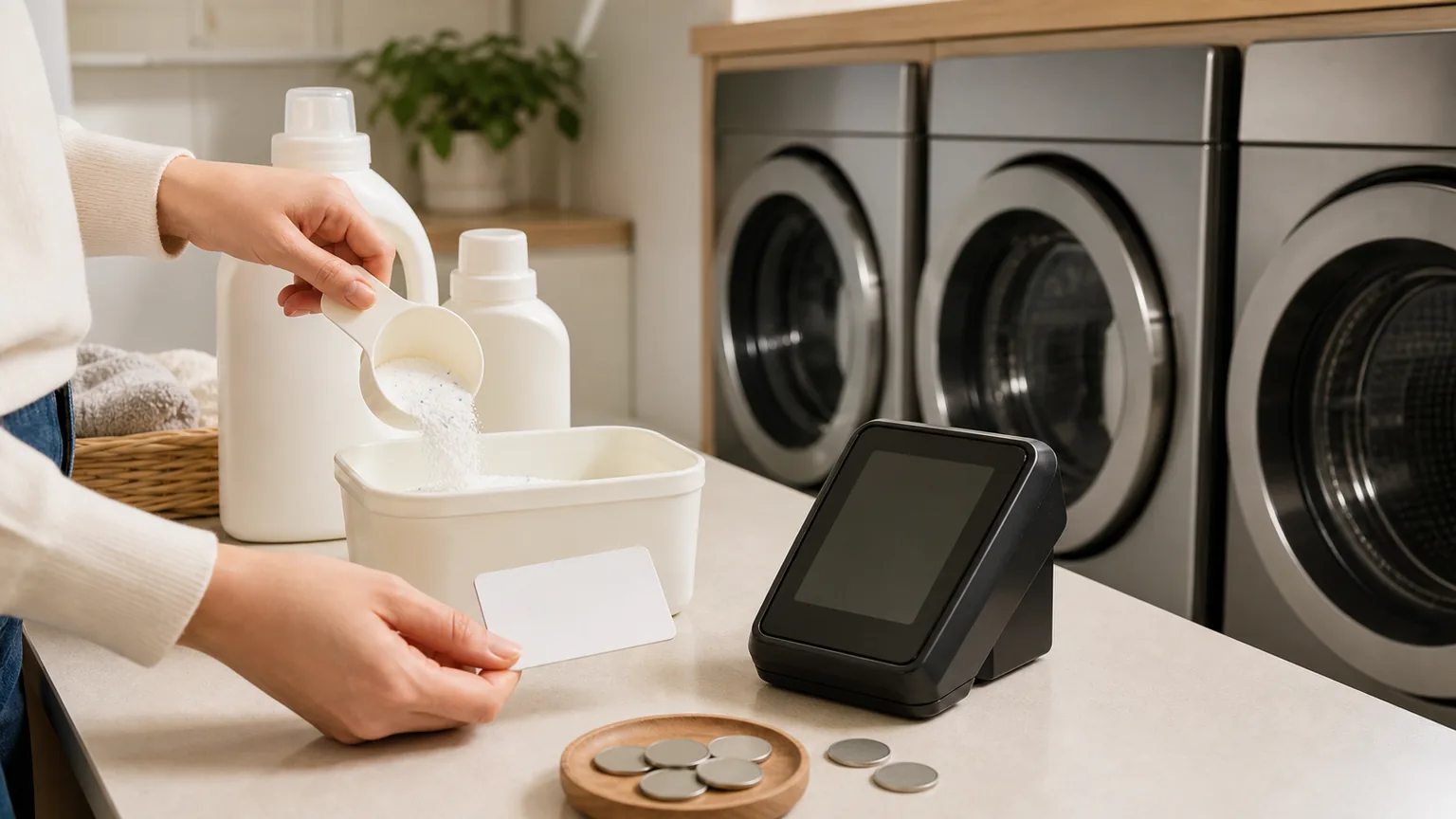
Laundry room words are useful when you use a shared washing machine or dryer in an apartment, officetel, dormitory, guesthouse, or workplace housing area in Korea. This lesson helps you recognize the words for the laundry room, machines, detergent, payment, wash cycles, problems, and help notices.
Start with the room and machine words before reading every label.
Briefing Summary
Situation
Using a shared laundry room in Korea
Practice focus
room, machine, supplies, payment, controls, problem, and inquiry words
Useful for
foreign residents, students, workers, and new tenants in Korea
Study time
8-12 minutes
Slide 1. The Situation
Imagine you enter a shared 세탁실 and see several machines. First identify the place and the machine: 세탁기 for the washing machine and 건조기 for the dryer. Then look for supplies, payment, controls, and help words.
This post is a Korean language lesson, not building management, machine safety, payment, or repair advice. Real machine rules, fees, and repair procedures should be confirmed with the responsible office, staff, or posted instructions.
Slide 2. Key Laundry Room Words
Supplies and payment words often appear near the machine.
Korean
Romanization
English
Level
Use
세탁실
setaksil
laundry room
BS2
The shared laundry room or laundry area.
세탁기
setakgi
washing machine
BS1
The washing machine.
건조기
geonjogi
dryer; drying machine
BS2
The dryer machine.
빨래
ppallae
laundry; clothes to wash
BS1
Laundry or clothes being washed.
세제
seje
detergent
BS2
Detergent for washing.
섬유유연제
seomyu yuyeonje
fabric softener
BS4
Fabric softener.
투입구
tuipgu
insertion slot; input opening
BS4
Slot or opening for coins, detergent, or items.
동전
dongjeon
coin
BS1
Coin payment word.
카드 결제
kadeu gyeolje
card payment
BS2
Card payment for the machine or service.
사용법
sayongbeop
instructions; how to use
BS3
How-to-use instructions.
세탁 코스
setak koseu
wash cycle; laundry course
BS4
Wash-cycle control.
헹굼
henggum
rinse; rinsing
BS4
Rinse step on a washing machine.
탈수
talsu
spin-dry; water extraction
BS4
Spin-dry or water extraction step.
고장
gojang
breakdown; out of order
BS2
Problem or out-of-order word.
문의
munui
inquiry; question
BS2
Inquiry or contact word.
Slide 3. Read the Laundry Room in Five Passes
Control words help you choose a cycle without translating every button.
Pass 1: Place and machine. Find 세탁실, 세탁기, and 건조기 first.
Pass 2: Supplies. Look for 세제, 섬유유연제, and 투입구 before adding anything.
Pass 3: Payment. Check whether the machine uses 동전 or 카드 결제.
Pass 4: Controls. Read 사용법, then find 세탁 코스, 헹굼, and 탈수.
Pass 5: Problem and help. If something is wrong, use 고장 and 문의 to ask clearly.
Slide 4. Common Laundry Room Mistakes
Problem and inquiry words make a question clearer.
The first mistake is mixing the dryer and the wash cycle. 건조기 is the dryer machine. 세탁 코스 is the wash cycle selection.
The second mistake is mixing detergent and fabric softener. 세제 and 섬유유연제 may go into different parts of the drawer or machine, so read the nearby words before adding them.
The third mistake is treating a problem word as an instruction. 고장 tells you something is broken or out of order. 문의 helps you ask where to get help.
Slide 5. Practice With BSKorean
Practice the words first, then use the same scan order in a real laundry room.
Practice this topic in BSKorean: Read the BSKorean app guide, then open the practice app. This exact article set keeps the laundry room words together so you can review the room, machine, supplies, payment, controls, and help terms in one session.
A good practice habit is to say the group first: place, machine, supply, payment, control, problem, or help. Then say the Korean word. This makes the real laundry room easier to scan when there are many buttons and small labels.
Mini Review Table
If you see…
Think…
세탁실
This is the shared laundry room.
세탁기
This is the washing machine.
건조기
This is the dryer.
세제
This is detergent.
카드 결제
This means card payment.
세탁 코스
This means a wash cycle.
탈수
This means spin-dry.
고장
This means breakdown or out of order.
Final Takeaway
You do not need to translate every laundry room notice at once. First find the room and machine words, then supplies, payment, controls, and help words. These Korean laundry room words give you a simple order for using a shared washing machine or dryer more confidently.
Many foreign residents in Korea receive a monthly apartment notice with several short Korean billing words. The total amount may include the management fee, electricity, water, heating, cleaning, elevator, security, and shared facility costs. The key word is 관리비, which means apartment management fee. The payment deadline is usually marked as 납부 기한, and unpaid charges may be shown as 미납.
Before you pay, check three things: the billing month, the total amount, and whether previous unpaid fees are included. If the bill looks higher than usual, take a photo and ask the management office: 이번 달 관리비가 왜 높아요? If you need another printed notice, ask 고지서를 다시 받을 수 있어요?
Words you may see on a fee notice
Bill word
Meaning
Question to ask
관리비
management fee
관리비는 어디에 내요?
전기료
electricity fee
전기료가 포함되어 있어요?
수도료
water fee
수도료가 얼마예요?
납부 기한
payment deadline
납부 기한이 언제예요?
미납
unpaid balance
미납 금액이 있어요?
What to do when you are not sure
Bring the bill to the management office and ask one short question at a time. If you pay by transfer, save the transfer receipt and match the amount to the bill. For related daily life tasks, study bank transfer words and problem report phrases. These help when you need to explain a billing problem clearly.
apartment management fee words guide
apartment management fee words helps learners practice Korean words in real situations. This BSKorean post keeps the lesson clear, scannable, and connected to app practice.
Apartment management fee words are useful when you receive a Korean bill notice in an apartment, officetel, dormitory, or shared housing building. This lesson helps you recognize the words for management fees, payment notices, due dates, utility rows, automatic transfer, late fees, payment confirmation, and management office inquiries.
Start with the notice type, then scan the amount, deadline, utility rows, and office contact.
Briefing Summary
Situation
Reading an apartment management fee notice in Korea
Practice focus
bill type, amount, due date, payment route, utility rows, and office inquiry words
Useful for
foreign residents, students, workers, and new apartment tenants in Korea
Study time
8-12 minutes
Slide 1. The Situation
Imagine you open your mailbox or check the apartment notice board and see a monthly notice. Do not read every line first. Start with the document type: 고지서. Then find the main fee word 관리비, the details phrase 관리비 내역, the payment amount, the payment deadline, and the office contact.
This is a Korean language lesson, not housing, legal, billing, or payment advice. Real amounts, due dates, bank procedures, and building rules should be confirmed with the responsible office or service provider.
Slide 2. Key Apartment Management Fee Words
The visual is text-free; the exact Korean words are in the table below.
Korean
Romanization
English
Level
Use
관리비
gwallibi
maintenance fee; management fee
BS2
Main monthly apartment fee word.
관리비 내역
gwallibi naeyeok
maintenance fee details; management fee statement
BS4
Line-item details on a management fee notice.
고지서
gojiseo
payment notice; bill notice
BS3
Bill or payment notice document.
납부
napbu
payment
BS3
Payment action on notices.
납부 기한
napbu gihan
payment deadline; due date
BS4
Due date printed on a bill.
납부 금액
napbu geumaek
payment amount
BS5
Amount that should be paid.
연체료
yeoncheryo
late fee; overdue charge
BS4
Late-fee word on payment notices.
자동이체
jadong iche
automatic bank transfer; autopay
BS4
Autopay or automatic transfer status.
계좌번호
gyejwa beonho
account number
BS4
Account number shown for transfer payment.
입금 확인
ipgeum hwagin
payment confirmation; deposit confirmation
BS4
Confirmation after sending money.
공과금
gonggwageum
utility bills
BS3
General utility fee category.
수도요금
sudo yogeum
water bill
BS2
Water utility row.
전기요금
jeongi yogeum
electricity bill
BS2
Electricity utility row.
난방비
nanbangbi
heating bill
BS3
Heating fee row.
관리사무소
gwalli samuso
management office
BS4
Office to ask about an apartment notice.
Slide 3. Scan the Notice in Four Passes
Use the words to ask a precise question at the management office.
Pass 1: Bill type. Look for 고지서, 관리비, and 관리비 내역. These tell you whether the paper is a bill notice and what kind of fee it covers.
Pass 2: Amount and deadline. Find 납부 금액 and 납부 기한. Do not confuse the amount row with the due date row.
Pass 3: Utility rows. Check 공과금, 수도요금, 전기요금, and 난방비. These words often explain why the total amount changed.
Pass 4: Payment and contact. Look for 납부, 자동이체, 계좌번호, 입금 확인, and 관리사무소.
Slide 4. Common Notice Mistakes
Payment words help you avoid mixing amount, deadline, and transfer route.
The first mistake is mixing the bill and the details. 고지서 is the notice itself. 관리비 내역 means the detailed breakdown. If you only know 관리비, you may still miss the rows that explain the total.
The second mistake is mixing the due date and the amount. 납부 기한 tells you the deadline. 납부 금액 tells you the amount. 연체료 is the word to notice when a payment is late.
The third mistake is treating autopay as proof. 자동이체 means automatic transfer or autopay. 입금 확인 means payment confirmation. They are related, but they are not the same word.
Slide 5. Practice With BSKorean
Practice the set first, then read a real notice with the same scan order.
Practice this topic in BSKorean: Read the BSKorean app guide, then open the practice app. Use this exact article set to review the Korean word, romanization, English meaning, and apartment management fee situation together.
A useful habit is to read the notice in the same order every time: bill type, amount and deadline, utility rows, then payment and contact. That order makes the Korean easier to process when the notice has many numbers.
Mini Review Table
If you see…
Think…
관리비
This is the main monthly apartment fee word.
관리비 내역
This points to the line-item statement.
고지서
This means a bill or payment notice.
납부 기한
This means the due date.
납부 금액
This means the amount to pay.
자동이체
This means automatic transfer or autopay.
입금 확인
This means payment confirmation.
관리사무소
This is the management office.
Final Takeaway
You do not need to translate a whole apartment notice at once. First identify the notice, then find the fee details, amount, deadline, utility rows, payment route, and office contact. These Korean apartment management fee words give you a practical reading order for real notices.
fire emergency sign words helps learners practice Korean words in real situations. This BSKorean post keeps the lesson clear, scannable, and connected to app practice.
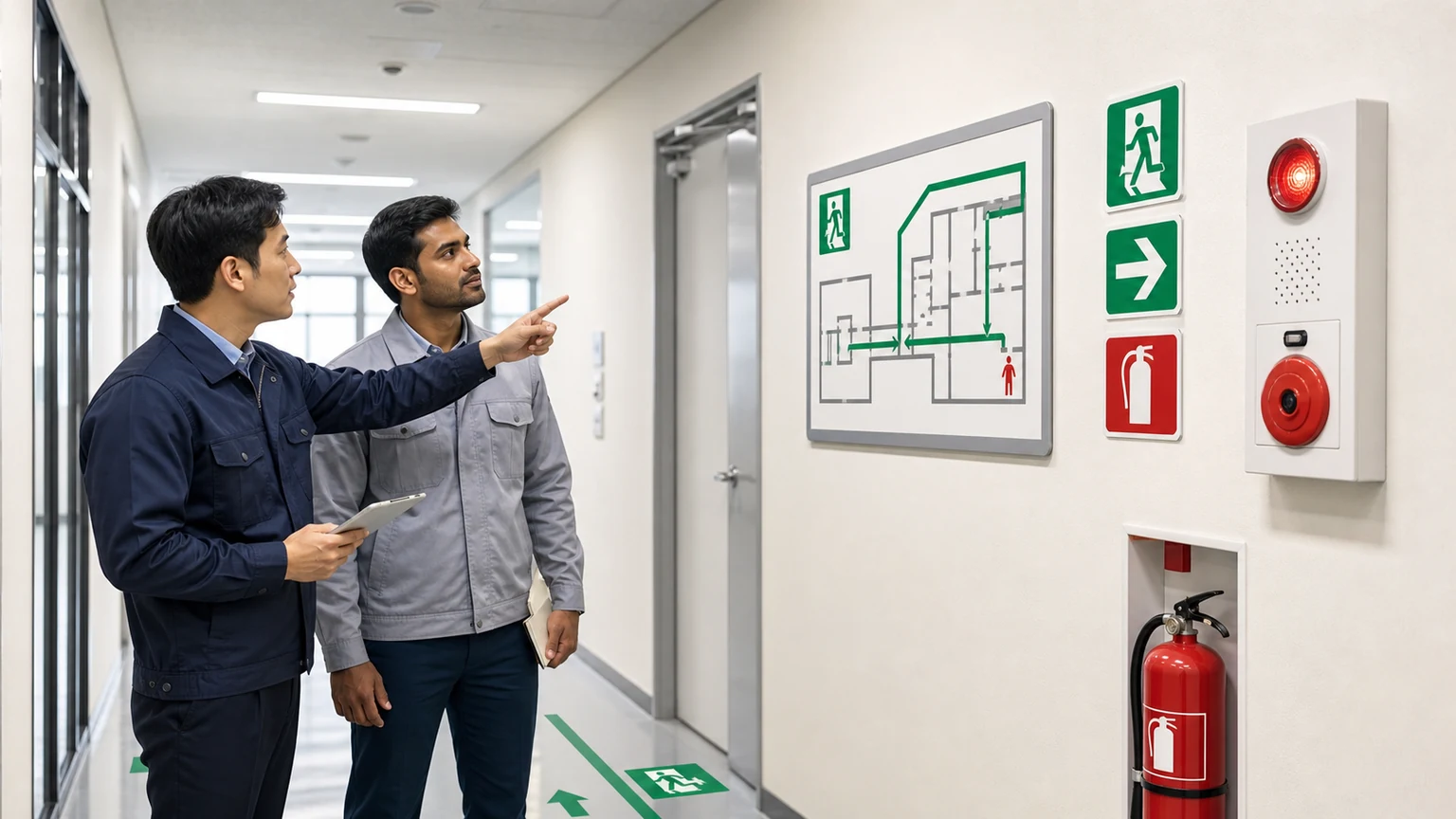
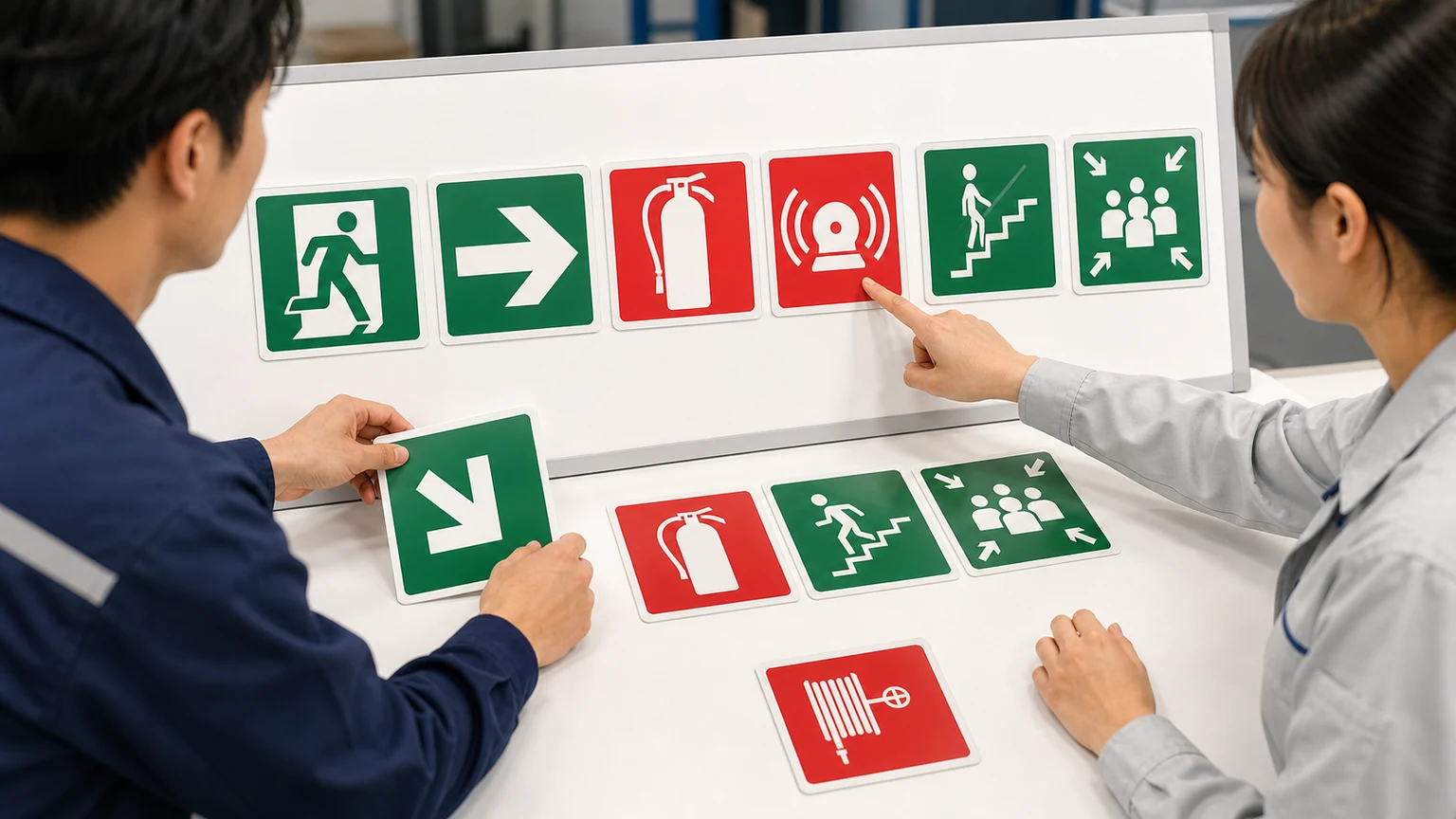
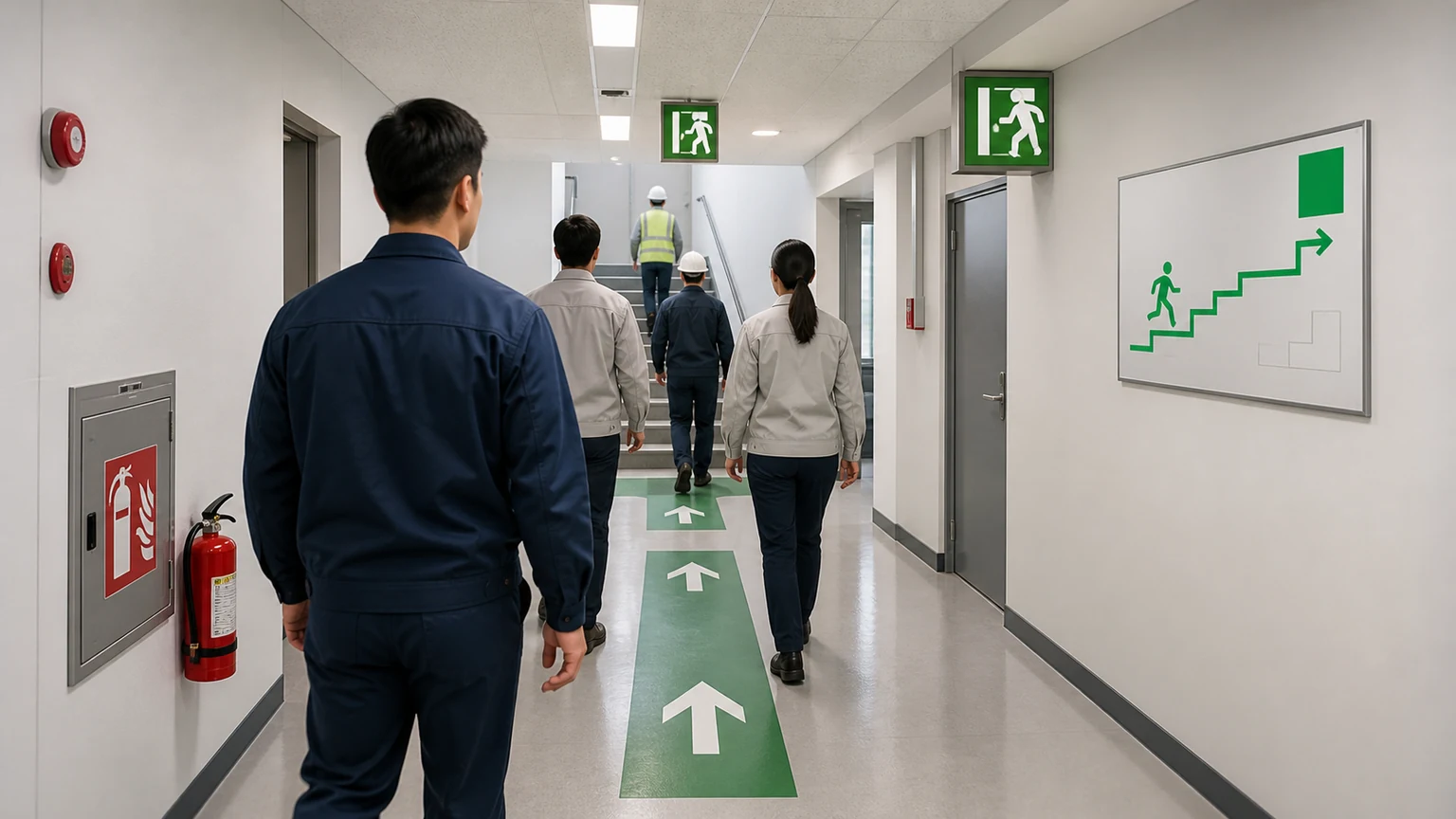
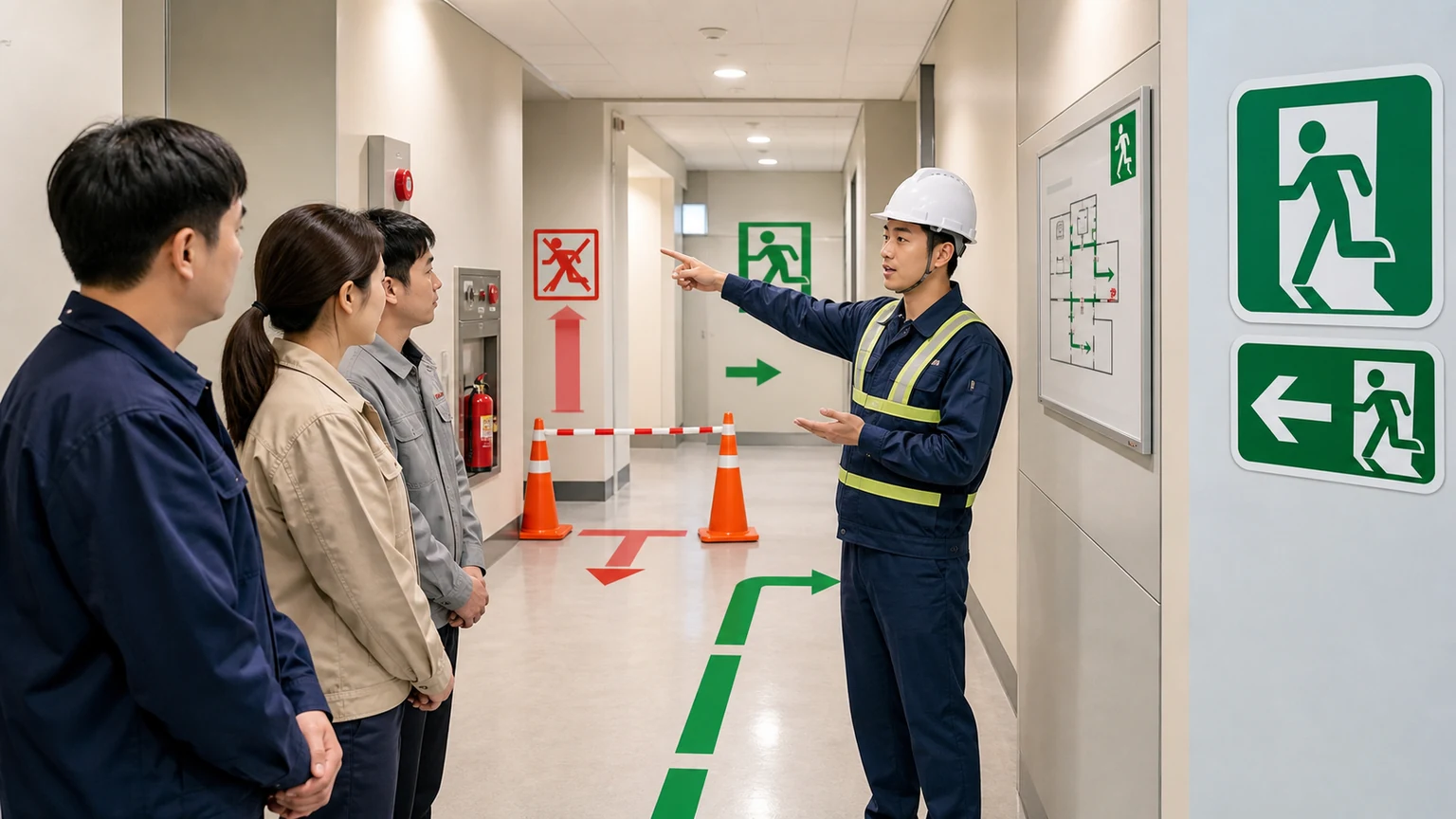
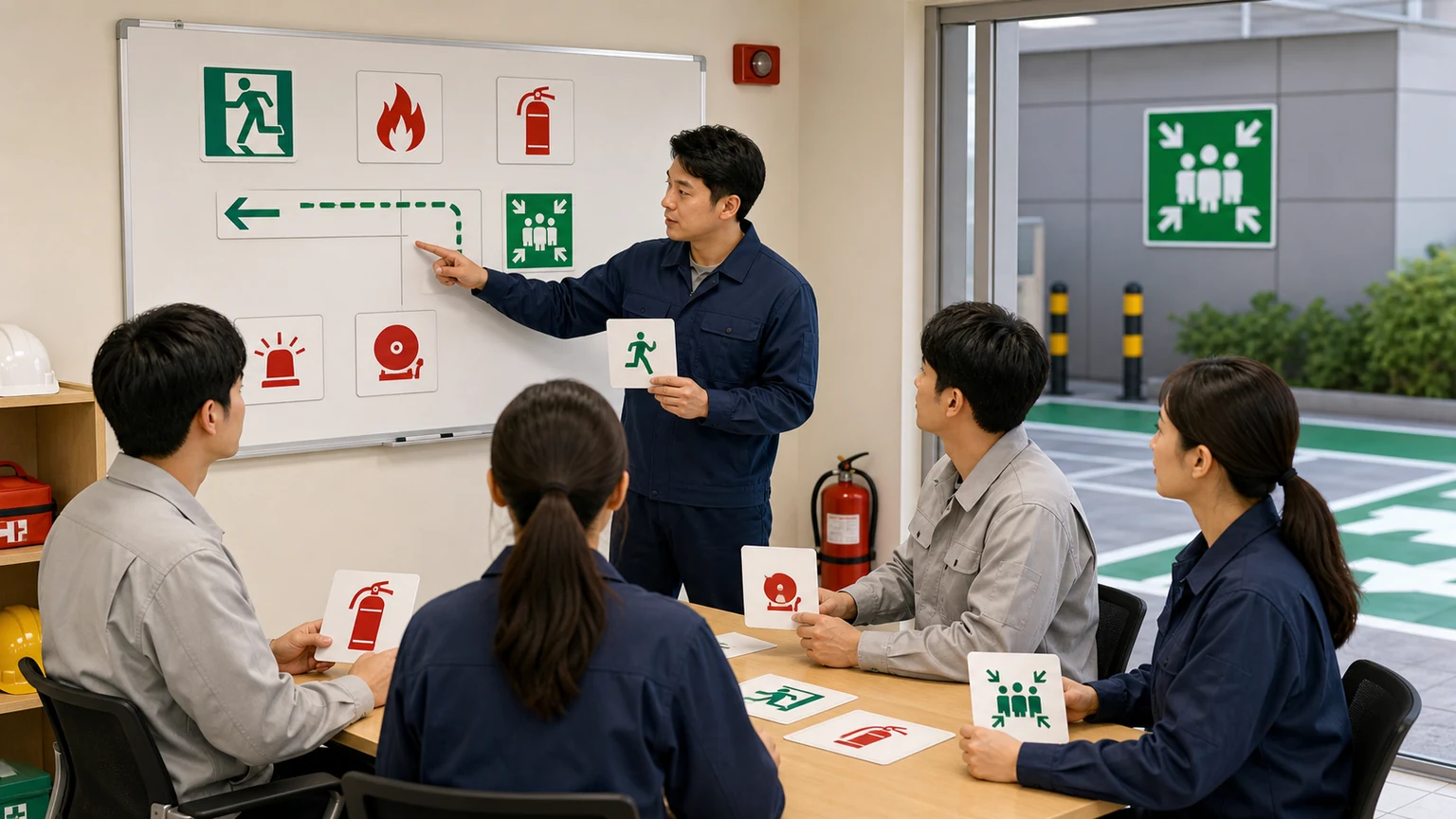
Korean fire and emergency sign words are useful when you work in a building, factory, kitchen, warehouse, school, or public facility in Korea. This lesson helps you recognize the words for safety, danger, caution, no entry, emergency exits, evacuation routes, fire extinguishers, alarms, and non-smoking areas.
Start with the real moment: see the sign family before reading the word.
Briefing Summary
Situation
Reading Korean fire and emergency signs at work or in a public building
Practice focus
warning, prohibition, emergency exit, evacuation route, fire equipment, alarm, and non-smoking area words
Useful for
foreign workers, factory workers, service workers, students, and residents in Korea
Study time
8-12 minutes
Slide 1. The Situation
Imagine you are walking through a workplace hallway and see several colored signs. You may not understand the whole notice yet, but you can still start with the sign family. Look for 안전, 위험, 주의, and 금지. These words tell you whether the sign is about safety, danger, caution, or a prohibited action.
This post is a Korean language lesson, not emergency-response, legal, workplace safety, or compliance advice. In a real emergency or safety question, follow the trained local procedure and ask the responsible person. The goal here is to help you recognize the Korean words on the sign.
Slide 2. Key Fire and Emergency Sign Words
The image stays text-free; the Korean sign words are in the table below.
Exit and evacuation words connect the sign to a place and route.
Step 1: Identify the sign family. Look for 위험, 주의, and 금지. These words tell you whether the sign is warning you, limiting entry, or banning an action.
Step 2: Find exit and route words. Look for 비상구, 비상구 확인, 대피, 대피로, and 대피로 확보. These connect the sign to a place or route.
Step 3: Find equipment and alarm words. Look for 화재, 소화기, 소화전, and 비상벨. These words point to fire, fire equipment, or an alarm.
Slide 4. Common Sign Mistakes
Do not read every red or green sign as the same message.
The first mistake is reading every red sign as the same message. 금지 means prohibition, but 소화기 and 소화전 are equipment words. A red sign may mean “do not,” “fire equipment,” or another important category.
The second mistake is seeing an exit sign but not reading the route words. 비상구 is the emergency exit word. 대피로 is the evacuation route word. 대피로 확보 is a phrase about keeping that route clear.
The third mistake is skipping area words. 출입 금지 marks an entry restriction. 금연 구역 marks a non-smoking area. These are not the same as route words, so use them as labels when asking what a sign means.
Slide 5. Practice With BSKorean
Practice recognition first, then use the words when you see a real sign.
Practice this topic in BSKorean: Read the BSKorean app guide, then open the practice app. Use this article set to practice Korean word, romanization, English meaning, and the fire/emergency sign situation together.
A useful habit is to say the group first: warning, prohibition, exit, evacuation route, fire equipment, or alarm. Then say the Korean word. This makes signs easier to read when you are busy or nervous.
Mini Review Table
If you see…
Think…
위험
This is a danger or hazard word.
주의
This is a caution word.
출입 금지
This marks an area you should not enter.
비상구
This points to an emergency exit.
대피로
This points to an evacuation route.
소화기
This is the fire extinguisher word.
비상벨
This is the emergency bell word.
금연 구역
This marks a non-smoking area.
Final Takeaway
You do not need to understand every long safety notice to begin reading signs better. First identify the sign family, then find the exit, route, fire equipment, alarm, or restricted-area word. These Korean fire and emergency sign words help you ask clearer questions and practice the signs you see in real places.
A Korean payslip usually separates money you earned from money deducted. Start with the question 급여명세서를 확인하고 싶어요, “I want to check my payslip.” Then look for 기본급, 수당, 공제, 세금, and 실수령액.
Korean payslip words helps learners practice Korean words in real situations. This BSKorean post keeps the lesson clear, scannable, and connected to app practice.
Korean payslip words help you understand what happened to your pay: the salary amount, hourly wage, pre-tax amount, deductions, insurance lines, net pay, pay date, account, and deposit. This lesson is for language recognition, so you can find the important words before asking payroll a clearer question.
Start with the real moment: a payslip arrives and you need to find the important parts.
Briefing Summary
Situation
Reading a Korean payslip after payday
Practice focus
salary, hourly wage, pre-tax amount, deductions, insurance, net pay, pay date, account, and deposit words
Useful for
foreign workers, factory workers, service workers, and anyone paid by salary or hourly wage in Korea
Study time
8-12 minutes
Slide 1. The Payslip Moment
Imagine you receive a 급여명세서 after payday. The first question is simple: what was paid, what was deducted, and what arrived in your account? Start with 급여, 세전 금액, 공제, and 실수령액. These words give you the basic map of the page.
This post is a Korean language lesson, not tax, labor, or financial advice. If you think a real payslip is wrong, ask payroll, a local help center, or a qualified professional. The goal here is to help you recognize the words that deserve a question.
Slide 2. Key Korean Payslip Words
The image stays text-free; the payslip words are in the table below.
Korean
Romanization
English
Level
Use
급여
geubyeo
salary; pay
BS2
Main pay word on a payslip.
급여명세서
geubyeo myeongseoseo
payslip; pay statement
BS5
The document that explains pay.
월급
wolgeup
monthly salary
BS1
Monthly salary amount.
시급
sigeup
hourly wage
BS2
Hourly pay rate.
세전 금액
sejeon geumaek
pre-tax amount
BS5
Amount before taxes and deductions.
공제
gongje
deduction
BS4
Money subtracted from pay.
소득세
sodeukse
income tax
BS5
Income tax line.
국민연금
gungmin yeongeum
national pension
BS5
National pension deduction line.
건강 보험
geongang boheom
health insurance
BS4
Health insurance deduction line.
고용보험
goyong boheom
employment insurance
BS5
Employment insurance deduction line.
산재보험
sanjae boheom
industrial accident insurance
BS5
Workplace accident insurance line.
실수령액
silsuryeong-aek
net pay; take-home pay
BS5
Final amount you receive.
지급일
jigeubil
pay date
BS3
Date the pay is issued.
계좌
gyejwa
bank account
BS1
Bank account for payment.
입금
ipgeum
deposit
BS1
Deposit into the bank account.
Slide 3. Read a Payslip in 3 Steps
A payslip explains the amount; a bank deposit confirms what arrived.
Step 1: Find the pay type. Look for 급여, 월급, and 시급. These tell you whether the page is talking about pay, monthly salary, or hourly wage.
Step 2: Compare before and after deductions. Find 세전 금액, 공제, and 실수령액. This helps you separate the starting amount from the final amount.
Step 3: Match the final amount to your bank. Check 지급일, 계좌, and 입금. These words connect the payslip to the bank deposit.
Slide 4. Deductions and Insurance Words
Deduction and insurance words are the parts that often need a question.
The word 공제 means deduction. It is the big category for money subtracted from pay. On many payslips, you may also see insurance or tax words such as 소득세, 국민연금, 건강 보험, 고용보험, and 산재보험.
Do not try to solve every number from vocabulary alone. Use these words as labels. If a line looks unexpected, point to the Korean word and ask: “What is this item?” or “Why was this deducted?” That is a practical first step.
Slide 5. Practice With BSKorean
Practice recognition first, then use the words when reading a real payslip.
Practice this topic in BSKorean: Read the BSKorean app guide, then open the practice app. Use this article set to practice Korean word, romanization, English meaning, and the payslip situation together.
A useful habit is to group the page first: pay, deductions, insurance, final amount, date, and bank. Then say the Korean word. That makes a busy payslip easier to scan.
Mini Review Table
If you see…
Think…
급여명세서
This tells you the page is a payslip or pay statement.
세전 금액
This is the amount before taxes and deductions.
공제
This means a deduction from pay.
건강 보험
This points to the health insurance line.
실수령액
This is the final take-home amount.
지급일
This is the pay date.
계좌
This is the bank account.
입금
This means the money was deposited.
Final Takeaway
You do not need to understand every small number to begin reading a payslip. First find the payslip word, then the pay, deduction, insurance, net pay, pay date, account, and deposit words. These Korean payslip words help you ask better questions when your pay arrives.