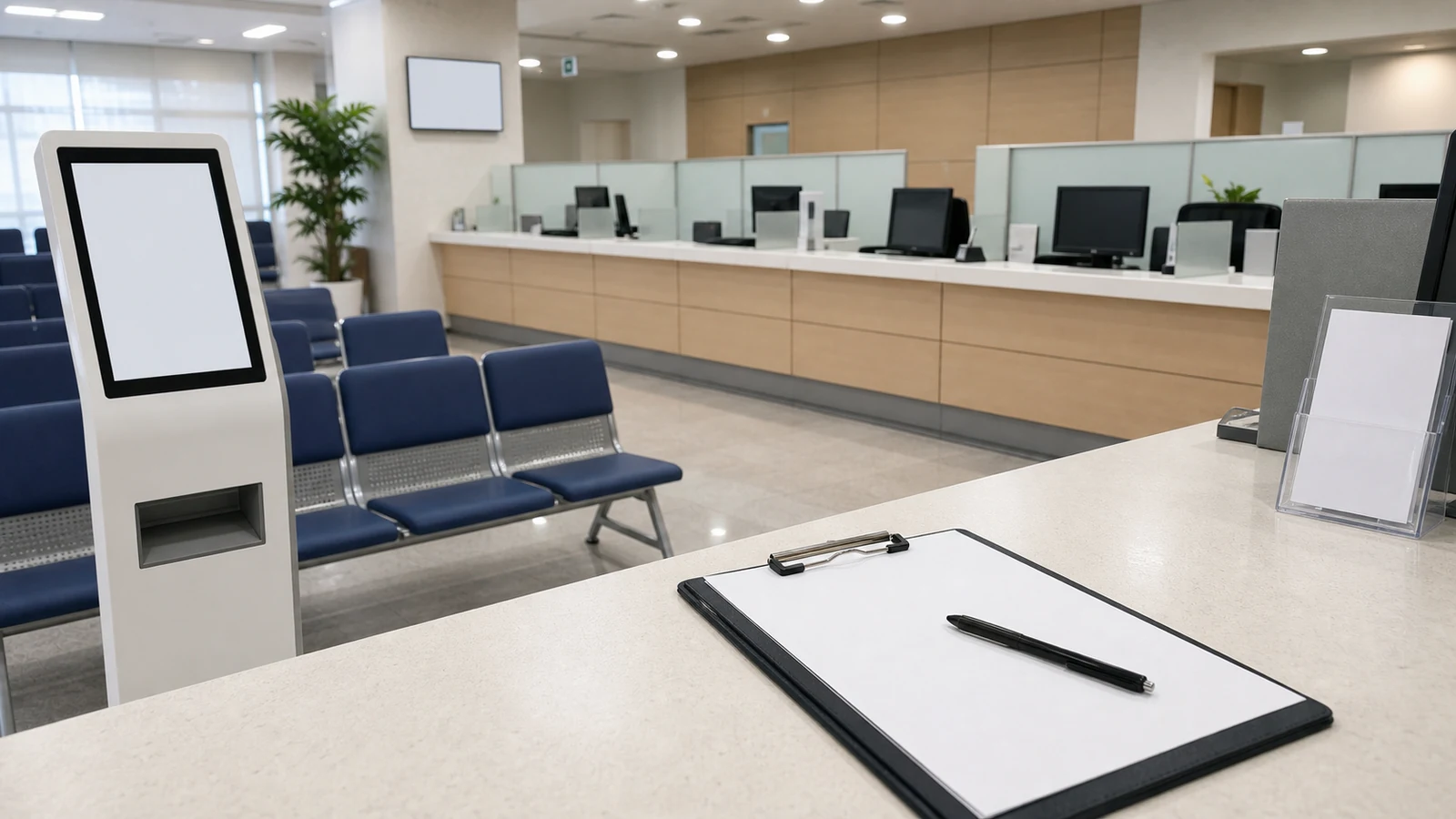
Kosakata bahasa Korea untuk kantor pos membantu pelajar melatih kata bahasa Korea dalam situasi nyata. Artikel BSKorean ini dibuat jelas, mudah dipindai, dan terhubung dengan latihan aplikasi.
Panduan Kosakata bahasa Korea untuk kantor pemerintahan
Kosakata bahasa Korea untuk kantor pemerintahan membantu pelajar melatih kata bahasa Korea dalam situasi nyata. Artikel BSKorean ini dibuat jelas, mudah dipindai, dan terhubung dengan latihan aplikasi.
Từ vựng tiếng Hàn cho bưu điện giúp người học luyện từ tiếng Hàn trong tình huống thực tế. Bài BSKorean này giữ nội dung rõ ràng, dễ xem và liên kết với phần luyện tập.
Hướng dẫn Từ vựng tiếng Hàn cho cơ quan hành chính
Từ vựng tiếng Hàn cho cơ quan hành chính giúp người học luyện từ tiếng Hàn trong tình huống thực tế. Bài BSKorean này giữ nội dung rõ ràng, dễ xem và liên kết với phần luyện tập.
At a Korean post office, start with the service you need. Say 택배 보내고 싶어요, “I want to send a parcel,” or 등기 우편으로 보내고 싶어요, “I want to send it by registered mail.”
post office words helps learners practice Korean words in real situations. This BSKorean post keeps the lesson clear, scannable, and connected to app practice.
Post office words are useful when you send mail, prepare a parcel, fill out an address form, ask for registered mail, keep a receipt, or check delivery tracking in Korea. This lesson teaches post office words by task, so you can read the counter and the form calmly instead of trying to translate every line at once.
Start by identifying the task: mail, parcel, registered mail, address, fee, or tracking.
Briefing Summary
Situation
Using a Korean post office for mail, parcels, registered mail, address forms, receipts, and tracking
Practice focus
post office, mail type, parcel type, recipient, sender, postal code, waybill, receipt, fee, and tracking words
Useful for
foreign residents, students, workers, new tenants, and anyone sending items from Korea
Study time
8-12 minutes
Slide 1. The Situation
Imagine you walk into a 우체국 with a small parcel. You may need 우편, 소포, 택배, or 등기. Start with the task first. Are you sending mail, sending a parcel, using registered mail, or asking about tracking?
This post is a Korean language lesson, not postal, customs, insurance, refund, delivery-time, price, or prohibited-item advice. For exact prices, international rules, customs documents, lost mail, refunds, or delivery promises, follow the official counter, service provider, or government guidance.
Slide 2. Key Post Office Words
Counter words help you connect the parcel, form, fee, and receipt.
Korean
Romanization
English
Level
Use
우체국
ucheguk
post office
BS1
The place where you send mail or parcels.
우편
upyeon
mail; postal service
BS2
General mail or postal-service word.
우편함
upyeonham
mailbox
BS2
Place where mail is received.
소포
sopo
parcel; package
BS2
Parcel or package at the post office.
택배
taekbae
courier delivery; parcel delivery
BS2
Common parcel-delivery word.
등기
deunggi
registered mail
BS4
Registered mail with proof or tracking depending on service.
주소
juso
address
BS2
Address field on a form or label.
우편번호
upyeon beonho
postal code
BS3
Postal code on an address form.
받는 사람
batneun saram
recipient
BS3
Person receiving the mail or parcel.
보내는 사람
bonaeneun saram
sender
BS3
Person sending the mail or parcel.
운송장
unsongjang
waybill; shipping label
BS4
Shipping label or waybill used for delivery tracking.
배송 조회
baesong johoe
delivery tracking
BS4
Checking delivery status.
배송비
baesongbi
shipping fee; delivery fee
BS2
Fee for sending a parcel or delivery.
국제우편
gukje upyeon
international mail
BS4
Mail going to another country.
접수증
jeopsujeung
receipt of acceptance; filing receipt
BS5
Proof that the item or request was accepted.
Slide 3. Read the Post Office in Five Passes
Address fields become easier when you separate recipient, sender, address, and postal code.
Pass 1: Place. Start with 우체국 and 우편함. They tell you whether you are at the post office or dealing with received mail.
Pass 2: Mail or parcel type. Check whether the task is 우편, 소포, 택배, 등기, or 국제우편.
Pass 3: Address form. Look for 주소, 우편번호, 받는 사람, and 보내는 사람 before you write.
Pass 4: Fee. When money appears, connect it to 배송비. The word tells you it is a shipping or delivery fee, but the price still depends on the service.
Pass 5: Proof and tracking. Keep the 운송장 or 접수증, then use 배송 조회 when you check the delivery.
Slide 4. Common Post Office Mistakes
The receipt and waybill help you keep proof and track the delivery.
The first mistake is mixing 우편, 소포, and 택배. 우편 is the broad mail or postal-service word. 소포 and 택배 point more toward parcels and delivery.
The second mistake is writing the wrong person in the wrong field. 받는 사람 is the recipient. 보내는 사람 is the sender. On a form, check these two labels before you write the names and addresses.
The third mistake is treating 운송장 and 접수증 as the same thing. A waybill or shipping label helps with delivery information. A receipt of acceptance proves the post office accepted the item. Keep the proof until the delivery is finished.
Slide 5. Practice With BSKorean
Review the same word set before you use the post office again.
Practice this topic in BSKorean: Read the BSKorean app guide, then open the practice app. This exact article set keeps the post office words together so you can review mail, parcels, forms, fees, receipts, and tracking in one focused session.
A good practice habit is to say the task first: mail, parcel, registered mail, address form, fee, proof, or tracking. Then say the Korean word. This makes the post office less stressful because you are reading the service flow, not every possible notice on the wall.
Mini Review Table
If you see…
Think…
우체국
This is the post office.
소포
This is a parcel.
등기
This means registered mail.
주소
This is the address.
우편번호
This is the postal code.
받는 사람
This is the recipient.
운송장
This is the waybill or shipping label.
배송 조회
This means delivery tracking.
Final Takeaway
You do not need to understand every postal form to use a Korean post office. First identify the service, then separate the address fields, keep the proof, and use the tracking word when needed. These Korean post office words give you a simple order for sending mail or parcels with more confidence.
Public office Korean is easier when you start with the document you need. Say 증명서가 필요해요, “I need a certificate,” or 신청서를 쓰고 싶어요, “I want to fill out an application form.” Then show your ID or application screen.
Korean public office words helps learners practice Korean words in real situations. This BSKorean post keeps the lesson clear, scannable, and connected to app practice.
Korean public office words are useful when you visit a district office, community service center, or immigration-related counter in Korea. The situation can feel formal, but the reading pattern is simple. Find the form word, check the receipt number, watch for document words, and notice whether the office is receiving, processing, or issuing something. This briefing explains the five-slide PPT lesson like a counter visit from start to finish.
You are standing in a Korean public office with a folder, a number ticket, and a form you may not fully understand. This is not the right moment to translate every sentence. Your first goal is to know where your request is in the process. Is the office asking you to write a form, submit a document, wait for processing, or receive an issued paper?
The slide shows a calm service counter because this topic is about reading under pressure. Public office Korean often sounds formal, but many signs repeat the same core words. If you can recognize 신청양식, 접수번호, 처리기한, and 발급하다, you can ask better questions and avoid missing a required step.
Slide 2. Key Public Office Words
The table below gives fifteen Korean public office words from the Wordbook database. They are grouped around one practical route: read the notice, fill out the form, submit papers, keep your number, and check whether anything is missing.
Korean
Romanization
English
Usage
안내문
annaemun
notice or guidance document
Read this first when a counter has posted instructions.
확인서
hwaginseo
confirmation document
Use this for a paper that proves or confirms a fact.
증빙서
jeungbingseo
supporting document
This proves the reason for your application or request.
신청양식
sincheong yangsik
application form
Look for this when you need the correct form to start.
접수번호
jeopsu beonho
receipt number
Keep this number after your request is registered.
발급번호
balgeup beonho
issuance number
This appears when a document has been officially issued.
수령인
suryeongin
recipient
This means the person who receives the issued document.
민원인
minwonin
petitioner or applicant
At an office, this often means the visiting citizen or applicant.
담당자
damdangja
person in charge
Ask for this person when your case needs a specific staff member.
접수하다
jeopsuhada
to receive or register
This means the office has accepted your form into the system.
처리하다
cheorihada
to process
Use this for the office working on your request after submission.
발급하다
balgeuphada
to issue
This means the office creates or gives an official document.
처리기한
cheori gihan
processing deadline
Check this to know when the office should finish the work.
보완서류
bowan seoryu
supplementary document
Bring this extra paper when the office asks for more proof.
누락서류
nurak seoryu
missing document
This tells you that one required document was not included.
Do not try to memorize the whole office sentence first. Start with the noun that tells you what object matters. Then check the action word beside it. A beginner can survive many office situations by reading only those two parts.
For example, a long notice may include dates, department names, and policy language. You can ignore most of that at first. Search for the word that changes your next action. If the line says 신청양식, you need a form. If it says 접수번호, you need to keep a number. If it says 누락서류, you need to find a missing paper before the office can continue. That small habit keeps the visit practical.
Slide 3. Reading Formulas
Public office Korean becomes easier when you read it as small formulas. A noun tells you the object. A verb tells you the stage. For example, 신청양식 작성 means you should fill out an application form. 서류 접수 means the documents are being received or registered. 확인서 발급 means a confirmation document is being issued.
Another useful pattern is number plus process. 접수번호 is the number connected to your submitted request. 발급번호 is the number connected to the document after it is issued. These numbers are not decoration. Save them, photograph them, or write them down. If you need help later, the staff may ask for the number before they can find your case.
The most important warning formula is document plus problem. 누락서류 means a required paper is missing. 보완서류 means extra or corrected papers must be added. When you see either one, the next action is not waiting. The next action is finding the exact document they want.
One more pattern is person plus responsibility. 민원인 points to the applicant side. 담당자 points to the staff side. 수령인 points to the person receiving the result. If a form asks for these names, do not write the same person automatically. Read the label, then decide who belongs in that box.
Slide 4. Read Public Office Korean in 3 Steps
Step one is to identify the counter task. Look for 신청양식, 안내문, or 민원인. These words tell you that the office is preparing your request or asking for your information. If you are unsure, ask, 이 신청양식 맞아요? This means, “Is this the right application form?”
Step two is to confirm registration. After you submit the form, look for 접수하다 or 접수번호. This stage matters because it means your request entered the office system. If you only handed over a paper but did not receive any number, politely ask whether the request was registered.
Step three is to track the result. Read for 처리하다, 처리기한, and 발급하다. These words tell you whether the office is still processing your request or ready to issue a document. If the screen or message says 보완서류, pause and check what paper is missing before you return home.
This three-step method also helps when you receive a text message after visiting the office. First, find whether the message mentions your 접수번호. Next, check whether the message says the request is being processed or a document has been issued. Finally, look for any word that signals a problem, especially 누락서류 or 보완서류. Those words mean the next step belongs to you.
Slide 5. Mistakes and Practice
The first mistake is treating every public office word as legal Korean. Some words are formal, but the action is usually ordinary. 작성 means write or fill in. 제출 means submit. 발급 means issue. Even if those exact action nouns are not in today’s table, they often appear beside the selected words.
The second mistake is ignoring people words. 민원인 often means you, the person making the request. 담당자 is the staff member or office worker responsible for the case. 수령인 is the person receiving the document. If the form has these labels, write the correct name in the correct place.
The third mistake is waiting when the office needs more documents. 누락서류 and 보완서류 both mean the process is not finished. Ask which document is needed, whether a copy is acceptable, and when you must bring it.
A useful speaking pattern is short and direct: 무슨 서류가 필요해요? means “What document is needed?” 언제까지 제출해야 해요? means “By when should I submit it?” You do not need to explain your whole story at the counter. A clear question about the document, deadline, or 담당자 is often more helpful.
Practice
Answer these quick recognition questions before you visit a public office. 1. Which word tells you the request number after submission: 접수번호 or 수령인? 2. Which word means a missing document: 누락서류 or 발급번호? 3. Which word means the person in charge: 담당자 or 민원인?
Mini scenario: you submitted a form, but the staff says 보완서류를 제출해야 해요. Do not leave and wait. Ask, 어떤 서류가 필요해요? The answer key is: 접수번호, 누락서류, and 담당자. In the scenario, you need to bring or send a supplementary document.
Mini Review Table
If you see…
It usually means…
What to do
신청양식
You need the application form.
Fill out the correct form.
접수번호
Your request has a tracking number.
Save the number.
처리기한
There is a processing deadline.
Check when to return or wait.
누락서류
A required paper is missing.
Ask which document is needed.
발급하다
The office issues a document.
Prepare to receive or print it.
Final Takeaway
Korean public office words are easier when you follow the process. Form, receipt number, processing, missing documents, and issuance are the main stages. Do not read every line equally. Find the object word, match it with the action, and ask one short question when the next step is unclear. Keep the number and deadline visible until the task is finished.