病院受付と症状説明で使う韓国語
病院受付、予約、保険証、症状、痛みの程度、期間、聞き返しの丁寧な表現を学びます。
1. この表現を使う場面
病院受付と症状説明で使う韓国語
10 分
このレッスンで学ぶこと
病院受付では、丁寧に話しながら正確な情報を伝える必要があるため、外国語では緊張しやすいです。このレッスンでは、受付、予約、保険、診療科、症状、痛みの程度、聞き返しの韓国語を学びます。医療アドバイスや診断、治療を教える内容ではありません。
安全な話し方の順番は、来た理由、必要な書類、症状、確認です。病名を推測する必要はありません。感じていることを短く伝える方が大切です。
練習では安全な例だけを使います。本当の患者番号、保険番号、処方内容、個人の病歴を大きな声で言わないでください。
病院受付の流れ
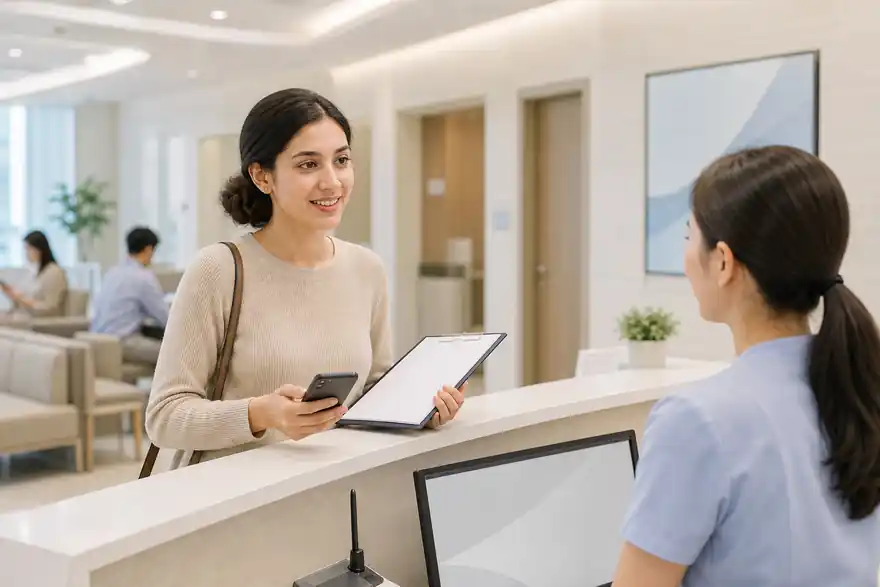
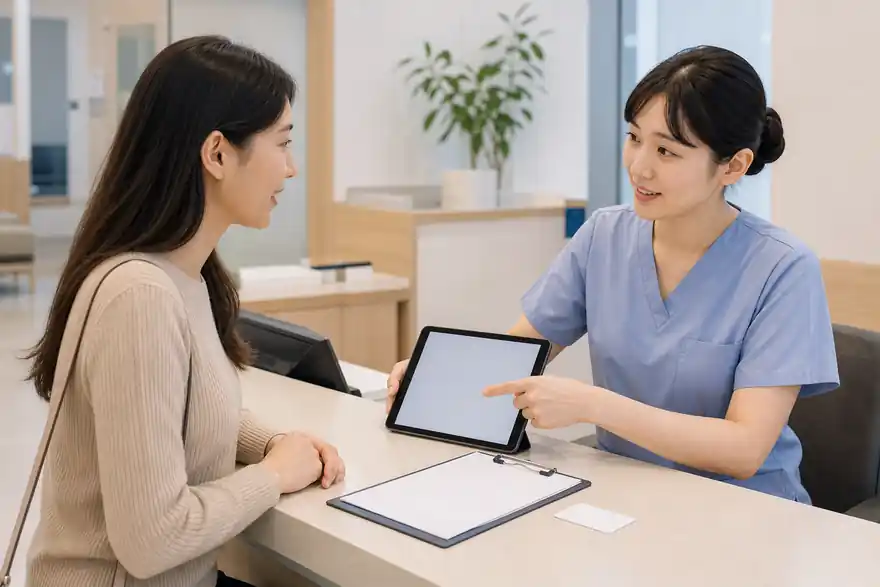
受付では、予約があるか、どの診療科か、保険があるかを聞かれることがあります。分からない時は 어느 과로 가야 해요? と聞きます。
問診票では、熱、咳、痛み、めまい、吐き気、アレルギー、飲んでいる薬などの基本語が重要です。
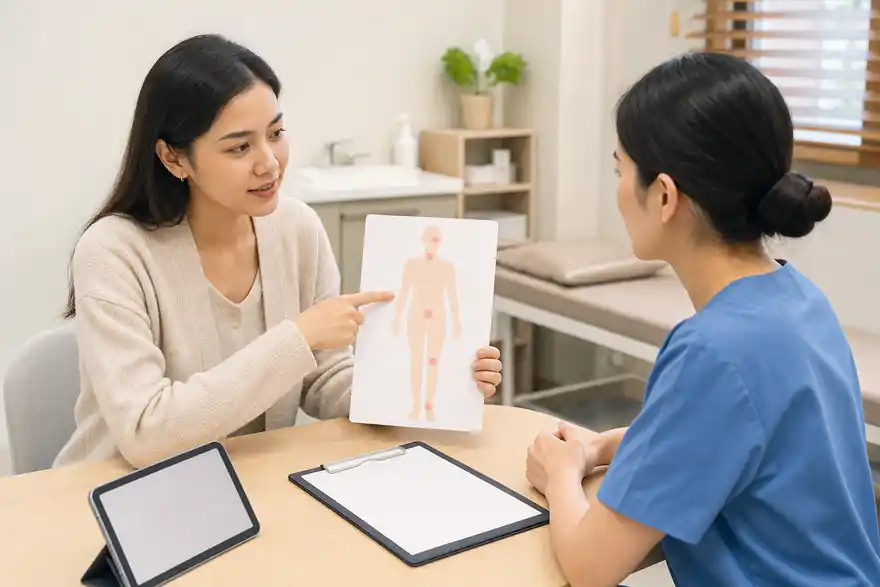
症状は、体の部分に 아파요 を付けて言えます。머리가 아파요、배가 아파요 のように使います。
緊急に感じる時は 응급 という語を使い、職員に直接助けを求めます。
診療後は、会計、検査結果、処方箋について質問する場面があります。
病院と症状の語彙
| 韓国語 | 発音 | 意味 | 練習メモ |
|---|---|---|---|
| 병원 | byeongwon | 病院 | 受付や症状の文で使います。本当の個人情報は入れません。 |
| 의원 | uiwon | 医院 | 受付や症状の文で使います。本当の個人情報は入れません。 |
| 접수 | jeopsu | 受付 | 受付や症状の文で使います。本当の個人情報は入れません。 |
| 접수처 | jeopsucheo | 受付窓口 | 受付や症状の文で使います。本当の個人情報は入れません。 |
| 예약 | yeyak | 予約 | 受付や症状の文で使います。本当の個人情報は入れません。 |
| 진료 | jillyo | 診療 | 受付や症状の文で使います。本当の個人情報は入れません。 |
| 진료과 | jillyogwa | 診療科 | 受付や症状の文で使います。本当の個人情報は入れません。 |
| 내과 | naegwa | 内科 | 受付や症状の文で使います。本当の個人情報は入れません。 |
| 이비인후과 | ibiinhugwa | 耳鼻咽喉科 | 受付や症状の文で使います。本当の個人情報は入れません。 |
| 피부과 | pibugwa | 皮膚科 | 受付や症状の文で使います。本当の個人情報は入れません。 |
| 신분증 | sinbunjeung | 身分証 | 受付や症状の文で使います。本当の個人情報は入れません。 |
| 건강보험 | geongang boheom | 健康保険 | 受付や症状の文で使います。本当の個人情報は入れません。 |
| 보험증 | boheomjeung | 保険証 | 受付や症状の文で使います。本当の個人情報は入れません。 |
| 문진표 | munjinpyo | 問診票 | 受付や症状の文で使います。本当の個人情報は入れません。 |
| 증상 | jeungsang | 症状 | 受付や症状の文で使います。本当の個人情報は入れません。 |
| 통증 | tongjeung | 痛み | 受付や症状の文で使います。本当の個人情報は入れません。 |
| 열 | yeol | 熱 | 受付や症状の文で使います。本当の個人情報は入れません。 |
| 기침 | gichim | 咳 | 受付や症状の文で使います。本当の個人情報は入れません。 |
| 콧물 | konnmul | 鼻水 | 受付や症状の文で使います。本当の個人情報は入れません。 |
| 목이 아파요 | mogi apayo | 喉が痛いです | 受付や症状の文で使います。本当の個人情報は入れません。 |
| 머리가 아파요 | meoriga apayo | 頭が痛いです | 受付や症状の文で使います。本当の個人情報は入れません。 |
| 배가 아파요 | baega apayo | お腹が痛いです | 受付や症状の文で使います。本当の個人情報は入れません。 |
| 어지러워요 | eojireowoyo | めまいがします | 受付や症状の文で使います。本当の個人情報は入れません。 |
| 메스꺼워요 | meseukkeowoyo | 吐き気がします | 受付や症状の文で使います。本当の個人情報は入れません。 |
| 언제부터 | eonjebuteo | いつから | 受付や症状の文で使います。本当の個人情報は入れません。 |
| 얼마나 | eolmana | どのくらい | 受付や症状の文で使います。本当の個人情報は入れません。 |
| 심해요 | simhaeyo | ひどいです | 受付や症状の文で使います。本当の個人情報は入れません。 |
| 가벼워요 | gabyeowoyo | 軽いです | 受付や症状の文で使います。本当の個人情報は入れません。 |
| 계속 | gyesok | ずっと | 受付や症状の文で使います。本当の個人情報は入れません。 |
| 가끔 | gakkeum | 時々 | 受付や症状の文で使います。本当の個人情報は入れません。 |
| 알레르기 | allereugi | アレルギー | 受付や症状の文で使います。本当の個人情報は入れません。 |
| 약 | yak | 薬 | 受付や症状の文で使います。本当の個人情報は入れません。 |
| 복용 | bogyong | 服用 | 受付や症状の文で使います。本当の個人情報は入れません。 |
| 검사 | geomsa | 検査 | 受付や症状の文で使います。本当の個人情報は入れません。 |
| 결과 | gyeolgwa | 結果 | 受付や症状の文で使います。本当の個人情報は入れません。 |
| 대기 | daegi | 待機 | 受付や症状の文で使います。本当の個人情報は入れません。 |
| 수납 | sunap | 会計 | 受付や症状の文で使います。本当の個人情報は入れません。 |
| 처방전 | cheobangjeon | 処方箋 | 受付や症状の文で使います。本当の個人情報は入れません。 |
| 응급 | eunggeup | 救急 | 受付や症状の文で使います。本当の個人情報は入れません。 |
| 천천히 | cheoncheonhi | ゆっくり | 受付や症状の文で使います。本当の個人情報は入れません。 |
受付と症状説明の文型
受付の目的は …하고 싶어요 で言います。
症状や持っているものは …이/가 있어요 で言います。
いつからかは …부터 を使います。
頻度は 계속 と 가끔 で説明します。
聞き取れない時は 다시 한 번 말씀해 주세요 と言います。
便利な表現
| 韓国語表現 | 意味 | 使い方 |
|---|---|---|
| 예약했어요. | 予約しています。 | 一つの文として言い、職員の質問を待ちます。 |
| 예약 없이 왔어요. | 予約なしで来ました。 | 一つの文として言い、職員の質問を待ちます。 |
| 접수하고 싶어요. | 受付をしたいです。 | 一つの文として言い、職員の質問を待ちます。 |
| 어느 과로 가야 해요? | 何科に行けばいいですか。 | 一つの文として言い、職員の質問を待ちます。 |
| 신분증이 필요해요? | 身分証が必要ですか。 | 一つの文として言い、職員の質問を待ちます。 |
| 건강보험이 있어요. | 健康保険があります。 | 一つの文として言い、職員の質問を待ちます。 |
| 문진표를 작성해야 하나요? | 問診票を記入しますか。 | 一つの文として言い、職員の質問を待ちます。 |
| 어디가 아프세요? | どこが痛いですか。 | 一つの文として言い、職員の質問を待ちます。 |
| 머리가 아파요. | 頭が痛いです。 | 一つの文として言い、職員の質問を待ちます。 |
| 배가 아파요. | お腹が痛いです。 | 一つの文として言い、職員の質問を待ちます。 |
| 열이 있어요. | 熱があります。 | 一つの文として言い、職員の質問を待ちます。 |
| 기침이 나요. | 咳が出ます。 | 一つの文として言い、職員の質問を待ちます。 |
| 어제부터 아팠어요. | 昨日から痛いです。 | 一つの文として言い、職員の質問を待ちます。 |
| 계속 아파요. | ずっと痛いです。 | 一つの文として言い、職員の質問を待ちます。 |
| 가끔 아파요. | 時々痛いです。 | 一つの文として言い、職員の質問を待ちます。 |
| 통증이 심해요. | 痛みがひどいです。 | 一つの文として言い、職員の質問を待ちます。 |
| 통증은 가벼워요. | 痛みは軽いです。 | 一つの文として言い、職員の質問を待ちます。 |
| 알레르기가 있어요. | アレルギーがあります。 | 一つの文として言い、職員の質問を待ちます。 |
| 먹는 약이 있어요. | 飲んでいる薬があります。 | 一つの文として言い、職員の質問を待ちます。 |
| 천천히 말씀해 주세요. | ゆっくり話してください。 | 一つの文として言い、職員の質問を待ちます。 |
| 다시 한 번 말씀해 주세요. | もう一度言ってください。 | 一つの文として言い、職員の質問を待ちます。 |
| 검사 결과는 언제 나와요? | 検査結果はいつ出ますか。 | 一つの文として言い、職員の質問を待ちます。 |
| 수납은 어디에서 해요? | 会計はどこですか。 | 一つの文として言い、職員の質問を待ちます。 |
| 처방전은 어디에서 받아요? | 処方箋はどこでもらいますか。 | 一つの文として言い、職員の質問を待ちます。 |
ミニ会話
受付する
患者: 예약했어요.
職員: 성함을 말씀해 주세요.
患者: 천천히 말씀해 주세요.
職員: 네, 신분증도 준비해 주세요.
予約なし
患者: 예약 없이 왔어요.
職員: 어디가 불편하세요?
患者: 목이 아파요.
職員: 접수 도와드릴게요.
診療科を選ぶ
患者: 어느 과로 가야 해요?
職員: 증상을 말씀해 주세요.
患者: 기침이 나고 열이 있어요.
職員: 내과 접수해 드릴게요.
症状の期間
職員: 언제부터 아프셨어요?
患者: 어제부터 아팠어요.
職員: 통증이 심하세요?
患者: 가끔 아파요.
会計と処方箋
患者: 수납은 어디에서 해요?
職員: 저쪽에서 하시면 됩니다.
患者: 처방전은 어디에서 받아요?
職員: 수납 후에 받으시면 됩니다.
安全とプライバシー
- 本当の患者番号、保険番号、医療記録で練習しないでください。
- 自分で病名を決めず、感じている症状を伝えてください。
- 質問が分からない時は、適当に答えず聞き返します。
- 個人情報は受付で静かに確認します。
- 深刻な症状では、現地の緊急案内と職員の指示に従ってください。
10分練習ルーティン
一回目は語彙表を読み、症状語で安全な文を作ります。
二回目は予約あり、予約なし、受付したいですを練習します。
三回目は体の部分、時間、痛みの強さで症状を説明します。
四回目は聞き返しとゆっくり話してもらう表現を練習します。
五回目は受付、待合室、症状説明、会計、処方箋のロールプレイをします。
追加練習: 個人の医療情報を使わず、症状、時間、強さを組み合わせます。
- 예약했어요.
- 예약 없이 왔어요.
- 접수하고 싶어요.
- 어느 과로 가야 해요?
- 신분증이 필요해요?
- 건강보험이 있어요.
- 문진표를 작성해야 하나요?
- 어디가 아프세요?
- 머리가 아파요.
- 배가 아파요.
- 열이 있어요.
- 기침이 나요.
- 어제부터 아팠어요.
- 계속 아파요.
- 가끔 아파요.
- 통증이 심해요.
- 통증은 가벼워요.
- 알레르기가 있어요.
ミニクイズ
- 質問 1: How do you say you have an appointment?
答え: 예약했어요. - 質問 2: How do you say you came without an appointment?
答え: 예약 없이 왔어요. - 質問 3: How do you ask which department to go to?
答え: 어느 과로 가야 해요? - 質問 4: How do you say your head hurts?
答え: 머리가 아파요. - 質問 5: How do you say you have a fever?
答え: 열이 있어요. - 質問 6: How do you say it started yesterday?
答え: 어제부터 아팠어요. - 質問 7: How do you ask staff to speak slowly?
答え: 천천히 말씀해 주세요. - 質問 8: How do you ask where to pay?
答え: 수납은 어디에서 해요?
復習
このレッスンの後、病院で受付し、どの診療科に行くか聞き、よくある症状を説明し、期間と頻度を言い、個人の健康情報を守り、職員にゆっくり話してもらうことができます。次のDaily Koreanは薬局での服用法です。
Tsuika renshu bank
- Renshu 1: jeopsuhago sipeoyo – check in at reception. Read the Korean romanization aloud, then answer with a short safe example. Do not use real patient numbers, insurance numbers, addresses, or private medical history. If one word is unclear, ask staff to repeat it.
- Renshu 2: yeyakhaesseoyo – say that you have an appointment. Read the Korean romanization aloud, then answer with a short safe example. Do not use real patient numbers, insurance numbers, addresses, or private medical history. If one word is unclear, ask staff to repeat it.
- Renshu 3: yeyak eopsi wasseoyo – say that you came without an appointment. Read the Korean romanization aloud, then answer with a short safe example. Do not use real patient numbers, insurance numbers, addresses, or private medical history. If one word is unclear, ask staff to repeat it.
- Renshu 4: eoneu gwaro gaya haeyo – ask which department to visit. Read the Korean romanization aloud, then answer with a short safe example. Do not use real patient numbers, insurance numbers, addresses, or private medical history. If one word is unclear, ask staff to repeat it.
- Renshu 5: sinbunjeungi piryohaeyo – ask whether an ID card is needed. Read the Korean romanization aloud, then answer with a short safe example. Do not use real patient numbers, insurance numbers, addresses, or private medical history. If one word is unclear, ask staff to repeat it.
- Renshu 6: geongang boheomi isseoyo – say that you have health insurance. Read the Korean romanization aloud, then answer with a short safe example. Do not use real patient numbers, insurance numbers, addresses, or private medical history. If one word is unclear, ask staff to repeat it.
- Renshu 7: munjinpyoreul jakseonghaeya hanayo – ask whether to fill out a questionnaire. Read the Korean romanization aloud, then answer with a short safe example. Do not use real patient numbers, insurance numbers, addresses, or private medical history. If one word is unclear, ask staff to repeat it.
- Renshu 8: meoriga apayo – say that your head hurts. Read the Korean romanization aloud, then answer with a short safe example. Do not use real patient numbers, insurance numbers, addresses, or private medical history. If one word is unclear, ask staff to repeat it.
- Renshu 9: baega apayo – say that your stomach hurts. Read the Korean romanization aloud, then answer with a short safe example. Do not use real patient numbers, insurance numbers, addresses, or private medical history. If one word is unclear, ask staff to repeat it.
- Renshu 10: yeori isseoyo – say that you have a fever. Read the Korean romanization aloud, then answer with a short safe example. Do not use real patient numbers, insurance numbers, addresses, or private medical history. If one word is unclear, ask staff to repeat it.
- Renshu 11: gichimeul haeyo – say that you have a cough. Read the Korean romanization aloud, then answer with a short safe example. Do not use real patient numbers, insurance numbers, addresses, or private medical history. If one word is unclear, ask staff to repeat it.
- Renshu 12: eoje buteo apasseoyo – say that it started yesterday. Read the Korean romanization aloud, then answer with a short safe example. Do not use real patient numbers, insurance numbers, addresses, or private medical history. If one word is unclear, ask staff to repeat it.
- Renshu 13: gyesok apayo – say that it hurts continuously. Read the Korean romanization aloud, then answer with a short safe example. Do not use real patient numbers, insurance numbers, addresses, or private medical history. If one word is unclear, ask staff to repeat it.
- Renshu 14: gakkeum apayo – say that it hurts sometimes. Read the Korean romanization aloud, then answer with a short safe example. Do not use real patient numbers, insurance numbers, addresses, or private medical history. If one word is unclear, ask staff to repeat it.
- Renshu 15: tongjeungi simhaeyo – say that the pain is severe. Read the Korean romanization aloud, then answer with a short safe example. Do not use real patient numbers, insurance numbers, addresses, or private medical history. If one word is unclear, ask staff to repeat it.
- Renshu 16: tongjeungeun gabyeowoyo – say that the pain is mild. Read the Korean romanization aloud, then answer with a short safe example. Do not use real patient numbers, insurance numbers, addresses, or private medical history. If one word is unclear, ask staff to repeat it.
- Renshu 17: cheoncheonhi malsseumhae juseyo – ask staff to speak slowly. Read the Korean romanization aloud, then answer with a short safe example. Do not use real patient numbers, insurance numbers, addresses, or private medical history. If one word is unclear, ask staff to repeat it.
- Renshu 18: dasi han beon malsseumhae juseyo – ask staff to repeat. Read the Korean romanization aloud, then answer with a short safe example. Do not use real patient numbers, insurance numbers, addresses, or private medical history. If one word is unclear, ask staff to repeat it.
- Renshu 19: sunabeun eodieseo haeyo – ask where to pay. Read the Korean romanization aloud, then answer with a short safe example. Do not use real patient numbers, insurance numbers, addresses, or private medical history. If one word is unclear, ask staff to repeat it.
- Renshu 20: cheobangjeoneun eodieseo badayo – ask where to get the prescription. Read the Korean romanization aloud, then answer with a short safe example. Do not use real patient numbers, insurance numbers, addresses, or private medical history. If one word is unclear, ask staff to repeat it.
- Renshu 21: jeopsuhago sipeoyo – check in at reception. Read the Korean romanization aloud, then answer with a short safe example. Do not use real patient numbers, insurance numbers, addresses, or private medical history. If one word is unclear, ask staff to repeat it.
- Renshu 22: yeyakhaesseoyo – say that you have an appointment. Read the Korean romanization aloud, then answer with a short safe example. Do not use real patient numbers, insurance numbers, addresses, or private medical history. If one word is unclear, ask staff to repeat it.
- Renshu 23: yeyak eopsi wasseoyo – say that you came without an appointment. Read the Korean romanization aloud, then answer with a short safe example. Do not use real patient numbers, insurance numbers, addresses, or private medical history. If one word is unclear, ask staff to repeat it.
- Renshu 24: eoneu gwaro gaya haeyo – ask which department to visit. Read the Korean romanization aloud, then answer with a short safe example. Do not use real patient numbers, insurance numbers, addresses, or private medical history. If one word is unclear, ask staff to repeat it.
- Renshu 25: sinbunjeungi piryohaeyo – ask whether an ID card is needed. Read the Korean romanization aloud, then answer with a short safe example. Do not use real patient numbers, insurance numbers, addresses, or private medical history. If one word is unclear, ask staff to repeat it.
- Renshu 26: geongang boheomi isseoyo – say that you have health insurance. Read the Korean romanization aloud, then answer with a short safe example. Do not use real patient numbers, insurance numbers, addresses, or private medical history. If one word is unclear, ask staff to repeat it.
- Renshu 27: munjinpyoreul jakseonghaeya hanayo – ask whether to fill out a questionnaire. Read the Korean romanization aloud, then answer with a short safe example. Do not use real patient numbers, insurance numbers, addresses, or private medical history. If one word is unclear, ask staff to repeat it.
- Renshu 28: meoriga apayo – say that your head hurts. Read the Korean romanization aloud, then answer with a short safe example. Do not use real patient numbers, insurance numbers, addresses, or private medical history. If one word is unclear, ask staff to repeat it.
- Renshu 29: baega apayo – say that your stomach hurts. Read the Korean romanization aloud, then answer with a short safe example. Do not use real patient numbers, insurance numbers, addresses, or private medical history. If one word is unclear, ask staff to repeat it.
- Renshu 30: yeori isseoyo – say that you have a fever. Read the Korean romanization aloud, then answer with a short safe example. Do not use real patient numbers, insurance numbers, addresses, or private medical history. If one word is unclear, ask staff to repeat it.
- Renshu 31: gichimeul haeyo – say that you have a cough. Read the Korean romanization aloud, then answer with a short safe example. Do not use real patient numbers, insurance numbers, addresses, or private medical history. If one word is unclear, ask staff to repeat it.
- Renshu 32: eoje buteo apasseoyo – say that it started yesterday. Read the Korean romanization aloud, then answer with a short safe example. Do not use real patient numbers, insurance numbers, addresses, or private medical history. If one word is unclear, ask staff to repeat it.
- Renshu 33: gyesok apayo – say that it hurts continuously. Read the Korean romanization aloud, then answer with a short safe example. Do not use real patient numbers, insurance numbers, addresses, or private medical history. If one word is unclear, ask staff to repeat it.
- Renshu 34: gakkeum apayo – say that it hurts sometimes. Read the Korean romanization aloud, then answer with a short safe example. Do not use real patient numbers, insurance numbers, addresses, or private medical history. If one word is unclear, ask staff to repeat it.
- Renshu 35: tongjeungi simhaeyo – say that the pain is severe. Read the Korean romanization aloud, then answer with a short safe example. Do not use real patient numbers, insurance numbers, addresses, or private medical history. If one word is unclear, ask staff to repeat it.
- Renshu 36: tongjeungeun gabyeowoyo – say that the pain is mild. Read the Korean romanization aloud, then answer with a short safe example. Do not use real patient numbers, insurance numbers, addresses, or private medical history. If one word is unclear, ask staff to repeat it.
- Renshu 37: cheoncheonhi malsseumhae juseyo – ask staff to speak slowly. Read the Korean romanization aloud, then answer with a short safe example. Do not use real patient numbers, insurance numbers, addresses, or private medical history. If one word is unclear, ask staff to repeat it.
- Renshu 38: dasi han beon malsseumhae juseyo – ask staff to repeat. Read the Korean romanization aloud, then answer with a short safe example. Do not use real patient numbers, insurance numbers, addresses, or private medical history. If one word is unclear, ask staff to repeat it.
BS3001 Daily Korean L2 content group: daily-korean-hospital-reception-symptom-phrases
2. 重要単語
病院
初級医院
初級受付
初級受付窓口
初級予約
初級3. 必須フレーズ
7. 関連する実用韓国語レッスン


답글 남기기
Please sign in with Google to comment. Sign in with Google