[태그:] Korean learning article

  • Korean Taxi Ride Words for Foreign Residents

    Korean Taxi Ride Words for Foreign Residents

    Use this taxi ride lesson first

    Taxi Korean starts with the destination. Say 여기로 가 주세요, “please go here,” while showing the address. Then use short phrases for payment, stops, and directions.

    Taxi momentKoreanMeaning
    Destination여기로 가 주세요Please go here.
    Stop여기서 세워 주세요Please stop here.
    Card카드 결제 돼요?Can I pay by card?
    Receipt영수증 주세요Please give me a receipt.

    If the driver speaks quickly, say 천천히 말해 주세요. For other movement words, continue with street sign words and bus stop sign vocabulary.

    Korean taxi ride words guide

    Korean taxi ride words helps learners practice Korean words in real situations. This BSKorean post keeps the lesson clear, scannable, and connected to app practice.

    Practice in the BSKorean app

    Related lessons

    Taking a taxi in Korea is usually simple, but it can feel fast if you are still learning Korean. You may need to say where you are going, ask about payment, or tell the driver where to stop. This lesson gives you practical Korean taxi words and short phrases you can use from the curb to the moment you get out.

    Use these phrases as a calm script. You do not need long sentences. A clear place name plus 주세요 is often enough.

    Text-free illustration for Korean taxi ride words on BSKorean.

    1. Starting the Ride

    If the taxi is stopping at a safe curb, you can confirm that it is okay to get in.

    택시를 타요.
    taeksi-reul tayo
    I take a taxi.

    여기서 타면 돼요?
    yeogiseo tamyeon dwaeyo?
    Can I get in here?

    Key words:

    KoreanRomanizationMeaning
    택시taeksitaxi
    타다tadato ride, to get in

    2. Confirming the Destination

    Say your destination before the taxi starts moving. If the place name is difficult, say the area first, then the exact building or address.

    Text-free illustration for Korean taxi ride words on BSKorean.

    OO까지 가 주세요.
    OO-kkaji ga juseyo
    Please go to OO.

    주소는 여기예요.
    juso-neun yeogiyeyo
    The address is here.

    Key words:

    KoreanRomanizationMeaning
    목적지mokjeokjidestination
    주소jusoaddress
    까지kkajito, as far as
    가 주세요ga juseyoplease go

    3. Fare and Payment

    When you are not sure what to say at the end of the ride, keep the payment phrase short.
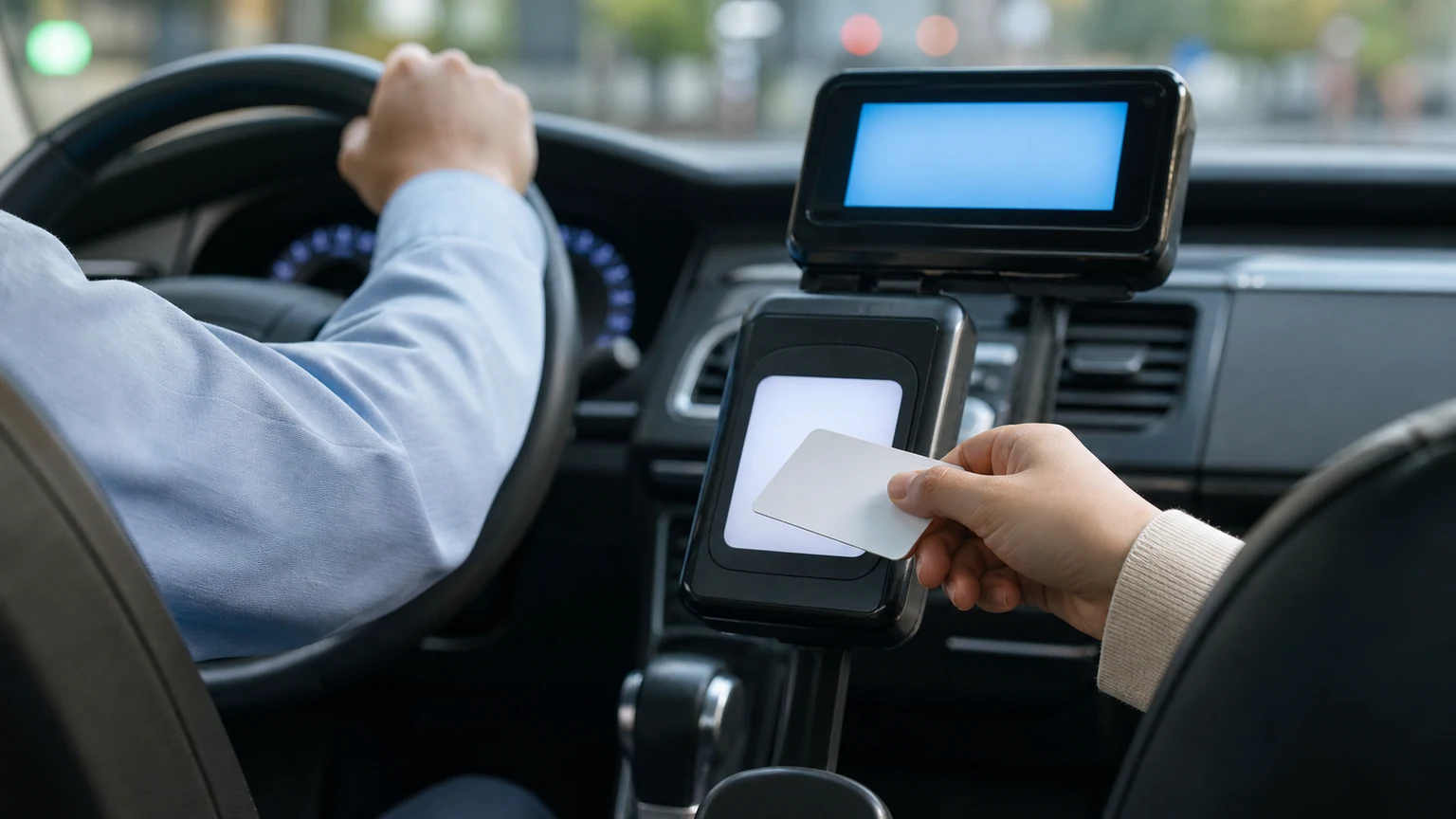
    Text-free illustration for Korean taxi ride words on BSKorean.

    요금이 얼마예요?
    yogeum-i eolmayeyo?
    How much is the fare?

    카드로 결제할게요.
    kadeu-ro gyeolje-halgeyo
    I will pay by card.

    Key words:

    KoreanRomanizationMeaning
    요금yogeumfare, fee
    미터기miteogitaxi meter
    카드kadeucard
    결제gyeoljepayment

    4. Asking the Taxi to Stop Nearby

    It is better to ask for a nearby safe stop than to demand an exact stop in traffic. Use 근처 when the exact curb is not possible.
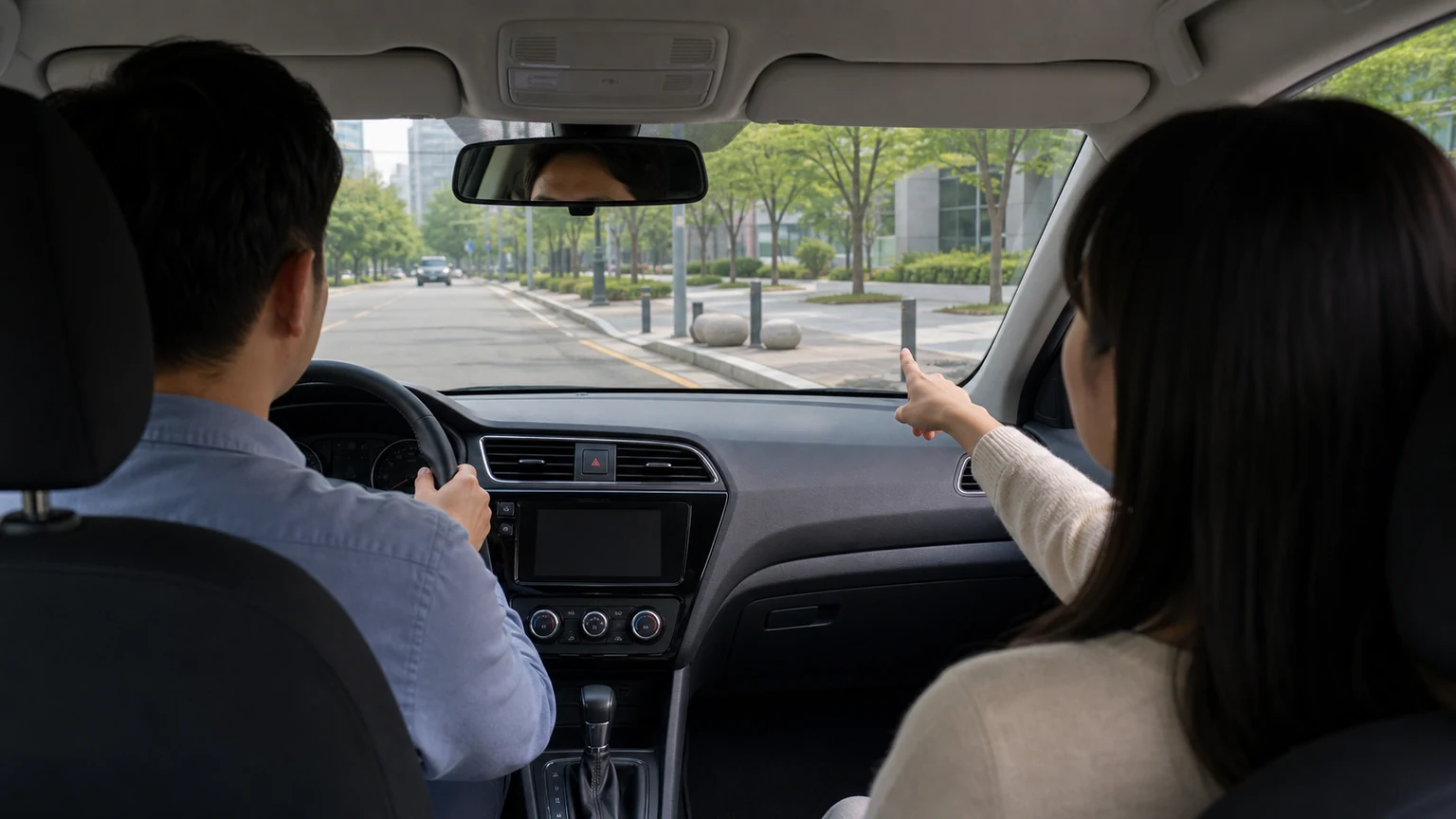
    Text-free illustration for Korean taxi ride words on BSKorean.

    여기 근처에 세워 주세요.
    yeogi geuncheo-e sewo juseyo
    Please stop near here.

    저기 앞에서 내려 주세요.
    jeogi apeseo naeryeo juseyo
    Please let me get out up there.

    Key words:

    KoreanRomanizationMeaning
    근처geuncheonearby
    세워 주세요sewo juseyoplease stop
    내리다naeridato get out

    5. Receipt and Belongings

    Before you leave, check your bag and wallet. If you need a receipt, ask before closing the door.
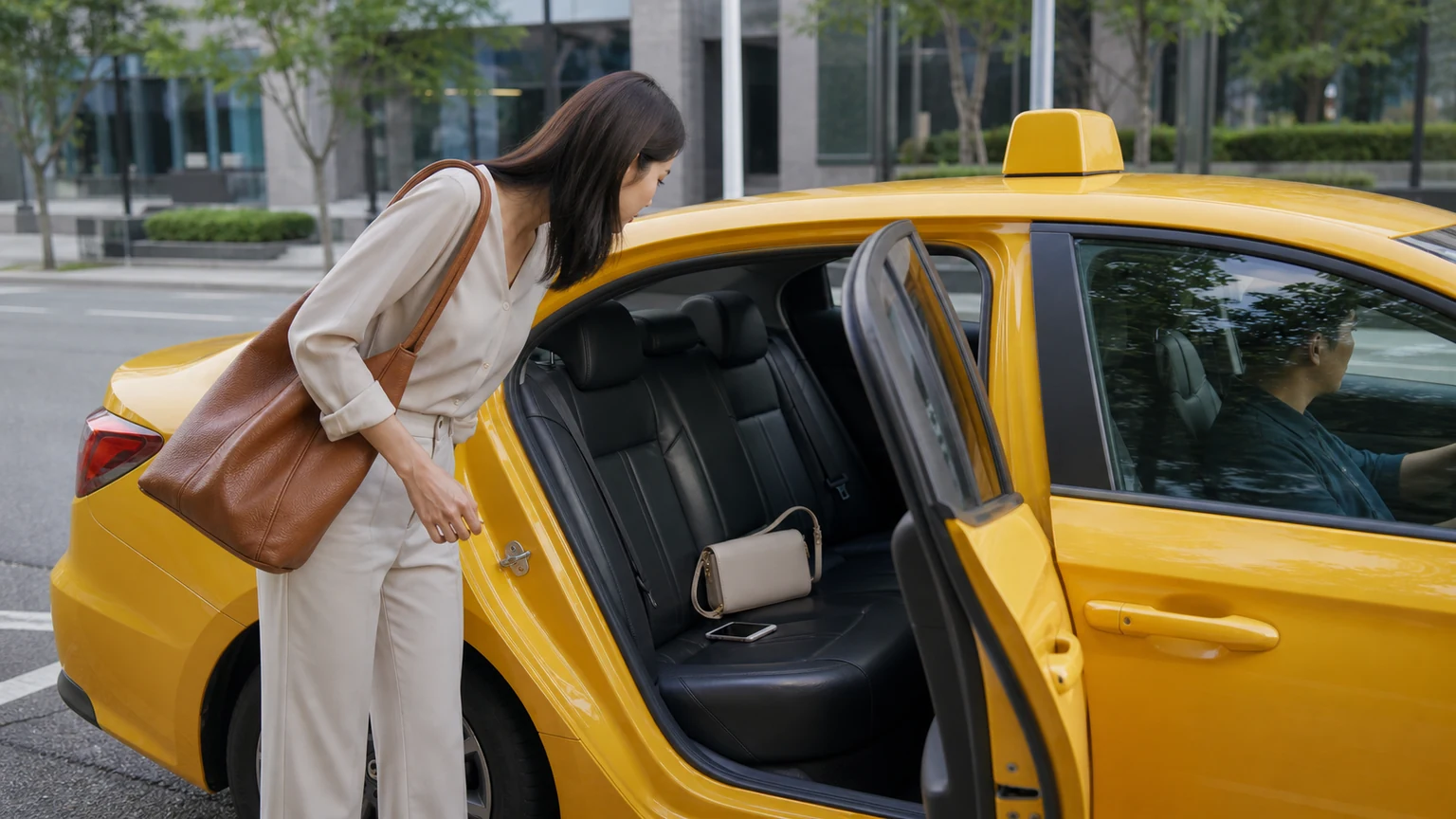
    Text-free illustration for Korean taxi ride words on BSKorean.

    영수증 주세요.
    yeongsujeung juseyo
    Please give me a receipt.

    물건을 놓고 내렸어요.
    mulgeon-eul noko naeryeosseoyo
    I left something behind.

    Key words:

    KoreanRomanizationMeaning
    영수증yeongsujeungreceipt
    물건mulgeonitem, belongings

    Quick Review

    SituationKorean phraseMeaning
    Getting in여기서 타면 돼요?Can I get in here?
    DestinationOO까지 가 주세요.Please go to OO.
    Address주소는 여기예요.The address is here.
    Payment카드로 결제할게요.I will pay by card.
    Stop nearby여기 근처에 세워 주세요.Please stop near here.
    Receipt영수증 주세요.Please give me a receipt.

    For more practical daily-life lessons, see the BSKorean learning app page and the practice page. If you are studying transportation Korean, you may also find the bus stop and parking lot lessons useful.

  • Korean Community Health Center Words for Foreign Residents

    Korean Community Health Center Words for Foreign Residents

    Use this community health center lesson first

    Community health center Korean often uses reservation and document words. Start with 예약하고 싶어요, “I want to make an appointment,” or 건강검진 받고 싶어요, “I want a health checkup.”

    Health center needKoreanMeaning
    Appointment예약하고 싶어요I want to make an appointment.
    Checkup건강검진 받고 싶어요I want a health checkup.
    Vaccine예방접종 가능해요?Is vaccination possible?
    ID신분증 여기 있어요Here is my ID.

    If staff ask about symptoms, answer simply and ask 다시 말해 주세요 when needed. Related lessons: hospital reception words and clinic appointment phrases.

    Korean community health center words guide

    Korean community health center words helps learners practice Korean words in real situations. This BSKorean post keeps the lesson clear, scannable, and connected to app practice.

    Practice in the BSKorean app

    Related lessons

    A Korean community health center, or 보건소, can help with basic public health services such as checkups, vaccination guidance, screening tests, and result follow-up. This lesson teaches practical Korean community health center words for foreign residents who need to check in, fill out a form, ask a simple question, and understand the next step.

    This lesson is for Korean communication practice only. It is not medical advice. For personal health decisions, follow the instructions from qualified medical staff.

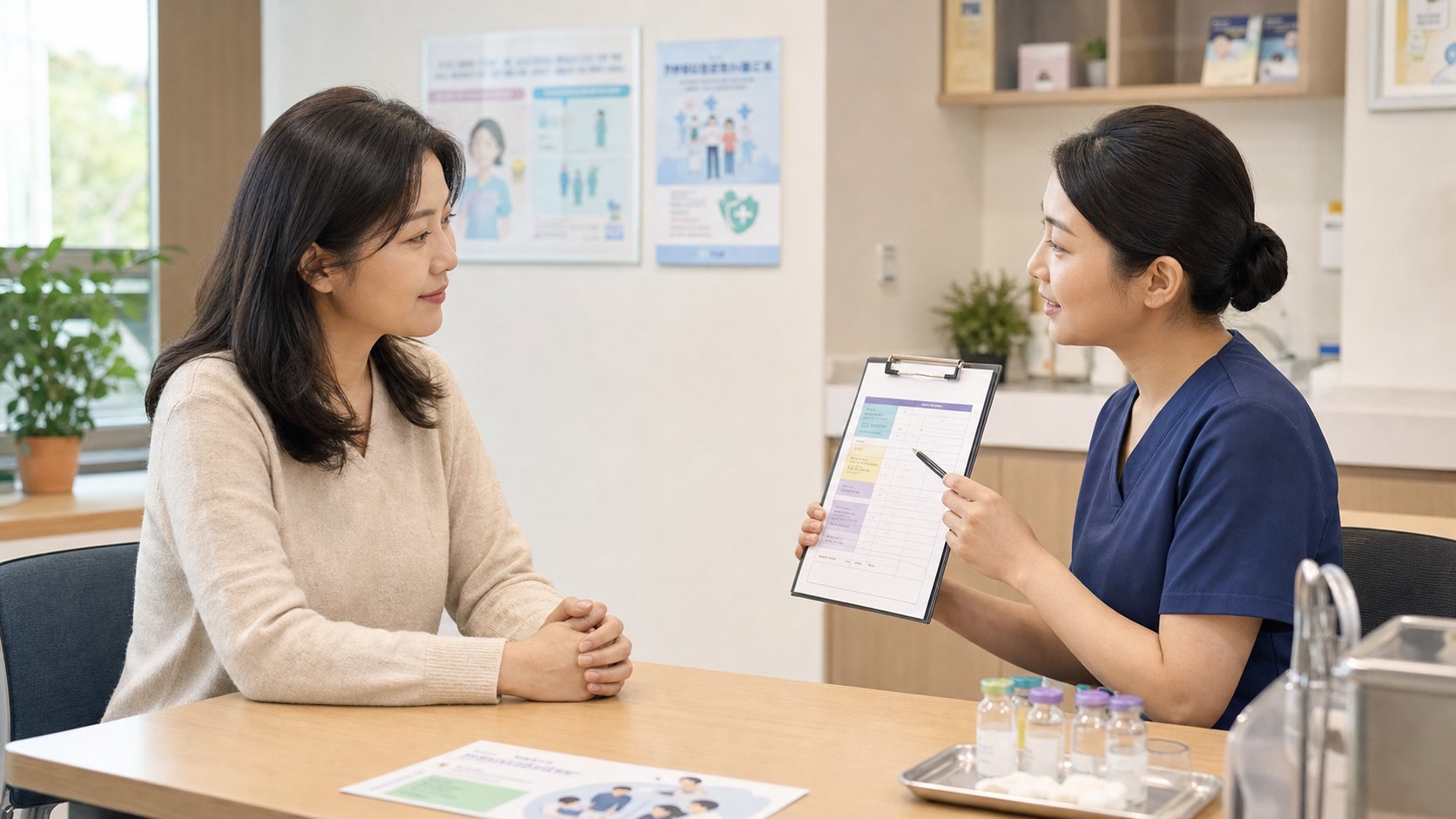
    Text-free illustration for Korean community health center words on BSKorean.
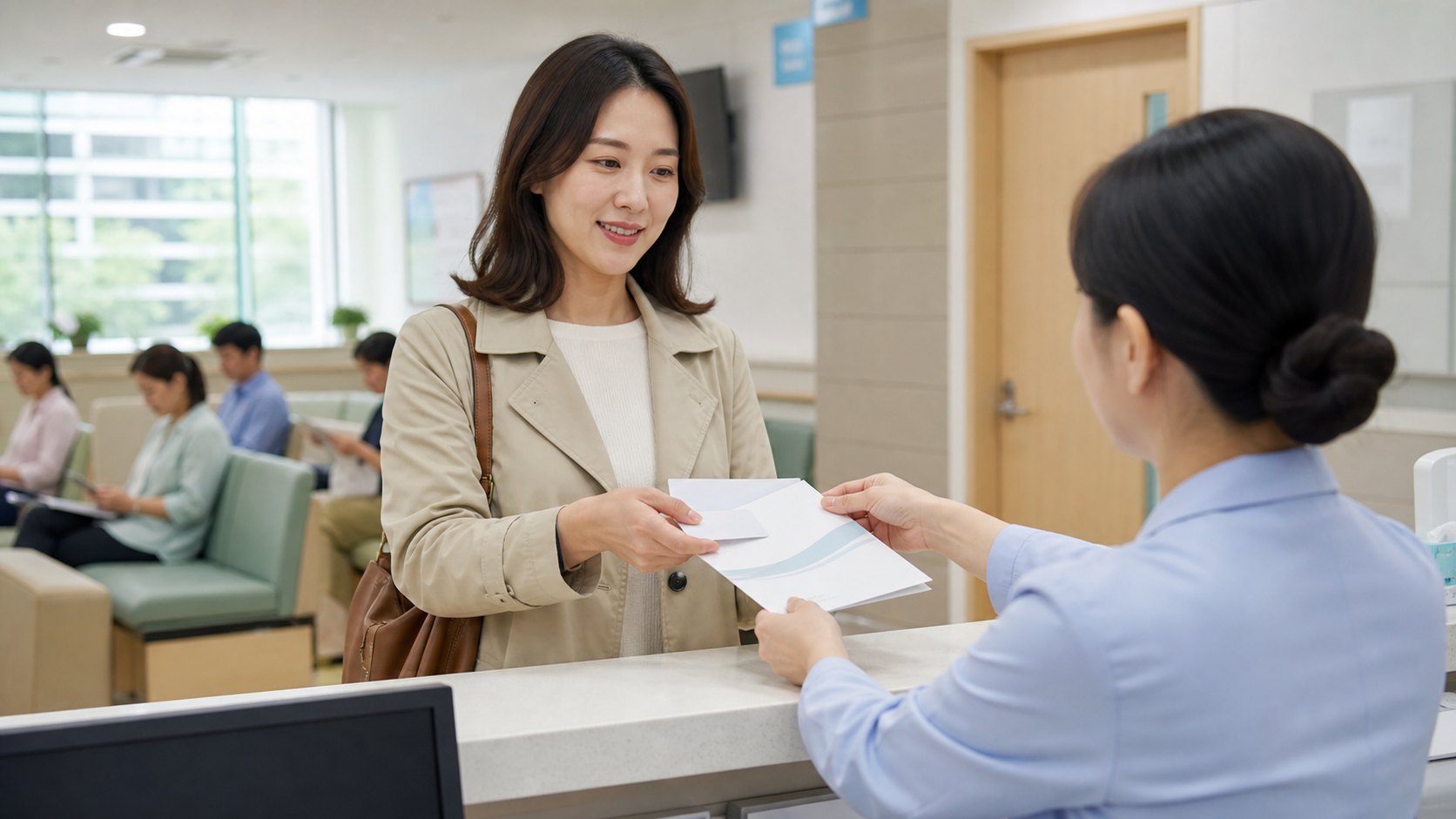
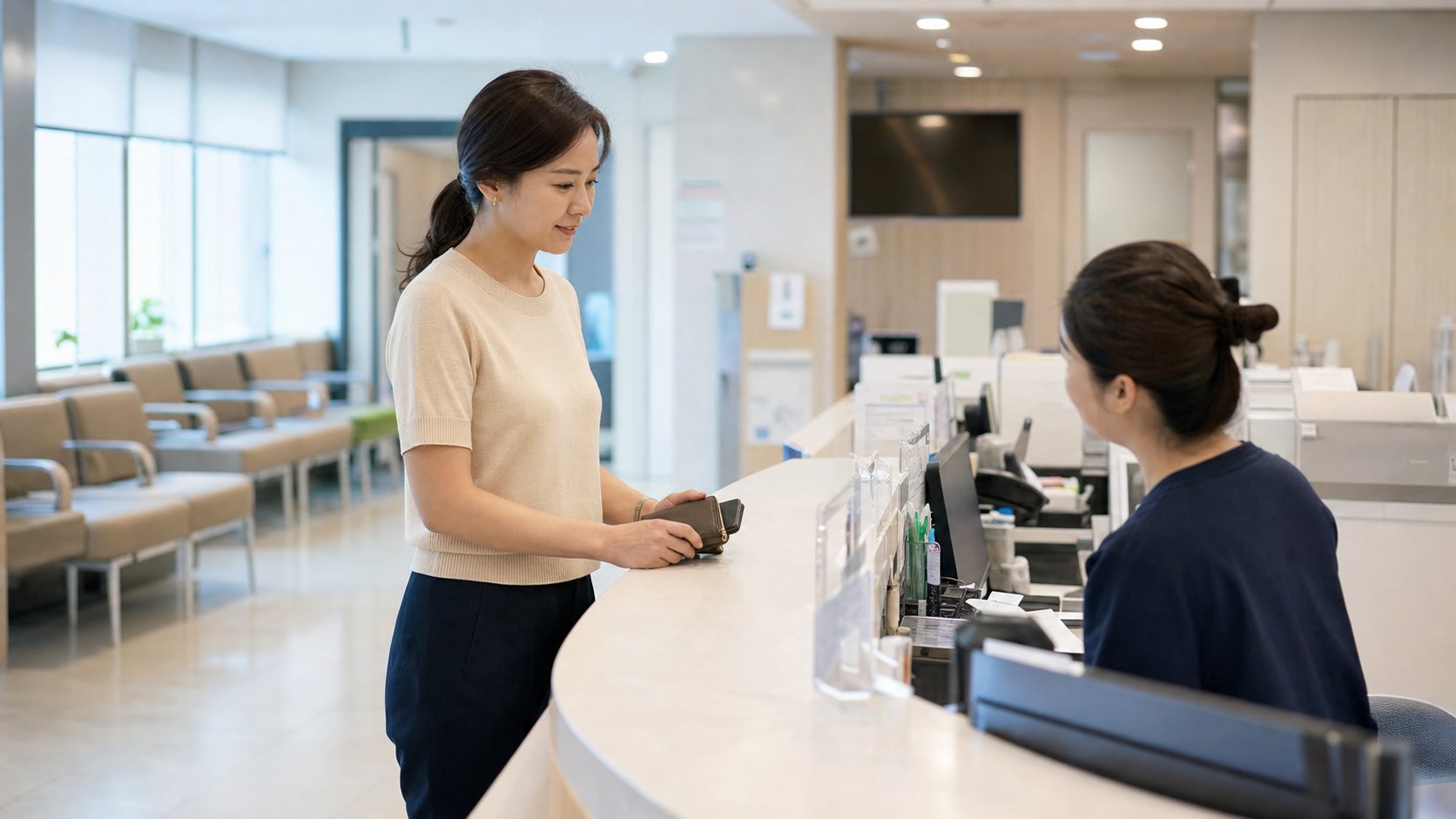
    Start at reception and say why you came to the health center.

    1. Check In at Reception

    When you arrive, go to the reception counter and say why you came. Keep your ID ready if staff asks for it.

    접수하러 왔어요.
    jeopsuhareo wasseoyo
    I came to check in.

    KoreanRomanizationMeaning
    보건소bogeonsocommunity health center
    접수jeopsureception / check-in
    번호표beonhopyonumber ticket
    신분증sinbunjeungID card

    2. Fill Out the Health Questionnaire

    Text-free illustration for Korean community health center words on BSKorean.
    Ask before guessing on a health questionnaire.

    Before a consultation or checkup, staff may ask you to fill out a health questionnaire. If one part is unclear, ask politely before guessing.

    문진표를 작성해야 하나요?
    munjinpyoreul jakseonghaeya hanayo?
    Do I need to fill out a health questionnaire?

    KoreanRomanizationMeaning
    문진표munjinpyohealth questionnaire
    작성하다jakseonghadato fill out
    증상jeungsangsymptom
    건강보험증geongang boheomjeunghealth insurance card

    3. Ask About Vaccination

    Text-free illustration for Korean community health center words on BSKorean.
    Confirm the vaccination appointment and precautions.

    For vaccination questions, ask what the appointment is for, whether you need to wait, and what you should do after the visit.

    예방접종 예약을 확인하고 싶어요.
    yebang jeopjong yeyageul hwaginhago sipeoyo
    I would like to check my vaccination appointment.

    KoreanRomanizationMeaning
    예방접종yebang jeopjongvaccination
    예약yeyakappointment
    예진yejinpre-check / pre-screening
    주의사항juuisahangprecautions

    4. Understand a Basic Checkup

    Text-free illustration for Korean community health center words on BSKorean.
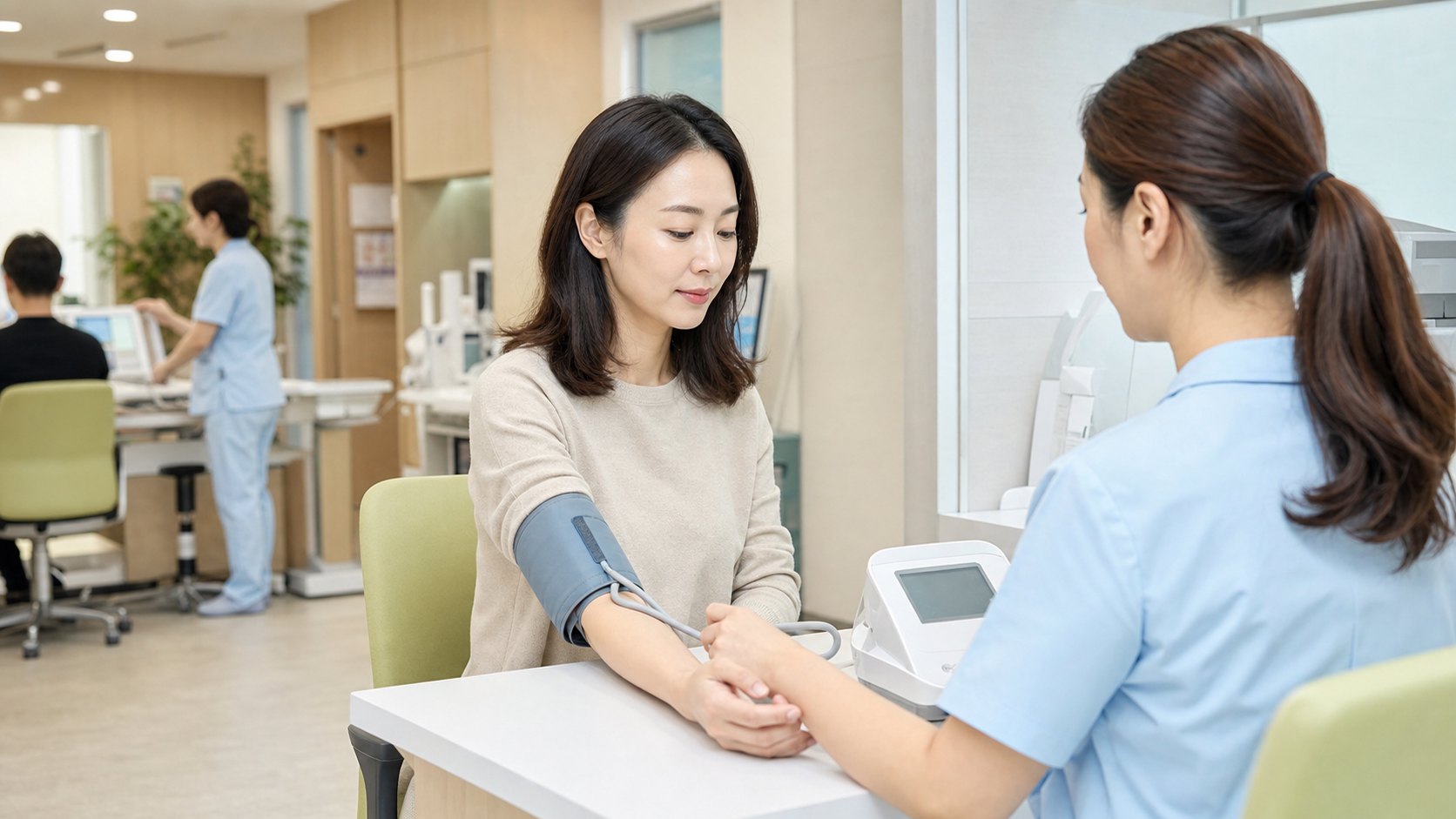
    Recognize basic checkup words such as blood pressure and body temperature.

    During a basic checkup, you may hear words for blood pressure, body temperature, height, weight, or a screening room.

    건강검진은 어디에서 하나요?
    geongang geomjineun eodieseo hanayo?
    Where do I do the health checkup?

    KoreanRomanizationMeaning
    건강검진geongang geomjinhealth checkup
    혈압hyeorapblood pressure
    체온cheonbody temperature
    검진실geomjinsilcheckup room

    5. Follow Screening Test Directions

    Text-free illustration for Korean community health center words on BSKorean.
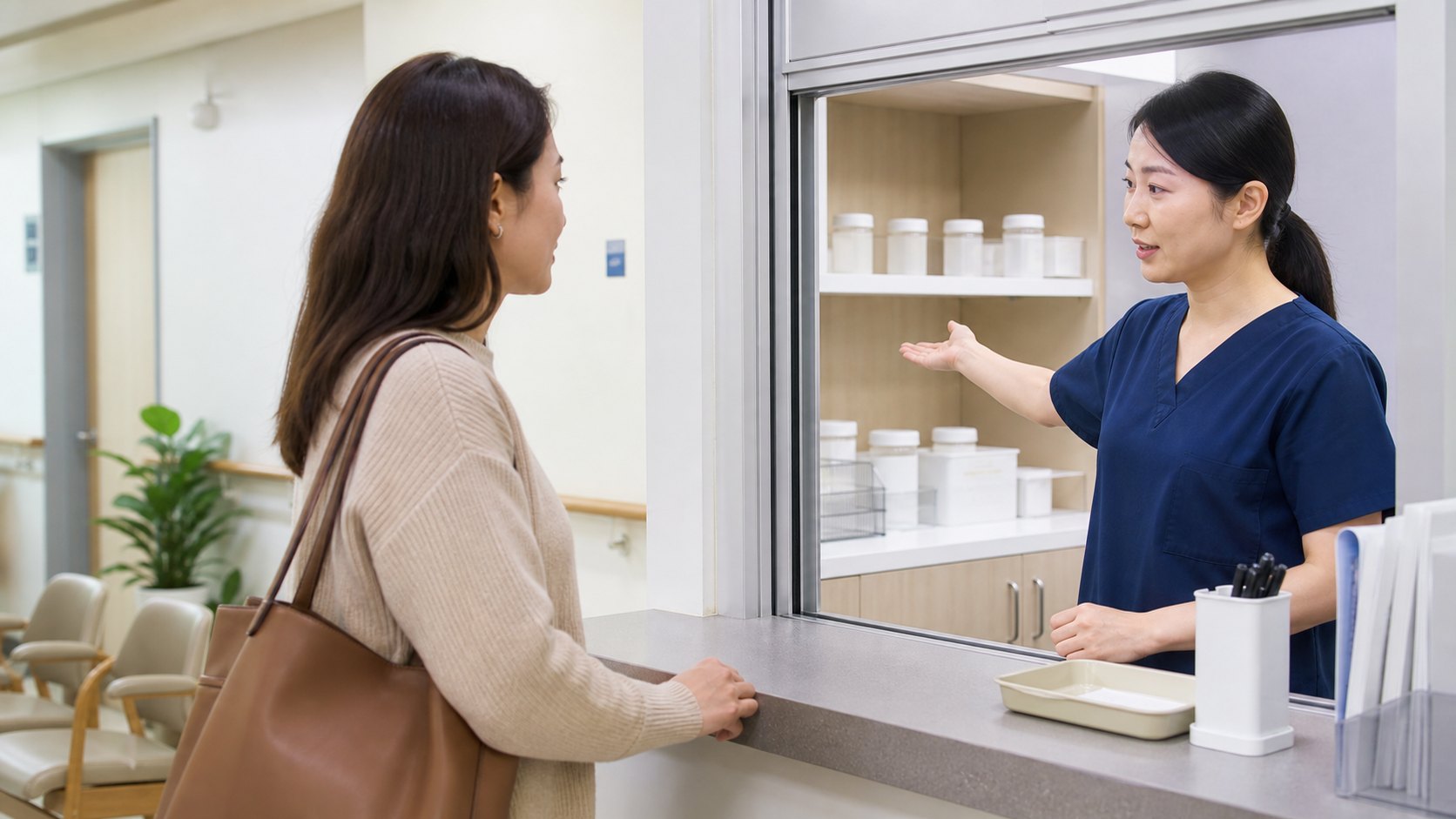
    Repeat the test room name before moving to the next window.

    If staff sends you to a test room or sample drop-off area, repeat the room name and ask where to go next.

    검사실은 어디예요?
    geomsasireun eodiyeyo?
    Where is the test room?

    KoreanRomanizationMeaning
    검사geomsatest / screening
    검사실geomsasiltest room / lab room
    소변검사sobyeon geomsaurine test
    채혈chaehyeolblood draw

    6. Confirm Results and Follow-Up

    Text-free illustration for Korean community health center words on BSKorean.
    Ask when results come out and whether another visit is needed.

    Before leaving, ask when results are available and whether you need another visit. A short follow-up question can prevent confusion later.

    결과는 언제 나오나요?
    gyeolgwa-neun eonje naonayo?
    When will the results come out?

    KoreanRomanizationMeaning
    결과gyeolgwaresult
    다음 방문daeum bangmunnext visit
    안내문annaemuninformation sheet
    다시 설명해 주세요dasi seolmyeonghae juseyoPlease explain again

    Quick Review

    SituationKorean phraseMeaning
    Reception접수하러 왔어요.I came to check in.
    Form문진표를 작성해야 하나요?Do I need to fill out a health questionnaire?
    Vaccination예방접종 예약을 확인하고 싶어요.I would like to check my vaccination appointment.
    Checkup건강검진은 어디에서 하나요?Where do I do the health checkup?
    Test room검사실은 어디예요?Where is the test room?
    Results결과는 언제 나오나요?When will the results come out?

    For more practical Korean lessons, see the BSKorean learning app page and the practice page. For related healthcare and service situations, review Korean hospital reception words, Korean dental clinic words, and Korean pharmacy words.

  • Korean Airport Immigration Words for Foreign Residents

    Korean Airport Immigration Words for Foreign Residents

    Use this airport immigration lesson first

    Airport immigration Korean should be short and calm. Keep your passport ready and learn 여권 여기 있어요, “here is my passport,” plus 비자, 입국 신고서, 주소, and 방문 목적.

    Immigration momentKoreanMeaning
    Passport여권 여기 있어요Here is my passport.
    Purpose방문 목적은 공부예요The purpose of visit is study.
    Address한국 주소는 여기예요My Korean address is here.
    Question천천히 말해 주세요Please speak slowly.

    If you do not understand a question, do not guess. Ask politely and show your documents. Related travel lessons: hotel check-in words and public office words.

    Korean airport immigration words guide

    Korean airport immigration words helps learners practice Korean words in real situations. This BSKorean post keeps the lesson clear, scannable, and connected to app practice.

    Practice in the BSKorean app

    Related lessons

    Arriving at an airport in Korea feels easier when you can recognize the words around immigration, baggage claim, and customs. This lesson teaches practical Korean airport immigration words for foreign residents and travelers: passport, arrival, purpose of visit, address, baggage, customs declaration, transfer, exit, and help desk phrases.

    These phrases are for communication practice only. They are not legal advice. Use them to answer simple questions clearly, ask for repetition, and find the next airport step.

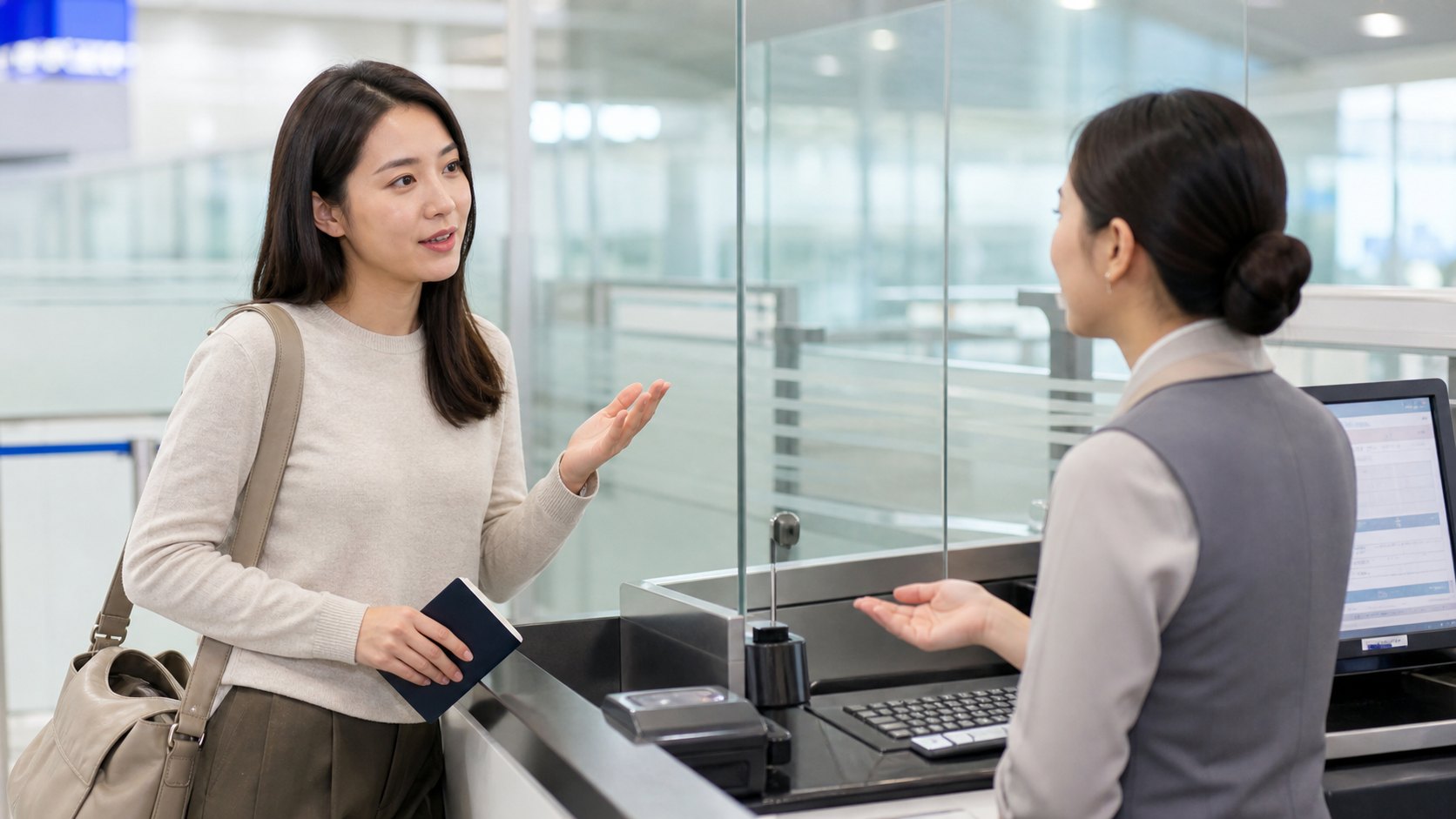
    Text-free illustration for Korean airport immigration words on BSKorean.
    After landing, follow the arrival path and ask where immigration is if needed.

    1. Arrive and Follow Immigration Signs

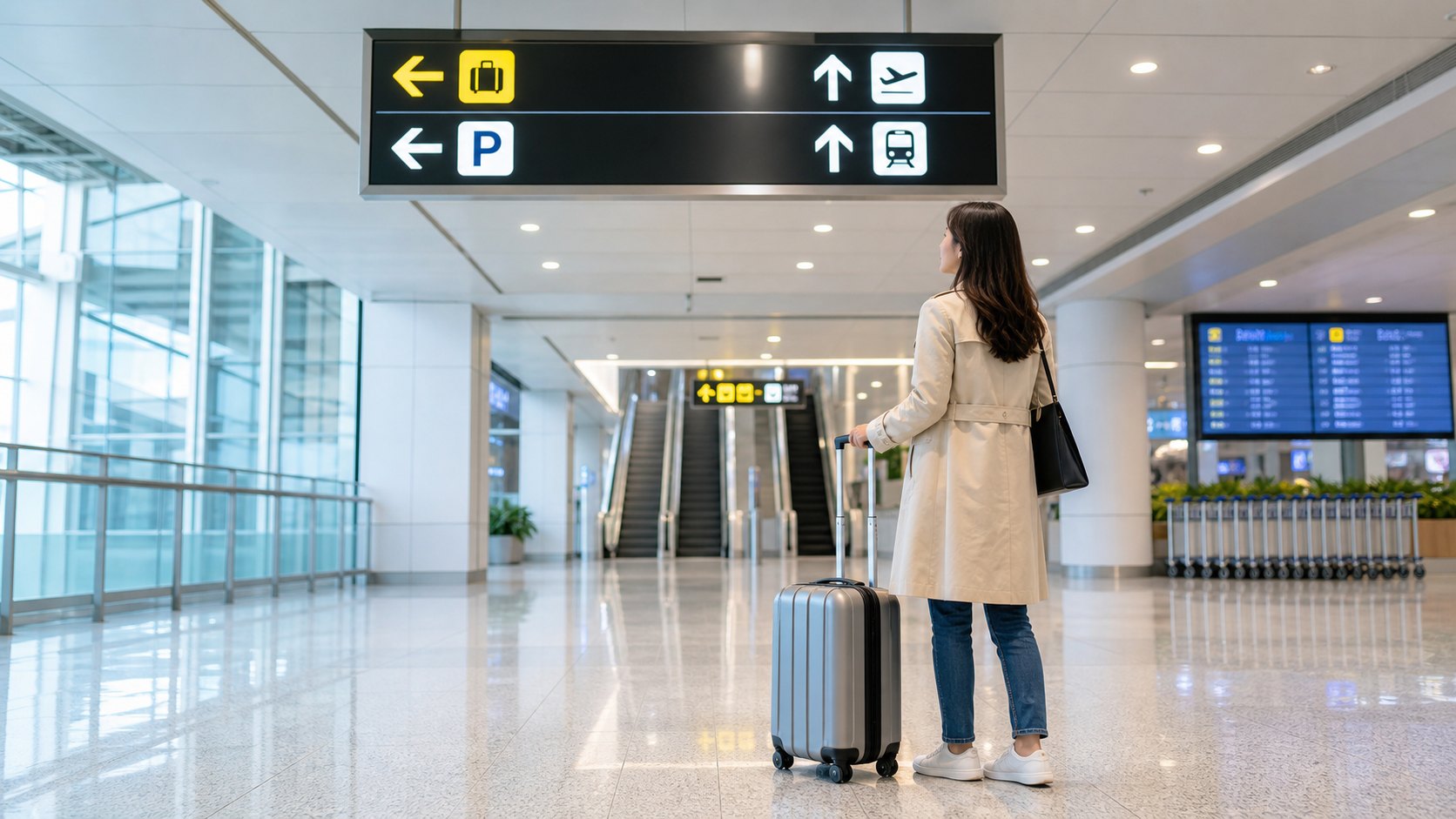
    After landing, follow the signs for arrival and immigration. If you are not sure where to go, ask a staff member before joining the wrong line.

    입국 심사는 어디예요?
    ipguk simsa-neun eodiyeyo?
    Where is immigration inspection?

    KoreanRomanizationMeaning
    공항gonghangairport
    도착dochagarrival
    입국ipgukentry / arrival into a country
    입국 심사ipguk simsaimmigration inspection

    2. Prepare Passport and Basic Answers

    Text-free illustration for Korean airport immigration words on BSKorean.
    Keep your passport ready and answer basic questions in short sentences.

    At the counter, keep your passport and basic travel information ready. Speak in short sentences if you are nervous.

    여권 여기 있습니다.
    yeogwon yeogi itseumnida
    Here is my passport.

    KoreanRomanizationMeaning
    여권yeogwonpassport
    비자bijavisa
    체류 기간cheryu giganlength of stay
    방문 목적bangmun mokjeokpurpose of visit

    3. Ask for a Repeat or Slower Explanation

    Text-free illustration for Korean airport immigration words on BSKorean.
    Ask staff to repeat slowly when a question is unclear.

    If you do not understand a question, it is okay to ask the officer or airport staff to repeat it slowly.

    천천히 다시 말씀해 주세요.
    cheoncheonhi dasi malsseumhae juseyo
    Please say it again slowly.

    KoreanRomanizationMeaning
    질문jilmunquestion
    주소jusoaddress
    숙소suksoaccommodation
    다시dasiagain

    4. Find Baggage Claim and Customs

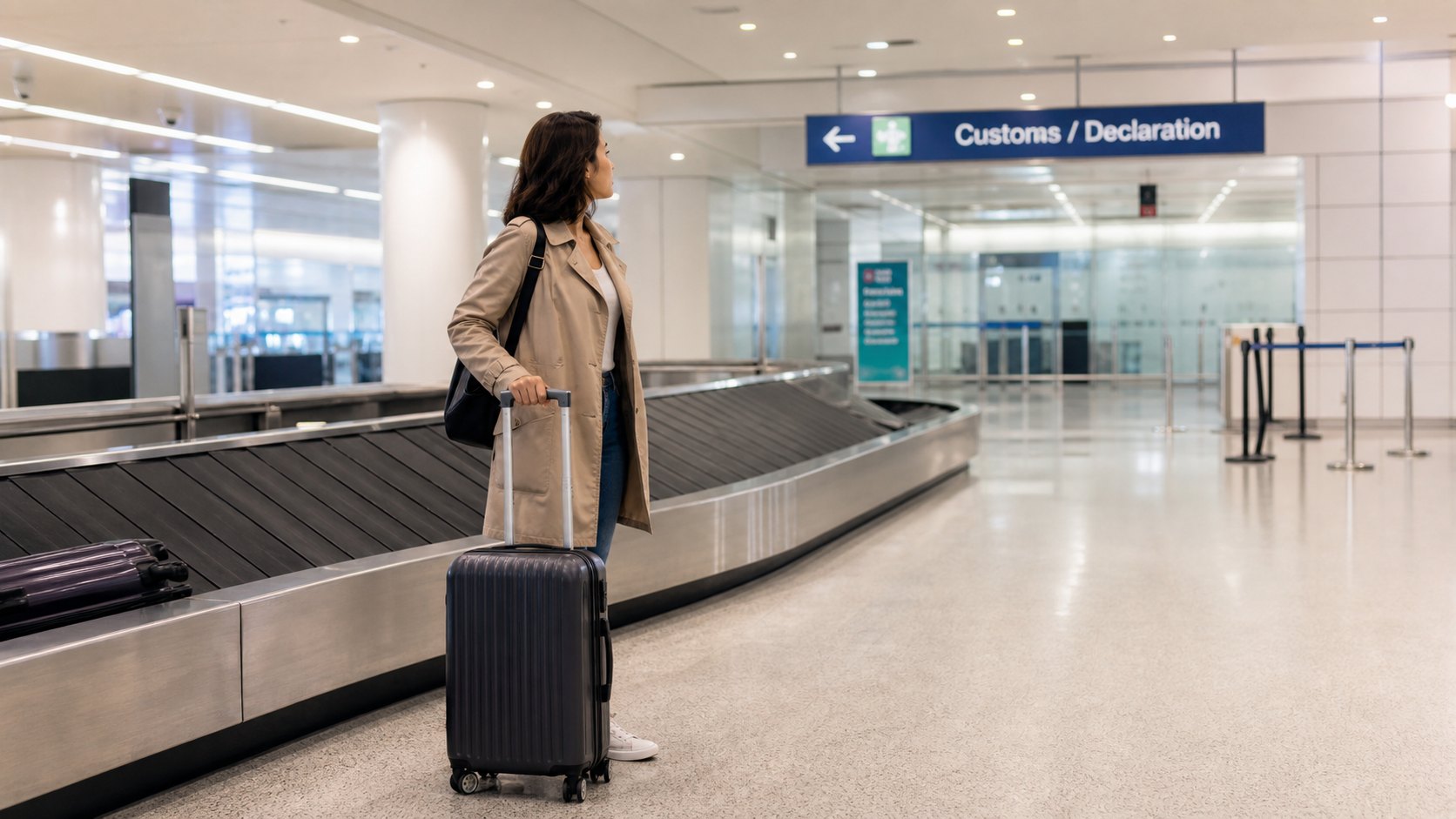
    Text-free illustration for Korean airport immigration words on BSKorean.
    After immigration, find baggage claim and then customs.

    After immigration, go to baggage claim and then customs. Keep any declaration form or related question simple and honest.

    수하물 찾는 곳은 어디예요?
    suhamul chatneun goseun eodiyeyo?
    Where is baggage claim?

    KoreanRomanizationMeaning
    수하물suhamulbaggage
    수하물 찾는 곳suhamul chatneun gotbaggage claim
    세관segwancustoms
    신고서singoseodeclaration form

    5. Ask About Transfer or Exit

    Text-free illustration for Korean airport immigration words on BSKorean.
    Confirm whether you need a transfer route or the exit.

    Some passengers need a transfer, and others need the airport exit. Confirm the direction before leaving the secure area.

    환승은 어디로 가요?
    hwanseung-eun eodiro gayo?
    Where do I go for transfer?

    KoreanRomanizationMeaning
    환승hwanseungtransfer
    출구chulguexit
    게이트geiteugate
    안내annaeinformation / guidance

    6. Use a Help Desk Phrase

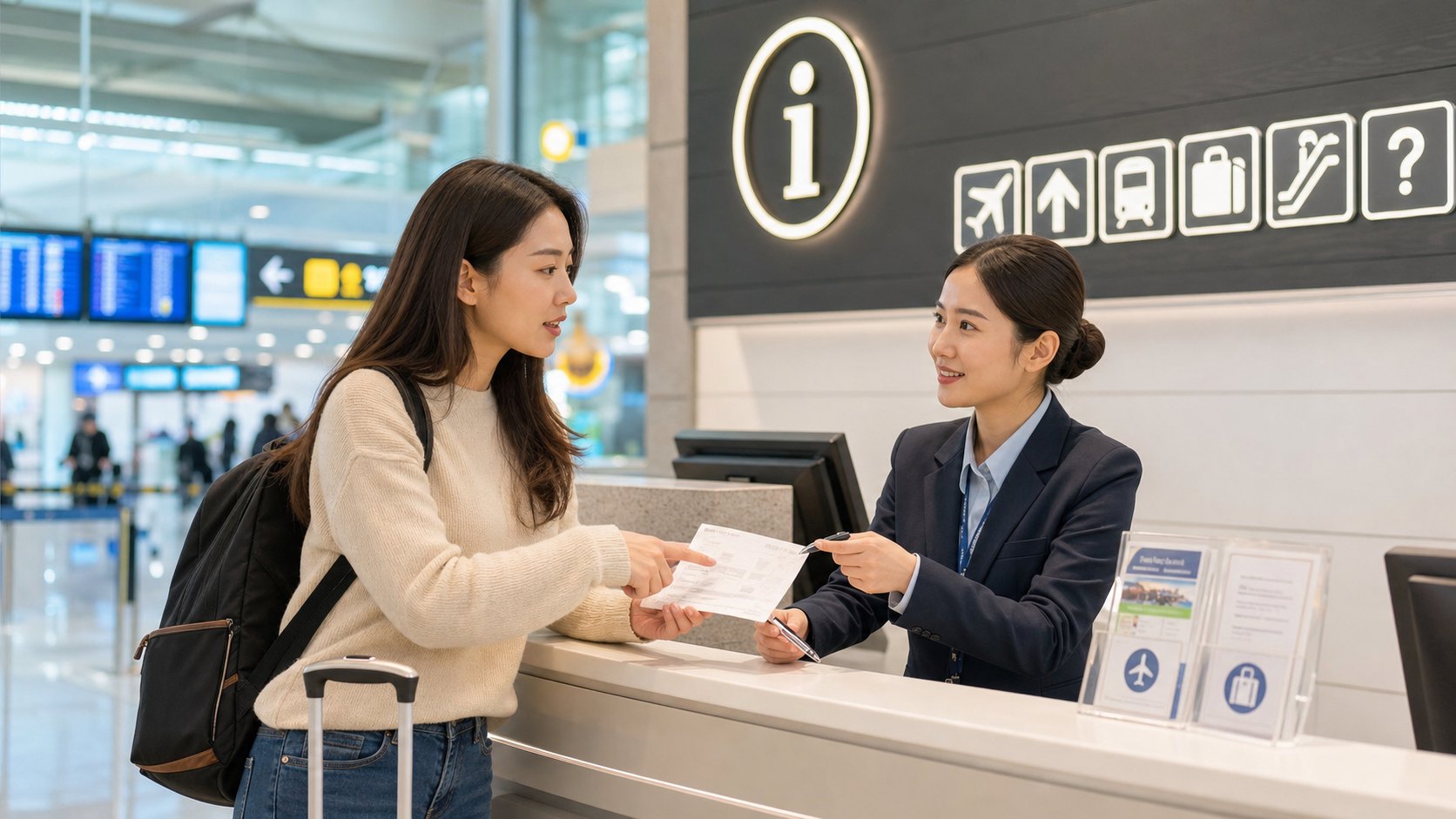
    Text-free illustration for Korean airport immigration words on BSKorean.
    Use a polite help phrase when the next airport step is unclear.

    When the next step is unclear, go to an information desk and show your boarding pass, address, or destination only to staff who need it.

    도와주실 수 있나요?
    dowajusil su innayo?
    Can you help me?

    KoreanRomanizationMeaning
    도움doumhelp
    안내 데스크annae deseukeuinformation desk
    탑승권tapseunggwonboarding pass
    분실물bunsilmullost item

    Quick Review

    SituationKorean phraseMeaning
    Immigration입국 심사는 어디예요?Where is immigration inspection?
    Passport여권 여기 있습니다.Here is my passport.
    Repeat slowly천천히 다시 말씀해 주세요.Please say it again slowly.
    Baggage수하물 찾는 곳은 어디예요?Where is baggage claim?
    Transfer환승은 어디로 가요?Where do I go for transfer?
    Help도와주실 수 있나요?Can you help me?

    For more practical Korean lessons, see the BSKorean learning app page and the practice page. For related travel and daily-life practice, review Korean taxi ride words, mobile phone store words, and post office words.

  • Korean Dental Clinic Words for Foreign Residents

    Korean Dental Clinic Words for Foreign Residents

    Use this dental clinic lesson first

    At a Korean dental clinic, start with the problem. Say 이가 아파요, “my tooth hurts,” or 예약하고 싶어요, “I want to make an appointment.” Then listen for 충치, 엑스레이, and 마취.

    Dental needKoreanMeaning
    Pain이가 아파요My tooth hurts.
    Appointment예약하고 싶어요I want to make an appointment.
    Cleaning스케일링 받고 싶어요I want teeth cleaning.
    Payment얼마예요?How much is it?

    If you are unsure about treatment, ask 다시 설명해 주세요. Related medical lessons: hospital reception words and clinic appointment phrases.

    Korean dental clinic words guide

    Korean dental clinic words helps learners practice Korean words in real situations. This BSKorean post keeps the lesson clear, scannable, and connected to app practice.

    Practice in the BSKorean app

    Related lessons

    A dental clinic visit in Korea is much easier when you can say the problem clearly and recognize the words at reception. This lesson teaches practical Korean dental clinic words for foreign residents: appointment, check-in, tooth pain, X-ray, treatment options, payment, prescription, and follow-up.

    Use these words as short, safe phrases. They are not medical advice. They help you explain what you feel and ask what the clinic needs next.

    Text-free illustration for Korean dental clinic words on BSKorean.
    Start by saying you have an appointment at reception.

    1. Check In at the Dental Clinic

    At the reception desk, start with your appointment or ask whether walk-in treatment is possible. If you have a residence card or insurance card, show it only to clinic staff.

    예약했어요.
    yeyakhaesseoyo
    I have an appointment.

    KoreanRomanizationMeaning
    치과chigwadental clinic / dentistry
    예약yeyakappointment
    접수jeopsureception / check-in
    문진표munjinpyomedical questionnaire

    2. Explain Tooth Pain Simply

    Text-free illustration for Korean dental clinic words on BSKorean.
    Point to the area and say the pain phrase clearly.

    You do not need a long explanation. Pointing to the area and saying one clear phrase is often enough to begin the consultation.

    이가 아파요.
    i-ga apayo
    My tooth hurts.

    KoreanRomanizationMeaning
    치통chitongtoothache
    잇몸itmomgums
    시려요siryeoyoit feels sensitive / cold-sensitive
    붓다butdato swell

    3. Understand X-Ray and Consent Words

    Text-free illustration for Korean dental clinic words on BSKorean.
    Ask for another explanation before agreeing to the next step.

    The dentist may ask for an X-ray before explaining the treatment. If you do not understand, ask them to explain again before you agree.

    다시 설명해 주세요.
    dasi seolmyeonghae juseyo
    Please explain it again.

    KoreanRomanizationMeaning
    엑스레이ekseureiX-ray
    검사geomsaexam / test
    동의서dong-uiseoconsent form
    설명seolmyeongexplanation

    4. Ask About Treatment Options and Cost

    Text-free illustration for Korean dental clinic words on BSKorean.
    Check the treatment name and fee before deciding.

    Dental words can sound difficult, so focus on the decision words first: what treatment is needed, whether it is urgent, and how much it costs.

    치료비는 얼마예요?
    chiryobi-neun eolmayeyo?
    How much is the treatment fee?

    KoreanRomanizationMeaning
    충치chungchicavity
    스케일링seukeillingdental cleaning / scaling
    마취machwianesthesia
    치료비chiryobitreatment fee

    5. Pay and Book a Follow-Up

    Text-free illustration for Korean dental clinic words on BSKorean.
    Confirm the receipt, prescription, and next appointment.

    After treatment or consultation, check the fee, prescription, and next appointment before leaving the clinic.

    다음 예약을 잡고 싶어요.
    daeum yeyak-eul japgo sipeoyo
    I would like to make the next appointment.

    KoreanRomanizationMeaning
    수납sunappayment desk / payment
    영수증yeongsujeungreceipt
    처방전cheobangjeonprescription
    다음 예약daeum yeyaknext appointment

    6. Listen for Aftercare Instructions

    Text-free illustration for Korean dental clinic words on BSKorean.
    Ask what to avoid and when to take medicine after treatment.

    Before you leave, ask what to avoid and when to take medicine. This is especially useful after cleaning, filling, extraction, or other treatment.

    주의사항을 알려 주세요.
    juuisahang-eul allyeo juseyo
    Please tell me the precautions.

    KoreanRomanizationMeaning
    주의사항juuisahangprecautions / aftercare notes
    yakmedicine
    식사siksameal
    통증tongjeungpain

    Quick Review

    SituationKorean phraseMeaning
    Check-in예약했어요.I have an appointment.
    Pain이가 아파요.My tooth hurts.
    Explanation다시 설명해 주세요.Please explain it again.
    Cost치료비는 얼마예요?How much is the treatment fee?
    Follow-up다음 예약을 잡고 싶어요.I would like to make the next appointment.
    Aftercare주의사항을 알려 주세요.Please tell me the precautions.

    For more practical Korean lessons, see the BSKorean learning app page and the practice page. If you need related healthcare vocabulary, review the hospital reception lesson and the pharmacy cold medicine lesson.

  • BSKorean App Tester Recruitment

    BSKorean App Tester Recruitment

    Use this BSKorean app tester page first

    This page is for people who want to test the BSKorean learning app and send practical feedback. A useful tester checks whether Korean words, example sentences, quizzes, level tests, and mobile screens are clear on a real device.

    Tester taskWhat to checkHelpful feedback
    Learning flowOpen the app and try a lessonWhich step felt confusing?
    Mobile screenCheck buttons and text sizeDevice model and screenshot area
    Learn KoreanTry Korean words and examplesWhich word or sentence looked wrong?
    PrivacyDo not send passwords or codesDescribe the issue without secrets

    Start with the BSKorean app, then try the level test. When reporting a problem, include the page URL, device type, browser, and what you expected to happen.

    Good tester notes are specific. Write the exact page, the button you pressed, the message you saw, and whether the issue happened once or every time. Useful reports do not include passwords, login codes, private messages, or screenshots that show someone else’s personal information.

    BSKorean app tester guide

    BSKorean app tester helps learners practice Korean words in real situations. This BSKorean post keeps the lesson clear, scannable, and connected to app practice.

    Practice in the BSKorean app

    Related lessons

    BSKorean is preparing practical Korean lessons for Android app users. We are recruiting Google Play testers who can install the app, try short learning sessions, and send simple feedback.

    Text-free illustration for BSKorean app tester on BSKorean.

    한국어 안내

    BSKorean 안드로이드 앱 비공개 테스트에 참여할 테스터를 모집합니다. 한국어를 일상생활, 업무, 여행, 공공서비스 상황에서 배우고 싶은 분이면 신청할 수 있습니다.

    신청은 william3001v@gmail.com 으로 보내 주세요. 메일에는 Google Play 이메일 주소, 안드로이드 휴대폰 기종, 거주 국가와 주로 쓰는 언어, 연습하고 싶은 한국어 상황을 적어 주세요.

    요청된 테스트 과정을 완료하고 사용할 수 있는 피드백을 보내 주신 분에게는 완료 확인 후 계좌이체로 5,000원을 지급합니다. 계좌 정보는 테스트 완료가 확인된 뒤에만 요청합니다.

    Who can apply

    • You use an Android phone with Google Play.
    • You want to learn Korean for daily life, work, travel, or public services.
    • You can test short Learn Korean sessions and tell us what was easy or confusing.

    How to apply

    Send an email to william3001v@gmail.com with the subject BSKorean App Tester Application.

    • Your Google Play email address
    • Your Android phone model
    • Your country and main language
    • One Korean situation you want to practice

    Tester reward

    Testers who complete the requested test flow and send usable feedback will receive KRW 5,000 by bank transfer. We will ask for bank account details only after completion is confirmed.

    After your email arrives, we will review it and send the next testing instructions. Testers may be asked to install the closed test version, open the app during the test period, and send brief feedback about lessons, Learn Korean, login, and screen layout. Completion means following the requested test steps and submitting usable feedback.

    Practice these Korean words in the BSKorean app

    After reading this lesson, continue with the BSKorean practical Korean app guide or open the BSKorean practice app to review words by level and real-life situation.

  • Korean Hair Salon Words for Foreign Residents

    Korean Hair Salon Words for Foreign Residents

    Use this hair salon resident lesson first

    Hair salon Korean works best with one clear request and a photo. Say 머리 잘라 주세요, “please cut my hair,” or 사진처럼 해 주세요, “please make it like the photo.”

    Salon requestKoreanMeaning
    Haircut머리 잘라 주세요Please cut my hair.
    Trim조금만 다듬어 주세요Please trim just a little.
    Appointment예약하고 싶어요I want to make an appointment.
    Price얼마예요?How much is it?

    Confirm the length before the cut starts: 이 정도 길이 괜찮아요?. For a broader version, continue with hair salon briefing words and mobile phone store words.

    hair salon words guide

    hair salon words helps learners practice Korean words in real situations. This BSKorean post keeps the lesson clear, scannable, and connected to app practice.

    Practice in the BSKorean app

    Related lessons

    Hair salon words are useful when you book a haircut, explain bangs or length, ask for a trim, check shampoo or styling, compare color or perm services, and pay at a Korean salon. This lesson teaches hair salon words by service step, so you can follow the conversation before the work starts.

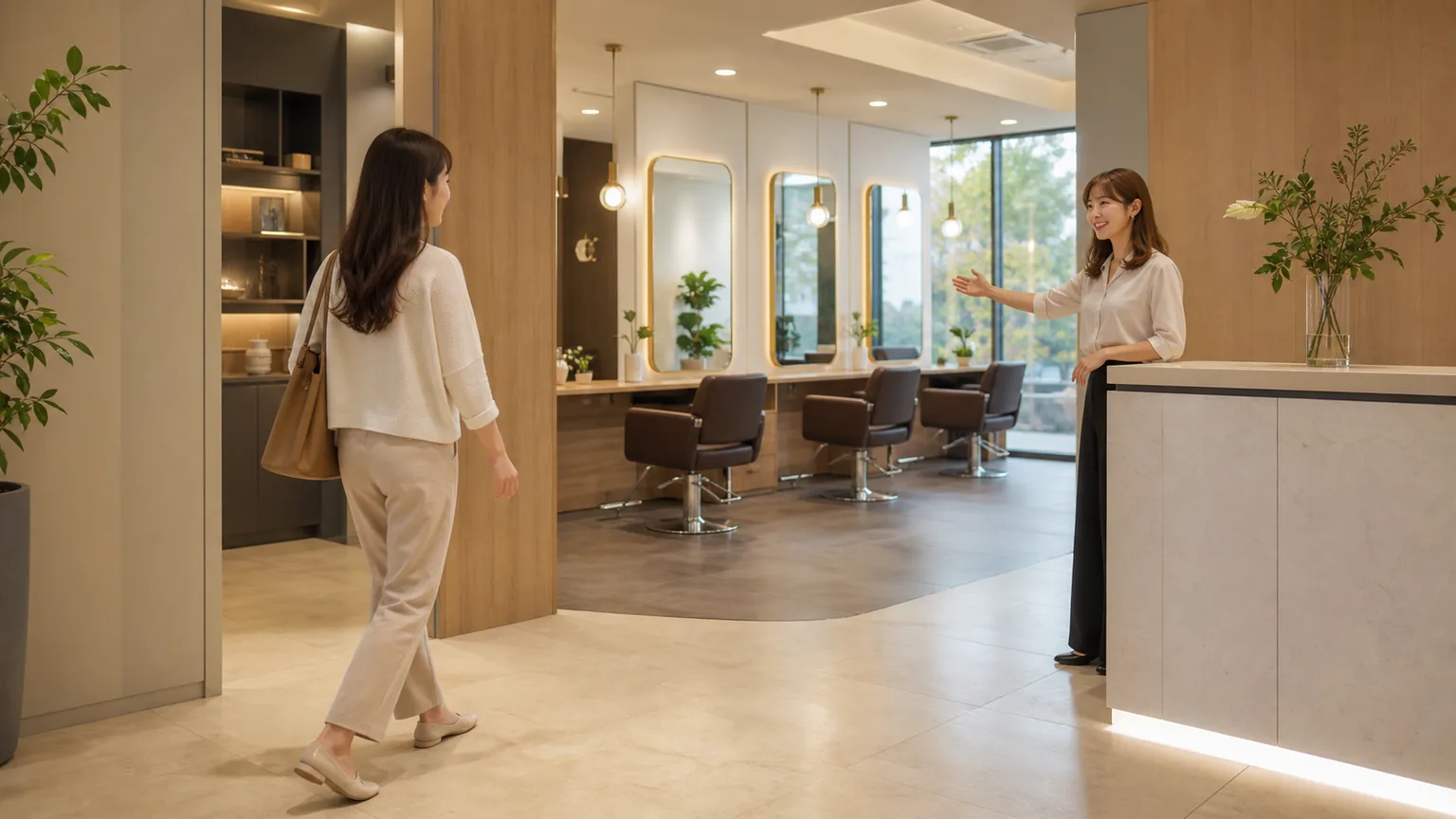
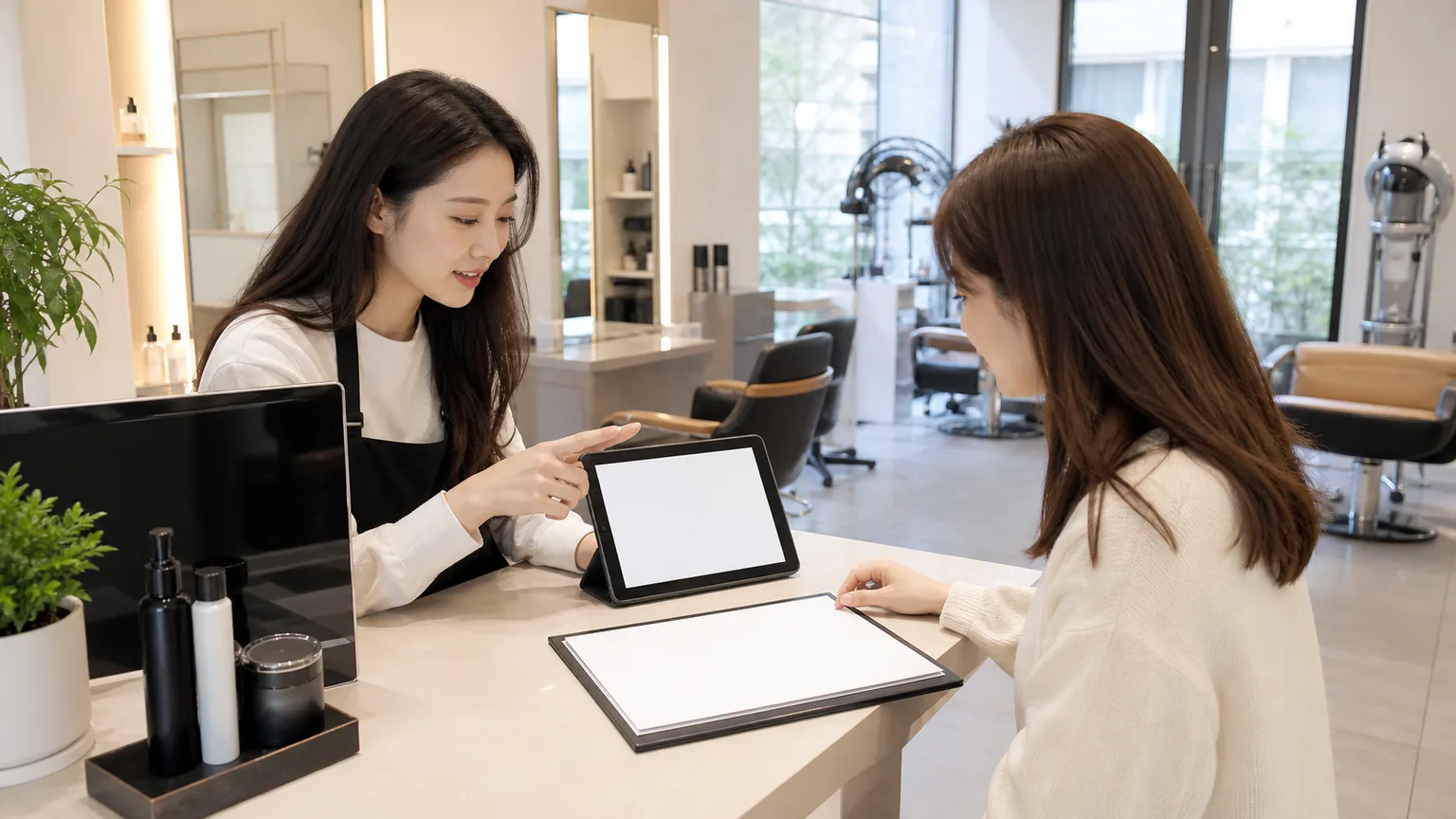
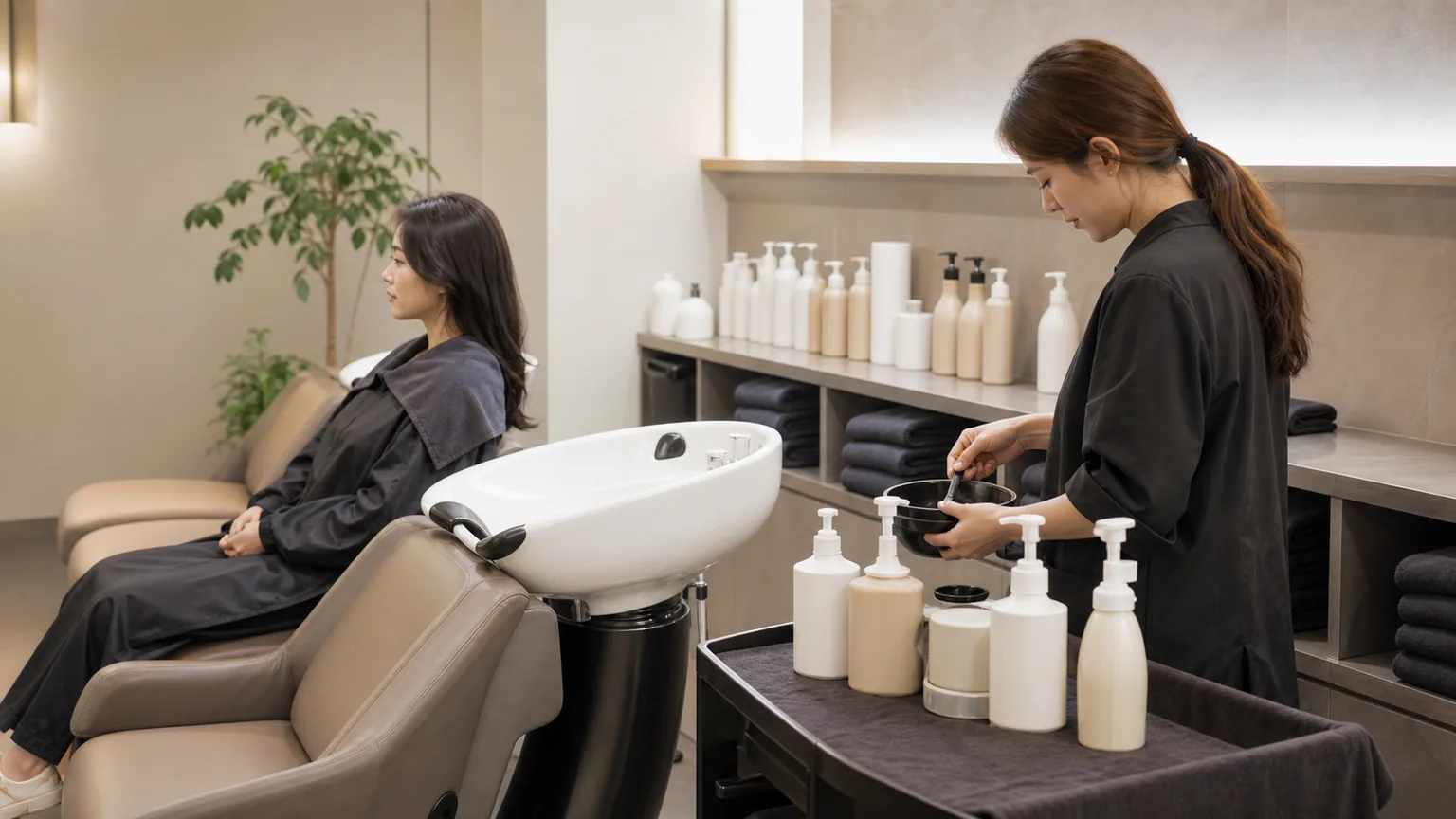
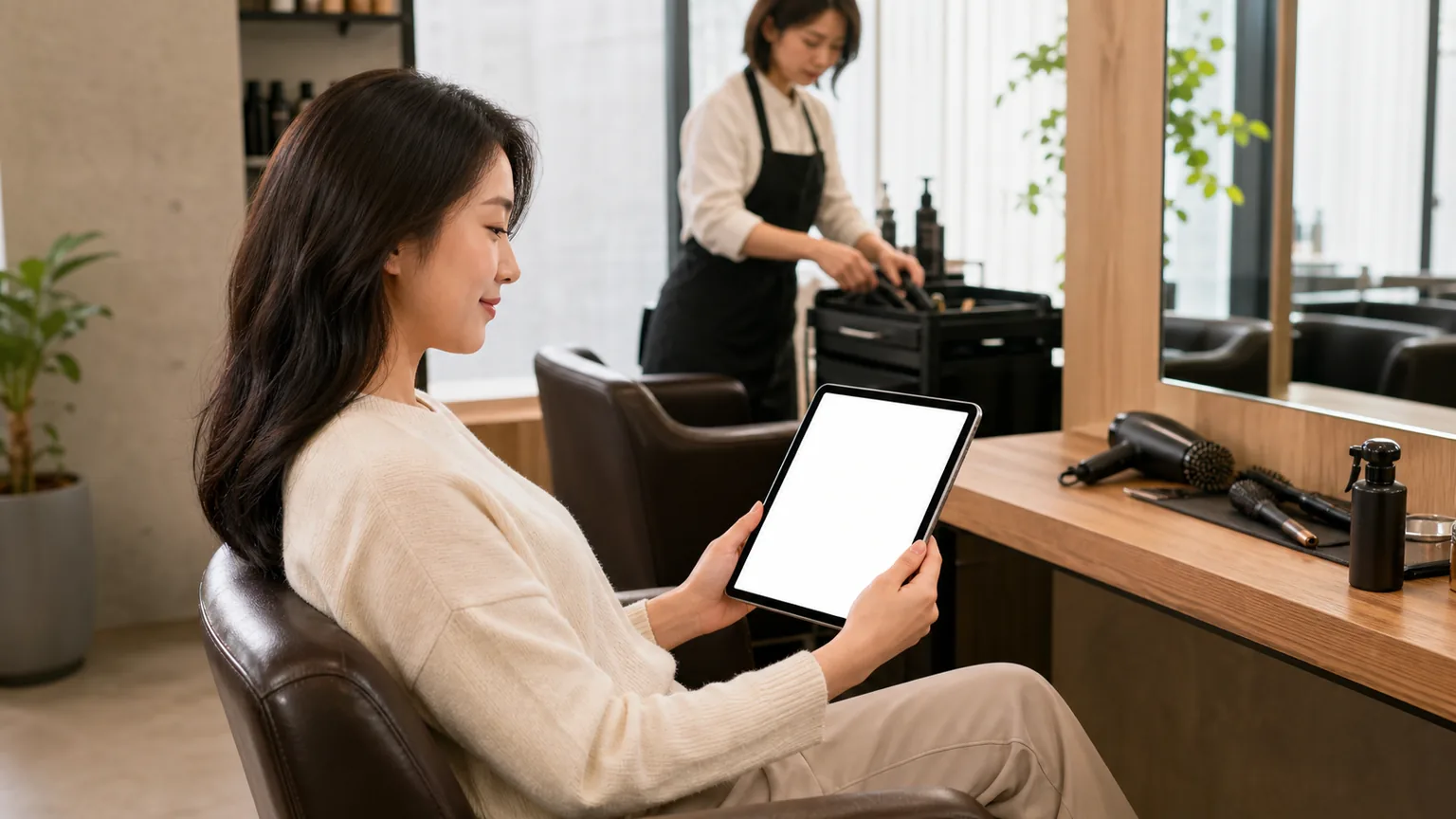
    Text-free illustration for hair salon words on BSKorean.
    Start by identifying the service step: appointment, haircut, treatment, style, price, or payment.

    Briefing Summary

    SituationUsing a Korean hair salon for an appointment, haircut, bangs, trim, color, perm, styling, price, or payment question
    Practice focussalon place, appointment, haircut request, hair length, trimming, dyeing, perm, shampoo, blow-dry, price, cash, and card payment words
    Useful forforeign residents, students, workers, and new arrivals using salon services in Korea
    Study time8-12 minutes

    Slide 1. The Situation

    Imagine you enter a 미용실 and the staff asks about your 예약. The conversation may move quickly from 커트 to 앞머리, 길이, or 짧게. First decide the service step: appointment, haircut, trim, treatment, styling, price, or payment.

    This post is a Korean language lesson, not beauty, medical, allergy, pricing, refund, or contract advice. For exact prices, chemical services such as dyeing or perms, allergy concerns, refunds, timing, and style outcomes, confirm directly with salon staff and written terms.

    Slide 2. Key Hair Salon Words

    Text-free illustration for hair salon words on BSKorean.
    Appointment and price words often appear before the service starts.
    KoreanRomanizationEnglishLevelUse
    미용실miyongsilhair salonBS1The place where you get a haircut or salon service.
    예약yeyakreservation; appointmentBS1The appointment or reservation time.
    커트keoteuhaircutBS2The haircut service.
    앞머리apmeoribangs; fringeBS2Bangs or fringe near the forehead.
    길이girilengthBS2Hair length or the amount to cut.
    다듬다dadeumdato trimBS3A small trim, not a major cut.
    짧게jjalpgeshort; shorterBS2A request to make hair shorter.
    염색yeomsaekhair dyeing; coloringBS3Hair coloring service.
    파마pamapermBS3A perm or wave service.
    샴푸syampushampooBS2Hair wash or shampoo step.
    드라이deuraiblow-dry; styling dryBS3Blow-dry or styling dry after service.
    스타일seutailstyleBS2The final style or look.
    가격gagyeokpriceBS1The service price.
    현금hyeongeumcashBS1Cash payment.
    카드 결제kadeu gyeoljecard paymentBS2Paying by card.

    Slide 3. Read the Salon Conversation in Five Passes

    Text-free illustration for hair salon words on BSKorean.
    Haircut request words help you explain length, bangs, and trimming.
    1. Pass 1: Place and time. Start with 미용실 and 예약. These tell you where you are and whether a booking is involved.
    2. Pass 2: Haircut request. Look for 커트, 앞머리, and 길이 when the staff asks about the cut.
    3. Pass 3: Trim and short. Use 다듬다 for trimming and 짧게 when you want it shorter.
    4. Pass 4: Treatment and style. Separate 염색, 파마, 샴푸, 드라이, and 스타일 from the basic haircut.
    5. Pass 5: Price and payment. Before you pay, check 가격, 현금, and 카드 결제.

    Slide 4. Common Hair Salon Mistakes

    Text-free illustration for hair salon words on BSKorean.
    Treatment words are different from haircut request words.

    The first mistake is mixing 커트 and 다듬다. 커트 is the haircut service. 다듬다 is a trim request, often for a smaller change.

    The second mistake is confusing 앞머리 and 길이. 앞머리 means bangs or fringe. 길이 means the overall length.

    The third mistake is treating chemical or styling services as if they are only haircut words. 염색, 파마, 샴푸, and 드라이 can affect time, price, and final result. Ask before the service begins.

    Slide 5. Practice With BSKorean

    Text-free illustration for hair salon words on BSKorean.
    Review the same set before you ask about a real service.

    Practice this topic in BSKorean: Read the BSKorean app guide, then open the practice app. This exact article set keeps the hair salon words together so you can review appointment, haircut, length, treatment, style, price, and payment words in one focused session.

    A good practice habit is to say the service step first: appointment, haircut, trim, treatment, styling, or payment. Then say the Korean word. This keeps the conversation clearer when several salon choices appear at once.

    Mini Review Table

    If you see…Think…
    미용실This is the place.
    예약This is the booked time.
    커트This is the haircut service.
    앞머리This means bangs or fringe.
    길이This means hair length.
    염색This means hair coloring.
    드라이This means blow-dry or styling dry.
    카드 결제This means card payment.

    Final Takeaway

    You do not need to understand every style detail to begin reading a Korean salon conversation. First identify the service step, then separate the haircut request, treatment, style, price, and payment words. These Korean hair salon words give you a practical checklist before you sit down.

    Related Lessons

  • Korean Mobile Phone Store Words for Foreign Residents

    Korean Mobile Phone Store Words for Foreign Residents

    Use these phone store phrases first

    At a Korean mobile phone store, ask about opening a line, the plan, SIM card, identity check, contract period, and cancellation before you choose.

    KoreanUse it for
    휴대폰 개통open a phone line
    요금제mobile plan
    유심SIM card
    본인인증identity verification
    약정contract period
    해지하고 싶어요I want to cancel
    Customer휴대폰 개통하고 싶어요.
    Staff어떤 요금제를 원하세요?
    Customer유심이 필요해요. 본인인증은 어떻게 해요?

    Check the monthly fee, contract period, cancellation fee, and required ID before signing a phone contract.

    Use this mobile phone store lesson first

    At a Korean mobile phone store, begin with 유심 카드가 필요해요, “I need a SIM card.” Then compare 요금제, 데이터, 월 요금, and 계약 기간.

    Phone store needKoreanMeaning
    SIM card유심 카드가 필요해요I need a SIM card.
    Plan요금제를 바꾸고 싶어요I want to change my plan.
    Data데이터가 얼마나 돼요?How much data is included?
    Repair휴대폰이 고장났어요My phone is broken.

    Before signing, ask 해지 수수료가 있어요? and confirm the total monthly price. Related daily app lessons: delivery app words and bank transfer words.

    mobile phone store words guide

    mobile phone store words helps learners practice Korean words in real situations. This BSKorean post keeps the lesson clear, scannable, and connected to app practice.

    Practice in the BSKorean app

    Related lessons

    Mobile phone store words are useful when you buy a phone, choose a plan, change a SIM card, activate service, show ID, check a bill, or ask customer support in Korea. This lesson teaches mobile phone store words by decision point, so you can follow the store conversation more calmly.

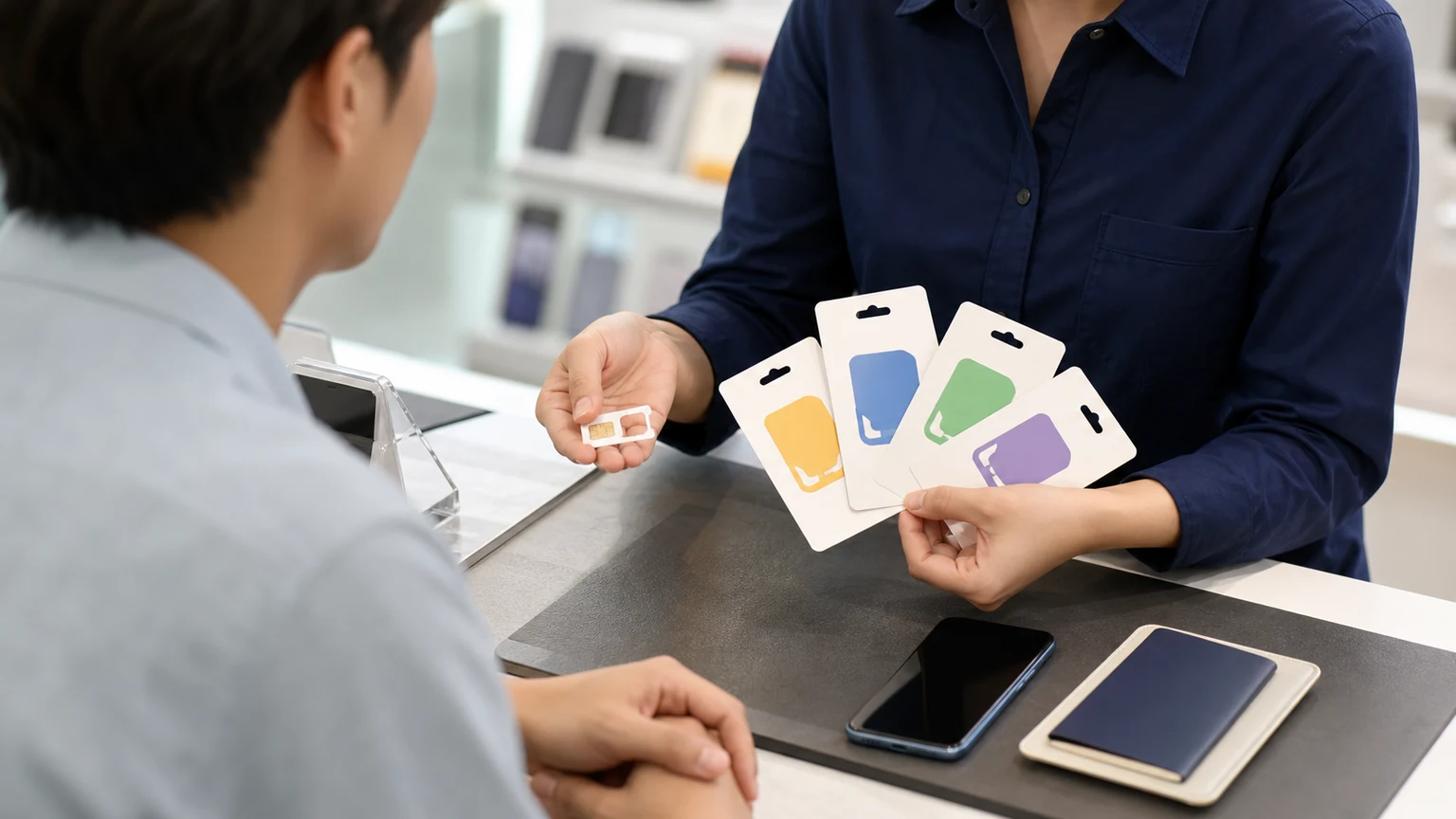
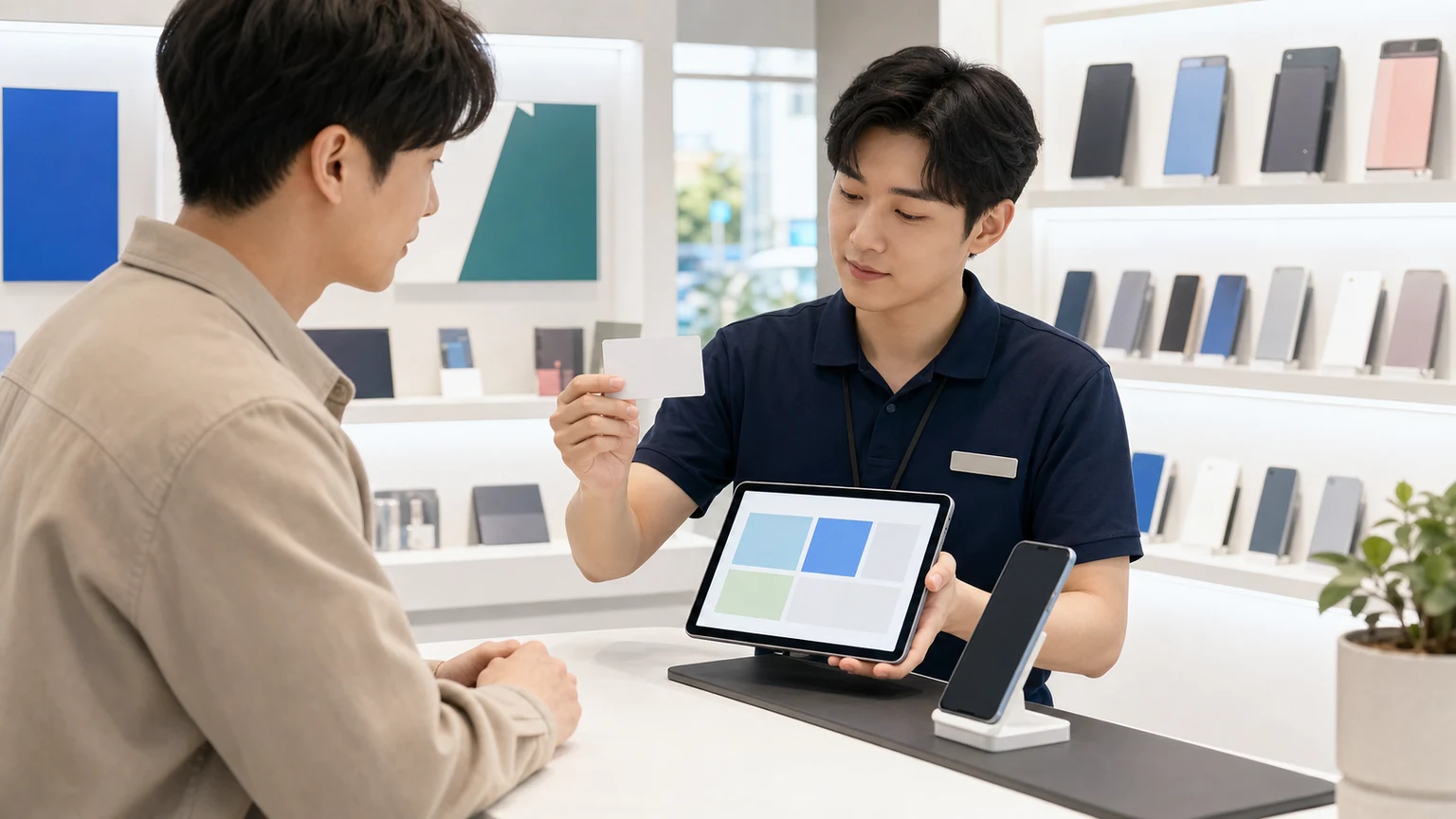
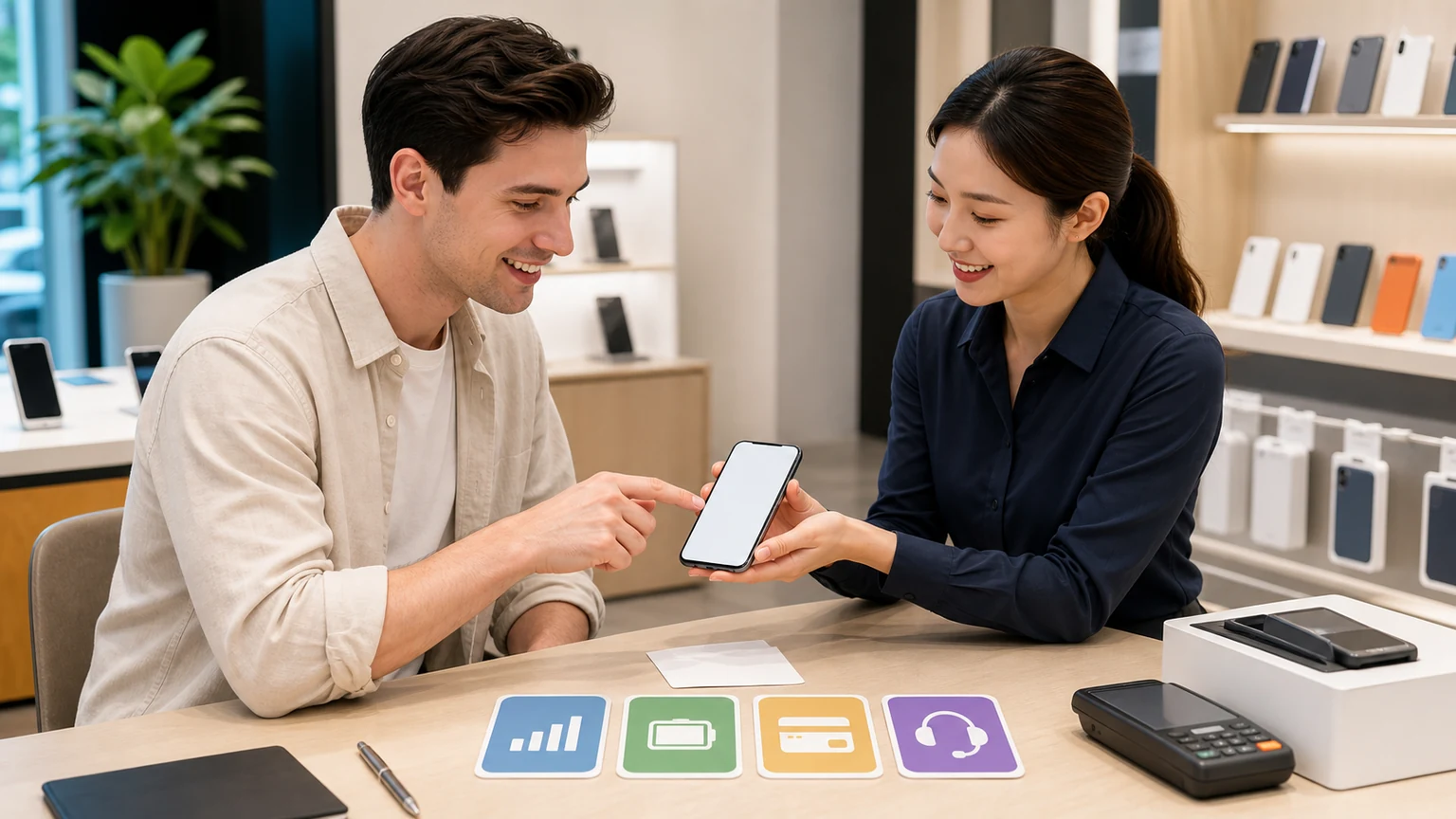
    Text-free illustration for mobile phone store words on BSKorean.
    Start by identifying the decision: device, SIM, plan, ID check, bill, or support.

    Briefing Summary

    SituationUsing a Korean mobile phone store for a device, SIM card, plan, identity check, bill, or support question
    Practice focusphone, plan, SIM, activation, contract term, installment, ID check, number transfer, data, calls, texts, bill, cancellation, and customer center words
    Useful forforeign residents, students, workers, and new arrivals setting up phone service in Korea
    Study time8-12 minutes

    Slide 1. The Situation

    Imagine you enter a phone store with your 휴대폰. The staff may ask about a 요금제, 유심, 개통, or 번호 이동. Before you look at details, decide the task: start service, change a SIM, compare a plan, verify identity, or ask support.

    This post is a Korean language lesson, not telecom, contract, credit, visa, pricing, refund, or cancellation-fee advice. For exact plan prices, required documents, contract terms, foreign-resident eligibility, credit checks, cancellation conditions, or refunds, confirm with official staff and written service terms.

    Slide 2. Key Mobile Phone Store Words

    Text-free illustration for mobile phone store words on BSKorean.
    SIM and activation words usually appear early in the service flow.
    KoreanRomanizationEnglishLevelUse
    휴대폰hyudaeponmobile phoneBS1The phone or device.
    요금제yogeumjemobile plan; rate planBS3The monthly mobile plan.
    유심yusimSIM cardBS3SIM card used for service.
    개통gaetongactivation; service openingBS4Starting phone service.
    약정yakjeongcontract term; commitmentBS4Contract or commitment period.
    할부halbuinstallment paymentBS3Paying over time.
    본인인증bonin injeungidentity verificationBS4Identity verification process.
    신분증sinbunjeungID card; identificationBS2ID card for verification.
    번호 이동beonho idongnumber transfer; number portingBS4Keeping or moving a phone number to another service.
    데이터deiteomobile dataBS2Mobile data usage.
    통화tonghwaphone call; calling minutesBS2Calls or calling allowance.
    문자munjatext messageBS2Text messages in a plan.
    청구서cheongguseobill; invoiceBS3Monthly bill or invoice.
    해지haejicancellation; terminationBS5Ending or canceling the service.
    고객센터gogaek senteocustomer center; customer serviceBS3Customer support after signup.

    Slide 3. Read the Store Conversation in Five Passes

    Text-free illustration for mobile phone store words on BSKorean.
    Plan words help you separate data, calls, texts, and monthly billing.
    1. Pass 1: Device and SIM. Start with 휴대폰 and 유심. These tell you whether the conversation is about the device or the card used for service.
    2. Pass 2: Starting service. Look for 개통 and 번호 이동 when the topic is activating service or moving a number.
    3. Pass 3: Plan and usage. Separate 요금제 from usage words like 데이터, 통화, and 문자.
    4. Pass 4: ID and contract. Check 본인인증, 신분증, 약정, and 할부 before you agree.
    5. Pass 5: After signup. For later questions, watch for 청구서, 해지, and 고객센터.

    Slide 4. Common Mobile Phone Store Mistakes

    Text-free illustration for mobile phone store words on BSKorean.
    Identity verification words are different from the ID card itself.

    The first mistake is mixing 요금제 and 데이터. 요금제 is the plan. 데이터, 통화, and 문자 are parts of what the plan may include.

    The second mistake is mixing 유심 and 개통. 유심 is the SIM card. 개통 is the activation or start of service.

    The third mistake is confusing the process with the document. 본인인증 is identity verification. 신분증 is the ID card or identification you may need for that process.

    Slide 5. Practice With BSKorean

    Text-free illustration for mobile phone store words on BSKorean.
    Review the same word set before you compare a real plan.

    Practice this topic in BSKorean: Read the BSKorean app guide, then open the practice app. This exact article set keeps the mobile phone store words together so you can review plan, SIM, activation, ID check, billing, cancellation, and support words in one session.

    A good practice habit is to say the decision first: device, SIM, plan, identity check, payment, bill, cancellation, or customer support. Then say the Korean word. This keeps the conversation clearer when several choices appear at once.

    Mini Review Table

    If you see…Think…
    휴대폰This is the mobile phone.
    요금제This is the mobile plan.
    유심This is the SIM card.
    개통This means activation.
    본인인증This means identity verification.
    번호 이동This means number transfer.
    청구서This is the bill.
    고객센터This is the customer center.

    Final Takeaway

    You do not need to understand every plan detail to begin reading a Korean phone store conversation. First identify the service step, then separate the plan, usage, ID check, bill, and support words. These Korean mobile phone store words give you a simple order for asking better questions before you decide.

    Related Lessons

    Practice these Korean words in the BSKorean app

    After reading this lesson, continue with the BSKorean practical Korean app guide or open the BSKorean practice app to review words by level and real-life situation.

  • Korean Post Office Words for Foreign Residents

    Korean Post Office Words for Foreign Residents

    Use this post office lesson first

    At a Korean post office, start with the service you need. Say 택배 보내고 싶어요, “I want to send a parcel,” or 등기 우편으로 보내고 싶어요, “I want to send it by registered mail.”

    Post office taskKoreanMeaning
    Parcel택배 보내고 싶어요I want to send a parcel.
    Address주소를 어디에 써요?Where do I write the address?
    Tracking송장 번호가 뭐예요?What is the tracking number?
    Overseas해외로 보낼 수 있어요?Can I send it overseas?

    Keep the receipt until delivery is confirmed. Related public-service lessons: public office words and bank account opening words.

    post office words guide

    post office words helps learners practice Korean words in real situations. This BSKorean post keeps the lesson clear, scannable, and connected to app practice.

    Practice in the BSKorean app

    Related lessons

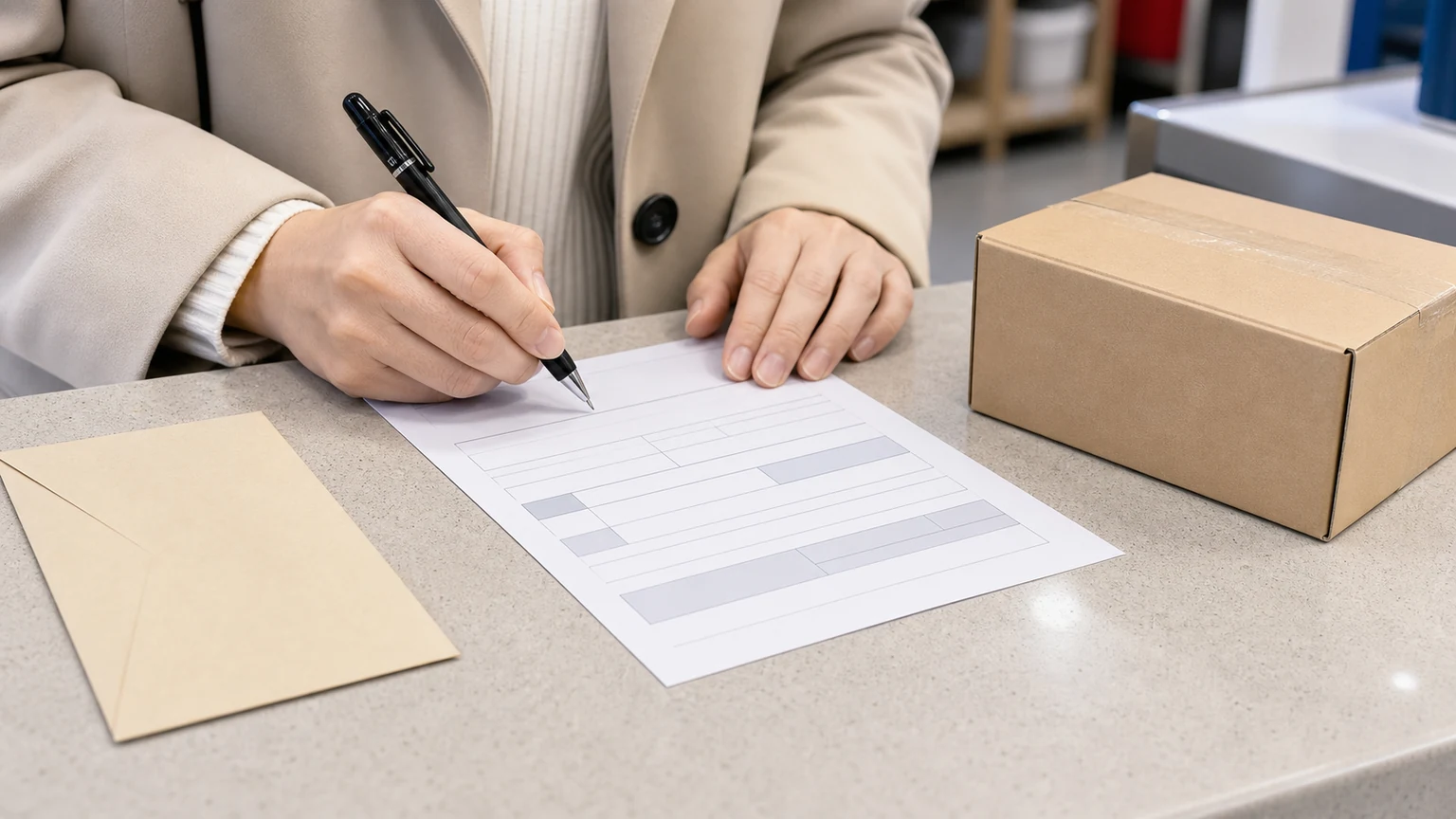
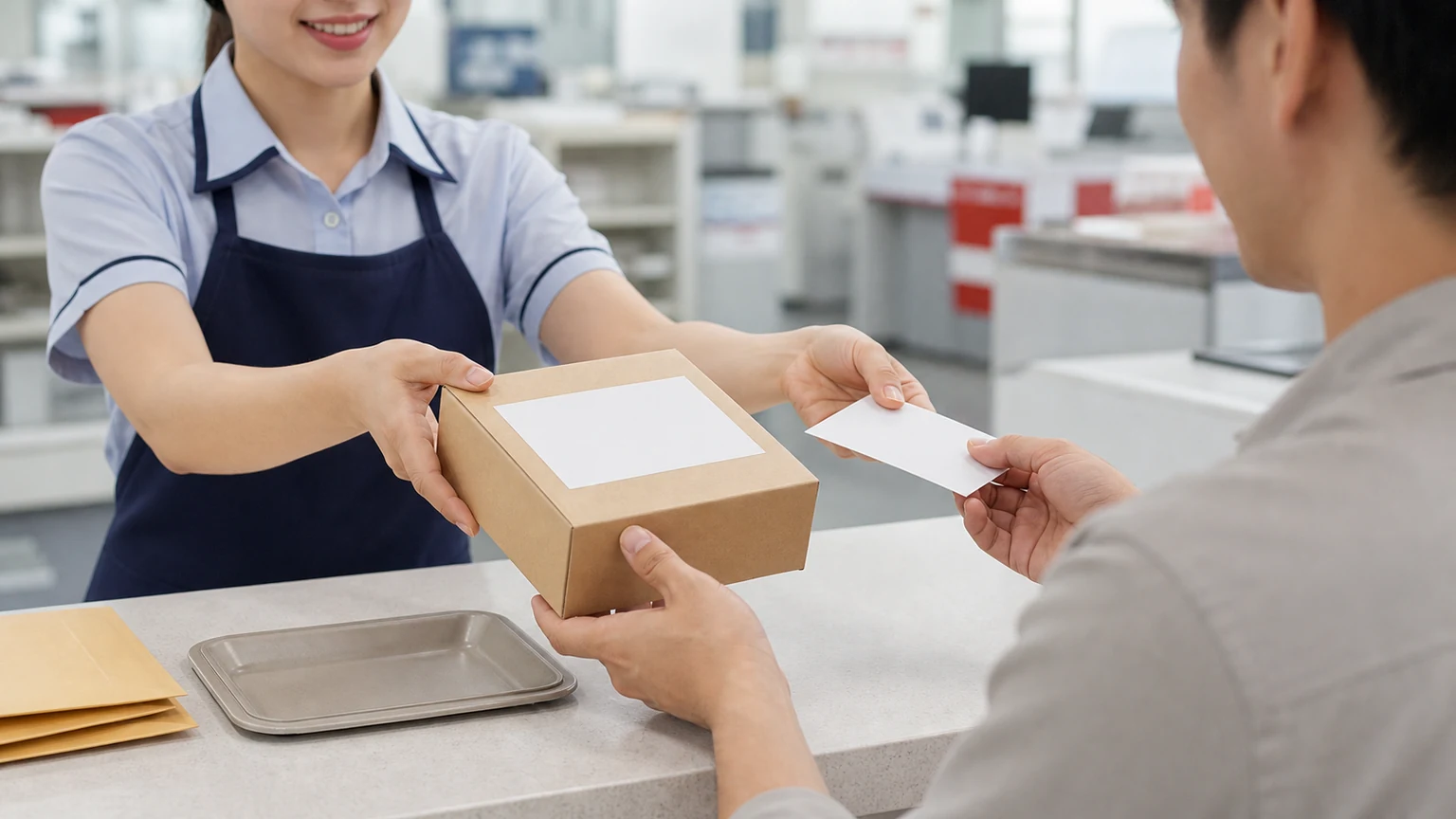
    Post office words are useful when you send mail, prepare a parcel, fill out an address form, ask for registered mail, keep a receipt, or check delivery tracking in Korea. This lesson teaches post office words by task, so you can read the counter and the form calmly instead of trying to translate every line at once.

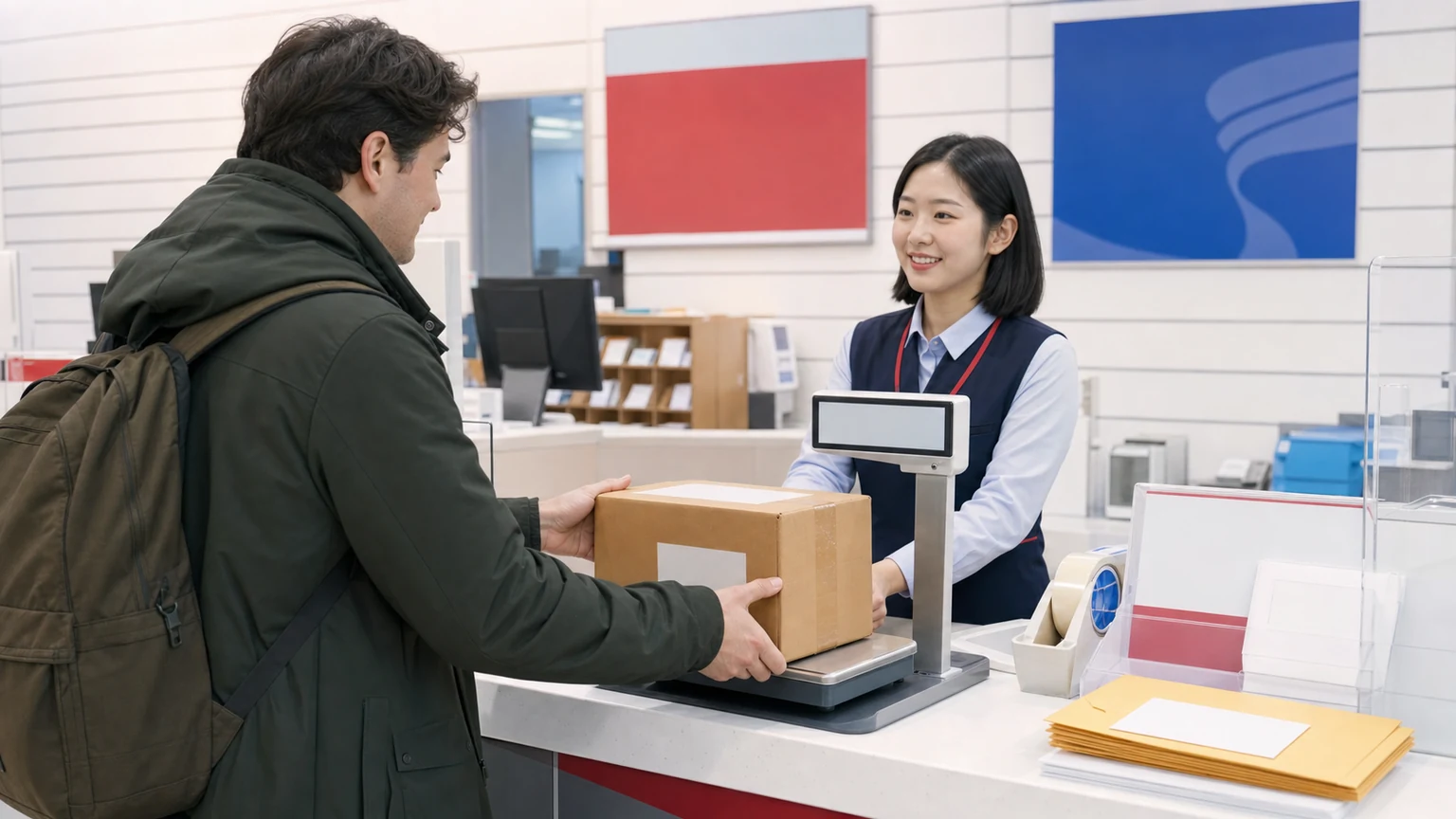
    Text-free illustration for post office words on BSKorean.
    Start by identifying the task: mail, parcel, registered mail, address, fee, or tracking.

    Briefing Summary

    SituationUsing a Korean post office for mail, parcels, registered mail, address forms, receipts, and tracking
    Practice focuspost office, mail type, parcel type, recipient, sender, postal code, waybill, receipt, fee, and tracking words
    Useful forforeign residents, students, workers, new tenants, and anyone sending items from Korea
    Study time8-12 minutes

    Slide 1. The Situation

    Imagine you walk into a 우체국 with a small parcel. You may need 우편, 소포, 택배, or 등기. Start with the task first. Are you sending mail, sending a parcel, using registered mail, or asking about tracking?

    This post is a Korean language lesson, not postal, customs, insurance, refund, delivery-time, price, or prohibited-item advice. For exact prices, international rules, customs documents, lost mail, refunds, or delivery promises, follow the official counter, service provider, or government guidance.

    Slide 2. Key Post Office Words

    Text-free illustration for post office words on BSKorean.
    Counter words help you connect the parcel, form, fee, and receipt.
    KoreanRomanizationEnglishLevelUse
    우체국uchegukpost officeBS1The place where you send mail or parcels.
    우편upyeonmail; postal serviceBS2General mail or postal-service word.
    우편함upyeonhammailboxBS2Place where mail is received.
    소포sopoparcel; packageBS2Parcel or package at the post office.
    택배taekbaecourier delivery; parcel deliveryBS2Common parcel-delivery word.
    등기deunggiregistered mailBS4Registered mail with proof or tracking depending on service.
    주소jusoaddressBS2Address field on a form or label.
    우편번호upyeon beonhopostal codeBS3Postal code on an address form.
    받는 사람batneun saramrecipientBS3Person receiving the mail or parcel.
    보내는 사람bonaeneun saramsenderBS3Person sending the mail or parcel.
    운송장unsongjangwaybill; shipping labelBS4Shipping label or waybill used for delivery tracking.
    배송 조회baesong johoedelivery trackingBS4Checking delivery status.
    배송비baesongbishipping fee; delivery feeBS2Fee for sending a parcel or delivery.
    국제우편gukje upyeoninternational mailBS4Mail going to another country.
    접수증jeopsujeungreceipt of acceptance; filing receiptBS5Proof that the item or request was accepted.

    Slide 3. Read the Post Office in Five Passes

    Text-free illustration for post office words on BSKorean.
    Address fields become easier when you separate recipient, sender, address, and postal code.
    1. Pass 1: Place. Start with 우체국 and 우편함. They tell you whether you are at the post office or dealing with received mail.
    2. Pass 2: Mail or parcel type. Check whether the task is 우편, 소포, 택배, 등기, or 국제우편.
    3. Pass 3: Address form. Look for 주소, 우편번호, 받는 사람, and 보내는 사람 before you write.
    4. Pass 4: Fee. When money appears, connect it to 배송비. The word tells you it is a shipping or delivery fee, but the price still depends on the service.
    5. Pass 5: Proof and tracking. Keep the 운송장 or 접수증, then use 배송 조회 when you check the delivery.

    Slide 4. Common Post Office Mistakes

    Text-free illustration for post office words on BSKorean.
    The receipt and waybill help you keep proof and track the delivery.

    The first mistake is mixing 우편, 소포, and 택배. 우편 is the broad mail or postal-service word. 소포 and 택배 point more toward parcels and delivery.

    The second mistake is writing the wrong person in the wrong field. 받는 사람 is the recipient. 보내는 사람 is the sender. On a form, check these two labels before you write the names and addresses.

    The third mistake is treating 운송장 and 접수증 as the same thing. A waybill or shipping label helps with delivery information. A receipt of acceptance proves the post office accepted the item. Keep the proof until the delivery is finished.

    Slide 5. Practice With BSKorean

    Text-free illustration for post office words on BSKorean.
    Review the same word set before you use the post office again.

    Practice this topic in BSKorean: Read the BSKorean app guide, then open the practice app. This exact article set keeps the post office words together so you can review mail, parcels, forms, fees, receipts, and tracking in one focused session.

    A good practice habit is to say the task first: mail, parcel, registered mail, address form, fee, proof, or tracking. Then say the Korean word. This makes the post office less stressful because you are reading the service flow, not every possible notice on the wall.

    Mini Review Table

    If you see…Think…
    우체국This is the post office.
    소포This is a parcel.
    등기This means registered mail.
    주소This is the address.
    우편번호This is the postal code.
    받는 사람This is the recipient.
    운송장This is the waybill or shipping label.
    배송 조회This means delivery tracking.

    Final Takeaway

    You do not need to understand every postal form to use a Korean post office. First identify the service, then separate the address fields, keep the proof, and use the tracking word when needed. These Korean post office words give you a simple order for sending mail or parcels with more confidence.

    Related Lessons

    Practice these Korean words in the BSKorean app

    After reading this lesson, continue with the BSKorean practical Korean app guide or open the BSKorean practice app to review words by level and real-life situation.

  • Korean Convenience Store Words for Foreign Residents

    Korean Convenience Store Words for Foreign Residents

    Use this convenience store resident lesson first

    Convenience store Korean is useful every day. Start with 계산해 주세요, “please ring this up.” Then learn the fast checkout words: 봉투, 영수증, 카드 결제, and 전자레인지.

    Store momentKoreanMeaning
    Checkout계산해 주세요Please ring this up.
    Bag봉투 필요해요I need a bag.
    Receipt영수증 주세요Please give me a receipt.
    Heat food데워 주세요Please heat it up.

    If you pick up a parcel or delivery, show the barcode and ask 택배 찾으러 왔어요. Continue with checkout words and delivery app words.

    convenience store words guide

    convenience store words helps learners practice Korean words in real situations. This BSKorean post keeps the lesson clear, scannable, and connected to app practice.

    Practice in the BSKorean app

    Related lessons

    Convenience store words are useful when you buy a quick meal, ask for a bag, heat food, check a promotion, save membership points, recharge a transport card, or drop off a parcel in Korea. This lesson teaches convenience store words by task, so you can read the store more calmly instead of trying to translate every shelf label.

    Text-free illustration for convenience store words on BSKorean.
    Start by identifying the task: food, checkout, promotion, or store service.

    Briefing Summary

    SituationUsing a Korean convenience store for food, checkout, promotions, and simple services
    Practice focusstore, checkout, receipt, bag, food, microwave, discount, membership, transport card, and parcel words
    Useful forforeign residents, students, workers, travelers, and new tenants in Korea
    Study time8-12 minutes

    Slide 1. The Situation

    Imagine you walk into a 편의점. You may need food, the microwave, the checkout counter, a promotion, or a service. First decide the task. If you are paying, look for 계산대. If you need proof of purchase, ask for 영수증. If you have several items, you may need a 봉투.

    This post is a Korean language lesson, not pricing, refund, parcel, transport card, tax, or membership policy advice. Store rules, refund conditions, parcel limits, transport card recharge limits, and membership terms should be confirmed with the store screen, the cashier, or the service provider.

    Slide 2. Key Convenience Store Words

    Text-free illustration for convenience store words on BSKorean.
    Checkout words help you ask about receipts, bags, and payment moments.
    KoreanRomanizationEnglishLevelUse
    편의점pyeonuijeomconvenience storeBS1The store itself.
    계산대gyesandaecheckout counterBS2Place where you pay.
    영수증yeongsujeungreceiptBS1Printed or digital receipt.
    봉투bongtushopping bag; envelopeBS1At checkout, usually a shopping bag.
    도시락dosiraklunch box; boxed mealBS2Convenience store boxed meal.
    삼각김밥samgak gimbaptriangle kimbapBS2Common ready-to-eat convenience store food.
    컵라면keop ramyeoncup noodlesBS2Instant cup noodles.
    전자레인지jeonjareinjimicrowaveBS3Microwave for convenience store meals.
    데우다deudato heat up; to warm upBS3Action for heating food.
    얼음컵eoreumkeopice cupBS3Cup of ice for drinks.
    행사 상품haengsa sangpumpromotional item; sale itemBS5Item under a promotion.
    할인harindiscountBS1Discount word for prices and promotions.
    멤버십 적립membeosip jeongnipmembership point saving; point accumulationBS4Asking to save membership points.
    교통카드 충전gyotong kadeu chungjeontransport card rechargeBS4Store service for recharging a transport card.
    택배 접수taekbae jeopsuparcel drop-off; parcel acceptanceBS4Store service for parcel drop-off or acceptance.

    Slide 3. Read the Store in Five Passes

    Text-free illustration for convenience store words on BSKorean.
    Food and heating words often appear near the microwave or hot water area.
    1. Pass 1: Place. Start with 편의점. It tells you the setting.
    2. Pass 2: Food. Look for 도시락, 삼각김밥, 컵라면, and 얼음컵 when choosing a quick meal or drink.
    3. Pass 3: Heat. Use 전자레인지 for the microwave and 데우다 for the action of heating food.
    4. Pass 4: Checkout. At the 계산대, you may hear 영수증 or 봉투.
    5. Pass 5: Promotions and services. For saving or asking, watch for 행사 상품, 할인, 멤버십 적립, 교통카드 충전, and 택배 접수.

    Slide 4. Common Convenience Store Mistakes

    Text-free illustration for convenience store words on BSKorean.
    Promotion words are useful, but the condition still matters.

    The first mistake is reading 봉투 too narrowly. It can mean an envelope, but at a convenience store checkout it usually means a shopping bag. A short phrase like 봉투 하나 주세요 is practical when you need a bag.

    The second mistake is mixing the machine with the action. 전자레인지 is the microwave. 데우다 means to heat something up. If you ask the cashier, 이거 데워 주세요 is a useful phrase.

    The third mistake is assuming every 행사 상품 or 할인 is simple. Promotions can have conditions, dates, app membership rules, or card rules. Learn the word first, then check the condition if money matters.

    Slide 5. Practice With BSKorean

    Text-free illustration for convenience store words on BSKorean.
    Some convenience store words are service words, not normal checkout words.

    Practice this topic in BSKorean: Read the BSKorean app guide, then open the practice app. This exact article set keeps the convenience store words together so you can review food, checkout, promotion, membership, and service words in one session.

    A good practice habit is to say the task first: food, heat, checkout, promotion, or service. Then say the Korean word. This is especially helpful in a small store where the microwave, receipt printer, membership screen, and service counter may all be close together.

    Mini Review Table

    If you see…Think…
    편의점This is the convenience store.
    계산대This is the checkout counter.
    영수증This is the receipt.
    도시락This is a boxed meal.
    컵라면These are cup noodles.
    전자레인지This is the microwave.
    멤버십 적립This means membership point saving.
    택배 접수This means parcel drop-off.

    Final Takeaway

    You do not need to understand every product label to use a Korean convenience store. First identify the task, then use the key word: 계산대 for checkout, 전자레인지 for heating food, 멤버십 적립 for points, and 택배 접수 for parcel drop-off. These Korean convenience store words give you a simple order for using the store more confidently.

    Related Lessons

    Practice these Korean words in the BSKorean app

    After reading this lesson, continue with the BSKorean practical Korean app guide or open the BSKorean practice app to review words by level and real-life situation.

  • Korean Parking Lot Words for Foreign Residents

    Korean Parking Lot Words for Foreign Residents

    Use this parking lot resident lesson first

    Resident parking Korean starts with access. Say 방문 주차 가능해요?, “is visitor parking possible?” Then check 입구, 출구, 정기권, 주차 요금, and 정산기.

    Parking needKoreanMeaning
    Visitor parking방문 주차 가능해요?Is visitor parking possible?
    Monthly pass정기권 신청하고 싶어요I want to apply for a monthly pass.
    Fee주차 요금은 얼마예요?How much is the parking fee?
    Exit출구가 어디예요?Where is the exit?

    If a machine asks for your license plate, enter it privately and keep the receipt. Related lessons: parking lot briefing words and street sign words.

    parking lot words guide

    parking lot words helps learners practice Korean words in real situations. This BSKorean post keeps the lesson clear, scannable, and connected to app practice.

    Practice in the BSKorean app

    Related lessons

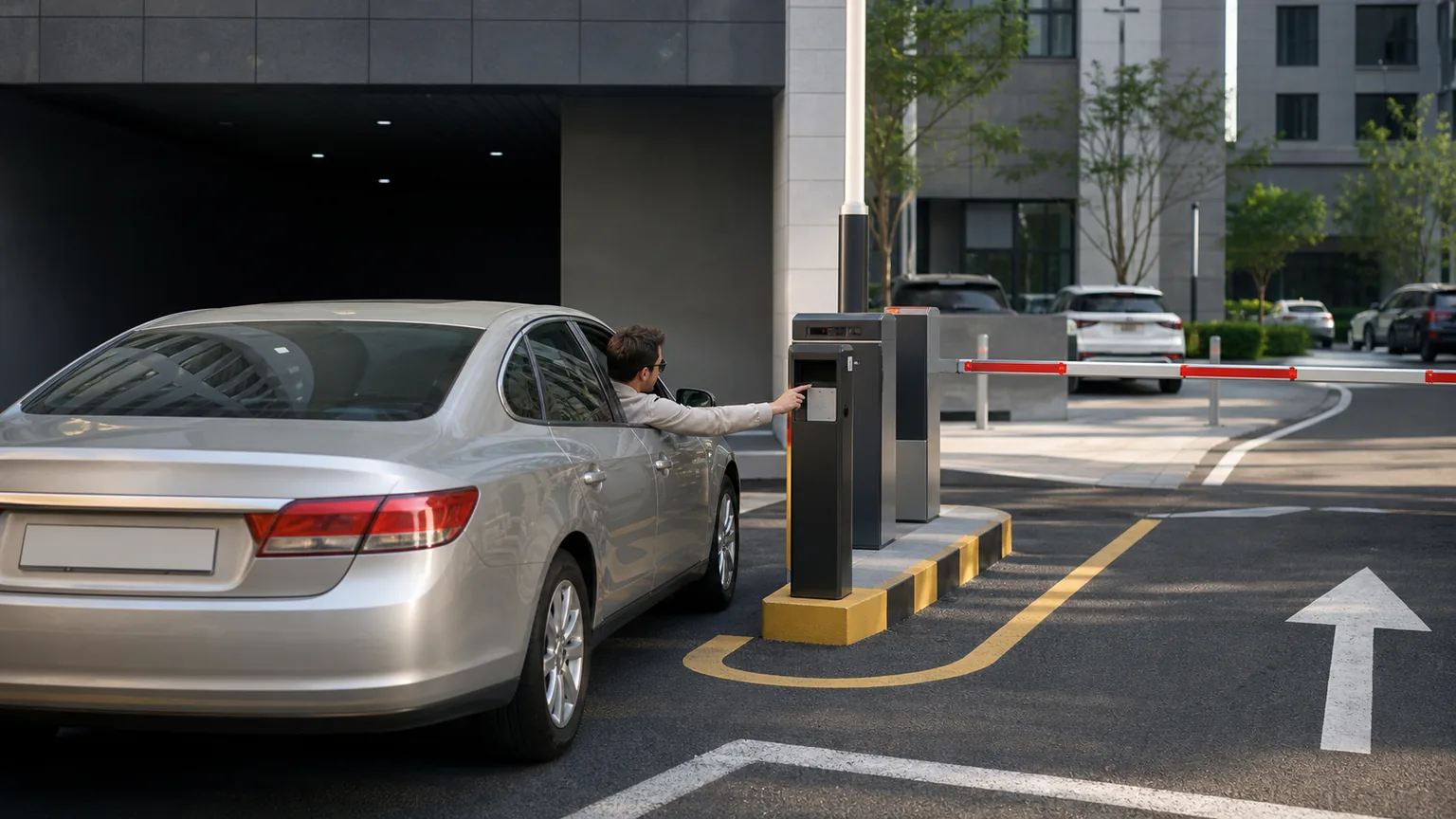
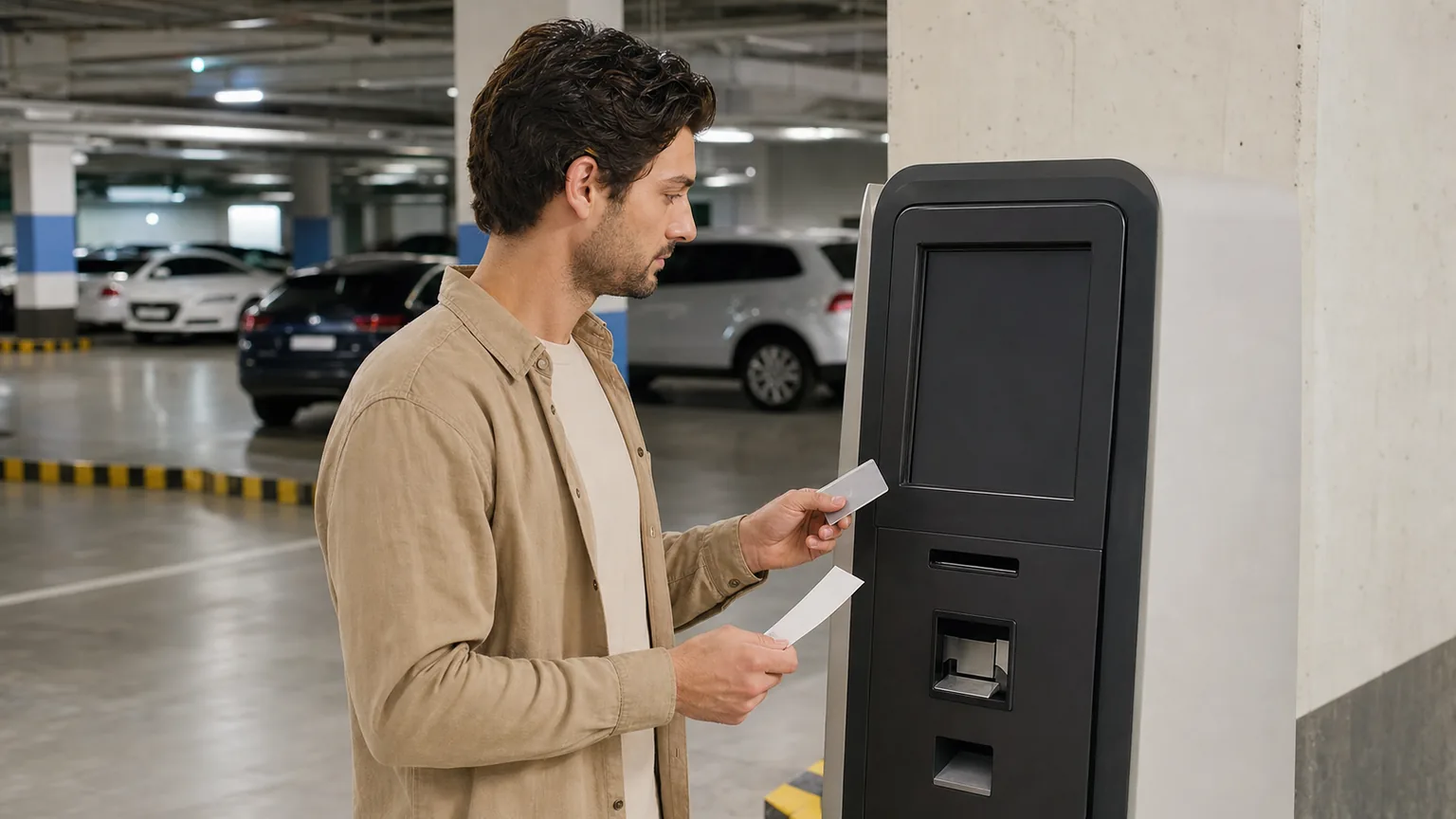
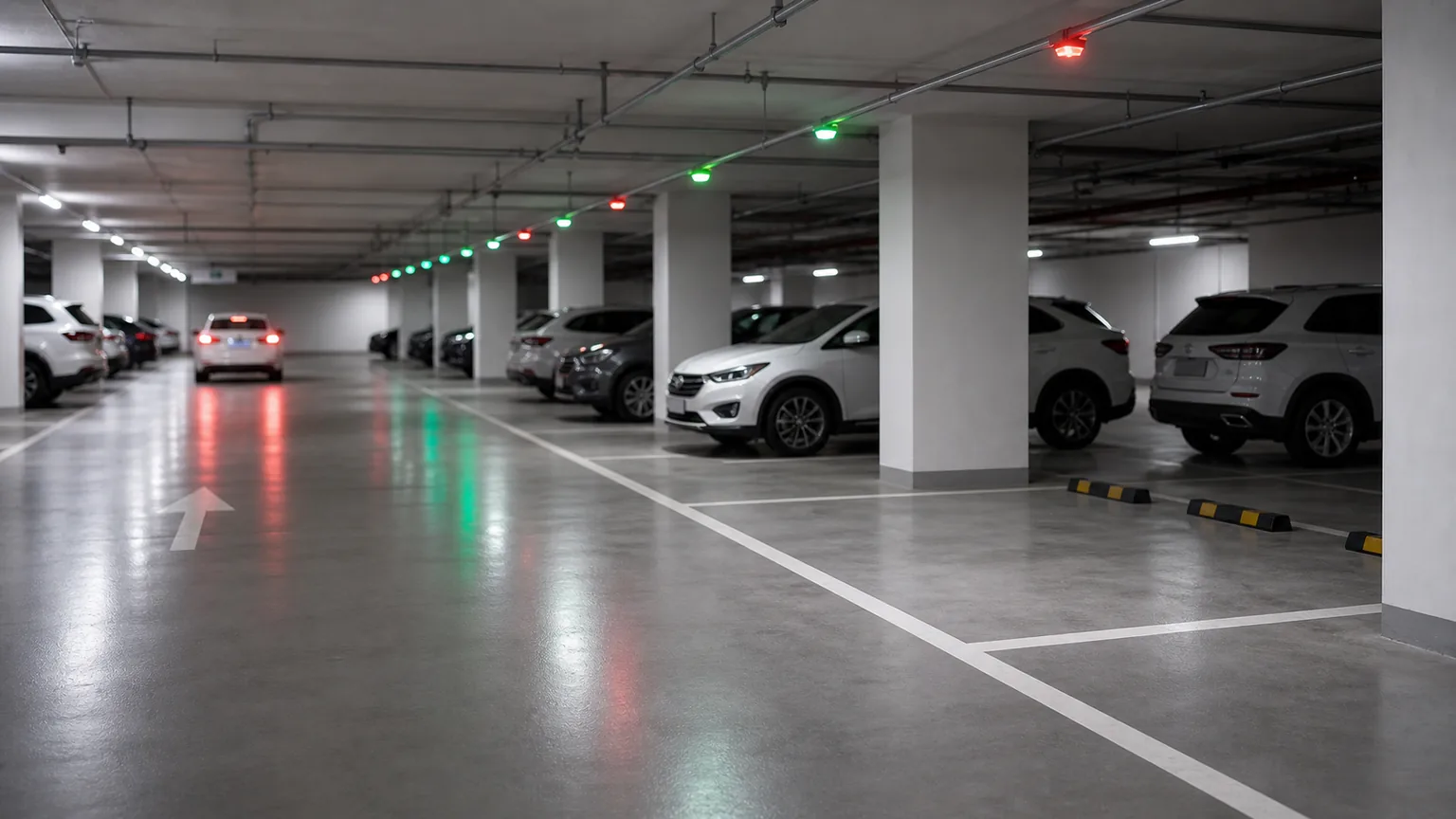
    Parking lot words are useful when you drive, ride with someone, visit an apartment, go to a clinic, shop at a mart, or pay for parking in Korea. This lesson teaches parking lot words for the lot, ticket, fee, payment machine, free or paid parking, full lots, vehicle numbers, and exit gates.

    Text-free illustration for parking lot words on BSKorean.
    Start with the place and gate words before reading every sign.

    Briefing Summary

    SituationUsing a parking lot or parking garage in Korea
    Practice focusplace, ticket, payment, fee, status, vehicle number, and exit words
    Useful forforeign residents, students, workers, drivers, and visitors in Korea
    Study time8-12 minutes

    Slide 1. The Situation

    Imagine you enter a 주차장 and see a gate, a payment kiosk, and several signs. First identify the place and action: 주차 means parking, and 주차하다 means to park. Then scan for the ticket, fee, availability, and exit words.

    This post is a Korean language lesson, not parking law, fine, towing, disabled parking eligibility, payment dispute, or building management advice. Real rules, fees, permit requirements, and penalties should be confirmed with the posted notice, parking operator, building office, or responsible authority.

    Slide 2. Key Parking Lot Words

    Text-free illustration for parking lot words on BSKorean.
    Ticket and payment words often appear near the kiosk or gate.
    KoreanRomanizationEnglishLevelUse
    주차장juchajangparking lotBS1The parking lot or parking area.
    주차juchaparkingBS1The general idea of parking.
    주차하다juchahadato parkBS2The action of parking a vehicle.
    주차권juchagwonparking ticketBS3Ticket issued when entering or paying for parking.
    정산기jeongsangipayment machine; fare adjustment machineBS4Machine used to settle or pay the parking fee.
    주차요금jucha yogeumparking feeBS3Amount paid for parking.
    무료 주차muryo juchafree parkingBS3Parking that does not require payment for a stated period.
    유료 주차yuryo juchapaid parkingBS3Parking that requires payment.
    입차ipchavehicle entryBS4Vehicle entering a parking area.
    출차chulchavehicle exitBS4Vehicle leaving a parking area.
    만차manchafull parking lot; no spacesBS3Status word meaning there are no parking spaces.
    공영주차장gongyeong juchajangpublic parking lotBS4Public parking lot, often operated by a local authority or public system.
    장애인 주차구역jangaein jucha guyeokaccessible parking areaBS4Designated accessible parking area.
    차단기chadangiparking barrier gateBS4Parking gate or barrier arm at entry or exit.
    차량번호charyang beonhovehicle number; license plate numberBS3Vehicle number used for lookup or payment.

    Slide 3. Read the Parking Lot in Five Passes

    Text-free illustration for parking lot words on BSKorean.
    Status words tell you whether you can enter, park, or keep looking.
    1. Pass 1: Place. Find 주차장 or 공영주차장 first.
    2. Pass 2: Ticket or lookup. Keep the 주차권 or enter the 차량번호 if the machine asks for it.
    3. Pass 3: Fee. Look for 정산기, 주차요금, 무료 주차, and 유료 주차.
    4. Pass 4: Status. If you see 만차, the lot is full. If you see 장애인 주차구역, check whether your vehicle is permitted.
    5. Pass 5: Exit. Use 입차, 출차, and 차단기 to understand the entry and exit flow.

    Slide 4. Common Parking Lot Mistakes

    Text-free illustration for parking lot words on BSKorean.
    Exit words help you leave after payment without mixing up entry and exit.

    The first mistake is mixing the fee with free parking. 주차요금 is the parking fee. 무료 주차 means free parking, often for a fixed time or condition.

    The second mistake is mixing entry and exit. 입차 means vehicle entry. 출차 means vehicle exit. The words may appear on lane signs, receipts, or payment screens.

    The third mistake is reading 차단기 too broadly. In a parking lot, it usually means the gate or barrier arm. In other contexts, it can mean a breaker or blocking device, so context matters.

    Slide 5. Practice With BSKorean

    Text-free illustration for parking lot words on BSKorean.
    Practice the same 15 words, then use the scan order in a real parking lot.

    Practice this topic in BSKorean: Read the BSKorean app guide, then open the practice app. This exact article set keeps the parking lot words together so you can review place, ticket, fee, status, vehicle number, and exit words in one focused session.

    A good practice habit is to say the scan order first: place, ticket, fee, status, exit. Then say the Korean word. This makes a real parking lot easier to read when several signs and payment screens appear at once.

    Mini Review Table

    If you see…Think…
    주차장This is the parking lot.
    주차권This is the parking ticket.
    정산기This is the payment machine.
    주차요금This is the parking fee.
    무료 주차This means free parking.
    만차This means the lot is full.
    출차This means vehicle exit.
    차량번호This is the vehicle number.

    Final Takeaway

    You do not need to translate every parking notice at once. First find the place, keep the ticket or vehicle number, check the fee, then follow the exit words. These Korean parking lot words give you a practical order for using parking areas more confidently.

    Related Lessons