[태그:] Korean warning signs

  • Luyện từ biển báo tàu điện ngầm

    Luyện từ biển báo tàu điện ngầm

    Hướng dẫn Luyện từ biển báo tàu điện ngầm

    Luyện từ biển báo tàu điện ngầm giúp người học luyện từ tiếng Hàn trong tình huống thực tế. Bài BSKorean này giữ nội dung rõ ràng, dễ xem và liên kết với phần luyện tập.

    Luyện tập trong ứng dụng BSKorean

    Bài học liên quan


    .bs3001-practice{background:#fbf8f1;border:1px solid #eadfce;border-radius:8px;padding:22px;margin:24px 0;color:#1f2a33}
    .bs3001-practice-grid{display:grid;grid-template-columns:repeat(auto-fit,minmax(220px,1fr));gap:14px}
    .bs3001-card,.bs3001-quiz-card{background:#fff;border:1px solid #e4ddd0;border-radius:8px;padding:18px}
    .bs3001-flash-word{font-size:34px;font-weight:800;margin:10px 0}
    .bs3001-muted{color:#5f6b70;font-size:14px}
    .bs3001-btn{border:0;border-radius:7px;background:#2b6b8f;color:#fff;padding:10px 14px;margin:4px;cursor:pointer;font-weight:700}
    .bs3001-btn.secondary{background:#68767d}
    .bs3001-choice{display:block;width:100%;text-align:left;background:#fff;border:1px solid #d8e2dd;color:#1f2a33;padding:10px;border-radius:7px;margin:8px 0;cursor:pointer}
    .bs3001-choice.correct{border-color:#287c6a;background:#edf7f2}
    .bs3001-choice.wrong{border-color:#c75b4a;background:#fff0ed}
    .bs3001-input{width:100%;max-width:360px;padding:10px;border:1px solid #cfd8d5;border-radius:7px}
    .bs3001-score{font-weight:800;color:#287c6a}
    .bs3001-missed li{margin-bottom:8px}
    @media(max-width:640px){.bs3001-practice{padding:16px}.bs3001-flash-word{font-size:28px}}

    Luyện trong tình huống biển báo tàu điện ngầm

    Short Intro

    Phần này giải thích biển báo tàu điện ngầm bằng tiếng Việt và giữ nguyên thứ tự luyện tập của bản gốc.

    Hãy đọc câu tiếng Hàn trước, sau đó đối chiếu phiên âm và nghĩa tiếng Việt trong bảng.

    Luyện trong tình huống biển báo tàu điện ngầm

    • Khi luyện biển báo tàu điện ngầm, hãy chú ý từ khóa tiếng Hàn, cách phát âm và cách dùng an toàn trong đời sống thực tế.
    • Khi luyện biển báo tàu điện ngầm, hãy chú ý từ khóa tiếng Hàn, cách phát âm và cách dùng an toàn trong đời sống thực tế.
    • Khi luyện biển báo tàu điện ngầm, hãy chú ý từ khóa tiếng Hàn, cách phát âm và cách dùng an toàn trong đời sống thực tế.
    • Khi luyện biển báo tàu điện ngầm, hãy chú ý từ khóa tiếng Hàn, cách phát âm và cách dùng an toàn trong đời sống thực tế.
    • Khi luyện biển báo tàu điện ngầm, hãy chú ý từ khóa tiếng Hàn, cách phát âm và cách dùng an toàn trong đời sống thực tế.

    Word List

    tiếng Hàn Phiên âm Nghĩa tiếng Việt How You Use It Ví dụ
    출구 chul-gu lối ra Khi luyện biển báo tàu điện ngầm, hãy chú ý từ khóa tiếng Hàn, cách phát âm và cách dùng an toàn trong đời sống thực tế. 2번 출구
    환승 hwan-seung chuyển tuyến; chuyển phương tiện Khi luyện biển báo tàu điện ngầm, hãy chú ý từ khóa tiếng Hàn, cách phát âm và cách dùng an toàn trong đời sống thực tế. 2호선 환승
    방면 bang-myeon hướng đi Khi luyện biển báo tàu điện ngầm, hãy chú ý từ khóa tiếng Hàn, cách phát âm và cách dùng an toàn trong đời sống thực tế. 서울역 방면
    승강장 seung-gang-jang sân ga; khu vực lên xe Khi luyện biển báo tàu điện ngầm, hãy chú ý từ khóa tiếng Hàn, cách phát âm và cách dùng an toàn trong đời sống thực tế. 승강장 가는 길
    화장실 hwa-jang-sil nhà vệ sinh; phòng tắm Khi luyện biển báo tàu điện ngầm, hãy chú ý từ khóa tiếng Hàn, cách phát âm và cách dùng an toàn trong đời sống thực tế. 화장실 오른쪽
    오른쪽 o-reun-jjok bên phải Direction word. 오른쪽으로 가세요
    왼쪽 oen-jjok bên trái Direction word. 왼쪽 출구
    직진 jik-jin đi thẳng Continue forward. 직진하세요
    계단 gye-dan cầu thang Stairway sign. 계단 이용
    엘리베이터 el-li-be-i-teo thang máy Accessible vertical movement. 엘리베이터

    Luyện trong tình huống biển báo tàu điện ngầm


    MulVí dụle Choice Quiz

    Luyện trong tình huống biển báo tàu điện ngầm


    Hướng dẫn tiếng Việt cho biển báo tàu điện ngầm

    Hướng dẫn tiếng Việt cho biển báo tàu điện ngầm

    Score:

    Review missed items

      (function(){
      const root=document.querySelector(‘[data-practice=”subway”]’);
      if(!root) return;
      const data={“words”:[[“출구”,”chul-gu”,”exit”,”Use this to leave the station.”,”2번 출구”],[“환승”,”hwan-seung”,”transfer”,”Use this to change subway lines.”,”2호선 환승”],[“방면”,”bang-myeon”,”toward / direction”,”Shows the direction a train or passage goes.”,”서울역 방면”],[“승강장”,”seung-gang-jang”,”platform”,”Where passengers board the train.”,”승강장 가는 길”],[“화장실”,”hwa-jang-sil”,”restroom”,”Facility sign for toilets.”,”화장실 오른쪽”],[“오른쪽”,”o-reun-jjok”,”right”,”Direction word.”,”오른쪽으로 가세요”],[“왼쪽”,”oen-jjok”,”left”,”Direction word.”,”왼쪽 출구”],[“직진”,”jik-jin”,”straight”,”Continue forward.”,”직진하세요”],[“계단”,”gye-dan”,”stairs”,”Stairway sign.”,”계단 이용”],[“엘리베이터”,”el-li-be-i-teo”,”elevator”,”Accessible vertical movement.”,”엘리베이터”]],”situations”:[[“You need to leave the station and meet someone outside Exit 3. Which word should you look for?”,”출구”,[“환승”,”출구”,”방면”,”계단”],”출구 means exit, and exit numbers matter in Korean subway stations.”],[“You are changing from Line 2 to Line 7 without leaving the station. Which word matters most?”,”환승”,[“화장실”,”환승”,”직진”,”출구”],”환승 means transfer, so it keeps you inside the subway system.”]]};
      let flash=0, mc=0, spell=0, sit=0, score=0, total=0, missed=[];
      const $=(sel)=>root.querySelector(sel);
      function showFlash(){
      const w=data.words[flash % data.words.length];
      $(‘.flash-word’).textContent=w[0];
      $(‘.flash-roman’).textContent=w[1];
      $(‘.flash-meaning’).textContent=’Click “Show Meaning” to check yourself.’;
      $(‘.flash-example’).textContent=w[4];
      }
      function showMeaning(){
      const w=data.words[flash % data.words.length];
      $(‘.flash-meaning’).textContent=w[2]+’ – ‘+w[3];
      }
      function nextFlash(){ flash++; showFlash(); }
      function makeOptions(answer, source){
      const pool=source.filter(v=>v!==answer).sort(()=>Math.random()-0.5).slice(0,3);
      return [answer,…pool].sort(()=>Math.random()-0.5);
      }
      function updateScore(){ $(‘.score’).textContent=score+’ / ‘+total; $(‘.missed’).innerHTML=missed.length?missed.map(m=>’

    • ‘+m+’
    • ‘).join(”):’

    • No missed items yet.
    • ‘; }
      function showMc(){
      const w=data.words[mc % data.words.length];
      $(‘.mc-question’).textContent=’What does “‘+w[0]+’” mean?’;
      $(‘.mc-options’).innerHTML=makeOptions(w[2], data.words.map(x=>x[2])).map(o=>’‘).join(”);
      }
      function showSpell(){
      const w=data.words[spell % data.words.length];
      $(‘.spell-question’).textContent=’Type the Korean for: ‘+w[2];
      $(‘.spell-input’).value=”;
      $(‘.spell-feedback’).textContent=”;
      }
      function showSituation(){
      const q=data.situations[sit % data.situations.length];
      $(‘.sit-question’).textContent=q[0];
      $(‘.sit-options’).innerHTML=q[2].map(o=>’‘).join(”);
      $(‘.sit-feedback’).textContent=”;
      }
      root.addEventListener(‘click’, function(e){
      if(e.target.matches(‘[data-action=”show-meaning”]’)) showMeaning();
      if(e.target.matches(‘[data-action=”next-flash”]’)) nextFlash();
      if(e.target.closest(‘.mc-options’) && e.target.matches(‘.bs3001-choice’)){
      const w=data.words[mc % data.words.length]; total++;
      if(e.target.dataset.answer===w[2]){score++; e.target.classList.add(‘correct’);} else {e.target.classList.add(‘wrong’); missed.push(w[0]+’ = ‘+w[2]);}
      mc++; updateScore(); setTimeout(showMc,500);
      }
      if(e.target.matches(‘[data-action=”check-spelling”]’)){
      const w=data.words[spell % data.words.length]; total++;
      if($(‘.spell-input’).value.trim()===w[0]){score++; $(‘.spell-feedback’).textContent=’Correct: ‘+w[0];} else {missed.push(‘Spelling: ‘+w[2]+’ -> ‘+w[0]); $(‘.spell-feedback’).textContent=’Answer: ‘+w[0];}
      spell++; updateScore();
      }
      if(e.target.matches(‘[data-action=”next-spelling”]’)) showSpell();
      if(e.target.closest(‘.sit-options’) && e.target.matches(‘.bs3001-choice’)){
      const q=data.situations[sit % data.situations.length]; total++;
      if(e.target.dataset.answer===q[1]){score++; e.target.classList.add(‘correct’); $(‘.sit-feedback’).textContent=q[3];} else {e.target.classList.add(‘wrong’); missed.push(‘Situation: ‘+q[0]+’ Answer: ‘+q[1]); $(‘.sit-feedback’).textContent=’Answer: ‘+q[1]+’. ‘+q[3];}
      sit++; updateScore(); setTimeout(showSituation,900);
      }
      });
      showFlash(); showMc(); showSpell(); showSituation(); updateScore();
      })();

      Bảng ôn tập ngắn

      Practice Goal Korean to Remember Nghĩa tiếng Việt
      Khi luyện biển báo tàu điện ngầm, hãy chú ý từ khóa tiếng Hàn, cách phát âm và cách dùng an toàn trong đời sống thực tế. 출구 lối ra
      Khi luyện biển báo tàu điện ngầm, hãy chú ý từ khóa tiếng Hàn, cách phát âm và cách dùng an toàn trong đời sống thực tế. 환승 chuyển tuyến; chuyển phương tiện
      Khi luyện biển báo tàu điện ngầm, hãy chú ý từ khóa tiếng Hàn, cách phát âm và cách dùng an toàn trong đời sống thực tế. 방면 hướng đi
      Khi luyện biển báo tàu điện ngầm, hãy chú ý từ khóa tiếng Hàn, cách phát âm và cách dùng an toàn trong đời sống thực tế. 승강장 sân ga; khu vực lên xe
      Khi luyện biển báo tàu điện ngầm, hãy chú ý từ khóa tiếng Hàn, cách phát âm và cách dùng an toàn trong đời sống thực tế. 화장실 nhà vệ sinh; phòng tắm
      Khi luyện biển báo tàu điện ngầm, hãy chú ý từ khóa tiếng Hàn, cách phát âm và cách dùng an toàn trong đời sống thực tế. 오른쪽 bên phải
      Khi luyện biển báo tàu điện ngầm, hãy chú ý từ khóa tiếng Hàn, cách phát âm và cách dùng an toàn trong đời sống thực tế. 왼쪽 bên trái
      Khi luyện biển báo tàu điện ngầm, hãy chú ý từ khóa tiếng Hàn, cách phát âm và cách dùng an toàn trong đời sống thực tế. 직진 đi thẳng

      Bài học liên quan

  • Luyện từ biển báo đường phố

    Luyện từ biển báo đường phố

    Hướng dẫn Luyện từ biển báo đường phố

    Luyện từ biển báo đường phố giúp người học luyện từ tiếng Hàn trong tình huống thực tế. Bài BSKorean này giữ nội dung rõ ràng, dễ xem và liên kết với phần luyện tập.

    Luyện tập trong ứng dụng BSKorean

    Bài học liên quan


    .bs3001-practice{background:#fbf8f1;border:1px solid #eadfce;border-radius:8px;padding:22px;margin:24px 0;color:#1f2a33}
    .bs3001-practice-grid{display:grid;grid-template-columns:repeat(auto-fit,minmax(220px,1fr));gap:14px}
    .bs3001-card,.bs3001-quiz-card{background:#fff;border:1px solid #e4ddd0;border-radius:8px;padding:18px}
    .bs3001-flash-word{font-size:34px;font-weight:800;margin:10px 0}
    .bs3001-muted{color:#5f6b70;font-size:14px}
    .bs3001-btn{border:0;border-radius:7px;background:#2b6b8f;color:#fff;padding:10px 14px;margin:4px;cursor:pointer;font-weight:700}
    .bs3001-btn.secondary{background:#68767d}
    .bs3001-choice{display:block;width:100%;text-align:left;background:#fff;border:1px solid #d8e2dd;color:#1f2a33;padding:10px;border-radius:7px;margin:8px 0;cursor:pointer}
    .bs3001-choice.correct{border-color:#287c6a;background:#edf7f2}
    .bs3001-choice.wrong{border-color:#c75b4a;background:#fff0ed}
    .bs3001-input{width:100%;max-width:360px;padding:10px;border:1px solid #cfd8d5;border-radius:7px}
    .bs3001-score{font-weight:800;color:#287c6a}
    .bs3001-missed li{margin-bottom:8px}
    @media(max-width:640px){.bs3001-practice{padding:16px}.bs3001-flash-word{font-size:28px}}

    Luyện trong tình huống biển báo đường phố

    Short Intro

    Phần này giải thích biển báo đường phố bằng tiếng Việt và giữ nguyên thứ tự luyện tập của bản gốc.

    Hãy đọc câu tiếng Hàn trước, sau đó đối chiếu phiên âm và nghĩa tiếng Việt trong bảng.

    Luyện trong tình huống biển báo đường phố

    • Khi luyện biển báo đường phố, hãy chú ý từ khóa tiếng Hàn, cách phát âm và cách dùng an toàn trong đời sống thực tế.
    • Khi luyện biển báo đường phố, hãy chú ý từ khóa tiếng Hàn, cách phát âm và cách dùng an toàn trong đời sống thực tế.
    • Khi luyện biển báo đường phố, hãy chú ý từ khóa tiếng Hàn, cách phát âm và cách dùng an toàn trong đời sống thực tế.
    • Khi luyện biển báo đường phố, hãy chú ý từ khóa tiếng Hàn, cách phát âm và cách dùng an toàn trong đời sống thực tế.
    • Khi luyện biển báo đường phố, hãy chú ý từ khóa tiếng Hàn, cách phát âm và cách dùng an toàn trong đời sống thực tế.

    Word List

    tiếng Hàn Phiên âm Nghĩa tiếng Việt How You Use It Ví dụ
    입구 ip-gu lối vào Place to enter. 건물 입구
    출구 chul-gu lối ra Place to leave. 주차장 출구
    주차 ju-cha việc đỗ xe; chỗ đỗ xe Car parking. 주차 가능
    금지 geum-ji cấm; lệnh cấm Do not do it. 주차 금지
    가능 ga-neung possible / allowed Allowed action. 주차 가능
    보행자 bo-haeng-ja người đi bộ Person walking. 보행자 전용
    전용 jeon-yong exclusive use Khi luyện biển báo đường phố, hãy chú ý từ khóa tiếng Hàn, cách phát âm và cách dùng an toàn trong đời sống thực tế. 보행자 전용
    주의 ju-ui chú ý; cẩn thận Be careful. 미끄럼 주의
    공사중 gong-sa-jung under construction Construction in progress. 공사중
    우회 u-hoe đi vòng; đường vòng Go around. 우회하세요

    Luyện trong tình huống biển báo đường phố


    MulVí dụle Choice Quiz

    Luyện trong tình huống biển báo đường phố


    Hướng dẫn tiếng Việt cho biển báo đường phố

    Hướng dẫn tiếng Việt cho biển báo đường phố

    Score:

    Review missed items

      (function(){
      const root=document.querySelector(‘[data-practice=”street”]’);
      if(!root) return;
      const data={“words”:[[“입구”,”ip-gu”,”entrance”,”Place to enter.”,”건물 입구”],[“출구”,”chul-gu”,”exit”,”Place to leave.”,”주차장 출구”],[“주차”,”ju-cha”,”parking”,”Car parking.”,”주차 가능”],[“금지”,”geum-ji”,”prohibited”,”Do not do it.”,”주차 금지”],[“가능”,”ga-neung”,”possible / allowed”,”Allowed action.”,”주차 가능”],[“보행자”,”bo-haeng-ja”,”pedestrian”,”Person walking.”,”보행자 전용”],[“전용”,”jeon-yong”,”exclusive use”,”Only for that purpose.”,”보행자 전용”],[“주의”,”ju-ui”,”caution”,”Be careful.”,”미끄럼 주의”],[“공사중”,”gong-sa-jung”,”under construction”,”Construction in progress.”,”공사중”],[“우회”,”u-hoe”,”detour”,”Go around.”,”우회하세요”]],”situations”:[[“A sign says 주차 금지. What is the rule?”,”No parking”,[“Parking allowed”,”No parking”,”Entrance”,”Detour”],”금지 means prohibited.”],[“A sign says 보행자 전용. Who is it for?”,”pedestrians only”,[“cars only”,”pedestrians only”,”delivery only”,”bicycles only”],”전용 means exclusive use.”]]};
      let flash=0, mc=0, spell=0, sit=0, score=0, total=0, missed=[];
      const $=(sel)=>root.querySelector(sel);
      function showFlash(){
      const w=data.words[flash % data.words.length];
      $(‘.flash-word’).textContent=w[0];
      $(‘.flash-roman’).textContent=w[1];
      $(‘.flash-meaning’).textContent=’Click “Show Meaning” to check yourself.’;
      $(‘.flash-example’).textContent=w[4];
      }
      function showMeaning(){
      const w=data.words[flash % data.words.length];
      $(‘.flash-meaning’).textContent=w[2]+’ – ‘+w[3];
      }
      function nextFlash(){ flash++; showFlash(); }
      function makeOptions(answer, source){
      const pool=source.filter(v=>v!==answer).sort(()=>Math.random()-0.5).slice(0,3);
      return [answer,…pool].sort(()=>Math.random()-0.5);
      }
      function updateScore(){ $(‘.score’).textContent=score+’ / ‘+total; $(‘.missed’).innerHTML=missed.length?missed.map(m=>’

    • ‘+m+’
    • ‘).join(”):’

    • No missed items yet.
    • ‘; }
      function showMc(){
      const w=data.words[mc % data.words.length];
      $(‘.mc-question’).textContent=’What does “‘+w[0]+’” mean?’;
      $(‘.mc-options’).innerHTML=makeOptions(w[2], data.words.map(x=>x[2])).map(o=>’‘).join(”);
      }
      function showSpell(){
      const w=data.words[spell % data.words.length];
      $(‘.spell-question’).textContent=’Type the Korean for: ‘+w[2];
      $(‘.spell-input’).value=”;
      $(‘.spell-feedback’).textContent=”;
      }
      function showSituation(){
      const q=data.situations[sit % data.situations.length];
      $(‘.sit-question’).textContent=q[0];
      $(‘.sit-options’).innerHTML=q[2].map(o=>’‘).join(”);
      $(‘.sit-feedback’).textContent=”;
      }
      root.addEventListener(‘click’, function(e){
      if(e.target.matches(‘[data-action=”show-meaning”]’)) showMeaning();
      if(e.target.matches(‘[data-action=”next-flash”]’)) nextFlash();
      if(e.target.closest(‘.mc-options’) && e.target.matches(‘.bs3001-choice’)){
      const w=data.words[mc % data.words.length]; total++;
      if(e.target.dataset.answer===w[2]){score++; e.target.classList.add(‘correct’);} else {e.target.classList.add(‘wrong’); missed.push(w[0]+’ = ‘+w[2]);}
      mc++; updateScore(); setTimeout(showMc,500);
      }
      if(e.target.matches(‘[data-action=”check-spelling”]’)){
      const w=data.words[spell % data.words.length]; total++;
      if($(‘.spell-input’).value.trim()===w[0]){score++; $(‘.spell-feedback’).textContent=’Correct: ‘+w[0];} else {missed.push(‘Spelling: ‘+w[2]+’ -> ‘+w[0]); $(‘.spell-feedback’).textContent=’Answer: ‘+w[0];}
      spell++; updateScore();
      }
      if(e.target.matches(‘[data-action=”next-spelling”]’)) showSpell();
      if(e.target.closest(‘.sit-options’) && e.target.matches(‘.bs3001-choice’)){
      const q=data.situations[sit % data.situations.length]; total++;
      if(e.target.dataset.answer===q[1]){score++; e.target.classList.add(‘correct’); $(‘.sit-feedback’).textContent=q[3];} else {e.target.classList.add(‘wrong’); missed.push(‘Situation: ‘+q[0]+’ Answer: ‘+q[1]); $(‘.sit-feedback’).textContent=’Answer: ‘+q[1]+’. ‘+q[3];}
      sit++; updateScore(); setTimeout(showSituation,900);
      }
      });
      showFlash(); showMc(); showSpell(); showSituation(); updateScore();
      })();

      Bảng ôn tập ngắn

      Practice Goal Korean to Remember Nghĩa tiếng Việt
      Khi luyện biển báo đường phố, hãy chú ý từ khóa tiếng Hàn, cách phát âm và cách dùng an toàn trong đời sống thực tế. 입구 lối vào
      Khi luyện biển báo đường phố, hãy chú ý từ khóa tiếng Hàn, cách phát âm và cách dùng an toàn trong đời sống thực tế. 출구 lối ra
      Khi luyện biển báo đường phố, hãy chú ý từ khóa tiếng Hàn, cách phát âm và cách dùng an toàn trong đời sống thực tế. 주차 việc đỗ xe; chỗ đỗ xe
      Khi luyện biển báo đường phố, hãy chú ý từ khóa tiếng Hàn, cách phát âm và cách dùng an toàn trong đời sống thực tế. 금지 cấm; lệnh cấm
      Khi luyện biển báo đường phố, hãy chú ý từ khóa tiếng Hàn, cách phát âm và cách dùng an toàn trong đời sống thực tế. 가능 possible / allowed
      Khi luyện biển báo đường phố, hãy chú ý từ khóa tiếng Hàn, cách phát âm và cách dùng an toàn trong đời sống thực tế. 보행자 người đi bộ
      Khi luyện biển báo đường phố, hãy chú ý từ khóa tiếng Hàn, cách phát âm và cách dùng an toàn trong đời sống thực tế. 전용 exclusive use
      Khi luyện biển báo đường phố, hãy chú ý từ khóa tiếng Hàn, cách phát âm và cách dùng an toàn trong đời sống thực tế. 주의 chú ý; cẩn thận

      Bài học liên quan

    • Từ vựng tiếng Hàn cho biển báo tàu điện ngầm

      Từ vựng tiếng Hàn cho biển báo tàu điện ngầm


      Hướng dẫn Từ vựng tiếng Hàn cho biển báo tàu điện ngầm

      Từ vựng tiếng Hàn cho biển báo tàu điện ngầm giúp người học luyện từ tiếng Hàn trong tình huống thực tế. Bài BSKorean này giữ nội dung rõ ràng, dễ xem và liên kết với phần luyện tập.

      Luyện tập trong ứng dụng BSKorean

      Bài học liên quan

      Phần này giải thích biển báo tàu điện ngầm bằng tiếng Việt và giữ nguyên thứ tự luyện tập của bản gốc.

      Hướng dẫn tiếng Việt cho biển báo tàu điện ngầm

      Hình minh họa không chữ cho Từ vựng tiếng Hàn cho biển báo tàu điện ngầm trên BSKorean.
      Hình minh họa cho tình huống biển báo tàu điện ngầm.

      Bắt đầu luyện tập

      Tình huống mở đầu

      Hãy đọc câu tiếng Hàn trước, sau đó đối chiếu phiên âm và nghĩa tiếng Việt trong bảng.

      Khi luyện biển báo tàu điện ngầm, hãy chú ý từ khóa tiếng Hàn, cách phát âm và cách dùng an toàn trong đời sống thực tế.

      Nội dung giữ cùng hình ảnh và bố cục để người học dễ so sánh với bản tiếng Anh.

      Learning Snapshot

      Phù hợp với Phần này giải thích biển báo tàu điện ngầm bằng tiếng Việt và giữ nguyên thứ tự luyện tập của bản gốc.
      Kỹ năng chính Hãy đọc câu tiếng Hàn trước, sau đó đối chiếu phiên âm và nghĩa tiếng Việt trong bảng.
      Thời gian học 8-10 phút
      Trọng tâm luyện tập Khi luyện biển báo tàu điện ngầm, hãy chú ý từ khóa tiếng Hàn, cách phát âm và cách dùng an toàn trong đời sống thực tế.

      Hướng dẫn tiếng Việt cho biển báo tàu điện ngầm

      Phần này giải thích biển báo tàu điện ngầm bằng tiếng Việt và giữ nguyên thứ tự luyện tập của bản gốc.

      Hãy đọc câu tiếng Hàn trước, sau đó đối chiếu phiên âm và nghĩa tiếng Việt trong bảng.

      Từ vựng chính

      tiếng Hàn Phiên âm Nghĩa cơ bản Nghĩa tự nhiên Nơi thường thấy Ví dụ
      출구 chulgu lối ra Khi luyện biển báo tàu điện ngầm, hãy chú ý từ khóa tiếng Hàn, cách phát âm và cách dùng an toàn trong đời sống thực tế. subway station, building 2번 출구
      환승 hwanseung chuyển tuyến; chuyển phương tiện change to another line Khi luyện biển báo tàu điện ngầm, hãy chú ý từ khóa tiếng Hàn, cách phát âm và cách dùng an toàn trong đời sống thực tế. 2호선 환승
      방면 bangmyeon hướng đi toward a station or area Khi luyện biển báo tàu điện ngầm, hãy chú ý từ khóa tiếng Hàn, cách phát âm và cách dùng an toàn trong đời sống thực tế. 강남 방면
      승강장 seunggangjang sân ga; khu vực lên xe Khi luyện biển báo tàu điện ngầm, hãy chú ý từ khóa tiếng Hàn, cách phát âm và cách dùng an toàn trong đời sống thực tế. Khi luyện biển báo tàu điện ngầm, hãy chú ý từ khóa tiếng Hàn, cách phát âm và cách dùng an toàn trong đời sống thực tế. 승강장 가는 길
      화장실 hwajangsil nhà vệ sinh; phòng tắm toilet or restroom facility station, mall, building 화장실 오른쪽
      엘리베이터 ellibeiteo thang máy Khi luyện biển báo tàu điện ngầm, hãy chú ý từ khóa tiếng Hàn, cách phát âm và cách dùng an toàn trong đời sống thực tế. station, apartment, building 엘리베이터 왼쪽
      에스컬레이터 eseukeolleiteo thang cuốn moving stairs Khi luyện biển báo tàu điện ngầm, hãy chú ý từ khóa tiếng Hàn, cách phát âm và cách dùng an toàn trong đời sống thực tế. 에스컬레이터 이용
      개찰구 gaechalgu cổng soát vé Khi luyện biển báo tàu điện ngầm, hãy chú ý từ khóa tiếng Hàn, cách phát âm và cách dùng an toàn trong đời sống thực tế. station entrance area 개찰구 앞
      직진 jikjin đi thẳng go straight ahead direction signs 직진 후 오른쪽
      오른쪽 oreunjjok bên phải right side Khi luyện biển báo tàu điện ngầm, hãy chú ý từ khóa tiếng Hàn, cách phát âm và cách dùng an toàn trong đời sống thực tế. 화장실 오른쪽
      왼쪽 oenjjok bên trái left side Khi luyện biển báo tàu điện ngầm, hãy chú ý từ khóa tiếng Hàn, cách phát âm và cách dùng an toàn trong đời sống thực tế. 승강장 왼쪽
      가는 길 ganeun gil đường đi đến nơi nào đó path toward a place Khi luyện biển báo tàu điện ngầm, hãy chú ý từ khóa tiếng Hàn, cách phát âm và cách dùng an toàn trong đời sống thực tế. 출구 가는 길

      Hướng dẫn tiếng Việt cho biển báo tàu điện ngầm

      Khi luyện biển báo tàu điện ngầm, hãy chú ý từ khóa tiếng Hàn, cách phát âm và cách dùng an toàn trong đời sống thực tế.

      Nội dung giữ cùng hình ảnh và bố cục để người học dễ so sánh với bản tiếng Anh.

      Phần này giải thích biển báo tàu điện ngầm bằng tiếng Việt và giữ nguyên thứ tự luyện tập của bản gốc.

      Hãy đọc câu tiếng Hàn trước, sau đó đối chiếu phiên âm và nghĩa tiếng Việt trong bảng.

      Sign Luyện tậps

      Khi luyện biển báo tàu điện ngầm, hãy chú ý từ khóa tiếng Hàn, cách phát âm và cách dùng an toàn trong đời sống thực tế.

      Luyện tập Nghĩa tiếng Việt Ví dụ
      Number + 번 출구 Exit number 3번 출구 = Exit 3
      Line number + 호선 환승 Transfer to that line 2호선 환승 = Transfer to Line 2
      Station or place + 방면 Toward that direction 강남 방면 = Toward Gangnam
      Place + 가는 길 Way to that place 승강장 가는 길 = Way to the platform
      Place + 오른쪽 / 왼쪽 Nội dung giữ cùng hình ảnh và bố cục để người học dễ so sánh với bản tiếng Anh. 화장실 오른쪽 = Restroom on the right

      Hướng dẫn tiếng Việt cho biển báo tàu điện ngầm

      Nội dung giữ cùng hình ảnh và bố cục để người học dễ so sánh với bản tiếng Anh.

      3번 출구 오른쪽
      Exit 3, right side

      Phần này giải thích biển báo tàu điện ngầm bằng tiếng Việt và giữ nguyên thứ tự luyện tập của bản gốc.

      Here is another example:

      2호선 환승 직진
      Transfer to Line 2, go straight

      Hãy đọc câu tiếng Hàn trước, sau đó đối chiếu phiên âm và nghĩa tiếng Việt trong bảng.

      Lưu ý thường gặp

      Lưu ý thường gặp

      Khi luyện biển báo tàu điện ngầm, hãy chú ý từ khóa tiếng Hàn, cách phát âm và cách dùng an toàn trong đời sống thực tế.

      Nội dung giữ cùng hình ảnh và bố cục để người học dễ so sánh với bản tiếng Anh.

      Lưu ý thường gặp

      Phần này giải thích biển báo tàu điện ngầm bằng tiếng Việt và giữ nguyên thứ tự luyện tập của bản gốc.

      Hãy đọc câu tiếng Hàn trước, sau đó đối chiếu phiên âm và nghĩa tiếng Việt trong bảng.

      Lưu ý thường gặp

      Khi luyện biển báo tàu điện ngầm, hãy chú ý từ khóa tiếng Hàn, cách phát âm và cách dùng an toàn trong đời sống thực tế.

      Nội dung giữ cùng hình ảnh và bố cục để người học dễ so sánh với bản tiếng Anh.

      Luyện trong tình huống biển báo tàu điện ngầm

      Phần này giải thích biển báo tàu điện ngầm bằng tiếng Việt và giữ nguyên thứ tự luyện tập của bản gốc.

      1. Khi luyện biển báo tàu điện ngầm, hãy chú ý từ khóa tiếng Hàn, cách phát âm và cách dùng an toàn trong đời sống thực tế.
      2. Khi luyện biển báo tàu điện ngầm, hãy chú ý từ khóa tiếng Hàn, cách phát âm và cách dùng an toàn trong đời sống thực tế.
      3. Khi luyện biển báo tàu điện ngầm, hãy chú ý từ khóa tiếng Hàn, cách phát âm và cách dùng an toàn trong đời sống thực tế.

      Ôn tập nhanh

      1. Khi luyện biển báo tàu điện ngầm, hãy chú ý từ khóa tiếng Hàn, cách phát âm và cách dùng an toàn trong đời sống thực tế.
      2. Khi luyện biển báo tàu điện ngầm, hãy chú ý từ khóa tiếng Hàn, cách phát âm và cách dùng an toàn trong đời sống thực tế.
      3. Khi luyện biển báo tàu điện ngầm, hãy chú ý từ khóa tiếng Hàn, cách phát âm và cách dùng an toàn trong đời sống thực tế.
      4. Khi luyện biển báo tàu điện ngầm, hãy chú ý từ khóa tiếng Hàn, cách phát âm và cách dùng an toàn trong đời sống thực tế.
      5. Khi luyện biển báo tàu điện ngầm, hãy chú ý từ khóa tiếng Hàn, cách phát âm và cách dùng an toàn trong đời sống thực tế.

      Bảng ôn tập ngắn

      tiếng Hàn Nghĩa tiếng Việt Tình huống sử dụng Beginner Ví dụ
      출구 exit lối ra Khi luyện biển báo tàu điện ngầm, hãy chú ý từ khóa tiếng Hàn, cách phát âm và cách dùng an toàn trong đời sống thực tế.
      환승 transfer chuyển tuyến; chuyển phương tiện Khi luyện biển báo tàu điện ngầm, hãy chú ý từ khóa tiếng Hàn, cách phát âm và cách dùng an toàn trong đời sống thực tế.
      방면 toward hướng đi Khi luyện biển báo tàu điện ngầm, hãy chú ý từ khóa tiếng Hàn, cách phát âm và cách dùng an toàn trong đời sống thực tế.
      승강장 platform sân ga; khu vực lên xe Khi luyện biển báo tàu điện ngầm, hãy chú ý từ khóa tiếng Hàn, cách phát âm và cách dùng an toàn trong đời sống thực tế.
      화장실 restroom nhà vệ sinh; phòng tắm Khi luyện biển báo tàu điện ngầm, hãy chú ý từ khóa tiếng Hàn, cách phát âm và cách dùng an toàn trong đời sống thực tế.
      직진 straight đi thẳng Keep going forward

      Luyện trong tình huống biển báo tàu điện ngầm

      Hãy đọc câu tiếng Hàn trước, sau đó đối chiếu phiên âm và nghĩa tiếng Việt trong bảng.

      Bắt đầu luyện tập

      Khi luyện biển báo tàu điện ngầm, hãy chú ý từ khóa tiếng Hàn, cách phát âm và cách dùng an toàn trong đời sống thực tế.

      Nội dung giữ cùng hình ảnh và bố cục để người học dễ so sánh với bản tiếng Anh.

      Bài học liên quan

      Kết luận

      Phần này giải thích biển báo tàu điện ngầm bằng tiếng Việt và giữ nguyên thứ tự luyện tập của bản gốc.

      Hãy đọc câu tiếng Hàn trước, sau đó đối chiếu phiên âm và nghĩa tiếng Việt trong bảng.

    • Từ vựng tiếng Hàn cho biển báo đường phố

      Từ vựng tiếng Hàn cho biển báo đường phố


      Hướng dẫn Từ vựng tiếng Hàn cho biển báo đường phố

      Từ vựng tiếng Hàn cho biển báo đường phố giúp người học luyện từ tiếng Hàn trong tình huống thực tế. Bài BSKorean này giữ nội dung rõ ràng, dễ xem và liên kết với phần luyện tập.

      Luyện tập trong ứng dụng BSKorean

      Bài học liên quan

      Phần này giải thích biển báo đường phố bằng tiếng Việt và giữ nguyên thứ tự luyện tập của bản gốc.

      Hướng dẫn tiếng Việt cho biển báo đường phố

      Hình minh họa không chữ cho Từ vựng tiếng Hàn cho biển báo đường phố trên BSKorean.
      Hình minh họa cho tình huống biển báo đường phố.

      Bắt đầu luyện tập

      Tình huống mở đầu

      Hãy đọc câu tiếng Hàn trước, sau đó đối chiếu phiên âm và nghĩa tiếng Việt trong bảng.

      Khi luyện biển báo đường phố, hãy chú ý từ khóa tiếng Hàn, cách phát âm và cách dùng an toàn trong đời sống thực tế.

      Learning Snapshot

      Nội dung giữ cùng hình ảnh và bố cục để người học dễ so sánh với bản tiếng Anh.

      Phần này giải thích biển báo đường phố bằng tiếng Việt và giữ nguyên thứ tự luyện tập của bản gốc.

      Hướng dẫn tiếng Việt cho biển báo đường phố

      Hãy đọc câu tiếng Hàn trước, sau đó đối chiếu phiên âm và nghĩa tiếng Việt trong bảng.

      Khi luyện biển báo đường phố, hãy chú ý từ khóa tiếng Hàn, cách phát âm và cách dùng an toàn trong đời sống thực tế.

      Từ vựng chính

      주차장 입구
      주차금지
      공사중
      보행자 통로

      Nội dung giữ cùng hình ảnh và bố cục để người học dễ so sánh với bản tiếng Anh.

      Phần này giải thích biển báo đường phố bằng tiếng Việt và giữ nguyên thứ tự luyện tập của bản gốc.

      Lưu ý thường gặp

      Lưu ý thường gặp

      Hãy đọc câu tiếng Hàn trước, sau đó đối chiếu phiên âm và nghĩa tiếng Việt trong bảng.

      Khi luyện biển báo đường phố, hãy chú ý từ khóa tiếng Hàn, cách phát âm và cách dùng an toàn trong đời sống thực tế.

      Nội dung giữ cùng hình ảnh và bố cục để người học dễ so sánh với bản tiếng Anh.

      Lưu ý thường gặp

      Phần này giải thích biển báo đường phố bằng tiếng Việt và giữ nguyên thứ tự luyện tập của bản gốc.

      Hãy đọc câu tiếng Hàn trước, sau đó đối chiếu phiên âm và nghĩa tiếng Việt trong bảng.

      Khi luyện biển báo đường phố, hãy chú ý từ khóa tiếng Hàn, cách phát âm và cách dùng an toàn trong đời sống thực tế.

      Lưu ý thường gặp

      Nội dung giữ cùng hình ảnh và bố cục để người học dễ so sánh với bản tiếng Anh.

      Phần này giải thích biển báo đường phố bằng tiếng Việt và giữ nguyên thứ tự luyện tập của bản gốc.

      Hãy đọc câu tiếng Hàn trước, sau đó đối chiếu phiên âm và nghĩa tiếng Việt trong bảng.

      Luyện trong tình huống biển báo đường phố

      • Khi luyện biển báo đường phố, hãy chú ý từ khóa tiếng Hàn, cách phát âm và cách dùng an toàn trong đời sống thực tế.
      • Khi luyện biển báo đường phố, hãy chú ý từ khóa tiếng Hàn, cách phát âm và cách dùng an toàn trong đời sống thực tế.
      • Khi luyện biển báo đường phố, hãy chú ý từ khóa tiếng Hàn, cách phát âm và cách dùng an toàn trong đời sống thực tế.
      • Khi luyện biển báo đường phố, hãy chú ý từ khóa tiếng Hàn, cách phát âm và cách dùng an toàn trong đời sống thực tế.

      Khi luyện biển báo đường phố, hãy chú ý từ khóa tiếng Hàn, cách phát âm và cách dùng an toàn trong đời sống thực tế.

      Nội dung giữ cùng hình ảnh và bố cục để người học dễ so sánh với bản tiếng Anh.

      Phần này giải thích biển báo đường phố bằng tiếng Việt và giữ nguyên thứ tự luyện tập của bản gốc.

      Ôn tập nhanh

      Question 1

      Hãy đọc câu tiếng Hàn trước, sau đó đối chiếu phiên âm và nghĩa tiếng Việt trong bảng.

      Khi luyện biển báo đường phố, hãy chú ý từ khóa tiếng Hàn, cách phát âm và cách dùng an toàn trong đời sống thực tế.

      Explanation: 금지 means prohibited.

      Question 2

      Nội dung giữ cùng hình ảnh và bố cục để người học dễ so sánh với bản tiếng Anh.

      Phần này giải thích biển báo đường phố bằng tiếng Việt và giữ nguyên thứ tự luyện tập của bản gốc.

      Hãy đọc câu tiếng Hàn trước, sau đó đối chiếu phiên âm và nghĩa tiếng Việt trong bảng.

      Question 3

      Khi luyện biển báo đường phố, hãy chú ý từ khóa tiếng Hàn, cách phát âm và cách dùng an toàn trong đời sống thực tế.

      Nội dung giữ cùng hình ảnh và bố cục để người học dễ so sánh với bản tiếng Anh.

      Phần này giải thích biển báo đường phố bằng tiếng Việt và giữ nguyên thứ tự luyện tập của bản gốc.

      Question 4

      Hãy đọc câu tiếng Hàn trước, sau đó đối chiếu phiên âm và nghĩa tiếng Việt trong bảng.

      Khi luyện biển báo đường phố, hãy chú ý từ khóa tiếng Hàn, cách phát âm và cách dùng an toàn trong đời sống thực tế.

      Nội dung giữ cùng hình ảnh và bố cục để người học dễ so sánh với bản tiếng Anh.

      Bảng ôn tập ngắn

      tiếng Hàn Nghĩa tiếng Việt Tình huống sử dụng Beginner Ví dụ
      입구 entrance lối vào Khi luyện biển báo đường phố, hãy chú ý từ khóa tiếng Hàn, cách phát âm và cách dùng an toàn trong đời sống thực tế.
      출구 exit lối ra Khi luyện biển báo đường phố, hãy chú ý từ khóa tiếng Hàn, cách phát âm và cách dùng an toàn trong đời sống thực tế.
      금지 prohibited cấm; lệnh cấm Khi luyện biển báo đường phố, hãy chú ý từ khóa tiếng Hàn, cách phát âm và cách dùng an toàn trong đời sống thực tế.
      주의 caution chú ý; cẩn thận Khi luyện biển báo đường phố, hãy chú ý từ khóa tiếng Hàn, cách phát âm và cách dùng an toàn trong đời sống thực tế.
      공사중 under construction roads and buildings Khi luyện biển báo đường phố, hãy chú ý từ khóa tiếng Hàn, cách phát âm và cách dùng an toàn trong đời sống thực tế.

      Phần này giải thích biển báo đường phố bằng tiếng Việt và giữ nguyên thứ tự luyện tập của bản gốc.

      Hãy đọc câu tiếng Hàn trước, sau đó đối chiếu phiên âm và nghĩa tiếng Việt trong bảng.

      Bài học liên quan

      Kết luận

      Khi luyện biển báo đường phố, hãy chú ý từ khóa tiếng Hàn, cách phát âm và cách dùng an toàn trong đời sống thực tế.

    • Korean Fire and Emergency Sign Words for Foreign Workers

      Korean Fire and Emergency Sign Words for Foreign Workers

      Use this fire emergency lesson first

      Emergency Korean must be short and clear. Learn 불이 났어요, “there is a fire,” and 119에 전화해 주세요, “please call 119.” Also read signs for 비상구, 소화기, and 대피.

      EmergencyKoreanMeaning
      Fire불이 났어요There is a fire.
      Call 119119에 전화해 주세요Please call 119.
      Emergency exit비상구가 어디예요?Where is the emergency exit?
      Injury사람이 다쳤어요A person is hurt.

      In a real emergency, move first and speak in short phrases. Related safety lessons: construction safety words and workplace problem report phrases.

      fire emergency sign words guide

      fire emergency sign words helps learners practice Korean words in real situations. This BSKorean post keeps the lesson clear, scannable, and connected to app practice.

      Practice in the BSKorean app

      Related lessons

      Korean fire and emergency sign words are useful when you work in a building, factory, kitchen, warehouse, school, or public facility in Korea. This lesson helps you recognize the words for safety, danger, caution, no entry, emergency exits, evacuation routes, fire extinguishers, alarms, and non-smoking areas.

      Text-free illustration for fire emergency sign words on BSKorean.
      Start with the real moment: see the sign family before reading the word.

      Briefing Summary

      SituationReading Korean fire and emergency signs at work or in a public building
      Practice focuswarning, prohibition, emergency exit, evacuation route, fire equipment, alarm, and non-smoking area words
      Useful forforeign workers, factory workers, service workers, students, and residents in Korea
      Study time8-12 minutes

      Slide 1. The Situation

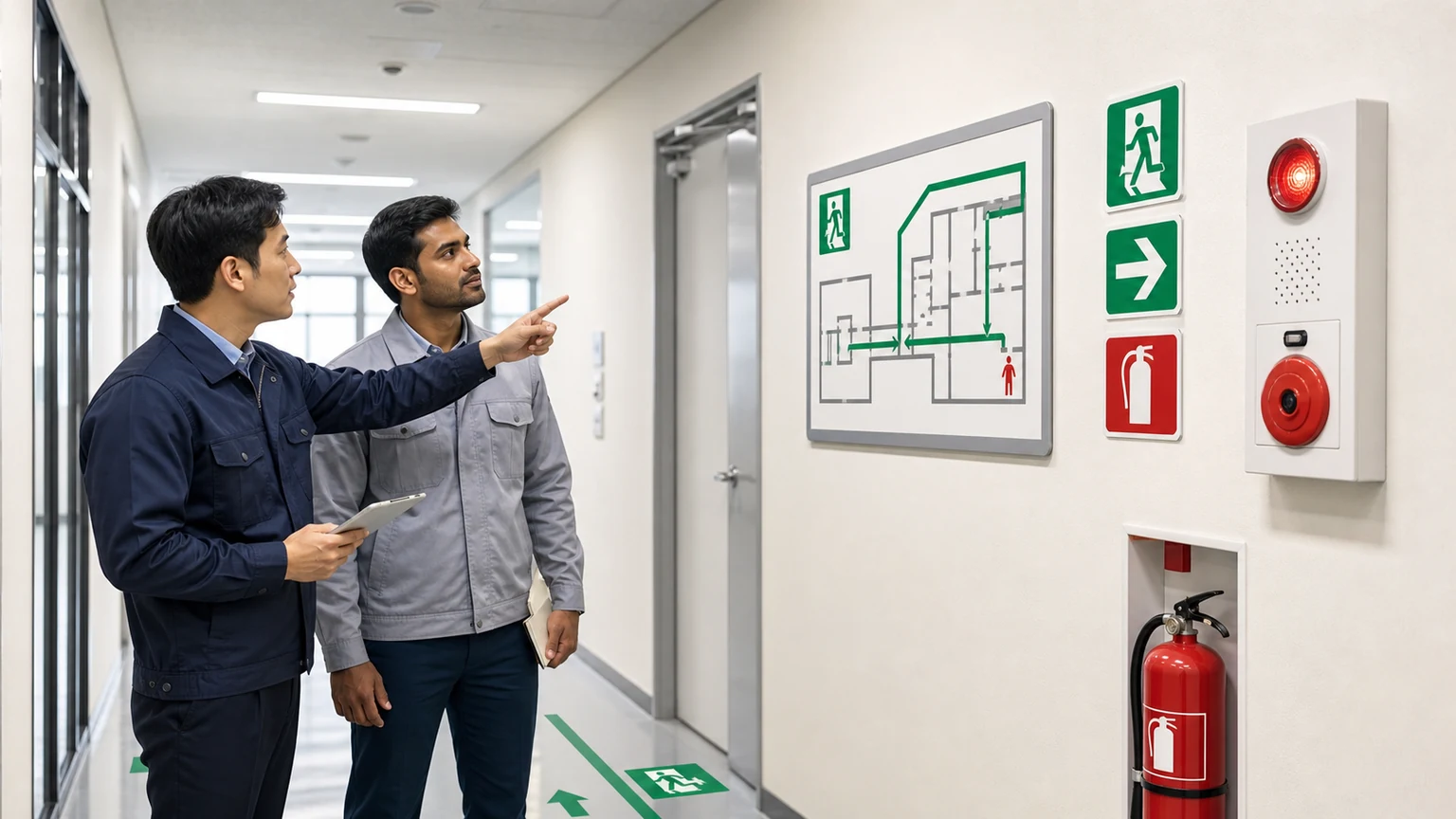
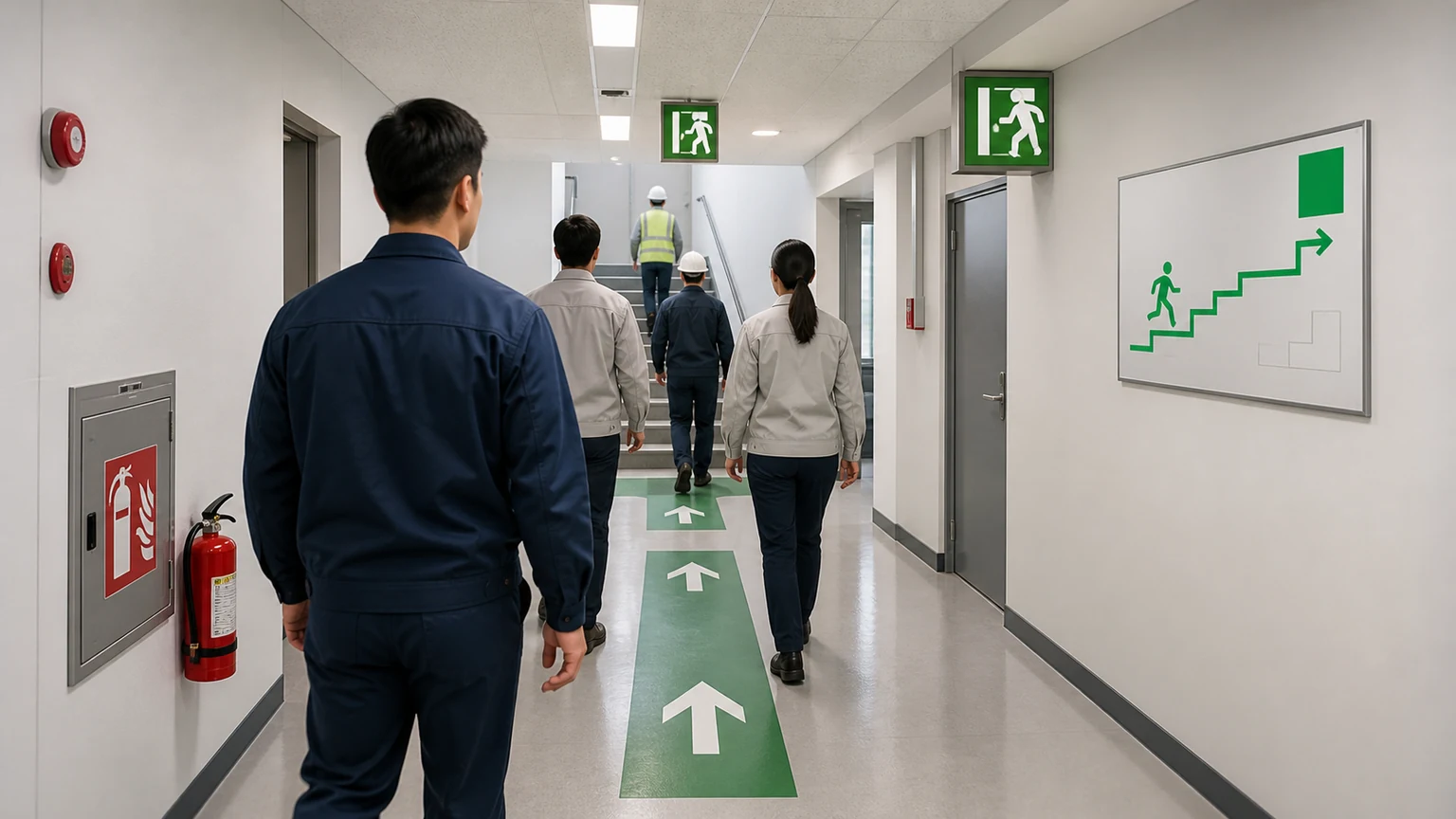
      Imagine you are walking through a workplace hallway and see several colored signs. You may not understand the whole notice yet, but you can still start with the sign family. Look for 안전, 위험, 주의, and 금지. These words tell you whether the sign is about safety, danger, caution, or a prohibited action.

      This post is a Korean language lesson, not emergency-response, legal, workplace safety, or compliance advice. In a real emergency or safety question, follow the trained local procedure and ask the responsible person. The goal here is to help you recognize the Korean words on the sign.

      Slide 2. Key Fire and Emergency Sign Words

      Text-free illustration for fire emergency sign words on BSKorean.
      The image stays text-free; the Korean sign words are in the table below.
      KoreanRomanizationEnglishLevelUse
      안전anjeonsafetyBS1General safety word.
      위험wiheomdanger; hazardBS1Danger or hazard sign.
      주의juuicautionBS1Caution or warning word.
      금지geumjiprohibition; banBS1Prohibition sign word.
      출입 금지churip geumjino entry; entry prohibitedBS2Entry restriction sign.
      비상구bisangguemergency exitBS2Emergency exit word.
      비상구 확인bisanggu hwagincheck emergency exitBS4Instruction to check exits.
      대피daepievacuationBS2Evacuation word.
      대피로daepiroevacuation routeBS2Evacuation route word.
      대피로 확보daepiro hwakbokeep evacuation route clear; secure evacuation routeBS4Keep evacuation route clear.
      화재hwajaefire; fire incidentBS2Fire incident word.
      소화기sohwagifire extinguisherBS2Fire extinguisher word.
      소화전sohwajeonfire hydrantBS4Fire hydrant word.
      비상벨bisangbelemergency bellBS2Emergency bell or alarm word.
      금연 구역geumyeon guyeoknon-smoking areaBS3Fire-prevention related area sign.

      Slide 3. Read Emergency Signs in 3 Steps

      Text-free illustration for fire emergency sign words on BSKorean.
      Exit and evacuation words connect the sign to a place and route.
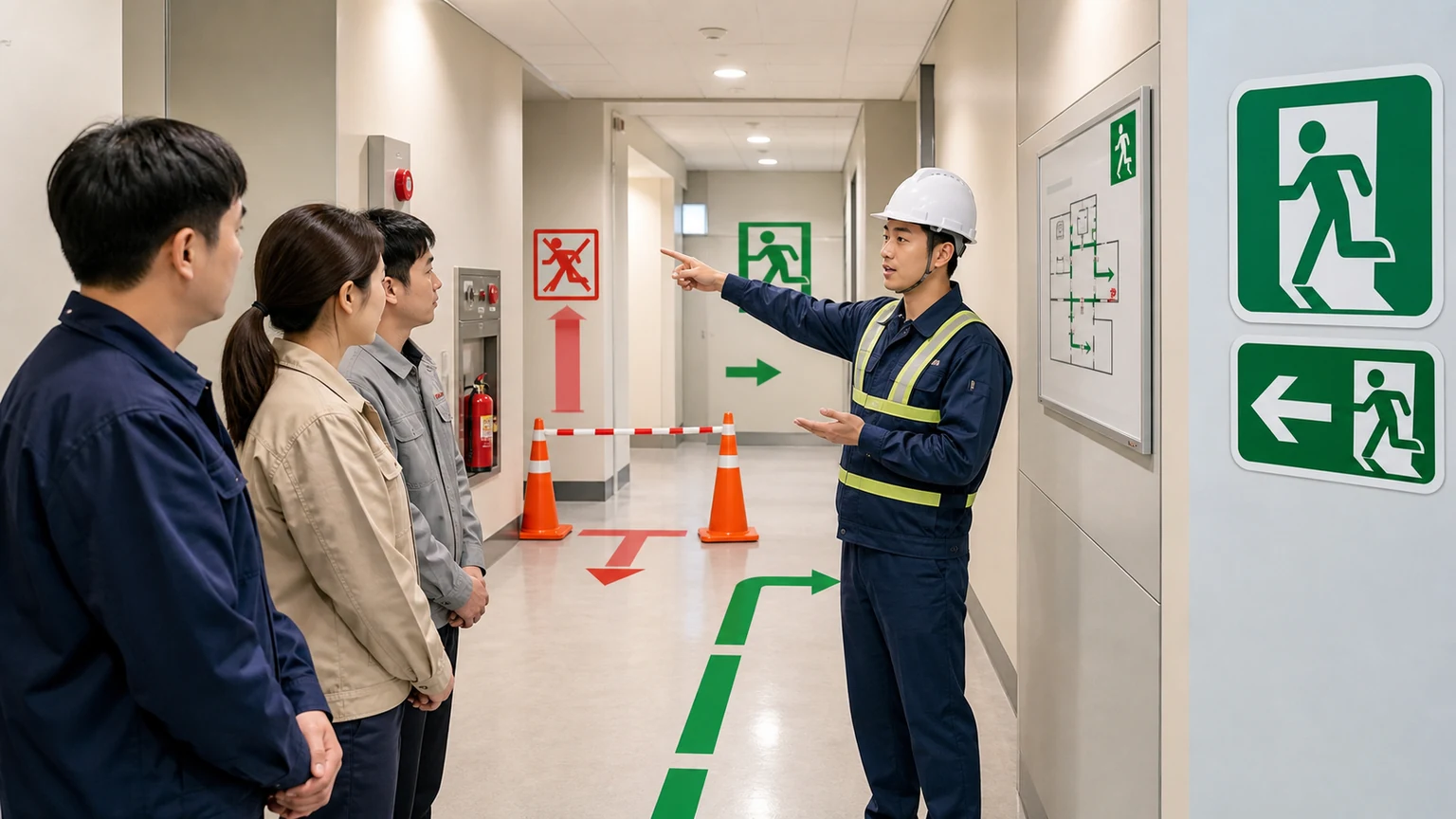
      1. Step 1: Identify the sign family. Look for 위험, 주의, and 금지. These words tell you whether the sign is warning you, limiting entry, or banning an action.
      2. Step 2: Find exit and route words. Look for 비상구, 비상구 확인, 대피, 대피로, and 대피로 확보. These connect the sign to a place or route.
      3. Step 3: Find equipment and alarm words. Look for 화재, 소화기, 소화전, and 비상벨. These words point to fire, fire equipment, or an alarm.

      Slide 4. Common Sign Mistakes

      Text-free illustration for fire emergency sign words on BSKorean.
      Do not read every red or green sign as the same message.

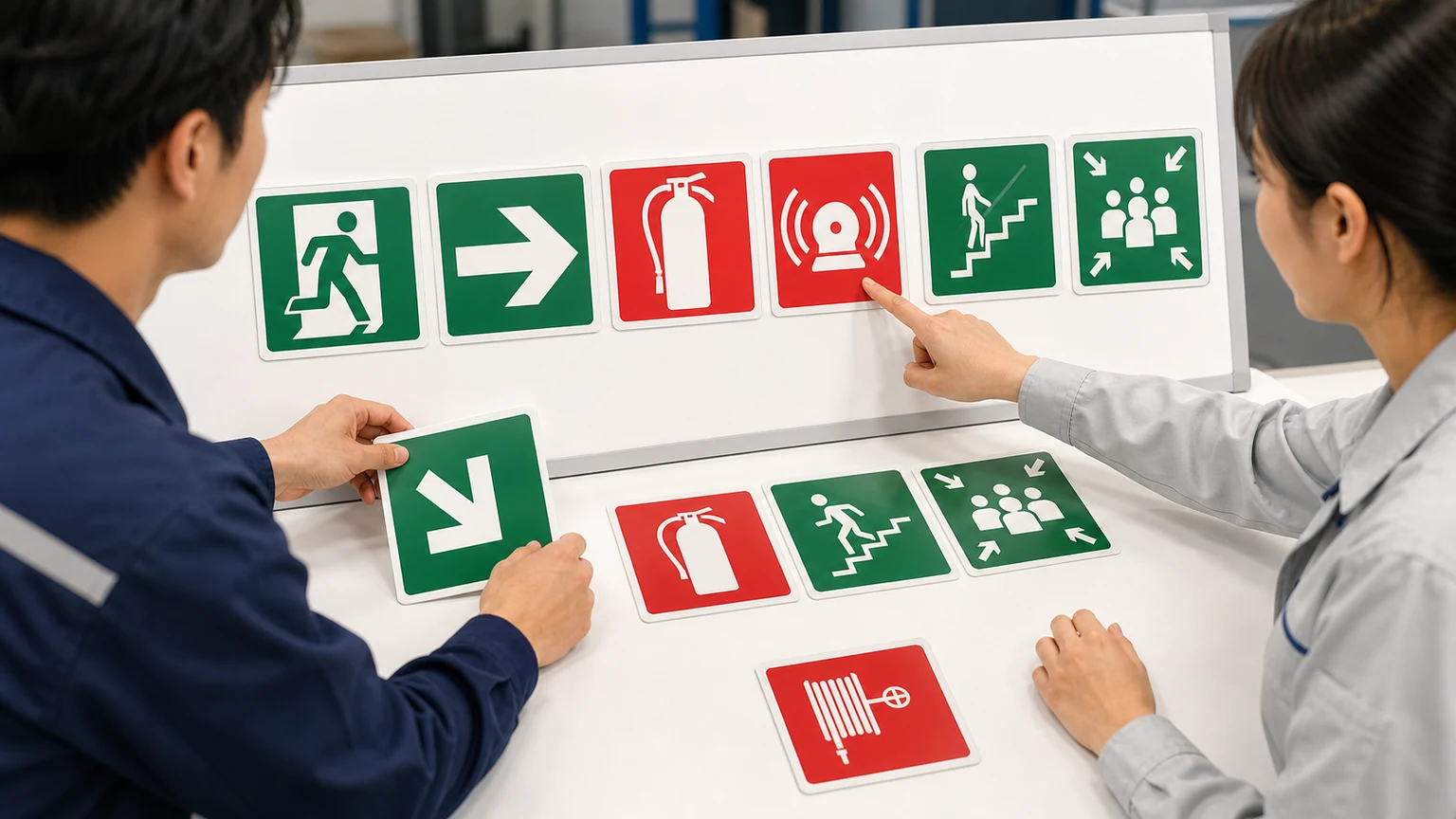
      The first mistake is reading every red sign as the same message. 금지 means prohibition, but 소화기 and 소화전 are equipment words. A red sign may mean “do not,” “fire equipment,” or another important category.

      The second mistake is seeing an exit sign but not reading the route words. 비상구 is the emergency exit word. 대피로 is the evacuation route word. 대피로 확보 is a phrase about keeping that route clear.

      The third mistake is skipping area words. 출입 금지 marks an entry restriction. 금연 구역 marks a non-smoking area. These are not the same as route words, so use them as labels when asking what a sign means.

      Slide 5. Practice With BSKorean

      Text-free illustration for fire emergency sign words on BSKorean.
      Practice recognition first, then use the words when you see a real sign.

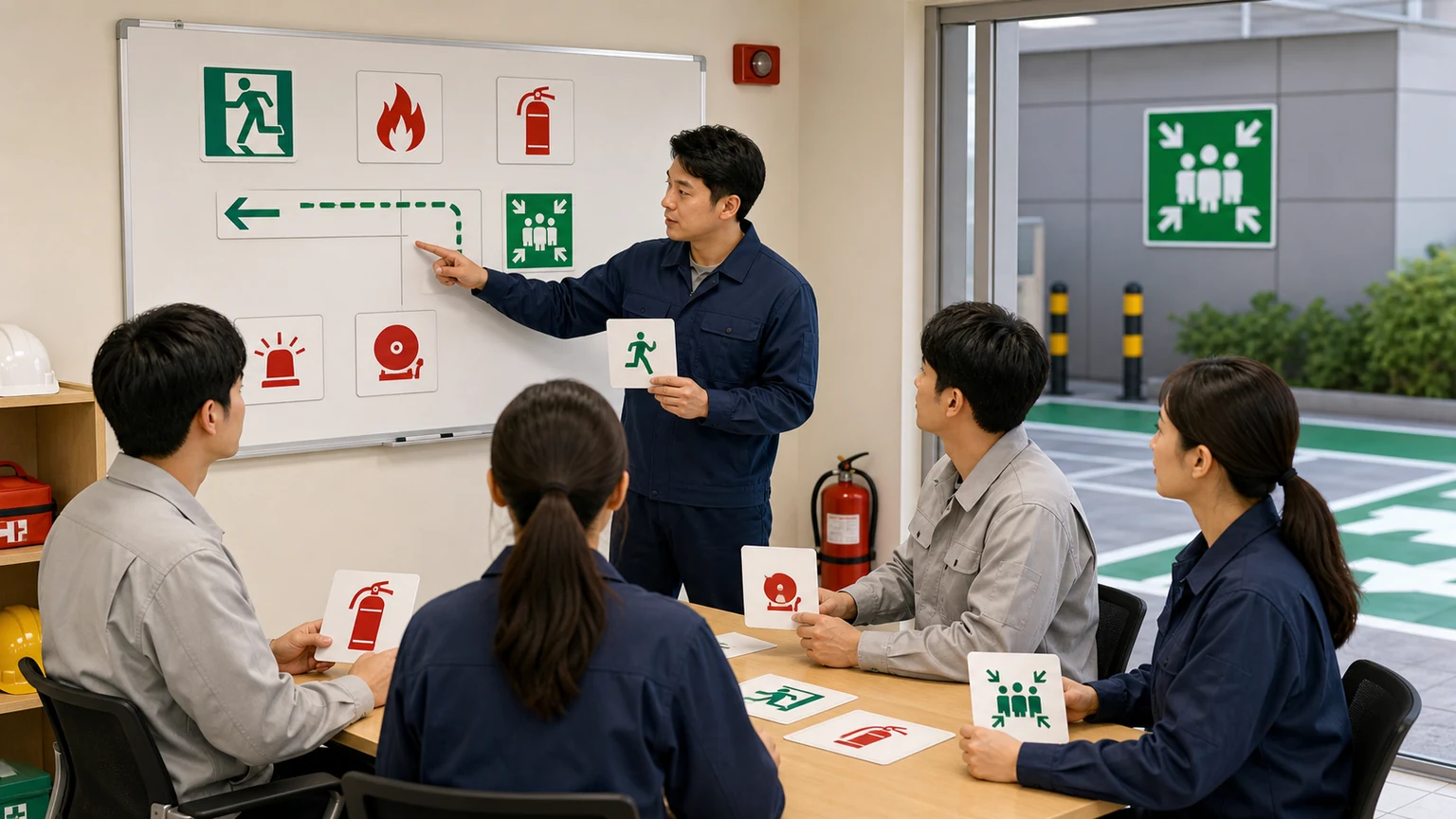
      Practice this topic in BSKorean: Read the BSKorean app guide, then open the practice app. Use this article set to practice Korean word, romanization, English meaning, and the fire/emergency sign situation together.

      A useful habit is to say the group first: warning, prohibition, exit, evacuation route, fire equipment, or alarm. Then say the Korean word. This makes signs easier to read when you are busy or nervous.

      Mini Review Table

      If you see…Think…
      위험This is a danger or hazard word.
      주의This is a caution word.
      출입 금지This marks an area you should not enter.
      비상구This points to an emergency exit.
      대피로This points to an evacuation route.
      소화기This is the fire extinguisher word.
      비상벨This is the emergency bell word.
      금연 구역This marks a non-smoking area.

      Final Takeaway

      You do not need to understand every long safety notice to begin reading signs better. First identify the sign family, then find the exit, route, fire equipment, alarm, or restricted-area word. These Korean fire and emergency sign words help you ask clearer questions and practice the signs you see in real places.

      Related Lessons

      Practice these Korean words in the BSKorean app

      After reading this lesson, continue with the BSKorean practical Korean app guide or open the BSKorean practice app to review words by level and real-life situation.

    • Korean Bus Stop Sign Vocabulary: A Briefing-Style Lesson

      Korean Bus Stop Sign Vocabulary: A Briefing-Style Lesson

      Use this bus stop sign lesson first

      At a Korean bus stop, confirm the bus number before boarding. Ask 이 버스 맞아요?, “is this the right bus?” Then watch for 도착 예정, 환승, 하차, and 교통카드.

      Bus moment Korean Meaning
      Right bus 이 버스 맞아요? Is this the right bus?
      Get off 어디에서 내려요? Where do I get off?
      Transfer 환승해야 해요? Do I need to transfer?
      Transit card 교통카드 충전하고 싶어요 I want to charge my transit card.

      If the stop name is long, show the map and ask 여기로 가요?. Related travel lessons: subway sign vocabulary and street sign words.

      Korean bus stop sign vocabulary guide

      Korean bus stop sign vocabulary helps learners practice Korean words in real situations. This BSKorean post keeps the lesson clear, scannable, and connected to app practice.

      Practice in the BSKorean app

      Related lessons


      .bsk-lesson-table{overflow-x:auto;margin:18px 0 24px}
      .bsk-lesson-table table{width:100%;border-collapse:collapse;table-layout:fixed;font-size:.92rem;line-height:1.45}
      .bsk-lesson-table th,.bsk-lesson-table td{padding:8px 10px;vertical-align:top;word-break:normal;overflow-wrap:break-word}
      .bsk-lesson-table th{white-space:nowrap}
      @media(max-width:640px){.bsk-lesson-table table{min-width:620px;table-layout:auto;font-size:.86rem}.bsk-lesson-table th,.bsk-lesson-table td{padding:7px 8px}}

      Briefing Summary

      Korean bus stop sign vocabulary helps you read stop names, route lists, arrival boards, boarding signs, last bus notices, and transfer information at a real bus stop in Korea.

      A Korean bus stop sign can look busy at first. You may see the stop name, several route numbers, arrival times, transfer information, and words like 승차, 하차, or 막차. The sign is not trying to teach grammar. It is trying to help people move.

      This briefing-style lesson teaches the Korean words you need to read a bus stop sign in real life. Focus on the function of each word: where the stop is, which bus route you need, when the bus arrives, where you board, where you get off, and whether the bus is the last one.

      Best for Main skill Study time Practice focus
      Travelers, foreign residents, exchange students, and new commuters in Korea Reading Korean bus stop signs by function 8-10 minutes Stop, route, arrival, boarding, getting off, last bus

      Slide 1. The Situation

      Text-free illustration for Korean bus stop sign vocabulary on BSKorean.

      You are waiting at a bus stop in Korea. A digital board shows several bus numbers. One line says a bus will arrive soon. Another line shows a different bus with more waiting time. On the signpost, you see a stop name and a route list.

      At this moment, you do not need to read every Korean word. You need to find the words that answer practical questions:

      • Where is this bus stop?
      • Which bus route should I take?
      • When will the bus arrive?
      • Where do I board or get off?
      • Is this the last bus?

      The words below help you answer those questions quickly.

      Slide 2. Key Bus Stop Words

      Korean bus stop signs often use short word patterns. They are not full sentences, so read them like labels.

      Formula 1: Stop name + 정류장

      서울역 정류장
      Seoul-yeok jeongnyujang
      Seoul Station bus stop

      The word before 정류장 is usually the stop name or nearby place. If you know this pattern, you can confirm that you are waiting at the correct stop.

      Formula 2: Bus number + 노선

      버스 노선
      beoseu noseon
      bus route

      노선 helps you check the route, not only the bus number. Two buses can stop at the same place but go to different areas. Always check the route direction if you are unsure.

      Formula 3: Time + 도착

      3분 후 도착
      sam-bun hu dochag
      arrives in 3 minutes

      On digital boards, 도착 is the key word for arrival. If you see a number before it, that number often tells you the waiting time.

      Slide 4. Read Bus Stop Signs in 3 Steps

      Step 1. Find the stop.
      Look for 정류장 and the stop name. This tells you where you are.

      Step 2. Check the route.
      Look for the bus number and 노선. If the sign shows several routes, choose the one that matches your destination.

      Step 3. Check the action.
      Use 도착 for arrival time, 승차 for getting on, 하차 for getting off, and 막차 for the last bus. If you need another bus or subway, look for 환승.

      Example:

      강남역 정류장 / 3분 후 도착 / 환승 가능
      Gangnam-yeok jeongnyujang / sam-bun hu dochag / hwanseung ganeung
      Gangnam Station bus stop / arrives in 3 minutes / transfer available

      Slide 5. Mistakes and Practice

      Mistake 1: Reading 노선 as the destination

      노선 means route. It does not always mean your final destination. Check the route direction or nearby stops before boarding.

      Mistake 2: Confusing 승차 and 하차

      승차 means getting on. 하차 means getting off. If you see a sign about 하차, it may be telling passengers where to exit or where getting off happens.

      Mistake 3: Ignoring 막차

      막차 is important at night. If the board says the bus is the last one, missing it may mean you need a taxi or a different route.

      Practice

      1. What does 정류장 mean?
      A. route / B. bus stop / C. transfer
      Answer: B. bus stop.

      2. What does 5분 후 도착 mean?
      Answer: Arrives in 5 minutes.

      3. Which word means getting off?
      A. 승차 / B. 하차 / C. 노선
      Answer: B. 하차.

      4. You need to change to another bus or subway. Which word should you look for?
      Answer: 환승.

      5. You are traveling late at night. Which word is especially important?
      Answer: 막차.

      Mini Review Table

      Korean Meaning Where You See It Quick Tip
      정류장 bus stop Stop name, map, signpost Use it to confirm your location.
      노선 route Route list, bus information board Check where the bus goes.
      도착 arrival Digital arrival board Look for minutes before this word.
      승차 boarding Boarding area, guide notice Getting on the bus.
      하차 getting off Exit notice, stop announcement Getting off the bus.
      막차 last bus Late-night route board Do not ignore this at night.
      환승 transfer Bus, subway, route information Changing to another route.

      Final Takeaway

      Do not try to translate every word on a Korean bus stop sign. First, find 정류장 to confirm the stop. Then check 노선 for the route and 도착 for arrival time. Use 승차 and 하차 to understand getting on and off. At night, always check 막차. If you need another route, look for 환승.

      Practice these words in Korean Learn Korean after reading. Start by matching the Korean word to the real action you would take at a bus stop.

      For official Korea travel and transportation context, check Visit Korea.

      Related Lessons

    • Korean Subway Sign Vocabulary: A Briefing-Style Lesson

      Korean Subway Sign Vocabulary: A Briefing-Style Lesson

      Use this subway sign lesson first

      Korean subway signs repeat a small set of words: exit, transfer, platform, direction, line, and card charging. Start with 출구가 어디예요?, “where is the exit?” This question is useful even when you only know the exit number.

      Practice four station phrases: 출구가 어디예요?, 환승은 어디에서 해요?, 이 노선 맞아요?, and 교통카드 충전하고 싶어요. They help you find exits, transfer, check the line, and charge a fare card.

      Transit task Korean Meaning
      Find exit 출구가 어디예요? Where is the exit?
      Transfer 환승은 어디에서 해요? Where do I transfer?
      Check line 이 노선 맞아요? Is this the right line?
      Charge card 교통카드 충전하고 싶어요 I want to charge my transit card.

      Look for numbers and arrows first, then read the Korean word beside them. If you need help from staff, show the destination on your phone and ask 여기 가고 싶어요. For related daily movement language, study convenience store transit card phrases and transport sign words.

      Korean subway sign vocabulary guide

      Korean subway sign vocabulary helps learners practice Korean words in real situations. This BSKorean post keeps the lesson clear, scannable, and connected to app practice.

      Practice in the BSKorean app

      Related lessons

      Korean subway sign vocabulary helps you read exits, transfers, platforms, directions, and station notices when you ride the subway in Korea. This lesson teaches the signs by function, not by grammar rules.

      Korean Subway Sign Vocabulary by Function

      Text-free illustration for Korean subway sign vocabulary on BSKorean.
      Korean subway sign vocabulary title slide for exit, transfer, direction, platform, and restroom signs

      Download the updated Korean subway sign vocabulary PPT briefing

      Opening Situation

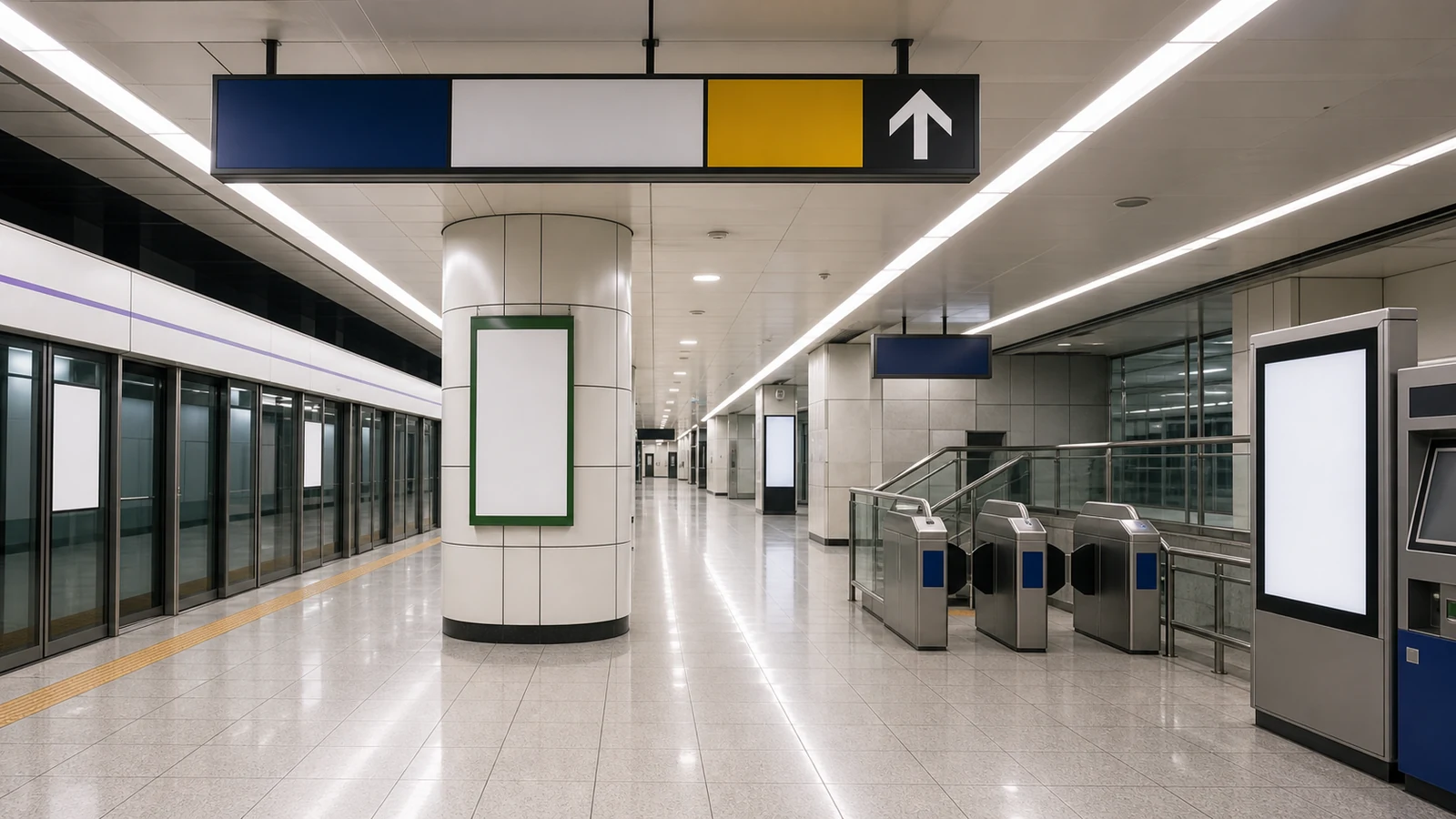
      You are standing inside a Korean subway station. Above you, several arrows point in different directions. One sign says 출구. Another says 환승. A platform sign shows 강남 방면, and a smaller facility sign points toward 화장실.

      If you try to translate every word on every sign, the station can feel confusing. But Korean subway signs are not written like long sentences. They are designed to help people move. Your job is to find the word that tells you what to do next.

      This lesson teaches Korean subway sign vocabulary as movement signals. Instead of memorizing isolated words, you will learn how to read the sign, identify the purpose, check the detail, and follow the arrow.

      Learning Snapshot

      Best for Travelers, foreign residents, exchange students, and new subway users in Korea
      Main skill Reading Korean subway signs by function, number, direction, and arrow
      Study time 8-10 minutes
      Practice focus Exit, transfer, direction, platform, restroom, elevator, and line signs

      Why This Topic Matters

      Many Korean learners know that 출구 means exit. The problem begins when the word appears with numbers, arrows, line colors, and other signs at the same time. For example, 3번 출구 오른쪽 is not just a vocabulary phrase. It is an instruction: Exit 3 is on the right.

      Subway signs also mix Korean words with symbols. You may see a train icon, a line number, an arrow, a restroom icon, and a place name on one board. The fastest way to understand the sign is to read it in this order: purpose word, detail, direction.

      Core Vocabulary Table

      Korean Romanization Basic Meaning Natural Meaning Where You See It Example
      출구 chulgu exit way out of the station subway station, building 2번 출구
      환승 hwanseung transfer change to another line subway passage, bus system 2호선 환승
      방면 bangmyeon direction toward a station or area platform signs, line signs 강남 방면
      승강장 seunggangjang platform place where you board the train train and subway stations 승강장 가는 길
      화장실 hwajangsil restroom toilet or restroom facility station, mall, building 화장실 오른쪽
      엘리베이터 ellibeiteo elevator lift for moving between floors station, apartment, building 엘리베이터 왼쪽
      에스컬레이터 eseukeolleiteo escalator moving stairs station entrances and platforms 에스컬레이터 이용
      개찰구 gaechalgu ticket gate gate where you tap your card station entrance area 개찰구 앞
      직진 jikjin straight go straight ahead direction signs 직진 후 오른쪽
      오른쪽 oreunjjok right right side direction signs, spoken directions 화장실 오른쪽
      왼쪽 oenjjok left left side direction signs, spoken directions 승강장 왼쪽
      가는 길 ganeun gil way to path toward a place station, hospital, public building 출구 가는 길

      How Koreans Actually Use These Words

      출구 is usually combined with a number. 2번 출구 means Exit 2, and people often use exit numbers when meeting friends or finding nearby buildings. If someone says 3번 출구로 나오세요, they mean you should come out through Exit 3, not just any exit.

      환승 means transfer. In a subway station, it usually means you should stay inside the transit system and follow the transfer passage. Do not confuse it with leaving the station. If you want to leave, look for 출구.

      방면 tells direction. 강남 방면 means toward Gangnam. It does not always mean you are at Gangnam now. When you choose a platform, this word helps you know which side goes toward your destination.

      승강장 is the platform, not the ticket gate. If a sign says 승강장 가는 길, it is guiding you toward the place where trains arrive and depart.

      Sign Patterns

      Korean subway signs follow predictable patterns. Learning these patterns is faster than trying to translate each sign as a full sentence.

      Pattern Meaning Example
      Number + 번 출구 Exit number 3번 출구 = Exit 3
      Line number + 호선 환승 Transfer to that line 2호선 환승 = Transfer to Line 2
      Station or place + 방면 Toward that direction 강남 방면 = Toward Gangnam
      Place + 가는 길 Way to that place 승강장 가는 길 = Way to the platform
      Place + 오른쪽 / 왼쪽 Place on the right or left 화장실 오른쪽 = Restroom on the right

      Real-Life Sign Example

      Imagine you see this sign inside a station:

      3번 출구 오른쪽
      Exit 3, right side

      Read it in three steps. First, find the purpose word: 출구. The sign is about leaving the station. Second, check the detail: 3번. You need Exit 3. Third, follow the direction: 오른쪽. Your action is simple: go right for Exit 3.

      Here is another example:

      2호선 환승 직진
      Transfer to Line 2, go straight

      The purpose word is 환승. The detail is 2호선. The direction is 직진. You should stay inside the station and go straight to transfer to Line 2.

      Common Mistakes

      Common Mistake 1: Thinking 방면 is the current station

      Why it happens: Beginners often read every Korean word on a sign as a place name.

      Correct understanding: 방면 means toward or in the direction of. 서울역 방면 means toward Seoul Station, not necessarily that you are at Seoul Station.

      Common Mistake 2: Thinking 환승 means exit

      Why it happens: Transfer passages can look like long exits because they lead through halls and stairs.

      Correct understanding: 환승 usually means you are changing lines inside the subway system. To leave the station, look for 출구.

      Common Mistake 3: Ignoring exit numbers

      Why it happens: In some countries, any exit near the destination may feel close enough.

      Correct understanding: In Korea, different exits often lead to different sides of a large road or underground shopping area. If someone says 5번 출구, the number matters.

      Step-by-Step Practice

      Use this method whenever you read a Korean subway sign.

      1. Find the purpose word. Look for words like 출구, 환승, 승강장, 화장실, or 엘리베이터.
      2. Check the detail. Look for a number, line number, station name, or facility name.
      3. Follow the arrow or direction word. Use 오른쪽, 왼쪽, 직진, 위, 아래, or the arrow icon.

      Mini Quiz

      1. 3번 출구 means what?
        Answer: Exit 3. The number is 3번, and 출구 means exit.
      2. You see 2호선 환승. Should you leave the station?
        Answer: No. 환승 means transfer to Line 2.
      3. 강남 방면 means what?
        Answer: Toward Gangnam. 방면 shows direction.
      4. You want the restroom and see 화장실 왼쪽. What should you do?
        Answer: Go left. 화장실 means restroom, and 왼쪽 means left.
      5. 승강장 가는 길 means what?
        Answer: Way to the platform. 승강장 is the platform, and 가는 길 means way to.

      Review Table

      Korean Meaning Best Situation Beginner Tip
      출구 exit leaving a station or building Look for the exit number
      환승 transfer changing subway lines Check the line number
      방면 toward choosing direction or platform It means direction, not current location
      승강장 platform finding where trains arrive It is not the ticket gate
      화장실 restroom finding a facility Follow the arrow or side word
      직진 straight following a route Keep going forward

      Practice This Lesson

      Practice these words in the Korean Learn Korean tool. Use the Signs & Notices or travel-related subway word set, then review the words you miss.

      Practice Korean subway sign vocabulary

      Practice these words again in Korean Learn Korean so you can connect the Korean word to the real situation.

      For official Korea travel and daily-life context, check Visit Korea.

      Related Lessons

      Conclusion

      Korean subway signs become much easier when you read them as action signals. Start with the purpose word: 출구, 환승, 방면, 승강장, or 화장실. Then check the number, line, station name, or facility next to it. Finally, follow the arrow.

      You do not need to understand every Korean word in the station. You need to understand what the sign is asking you to do next.

    • Korean Street Sign Words: A Briefing-Style Lesson

      Korean Street Sign Words: A Briefing-Style Lesson

      Use this street sign lesson first

      When a Korean street sign is unclear, ask one useful question first: 이 표지 무슨 뜻이에요?, “what does this sign mean?” Then learn signs that affect movement: 출입 금지, 주차 금지, 횡단보도, and 주의.

      Street moment Korean Meaning
      Ask meaning 이 표지 무슨 뜻이에요? What does this sign mean?
      No entry 출입 금지예요? Is entry prohibited?
      No parking 주차 금지예요? Is parking prohibited?
      Crossing 길을 건너도 돼요? Can I cross the street?

      If you are driving or walking with someone, say 천천히 가 주세요. Related transport lessons: subway sign vocabulary and bus stop sign vocabulary.

      Korean street sign words guide

      Korean street sign words helps learners practice Korean words in real situations. This BSKorean post keeps the lesson clear, scannable, and connected to app practice.

      Practice in the BSKorean app

      Related lessons

      Korean street sign words help you understand directions, entrances, exits, warning signs, and simple public notices while walking around Korea. This lesson teaches the words by the action you need to take.

      Korean Street Sign Words by Action

      Text-free illustration for Korean street sign words on BSKorean.
      Korean street sign words title slide with a realistic Korean street and public sign scene

      Download the updated Korean street sign words PPT briefing

      Opening Situation

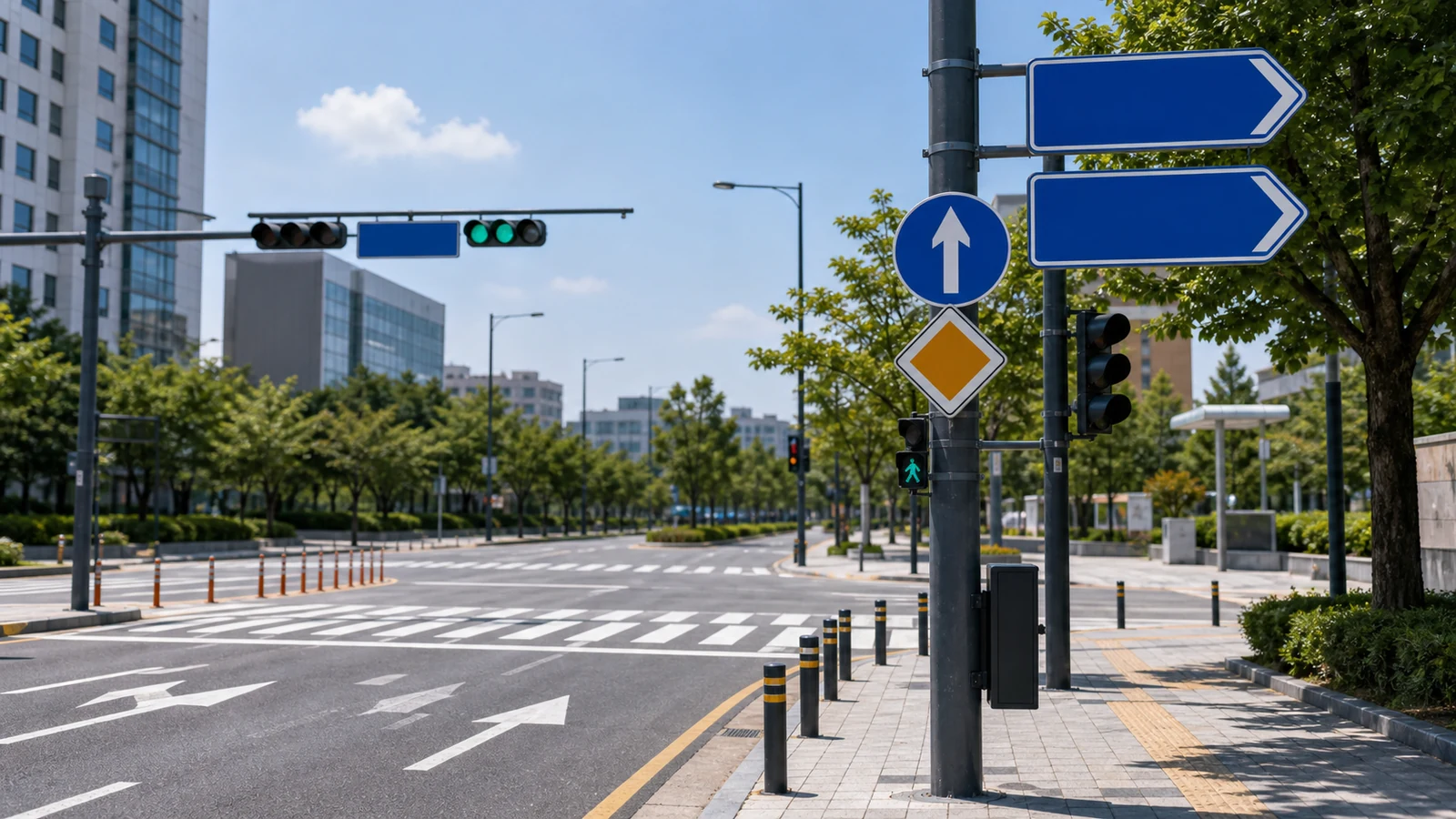
      You are walking in a Korean neighborhood and see several short signs: 입구, 출구, 주차금지, and 공사중. None of them are long sentences, but each one tells you what you can do or should avoid.

      This lesson teaches Korean street sign words as practical movement and warning language. You will learn how to read entrance, exit, parking, prohibition, construction, crosswalk, and bus-stop signs without translating every small word.

      Learning Snapshot

      Level: Beginner
      Best for: Travelers, pedestrians, drivers, new residents
      Main skill: Understanding Korean street signs as action signals
      Study time: 8-10 minutes

      This briefing lesson focuses on a real situation rather than a memorized word list. Use the tables, patterns, examples, mistakes, and practice steps together so the Korean words become practical actions.

      Why This Topic Matters

      Street signs in Korea often combine a place word with an action word. A learner may know 주차 means parking, but still miss the difference between 주차장 and 주차금지. One is a place; the other is a prohibition.

      These words appear around apartment complexes, small stores, hospitals, schools, bus stops, public offices, and construction areas. They help you choose where to enter, where to wait, where not to park, and where to be careful.

      Core Vocabulary Table

      주차장 입구
      주차금지
      공사중
      보행자 통로

      Read the action word. 입구 means this is where cars or people enter. 금지 means parking is not allowed. 공사중 means construction is happening. 보행자 통로 means a pedestrian passage, often a safer temporary route.

      The key is to decide what the Korean is asking you to do. In daily life, the best reading is usually a short action: answer yes, choose a direction, pay with a card, wait for pickup, ask the office, or avoid a restricted area.

      Common Mistakes

      Common Mistake 1: Confusing 주차장 and 주차금지

      Why it happens: Both signs contain 주차, so beginners may focus only on the shared word.

      Correct understanding: 장 is a place marker in 주차장, while 금지 means not allowed.

      Example: 주차장 is a parking lot. 주차금지 means no parking.

      Common Mistake 2: Thinking 출입금지 only means private property

      Why it happens: Some signs appear at gates, so learners connect them only with private spaces.

      Correct understanding: 출입금지 means entry is prohibited for the marked area, including construction zones, restricted rooms, or unsafe passages.

      Example: 외부인 출입금지 means outsiders may not enter.

      Common Mistake 3: Ignoring 주의 because it is not a full stop sign

      Why it happens: Caution signs can look less strict than prohibition signs.

      Correct understanding: 주의 still matters because it points to a real risk.

      Example: 미끄럼 주의 means watch out for slippery ground.

      Step-by-Step Practice

      • Step 1. Find the action word: 입구, 출구, 금지, 주의, or 중.
      • Step 2. Check the noun before or after it to know the subject.
      • Step 3. Decide whether the sign tells a route, a prohibition, a warning, or a status.
      • Step 4. Turn the sign into a real action: enter, exit, do not park, slow down, or use another passage.

      Practice slowly at first. After a few repetitions, try to reduce the Korean into one practical decision. This is how the vocabulary becomes usable outside a lesson page.

      For one week, choose three words from this lesson whenever you see a similar place in Korea or in a photo. Say the Korean word first, then say the real action in English. For example, do not only say “this word means exit.” Say “출구 tells me where to leave.” That small habit trains you to connect Korean with movement, payment, access, warning, or choice.

      If you are studying outside Korea, use maps, street-view images, apartment listing screenshots, cafe menus, or transportation photos. The goal is not to memorize perfect sentences in isolation. The goal is to recognize the Korean word fast enough to make a simple decision when the situation appears.

      Mini Quiz

      Question 1

      What does 주차금지 mean?

      Answer: No parking.

      Explanation: 금지 means prohibited.

      Question 2

      What is the difference between 입구 and 출구?

      Answer: 입구 is entrance, 출구 is exit.

      Explanation: They tell opposite movement directions.

      Question 3

      You see 공사중. What should you expect?

      Answer: Construction work is happening.

      Explanation: 중 means in progress here.

      Question 4

      What does 보행자 통로 mean?

      Answer: Pedestrian passage.

      Explanation: 보행자 is pedestrian and 통로 is passage.

      Review Table

      Korean Meaning Best Situation Beginner Tip
      입구 entrance entering a place Look for this when going in.
      출구 exit leaving a place Often paired with arrows.
      금지 prohibited rules and restrictions The word before it is not allowed.
      주의 caution hazards and warnings Slow down and check the risk.
      공사중 under construction roads and buildings Use another route if needed.

      Practice these words again in Korean Learn Korean so you can connect the Korean word to the real situation.

      For official Korea travel and daily-life context, check Visit Korea.

      Related Lessons

      Conclusion

      These Korean words become easier when you read them through the situation. Start with the purpose word, check the detail next to it, and turn the whole expression into a simple action. That habit is more useful than translating every word slowly.