[태그:] Korean for English speakers

  • Korean Hair Salon Words: A Briefing-Style Lesson

    Korean Hair Salon Words: A Briefing-Style Lesson

    Use this hair salon lesson first

    At a Korean hair salon, start with the result you want. Say 머리 잘라 주세요, “please cut my hair,” or 조금만 다듬어 주세요, “please trim just a little.” Show a photo if style words feel difficult.

    Salon request Korean Meaning
    Haircut 머리 잘라 주세요 Please cut my hair.
    Trim 조금만 다듬어 주세요 Please trim just a little.
    Bangs 앞머리 Bangs
    Color 염색하고 싶어요 I want to dye my hair.

    Before the service starts, ask 얼마예요? and confirm the price. For another version with resident-focused wording, see hair salon words for foreign residents.

    Korean hair salon words guide

    Korean hair salon words helps learners practice Korean words in real situations. This BSKorean post keeps the lesson clear, scannable, and connected to app practice.

    Practice in the BSKorean app

    Related lessons


    .bsk-lesson-table{overflow-x:auto;margin:18px 0 24px}
    .bsk-lesson-table table{width:100%;border-collapse:collapse;table-layout:fixed;font-size:.92rem;line-height:1.45}
    .bsk-lesson-table th,.bsk-lesson-table td{padding:8px 10px;vertical-align:top;word-break:normal;overflow-wrap:break-word}
    .bsk-lesson-table th{white-space:nowrap}
    @media(max-width:640px){.bsk-lesson-table table{min-width:620px;table-layout:auto;font-size:.86rem}.bsk-lesson-table th,.bsk-lesson-table td{padding:7px 8px}}

    Briefing Summary

    Korean hair salon words are useful when you need a haircut, a trim, shampoo, bangs, or hair coloring in Korea. A salon visit can feel simple until the stylist asks how short you want it or which part you want to change.

    This briefing-style lesson helps beginners read and say the most practical words at a Korean hair salon. The goal is not to explain every hairstyle. The goal is to help you make a clear, polite request before the scissors come out.

    Best for Main skill Study time Practice focus
    Foreign residents, workers, students, and travelers in Korea Asking for basic salon services politely 8-10 minutes Appointment, haircut, trim, length, bangs, shampoo, dye

    Slide 1. The Situation

    Text-free illustration for Korean hair salon words on BSKorean.

    You walk into a hair salon in Korea. The stylist may ask whether you have an appointment. After you sit down, they may ask what service you want and how short you want your hair. If you only know one word, you may say “cut” but still not explain the length or the specific part.

    Start with the service word, then add a simple request. For example, 커트 해 주세요 means “Please cut my hair.” If you want only a small change, 조금 다듬어 주세요 is safer than saying only 짧게.

    Slide 2. Key Hair Salon Words

    Korean salon requests often use short formulas. You do not need a long sentence. A service word plus 해 주세요 is often enough.

    Formula 1: Service + 해 주세요

    커트 해 주세요
    keoteu hae juseyo
    Please cut my hair.

    해 주세요 means “please do it for me.” It is polite and useful in service situations. You can also say 샴푸 해 주세요 if you want shampoo.

    Formula 2: 조금 + 다듬어 주세요

    조금 다듬어 주세요
    jogeum dadeumeo juseyo
    Please trim it a little.

    This is one of the safest salon phrases. 조금 means “a little,” and 다듬어 주세요 means “please trim it.” Use this when you do not want a big change.

    Formula 3: Part + 짧게 해 주세요

    앞머리 짧게 해 주세요
    apmeori jjalpge hae juseyo
    Please make my bangs shorter.

    Use the part first, then the change. 앞머리 tells the stylist which part you mean. 짧게 tells the direction of the change.

    Slide 4. Read a Hair Salon Visit in 3 Steps

    Step 1. Confirm the appointment.
    If you booked ahead, listen for 예약. You may hear 예약하셨어요?, which means “Did you make an appointment?”

    Step 2. Say the main service and length.
    Use 커트 for a haircut. If you want a small trim, say 조금 다듬어 주세요. If you want it shorter, use 짧게, but be careful because it can lead to a bigger change.

    Step 3. Check extra services.
    The salon may ask about 샴푸 or 염색. If you do not want an extra service, answer clearly and politely.

    Example visit flow:

    예약 확인 → 커트 요청 → 길이 확인 → 샴푸 여부 확인
    yeyak hwagin → keoteu yocheong → giri hwagin → syampu yeobu hwagin
    Confirm appointment → ask for haircut → check length → check shampoo option

    Slide 5. Mistakes and Practice

    Mistake 1: Saying 짧게 when you only want a tiny trim

    짧게 means short or shorter. If you only want to clean the ends, use 조금 다듬어 주세요. This sounds more careful and reduces misunderstanding.

    Mistake 2: Forgetting to name the part

    If you want only the front hair changed, say 앞머리. Without the part, the stylist may think you mean all of your hair.

    Mistake 3: Treating 염색 like a quick extra

    염색 is hair coloring. It takes more time and usually costs more than a basic cut. Ask about the price and time before starting.

    Practice

    1. What does 예약 mean?
    A. haircut / B. appointment / C. shampoo
    Answer: B. appointment. Use it when booking or checking your salon visit.

    2. What should you say if you only want a small trim?
    Answer: 조금 다듬어 주세요. It means “Please trim it a little.”

    3. Which word means bangs or front hair?
    A. 앞머리 / B. 샴푸 / C. 염색
    Answer: A. 앞머리.

    4. What does 커트 해 주세요 mean?
    Answer: Please cut my hair.

    5. Which word should you check before hair coloring?
    Answer: 염색. It means hair dye or coloring.

    Mini Review Table

    Korean Meaning Where You Hear It Quick Tip
    예약 appointment Reception desk Use it before the service starts.
    커트 haircut Service menu Basic haircut request.
    다듬어 주세요 Please trim it. Styling chair Useful for a small change.
    짧게 shorter Length discussion Use carefully.
    앞머리 bangs Mirror consultation Name the part clearly.
    샴푸 shampoo Before or after cut Check if it is included.
    염색 hair coloring Service menu Ask about time and price.

    Final Takeaway

    At a Korean hair salon, start with the service word. Use 예약 for appointment, 커트 for haircut, and 다듬어 주세요 for a trim. If you want a specific part changed, say the part first, such as 앞머리. Then add a polite request with 주세요.

    Practice these Korean hair salon words in Korean Learn Korean. They are useful because each word connects to a real action you may need in a salon.

    Related Lessons

  • Korean Bus Stop Sign Vocabulary: A Briefing-Style Lesson

    Korean Bus Stop Sign Vocabulary: A Briefing-Style Lesson

    Use this bus stop sign lesson first

    At a Korean bus stop, confirm the bus number before boarding. Ask 이 버스 맞아요?, “is this the right bus?” Then watch for 도착 예정, 환승, 하차, and 교통카드.

    Bus moment Korean Meaning
    Right bus 이 버스 맞아요? Is this the right bus?
    Get off 어디에서 내려요? Where do I get off?
    Transfer 환승해야 해요? Do I need to transfer?
    Transit card 교통카드 충전하고 싶어요 I want to charge my transit card.

    If the stop name is long, show the map and ask 여기로 가요?. Related travel lessons: subway sign vocabulary and street sign words.

    Korean bus stop sign vocabulary guide

    Korean bus stop sign vocabulary helps learners practice Korean words in real situations. This BSKorean post keeps the lesson clear, scannable, and connected to app practice.

    Practice in the BSKorean app

    Related lessons


    .bsk-lesson-table{overflow-x:auto;margin:18px 0 24px}
    .bsk-lesson-table table{width:100%;border-collapse:collapse;table-layout:fixed;font-size:.92rem;line-height:1.45}
    .bsk-lesson-table th,.bsk-lesson-table td{padding:8px 10px;vertical-align:top;word-break:normal;overflow-wrap:break-word}
    .bsk-lesson-table th{white-space:nowrap}
    @media(max-width:640px){.bsk-lesson-table table{min-width:620px;table-layout:auto;font-size:.86rem}.bsk-lesson-table th,.bsk-lesson-table td{padding:7px 8px}}

    Briefing Summary

    Korean bus stop sign vocabulary helps you read stop names, route lists, arrival boards, boarding signs, last bus notices, and transfer information at a real bus stop in Korea.

    A Korean bus stop sign can look busy at first. You may see the stop name, several route numbers, arrival times, transfer information, and words like 승차, 하차, or 막차. The sign is not trying to teach grammar. It is trying to help people move.

    This briefing-style lesson teaches the Korean words you need to read a bus stop sign in real life. Focus on the function of each word: where the stop is, which bus route you need, when the bus arrives, where you board, where you get off, and whether the bus is the last one.

    Best for Main skill Study time Practice focus
    Travelers, foreign residents, exchange students, and new commuters in Korea Reading Korean bus stop signs by function 8-10 minutes Stop, route, arrival, boarding, getting off, last bus

    Slide 1. The Situation

    Text-free illustration for Korean bus stop sign vocabulary on BSKorean.

    You are waiting at a bus stop in Korea. A digital board shows several bus numbers. One line says a bus will arrive soon. Another line shows a different bus with more waiting time. On the signpost, you see a stop name and a route list.

    At this moment, you do not need to read every Korean word. You need to find the words that answer practical questions:

    • Where is this bus stop?
    • Which bus route should I take?
    • When will the bus arrive?
    • Where do I board or get off?
    • Is this the last bus?

    The words below help you answer those questions quickly.

    Slide 2. Key Bus Stop Words

    Korean bus stop signs often use short word patterns. They are not full sentences, so read them like labels.

    Formula 1: Stop name + 정류장

    서울역 정류장
    Seoul-yeok jeongnyujang
    Seoul Station bus stop

    The word before 정류장 is usually the stop name or nearby place. If you know this pattern, you can confirm that you are waiting at the correct stop.

    Formula 2: Bus number + 노선

    버스 노선
    beoseu noseon
    bus route

    노선 helps you check the route, not only the bus number. Two buses can stop at the same place but go to different areas. Always check the route direction if you are unsure.

    Formula 3: Time + 도착

    3분 후 도착
    sam-bun hu dochag
    arrives in 3 minutes

    On digital boards, 도착 is the key word for arrival. If you see a number before it, that number often tells you the waiting time.

    Slide 4. Read Bus Stop Signs in 3 Steps

    Step 1. Find the stop.
    Look for 정류장 and the stop name. This tells you where you are.

    Step 2. Check the route.
    Look for the bus number and 노선. If the sign shows several routes, choose the one that matches your destination.

    Step 3. Check the action.
    Use 도착 for arrival time, 승차 for getting on, 하차 for getting off, and 막차 for the last bus. If you need another bus or subway, look for 환승.

    Example:

    강남역 정류장 / 3분 후 도착 / 환승 가능
    Gangnam-yeok jeongnyujang / sam-bun hu dochag / hwanseung ganeung
    Gangnam Station bus stop / arrives in 3 minutes / transfer available

    Slide 5. Mistakes and Practice

    Mistake 1: Reading 노선 as the destination

    노선 means route. It does not always mean your final destination. Check the route direction or nearby stops before boarding.

    Mistake 2: Confusing 승차 and 하차

    승차 means getting on. 하차 means getting off. If you see a sign about 하차, it may be telling passengers where to exit or where getting off happens.

    Mistake 3: Ignoring 막차

    막차 is important at night. If the board says the bus is the last one, missing it may mean you need a taxi or a different route.

    Practice

    1. What does 정류장 mean?
    A. route / B. bus stop / C. transfer
    Answer: B. bus stop.

    2. What does 5분 후 도착 mean?
    Answer: Arrives in 5 minutes.

    3. Which word means getting off?
    A. 승차 / B. 하차 / C. 노선
    Answer: B. 하차.

    4. You need to change to another bus or subway. Which word should you look for?
    Answer: 환승.

    5. You are traveling late at night. Which word is especially important?
    Answer: 막차.

    Mini Review Table

    Korean Meaning Where You See It Quick Tip
    정류장 bus stop Stop name, map, signpost Use it to confirm your location.
    노선 route Route list, bus information board Check where the bus goes.
    도착 arrival Digital arrival board Look for minutes before this word.
    승차 boarding Boarding area, guide notice Getting on the bus.
    하차 getting off Exit notice, stop announcement Getting off the bus.
    막차 last bus Late-night route board Do not ignore this at night.
    환승 transfer Bus, subway, route information Changing to another route.

    Final Takeaway

    Do not try to translate every word on a Korean bus stop sign. First, find 정류장 to confirm the stop. Then check 노선 for the route and 도착 for arrival time. Use 승차 and 하차 to understand getting on and off. At night, always check 막차. If you need another route, look for 환승.

    Practice these words in Korean Learn Korean after reading. Start by matching the Korean word to the real action you would take at a bus stop.

    For official Korea travel and transportation context, check Visit Korea.

    Related Lessons

  • Korean ATM Words: A Briefing-Style Lesson

    Korean ATM Words: A Briefing-Style Lesson

    Use this ATM words lesson first

    At a Korean ATM, choose the task first: 현금 인출, 계좌 이체, or 잔액 조회. If you need help, say 현금 인출하고 싶어요, “I want to withdraw cash.”

    ATM task Korean Meaning
    Withdraw 현금 인출하고 싶어요 I want to withdraw cash.
    Transfer 계좌 이체 Bank transfer
    Balance 잔액 조회 Balance inquiry
    Receipt 영수증 주세요 Please give me a receipt.

    When the screen says 비밀번호를 입력하세요, enter it privately and do not show it to anyone. For related money lessons, continue with bank transfer words and bank account opening words.

    Korean ATM words guide

    Korean ATM words helps learners practice Korean words in real situations. This BSKorean post keeps the lesson clear, scannable, and connected to app practice.

    Practice in the BSKorean app

    Related lessons


    .bsk-lesson-table{overflow-x:auto;margin:18px 0 24px}
    .bsk-lesson-table table{width:100%;border-collapse:collapse;table-layout:fixed;font-size:.92rem;line-height:1.45}
    .bsk-lesson-table th,.bsk-lesson-table td{padding:8px 10px;vertical-align:top;word-break:normal;overflow-wrap:break-word}
    .bsk-lesson-table th{white-space:nowrap}
    @media(max-width:640px){.bsk-lesson-table table{min-width:620px;table-layout:auto;font-size:.86rem}.bsk-lesson-table th,.bsk-lesson-table td{padding:7px 8px}}

    Briefing Summary

    Korean ATM words are useful when you need to withdraw cash, check your balance, transfer money, or print a receipt in Korea. This lesson helps you read the most important ATM screen words before you press the final button.

    Korean ATM Words You Should Read First

    An ATM screen in Korea can feel stressful if you only recognize a few words. The screen may ask you to choose a service, enter a PIN, check a fee, or decide whether to print a receipt. You do not need to understand every long sentence. You need to recognize the function words first.

    This briefing-style lesson focuses on the Korean words foreigners are most likely to see when using an ATM in Korea. The goal is simple: read the main action, avoid choosing the wrong menu, and confirm important details before pressing the final button.

    Best for Main skill Study time Practice focus
    Foreign residents, workers, students, and travelers in Korea Reading common ATM screen words 8-10 minutes Withdrawal, deposit, balance, transfer, PIN, fee, receipt

    Slide 1. The Situation

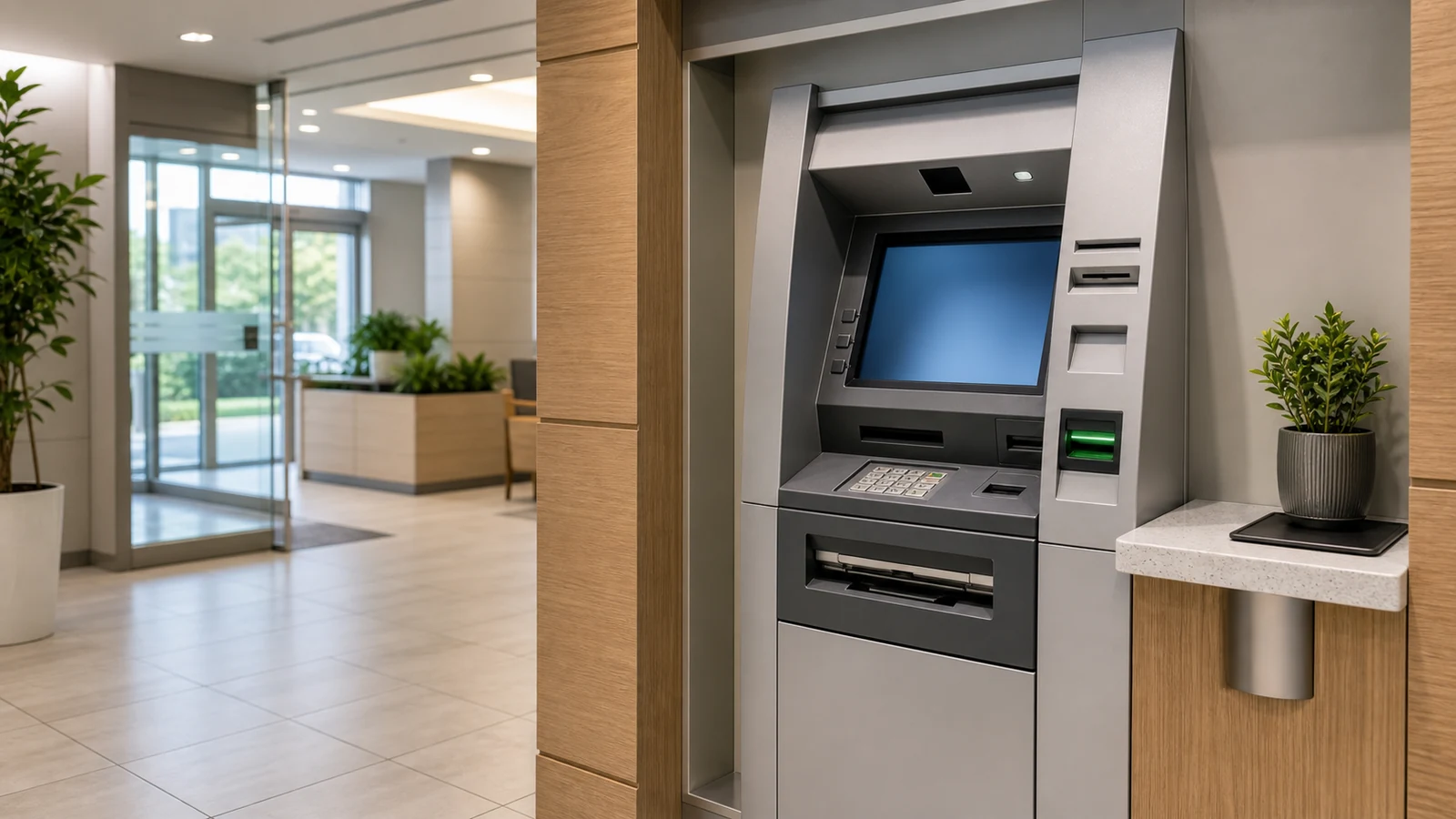
    Text-free illustration for Korean ATM words on BSKorean.

    You are standing in front of an ATM in Korea. The machine shows several buttons, and the person behind you may be waiting. At this moment, speed is useful, but accuracy is more important.

    Start by looking for the Korean words that tell you the action. Is the machine asking about taking money out, putting money in, checking your balance, sending money, entering your PIN, checking a fee, or printing a receipt?

    The slide highlights three words you may see very early on an ATM screen: 출금, 입금, and 잔액. These are not full sentences. They are menu functions. Once you understand them, the screen becomes much easier to read.

    Slide 2. Key ATM Words

    ATM Korean often appears as short labels, not long grammar sentences. Read the words like screen instructions.

    Formula 1: Action word + amount

    출금 금액
    chulgeum geumaek
    withdrawal amount

    If you see 출금, the screen is about taking money out. If the next part shows an amount, check the number carefully before continuing.

    Formula 2: 비밀번호 + 입력

    비밀번호 입력
    bimilbeonho ipnyeok
    enter PIN / enter password

    입력 means input or enter. When it appears with 비밀번호, the machine is asking you to enter your secret number. Do this privately and check the keypad before pressing the next button.

    Formula 3: 수수료 + 확인

    수수료 확인
    susuryo hwagin
    check the fee

    수수료 is important because some ATMs charge extra depending on the bank, time, card, or service. If you see this word before the final confirmation, pause and check the amount.

    Slide 4. Read an ATM Screen in 3 Steps

    Step 1. Find the main action.
    Look first for 출금, 입금, 잔액, or 이체. This tells you what kind of service you are using.

    Step 2. Check the sensitive information.
    If the screen asks for 비밀번호, enter it carefully. If you are transferring money, check the account details. If you are withdrawing cash, check the amount.

    Step 3. Confirm the fee and receipt.
    Before the final button, look for 수수료. After the transaction, the machine may ask about 영수증. If you need proof, choose the receipt option.

    Example screen logic:

    출금 선택 → 비밀번호 입력 → 출금 금액 확인 → 수수료 확인 → 영수증 출력
    chulgeum seontaek → bimilbeonho ipnyeok → chulgeum geumaek hwagin → susuryo hwagin → yeongsujeung chullyeok
    Choose withdrawal → enter PIN → check withdrawal amount → check fee → print receipt

    Slide 5. Mistakes and Practice

    Mistake 1: Confusing 출금 and 입금

    출금 means money comes out of your account. 입금 means money goes into an account. They look similar because both end with , which relates to money, but the direction is different.

    Mistake 2: Thinking 잔액 means the amount you will receive

    잔액 means balance, or money left in the account. It is not the cash amount the ATM will give you. If you want to take cash out, look for 출금 and then check the withdrawal amount.

    Mistake 3: Ignoring 수수료

    수수료 is a fee. It can appear near the final confirmation screen. If the fee is higher than expected, you may want to cancel and use another ATM or another payment method.

    Practice

    1. What does 출금 mean?
    A. deposit / B. withdrawal / C. receipt
    Answer: B. withdrawal. Choose this when you want cash from your account.

    2. Which word should you look for when checking money left in your account?
    Answer: 잔액. It means balance.

    3. What does 비밀번호 입력 mean?
    Answer: Enter PIN or enter password. The machine is asking for your secret number.

    4. You see 수수료 before the final confirmation. What should you do?
    Answer: Check the fee before continuing.

    5. Which word is useful if you need proof of the transaction?
    Answer: 영수증. It means receipt.

    Mini Review Table

    Korean Meaning Where You See It Quick Tip
    출금 withdrawal Main ATM menu Cash comes out.
    입금 deposit Main ATM menu Money goes in.
    잔액 balance Account check screen Money left in the account.
    이체 transfer Banking menu Send money to another account.
    비밀번호 PIN / password Security screen Enter privately.
    수수료 fee Confirmation screen Check before confirming.
    영수증 receipt Final screen or receipt slot Choose it if you need proof.

    Final Takeaway

    When you use an ATM in Korea, do not try to translate the whole screen first. Find the function word. 출금 is withdrawal, 입금 is deposit, 잔액 is balance, and 이체 is transfer. Then check 비밀번호, 수수료, and 영수증 before you finish.

    You can review these words in Korean Learn Korean. They are also useful for future app-based practice because each word connects to a real action on a screen.

    For official Korea travel and daily-life context, check Visit Korea.

    Related Lessons

  • Korean Restaurant Order Words for Foreign Workers

    Korean Restaurant Order Words for Foreign Workers

    Use this restaurant order lesson first

    This lesson is for learners who need to order food in Korea without scrolling through a long explanation first. Start with the sentence pattern 이거 하나 주세요, which means “one of this, please.” You can point to the menu, say the item name, or change 하나 to another number.

    Five restaurant phrases are useful almost every day: 메뉴판 주세요, 이거 하나 주세요, 덜 맵게 해 주세요, 포장해 주세요, and 계산할게요. They cover asking for the menu, ordering, reducing spice, takeout, and paying.

    NeedKoreanMeaning
    See the menu메뉴판 주세요Please give me the menu.
    Order one이거 하나 주세요One of this, please.
    Less spicy덜 맵게 해 주세요Please make it less spicy.
    Takeout포장해 주세요Please pack it to go.
    Pay계산할게요I will pay now.

    If staff ask a question quickly, answer with one short choice first: , 아니요, 포장, or 매장. Then continue with cafe phrases and convenience store words, because the same polite request ending 주세요 appears there too.

    Korean restaurant order words guide

    Korean restaurant order words helps learners practice Korean words in real situations. This BSKorean post keeps the lesson clear, scannable, and connected to app practice.

    Practice in the BSKorean app

    Related lessons

    Korean restaurant order words help foreign workers and new residents order food, ask for takeout, request water or side dishes, and pay clearly in Korea. This briefing-style lesson focuses on practical words you can use at a real restaurant counter or table.

    Korean Restaurant Order Words to Notice First

    You are standing at a Korean restaurant counter. The menu is above you, a staff member is waiting, and there may be people behind you. In that moment, Korean does not feel like a textbook. It feels fast, short, and practical.

    This lesson uses the PPT visual flow below as the learning path. Each image shows one real restaurant moment, and the explanation under the image teaches the Korean words you need for that moment. The goal is not to memorize a long script. The goal is to recognize the key word, understand the situation, and answer with one short polite phrase.

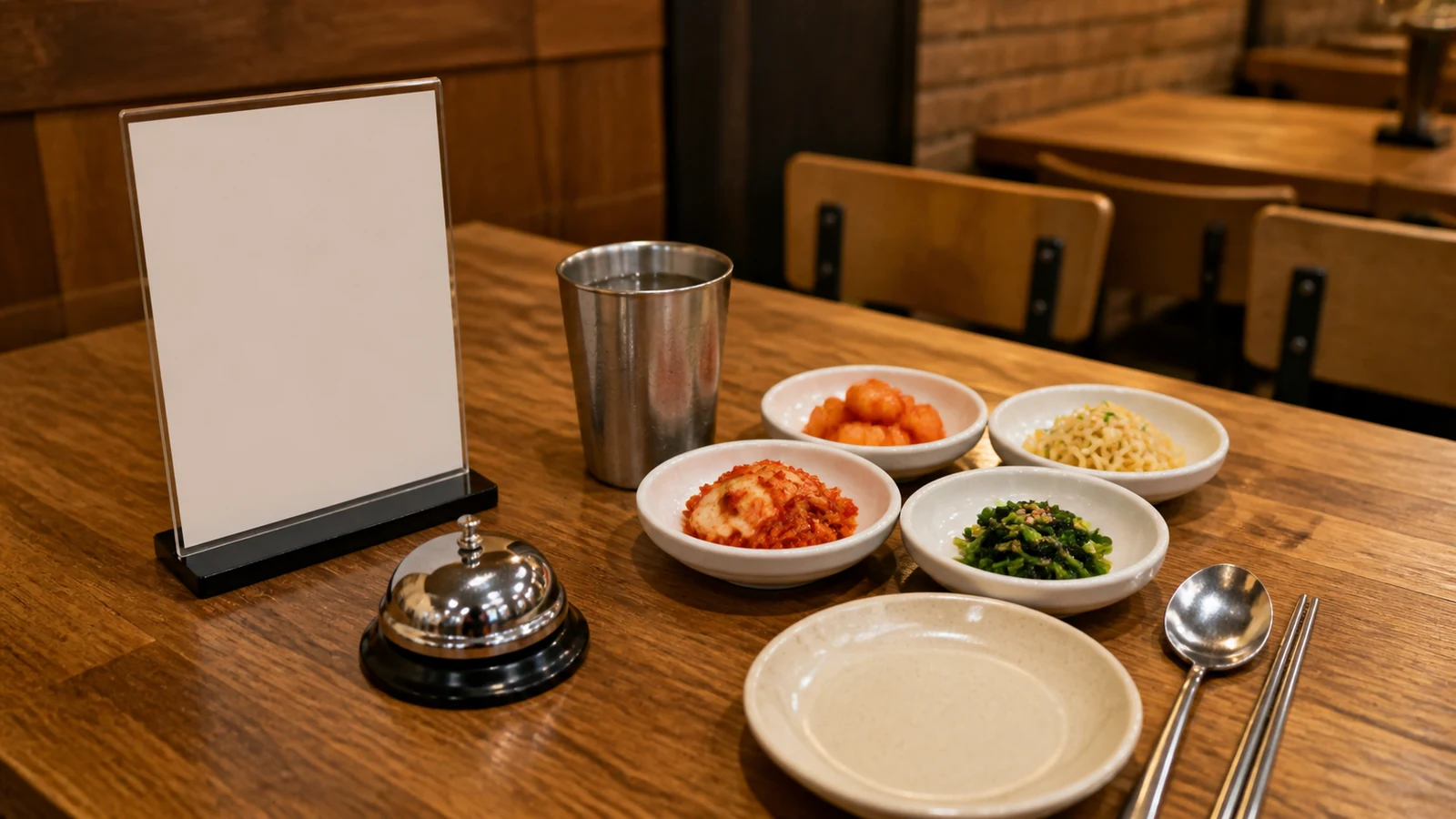
    Text-free illustration for Korean restaurant order words on BSKorean.
    Visual 1. The full restaurant order situation: ordering food, choosing takeout or dine-in, and paying.

    Visual Situation: What Happens at the Counter

    The first slide shows a customer and staff member facing each other at a Korean restaurant counter. This is the exact moment when learners often freeze. The staff may ask 주문하시겠어요? (jumunhasigesseoyo?, would you like to order?), 매장에서 드시나요? (maejangeseo deusinayo?, will you eat here?), or 포장해 드릴까요? (pojanghae deurilkkayo?, should I pack it to go?).

    The three big words on the slide are the main action words for this situation: 주문 means order, 포장 means takeout or packing, and 계산 means payment or checkout. If you understand these three words, you can follow most restaurant counter conversations in Korea.

    Lesson Goal: Listen for the Service Keyword

    The second slide shows the learning goal. In a real restaurant, you do not need to understand every word perfectly. You need to catch the keyword. If you hear 주문, the staff is talking about choosing food. If you hear 매장 or 포장, the staff is asking whether you will eat inside or take the food out. If you hear 계산, it is time to pay.

    For foreign workers in food service, this same pattern works from the staff side. You can use short, polite questions many times during a shift: 주문하시겠어요?, 매장에서 드시나요?, 포장해 드릴까요?, and 영수증 필요하세요? These phrases are short because the situation already explains most of the meaning.

    Key Vocabulary

    Dine-In or Takeout: 매장 and 포장

    The fourth slide focuses on a common question: 매장에서 드시나요? This means “Will you eat here?” The word 매장 can mean store, but in a restaurant or cafe it often points to the dine-in space. A natural short answer is 여기서 먹을게요 (yeogiseo meogeulgeyo, I will eat here).

    If you want takeout, listen for 포장. The phrase 포장해 주세요 means “Please make it takeout.” In factory Korean, 포장 can mean packaging, but in this restaurant scene it means packing food to go. The image shows why the meaning changes: there is a counter, a menu, a customer, and a bag. The situation tells you that 포장 is about takeout.

    Common Expressions

    Mini Dialogue

    Staff: 주문하시겠어요?
    Jumunhasigesseoyo?
    Would you like to order?

    Customer: 네, 김치찌개 하나 주세요.
    Ne, gimchijjigae hana juseyo.
    Yes, one kimchi stew, please.

    Staff: 매장에서 드시나요, 포장하시나요?
    Maejangeseo deusinayo, pojanghasinayo?
    Will you eat here or take it to go?

    Customer: 여기서 먹을게요.
    Yeogiseo meogeulgeyo.
    I will eat here.

    Staff: 맵기는 괜찮으세요?
    Maepgineun gwaenchaneuseyo?
    Is the spiciness okay?

    Customer: 조금 덜 맵게 해 주세요.
    Jogeum deol maepge hae juseyo.
    Please make it a little less spicy.

    Staff: 계산은 카드로 하시나요?
    Gyesaneun kadeuro hasinayo?
    Will you pay by card?

    Customer: 네, 카드로 할게요. 영수증은 괜찮아요.
    Ne, kadeuro halgeyo. Yeongsujeungeun gwaenchanayo.
    Yes, I will pay by card. I do not need a receipt.

    Usage Point: Noun or Action + 주세요

    The seventh slide teaches the most useful pattern in this lesson. 주세요 means “please give me” or “please do this for me.” You can place a noun before it: 물 주세요 means “Please give me water.” You can also place an action before it: 포장해 주세요 means “Please pack it for takeout.”

    Use this pattern carefully. 주세요 alone is polite, but it is not always clear. Add the object or action first: 이거 주세요, 물 좀 주세요, 반찬 더 주세요, 양파 빼 주세요. This makes your request understandable even if your sentence is short.

    Common Mistakes

    1. Thinking 매장 only means a shop

    Why it is confusing: Dictionaries often translate 매장 as store or shop. Correct understanding: In restaurant Korean, 매장에서 드시나요? usually means “Will you eat here?” If you want dine-in, say 여기서 먹을게요.

    2. Answering 포장해 드릴까요? with only 네

    Why it is confusing: means yes, so it may feel enough. Correct understanding: It is clearer to say 네, 포장해 주세요. This confirms that you want takeout.

    3. Confusing 주문 and 계산

    Why it is confusing: Both words happen at the counter. Correct understanding: 주문 means order. 계산 means payment or checkout. First you order, then you pay.

    4. Forgetting the action before 주세요

    Why it is confusing: Learners remember 주세요, but forget to say what they want. Correct understanding: Use a complete short request: 물 좀 주세요, 이거 하나 주세요, or 양파 빼 주세요.

    Quick Quiz

    1. What does 주문 mean?
    A. payment / B. order / C. receipt
    Answer: B. order. Explanation: 주문 is the main word for ordering food.

    2. A staff member asks 매장에서 드시나요? What are they asking?
    A. Do you need water? / B. Will you eat here? / C. Will you pay by card?
    Answer: B. Will you eat here. Explanation: 매장에서 points to the dine-in space.

    3. You want takeout. What should you say?
    Answer: 포장해 주세요. Explanation: 포장 means takeout in this restaurant situation.

    4. Fill in the blank: 물 좀 ____.
    Answer: 주세요. Explanation: 물 좀 주세요 means “Please give me some water.”

    5. What is the difference between 주문 and 계산?
    Answer: 주문 means order, and 계산 means payment or checkout. Explanation: 주문 happens when choosing food. 계산 happens when paying.

    Quick Review

    KoreanMeaningBest SituationBeginner Tip
    주문orderchoosing foodListen for 주문하시겠어요?
    포장takeoutfood to goSay 포장해 주세요.
    매장dine-in space / storeeat inside or takeout questionAnswer 여기서 먹을게요 if eating inside.
    waterasking during a meal물 좀 주세요 is natural.
    추가extraasking for moreUse with rice, side dishes, sauce, or toppings.
    계산paymentcounter checkoutDifferent from 주문.
    영수증receiptafter paymentSay 괜찮아요 if you do not need it.

    Practice More

    Practice this word list in Korean Learn Korean or in the upcoming BSkorean app. Start with image recognition first: look at the counter scene and choose the correct Korean action word. Then practice short answers such as 포장해 주세요, 여기서 먹을게요, 카드로 할게요, and 영수증은 괜찮아요.

    For official Korea travel and daily-life context, check Visit Korea.

    Related Lessons

    Conclusion

    The PPT images show the full restaurant flow: choose food, answer dine-in or takeout, make a short request, pay, and decide about the receipt. When you connect the words to the visual situation, the Korean becomes easier to use. Listen for 주문, 매장, 포장, 계산, and 영수증. Then answer with one short polite phrase.

    Practice these Korean words in the BSKorean app

    After reading this lesson, continue with the BSKorean practical Korean app guide or open the BSKorean practice app to review words by level and real-life situation.

  • Korean Factory Inspection Words for Foreign Workers

    Korean Factory Inspection Words for Foreign Workers

    Use this factory inspection lesson first

    Factory inspection language is short and direct. Start with 검사해 주세요, “please inspect it.” If something is wrong, use 불량이에요, which means “it is defective.” These two phrases are enough for many line-check situations.

    Practice the core inspection set: 검사해 주세요, 불량이에요, 다시 확인해 주세요, and 안전장비가 필요해요. They cover checking, defects, rechecking, and safety equipment.

    Inspection needKoreanMeaning
    Ask for check검사해 주세요Please inspect it.
    Defect불량이에요It is defective.
    Confirm again다시 확인해 주세요Please check again.
    Safety equipment안전장비가 필요해요I need safety equipment.

    If you are not sure whether a product passed, ask 이거 통과예요?, “did this pass?” For emergency and safety vocabulary, continue with fire emergency sign words and construction site safety instructions.

    Korean factory inspection words guide

    Korean factory inspection words helps learners practice Korean words in real situations. This BSKorean post keeps the lesson clear, scannable, and connected to app practice.

    Practice in the BSKorean app

    Related lessons

    Korean factory inspection words are important when a supervisor checks products, reports defects, or asks workers to recheck an item. This briefing-style lesson teaches practical inspection vocabulary for real factory communication in Korea.

    Korean Factory Inspection Words to Recognize

    You are standing beside a factory inspection table in Korea. A supervisor points to two trays and says, 양품과 불량품을 분리해 주세요. Another worker says, 외관검사에서 스크래치가 보입니다. You understand some Korean, but the inspection words come quickly.

    This lesson teaches practical Korean factory inspection words for foreign workers. The words come from the BSkorean factory vocabulary DB, especially the quality and inspection set. The goal is simple: when you hear a factory inspection word, you should know what to check, what to report, and what action to take next.

    Briefing Slides

    The PPT below was built with realistic factory situation images first, then Korean learning text was placed on top. Use the slides as a quick briefing before reading the full lesson.

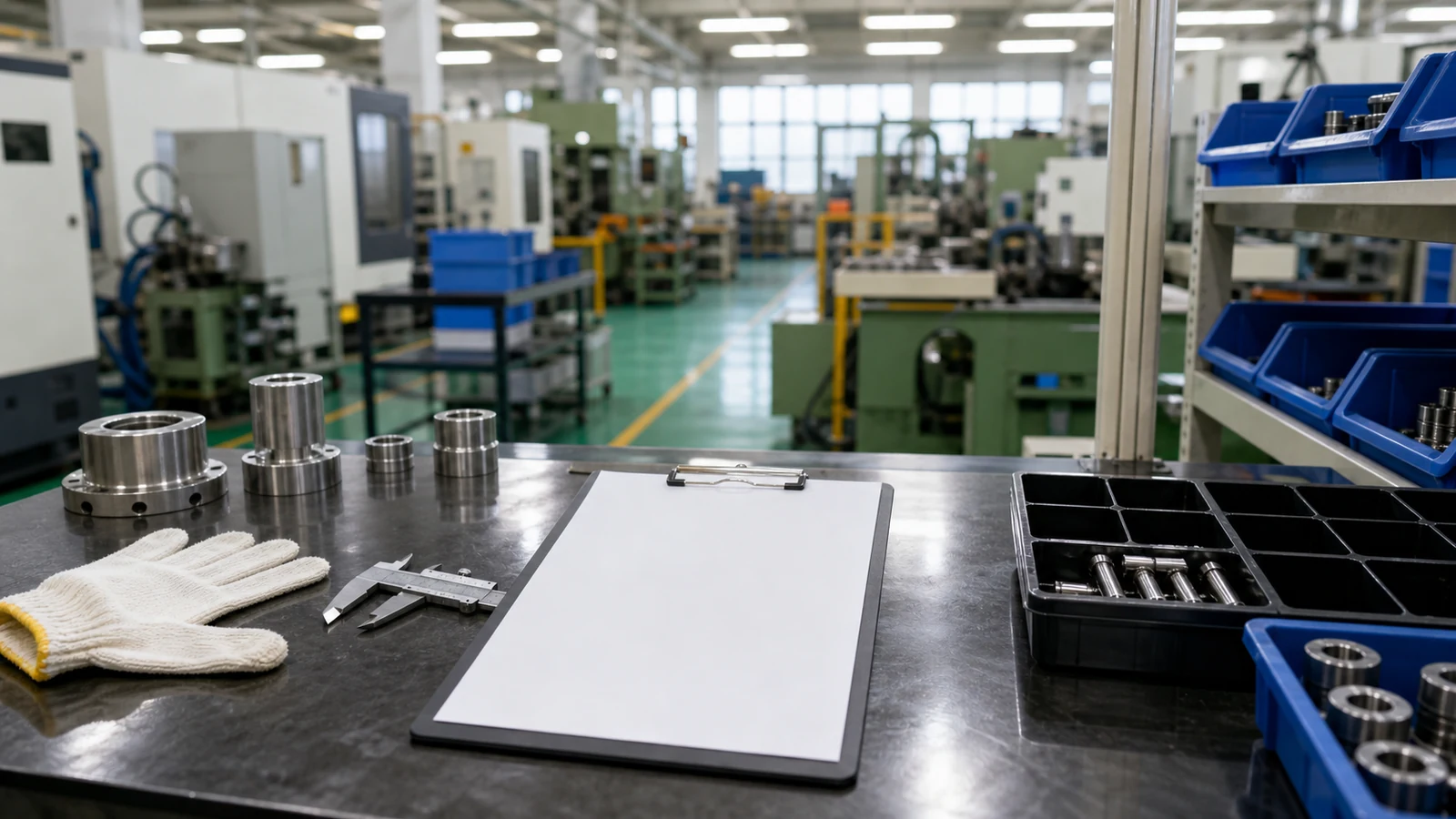
    Text-free illustration for Korean factory inspection words on BSKorean.
    Slide 1. Korean factory inspection words lesson slide with quality and defect vocabulary

    Download the PPT briefing

    Opening Situation

    Imagine your first day helping with quality checks in a Korean factory. Products move from the production line to the inspection area. Some items are good. Some have scratches, dents, missing parts, or contamination. The supervisor does not explain everything slowly. Instead, you hear short words like 검사, 불량, 합격, 불합격, 선별, and 재검사.

    In this situation, the most important skill is not translating every sentence word by word. You need to recognize the inspection word and connect it to the next work action. If you hear 검사, you should check something. If you hear 불량품, you should not mix that item with good products. If you hear 격리, you should keep the problem item separate.

    What You Need to Understand

    Factory Korean often uses short, direct phrases. A supervisor may say 품질 확인하세요, 샘플검사 하세요, or 불량 보고하세요. These phrases are not long conversations. They are work signals. The noun tells you the object or status, and the verb tells you the action.

    This is why factory inspection vocabulary is useful for foreign workers. The same words appear in spoken instructions, inspection sheets, quality reports, defect labels, and workplace notices. Once you recognize the core words, you can understand the workflow more quickly.

    Core Vocabulary

    KoreanRomanizationEnglishLevelWhat it means at work
    품질pumjilqualityBeginner 1The condition or standard of a product.
    품질관리pumjilgwanriquality controlBeginner 1The system or work of controlling product quality.
    검사geomsainspectionBeginner 1A check or inspection step.
    전수검사jeonsugeomsafull inspectionBeginner 1Checking every item, not only a sample.
    샘플검사saempeulgeomsasampling inspectionBeginner 1Checking a sample from a larger lot.
    공정검사gongjeonggeomsain-process inspectionBeginner 1Inspection during the production process.
    최종검사choejonggeomsafinal inspectionBeginner 1The last inspection before shipment or completion.
    외관검사oegwangeomsavisual inspectionBeginner 1Looking at the outside condition of a product.
    치수검사chisugeomsadimensional inspectionBeginner 1Checking size, length, width, or dimensions.
    기능검사gineunggeomsafunctional inspectionBeginner 1Checking whether the product works correctly.
    합격hapgyeokpassBeginner 2The product or inspection result passes.
    불합격bulhapgyeokfailBeginner 2The product or inspection result fails.
    판정panjeongjudgmentBeginner 2The decision after inspection.
    양품yangpumgood productBeginner 2A good product that can move to the next step.
    불량품bulryangpumdefective productBeginner 2A defective product that should not be mixed with good items.
    불량bulryangdefectBeginner 2A defect or quality problem.
    결함gyeolhamflawBeginner 2A flaw or fault in the product.
    스크래치seukeuraechiscratchBeginner 2A scratch on the surface.
    찍힘jjikhimdentBeginner 2A dent or mark from impact.
    오염oyeomcontaminationBeginner 2Contamination, dirt, stain, or unwanted material.
    이물imulforeign matterBeginner 2Foreign matter that should not be inside or on the product.
    누락nurakmissing partBeginner 2A missing part, step, or item.
    파손pasonbreakageBeginner 3Breakage or damage.
    격리gyeokriquarantineIntermediate 2Keeping problem products separate.
    선별seonbyeolsortingIntermediate 2Sorting products by condition.
    재검사jaegeomsare-inspectionIntermediate 2Checking again after a problem or correction.

    Real Workplace Phrases

    The words above become useful when they are connected to short workplace instructions. The following phrases are common in quality control and inspection work.

    Korean SentenceEnglish MeaningWhen to Use
    품질을 확인해 주세요.Please check the quality.When asking someone to check a product before moving it forward.
    샘플검사 먼저 하세요.Please do the sampling inspection first.When only selected items need to be checked first.
    외관검사에서 스크래치가 보입니다.A scratch is visible during visual inspection.When reporting a visible surface problem.
    이 제품은 불량품입니다.This product is defective.When a product should not be treated as good stock.
    양품과 불량품을 분리해 주세요.Please separate good products and defective products.When sorting inspected products.
    불합격 제품은 격리하세요.Quarantine failed products.When failed products must be kept away from good items.
    누락된 부품이 있는지 확인하세요.Check whether any parts are missing.When inspecting assembly or packaging.
    재검사 후 보고해 주세요.Please report after re-inspection.When a supervisor asks for confirmation after checking again.

    Usage Notes

    검사 means the checking step

    검사 means inspection or checking. It can be general, but factory work often makes it more specific. 외관검사 checks the outside appearance. 치수검사 checks size or dimensions. 기능검사 checks whether the product works. When you hear a word ending in 검사, ask yourself: “What type of check is required?”

    합격 and 불합격 are result words

    합격 means pass, and 불합격 means fail. These words can be used for tests, but in a factory they often describe the inspection result. A product can be 합격 if it meets the standard. It can be 불합격 if it does not meet the standard.

    양품 and 불량품 describe product status

    양품 is a good product. It can usually continue to the next process, packing, or shipment. 불량품 is a defective product. It should be reported, separated, repaired, rechecked, or discarded depending on the workplace rule. Do not mix 불량품 with 양품.

    불량 is the problem, 불량품 is the product

    불량 can mean the defect or the defective condition. 불량품 means the defective product itself. For example, 스크래치 불량 can mean a scratch defect. 이 제품은 불량품입니다 means this product is defective.

    Common Pattern

    PatternMeaningExample
    N + 확인하세요Please check N.품질 확인하세요.
    N + 검사하세요Please inspect N.치수검사 하세요.
    N + 분리해 주세요Please separate N.불량품을 분리해 주세요.
    N + 보고해 주세요Please report N.불량을 보고해 주세요.
    N + 재검사하세요Please inspect N again.이 제품은 재검사하세요.

    In real spoken Korean, workers may shorten these phrases. You might hear 품질 확인, 불량 보고, or 재검사. The shorter form is common when the situation is obvious. For learning, remember the polite full forms first.

    Mini Dialogue

    Supervisor: 이 제품 외관검사 했어요?
    Did you do the visual inspection for this product?

    Worker: 네, 외관검사에서 스크래치가 보입니다.
    Yes, a scratch is visible during the visual inspection.

    Supervisor: 그러면 불량품으로 분리해 주세요.
    Then please separate it as a defective product.

    Worker: 불합격 제품은 어디에 두면 될까요?
    Where should I put the failed products?

    Supervisor: 저쪽 격리 구역에 두고, 나중에 재검사하세요.
    Put them in the quarantine area over there, and inspect them again later.

    Worker: 네, 격리 후 재검사하겠습니다.
    Okay, I will quarantine them and re-inspect them.

    This dialogue shows the work flow: inspect, find a defect, separate the defective product, quarantine it, and re-inspect it. The Korean is short because the workers are focused on action, not explanation.

    Common Mistakes

    Common Mistake 1: Treating 불량 and 불량품 as the same word

    Why it happens: Both words are connected to defects.

    Correct understanding: 불량 is the defect or defective condition. 불량품 is the defective product.

    Example: 스크래치 불량 means a scratch defect. 불량품을 분리해 주세요 means please separate the defective products.

    Common Mistake 2: Thinking 합격 and 불합격 only refer to people

    Why it happens: Learners often meet these words in tests or exams first.

    Correct understanding: In a factory, 합격 and 불합격 can describe an inspection result for a product, part, process, or sample.

    Example: 샘플검사 합격 means the sample inspection passed.

    Common Mistake 3: Ignoring 격리 after a defect is found

    Why it happens: Beginners may understand the defect word but miss the next action.

    Correct understanding: 격리 means the product should be kept separate. This prevents defective products from being mixed with good products.

    Example: 불합격 제품은 격리하세요 means failed products should be quarantined.

    Quick Quiz

    1. What does “외관검사” mean?
    A. visual inspection / B. final inspection / C. missing part
    Answer: A. visual inspection
    외관검사 means checking the outside appearance of a product.

    2. A product has a visible dent. Which Korean word is useful?
    A. 찍힘 / B. 합격 / C. 양품
    Answer: A. 찍힘
    찍힘 means a dent or impact mark.

    3. Which word means “good product”?
    A. 불량품 / B. 양품 / C. 오염
    Answer: B. 양품
    양품 is a product that passed inspection or can be treated as good stock.

    4. What should you do with failed products if the supervisor says “격리하세요”?
    A. Mix them with good products / B. Keep them separate / C. Ship them immediately
    Answer: B. Keep them separate
    격리 means quarantine or separation from other products.

    5. What does “재검사” mean?
    A. re-inspection / B. full inspection / C. contamination
    Answer: A. re-inspection
    재검사 means checking again after a problem, correction, or unclear result.

    Practice This Lesson

    Practice this word list in Learn Korean or in the upcoming BS3001 app.

    Practice Factory Inspection Words

    Practice these words again in Korean Learn Korean so you can connect the Korean word to the real situation.

    For official employment and workplace information in Korea, check the English site of the Ministry of Employment and Labor.

    Related Lessons

    Conclusion

    Korean factory inspection words are easier when you read them as work signals. First, find the inspection type: 외관검사, 치수검사, or 기능검사. Then check the result word: 합격, 불합격, 양품, or 불량품. Finally, take the action: separate, quarantine, report, or re-inspect.

    If you work in a Korean factory, these words can help you understand quality instructions faster and avoid mixing good products with defective products.

    Practice these Korean words in the BSKorean app

    After reading this lesson, continue with the BSKorean practical Korean app guide or open the BSKorean practice app to review words by level and real-life situation.

  • Korean Agriculture Words for Foreign Farm Workers

    Korean Agriculture Words for Foreign Farm Workers

    Use this agriculture work lesson first

    This lesson is for foreign farm workers who need to understand the next task, ask for tools, and report safety problems. Start with 오늘 작업은 어디예요?, which means “where is today’s work?” It is a safe question when instructions are unclear.

    Learn these first-day phrases: 오늘 작업은 어디예요?, 장갑이 필요해요, 쉬는 시간이 언제예요?, and 다쳤어요. They cover location, gloves, break time, and injury.

    Situation Korean Meaning
    Find the task 오늘 작업은 어디예요? Where is today’s work?
    Ask for gloves 장갑이 필요해요 I need gloves.
    Ask break time 쉬는 시간이 언제예요? When is break time?
    Report injury 다쳤어요 I got hurt.

    When you do not understand a tool name, point and ask 이거 맞아요?, “is this correct?” If something is dangerous, stop and say 위험해요. Continue with workplace problem report phrases and workplace schedule words to handle workday changes.

    Korean agriculture words guide

    Korean agriculture words helps learners practice Korean words in real situations. This BSKorean post keeps the lesson clear, scannable, and connected to app practice.

    Practice in the BSKorean app

    Related lessons

    Korean agriculture words help foreign farm workers understand field instructions, tools, crop work, safety notices, and daily tasks in Korea. This lesson connects practical farm vocabulary to real work situations.

    Korean Agriculture Words for Real Field Work

    You arrive at a farm in Korea early in the morning. A supervisor points toward a greenhouse and says, 하우스 재배 구역으로 가세요. Then you hear words like 모종, 비료, 토양, and 수확물. Even if the work itself is familiar, the Korean words can make the first few minutes confusing.

    This lesson teaches practical Korean agriculture words for foreign farm workers. The words come from the BSkorean agriculture, livestock, and fisheries word DB, and this article focuses on the agriculture side: crops, soil, seedlings, fertilizer, greenhouse work, open-field work, weather, and harvested crops.

    Briefing PPT

    This PPT was rebuilt using realistic farm background images first, then lesson text was placed on top as readable briefing slides.

    Download the agriculture vocabulary briefing PPT

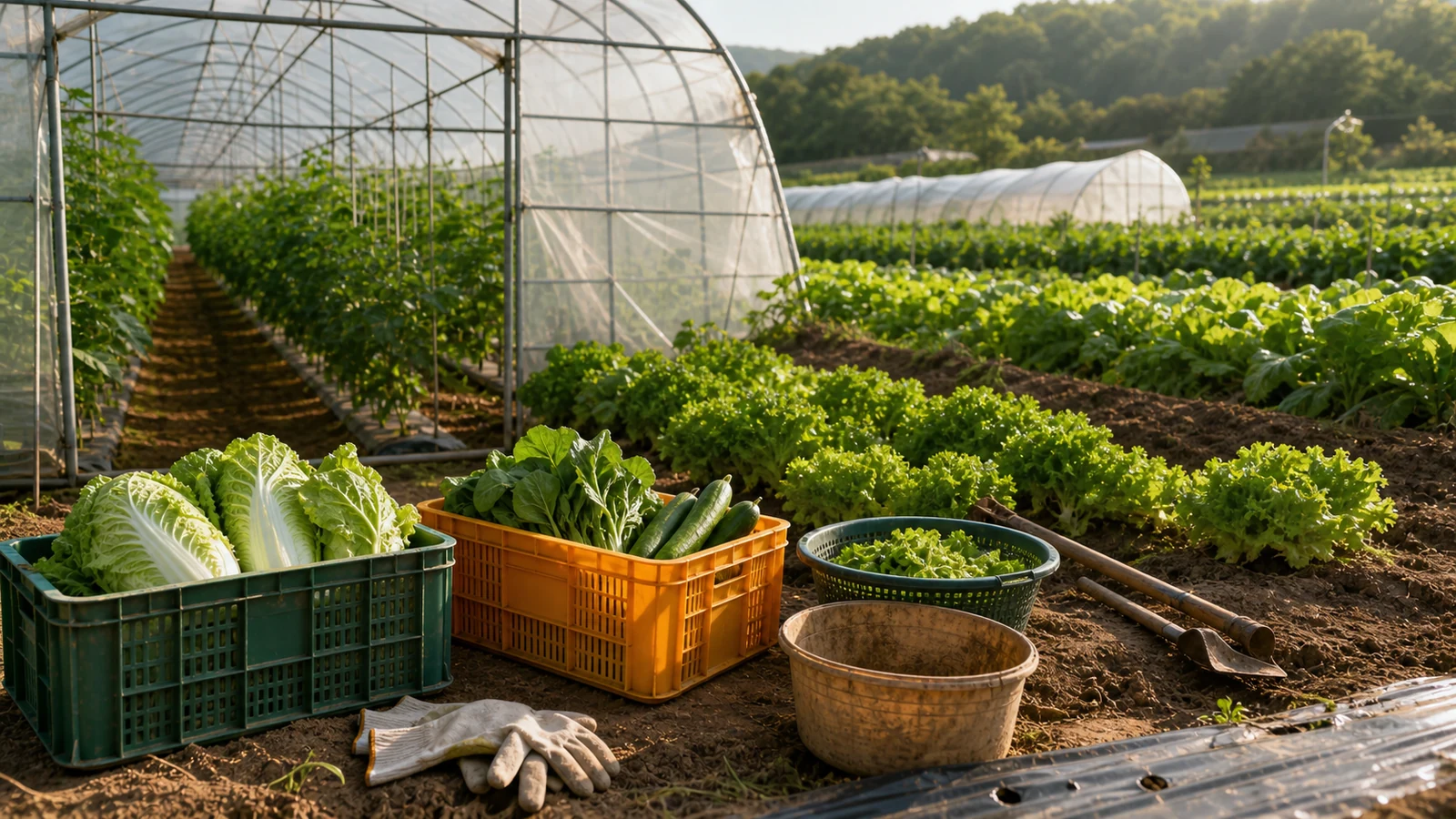
    Text-free illustration for Korean agriculture words on BSKorean.
    Korean Agriculture Words title slide for foreign farm workers

    Opening Situation

    Imagine your first shift at a vegetable farm in Korea. Some workers are inside a greenhouse. Others are working in an open field. One person is checking seedlings, another is preparing fertilizer, and another is sorting harvested vegetables.

    In this situation, you do not need to understand a long explanation about agriculture. You need to recognize the words that tell you what object, place, or work step people are talking about. If you hear 모종, look for seedlings. If you hear 비료, the work is about fertilizer. If you hear 수확물, the work is probably about harvested crops that need to be moved, sorted, packed, or checked.

    What You Need to Understand

    Agriculture Korean is often practical and object-based. A supervisor may use a noun first, then add a short instruction. For example, 모종 확인하세요 means “Check the seedlings.” 비료 준비해 주세요 means “Please prepare the fertilizer.” The important part is not a grammar explanation. The important part is recognizing the core word and connecting it to the real object in front of you.

    Farm work also changes depending on location. 하우스 재배 means greenhouse cultivation. 노지 재배 means open-field cultivation. If you know this difference, you can understand whether the instruction is about work inside a greenhouse or outside in the field.

    Core Vocabulary

    Korean Romanization English Level What it means at work
    농업 nongeop agriculture Beginner 1 The general field of agriculture.
    농사 nongsa farming Beginner 2 The actual work of farming.
    농민 nongmin farm worker Beginner 2 A farm worker or farmer as a person.
    농부 nongbu farmer Beginner 1 A farmer, usually a person who grows crops.
    농작물 nongjakmul agricultural crop Beginner 1 Crops growing in a field or greenhouse.
    채소 chaeso vegetable Beginner 1 Vegetables grown, packed, or sorted.
    하우스 재배 hauseu jaebae greenhouse cultivation Beginner 1 Growing crops inside a greenhouse.
    노지 재배 noji jaebae open-field cultivation Beginner 2 Growing crops outside in an open field.
    non rice paddy Beginner 1 A rice paddy or wet rice field.
    heulk soil Beginner 1 Soil or dirt you touch and work with.
    토양 toyang soil Beginner 2 Soil as a more technical growing condition.
    비료 biryo fertilizer Beginner 1 Fertilizer used to help crops grow.
    종자 jongja seed stock Beginner 1 Seed stock before planting.
    모종 mojong seedling Beginner 2 Seedlings ready to be moved or planted.
    ssak sprout Beginner 2 A sprout that has just started growing.
    줄기 julgi stem Beginner 1 The stem of a plant.
    수확물 suhwakmul harvested crop Beginner 2 The crop after harvest.
    bi rain Beginner 1 Rain that can affect field work.
    햇빛 haetbit sunlight Beginner 1 Sunlight needed for growing crops.
    이슬 iseul dew Beginner 2 Dew on plants in the morning.

    Crop Words You May Hear

    Korean Romanization English Level Workplace note
    당근 danggeun carrot Beginner 1 Carrot, often sorted by size and condition.
    상추 sangchu lettuce Beginner 1 Lettuce, often harvested and packed by hand.
    오이 oi cucumber Beginner 1 Cucumber, common in greenhouse work.
    토마토 tomato tomato Beginner 1 Tomato, common in greenhouse work.
    옥수수 oksusu corn Beginner 1 Corn, common in field farming.

    Crop names are useful because they often appear in direct work instructions. If someone says 상추 수확물, they are talking about harvested lettuce. If they say 오이 하우스, they may mean the greenhouse where cucumbers are grown. In real farm work, Korean words are often shortened because everyone can see the place and the object.

    Common Pattern

    The most useful pattern is simple:

    Pattern Meaning Example
    N + 확인하세요 Please check N. 모종 확인하세요.
    N + 준비해 주세요 Please prepare N. 비료 준비해 주세요.
    N + 분류해 주세요 Please sort N. 수확물 분류해 주세요.
    N + 쪽으로 가세요 Please go toward N. 하우스 재배 구역으로 가세요.

    In spoken workplace Korean, particles may be dropped. You may hear 모종 확인하세요 instead of 모종을 확인하세요. Both point to the same action: check the seedlings.

    Real-Life Dialogue

    Dialogue 1: Greenhouse Work

    Supervisor: 오늘은 하우스 재배 구역으로 가세요.
    Oneureun hauseu jaebae guyeogeuro gaseyo.
    Today, please go to the greenhouse cultivation area.

    Worker: 네, 무엇을 확인하면 될까요?
    Ne, mueoseul hwaginhayeomyeon doelkkayo?
    Okay. What should I check?

    Supervisor: 모종하고 토양 상태를 확인하세요.
    Mojonghago toyang sangtaereul hwaginhaseyo.
    Please check the seedlings and the soil condition.

    Worker: 네, 확인하겠습니다.
    Ne, hwaginhagetseumnida.
    Yes, I will check.

    In this dialogue, 하우스 재배 tells you the work area. 모종 tells you the object to check. 토양 tells you that the supervisor cares about the soil condition, not just the plants.

    Dialogue 2: Harvest Sorting

    Supervisor: 수확물을 여기로 가져오세요.
    Suhwangmureul yeogiro gajyeooseyo.
    Please bring the harvested crops here.

    Worker: 어떤 수확물인가요?
    Eotteon suhwangmuringayo?
    Which harvested crops?

    Supervisor: 상추하고 오이를 먼저 분류해 주세요.
    Sangchuhago oireul meonjeo bullyuhae juseyo.
    Please sort the lettuce and cucumbers first.

    Worker: 네, 상추부터 하겠습니다.
    Ne, sangchubuteo hagetseumnida.
    Okay, I will start with the lettuce.

    Here, the key word is 수확물. It does not simply mean “harvest” as an abstract idea. At work, it usually means the actual crops that have already been picked and now need to be moved, sorted, checked, or packed.

    Common Mistakes

    Common Mistake 1: Thinking 농업 and 농사 are the same in every sentence

    Why it happens: Both words are connected to farming.

    Correct understanding: 농업 is the broad industry or field of agriculture. 농사 is the actual work of farming.

    Example: 농업 can appear in a category or document. 농사 is more natural when talking about doing farm work.

    Common Mistake 2: Reading 하우스 재배 as a normal house

    Why it happens: Beginners may connect 하우스 with “house.”

    Correct understanding: In farm work, 하우스 재배 usually means greenhouse cultivation. It is about growing crops inside a greenhouse, not a house for people.

    Example: 하우스 재배 구역 means the greenhouse cultivation area.

    Common Mistake 3: Confusing 흙 and 토양

    Why it happens: Both words can mean soil.

    Correct understanding: is the everyday word for soil or dirt. 토양 sounds more technical and is often used when talking about soil condition, quality, moisture, or management.

    Example: A worker may say 흙이 젖었어요, “The soil is wet.” A supervisor may say 토양 상태를 확인하세요, “Check the soil condition.”

    Practice Sentences

    Korean Expression Romanization English Meaning Level When to Use
    모종을 확인하세요. mojongeul hwaginhaseyo. Please check the seedlings. Beginner 2 A supervisor asks you to check seedlings before planting.
    비료를 준비해 주세요. biryoreul junbihae juseyo. Please prepare the fertilizer. Beginner 1 Before field or greenhouse work starts.
    하우스 재배 구역으로 가세요. hauseu jaebae guyeogeuro gaseyo. Please go to the greenhouse cultivation area. Beginner 1 A worker is sent to the greenhouse area.
    수확물을 분류해 주세요. suhwangmureul bullyuhae juseyo. Please sort the harvested crops. Beginner 2 After harvesting vegetables or fruits.
    토양 상태를 확인하세요. toyang sangtaereul hwaginhaseyo. Please check the soil condition. Beginner 2 When soil moisture or condition matters.
    비가 오면 작업을 멈추세요. biga omyeon jageobeul meomchuseyo. If it rains, stop the work. Beginner 1 For outdoor field work.

    Mini Quiz

    Question 1. What does 모종 mean?
    A. fertilizer
    B. seedling
    C. rain
    Answer: B. 모종 means seedling.

    Question 2. You are told 비료를 준비해 주세요. What should you prepare?
    A. fertilizer
    B. harvested crops
    C. sunlight
    Answer: A. 비료 means fertilizer.

    Question 3. Which word means greenhouse cultivation?
    A. 노지 재배
    B. 하우스 재배
    C. 수확물
    Answer: B. 하우스 재배 means greenhouse cultivation.

    Question 4. What is the more technical word for soil condition?
    A. 흙
    B. 토양
    C. 이슬
    Answer: B. 토양 is often used for soil as a condition or growing environment.

    Question 5. You hear 수확물을 분류해 주세요. What action should you do?
    A. Sort the harvested crops.
    B. Plant the seeds.
    C. Stop because of rain.
    Answer: A. 수확물 means harvested crops, and 분류해 주세요 means please sort.

    Practice This Lesson

    Practice these and related words in the dedicated Agri-Fishery Learn Korean page.

    Practice Agriculture Words

    Practice these words again in Korean Learn Korean so you can connect the Korean word to the real situation.

    For official employment and workplace information in Korea, check the English site of the Ministry of Employment and Labor.

    Related Lessons

    Quick Review

    For farm work in Korea, start with the object word first. 모종 means seedlings. 비료 means fertilizer. 토양 means soil as a growing condition. 수확물 means crops after harvest. 하우스 재배 points to greenhouse cultivation, while 노지 재배 points to open-field cultivation.

    If you can connect these words to real objects and places, Korean agriculture instructions become much easier to follow. You do not need to translate every sentence slowly. Listen for the work word, check the object or place, and confirm the action.

  • Korean Workplace Problem Report Phrases for Foreign Workers

    Korean Workplace Problem Report Phrases for Foreign Workers

    Use these workplace problem phrases first

    When something feels unsafe or wrong at work, start with one clear Korean sentence. Say the problem, point to the place, then ask for a check.

    Korean Use it for
    문제가 있어요 There is a problem.
    위험해요 It is dangerous.
    확인해 주세요 Please check it.
    다쳤어요 I or someone got hurt.
    신고해야 해요 We need to report it.
    Worker 저기요, 문제가 있어요.
    Supervisor 어디가 문제예요?
    Worker 기계 옆이 위험해요. 확인해 주세요.

    Safety note: describe the place and danger first. For fire, gas, serious injury, or immediate danger, contact the site supervisor or local emergency help right away.

    Use this workplace problem report lesson first

    Use this page when something at work is wrong and you need to explain it clearly in Korean. The first sentence is 문제가 있어요, “there is a problem.” Then add one short detail, such as a machine, injury, missing tool, or schedule problem.

    Memorize these urgent phrases: 문제가 있어요, 기계가 멈췄어요, 다쳤어요, 관리자에게 말해 주세요, and 사진을 보여드릴게요. They help you report without a long explanation.

    Problem Korean Meaning
    General issue 문제가 있어요 There is a problem.
    Machine stopped 기계가 멈췄어요 The machine stopped.
    Injury 다쳤어요 I got hurt.
    Call manager 관리자에게 말해 주세요 Please tell the manager.
    Show evidence 사진을 보여드릴게요 I will show you a photo.

    For safety issues, speak early and keep the sentence simple. If a supervisor asks for details, show the object or photo and repeat the key word. Related lessons: factory inspection words and construction site safety instructions.

    Korean workplace problem report phrases guide

    Korean workplace problem report phrases helps learners practice Korean words in real situations. This BSKorean post keeps the lesson clear, scannable, and connected to app practice.

    Practice in the BSKorean app

    Related lessons

    Korean workplace problem report phrases help foreign workers explain a problem quickly when something is broken, delayed, dangerous, missing, or unclear. This lesson focuses on calm, practical reporting language used at work in Korea.

    Korean Workplace Problem Report Phrases to Use Clearly

    Text-free illustration for Korean workplace problem report phrases on BSKorean.
    Korean workplace problem report phrases title slide with a realistic workplace scene

    You are working a busy shift in Korea. A machine stops, a delivery is late, a customer is upset, or one item is missing from an order. Your supervisor is nearby, but you only have a few seconds to explain the problem. In that moment, you do not need advanced Korean. You need a clear problem report.

    This lesson teaches Korean workplace problem report phrases for foreign workers in service jobs, factories, warehouses, construction sites, cleaning work, hotels, and other practical workplaces. The goal is to help you say what happened, where it happened, and what kind of help you need.

    Download the updated workplace problem report PPT briefing

    Opening Situation

    At work, Korean can become stressful when something goes wrong. Normal words feel harder because you are also dealing with time pressure. Maybe the packing line stopped. Maybe the wrong item was delivered. Maybe a customer is complaining at the counter. A short phrase like 문제가 생겼어요 can help you start the report.

    Many industrial and service workplaces in Korea use direct reporting language. Managers often want three pieces of information: what the problem is, where it happened, and whether immediate action is needed. If you can report those three things, you can communicate more safely and professionally.

    What You Need to Do

    1. Say that there is a problem.
    2. Name the specific issue: delay, defect, missing item, breakdown, complaint, or mistake.
    3. Say the place or item connected to the problem.
    4. Ask for confirmation or help.
    5. Report again after the issue is checked or fixed.

    Core Vocabulary Table

    Korean Romanization English Level Usage Note
    문제 munje problem Beginner 2 General problem word used in all workplaces.
    보고 bogo report Intermediate 1 Used when telling a supervisor or manager.
    확인 hwagin check / confirm Beginner 3 Useful for asking someone to check a situation.
    고장 gojang breakdown Intermediate 1 Used for machines, equipment, doors, or devices.
    지연 jiyeon delay Intermediate 2 Common in delivery, production, service, and schedules.
    누락 nurak missing item Advanced 1 Formal word for something omitted or missing.
    불량 bullyang defect Intermediate 2 Used in factories, products, packaging, and quality checks.
    실수 silsu mistake Beginner 3 A general mistake, often used in daily work conversation.
    고객 항의 gogaek hangui customer complaint Advanced 1 Useful in service jobs and customer support.
    주문 jumun order Beginner 2 Used in restaurants, cafes, delivery, and online sales.
    재고 jaego stock / inventory Intermediate 2 Used in stores, warehouses, and production.
    조치 jochi action / measure Advanced 1 Formal word for what will be done to solve a problem.
    담당자 damdangja person in charge Intermediate 2 The person responsible for a task or issue.
    관리자 gwallija manager / supervisor Intermediate 1 The person you report to or ask for instructions.
    다시 확인해 주세요 dasi hwaginhae juseyo please check again Beginner 3 Polite request when something seems wrong.

    Action Signal Formula

    A useful workplace report does not need to be long. Use this order:

    Formula Meaning Example
    문제가 생겼어요 There is a problem 관리자님, 문제가 생겼어요.
    N에 문제가 있어요 There is a problem with N 포장 라인에 문제가 있어요.
    N이 고장 났어요 N is broken 기계가 고장 났어요.
    N이 지연됐어요 N is delayed 배송이 지연됐어요.
    N이 누락됐어요 N is missing 주문에서 음료가 누락됐어요.
    확인 부탁드립니다 Please check 재고 확인 부탁드립니다.

    This pattern works across industries. A restaurant worker can report an order problem. A warehouse worker can report missing stock. A factory worker can report a defect. A construction worker can report a tool or equipment problem.

    For service jobs, the most useful words are often 주문, 누락, 고객 항의, and 확인. For field jobs, the most useful words are often 고장, 불량, 지연, and 조치. You can use the same report structure, but change the noun to match your workplace.

    Usage Notes

    보고 sounds more formal than just “telling someone.” It is often used when information moves from a worker to a supervisor, from a staff member to a manager, or from one department to another. In a short spoken situation, you can say 보고드릴 게 있습니다, which means “I have something to report.”

    확인 is one of the safest workplace words because it does not blame anyone. If you are not sure whether something is wrong, say 확인 부탁드립니다 or 다시 확인해 주세요. This lets the other person check the situation before deciding what happened.

    조치 is a manager-style word. It means the action or measure taken after a problem is found. You may hear 조치하겠습니다, meaning “I will take action,” or 조치가 필요합니다, meaning “action is needed.” You do not need to use this word often as a beginner, but you should recognize it in workplace messages.

    Real-Life Dialogue

    Dialogue 1: Factory or warehouse problem

    Worker: 관리자님, 문제가 생겼어요.
    Gwallijanim, munjega saenggyeosseoyo.
    Manager, there is a problem.

    Supervisor: 어디 문제예요?
    Eodi munjeyeyo?
    Where is the problem?

    Worker: 포장 라인에 문제가 있어요. 기계가 멈췄어요.
    Pojang raine munjega isseoyo. Gigyega meomchwosseoyo.
    There is a problem on the packing line. The machine stopped.

    Supervisor: 알겠습니다. 잠시 멈추고 기다리세요.
    Algesseumnida. Jamsi meomchugo gidariseyo.
    Understood. Stop for a moment and wait.

    Dialogue 2: Service job problem

    Staff: 주문에서 음료가 누락됐어요.
    Jumuneseo eumryoga nurakdwaesseoyo.
    A drink is missing from the order.

    Manager: 고객님께 말씀드렸어요?
    Gogaeknimkke malsseumdeuryeosseoyo?
    Did you tell the customer?

    Staff: 아직이요. 다시 확인해 주세요.
    Ajigiyo. Dasi hwaginhae juseyo.
    Not yet. Please check again.

    Manager: 네, 제가 확인하겠습니다.
    Ne, jega hwaginhagetseumnida.
    Yes, I will check.

    Common Mistakes

    Common Mistake 1: Saying only 문제

    Why it happens: Beginners may remember the noun but not the reporting phrase.

    Correct understanding: Use a sentence such as 문제가 생겼어요 or N에 문제가 있어요. The sentence tells your supervisor that action is needed.

    Common Mistake 2: Using 고장 for every problem

    Why it happens: 고장 is easy to remember because it means broken.

    Correct understanding: 고장 is best for machines, equipment, devices, or facilities. Use 누락 for missing items, 지연 for delays, and 불량 for defective products.

    Common Mistake 3: Forgetting the location

    Why it happens: Under pressure, learners report the problem but not where it happened.

    Correct understanding: Add the place or item: 포장 라인에, 주문에서, 창고에, 계산대에서. This helps the manager respond faster.

    Common Mistake 4: Sounding too casual with customers

    Why it happens: Workplace learners may use the same phrase with coworkers and customers.

    Correct understanding: With customers, use polite forms such as 확인해 드리겠습니다 or 잠시만 기다려 주세요. With a coworker, short direct phrases may be acceptable.

    Mini Quiz

    1. Question 1: What does 문제가 생겼어요 mean?
      Answer: There is a problem.
      Explanation: This is a useful first sentence for reporting an issue.
    2. Question 2: Which word is best for a broken machine?
      Answer: 고장.
      Explanation: 고장 is used for machines, equipment, devices, or facilities that do not work.
    3. Question 3: Which word means delay?
      Answer: 지연.
      Explanation: 지연 is used for delayed delivery, production, service, or schedules.
    4. Question 4: A drink is missing from an order. Which word fits best?
      Answer: 누락.
      Explanation: 누락 means something is missing or omitted.
    5. Question 5: How do you politely ask someone to check again?
      Answer: 다시 확인해 주세요.
      Explanation: This is short, polite, and useful in many workplaces.

    Review Table

    Korean Meaning Best Situation Beginner Tip
    문제가 생겼어요 There is a problem first report to a supervisor Use this to start the report.
    고장 breakdown machine or equipment issue Use with 기계, 문, 장비, or 컴퓨터.
    지연 delay delivery, production, schedule Use when something is late.
    누락 missing item orders, documents, inventory Formal but very useful at work.
    불량 defect product or quality issue Common in factory and warehouse work.
    확인 부탁드립니다 Please check polite work request Good for messages and reports.
    조치 action / measure after checking a problem Often used by managers.

    Practice This Set

    Practice this word list in Learn Korean or in the upcoming BS3001 app. Start by recognizing the problem word, then practice one report sentence for each word. For example, when you see 고장, say 기계가 고장 났어요. When you see 누락, say 주문에서 하나가 누락됐어요.

    Practice Workplace Report Words

    For official employment and workplace information in Korea, check the English site of the Ministry of Employment and Labor.

    Related Lessons

    Conclusion

    Workplace Korean becomes more useful when you learn it as reporting language. In many jobs, the most important sentence is not complicated. It is 문제가 생겼어요. After that, add the specific word: 고장, 지연, 누락, 불량, or 고객 항의.

    A clear report protects time, safety, and customer trust. Say what happened, where it happened, and what you need the manager to check. That simple structure works across factories, warehouses, restaurants, cafes, stores, hotels, and field work in Korea.

    Practice This Lesson

    Review words from this lesson with quiz cards and browser-based review history.

    Practice workplace Korean words

  • Korean Construction Safety Words for Foreign Workers

    Korean Construction Safety Words for Foreign Workers

    Use this construction safety lesson first

    Construction safety Korean should be useful before a worker scrolls. Start with 안전모를 써 주세요, “please wear a safety helmet.” Then learn the words that appear on signs and in spoken warnings: 위험, 정지, 추락주의, and 비상구.

    Safety momentKoreanMeaning
    Helmet안전모를 써 주세요Please wear a safety helmet.
    Danger위험해요It is dangerous.
    Stop work잠깐 멈춰 주세요Please stop for a moment.
    Injury다쳤어요I got hurt.

    If you see a sign you do not understand, take a photo and ask 이 표지 무슨 뜻이에요?. For related emergency language, continue with fire emergency sign words and workplace problem report phrases.

    Korean construction safety words guide

    Korean construction safety words helps learners practice Korean words in real situations. This BSKorean post keeps the lesson clear, scannable, and connected to app practice.

    Practice in the BSKorean app

    Related lessons

    Korean construction safety words help foreign workers understand basic safety instructions, warning signs, and supervisor directions on a Korean construction site. This lesson focuses on words that can prevent confusion in real work situations.

    Korean Construction Safety Words to Read First

    Text-free illustration for Korean construction safety words on BSKorean.
    Korean construction safety words lesson showing a worker receiving safety instructions at a Korean construction site

    You arrive at a Korean construction site for your first shift. Before you start working, a supervisor points to the safety board and says short instructions like 안전모 쓰세요, 조심하세요, and 출입금지.

    These are not long grammar lessons. They are safety actions. If you understand the main word quickly, you can know whether to wear something, stop, avoid an area, organize tools, or ask for confirmation.

    This lesson is based on the BSkorean word database and focuses on practical Korean construction safety words that foreign workers may see or hear on a real site.

    Download the updated image-based PPT for this lesson

    Key Vocabulary

    KoreanRomanizationEnglishLevel
    안전모anjeonmosafety helmetIntermediate 1
    안전화anjeonhwasafety shoesIntermediate 1
    안전벨트anjeonbelteusafety beltIntermediate 1
    착용chagyongwearing / putting onIntermediate 1
    조심하세요josimhaseyobe carefulBeginner 3
    멈추세요meomchuseyostopBeginner 3
    들어오지 마세요deureooji maseyodo not come inBeginner 3
    출입금지churipgeumjino entryIntermediate 1
    위험wiheomdangerIntermediate 1
    주의juuicautionIntermediate 1
    작업중jageopjungwork in progressBeginner 3
    낙하물 주의nakhamul juuifalling objects cautionIntermediate 1
    자재jajaematerialsBeginner 3
    공구gonggutoolsBeginner 3
    비계bigyescaffoldingBeginner 3

    Real Workplace Phrases

    Korean SentenceEnglish MeaningWhen to Use
    안전모 쓰세요.Put on your safety helmet.Before entering or working on site
    안전화 착용하세요.Wear safety shoes.When PPE is required
    잠깐 멈추세요.Stop for a moment.When movement or work must pause
    뒤에 조심하세요.Watch behind you.When equipment or people are moving nearby
    여기 들어오지 마세요.Do not come in here.For restricted areas
    공구 정리하세요.Organize the tools.At the end of work or before inspection

    Usage Notes

    안전모, 안전화, and 안전벨트 are protective gear words. On a construction site, these words are often followed by 쓰세요, 하세요, or 착용하세요. The exact verb may change, but the action is usually the same: put on the required gear before work.

    출입금지 is stronger than a simple warning. It means you should not enter the area. It may appear near temporary fences, machine zones, elevator shafts, demolition areas, or unfinished spaces. If you are not sure whether you can enter, ask your supervisor before moving.

    주의 and 위험 are common on warning signs. 주의 means caution. It tells you to pay attention. 위험 means danger. It usually means the risk is more serious, so you should stop and check the situation before acting.

    작업중 means work in progress. It does not always mean the area is forbidden, but it means something is actively happening. Machines, tools, materials, or workers may be moving nearby.

    How to Read Safety Signs

    When you see a Korean safety sign, do not try to translate every word first. Read it as an action signal.

    StepWhat to CheckExample
    1Find the main word출입금지
    2Connect it to an actionDo not enter
    3Check the place or object현장, 구역, 비계, 자재
    4Ask if unclear여기 들어가도 돼요?

    Tools and Materials

    Construction Korean is not only about danger signs. Workers also hear words for tools, materials, and site organization. 공구 means tools. 자재 means materials. 비계 means scaffolding.

    If a supervisor says 공구 정리하세요, the main action is 정리하세요, which means organize or put things in order. If the supervisor says 자재는 여기 두세요, the important word is 자재, and the action is to place the materials here.

    Mini Dialogue

    Supervisor: 안전모 쓰세요.
    Put on your safety helmet.

    Worker: 네, 알겠습니다.
    Yes, I understand.

    Supervisor: 저쪽은 출입금지 구역입니다.
    That area is a no-entry zone.

    Worker: 여기로 가면 돼요?
    Should I go this way?

    Supervisor: 네. 그리고 뒤에 조심하세요.
    Yes. And watch behind you.

    This dialogue is short, but it shows the real pattern. The supervisor gives a safety instruction. The worker answers simply and asks for confirmation. On a real site, asking a short question is better than guessing.

    Quick Quiz

    1. What does 안전모 mean?
      Answer: safety helmet. It is protective gear for your head.
    2. What should you do if you see 출입금지?
      Answer: do not enter. Ask first if you are not sure.
    3. Which word means caution?
      Answer: 주의.
    4. What does 공구 정리하세요 mean?
      Answer: organize the tools.
    5. You hear 잠깐 멈추세요. What is the action?
      Answer: stop for a moment.

    Review Table

    KoreanMeaningBest SituationBeginner Tip
    안전모safety helmetBefore entering the siteListen for 쓰세요 or 착용하세요
    출입금지no entryRestricted areaDo not enter first
    주의cautionWarning signSlow down and check
    위험dangerHigh-risk areaStop and ask if unsure
    공구toolsTool areaOften used with 정리하세요
    자재materialsMaterial storage areaOften used with 두세요

    For official workplace safety and employment information in Korea, check the English site of the Ministry of Employment and Labor.

    Related Lessons

    Practice More

    Practice this word list in Learn Korean or in the upcoming BSkorean app. Start with words such as 안전모, 주의, 위험, and 출입금지. These words are short, but they can change what you should do immediately on a real construction site.

    Conclusion

    Korean construction safety words are easiest to learn as action signals. First, find the main word. Then connect it to the action: wear, stop, avoid, organize, or ask. This habit helps you understand Korean safety signs and supervisor instructions faster and more safely.

    Practice This Lesson

    Review words from this lesson with quiz cards and browser-based review history.

    Practice construction safety terms

    Practice these Korean words in the BSKorean app

    After reading this lesson, continue with the BSKorean practical Korean app guide or open the BSKorean practice app to review words by level and real-life situation.

  • Korean Pharmacy Words for Buying Cold Medicine

    Korean Pharmacy Words for Buying Cold Medicine

    Use these pharmacy phrases first

    At a Korean pharmacy, say the symptom first, then ask how to take the medicine. These phrases help before you scroll.

    Korean Use it for
    감기약 cold medicine
    진통제 pain reliever
    알레르기 allergy
    처방전 prescription
    하루에 몇 번 how many times a day
    이 약은 어떻게 먹어요? How do I take this medicine?
    Customer 감기약 있어요?
    Pharmacist 증상이 어떻게 되세요?
    Customer 열이 있어요. 이 약은 어떻게 먹어요?

    Safety note: tell the pharmacist about allergies, pregnancy, other medicine, or a child patient before buying medicine.

    Use this pharmacy lesson first

    At a Korean pharmacy, say your symptom first and then ask for medicine. The simplest request is 감기약 주세요, “please give me cold medicine.” If you have a specific symptom, add it before the request.

    Use these safe pharmacy phrases: 감기약 주세요, 기침이 나요, 열이 있어요, 하루에 몇 번 먹어요?, and 알레르기가 있어요. They cover medicine, cough, fever, dosage, and allergies.

    Need Korean Meaning
    Cold medicine 감기약 주세요 Please give me cold medicine.
    Cough 기침이 나요 I have a cough.
    Fever 열이 있어요 I have a fever.
    Dosage 하루에 몇 번 먹어요? How many times a day do I take it?
    Allergy 알레르기가 있어요 I have an allergy.

    Before leaving, repeat the dosage and check whether to take the medicine before or after meals. If you also need a bag or receipt, the same counter phrases appear in convenience store words. For official health paperwork, continue with public office words.

    Korean pharmacy words guide

    Korean pharmacy words helps learners practice Korean words in real situations. This BSKorean post keeps the lesson clear, scannable, and connected to app practice.

    Practice in the BSKorean app

    Related lessons

    Korean pharmacy words are useful when you need cold medicine, explain symptoms, ask about dosage, or understand simple instructions from a pharmacist in Korea. This lesson keeps the language practical for real pharmacy visits.

    Korean Pharmacy Words for Cold Medicine

    Text-free illustration for Korean pharmacy words on BSKorean.
    Korean pharmacy words title slide with a realistic Korean pharmacy scene

    You walk into a Korean pharmacy after work. Your throat hurts, your nose is running, and you still need to get through tomorrow morning. The pharmacist asks, 어디가 불편하세요? You know they are asking what is wrong, but you do not know how to explain your symptoms in simple Korean.

    This lesson helps you handle that exact moment. You will learn Korean pharmacy words for cold medicine, symptoms, dosage, drowsiness, allergies, and basic safety questions. The goal is not to replace medical advice. The goal is to help you say the important things clearly and understand the most common instructions at a Korean pharmacy.

    Download the updated pharmacy PPT briefing

    Opening Situation

    In Korea, many people visit a pharmacy, or 약국 (yakguk), when they have mild cold symptoms. You may not need a long conversation. Most pharmacy visits are short. The pharmacist needs to know your main symptom, whether you have allergies, and whether you want medicine that will not make you too sleepy.

    A useful beginner sentence is 감기약 주세요 (gamgiyak juseyo), which means “Please give me cold medicine.” But this sentence is often too general. If you can add one or two symptoms, the pharmacist can guide you better.

    What You Need to Do

    1. Say the main problem: cough, runny nose, fever, sore throat, or body aches.
    2. Ask for cold medicine in a polite and simple way.
    3. Check how many times a day you should take it.
    4. Ask whether it may cause drowsiness if you need to work, drive, or study.
    5. Mention allergies, other medicine, pregnancy, or a serious condition when relevant.

    Core Vocabulary Table

    Korean Romanization English Level Usage Note
    약국 yakguk pharmacy Beginner 1 The place where you buy medicine or ask a pharmacist.
    감기약 gamgiyak cold medicine Beginner 2 Use this when asking for medicine for cold symptoms.
    기침 gichim cough Beginner 2 A common symptom word. You can say 기침이 나요.
    콧물 konmul runny nose Beginner 2 Often used together with 코가 막혀요, meaning stuffy nose.
    목이 아파요 mogi apayo my throat hurts Beginner 2 A full phrase that is easy to use at the counter.
    yeol fever Beginner 2 You can say 열이 있어요, meaning I have a fever.
    몸살 momsal body aches Intermediate 1 Used when your whole body aches from a cold or fatigue.
    두통 dutong headache Intermediate 1 A symptom word used in pharmacies and clinics.
    복용 bogyong taking medicine Intermediate 2 Common on medicine labels and instructions.
    식후 sikhu after meals Intermediate 1 Important dosage word. 식후 30분 means 30 minutes after a meal.
    하루 세 번 haru se beon three times a day Intermediate 1 A common medicine instruction.
    졸릴 수 있어요 jollil su isseoyo it may make you sleepy Intermediate 2 Important if you must work, drive, or study.
    알레르기 allereugi allergy Intermediate 1 Tell the pharmacist if you have an allergy.
    처방전 cheobangjeon prescription Intermediate 2 Some medicine requires a doctor’s prescription.
    부작용 bujagyong side effect Advanced 1 A formal word for an unwanted medicine effect.

    Action Signal Formula

    At a Korean pharmacy, do not try to make a long medical speech. Use a short formula.

    Formula Meaning Example
    Symptom + 있어요 I have a symptom 열이 있어요.
    Symptom + 나요 A symptom is happening 기침이 나요.
    Body part + 아파요 A body part hurts 목이 아파요.
    N 주세요 Please give me N 감기약 주세요.
    N 없나요? Do you have one without N? 졸림 없는 약 없나요?

    For example, 기침이 나고 목이 아파요. 감기약 주세요. means “I have a cough and my throat hurts. Please give me cold medicine.” This is short, polite, and clear.

    Real-Life Dialogue

    Dialogue 1: Asking for cold medicine

    Pharmacist: 어디가 불편하세요?
    Eodiga bulpyeonhaseyo?
    What feels uncomfortable?

    Customer: 기침이 나고 목이 아파요.
    Gichimi nago mogi apayo.
    I have a cough and my throat hurts.

    Pharmacist: 열은 있으세요?
    Yeoreun isseuseyo?
    Do you have a fever?

    Customer: 열은 없어요. 감기약 주세요.
    Yeoreun eopseoyo. Gamgiyak juseyo.
    I do not have a fever. Please give me cold medicine.

    This dialogue shows a natural pharmacy pattern. The pharmacist asks about symptoms, and the customer answers with only the most important details.

    Dialogue 2: Checking drowsiness and dosage

    Customer: 이 약 졸리나요?
    I yak jollinayo?
    Does this medicine make you sleepy?

    Pharmacist: 조금 졸릴 수 있어요.
    Jogeum jollil su isseoyo.
    It may make you a little sleepy.

    Customer: 하루에 몇 번 먹어요?
    Harue myeot beon meogeoyo?
    How many times a day should I take it?

    Pharmacist: 하루 세 번, 식후에 드세요.
    Haru se beon, sikhu-e deuseyo.
    Take it three times a day, after meals.

    The word 먹어요 literally means “eat,” but Korean speakers often use it naturally for taking medicine. Pharmacists may also use the more formal word 드세요, meaning “please take.”

    Common Mistakes

    Common Mistake 1: Saying only “감기약 주세요”

    Why it happens: Beginners often learn one useful sentence and use it for every cold situation.

    Correct understanding: 감기약 주세요 is useful, but symptoms matter. Add one or two words such as 기침, 콧물, 열, or 목이 아파요.

    Better example: 기침이 나고 콧물이 나요. 감기약 주세요.

    Common Mistake 2: Ignoring 졸릴 수 있어요

    Why it happens: Learners may focus only on the medicine name and miss the warning.

    Correct understanding: 졸릴 수 있어요 means the medicine may make you sleepy. This matters before driving, operating equipment, studying, or working a long shift.

    Useful question: 이 약 졸리나요?

    Common Mistake 3: Confusing 식전 and 식후

    Why it happens: Both words are short and often appear on labels.

    Correct understanding: 식전 means before meals. 식후 means after meals. Most cold medicine instructions at pharmacies may include 식후, but you should check the label or ask.

    Useful question: 식전에 먹어요, 식후에 먹어요?

    Common Mistake 4: Not mentioning allergies or other medicine

    Why it happens: Some learners think a pharmacy visit is too short to mention medical details.

    Correct understanding: If you have allergies, take other medicine, are pregnant, or have a serious condition, say it clearly or use a translation app. A short phrase such as 알레르기가 있어요 is important.

    Mini Quiz

    1. Question 1: What does 약국 mean?
      Answer: pharmacy.
      Explanation: 약국 is the place where you buy medicine and speak with a pharmacist.
    2. Question 2: You have a sore throat. Which phrase is best?
      A. 목이 아파요. B. 처방전 있어요. C. 하루 세 번.
      Answer: A.
      Explanation: 목이 아파요 means “My throat hurts.”
    3. Question 3: What does 하루 세 번 mean?
      Answer: three times a day.
      Explanation: 하루 means one day, 세 means three, and 번 means times.
    4. Question 4: What should you ask if you need to avoid sleepy medicine?
      Answer: 이 약 졸리나요?
      Explanation: This asks whether the medicine may cause drowsiness.
    5. Question 5: What is the difference between 식전 and 식후?
      Answer: 식전 means before meals, and 식후 means after meals.
      Explanation: These are important dosage timing words.

    Review Table

    Korean Meaning Best Situation Beginner Tip
    감기약 cold medicine asking for medicine Add your symptom if possible.
    기침 cough explaining symptoms Say 기침이 나요.
    콧물 runny nose explaining symptoms Often appears with cold symptoms.
    fever checking severity Say 열이 있어요 or 열은 없어요.
    식후 after meals dosage instructions Check if the medicine is taken after meals.
    하루 세 번 three times a day dosage frequency Look for the number before 번.
    졸릴 수 있어요 may cause drowsiness safety warning Ask before work or driving.
    알레르기 allergy safety information Mention it before buying medicine.

    Practice This Set

    Practice this word list in Learn Korean or in the upcoming BS3001 app. Use the quiz mode to review Korean pharmacy words until you can recognize the Korean word first and choose the English meaning quickly.

    Practice Korean Pharmacy Words

    For official medicine and safety information in Korea, check the English site of the Ministry of Food and Drug Safety.

    Related Lessons

    Conclusion

    A Korean pharmacy visit becomes easier when you focus on three things: your symptom, the medicine request, and the dosage instruction. Start with short phrases like 기침이 나요, 목이 아파요, and 감기약 주세요. Then check words such as 식후, 하루 세 번, and 졸릴 수 있어요.

    These Korean pharmacy words are practical for daily life, but they are also useful for workers, students, and travelers who need to solve a small health problem in Korea without a long conversation.

    Practice This Lesson

    Review words from this lesson with quiz cards and browser-based review history.

    Practice pharmacy words

  • Korean Convenience Store Words for Checkout

    Korean Convenience Store Words for Checkout

    Use this convenience store lesson first

    A Korean convenience store checkout can move quickly, so learn the words you need before you reach the counter. The most useful sentence is 봉투 주세요, “please give me a bag.” If you do not need a bag, answer 괜찮아요.

    Practice these checkout phrases aloud: 봉투 주세요, 영수증 주세요, 교통카드 충전해 주세요, and 따로 계산해 주세요. They help with bags, receipts, transit cards, and separate payment.

    Counter moment Korean phrase Use it when
    Bag 봉투 주세요 You need a bag.
    Receipt 영수증 주세요 You need proof of payment.
    Transport card 교통카드 충전해 주세요 You want to add money to a card.
    Separate bill 따로 계산해 주세요 You and another person will pay separately.

    If the clerk asks 봉투 필요하세요?, they are asking whether you need a bag. A simple 네, 주세요 or 아니요, 괜찮아요 is enough. For similar quick-counter speaking, study cafe phrases and pharmacy cold medicine words.

    Korean convenience store words guide

    Korean convenience store words helps learners practice Korean words in real situations. This BSKorean post keeps the lesson clear, scannable, and connected to app practice.

    Practice in the BSKorean app

    Related lessons

    Korean convenience store words help you understand checkout questions, payment options, bags, receipts, discounts, and quick service phrases in Korea. This briefing-style lesson focuses on words you hear at the counter.

    Korean Convenience Store Words at Checkout

    Text-free illustration for Korean convenience store words on BSKorean.
    Korean convenience store checkout words title slide with a realistic checkout scene

    You put a lunch box, bottled water, and a small snack on the counter at a Korean convenience store. The cashier scans the items quickly and asks, 봉투 필요하세요? Another customer is already waiting behind you. You know this is a simple checkout, but the Korean comes fast.

    This lesson helps you handle that exact moment. You will learn Korean convenience store words for checkout, bags, receipts, membership points, payment, microwave heating, disposable items, and transport card top-ups. The goal is not to memorize a long conversation. The goal is to recognize the action word and answer clearly.

    Download the updated convenience store PPT briefing

    Opening Situation

    Korean convenience stores are useful for travelers, students, workers, and new residents. You can buy meals, drinks, umbrellas, chargers, medicine-like daily items, and sometimes top up a transport card. Many people also use the microwave area after buying a lunch box or instant food.

    The language is usually short. A cashier may not say a full sentence every time. You might hear 봉투요?, 영수증은요?, or 포인트 있으세요? These are not grammar tests. They are checkout signals.

    This matters even more if you work in a service job in Korea. Convenience store checkout language overlaps with cafe, restaurant, pharmacy, mart, and hotel front desk Korean. Words like 계산, 카드, 영수증, 포인트, and 할인 appear in many service situations. When you learn them as action words, you are not only learning one store. You are learning a small service counter system.

    What You Need to Do

    1. Listen for the main checkout word: bag, receipt, points, payment, or heating.
    2. Answer with a short phrase such as 네, 주세요 or 아니요, 괜찮아요.
    3. Choose your payment method clearly.
    4. Ask for microwave heating or disposable items only if you need them.
    5. Use the same words again in cafes, pharmacies, small stores, and service counters.

    Core Vocabulary Table

    Korean Romanization English Level Usage Note
    편의점 pyeonuijeom convenience store Beginner 1 The store itself. Use it for maps, signs, and directions.
    계산 gyesan checkout / payment Beginner 2 Used when paying or asking where to pay.
    봉투 bongtu bag Beginner 2 A shopping bag. It may cost extra.
    영수증 yeongsujeung receipt Beginner 2 Proof of purchase. The cashier may ask if you need it.
    카드 kadeu card Beginner 1 Debit or credit card. Common payment method in Korea.
    현금 hyeongeum cash Beginner 2 Paper money or coins.
    포인트 pointeu points Intermediate 1 Membership or reward points. Not the same as payment.
    할인 harin discount Intermediate 1 Used in promotions, membership benefits, and signs.
    행사 상품 haengsa sangpum promotional item Intermediate 2 Often appears on shelf labels or 1+1 items.
    전자레인지 jeonjareinji microwave Beginner 3 Used for lunch boxes and instant food.
    데워 주세요 dewo juseyo please heat it Beginner 3 Useful when asking staff to heat food.
    일회용품 ilhoe-yongpum disposable items Intermediate 2 Spoons, chopsticks, forks, or straws.
    교통카드 gyotongkadeu transport card Intermediate 1 Transit card for buses and subways.
    충전 chungjeon top-up / recharge Intermediate 1 Used when adding money to a transport card.
    환불 hwanbul refund Advanced 1 More formal service word. Use when asking about returns.

    Action Signal Formula

    Convenience store Korean is easier when you treat each question as an action signal.

    The important point is that the Korean word tells you what decision is being requested. If you hear 봉투, decide whether you need a bag. If you hear 영수증, decide whether you want a receipt. If you hear 포인트, decide whether you have membership points. You do not need to translate every ending while the line is moving.

    Pattern Meaning Example
    N 필요하세요? Do you need N? 봉투 필요하세요?
    N 드릴까요? Shall I give you N? 영수증 드릴까요?
    N 있으세요? Do you have N? 포인트 있으세요?
    N로 할게요 I will use/pay with N 카드로 할게요.
    이거 데워 주세요 Please heat this up 이거 데워 주세요.
    Amount + 충전해 주세요 Please top up this amount 만원 충전해 주세요.

    Real-Life Dialogue

    Dialogue 1: Bag, points, and payment

    Cashier: 봉투 필요하세요?
    Bongtu piryo haseyo?
    Do you need a bag?

    Customer: 네, 하나 주세요.
    Ne, hana juseyo.
    Yes, one please.

    Cashier: 포인트 있으세요?
    Pointeu isseuseyo?
    Do you have membership points?

    Customer: 아니요, 없어요. 카드로 할게요.
    Aniyo, eopseoyo. Kadeuro halgeyo.
    No, I do not. I will pay by card.

    Dialogue 2: Lunch box and receipt

    Customer: 이거 데워 주세요.
    Igeo dewo juseyo.
    Please heat this up.

    Cashier: 네, 잠시만요.
    Ne, jamsimanyo.
    Yes, one moment.

    Cashier: 영수증 드릴까요?
    Yeongsujeung deurilkkayo?
    Would you like a receipt?

    Customer: 아니요, 괜찮아요.
    Aniyo, gwaenchanayo.
    No, that is okay.

    These dialogues are short because real checkout Korean is short. You do not need to explain everything. You only need to answer the current decision.

    Notice that the customer does not answer with long grammar. The customer uses short, polite phrases that fit the situation. This is natural in Korea because the counter is busy and the shared goal is simple: complete the payment, give the needed items, and move on. For beginners, this is good news. You can sound natural with a small number of reliable phrases.

    Common Mistakes

    Common Mistake 1: Thinking 포인트 means payment

    Why it happens: The word sounds like a payment system to many learners.

    Correct understanding: 포인트 usually means membership or reward points. If you do not have them, say 포인트 없어요.

    Common Mistake 2: Answering 봉투 필요하세요? with only 네

    Why it happens: 네 means yes, so learners think it is enough.

    Correct understanding: 네 can work, but 네, 하나 주세요 is clearer. It means “Yes, one please.”

    Common Mistake 3: Waiting for staff to heat food automatically

    Why it happens: In some countries, staff may prepare hot food automatically.

    Correct understanding: If you bought a lunch box and want it heated, say 이거 데워 주세요. Some stores have a self-use microwave area.

    Common Mistake 4: Using long sentences under pressure

    Why it happens: Learners often try to make a complete textbook sentence.

    Correct understanding: Short Korean is normal at checkout. 카드로 할게요, 영수증 괜찮아요, and 포인트 없어요 are natural.

    Mini Quiz

    1. Question 1: What does 봉투 mean?
      Answer: bag.
      Explanation: The cashier may ask 봉투 필요하세요?, meaning “Do you need a bag?”
    2. Question 2: You want to pay by card. What should you say?
      Answer: 카드로 할게요.
      Explanation: N로 할게요 is a natural pattern for choosing a payment method.
    3. Question 3: What does 포인트 있으세요? ask?
      Answer: Do you have membership points?
      Explanation: It is not asking whether you will pay with points in every case. It often means membership points.
    4. Question 4: You do not need a receipt. What can you say?
      Answer: 아니요, 괜찮아요.
      Explanation: This is a polite and short way to decline.
    5. Question 5: How do you ask staff to heat a lunch box?
      Answer: 이거 데워 주세요.
      Explanation: 이거 means “this,” and 데워 주세요 means “please heat it.”

    Review Table

    Korean Meaning Best Situation Beginner Tip
    봉투 bag checkout Answer with 네, 하나 주세요 if you need one.
    영수증 receipt after payment Decline with 아니요, 괜찮아요.
    포인트 membership points cashier question Say 포인트 없어요 if you do not have points.
    카드 card payment Use 카드로 할게요.
    현금 cash payment Use 현금으로 할게요.
    전자레인지 microwave food area Look near lunch boxes or instant food.
    데워 주세요 please heat it lunch box purchase Point to the food and say 이거.
    충전 top-up transport card service Use amount + 충전해 주세요.

    Practice This Set

    Practice this word list in Learn Korean or in the upcoming BS3001 app. Start with Korean to English recognition first. Then practice English to Korean so you can produce short answers at the counter.

    A good practice order is simple. First, recognize the Korean word. Second, choose the English meaning. Third, say one short answer aloud. For example, when you see 영수증, think “receipt,” then practice 아니요, 괜찮아요. When you see 카드, think “card,” then practice 카드로 할게요. This connects vocabulary to real action.

    Practice Convenience Store Words

    For official Korea travel and daily-life context, check Visit Korea.

    Related Lessons

    Conclusion

    Korean convenience store checkout is not one long conversation. It is a series of small choices. Listen for words like 봉투, 영수증, 포인트, 카드, and 전자레인지. Then answer with a short phrase.

    If you can say 네, 하나 주세요, 아니요, 괜찮아요, 카드로 할게요, and 이거 데워 주세요, you can handle most convenience store checkout situations in Korea with much less stress.

    Practice This Lesson

    Review words from this lesson with quiz cards and browser-based review history.

    Practice convenience store words