[태그:] Korean practice lesson

  • Korean Laundry Room Words for Foreign Residents

    Korean Laundry Room Words for Foreign Residents

    Use this laundry room lesson first

    Shared laundry room Korean should be practical immediately. Start with 세탁기 사용하고 싶어요, “I want to use the washing machine.” Then check 건조기, 세제, 동전, and 카드 결제.

    Laundry taskKoreanMeaning
    Washer세탁기 사용하고 싶어요I want to use the washing machine.
    Dryer건조기Dryer
    Detergent세제가 필요해요?Do I need detergent?
    Broken고장났어요It is broken.

    If the machine needs coins or a card, ask 동전이 필요해요?. For nearby home topics, continue with apartment management fee words and housing words.

    laundry room words guide

    laundry room words helps learners practice Korean words in real situations. This BSKorean post keeps the lesson clear, scannable, and connected to app practice.

    Practice in the BSKorean app

    Related lessons

    Laundry room words are useful when you use a shared washing machine or dryer in an apartment, officetel, dormitory, guesthouse, or workplace housing area in Korea. This lesson helps you recognize the words for the laundry room, machines, detergent, payment, wash cycles, problems, and help notices.

    Text-free illustration for laundry room words on BSKorean.
    Start with the room and machine words before reading every label.

    Briefing Summary

    SituationUsing a shared laundry room in Korea
    Practice focusroom, machine, supplies, payment, controls, problem, and inquiry words
    Useful forforeign residents, students, workers, and new tenants in Korea
    Study time8-12 minutes

    Slide 1. The Situation

    Imagine you enter a shared 세탁실 and see several machines. First identify the place and the machine: 세탁기 for the washing machine and 건조기 for the dryer. Then look for supplies, payment, controls, and help words.

    This post is a Korean language lesson, not building management, machine safety, payment, or repair advice. Real machine rules, fees, and repair procedures should be confirmed with the responsible office, staff, or posted instructions.

    Slide 2. Key Laundry Room Words
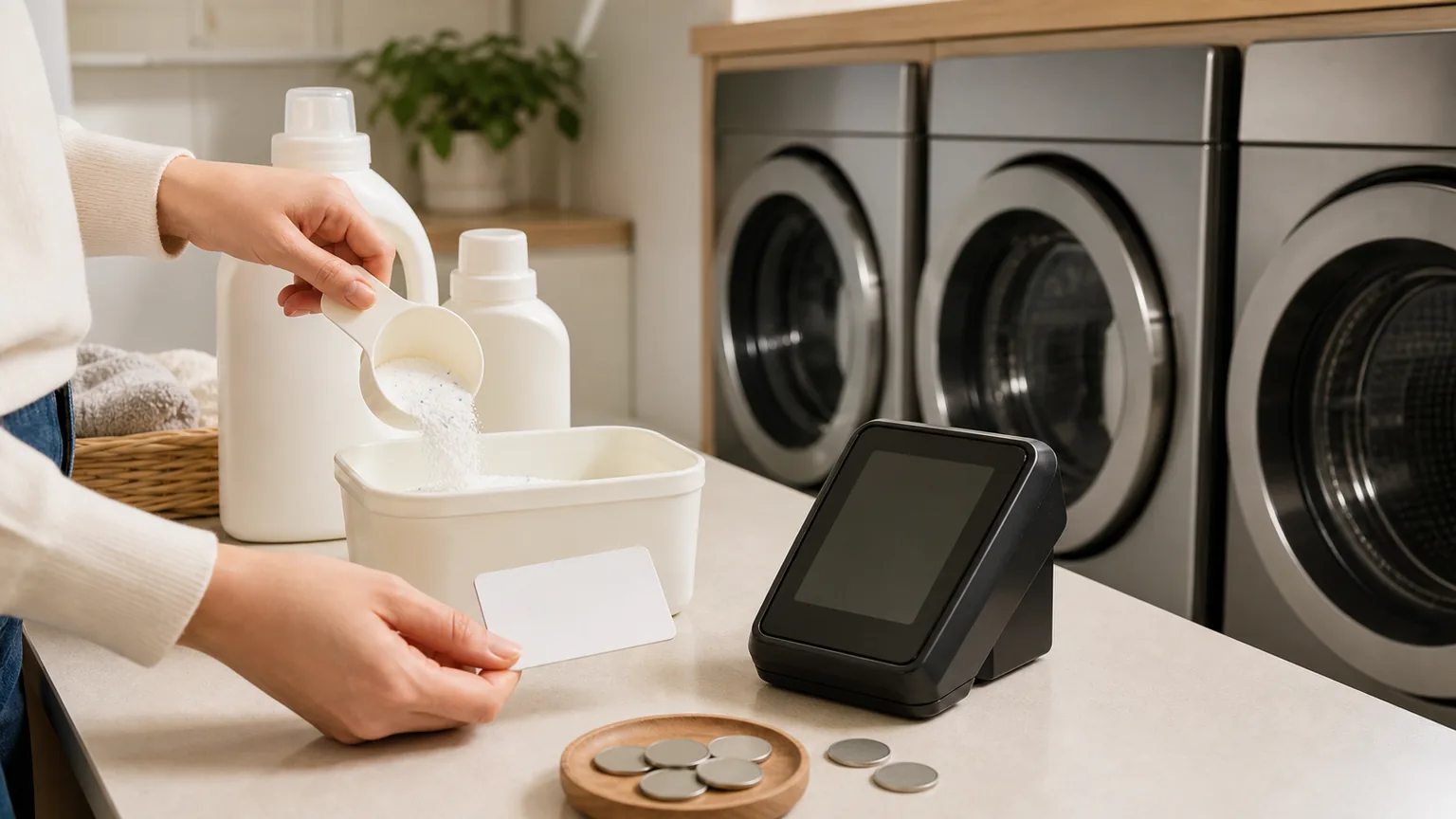
    Text-free illustration for laundry room words on BSKorean.
    Supplies and payment words often appear near the machine.
    KoreanRomanizationEnglishLevelUse
    세탁실setaksillaundry roomBS2The shared laundry room or laundry area.
    세탁기setakgiwashing machineBS1The washing machine.
    건조기geonjogidryer; drying machineBS2The dryer machine.
    빨래ppallaelaundry; clothes to washBS1Laundry or clothes being washed.
    세제sejedetergentBS2Detergent for washing.
    섬유유연제seomyu yuyeonjefabric softenerBS4Fabric softener.
    투입구tuipguinsertion slot; input openingBS4Slot or opening for coins, detergent, or items.
    동전dongjeoncoinBS1Coin payment word.
    카드 결제kadeu gyeoljecard paymentBS2Card payment for the machine or service.
    사용법sayongbeopinstructions; how to useBS3How-to-use instructions.
    세탁 코스setak koseuwash cycle; laundry courseBS4Wash-cycle control.
    헹굼henggumrinse; rinsingBS4Rinse step on a washing machine.
    탈수talsuspin-dry; water extractionBS4Spin-dry or water extraction step.
    고장gojangbreakdown; out of orderBS2Problem or out-of-order word.
    문의munuiinquiry; questionBS2Inquiry or contact word.

    Slide 3. Read the Laundry Room in Five Passes

    Text-free illustration for laundry room words on BSKorean.
    Control words help you choose a cycle without translating every button.
    1. Pass 1: Place and machine. Find 세탁실, 세탁기, and 건조기 first.
    2. Pass 2: Supplies. Look for 세제, 섬유유연제, and 투입구 before adding anything.
    3. Pass 3: Payment. Check whether the machine uses 동전 or 카드 결제.
    4. Pass 4: Controls. Read 사용법, then find 세탁 코스, 헹굼, and 탈수.
    5. Pass 5: Problem and help. If something is wrong, use 고장 and 문의 to ask clearly.

    Slide 4. Common Laundry Room Mistakes

    Text-free illustration for laundry room words on BSKorean.
    Problem and inquiry words make a question clearer.

    The first mistake is mixing the dryer and the wash cycle. 건조기 is the dryer machine. 세탁 코스 is the wash cycle selection.

    The second mistake is mixing detergent and fabric softener. 세제 and 섬유유연제 may go into different parts of the drawer or machine, so read the nearby words before adding them.

    The third mistake is treating a problem word as an instruction. 고장 tells you something is broken or out of order. 문의 helps you ask where to get help.

    Slide 5. Practice With BSKorean

    Text-free illustration for laundry room words on BSKorean.
    Practice the words first, then use the same scan order in a real laundry room.

    Practice this topic in BSKorean: Read the BSKorean app guide, then open the practice app. This exact article set keeps the laundry room words together so you can review the room, machine, supplies, payment, controls, and help terms in one session.

    A good practice habit is to say the group first: place, machine, supply, payment, control, problem, or help. Then say the Korean word. This makes the real laundry room easier to scan when there are many buttons and small labels.

    Mini Review Table

    If you see…Think…
    세탁실This is the shared laundry room.
    세탁기This is the washing machine.
    건조기This is the dryer.
    세제This is detergent.
    카드 결제This means card payment.
    세탁 코스This means a wash cycle.
    탈수This means spin-dry.
    고장This means breakdown or out of order.

    Final Takeaway

    You do not need to translate every laundry room notice at once. First find the room and machine words, then supplies, payment, controls, and help words. These Korean laundry room words give you a simple order for using a shared washing machine or dryer more confidently.


    Related Lessons

  • Korean Payslip Words for Foreign Workers

    Korean Payslip Words for Foreign Workers

    Use this payslip lesson first

    A Korean payslip usually separates money you earned from money deducted. Start with the question 급여명세서를 확인하고 싶어요, “I want to check my payslip.” Then look for 기본급, 수당, 공제, 세금, and 실수령액.

    Payslip itemKoreanMeaning
    Payslip급여명세서Payslip
    Basic pay기본급Basic pay
    Deduction공제Deduction
    Net pay실수령액Amount received after deductions

    If the amount looks different from what you expected, ask 공제 내역을 설명해 주세요. For related money topics, study bank transfer words and employment contract words.

    Korean payslip words guide

    Korean payslip words helps learners practice Korean words in real situations. This BSKorean post keeps the lesson clear, scannable, and connected to app practice.

    Practice in the BSKorean app

    Related lessons

    Korean payslip words help you understand what happened to your pay: the salary amount, hourly wage, pre-tax amount, deductions, insurance lines, net pay, pay date, account, and deposit. This lesson is for language recognition, so you can find the important words before asking payroll a clearer question.

    Text-free illustration for Korean payslip words on BSKorean.
    Start with the real moment: a payslip arrives and you need to find the important parts.

    Briefing Summary

    SituationReading a Korean payslip after payday
    Practice focussalary, hourly wage, pre-tax amount, deductions, insurance, net pay, pay date, account, and deposit words
    Useful forforeign workers, factory workers, service workers, and anyone paid by salary or hourly wage in Korea
    Study time8-12 minutes

    Slide 1. The Payslip Moment

    Imagine you receive a 급여명세서 after payday. The first question is simple: what was paid, what was deducted, and what arrived in your account? Start with 급여, 세전 금액, 공제, and 실수령액. These words give you the basic map of the page.

    This post is a Korean language lesson, not tax, labor, or financial advice. If you think a real payslip is wrong, ask payroll, a local help center, or a qualified professional. The goal here is to help you recognize the words that deserve a question.

    Slide 2. Key Korean Payslip Words

    Text-free illustration for Korean payslip words on BSKorean.
    The image stays text-free; the payslip words are in the table below.
    KoreanRomanizationEnglishLevelUse
    급여geubyeosalary; payBS2Main pay word on a payslip.
    급여명세서geubyeo myeongseoseopayslip; pay statementBS5The document that explains pay.
    월급wolgeupmonthly salaryBS1Monthly salary amount.
    시급sigeuphourly wageBS2Hourly pay rate.
    세전 금액sejeon geumaekpre-tax amountBS5Amount before taxes and deductions.
    공제gongjedeductionBS4Money subtracted from pay.
    소득세sodeukseincome taxBS5Income tax line.
    국민연금gungmin yeongeumnational pensionBS5National pension deduction line.
    건강 보험geongang boheomhealth insuranceBS4Health insurance deduction line.
    고용보험goyong boheomemployment insuranceBS5Employment insurance deduction line.
    산재보험sanjae boheomindustrial accident insuranceBS5Workplace accident insurance line.
    실수령액silsuryeong-aeknet pay; take-home payBS5Final amount you receive.
    지급일jigeubilpay dateBS3Date the pay is issued.
    계좌gyejwabank accountBS1Bank account for payment.
    입금ipgeumdepositBS1Deposit into the bank account.

    Slide 3. Read a Payslip in 3 Steps

    Text-free illustration for Korean payslip words on BSKorean.
    A payslip explains the amount; a bank deposit confirms what arrived.
    1. Step 1: Find the pay type. Look for 급여, 월급, and 시급. These tell you whether the page is talking about pay, monthly salary, or hourly wage.
    2. Step 2: Compare before and after deductions. Find 세전 금액, 공제, and 실수령액. This helps you separate the starting amount from the final amount.
    3. Step 3: Match the final amount to your bank. Check 지급일, 계좌, and 입금. These words connect the payslip to the bank deposit.

    Slide 4. Deductions and Insurance Words

    Text-free illustration for Korean payslip words on BSKorean.
    Deduction and insurance words are the parts that often need a question.

    The word 공제 means deduction. It is the big category for money subtracted from pay. On many payslips, you may also see insurance or tax words such as 소득세, 국민연금, 건강 보험, 고용보험, and 산재보험.

    Do not try to solve every number from vocabulary alone. Use these words as labels. If a line looks unexpected, point to the Korean word and ask: “What is this item?” or “Why was this deducted?” That is a practical first step.

    Slide 5. Practice With BSKorean

    Text-free illustration for Korean payslip words on BSKorean.
    Practice recognition first, then use the words when reading a real payslip.

    Practice this topic in BSKorean: Read the BSKorean app guide, then open the practice app. Use this article set to practice Korean word, romanization, English meaning, and the payslip situation together.

    A useful habit is to group the page first: pay, deductions, insurance, final amount, date, and bank. Then say the Korean word. That makes a busy payslip easier to scan.

    Mini Review Table

    If you see…Think…
    급여명세서This tells you the page is a payslip or pay statement.
    세전 금액This is the amount before taxes and deductions.
    공제This means a deduction from pay.
    건강 보험This points to the health insurance line.
    실수령액This is the final take-home amount.
    지급일This is the pay date.
    계좌This is the bank account.
    입금This means the money was deposited.

    Final Takeaway

    You do not need to understand every small number to begin reading a payslip. First find the payslip word, then the pay, deduction, insurance, net pay, pay date, account, and deposit words. These Korean payslip words help you ask better questions when your pay arrives.

    Related Lessons

    Practice these Korean words in the BSKorean app

    After reading this lesson, continue with the BSKorean practical Korean app guide or open the BSKorean practice app to review words by level and real-life situation.

  • Korean Employment Contract Words for Foreign Workers

    Korean Employment Contract Words for Foreign Workers

    Use this employment contract lesson first

    Before signing a Korean employment contract, check the wage, work hours, overtime, holiday, contract period, and insurance. Start with 계약서를 확인하고 싶어요, “I want to check the contract.” Do not rush through numbers or dates.

    Contract itemKoreanMeaning
    Contract check계약서를 확인하고 싶어요I want to check the contract.
    Wage임금은 얼마예요?How much is the wage?
    Work hours근무 시간은 어떻게 돼요?What are the work hours?
    Insurance보험이 포함돼요?Is insurance included?

    If you do not understand a clause, ask 이 부분 설명해 주세요. For connected workplace money and time topics, continue with workplace schedule words and payslip words.

    Korean employment contract words guide

    Korean employment contract words helps learners practice Korean words in real situations. This BSKorean post keeps the lesson clear, scannable, and connected to app practice.

    Practice in the BSKorean app

    Related lessons

    Korean employment contract words are useful when you receive a work document, start a new job, or review conditions with HR. You do not need to understand every long sentence first. Start by finding the people, the document type, work time, pay, contract period, copy, and signature words.

    Text-free illustration for Korean employment contract words on BSKorean.
    Start with the real moment: review the contract before you sign.

    Briefing Summary

    SituationReading a Korean employment contract before signing
    Practice focusContract, document, employer, employee, work hours, pay, period, copy, and signature words
    Useful forforeign workers, factory workers, service workers, and anyone starting work in Korea
    Study time8-12 minutes

    Slide 1. The Situation

    Imagine an HR staff member gives you a document and asks you to review it. The page may contain many sentences, but your first job is simpler: identify the document and the main fields. Look for 근로 계약, 계약, and 문서. These words tell you that the page is a contract or work document.

    This post is language recognition, not legal advice. For a real dispute or legal question, contact a qualified local help center, labor office, or professional. The goal here is to help you notice the words that deserve a question before you sign.

    Slide 2. Key Employment Contract Words

    Text-free illustration for Korean employment contract words on BSKorean.
    The image stays text-free; the contract words are in the table below.
    KoreanRomanizationEnglishLevelUse
    근로 계약geunno gyeyakemployment contractBS4Name of the work contract.
    계약gyeyakcontractBS1General contract word.
    문서munseodocumentBS1Document or file.
    사본saboncopyBS3Copy to keep for records.
    고용주goyongjuemployerBS3Employer or hiring side.
    직원jigwonemployee; staffBS1Employee or staff member.
    계약직gyeyakjikcontract employee; fixed-term employeeBS4Employment type.
    근무 시간geunmu siganworking hoursBS2Hours you work.
    근로 조건geunno jogeonworking conditions; employment conditionsBS6Overall work conditions.
    계약 조건gyeyak jogeoncontract termsBS5Terms in the contract.
    계약 기간gyeyak gigancontract periodBS5How long the contract runs.
    월급wolgeupmonthly salaryBS1Monthly pay.
    시급sigeuphourly wageBS2Hourly pay.
    급여geubyeosalary; payBS2Pay or wage section.
    서명seomyeongsignatureBS2Signature area.

    Slide 3. Read an Employment Contract in 3 Steps

    Text-free illustration for Korean employment contract words on BSKorean.
    Use the words as a checklist: people, document, time, pay, copy, and signature.
    1. Step 1: Find the people and document. Look for 고용주, 직원, 문서, and 근로 계약. Confirm who the contract is between.
    2. Step 2: Check time and period. Look for 근무 시간, 계약 기간, and 근로 조건. These words tell you when you work and how long the contract runs.
    3. Step 3: Check pay and signing words. Look for 월급, 시급, 급여, 서명, and 사본. Ask before signing if these parts are unclear.

    Slide 4. Common Contract Mistakes

    Text-free illustration for Korean employment contract words on BSKorean.
    Pause before signing if the pay, period, or copy words are unclear.

    The first mistake is confusing pay words. 월급 is monthly salary, while 시급 is hourly wage. 급여 is a broader salary or pay word. Do not treat these as the same pay structure.

    The second mistake is mixing up period and conditions. 계약 기간 is the contract period. 계약 조건 and 근로 조건 point to terms or working conditions. If the contract period or work conditions do not match what you expected, ask a clear question.

    The third mistake is signing before you understand record words. 서명 means signature. 사본 means copy. In real life, it is often important to know whether you have signed and whether you have a copy for your records.

    Slide 5. Practice With BSKorean

    Text-free illustration for Korean employment contract words on BSKorean.
    Practice recognition first, then use the words when reading a real form.

    Practice this topic in BSKorean: Read the BSKorean app guide, then open the practice app. Use this article set to practice Korean word, romanization, English meaning, and the contract-reading situation together.

    A useful habit is to say the group first: people, document, time, terms, pay, or signature. Then say the Korean word. This makes the page easier to scan when you are nervous or busy.

    Mini Review Table

    If you see…Think…
    근로 계약This tells you the document is an employment contract.
    고용주This is the employer side of the contract.
    근무 시간This is where working hours matter.
    계약 기간This tells you the contract period.
    급여This points to pay or salary.
    서명This is the signature word.

    Final Takeaway

    You do not need to understand every contract sentence to begin reading safely. First find the employment contract word, then the people, time, pay, period, copy, and signature words. These Korean employment contract words help you ask better questions before you sign.

    Related Lessons

  • Korean Workplace Schedule Words for Foreign Workers

    Korean Workplace Schedule Words for Foreign Workers

    Use this workplace schedule lesson first

    When schedule details change, ask one short Korean question first: 오늘 몇 시에 시작해요?, “what time do we start today?” The most important words are 출근, 퇴근, 야근, 휴무, and 교대.

    Schedule needKoreanMeaning
    Start time오늘 몇 시에 시작해요?What time do we start today?
    End time몇 시에 퇴근해요?What time do we finish?
    Overtime오늘 야근 있어요?Is there overtime today?
    Day off내일 휴무예요?Is tomorrow a day off?

    If the schedule is posted on a board or app, take a photo and confirm 이 일정 맞아요?. Related work lessons: employment contract words and payslip words.

    Korean workplace schedule words guide

    Korean workplace schedule words helps learners practice Korean words in real situations. This BSKorean post keeps the lesson clear, scannable, and connected to app practice.

    Practice in the BSKorean app

    Related lessons

    Korean workplace schedule words are useful when you need to read a duty roster, confirm a shift, clock in, take a break, or ask about a schedule change. This lesson is for language recognition at work, especially for foreign workers who need practical Korean before the shift starts.

    Text-free illustration for Korean workplace schedule words on BSKorean.
    Start with the real moment: check the roster before the shift begins.

    Briefing Summary

    SituationReading a workplace schedule, duty roster, or shift notice
    Practice focusSchedule, clock-in, clock-out, shift type, break time, leave, absence, and overtime words
    Useful forforeign workers, factory workers, field workers, and anyone reading work notices in Korea
    Study time8-12 minutes

    Slide 1. The Situation

    Imagine you arrive at work and see a roster board. You need to know your row, your shift, your break time, and whether anything changed. If the schedule uses Korean only, the important words may look small, but the reading order can stay simple. Start with the plan, then attendance, then shift type, then exceptions.

    This post is not legal or HR advice. It only explains Korean words you may see around a workplace schedule. If a schedule affects pay, leave, overtime, or safety, ask your supervisor or the appropriate workplace contact.

    Slide 2. Key Workplace Schedule Words

    Text-free illustration for Korean workplace schedule words on BSKorean.
    The image stays text-free; the Korean schedule words are in the table below.
    KoreanRomanizationEnglishLevelUse
    일정iljeongscheduleBS1Check the overall plan.
    근무표geunmupyoduty roster; work scheduleBS4Find your assigned work row.
    출근chulgeunclocking in; going to workBS1Start of work.
    퇴근toegeunclocking out; leaving workBS1End of work.
    교대 근무gyodae geunmushift workBS4Rotating shift system.
    주간 근무jugan geunmuday shiftBS4Daytime work.
    야간 근무yagan geunmunight shiftBS4Nighttime work.
    야근yageunovertime work; working lateBS2Work after normal hours.
    연장 근무yeonjang geunmuovertime workBS4Extended work.
    휴식 시간hyusik siganbreak timeBS2Rest time during work.
    점심시간jeomsim siganlunch breakBS1Lunch break.
    휴가hyugavacation; leaveBS1Approved leave.
    결근하다gyeolgeunhadato be absent from workBS2When you cannot come to work.
    출근 기록chulgeun girokattendance record; clock-in recordBS3Record of clock-in.
    휴일 근무hyuil geunmuholiday work; working on a day offBS4Work on a holiday or day off.

    Slide 3. Read a Work Schedule in 3 Steps

    Text-free illustration for Korean workplace schedule words on BSKorean.
    Clock-in and clock-out words connect the schedule to the actual workday record.
    1. Step 1: Find the plan. Look for 일정 or 근무표. These words tell you that you are looking at a schedule or roster.
    2. Step 2: Check attendance words. Look for 출근, 퇴근, and 출근 기록. These connect the schedule to clock-in and clock-out records.
    3. Step 3: Check shift and exception words. Look for 교대 근무, 야근, 연장 근무, and 휴일 근무. These words often mean the workday is different from a normal day.

    Slide 4. Common Schedule Mistakes

    Text-free illustration for Korean workplace schedule words on BSKorean.
    Shift changes, overtime, and holiday work are the places where misunderstandings often happen.

    The first mistake is reading only the start time and ignoring the shift type. 주간 근무 and 야간 근무 are very different. If your workplace uses 교대 근무, confirm which rotation you are on.

    The second mistake is treating overtime words as normal work words. 야근 and 연장 근무 both point to extra work time. If the notice is unclear, ask before the shift ends.

    The third mistake is missing leave or absence language. 휴가 is approved leave or vacation, while 결근하다 means being absent from work. Do not guess these words from context alone.

    Slide 5. Practice With BSKorean

    Text-free illustration for Korean workplace schedule words on BSKorean.
    Practice the schedule words as recognition first, then use them as a checklist at work.

    Practice this topic in BSKorean: Read the BSKorean app guide, then open the practice app. Use this article set to practice Korean word, romanization, English meaning, and the work situation together.

    A useful practice habit is to say the word group first: plan, attendance, shift, extra work, rest, or leave. Then say the Korean word. This makes the schedule easier to scan when you are tired or in a hurry.

    Mini Review Table

    If you see…Think…
    근무표Find the duty roster or work schedule first.
    출근This is the start-of-work or clock-in moment.
    퇴근This is the leaving-work or clock-out moment.
    교대 근무Check whether the job uses rotating shifts.
    야간 근무Night shift needs extra schedule attention.
    휴식 시간This marks a rest or break period.
    결근하다Use this when someone is absent from work.
    휴일 근무Confirm this early because it means holiday work.

    Final Takeaway

    You do not need to understand every sentence on a work notice to start safely. First find the schedule, then clock-in and clock-out words, then shift type, break time, leave, absence, overtime, and holiday work. These Korean workplace schedule words help you ask better questions before the problem becomes urgent.

    Related Lessons

  • Korean Bank Transfer Words: A Briefing-Style Lesson

    Korean Bank Transfer Words: A Briefing-Style Lesson

    How to use this bank transfer lesson

    This lesson is for foreign residents who need to send money from a Korean bank counter, ATM, or mobile banking screen. A transfer can feel stressful because the words are short, formal, and usually appear beside numbers. Learn the words for account number, recipient, sender, transfer fee, deposit, withdrawal, receipt, and confirmation before you press the final button.

    Start with one practical sentence: 송금하고 싶어요. It means “I want to make a transfer.” At a counter, show the account number slowly and ask the staff to confirm the recipient name with 받는 사람 이름을 확인해 주세요. On an ATM, check the bank name, account number, amount, recipient, and fee before choosing 확인.

    Common transfer situations

    SituationKorean phraseMeaning
    Ask for help송금하는 방법을 알려 주세요.Please show me how to make a transfer.
    Check the recipient받는 사람 이름이 맞나요?Is the recipient name correct?
    Ask about the fee수수료가 얼마예요?How much is the fee?
    Request proof영수증을 받을 수 있어요?Can I get a receipt?

    Practice before you transfer money

    Read the amount aloud once, then read the Korean screen again. If the transfer is for rent, salary, school, or a deposit, save the receipt or screenshot immediately. For more daily finance language, continue with bank account opening words and apartment management fee words.

    Korean bank transfer words guide

    Korean bank transfer words helps learners practice Korean words in real situations. This BSKorean post keeps the lesson clear, scannable, and connected to app practice.

    Practice in the BSKorean app

    Related lessons

    Korean bank transfer words are easier to remember when the lesson starts from a real situation. This updated version uses a five-slide briefing flow: situation, key fields, reading order, common mistakes, and BSKorean practice.

    Text-free illustration for Korean bank transfer words on BSKorean.
    Start with the situation: a learner needs to send money and must slow down before the final confirmation.

    Briefing Summary

    SituationSending money by bank app, ATM, or account transfer
    Practice focusCheck destination, amount, fee, balance, limit, and final confirmation fields
    Useful forforeign residents, workers, students, and travelers staying longer in Korea
    Study time8-12 minutes

    Slide 1. The Situation

    You need to send money in Korea. The screen may ask for a bank, an account number, a recipient name, an amount, and a password. Even if the app has some English, the final confirmation screen may still show Korean words. Your goal is to recognize the fields that can cause a mistake.

    This lesson is for language recognition only. It is not financial advice. Before sending money, always confirm the recipient, account number, amount, fee, and final confirmation screen in your own banking app.

    Slide 2. Key Bank Transfer Words

    Text-free illustration for Korean bank transfer words on BSKorean.
    The image stays text-free; the Korean words are handled in the table below.
    KoreanRomanizationEnglishLevel
    은행eunhaengbankBS1
    계좌gyejwabank accountBS1
    계좌번호gyejwa beonhoaccount numberBS4
    계좌 이체gyejwa ichebank transferBS2
    송금songgeummoney transferBS3
    송금하다songgeumhadato transfer moneyBS3
    입금ipgeumdeposit/payment transferBS3
    출금chulgeumwithdrawalBS3
    금액geumaekamount of moneyBS3
    잔액janaekbalanceBS3
    수수료susuryofeeBS2
    이체 한도iche handotransfer limit; wire-transfer limitBS5
    수령인suryeonginrecipientBS3
    비밀번호bimilbeonhopasswordBS1
    확인하다hwaginhadato check; to confirmBS2

    Slide 3. Reading Flow

    Text-free illustration for Korean bank transfer words on BSKorean.
    Use a fixed reading order so the screen becomes a checklist.
    1. 은행: choose or confirm the bank first.
    2. 계좌번호: compare every digit of the account number.
    3. 수령인: check the recipient name before the final step.
    4. 금액: check the exact amount, including zeros.
    5. 수수료 / 잔액: notice any fee and the remaining balance.
    6. 확인하다: stop and read again before the final confirmation.

    Slide 4. Common Mistakes

    Text-free illustration for Korean bank transfer words on BSKorean.
    The most useful habit is to pause before the password or final confirmation step.

    The first mistake is checking only 금액. The amount can be correct while the 수령인 or 계좌번호 is wrong.

    The second mistake is missing 이체 한도. If the transfer is too large for the current limit, the app may stop the process or ask for another step.

    The third mistake is moving too fast at 비밀번호 or the final confirmation screen. Treat that moment as the last checkpoint, not as a routine button press.

    Slide 5. Practice With BSKorean

    Text-free illustration for Korean bank transfer words on BSKorean.
    Practice recognition in BSKorean before relying on these words in a real situation.

    Practice this topic in BSKorean: Read the BSKorean app guide, then open the practice app and use the bank transfer words from this lesson. Practice recognition first: Korean word, romanization, English meaning, then the screen-check order.

    Mini Review Table

    If you see…Think…
    계좌번호Is the account number correct?
    수령인Is this the right person?
    금액Is this the right amount?
    수수료Is there an extra fee?
    잔액Will enough money remain?
    비밀번호This is an important confirmation step.

    Final Takeaway

    You do not need to read every sentence on a bank screen to stay safer. Start with the bank, account number, recipient, amount, fee, balance, limit, and final confirmation. These Korean bank transfer words help you slow down at the right moment.

    Related Lessons

    Practice these Korean words in the BSKorean app

    After reading this lesson, continue with the BSKorean practical Korean app guide or open the BSKorean practice app to review words by level and real-life situation.

  • Korean Recycling Words: A Briefing-Style Lesson

    Korean Recycling Words: A Briefing-Style Lesson

    Use this recycling lesson first

    Recycling Korean is important in apartments and shared housing. Ask 분리수거는 어디예요?, “where is recycling?” Then sort by 일반 쓰레기, 음식물 쓰레기, 플라스틱, and 종이.

    Recycling taskKoreanMeaning
    Location분리수거는 어디예요?Where is recycling?
    General waste일반 쓰레기General waste
    Food waste음식물 쓰레기Food waste
    Disposal day오늘 버려도 돼요?Can I throw this away today?

    If a notice is posted, take a photo and ask 이건 어디에 버려요?. Related home lessons: apartment words and laundry room words.

    Korean recycling words guide

    Korean recycling words helps learners practice Korean words in real situations. This BSKorean post keeps the lesson clear, scannable, and connected to app practice.

    Practice in the BSKorean app

    Related lessons

    Briefing Summary

    Korean recycling words are essential when you live in Korea, especially in apartments, studios, dorms, or shared housing. The difficult part is not the idea of recycling. It is reading the right label at the right moment. This briefing follows a five-slide lesson: identify the waste type, choose the correct bag or bin, watch food waste rules, sort recyclables, and handle bulky waste without guessing.

    Download the complete Korean recycling words PPT briefing

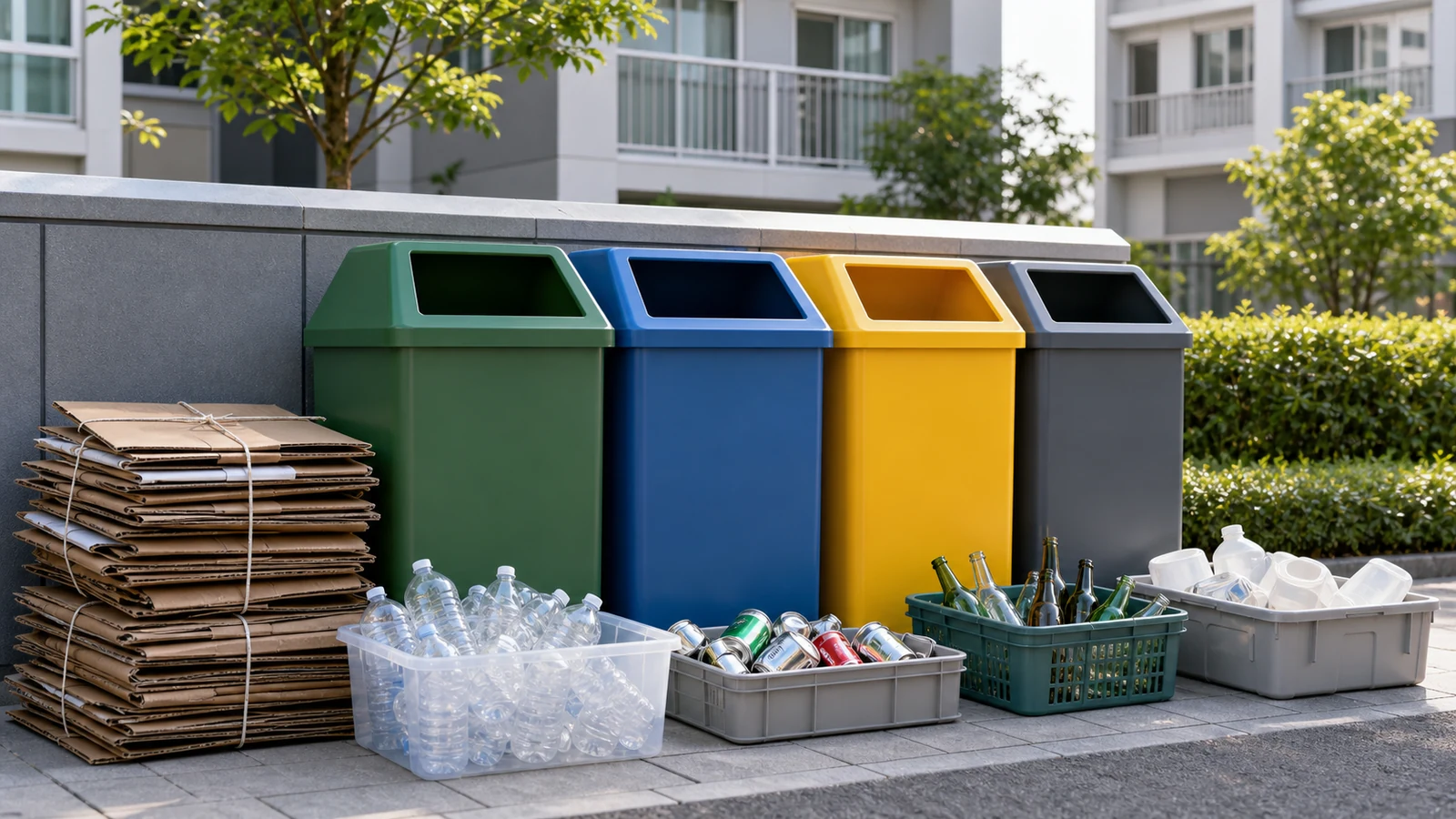
    Text-free illustration for Korean recycling words on BSKorean.
    Slide 1 introduces the daily recycling situation.

    Slide 1. The Situation

    You are standing at an apartment recycling area with bottles, paper, a small trash bag, and maybe food scraps from dinner. The bins look familiar, but the Korean labels can change your next action. Some items go into 재활용품. Some become 일반쓰레기. Food scraps may need a separate container or bag. Large items like a chair may be 대형폐기물, not normal trash.

    The slide shows a calm sorting area because this lesson is about practical reading. You do not need to understand every recycling notice. First, find the object word. Then look for the disposal action. If you can recognize 분리수거, 쓰레기봉투, 음식물쓰레기, and 분리배출, you can avoid the most common mistakes.

    Slide 2. Key Recycling Words

    The table below gives fifteen Korean recycling words from the Wordbook database. They are grouped around one daily route: name the waste, decide whether it is general trash, food waste, or recycling, then choose the right bag or bin.

    KoreanRomanizationEnglishUsage
    쓰레기sseuregitrashThe general word for waste, but it does not tell you the disposal type.
    생활 폐기물saenghwal pyegimulhousehold wasteA formal term for waste made in daily home life.
    음식물쓰레기eumsikmul sseuregifood wasteUse this for food scraps that go in a separate container or bag.
    일반쓰레기ilban sseuregigeneral wasteThis is non-recyclable waste that usually needs a paid trash bag.
    재활용품jaehwaryongpumrecyclablesThis means items that should go to recycling, not general trash.
    분리수거bulli sugeowaste sortingThis is the everyday word for sorting recycling and waste.
    분리배출bulli baechulseparate disposalA notice-style word meaning you must put items out by type.
    분리수거함bulli sugeohamsorting binLook for this bin area in apartment basements or outside zones.
    쓰레기봉투sseuregi bongtutrash bagThis often means the official paid bag for general waste.
    종이류jongnyupaper itemsUse this label for paper waste, paper bags, boxes, and similar items.
    플라스틱류peullaseutiknyuplastic itemsThis label covers plastic containers, packaging, and similar items.
    페트병peteubyeongplastic bottleA common recycling word for drink bottles made from PET plastic.
    비닐봉지binil bongjiplastic bagThis means a thin plastic bag, often sorted differently from hard plastic.
    대형폐기물daehyeong pyegimulbulky wasteThis is for large items like furniture that need a special process.
    분리배출하다bulli baechulhadato dispose separatelyUse this verb when a notice tells residents to sort before disposal.

    Start with the big category. 쓰레기 is broad, so it is only your first clue. The important question is what kind of trash it is. 일반쓰레기 usually needs an official trash bag. 음식물쓰레기 goes separately. 재활용품 must be sorted into the right bin.

    Next, notice the place word or container word. 분리수거함 tells you where sorted items go. 쓰레기봉투 tells you a bag is required. If a notice says 대형폐기물, do not leave the item beside normal bins. Large waste often needs a report, sticker, fee, or assigned pickup day.

    Slide 3. Reading Formulas

    Recycling Korean becomes easier when you read labels as formulas. Type plus container is the first formula. 플라스틱류 + 분리수거함 means plastic items go into the sorting bin. 종이류 + 접어서 often means paper should be folded or flattened. 페트병 + 라벨 제거 tells you to remove the bottle label.

    The second formula is waste type plus disposal action. 재활용품을 분리배출하세요 means you should dispose of recyclables separately. 음식물쓰레기는 따로 버리세요 means food waste is separate from other trash. In signs, 따로 and 분리 both warn you not to mix items.

    The third formula is exception plus special process. 대형폐기물 is the key warning word. A chair, mattress, desk, or shelf may not belong in the normal trash area. If you see that word, check whether the apartment office, district office, or app requires a pickup request.

    A small reading habit helps here. Do not start with the longest sentence on the sign. Scan for the material word first. Then scan for the action word near it. If you see 종이류, the notice is probably about paper. If you see 플라스틱류 or 페트병, the rule is probably about emptying, separating, or removing a label.

    Slide 4. Read Recycling Korean in 3 Steps

    Step one is to name the item. Ask yourself whether it is paper, plastic, food waste, a plastic bottle, or a large item. Match the item to a word such as 종이류, 플라스틱류, 음식물쓰레기, 페트병, or 대형폐기물. This prevents you from using one general trash idea for everything.

    Step two is to choose the correct container. If the notice says 일반쓰레기, look for the correct 쓰레기봉투. If the label says 재활용품, move to the 분리수거함. If it says 음식물쓰레기, check whether your building uses a food waste bin, card reader, or special bag.

    Step three is to check the special rule. Bottles may need emptying. Paper may need folding. Plastic bags may be collected separately. Large items may need registration. This is where 분리배출 matters. The word does not only mean recycling. It means you must separate the item correctly before putting it out.

    This three-step method also helps when a neighbor or building staff member gives a quick instruction. Listen for the item word first. Then listen for the container or action word. You can ask a short question like 이건 어디에 버려요?, which means “Where do I throw this away?”

    If the answer is too fast, repeat only the key word you heard. For example, say 음식물쓰레기요? or 재활용품이에요? with a questioning tone. This keeps the conversation simple. You are not asking for a full grammar explanation. You are confirming which disposal category controls the next step.

    Slide 5. Mistakes and Practice

    The first mistake is using 쓰레기 for every situation. It is a useful word, but it is too broad. When you read an apartment notice, look for the more exact label. 일반쓰레기, 음식물쓰레기, and 재활용품 lead to different actions.

    The second mistake is putting dirty recyclables directly into the bin. A notice may ask residents to empty, rinse, flatten, or remove labels. Even if those verbs are new, the category words still help. If you see 페트병, check the bottle. If you see 종이류, check whether boxes should be flattened.

    The third mistake is treating 대형폐기물 as normal trash. Large waste rules are strict in many Korean cities. If you are unsure, ask building staff before leaving the item outside. A simple question is enough: 대형폐기물 신고해야 해요? It means “Do I need to report bulky waste?”

    Practice

    Answer these quick recognition questions. 1. Which word means food waste: 음식물쓰레기 or 종이류? 2. Which word means a sorting bin: 분리수거함 or 쓰레기봉투? 3. Which word warns you about large waste: 대형폐기물 or 페트병?

    Mini scenario: you have a plastic drink bottle and a pizza box. The bottle is 페트병, so empty it and check the label. The pizza box may be 종이류 only if it is not too dirty. The answer key is 음식물쓰레기, 분리수거함, and 대형폐기물. The main habit is simple: identify, sort, then dispose.

    Mini Review Table

    If you see…It usually means…What to do
    일반쓰레기Non-recyclable waste.Use the correct trash bag.
    음식물쓰레기Food waste is separate.Use the food waste bin or bag.
    재활용품The item can be recycled.Sort by material.
    분리수거함This is the sorting bin.Choose the matching bin.
    대형폐기물A large item needs special handling.Ask before leaving it outside.

    Final Takeaway

    Korean recycling words are practical because they tell you the next action. Do not stop at 쓰레기. Find the exact type, choose the correct bag or sorting bin, and check for special rules. When the label is unclear, ask one short question before putting the item out.

    Related Lessons

    Practice this topic in BSKorean: Read the BSKorean app guide, then open the practice app and use the words from this lesson.

  • Korean Public Office Words: A Briefing-Style Lesson

    Korean Public Office Words: A Briefing-Style Lesson

    Use this public office lesson first

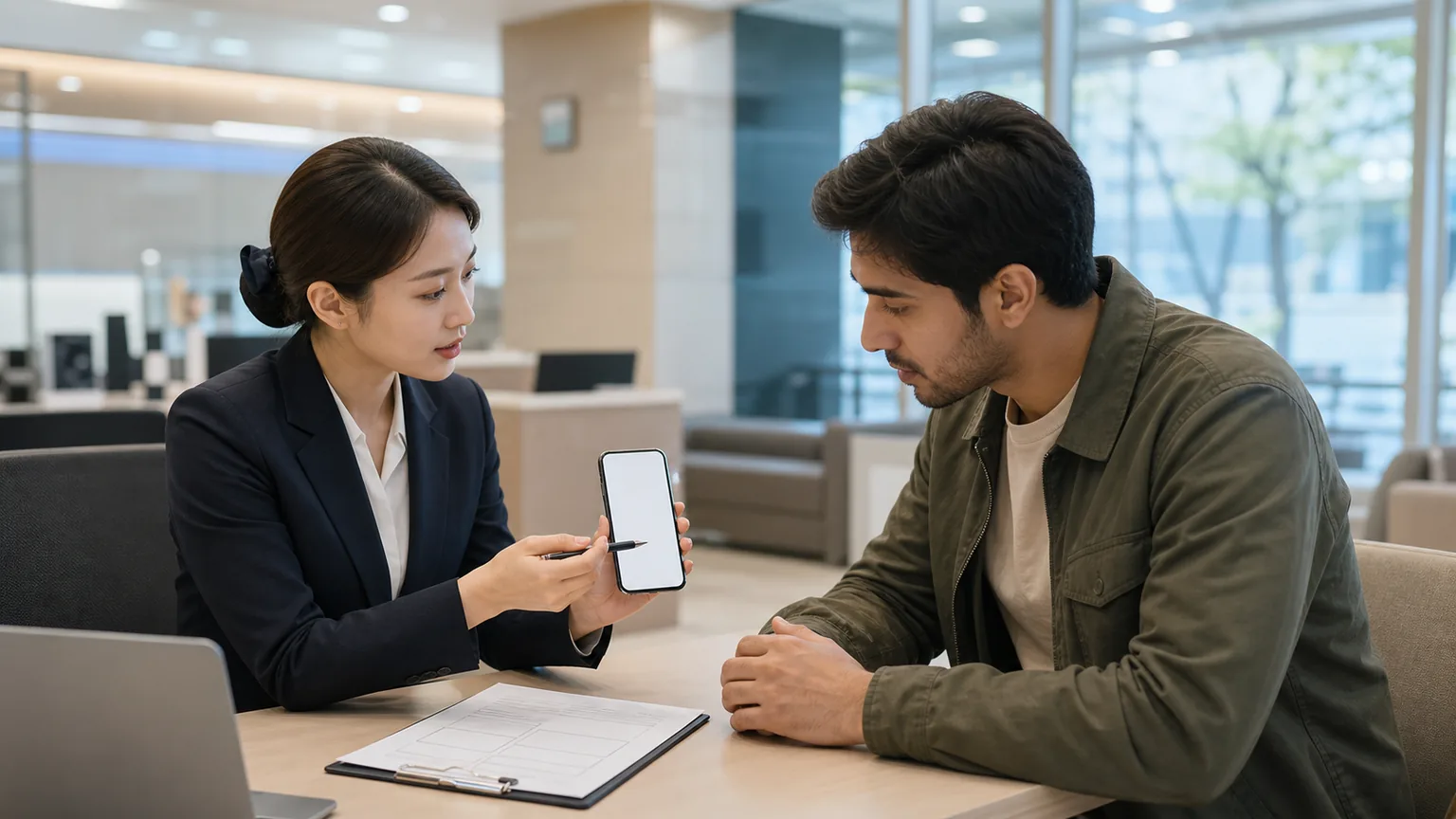
    Public office Korean is easier when you start with the document you need. Say 증명서가 필요해요, “I need a certificate,” or 신청서를 쓰고 싶어요, “I want to fill out an application form.” Then show your ID or application screen.

    Office taskKoreanMeaning
    Certificate증명서가 필요해요I need a certificate.
    Application신청서는 어디에 있어요?Where is the application form?
    Number ticket번호표를 뽑아야 해요?Do I need to take a number ticket?
    Copy복사할 수 있어요?Can I make a copy?

    If staff ask for another document, write down the Korean word and ask 다시 말씀해 주세요. For related errands, continue with post office words and bank account opening words.

    Korean public office words guide

    Korean public office words helps learners practice Korean words in real situations. This BSKorean post keeps the lesson clear, scannable, and connected to app practice.

    Practice in the BSKorean app

    Related lessons

    Briefing Summary

    Korean public office words are useful when you visit a district office, community service center, or immigration-related counter in Korea. The situation can feel formal, but the reading pattern is simple. Find the form word, check the receipt number, watch for document words, and notice whether the office is receiving, processing, or issuing something. This briefing explains the five-slide PPT lesson like a counter visit from start to finish.

    Download the complete Korean public office words PPT briefing

    Text-free illustration for Korean public office words on BSKorean.
    Slide 1 introduces the public office situation.

    Slide 1. The Situation

    You are standing in a Korean public office with a folder, a number ticket, and a form you may not fully understand. This is not the right moment to translate every sentence. Your first goal is to know where your request is in the process. Is the office asking you to write a form, submit a document, wait for processing, or receive an issued paper?

    The slide shows a calm service counter because this topic is about reading under pressure. Public office Korean often sounds formal, but many signs repeat the same core words. If you can recognize 신청양식, 접수번호, 처리기한, and 발급하다, you can ask better questions and avoid missing a required step.

    Slide 2. Key Public Office Words

    The table below gives fifteen Korean public office words from the Wordbook database. They are grouped around one practical route: read the notice, fill out the form, submit papers, keep your number, and check whether anything is missing.

    KoreanRomanizationEnglishUsage
    안내문annaemunnotice or guidance documentRead this first when a counter has posted instructions.
    확인서hwaginseoconfirmation documentUse this for a paper that proves or confirms a fact.
    증빙서jeungbingseosupporting documentThis proves the reason for your application or request.
    신청양식sincheong yangsikapplication formLook for this when you need the correct form to start.
    접수번호jeopsu beonhoreceipt numberKeep this number after your request is registered.
    발급번호balgeup beonhoissuance numberThis appears when a document has been officially issued.
    수령인suryeonginrecipientThis means the person who receives the issued document.
    민원인minwoninpetitioner or applicantAt an office, this often means the visiting citizen or applicant.
    담당자damdangjaperson in chargeAsk for this person when your case needs a specific staff member.
    접수하다jeopsuhadato receive or registerThis means the office has accepted your form into the system.
    처리하다cheorihadato processUse this for the office working on your request after submission.
    발급하다balgeuphadato issueThis means the office creates or gives an official document.
    처리기한cheori gihanprocessing deadlineCheck this to know when the office should finish the work.
    보완서류bowan seoryusupplementary documentBring this extra paper when the office asks for more proof.
    누락서류nurak seoryumissing documentThis tells you that one required document was not included.

    Do not try to memorize the whole office sentence first. Start with the noun that tells you what object matters. Then check the action word beside it. A beginner can survive many office situations by reading only those two parts.

    For example, a long notice may include dates, department names, and policy language. You can ignore most of that at first. Search for the word that changes your next action. If the line says 신청양식, you need a form. If it says 접수번호, you need to keep a number. If it says 누락서류, you need to find a missing paper before the office can continue. That small habit keeps the visit practical.

    Slide 3. Reading Formulas

    Public office Korean becomes easier when you read it as small formulas. A noun tells you the object. A verb tells you the stage. For example, 신청양식 작성 means you should fill out an application form. 서류 접수 means the documents are being received or registered. 확인서 발급 means a confirmation document is being issued.

    Another useful pattern is number plus process. 접수번호 is the number connected to your submitted request. 발급번호 is the number connected to the document after it is issued. These numbers are not decoration. Save them, photograph them, or write them down. If you need help later, the staff may ask for the number before they can find your case.

    The most important warning formula is document plus problem. 누락서류 means a required paper is missing. 보완서류 means extra or corrected papers must be added. When you see either one, the next action is not waiting. The next action is finding the exact document they want.

    One more pattern is person plus responsibility. 민원인 points to the applicant side. 담당자 points to the staff side. 수령인 points to the person receiving the result. If a form asks for these names, do not write the same person automatically. Read the label, then decide who belongs in that box.

    Slide 4. Read Public Office Korean in 3 Steps

    Step one is to identify the counter task. Look for 신청양식, 안내문, or 민원인. These words tell you that the office is preparing your request or asking for your information. If you are unsure, ask, 이 신청양식 맞아요? This means, “Is this the right application form?”

    Step two is to confirm registration. After you submit the form, look for 접수하다 or 접수번호. This stage matters because it means your request entered the office system. If you only handed over a paper but did not receive any number, politely ask whether the request was registered.

    Step three is to track the result. Read for 처리하다, 처리기한, and 발급하다. These words tell you whether the office is still processing your request or ready to issue a document. If the screen or message says 보완서류, pause and check what paper is missing before you return home.

    This three-step method also helps when you receive a text message after visiting the office. First, find whether the message mentions your 접수번호. Next, check whether the message says the request is being processed or a document has been issued. Finally, look for any word that signals a problem, especially 누락서류 or 보완서류. Those words mean the next step belongs to you.

    Slide 5. Mistakes and Practice

    The first mistake is treating every public office word as legal Korean. Some words are formal, but the action is usually ordinary. 작성 means write or fill in. 제출 means submit. 발급 means issue. Even if those exact action nouns are not in today’s table, they often appear beside the selected words.

    The second mistake is ignoring people words. 민원인 often means you, the person making the request. 담당자 is the staff member or office worker responsible for the case. 수령인 is the person receiving the document. If the form has these labels, write the correct name in the correct place.

    The third mistake is waiting when the office needs more documents. 누락서류 and 보완서류 both mean the process is not finished. Ask which document is needed, whether a copy is acceptable, and when you must bring it.

    A useful speaking pattern is short and direct: 무슨 서류가 필요해요? means “What document is needed?” 언제까지 제출해야 해요? means “By when should I submit it?” You do not need to explain your whole story at the counter. A clear question about the document, deadline, or 담당자 is often more helpful.

    Practice

    Answer these quick recognition questions before you visit a public office. 1. Which word tells you the request number after submission: 접수번호 or 수령인? 2. Which word means a missing document: 누락서류 or 발급번호? 3. Which word means the person in charge: 담당자 or 민원인?

    Mini scenario: you submitted a form, but the staff says 보완서류를 제출해야 해요. Do not leave and wait. Ask, 어떤 서류가 필요해요? The answer key is: 접수번호, 누락서류, and 담당자. In the scenario, you need to bring or send a supplementary document.

    Mini Review Table

    If you see…It usually means…What to do
    신청양식You need the application form.Fill out the correct form.
    접수번호Your request has a tracking number.Save the number.
    처리기한There is a processing deadline.Check when to return or wait.
    누락서류A required paper is missing.Ask which document is needed.
    발급하다The office issues a document.Prepare to receive or print it.

    Final Takeaway

    Korean public office words are easier when you follow the process. Form, receipt number, processing, missing documents, and issuance are the main stages. Do not read every line equally. Find the object word, match it with the action, and ask one short question when the next step is unclear. Keep the number and deadline visible until the task is finished.

    Related Lessons

    Practice this topic in BSKorean: Read the BSKorean app guide, then open the practice app and use the words from this lesson.

  • Korean Parking Lot Words: A Briefing-Style Lesson

    Korean Parking Lot Words: A Briefing-Style Lesson

    Use this parking lot lesson first

    Parking lot Korean is about location, time, and payment. Ask 주차장이 어디예요?, “where is the parking lot?” Then check 주차 요금, 무료 시간, 출차, and 정산기.

    Parking task Korean Meaning
    Location 주차장이 어디예요? Where is the parking lot?
    Fee 주차 요금은 얼마예요? How much is the parking fee?
    Free time 몇 시간 무료예요? How many hours are free?
    Receipt 영수증 주세요 Please give me a receipt.

    At the exit, look for 출차 and the payment machine. Related sign lessons: parking lot words for foreign residents and street sign words.

    Korean parking lot words guide

    Korean parking lot words helps learners practice Korean words in real situations. This BSKorean post keeps the lesson clear, scannable, and connected to app practice.

    Practice in the BSKorean app

    Related lessons

    Briefing Summary

    Korean parking lot words help you make fast decisions before you stop the car, pay a fee, or leave a garage. This briefing follows the subway lesson style: read the visible word, connect it to one action, and move step by step. You will learn parking, fee, payment, operating-hour, no-parking, and enforcement words that appear in real Korean parking situations.

    Download the complete Korean parking lot words PPT briefing

    Text-free illustration for Korean parking lot words on BSKorean.
    Slide 1 shows the parking lot situation.

    Slide 1. The Situation

    You arrive near a public lot, an apartment garage, or a small paid parking area. The first problem is not grammar. It is choosing the right action from several signs and screens. Start with the biggest location word. If you see 주차장, you are near the parking lot. If you see 주차구역, you need to park inside the marked area.

    Next, check whether the space is allowed. 주차금지, 무단주차, and 불법주차 are warning words. They tell you that stopping the car may lead to a fine or towing. A safe beginner rule is simple: location words invite action, but 금지 and 단속 words stop action.

    The slide also shows why parking vocabulary is different from a normal word list. You are often reading while moving, carrying bags, or standing beside a machine. That means the lesson must train fast recognition. Learn the few words that change your next step, then ignore extra detail until the car is safely parked or the fee is paid.

    Slide 2. Key Parking Lot Words

    The table below gives fourteen Korean parking lot words from the Wordbook database. They are grouped around what a learner must do: find the lot, read the fee, pay correctly, and avoid restricted parking.

    Korean Romanization English Usage
    주차 jucha parking Use this for the general action of parking a car.
    주차장 juchajang parking lot Look for this word when finding a place to park.
    주차비 juchabi parking fee This is the amount you pay for parking time.
    요금 yogeum fee A general charge shown on signs, screens, or receipts.
    정산 jeongsan settlement Use this for paying or settling the parking fee before exit.
    결제 gyeolje payment This appears at kiosks, apps, and card payment steps.
    운영시간 unyeong sigan operating hours Check this before assuming the lot is open all day.
    주차구역 jucha guyeok parking area This marks an allowed or assigned parking area.
    주차공간 jucha gonggan parking space Use this for an available spot, not the whole lot.
    주차금지 jucha geumji no parking A strict sign telling you not to park there.
    불법주차 bulbeop jucha illegal parking This describes parking that breaks the rule or law.
    주차단속 jucha dansok parking enforcement This warns that parking rules may be checked or fined.
    무단주차 mudan jucha unauthorized parking This means parking without permission in a restricted place.
    주차규정 jucha gyujeong parking regulation Use this for posted rules about time, payment, and access.

    Do not try to memorize every parking sentence at once. First, separate place words from money words. 주차장, 주차구역, and 주차공간 tell you where parking may happen. 주차비, 요금, 정산, and 결제 tell you what to pay or press. Finally, warning words tell you where not to park.

    This grouping also helps when a sign looks crowded. A parking notice may include hours, prices, vehicle limits, and warnings in one place. Do not read it from the first Korean syllable to the last. Scan for the function word first. If the word is about place, decide where to move. If it is about money, look for the kiosk. If it is a warning, stop and choose another space.

    Slide 3. Reading Formulas

    Parking signs often use short noun patterns. The most useful formula is noun + 요금. It points to a fee. When you see 주차비 or 주차 요금, look nearby for the time unit, discount note, or payment machine. You do not need full sentence grammar to understand the demand.

    The second formula is noun + 금지. 주차금지 means “no parking.” It is stronger than a suggestion. The third formula is noun + 단속. 주차단속 means parking enforcement, so the rule is actively being checked. These formulas help you read unfamiliar signs quickly. Find the base word, then read the ending word for the action.

    For speaking, keep sentences short. Ask 주차장이 어디예요? when you need the lot. Ask 주차비는 얼마예요? when the fee is unclear. Say 카드로 결제할게요. at a payment point.

    On machines, read buttons from top to bottom and look for the payment action. You may see card, receipt, discount, or exit words beside the core parking terms. A beginner does not need to master every button. The key is to recognize that 정산 prepares the fee, while 결제 finishes the payment. That difference prevents many exit-lane problems.

    Slide 4. Read Parking Lot Signs in 3 Steps

    Step one is place. Look for 주차장, then check whether there is an available 주차공간. If the lot marks special zones, use 주차구역 as your guide. Stay inside the marked space and avoid any area with a restriction word.

    Step two is time and fee. Read 운영시간 before assuming the lot is open. Then look for 요금 or 주차비. Some lots charge by the hour. Others need payment before exit. If you see 정산, settle the fee before you drive to the barrier.

    Step three is exit. At a kiosk, 결제 means payment. After payment, move toward the exit lane. If the barrier does not open, keep the receipt or call the attendant. Do not reverse into another lane unless the sign clearly allows it.

    If you are unsure whether payment is already complete, watch the screen for a receipt, paid amount, or confirmation message. Many Korean parking systems are automated, so staff may not be nearby. In that situation, your safest Korean is short and direct: 정산했어요? means “Did I settle it?” and 결제됐어요? means “Was the payment completed?”

    Slide 5. Mistakes and Practice

    The first common mistake is reading 주차장 and ignoring the smaller rule beside it. A lot may be open, but one section may still be restricted. Check the words around the arrow or painted space before you park.

    The second mistake is confusing 정산 and 결제. They are close, but their timing can feel different. 정산 often means settling the parking fee before exit. 결제 is the payment action itself. If a screen asks for 결제, choose the payment method.

    The third mistake is treating warning words as decoration. 주차금지, 불법주차, 무단주차, and 주차단속 are not background text. They tell you the space is risky. Move the car before you start translating every word.

    Practice

    Answer these quick recognition questions. First, which word tells you not to park: 주차장 or 주차금지? Second, which word points to payment settlement before exit: 정산 or 주차공간? Third, which word means operating hours: 운영시간 or 불법주차?

    Mini scenario: you enter a garage and see 운영시간, 주차비, and 정산 near the elevator. The safe reading is: check the hours, note the fee, then settle payment before leaving. Answer key: 주차금지, 정산, and 운영시간.

    Mini Review Table

    If you see… It usually means… What to do
    주차장 / 주차구역 A parking lot or allowed area Park only inside the marked space.
    주차비 / 요금 A fee or charge Check the amount and time rule.
    정산 / 결제 Settlement or payment Use the kiosk, card reader, or app.
    주차금지 / 무단주차 Parking is not allowed Move the car to another space.
    주차단속 Enforcement may happen Do not risk the restricted area.

    Final Takeaway

    Korean parking lot words become manageable when you read them by function. First find the place. Then read the fee and payment words. Finally, respect warning words before you stop the car. This short order keeps parking signs practical, even when the full notice looks crowded. Use the same order each time, and the signs will feel less scattered during real parking in Korea.

    Related Lessons

  • Korean Hospital Reception Words: A Briefing-Style Lesson

    Korean Hospital Reception Words: A Briefing-Style Lesson

    Use this hospital reception lesson first

    At a Korean hospital desk, begin with your task: 접수하고 싶어요, “I want to register.” If you already have an appointment, say 예약했어요. Keep your ID, insurance card, and phone number ready because reception staff may ask quickly.

    Reception need Korean Meaning
    Register 접수하고 싶어요 I want to register.
    Appointment 예약했어요 I have an appointment.
    Insurance card 건강보험증 있어요 I have a health insurance card.
    Symptoms 증상을 설명할게요 I will explain my symptoms.

    After reception, listen for your name or waiting number. If you need medicine after payment, ask 약국은 어디예요?. Study pharmacy cold medicine words and clinic appointment phrases next.

    Korean hospital reception words guide

    Korean hospital reception words helps learners practice Korean words in real situations. This BSKorean post keeps the lesson clear, scannable, and connected to app practice.

    Practice in the BSKorean app

    Related lessons

    Briefing Summary

    Korean hospital reception words help you move through a clinic visit without guessing every sentence. This briefing follows the same sign-reading style as the subway lesson. First, read the visible desk word. Next, match it to one safe action. By the end, you should recognize check-in, ID, appointment, waiting number, consultation, symptoms, fees, prescription, and pharmacy steps in a Korean clinic.

    Download the complete Korean hospital reception words PPT briefing

    Text-free illustration for Korean hospital reception words on BSKorean.
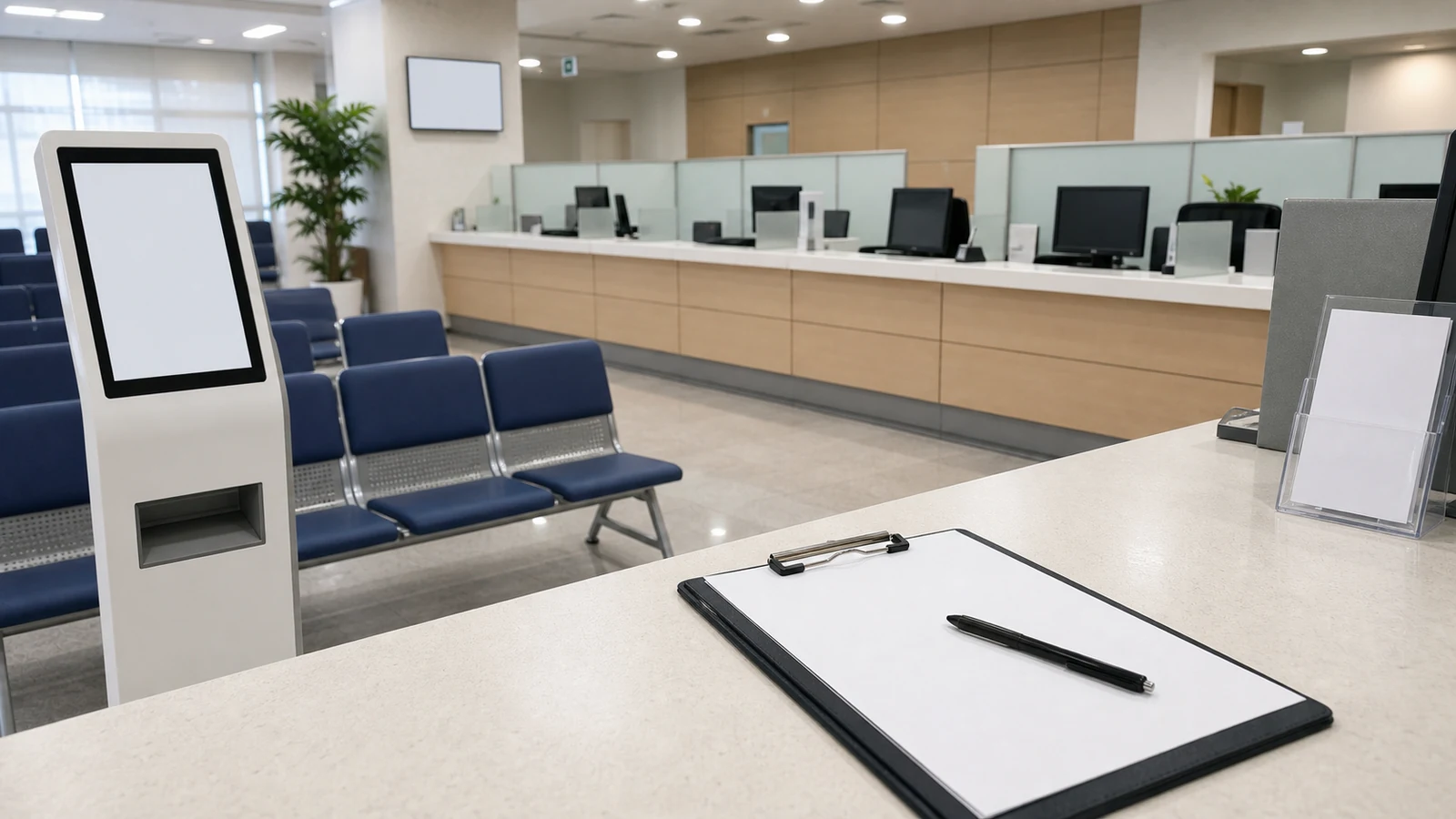
    Slide 1 shows the clinic reception situation.

    Slide 1. The Situation

    You enter a Korean clinic and see several possible starting points. There may be a front desk, a small kiosk, a waiting area, and doors leading to consultation rooms. You do not need to understand every notice. Start by finding 접수 or 접수창구. These words tell you where the visit begins.

    After check-in, the staff may ask for 신분증 or confirm your 진료예약. Then you may receive a 대기번호 and move to the 대기실. The lesson treats the clinic like a short route. Each word points to the next action. When you read the route in order, the visit feels much less stressful.

    Slide 2. Key Hospital Reception Words

    The table below gives thirteen Korean hospital reception words from the Wordbook database. These are not random medical terms. They are the practical words a beginner may see or hear before, during, and right after a basic clinic visit.

    Korean Romanization English Usage
    접수 jeopsu registration / check-in Find this first at the clinic desk or kiosk.
    접수창구 jeopsu changgu reception counter This is the desk where the visit begins.
    신분증 sinbunjeung ID card Staff may ask for this before registration.
    진료예약 jillyo yeyak medical appointment Use this when you booked a clinic visit.
    대기번호 daegi beonho waiting number Watch or listen for this number after check-in.
    대기실 daegisil waiting room Go here after registration if staff tells you to wait.
    진료 jillyo medical consultation This means the doctor visit, not the desk check-in.
    진료실 jillyosil consultation room Enter this room when your turn is called.
    증상 jeungsang symptom Use this to explain why you came to the clinic.
    검사 geomsa examination / test Staff may use this before blood, urine, or simple checks.
    처방전 cheobangjeon prescription Take this paper or digital code to the pharmacy.
    진료비 jillyobi medical fee This is the amount you pay after the visit.
    약국 yakguk pharmacy Go here after the clinic if you receive a prescription.

    접수 and 접수창구 are your starting words. Use them before you explain symptoms or ask about payment. The desk must first know who you are and why you came.

    신분증 often appears early because clinics may need to confirm your identity. If you have an appointment, listen for 진료예약. It tells staff that your visit is already booked.

    대기번호 and 대기실 help you wait correctly. Watch the number screen, listen for your name, and stay close enough to hear the next instruction.

    진료, 진료실, and 증상 belong to the doctor step. Keep symptom sentences short. A clear word like 기침 or 두통 can be added if you know it.

    검사, 처방전, 진료비, and 약국 appear near the end. They tell you whether a test, payment, prescription, or pharmacy visit comes next.

    If you can only remember a few words, remember the route words first: 접수, 대기번호, 진료실, 진료비, and 약국. These words usually tell you where to move next. The other words help you answer staff questions more calmly.

    Slide 3. Reading Formulas

    Use these formulas as short, safe patterns. They are not full grammar lessons. They are practical clinic sentences that help you respond at the right moment.

    Formula 1: 접수 + 해 주세요

    접수해 주세요 means “Please check me in.” Use it at the reception counter when you are ready to begin. If you cannot find the desk, ask 접수창구가 어디예요?

    Formula 2: 진료예약 + 했어요

    진료예약했어요 means “I made a medical appointment.” Say this when the staff asks whether you booked. If you did not book, keep your answer simple and wait for the next instruction.

    Formula 3: 증상 + 이/가 있어요

    증상이 있어요 means “I have symptoms.” This sentence is useful when you are nervous. You can add one symptom word after it, but the first goal is to explain that you need medical help.

    Formula 4: 처방전 + 받았어요

    처방전을 받았어요 means “I received a prescription.” This is useful after the consultation, especially when you go to the pharmacy and need to show what the clinic gave you.

    Notice that each formula begins with the key clinic word. This makes your Korean easier to understand, even if your full sentence is short. In a busy clinic, short and accurate is better than long and uncertain.

    Slide 4. Read Hospital Reception in 3 Steps

    Step 1: Start at 접수. Look for the desk, kiosk, or counter sign. If staff asks for 신분증, show your ID. If they ask about 진료예약, answer whether you booked. This step is about identity and visit setup.

    Step 2: Follow 대기번호. After registration, check your 대기번호 and move to the 대기실. Do not stand at the desk unless staff asks you to stay there. Waiting correctly prevents confusion and keeps the line moving.

    Step 3: Connect 진료 to the next action. When your turn comes, go to the 진료실 and explain your 증상. If staff mentions 검사, a test may come before or after the consultation. At the end, check 진료비, receive the 처방전, and go to the 약국 if needed.

    If you miss one sentence, look back at the visible word. Clinic staff often repeat the action word before moving you forward. That repeated word is your anchor, so pause, read it again, and follow the next clear instruction.

    Slide 5. Mistakes and Practice

    Mistake 1: Confusing 접수 and 진료

    접수 is check-in. 진료 is the medical consultation. If you use 진료 at the desk, staff may still understand, but 접수 is the safer first word.

    Mistake 2: Ignoring 대기번호

    Many clinics run by number. If you receive a 대기번호, watch the screen or listen carefully. Do not miss your turn by walking too far away.

    Mistake 3: Explaining too much at once

    At reception, keep your symptom explanation short. Say 증상이 있어요, then add one clear symptom if you can. Save long details for the consultation room.

    These mistakes are common because clinics move quickly. However, the fix is simple. Read the action word first, answer with one short sentence, and wait for the next visible or spoken cue.

    Practice

    Try these quick recognition questions before you visit a clinic.

    1. You see 접수창구. What should you do first?
    2. The staff asks for 신분증. What should you show?
    3. Your screen shows 대기번호. What should you watch next?

    Mini scenario: You arrive with no appointment and a sore throat. A safe first sentence is: 접수해 주세요. 증상이 있어요. It means “Please check me in. I have symptoms.”

    Answer key: First, check in at the counter. Second, show your ID card. Third, watch or listen for your waiting number, then go when staff calls you.

    Mini Review Table

    If you see… It usually means… What to do
    접수 / 접수창구 Clinic registration starts here. Check in and prepare your ID.
    진료예약 Appointment information is needed. Say whether you booked.
    대기번호 / 대기실 You need to wait for your turn. Watch the number or stay nearby.
    진료 / 진료실 The doctor consultation is next. Enter when staff calls you.
    처방전 / 약국 Medicine may be the next step. Take the prescription to a pharmacy.

    Final Takeaway

    Korean hospital reception words are easiest when you read them as a sequence. Start with 접수, confirm 신분증 or 진료예약, follow 대기번호, enter 진료실, explain 증상, then check 진료비 and 처방전. You do not need perfect Korean. You need the right word at the right moment.

    Related Lessons

  • Korean Delivery App Words: A Briefing-Style Lesson

    Korean Delivery App Words: A Briefing-Style Lesson

    Use this delivery app lesson first

    Delivery app Korean starts with the address and order status. Learn 배달 주소, 주문했어요, 도착 예정, and 문 앞에 놓아 주세요 before you need to message the rider.

    Delivery need Korean Meaning
    Address 배달 주소 Delivery address
    Ordered 주문했어요 I placed an order.
    Arrival 도착 예정 Expected arrival
    Door drop-off 문 앞에 놓아 주세요 Please leave it at the door.

    If the food or item is wrong, save the order number and receipt. For everyday shopping words, continue with convenience store checkout words and mobile phone store words.

    Korean delivery app words guide

    Korean delivery app words helps learners practice Korean words in real situations. This BSKorean post keeps the lesson clear, scannable, and connected to app practice.

    Practice in the BSKorean app

    Related lessons

    Briefing Summary

    Korean delivery app words help you order food without reading every line on the screen. In this lesson, you will follow a five-slide briefing from choosing a menu to checking the delivery address, payment, requests, and arrival time. The goal is simple: recognize the words that change what you tap next.

    Download the complete Korean delivery app words PPT briefing

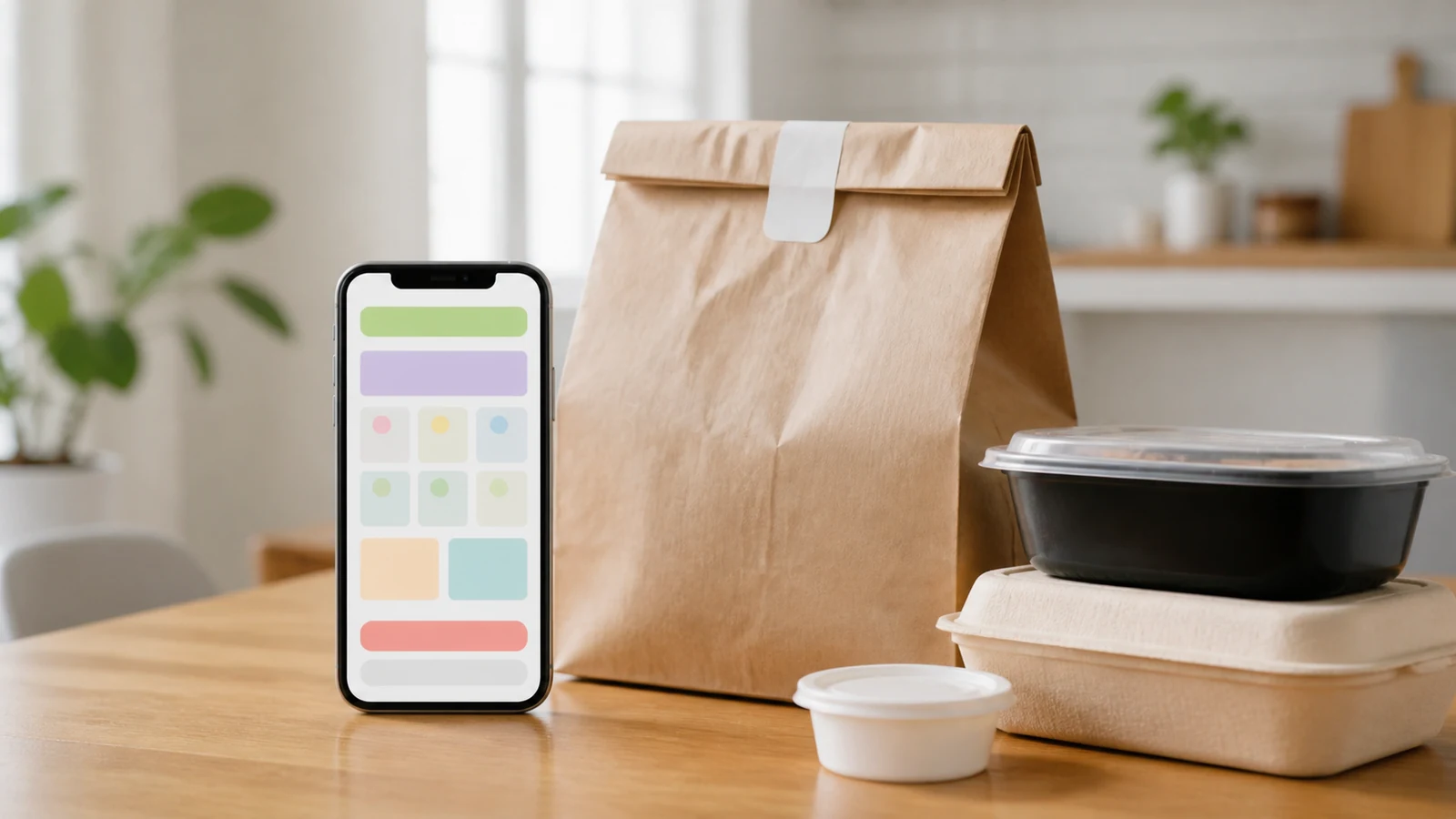
    Text-free illustration for Korean delivery app words on BSKorean.
    Slide 1 introduces the delivery situation.

    Slide 1. The Situation

    You are at home in Korea, hungry, and using a delivery app. The screen may look busy, but most decisions follow a clear order. First, you choose a restaurant and a menu. Then you check the cart, coupon, delivery address, requests, payment, delivery fee, and arrival time. This slide shows the final moment at the door because that is the whole point of the app flow. You are not studying abstract vocabulary. You are reading enough Korean to make the delivery reach the right place.

    For beginners, the safest habit is to read labels by function. If a word changes the food, price, address, or time, pause and check it. If it only describes a promotion or extra detail, you can return to it later.

    Slide 2. Key Delivery App Words

    This slide turns the app screen into a small map. These Korean delivery app words appear before or after payment, so they are worth learning as one set. Read the table from left to right, then connect each word to the action it controls.

    Korean Romanization English Usage
    배달 baedal delivery Use this as the broad label for food delivery or delivered items.
    주문 jumun order This marks the order itself, not the food category.
    메뉴 menyu menu Look for this before choosing a dish or a set.
    장바구니 jangbaguni shopping cart This is the app basket where selected items wait before payment.
    쿠폰 kupon coupon Apps often show this near payment, discount, or event banners.
    할인 harin discount Read this before payment to see whether the price went down.
    결제 gyeolje payment This is the final payment step, usually after checking the cart.
    결제수단 gyeolje sudan payment method This asks how you will pay, such as card, app pay, or cash.
    배송지 baesongji delivery address Check this carefully before paying because it controls where the order goes.
    요청사항 yocheong sahang requests Use this field for short instructions, such as sauce, utensils, or door delivery.
    도착시간 dochak sigan arrival time This tells when the order or rider is expected to arrive.
    취소요청 chwiso yocheong cancellation request This is used when you ask to cancel after an order has been sent.
    배송비 baesongbi delivery fee This is the extra fee added for delivery or shipping.

    배달 is the broad idea of delivery. 주문 is the order you are making. 메뉴 is where the food choice begins. 장바구니 holds the items before you pay. After that, 결제, 결제수단, and 배송지 become important because they affect money and location.

    Think of the words in small groups. 메뉴 and 장바구니 belong to the choosing stage. 쿠폰, 할인, 배송비, and 결제 belong to the price stage. 배송지, 요청사항, and 도착시간 belong to the delivery stage. This grouping is useful because Korean apps often move quickly from one screen to the next.

    When you see a familiar word, do not tap immediately. First, ask what the word controls. Does it change the food? Does it change the address? Does it change the amount you will pay? This habit protects beginners from the two most common delivery mistakes: paying with the wrong address or accepting a final price they did not check.

    Slide 3. Reading Formulas

    Delivery apps often use short labels instead of full sentences. That is helpful for learners. A label tells you what kind of information follows. For example, 메뉴 선택 means menu selection. 쿠폰 적용 means coupon application. 결제수단 선택 asks you to choose a payment method. The pattern is usually noun plus action.

    Formula 1: item + 선택

    When you see 선택, the app wants you to choose something. It may be a menu, option, address, or payment method.

    Formula 2: coupon or discount + 적용

    적용 means apply. In delivery apps, it often appears with 쿠폰 or 할인.

    Formula 3: delivery + time or fee

    도착시간 and 배송비 both change your decision. One affects when you eat. The other affects the final price.

    Many labels also combine a noun with a short action word. 확인 means check or confirm. 입력 means enter. 변경 means change. Even if those action words are not in today’s main table, you will often see them next to the selected vocabulary. For example, 배송지 확인 asks you to check the delivery address. 요청사항 입력 asks you to enter a request.

    For learners, this formula style is good news. You do not need to read a long Korean sentence to understand the task. Find the main noun first, then read the action after it. If the noun is 결제수단, the app is about payment. If the noun is 도착시간, the app is about timing.

    Slide 4. Read Delivery App in 3 Steps

    Use this slide when the screen feels crowded. Step one is the food decision. Read 메뉴, then move the item into 장바구니. Do not rush to payment before checking the quantity and options. Step two is the delivery decision. Confirm 배송지, add 요청사항 if needed, and look at 도착시간. Step three is the money decision. Look for 쿠폰, 할인, 배송비, 결제수단, and finally 결제.

    This order reduces mistakes because it follows the real order process. Food first, place and time second, money last. If you only memorize words, the screen still feels noisy. If you read by step, the app becomes manageable.

    The three-step method also works when the app updates after payment. Once the order is accepted, you will no longer focus on 메뉴 or 장바구니. Your attention moves to 도착시간, delivery status, and possible messages from the rider or restaurant. If something is wrong, read carefully before tapping 취소요청. A request is not the same as a confirmed cancellation.

    If you are ordering at night or from a new address, slow down at the delivery detail step. Apartment names, building numbers, and room numbers matter in Korea. A correct 배송지 saves more time than any coupon.

    Slide 5. Mistakes and Practice

    The first common mistake is confusing 배송지 with your current location. The app may save an old address, so always check it before payment. The second mistake is ignoring 배송비. The food price and final price can differ after fees. The third mistake is writing long requests in 요청사항. Keep requests short and practical.

    Also, remember that 취소요청 is only a request. It does not always mean the order has already been cancelled. If the restaurant already accepted the order, cancellation may not work. Read the next message carefully before ordering again.

    A quieter mistake is missing the difference between a menu price and the final payment price. Delivery apps may add 배송비 after the food is already in the cart. They may also remove a 할인 if the order does not meet a condition. Before you tap the final 결제 button, pause and scan the price area one more time.

    For 요청사항, short messages are safer. “No utensils,” “leave at door,” or “less spicy” are the kinds of requests that work well. Long explanations can be misunderstood. If the request is important, use simple wording and check whether the restaurant accepts it.

    Practice

    Answer these quickly. 1. If you see 결제수단, what should you choose? 2. If you see 배송지, what should you check? 3. If you see 쿠폰 적용, what action is the app offering?

    Mini scenario: You order dinner, but the final price is higher than expected. Check 배송비 first. Then check whether a 쿠폰 or 할인 was applied. Answer key: 1. A payment method. 2. The delivery address. 3. Applying a coupon.

    Try one more screen-reading routine. Before payment, say the steps in English: food, address, request, price, payment. Then point to the Korean labels that match those steps. This keeps the practice practical and fast.

    Mini Review Table

    If you see… It usually means… What to do
    메뉴 / 장바구니 You are choosing food. Check the item and quantity.
    배송지 / 요청사항 The app needs delivery details. Confirm address and short instructions.
    쿠폰 / 할인 A price reduction may be available. Apply it before payment.
    결제 / 결제수단 You are at the payment step. Choose how to pay and confirm.
    도착시간 / 취소요청 The order is moving or changing. Check the status before tapping again.

    Final Takeaway

    Korean delivery app words are easiest when you read them as a flow. Choose the food, check the cart, confirm the address, apply discounts, pay, then watch the arrival time. You do not need perfect Korean to order safely. You need to recognize the labels that control food, place, money, and time.

    Related Lessons